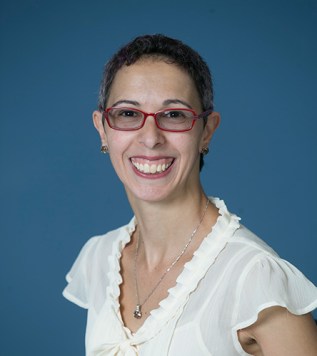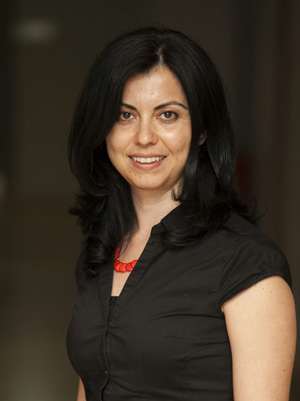
Belinda Espiritu Profile

ProfilesBelinda F. Espiritu is an associate professor of communication in the University of the Philippines Cebu. She teaches communication theory and research, development communication, speech communication, and media studies. Her research interests include cultural studies, intercultural communication, religion and communication, peace and development studies, and Internet communication.
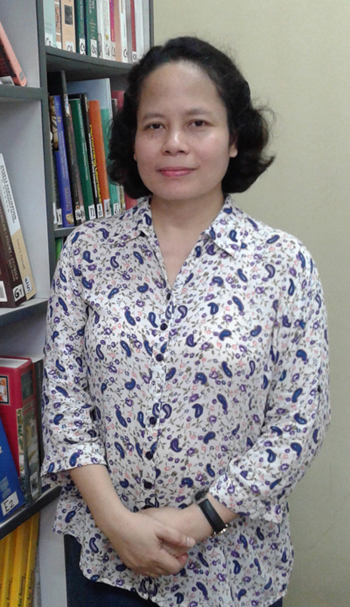
Belinda EspirituShe has published research articles in local and international communication and literary journals on transnational audience reception of Korean television dramas; communication, civil society groups, the public sphere, and governance; intercultural communication between Christians and Muslims in the Philippines; Islamophobia and negative media portrayal of Islam; and literary critical essays. She has also written essays on the ideology of peace; reviews of the books of Maulana Wahiddudin Khan, an Islamic teacher advocating for peace; and her reflections on life, society, and spirituality published in newageislam.com, globalresearch.ca, and metrocebunews.com.

She has spoken in seminars for teachers about peace education, violence and conflict resolution and has been a resource speaker to Episcopalian priests on the use of communication for evangelization and to Philippine soldiers and military officers on purpose-driven life and goal-setting. She holds a Bachelor in Secondary Education degree with a major in English, a Master of Arts degree in Comparative Literature, and a Doctor of Philosophy degree in Communication from the University of the Philippines in Diliman, Quezon City.

Her publications include:

Espiritu, B. F. (2019). Negative stereotypes of Muslims have fueled the rise of Islamophobia. In E. Lucas (Ed.), Islam in society: Global viewpoints (pp. 35-43). New York: Greenhaven Publishing.

Espiritu, B. F. (2017). The Lumad struggle for social and environmental justice: Alternative media in a socioenvironmental movement in the Philippines. Journal of Alternative and Community Media, 2, 45-59.

Espiritu, B. F. (2015, July 18). The Battle against GMOs in the Philippines: Confronting the WTO’s Attempts to Destabilize Sustainable AgricultureGlobal Research.

Espiritu, B. F. (2015, May 6). How to Have Peace in the Holy Land: Implications for Interfaith Dialogue. New Age Islam.

Espiritu, B. F. (2015, April 3). Islamophobia and the “Negative Media Portrayal of Muslims”: An Exposition of Sufism, A Critique of the Alleged “Clash of Civilizations”. Global Research.

Espiritu, B. F. (2015, March 26). Neoliberal Capitalism’s Fatal Flaws: A Call for an Alternative Economic System. Global Research. 

Espiritu, B. F. (2015, March 14). The Destructive Impacts of Corporate Mining in the Philippines: The Tampakan Copper-Gold Mining Project in MindanaoGlobal Research.

Espiritu, B. F. (2014). The Public Sphere, Blogs, and the Pork Barrel Scam: Online Citizens’ Voices on Corruption and Governance in the Philippines. Media Asia, 41(4), 343-354.

Espiritu, B. F. (2011, August). Transnational audience reception as a theater of struggle: Young Filipino women’s reception of Korean television dramas. Asian Journal of Communication, 21(4), 355-372.

Espiritu, B.F. (2006). From fears and prejudices to intercultural solidarity: A study of interpersonal/ intercultural communication in Muslim-Christian relations in selected areas of Metro Manila, Philippines. Religion and Social Communication:  Journal of the Asian Research Center for Religion and Social Communication, 4(2), 77-97.

Espiritu, B.F. (2005). Communication, participation and governance: Discursive democracy and communitarianism in the Philippines. Media Asia: An Asian Communication Quarterly, 32(4), 240-248.

Espiritu, B.F. (2004). The cry of the poor and the oppressed: Theodicy and existentialism in the historical and socio-political contexts of Francisco Sionil Jose’s novels. KINAADMAN: A Journal of Southern Philippines, 26.

Espiritu, B. F. (2004). A call to subversion: Women’s disempowerment and empowerment in Lina Espina Moore’s Heart of the Lotus and other novels”, in Interdisciplinary Literary Studies: A Journal of Criticism and Theory, 6(1), 21-36.

Espiritu, B. F. (2001). From journey to journey: Identity and nationhood in F. Sionil Jose’s Po-on and Viajero. Danyag: Journal of Humanities and the Social Sciences of the University of the Philippines in the Visayas, 6(2), 211-232.


Work for CID:
Belinda Espiritu wrote the guest post, Peace Profile of Sebastiano D’Ambra.

Lauren Mackenzie Profile

ProfilesDr. Lauren Mackenzie is Professor of Military Cross-Cultural Competence at the Center for Advanced Operational Culture Learning (CAOCL), Marine Corps University, Quantico, VA.

Lauren Mackenzie

She also currently serves as the Marine Corps University faculty council president as well as an adjunct Professor of Military/Emergency Medicine at the Uniformed Services University of Health Sciences. She conducts research relating to cross-cultural competence, oversees culture-related curriculum development and outcomes assessment, and delivers communication and culture lectures across the Professional Military Education spectrum, to include the Marine Corps Command & Staff College, War College, Expeditionary Warfighting School, and the College of Enlisted Military Education. Recently, she was invited to provide “Intercultural Communication” presentations at the Women, Peace & Security annual conference, the FBI Academy, the U.S. Naval War College and the Walter Reed Army Institute of Research, among others. From 2009-2014, Dr. Mackenzie served as Associate Professor of Cross-Cultural Communication at the U. S. Air Force Culture and Language Center where she taught resident electives at the Air Command & Staff College and designed and delivered the “Introduction to Cross-Cultural Communication” on-line course, completed by over 1,000 Airmen annually.

Dr. Mackenzie earned her M.A. and Ph.D. in Communication from the University of Massachusetts and has taught intercultural competence courses throughout the Department of Defense over the past ten years. Prior to working for the Department of Defense, she taught a variety of intercultural and interpersonal communication courses at the University of Massachusetts, the State University of New York Potsdam, and Columbus State University, among others. Dr. Mackenzie’s most recent publications are devoted to best practices in military on-line culture learning and assessment, with recent entries in the International Encyclopedia of Intercultural Communication and the Handbook of Communication Training. She is also the co-author with Dr. Kerry Fosher of the Culture General Guidebook for Military Professionals.

Selected Publications:

Mackenzie, L. & Post, K. (2019). Relationship repair strategies for the military professional: The impact of cultural differences on expectations and applications. Marine Corps University Journal, 10(1), 128-141.

Mackenzie, L. & Tenzek, K. (2018). Cultural variation in end-of-life conversations: Using Cultural Discourse Analysis as a tool to analyze case studies designed for professional military education. In M. Scollo & T. Milburn (Eds.), Engaging and transforming global communication through Cultural Discourse Analysis (pp. 91-110). Teaneck, NJ: Farleigh Dickinson University Press.

Steen, S., Mackenzie, L. & Buechner, B. (2018). Incorporating cosmopolitan communication into diverse teaching and training contexts:  Considerations from our work with military students and veterans. In D. Becker & J.D. Wallace (Eds.), Handbook of communication training: A best practices framework for assessing and developing competence (pp. 401-413). New York: Routledge.

Mackenzie, L. & Miller, J. (2017). Military cross-cultural competence. In Y. Y. Kim & K. McKay-Semmler (Eds.), International Encyclopedia of Intercultural Communication. Wiley Blackwell.

Mackenzie, L. & Wallace, M. (2015). Intentional design: Using iterative modification to enhance online learning for professional cohorts. In T. Milburn (Ed.), Communicating user experience: Applying local strategies research to digital media design (pp. 155-182). Lanham, MD: Lexington.

Mackenzie, L. (2014). Strategic enablers: How intercultural communication skills advance micro-level international security. Journal of Culture, Language & International Security, 1(1), 85-96.

Mackenzie, L., & Wallace, M. (2014). Cross-cultural communication contributions to professional military education: A distance learning case study. In R. Greene-Sands & A. Greene-Sands (Eds.), Cross-cultural competence for a 21st century military. Lanham, MD: Lexington.

Mackenzie, L., Fogarty, P., & Khachadoorian, A. (2013). A model for military online culture education: Key findings and best practices. EDUCAUSE Review. 48(4).

Areas of Interest:
Military Cross-Cultural Competence, Communication of Respect , On-line Military Culture Education, Intercultural Situational Judgment Tests


Work for CID:
Lauren Mackenzie wrote the guest post, Military Cross-Cultural Competence.

Anastacia Kurylo Profile

ProfilesAnastacia Kurylo, Ph.D. (Rutgers University) is an assistant professor in the Communication Studies Department at St. Joseph’s College in New York.

Anastacia-Kurylo_CommunicationsHer research focuses on stereotypes communicated in interpersonal, intercultural, organizational, and new media contexts. Specifically, she explores the ways in which stereotypes are constructed through interpersonal communication and how this interactional and collaborative process facilitates stereotype maintenance within a cultural knowledge base.
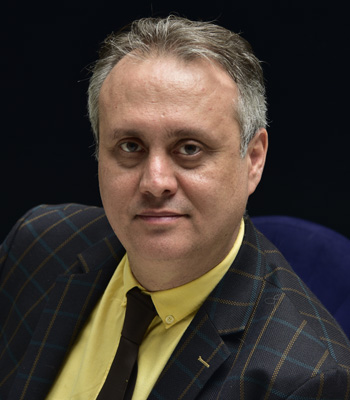
Dr. Kurylo has written over 25 publications including authoring The Communicated Stereotype: From Celebrity Vilification to Everyday Talk and editing Inter/Cultural Communication: Representation and Construction of Culture. Most recently she has worked on two projects related to new media. First, she has co-edited a special issue of the International Journal of Interactive Communication Systems and Technologies titled Intercultural New Media Research for the 21st Century. Second, she has co-edited a new book titled Social Networking: Redefining Communication in the Digital Age. Both projects advance this vibrant area of research in which new media is viewed as integral to exploring communication practices, their outcomes, and their implications. As assistant director of the Center for Intercultural New Media Research, Dr. Kurylo focuses on facilitating collaborative research opportunities for those interested in new media in the context of intercultural communication specifically.

Professor Kurylo is President of the New York State Communication Association and organized their 73rd annual conference last October. She is also the chair of the Board of Trustees of The Quad Preparatory School, and former president of the New York Chapter of the Tri-State Diversity Council. She has served as a reviewer for several journals and is an Associate Editor of the Atlantic Journal of Communication.


Work for CID:
Anastacia Kurylo wrote KC55: Stereotypes.

Ramin Hajianfard Profile

ProfilesRamin Hajianfard (Ph.D., International Islamic University of Malaysia) is senior lecturer in Art & Design at the University Pendidakan Sultan Idris, in Selangor, Malaysia.

Ramin Hajian FardHis main area of research is on Mughal miniature painting, with a secondary emphasis on interfaith dialogue during the Mughal Empire of India. His MA was on peace painting, resulting in the following article:

• Hajianfard, R. (2013). Iranian painters for peace. Peace Review: A Journal of Social Justice, 25(2), 284-290.

He has written multiple entries for encyclopedias: six entries for The Great Events in Religion: An Encyclopedia of Pivotal Events in Religious History (English), and five entries for the Great Islamic Encyclopedia (Persian).

He has published articles in both Persian and English including:

• Hajianfard, R. (2013). An introduction to the art of illuminating the Qur’an. Journal of Arts, Culture & Heritage, 2, 95-109 (English).

• Hajianfard, R. (2012-2013). Hajj painting: A traditional Egyptian art celebrating the Hajj. Bulletin of International Institute of Islamic Science, Thought and Civilization, 4, 12-13.

• Hajianfard, R. (2014). French orientalist painting: Colonial views or an artistic approach? In B. Atashinjan (Ed.), Naghd-e Nāmeh-e Honar [Professional Book (vol. 6) on the Research and Art Criticism] (pp. 25-45). Tahran: Mugham (Persian).

He has also translated multiple books, articles, and book chapters, about music, art, and philosophy, into Persian for publication in Iran.

He was the winner of the second prize for publishing and research at the University of Applied Science and Technology, Iran, 2013.

A video presentation he recently made, Persian Manuscripts of Ramayana || Illustrative Miniature Paintings, is now available on YouTube. (His part begins at 15:27.)


Work for CID:

Ramin Hajianfard wrote KC75: Sulh-i-Kul and KC83: Intercultural Aesthetics. He has translated KC1: Intercultural DialogueKC2: Cosmopolitanism, KC3: Intercultural CompetenceKC4: Coordinated Management of Meaning, KC5: Intercultural CommunicationKC6: Intercultural CapitalKC7: Intergroup Relations DialogueKC8: Public Dialogue, KC10: Cross-Cultural Dialogue, KC75: Sulh-i-Kul, and KC83: Intercultural Aesthetics into Persian. He also has served as a reviewer for translations into Persian. He is currently working on a project looking at visual art as a tool for intercultural dialogue between sister cities, and is interested in hearing from people with overlapping interests.

Dai Xiaodong Profile

ProfilesDai Xiaodong is associate professor at the Foreign Languages College of Shanghai Normal University (SHNU), P. R. China.

Dai XiaodongPresently he serves as the executive chief of Intercultural Communication Research Center of SHNU, and the vice president of China Association for Intercultural Communication (CAFIC). His major research interests are identity negotiation and intercultural competence. In 2007-2008, he won a Fulbright grant and conducted research at the Department of Communication Studies of University of Rhode Island in the US. He has published numerous articles which have appeared in Chinese Journal of European Studies, American Studies Quarterly, World Economics and Politics, Contemporary International Relations, International Survey, China Media Research, Academic Research, and so forth.

His recent books include Identity and Intercultural Communication (I): Theoretical and Contextual Construction (2010, co-edited with Steve J. Kulich), Identity and Intercultural Communication (II): Conceptual and Contextual Applications (2011, co-edited with Steve J. Kulich), Intercultural Communication Theories (2011), Intercultural Adaptation: Theoretical Explorations and Empirical Studies (2012, co-edited with Steve J. Kulich), and Intercultural Communication Competence: Conceptualization and its Development in Cultural Contexts and Interactions (2014, co-edited with Guo-Ming Chen).


Beth Bonniwell Haslett Profile

ProfilesBeth Bonniwell Haslett (Ph.D., University of Minnesota) is Professor Emerita in the Department of Communication at the University of Delaware.

Beth HaslettHer research and teaching interests span organizational and intercultural communication. More specifically, her scholarship focuses on issues of face, cross-cultural communication and the social impact of information and communication technologies. Her current research focuses on differences and similarities across Eastern and Western approaches to communication and cognition, and using Goffman’s concept of Face as an approach to communicative competence.


Dr. Haslett has written four books (Communication: Strategic Action in Context; The Organizational Woman, with F.L.Geis and M.R.Carter; Children Communicating, with W. Samter; and Communicating and Organizing in Context.) This last is her most recent book, and it integrates Giddens’ structuration theory with Goffman’s interaction order and develops a new theoretical perspective, the theory of structurational interaction. From this theoretical framework, it is possible to integrate both the macro- and micro-levels of communication as they contribute to social change, institutional change and globalization, particularly in cross-cultural and organizational settings. Both digital and interpersonal forms of communication are integrated within this framework.

She has also served as chairperson of the Language and Social Interaction Division of the National Communication Association. In addition, Dr. Haslett has served on the editorial boards of Human Communication Research, Communication Monographs, Communication Education, Communication Studies, Journal of Family Communication, Communication Quarterly, Journal of Communication, and Western States Journal of Communication, and reviews for other journals. She has published over 40 articles and book chapters, and presented more than 60 papers at national and international conferences.


Work for CID:
Beth Haslett wrote KC74: Face.

Jolanta A. Drzewiecka Profile

ProfilesJolanta A. Drzewiecka is Senior Assistant Professor and Intercultural Communication Chair at the Università della Svizzera italiana, Lugano, Switzerland.  Visiting Professor, University of Zürich, Zürich, Switzerland (Fall, 2015)

Jolanta Drzewiecka My research centers on construction of cultural, racial, and national differences in discourse.  I am particularly interested in contexts of systemic collapse and transition, regional and global integration, and rescaling of government. I focus on two areas: negotiation of belonging and public memories.

Immigrant identity: incorporation and representation

My work examines how immigrants negotiate identities and are represented by media.  I am developing  an innovative way of understanding how immigrants are incorporated within racial hierarchies that perpetuate domination and inequality (Drzewiecka & Steyn, 2009; Drzewiecka  & Steyn, 2012; Pande & Drzewiecka, under review).  With my South African collaborator, Melissa Steyn, I proposed a framework of incorporation as discursive intercultural translation based on a study of how Polish immigrants are incorporated racially within the distinct South African racial regionalism (Drzewiecka & Steyn, 2009).  We theorize translation as a creative and strategic process of meaning integration that results in immigrants’ reframing themselves to bid for inclusion and belonging in their new place.  Our concept of translation is based in postcolonial theory and highlights the complex processes whereby immigrants understand and connect new meanings and position themselves within racial hierarchies.  We extended this work to theorise how the symbolic and the material are inseparably interlaced to form immigrant identities (Drzewiecka & Steyn, 2012).   We demonstrated that Polish immigrants were incorporated and incorporated themselves in ways that supported continuing white domination in cultural, institutional and economic structures.  The most recent project extends the concept of racial incorporation by connecting identity capital and emotions to negotiation of belonging.

I also explore representations of immigrants in newspapers.  A recent paper examines how Polish post-EU accession migrants are represented in British newspapers (Drzewiecka, Hoops & Thomas, 2014).  We zero in on the role of media in legitimating the changing scales of government as well as precarious citizenship in representations of migrants in the European Union.  This is a rich area for application;  a follow up study examines the US immigration reform debate focusing on how citizenship and rights are shaped by the state adjusting to globalizing conditions (Drzewiecka, Pande & Saurbier, 2014).

Public memories

Another productive line of research centers on public memories, particularly those of racist violence.  In a recent project, I demonstrated through a psychoanalytic reading how knowledge of the past antisemitic violence has been blocked and the victims rendered unrecognisable to protect the fictions of the Polish gentile self (Drzewiecka, 2014).  Another paper examines the discourses of historical wound in media and how they are shaped and shape relations with the other. My current book project extends the psychoanalytical rhetorical approach to understand how memories of racial others recuperate and purify the nation in response to ongoing and new global challenges to national purity and exclusivity. Further, I am co-editing (with Susan A. Owen and Peter Ehrenhaus) a special issue of the Journal of International and Intercultural Communication on public memories, culture and difference.  The issue is scheduled for publication in 2016.

I had the pleasure of serving as the Chair of the International and Intercultural Communication Division of the National Communication Association, USA.

Selected publications

Hoops, J., Thomas, R., & Drzewiecka, J. A. (2015). Polish plumber as a pawn in the British newspaper discourse on Polish post-EU enlargement immigration to the U.K.  Journalism. Published online before print May 31, 2015, doi: 10.1177/1464884915585960.

Drzewiecka, J. A. (2014). Aphasia and a legacy of violence: disabling and enabling knowledge of the past in Poland. Communication and Critical/Cultural Studies, 11, 362-381.

Drzewiecka, J. A., Hoops, J., & Thomas, R. (2014). Rescaling the state and disciplining workers in discourses on EU Polish migration in UK newspapers. Critical Studies in Media Communication, 31, 410-425.

Drzewiecka, J. A., & Steyn, M. (2012). Racial immigrant incorporation: material-symbolic articulation of identities. Journal of International and Intercultural Communication, 5, 1-19.

Drzewiecka, J. A., & Steyn, M. (2009). Discourses of exoneration in intercultural translation: Polish immigrants in South Africa. Communication Theory, 19, 188-218.


Work for CID:

Jolanta Drzewiecka wrote KC56: Racial Incorporation and KC62: Diaspora. She was also one of the participants at the National Communication Association‘s Summer Conference on Intercultural Dialogue in Istanbul, Turkey, which led to the creation of CID.

Sara Greco Profile

ProfilesSara Greco is Senior Assistant Professor of Argumentation at the Università della Svizzera italiana (Lugano, Switzerland). Her research interests cover different aspects of the analysis of argumentative interactions, both written and oral.

Sara GrecoIn particular, she has been working on the role of argumentation in conflict resolution, specifically in relation to dispute mediation (Greco Morasso 2011, 2018, 2020) and to social controversies. In her view, argumentative dialogue can be seen as a means to solve disagreement and, thus, as an alternative to conflict.

Sara Greco has also worked on inner conflict and how people make their decisions on the basis of dialogue with themselves. She has been working in particular with the case of how international migrants make their crucial migration decisions (Greco Morasso 2013, Greco 2015). Besides, she has done research on children’s argumentation (Greco et al. 2018).

In her work, Sara Greco has developed theoretical concepts of argumentation theory, in particular framing and reframing, issue, and argument schemes (Rigotti & Greco 2019); she has equally been analysing specific cases of communicative interaction in different contexts, using methods from Discourse Analysis, argumentation and linguistic semantics-pragmatics.

Sara Greco is on www.academia.edu and www.researchgate.net, and on her institutional website.

A selection of her recent publications includes:

Greco, S. (2020). Dal conflitto al dialogo: Un approccio comunicativo alla mediazione. Santarcangelo di Romagna: Maggioli.

Rigotti, E., and Greco, S. (2019). Inference in argumentation: A topics-based approach to argument schemes. Cham: Springer (Argumentation Library).

Greco, S. (2018). Designing dialogue: Argumentation as conflict management in social interaction. Tranel – Travaux Neuchâtelois de Linguistique, 68, 7-15.

Greco, S., Perret-Clermont, A.N., Iannaccone, A., Rocci, A., Convertini, J., & Schär, R. (2018). The analysis of implicit premises within children’s argumentative inferences. Informal Logic, 38(4), 438-470.

Greco Morasso, S. (2015). Argumentation from analogy in migrants’ decisions. Proceedings of the ISSA Conference, Amsterdam, July 2014. Ed. B. Garssen et al.

Bijnen, E., van, & Greco, S. (2018). Divide to unite: Making disagreement explicit in dispute mediation. Journal of Argumentation in Context, 7(3), 285-315.

Greco, S., Schär, R., Pollaroli, C., & Mercuri, C. (2018). Adding a temporal dimension to the analysis of argumentative discourse: Justified reframing as a means of turning a single-issue discussion into a complex argumentative discussion. Discourse Studies, 20(6), 726–742.

Xenitidou, M., & Greco Morasso, S. (2014). Parental discourse and identity management in the talk of indigenous and migrant speakers. Discourse & Society, 25(1), 100-121.

Greco Morasso, S. (2013). Multivoiced decisions. A study of migrants’ inner dialogue and its connection to social argumentation. Pragmatics & Cognition, 21(1), 55-80.

Greco Morasso, S., & Zittoun, T. (2014). The trajectory of food as a symbolic resource for international migrants. Outlines. Critical Practice Studies, 15(1), 28-48.

Greco Morasso, S. (2011). Argumentation in dispute mediation: A reasonable way to handle conflict. Amsterdam/Philadelphia: John Benjamins.


Work for CID:

Sara Greco wrote KC73: Argumentative Dialogue, and translated it into Italian.

Marc Hermeking Profile

ProfilesMarc Hermeking (Dr. Phil.), is scientific lecturer in cross-cultural marketing, product development and marketing communications with a special focus on culture & ICT, technical communication and cross-cultural transfer of technology.

Marc HermekingHe is affiliated with the Institute for Intercultural Communication at the University of Munich (LMU), Germany, where he earned his doctoral degree with his inaugural dissertation on the cultural influences on the handling of industrial technology (Kulturen und Technik, 2001). In recent years, he focused on the Influence of culture on all kinds of computer-mediated communication.

Some of his publications are, for example:

(2015). Das Mobiltelefon im Kulturvergleich: Exemplarische Forschungsfelder interkultureller Technik-Kommunikation. In: Banse, G. / Rothkegel, A. (Eds.): Neue Medien: Interdependenzen von Technik, Kultur und Kommunikation (eCulture – Network Cultural Diversity and New Media, vol. 19, pp. 143-161). Berlin: Trafo.

(2013). Kulturelle Aspekte technischer Sicherheit: Interkulturelle Sicherheitskommunikation. In S. Stumpf, E. Schuch & U. Meyer (Eds.), Technik und Kultur: Anwendungsorientierte Beiträge zu einem Spannungsfeld (pp. 51-62). Lengerich: Pabst Science Publishers.

(2012). Cultural aspects of technology and documentation: Contributions from the field of intercultural communication. In A. Rothkegel & S. Ruda (Eds.), Communication on and via Technology (pp. 203-216). Berlin: Mouton de Gruyter.

(2011). Culture, Online Technology and Computer-mediated Technical Documentation: Contributions from the Field of Intercultural Communication. In K. St.Amant & S. Kelsey (Eds.), Computer-Mediated Communication across Cultures: International Interactions in Online Environments (pp. 77-90). Hershey, PA: Information Science Reference/IGI.

(2010). Kultur und Technik: Schnittstellen für die Interkulturelle Kommunikation. In G. Banse G. & A. Grunwald (Eds.), Technik und Kultur: Bedingungs- und Beeinflussungsverhältnisse (pp. 163-178). Karlsruhe: KIT Scientific Publishing.

(2008). Lokalisierung von Webseiten – Interkulturelle Marketing-Kommunikation. MDÜ – Fachzeitschrift für Dolmetscher und Übersetzer, 55(3), 48-53.

(2005, re-issued 2006): Culture and Internet Consumption: Contributions from Cross-cultural Marketing and Advertising. Journal of Computer Mediated Communication, 11(1), 192-216.

(2001). Kulturen und Technik: Techniktransfer als Arbeitsfeld der Interkulturellen Kommunikation. Beispiele aus der arabischen, russischen und lateinamerikanischen Region. Münster/München/New York: Waxmann

See more at his university webpage.


Work for CID:

Marc Hermeking has served as a reviewer for German translations.

Çiğdem Bozdağ Profile

ProfilesÇiğdem Bozdağ is an assistant professor in the department of New Media at the Kadir Has University, Istanbul. Bozdağ’s research and teaching focus on digital media, intercultural communication, migration, globalization, and education and media technologies.

Cigdem BozdagHer recent research was about online intercultural school networks between Germany and Turkey. Bozdağ completed her Ph.D. at the University of Bremen in January 2013. In her thesis, she analyzed the websites of the Moroccan and Turkish diaspora and their role in ethnic community building, within a mediated emerging social space. From 2008 to 2010, she worked at the same university in the research project “Communicative Connectivity of Ethnic Minorities: The Integrative and Segregative Potential of Digital Media for Diasporas.” Moreover, she worked on an EU-funded research project, entitled “ICT and Cultural Diversity.” After the Ph.D., Bozdağ worked as a Mercator-IPC fellow at the Sabanci University, Istanbul. She received her M.A. degree from the University of Bremen, in the field of media culture. Her bachelor degree is from Boğaziçi University, in the field of political science and international relation.

Bozdağ recently wrote a report on Intercultural Learning In Education Through Information And Communication Technologies (Istanbul Policy Center, 2014), is the co-author of the book Mediale Migranten: Mediatisierung und die kommunikative Vernetzung der Diaspora (Springer, 2011) and author of the book Aneignung von Diasporawebsites (Springer, 2013). Her recent papers appear in the Journal of Global Media and Communication (2014), in Case Studies in Intercultural Dialogue (Edited by Nazan Haydari and Prue Holmes, 2014) and in Crossings: Journal of Migration & Culture (2014).