

Godfried Asante (Ph.D., University of New Mexico) is Associate Professor in the School of Communication at San Diego State University.
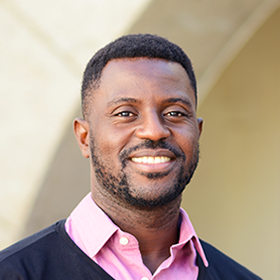 His scholarship examines the relationships among culture, communication, identity, power, sexuality, and globalization, with particular attention to queer African experiences and critical intercultural communication.
Asante has received several scholarly honors, including the Early Career Award from the International and Intercultural Communication Division of the National Communication Association, the Outstanding Pre-Tenure Global Researcher Award from San Diego State University, and multiple outstanding article and top paper awards from NCA, ICA, and the Western States Communication Association. He has held elected leadership positions in divisions of the International Communication Association, National Communication Association, and Western States Communication Association. He has also served on the editorial boards of Communication Monographs, Quarterly Journal of Speech, Women’s Studies in Communication, Howard Journal of Communications, and other journals.
His research uses critical, decolonial, feminist, queer, and participatory approaches to examine how marginalized communities negotiate identity, belonging, violence, advocacy, and social change. His work has appeared in such journals as Communication Theory, Communication Monographs, Communication and Critical/Cultural Studies, Howard Journal of Communications, Journal of International and Intercultural Communication, and Women’s Studies in Communication. He is also co-founder of Asante-Hoeg Consulting LLC, where he works with civil-society and human-rights organizations to develop culturally grounded research, advocacy, and monitoring and evaluation initiatives.
Select Publications
Asante, G., LeMaster, L., & Maxine, A. (2024). Sensing difference otherwise: Seniority and the sensorial constitution of gender in (post)colonial Ghana. Siyabonana: The Journal of Africana Studies, 2(2).
Asante, G. (2023). “You can be gay and straight at the same time”: Contextually contingent negotiations of gay and bisexual identifications among same-gender-loving men in Ghana. Communication Monographs, 90(4), 481–504.
Asante, G. (2022). “They just need to empower themselves”: Reproducing queer (neo)liberalism in LGBT empowerment discourses of representatives of LGBT human-rights NGOs in Ghana. Communication and Critical/Cultural Studies, 19(4), 393–411.
Asante, G. (2022). Unexpected intimacies: Exploring sasso relationality in postcolonial Ghana. Journal of Homosexuality, 70(1), 53-70.
Asante, G., & Hanchey, J. N. (2021). Decolonizing queer modernities: The case for queer (post)colonial studies in critical/cultural communication. Communication and Critical/Cultural Studies, 18(2), 212–220.
Eguchi, S., & Asante, G. (2016). Disidentifications revisited: Queer(y)ing intercultural communication theory. Communication Theory, 26(2), 171–189.
Work for CID:
Godfried Asante serves on the Advisory Board of the Center.
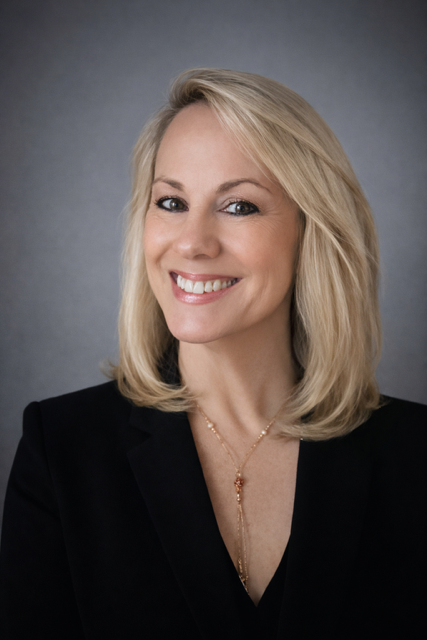 She is also the founder and director of the Center for Indigenous Student Media, director of Good Morning Indian Country, an award-winning, student led weekly Indigenous news and information program, as well as creator and director of the Native Storytelling Workshop. She worked as a news anchor and reporter for 20+ years in television markets across the country. Her scholarship focuses on Indigenous representation in media past and present with a focus on improving coverage of Indigenous issues, identity, and communities in non-Indigenous media spaces. Melissa is a board member and education chair for the Indigenous Journalists Association.
 She is currently Regional Director of Northeast School Partnerships for the High School Global Navigator Programs at CIEE (Council on International Educational Exchange), an international exchange nonprofit, where she builds collaborations with schools, districts, and educators to expand access to academically aligned study abroad programming for high school students. In this role, she works with schools from New Jersey to Maine to share programs for students and professional development opportunities for educators. She oversees more than $9M annually in scholarship funds stewarded by CIEE which make study abroad opportunities accessible to thousands of high school students.
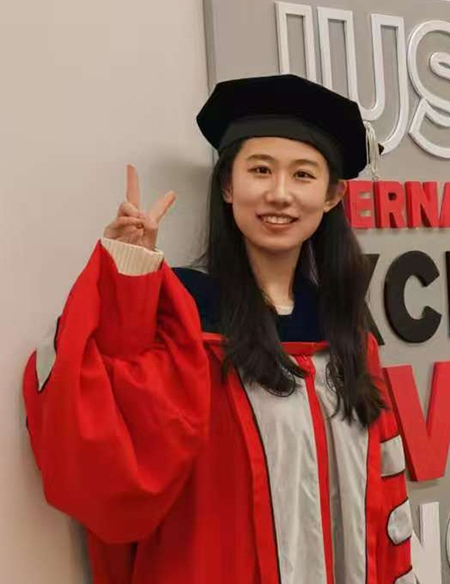 Yizhe’s research interests include bilingual and multilingual language education, varieties of Chinese as heritage languages, translanguaging pedagogies, teaching Chinese as a foreign language, and technology-enhanced language education. More information can be found on her
 Gittins is a practitioner-scholar with over 20 years of leadership, programming, and analysis experience in the areas of peace, education, psychology, youth, and community development. He has lived, worked, and travelled in over 60 countries across 6 continents; taught in schools, colleges, and universities around the world; and trained thousands individuals and organisations on peace and social change-related issues. Other experience includes working in youth offending prisons; developing, launching, and overseeing a wide range of programmes and projects; and consultancy assignments for public, private, and non-profit organizations. He has received multiple awards for his work, including a Rotary Peace Fellowship, KAICIID Fellowship, and Kathryn Davis Fellowship for Peace. He is also a Positive Peace Activator and Global Peace Index Ambassador for the Institute for Economics and Peace.
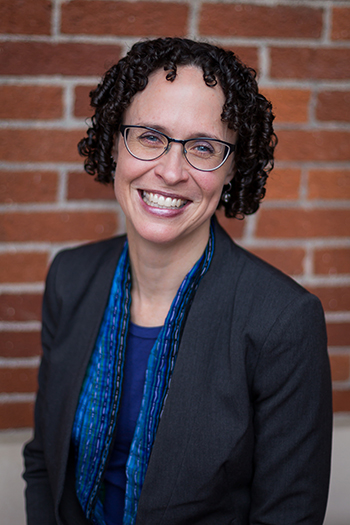 She began her career as an English as a second/foreign language teacher. Besides teaching refugees, immigrants, and international students in Minnesota, she also taught conversational English classes in both China and South Korea for seven years. Her experience working with international students prompted her to return to graduate school to study intercultural communication. Research during her PhD program took her back to South Korea to collect narrative data exploring the intercultural relationships between native-English-speaking teachers and Korean students in a classroom setting. This branch of her research explores how the hegemony of English has impacted foreign language classrooms. Ideological beliefs attached to English influence how cross-cultural adaptation occurs in complex and uneven ways. She has also examined perceptions of agency of English speakers within the context of English hegemony. Another branch of Elizabeth’s research is focused on intercultural communication pedagogy. She employs qualitative research to study teacher identity and students’ descriptions of intercultural learning. Deeper intercultural learning occurs through acknowledgement of dialectical tensions as students navigate cultural differences and similarities.
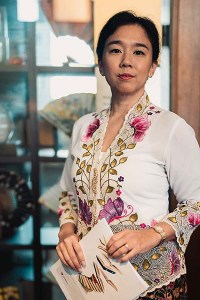 Su-Ann holds a PhD in Intercultural Communication and Cross-cultural Psychology, as well as an Honours degree in Intercultural Communication, and Bachelor’s Degree in Organisational Communication from The University of Queensland, Australia.
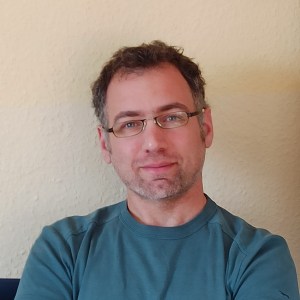 He gained seven years of practical experience in Berlin (Germany) managing the – at that time – second largest project for integration assistants (Integrationslotsen) in Germany. With this practical backing, he commenced an academic career in teaching and research. He was a researcher at various universities (the Karlshochschule of Applied Sciences, the Hochschule Karlsruhe of Applied Sciences, the University of Landau, and the Johannes-Gutenberg University of Mainz/Germersheim) carrying out several applied research projects concerning questions of integration, participation and intercultural communication. The latest project is the
 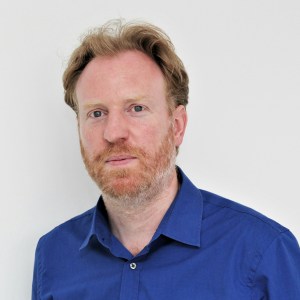 He also completed the German Habilitation – the formal, second PhD which allows you to officially become a Professor – at the Friedrich-Schiller-University of Jena. He is also journalistically active and has written for the
