

Mohan J. Dutta Profile

ProfilesMohan J Dutta is Dean’s Chair Professor of Communication at Massey University (New Zealand), and Director of the Center for Culture-Centered Approach to Research and Evaluation (CARE) directing research on culturally-centered, community-based projects of social change communication.


Mohan Dutta
Professor Dutta teaches and conducts research in international health communication, critical cultural theories of health and social change, poverty and unequal health outcomes in the backdrop of neoliberal policies, health activism in globalization politics, indigenous cosmologies of health, subaltern studies and dialogue, and public policy and participatory social change communication. Currently, he serves as Editor of the “Critical Cultural Studies in Global Health Communication Book Series” with Routledge, Specialty Chief Editor of the Health Communication section of the open access journal, Frontiers in Communication, and sits on the editorial board of seven journals including Communication Theory, Journal of Computer Mediated Communication, and Annals of the International Communication Association. Before arriving to NUS, he served as Associate Dean of Research & Graduate Education in the College of Liberal Arts at Purdue University, a Service Learning Fellow, and a fellow of the Entrepreneurial Leadership Academy. Also at Purdue, he served as the Founding Director of the Center for Poverty and Health Inequities (COPHI), where he continues to hold an Affiliate appointment.

Professor Dutta holds a Bachelor of Technology (Honors) in Agricultural Engineering from the Indian Institute of Technology (IIT), Kharagpur, and a PhD in Mass Communication from the University of Minnesota. He began his career at Purdue University in 2001, was tenured in 2005, and became Full Professor in 2009. In June, 2010, he was appointed as the Lim Chong Yah Professor of Communication and New Media at the National University of Singapore (NUS), and formally joined NUS as Professor of Communication in July, 2012.

Mohan Dutta’s research examines marginalization in contemporary healthcare, health care inequalities, the intersections of poverty and health experiences at the margins, political economy of global health policies, the mobilization of cultural tropes for the justification of neo-colonial health development projects, the meanings of health in the realms of marginalized experiences in highly underserved communities in the global South, and the ways in which participatory culture-centered processes and strategies are organized in marginalized contexts to bring about changes in neo-colonial structures of global oppression and exploitation. Engaging in dialogues with subaltern communities at the global margins in imagining alternative spaces that resist neoliberal formations forms the crux of Professor Dutta’s academic and activist projects. At the Center for Culture-Centered Approach to Research and Evaluation (CARE), Professor Dutta leads 19 culture-centered projects spread across 7 countries exploring the roles of listening, participation, and dialogue in creating infrastructures for alternative rationalities of health and wellbeing. These projects highlight the role of local cultural practices in transforming health, and in strengthening community-state relationships in securing community access to infrastructures of health and wellbeing. Ultimately, Professor Dutta hopes that this work offers an entry point for transformative communicative practices and networks of solidarity that connect the imaginaries of the global South in offering alternative structures of global organizing grounded in the spirits of justice, equality, and dignity.
Soumia Bardhan Profile

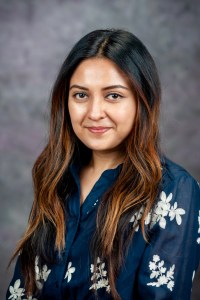
ProfilesSoumia Bardhan (Ph.D., University of New Mexico) is associate professor of Communication at the University of Colorado Denver.

Operating at the intersection of intercultural communication and global communication, Bardhan uses qualitative and rhetorical approaches to explore the role of media, AI, and communication in the cultural-political transformation of Middle Eastern and South Asian societies. She investigates the complex ways diverse rhetorical dynamics and discursive practices of Islam shape MENA (Middle East and North Africa) politics and how Western actors—scholars, publics, and policy makers—might respond to such discourses. Through her research, Bardhan aims to a) minimize stereotypes and advance dialogue and understanding between Muslim and non-Muslim communities, b) explore how culture and communication affect democratic institutions globally, and b) identify extremist discourses and imminent threats to then help shape foreign policy and global security strategies. Due to the global emphasis of her work, Bardhan is also invested in contributing to the internationalization of the communication discipline.

Bardhan teaches courses related to intercultural communication; intercultural and transnational rhetoric; religion, culture, and communication; communication theories; history and philosophy of communication studies; AI and human communication; qualitative research methodologies; and directs global study programs in Spain, France, Morocco, and India. As a certified mediator, she also teaches mediation (creative dispute resolution) courses. Bardhan is recipient of several curriculum development awards, including University of Notre Dame’s Global Religion and Research Initiative grant. CU Denver College of Liberal Arts and Sciences recognized her with the 2025 Excellence in Teaching award.

Bardhan was named Henry Luce Foundation’s Sacred Writes Public Scholarship on Religion fellow (2023-2024), CU Denver’s ThinqStudio fellow (2022-2024), Big 12 Faculty fellow (2017-2018), and is Association of College and University Educators (ACUE) fellow. She serves as director on the board of the International Communication Association (ICA) and chair of its Membership and Internationalization Committee; she was chair of ICA’s Intercultural Communication Division (2019-2021). She served on the National Communication Association’s Task Force on Fostering International Collaborations in research, teaching, and service (2015-2019). She served on the editorial board of Journal of International and Intercultural Communication (2018-2021) and is associate editor of Frontiers in Intercultural Communication (2020-present). Bardhan currently serves as interim director of International Studies at CU Denver.

Selected publications:

Book:

Turner, P. K., Bardhan, S., Holden, T. Q., & Mutua, E. M. (Eds.). (2019). Internationalizing the communication curriculum in an age of globalization: Why, what, and how. New York: Routledge.

Articles and chapters:

Bardhan, S., Chen, Y., AlSumait F. Y., Lee, P.,  & Wang, H. L. (2024). Pluriversal possibilities for the Euro/U.S.-centric intercultural communication field? Review of the GCC States and Taiwan. Annals of the International Communication Association. DOI: 10.1080/23808985.2024.2324153

Evans, E., & Bardhan, S. (2023). Adult Third Culture Kids and sojourner intercultural communication: Exploring belonging through a multilevel approach. International Journal of Intercultural Relations, 96.

Bardhan, S. (2022). Rhetoric and intercultural communication. In Moy, P. (Ed.), Oxford Bibliographies in Communication. New York: Oxford University Press.

Bardhan, S. (2022). #egyptian and #tunisiangirl: The (micro)politics of self-presentation on Instagram. International Journal of Communication, 16, 681-99.

Bardhan, S., & Cutter, D. (2021). Recruiting foreign warriors: Function of moral and temporal tropes in the Islamic State’s “Dabiq”. Rhetoric and Public Affairs, 24, 483-520.

Bardhan, S. & Foss, K. (2020). Revolutionary graffiti and Cairene women: Performing agency through gaze aversion. In Charrad, M & Stephan, R. (Eds.), Women rising: Resistance, revolution, and reform in the Arab Spring and beyond. New York: New York University Press.

Bardhan, S. (2019). Internationalizing the communication curriculum: Benefits to stakeholders. In Turner, P. K., Bardhan, S., Holden, T. Q., & Mutua, E. M. (Eds.), Internationalizing the communication curriculum in an age of globalization (pp. 11-20). New York: Routledge.

Bardhan, S., Colvin, J., Croucher, S., O’Keefe, M., & Dong, Q. (2019). Intercultural communication: A 17-year analysis of the state of the discipline. In Turner, P. K., Bardhan, S., Holden, T. Q., & Mutua, E. M. (Eds.), Internationalizing the communication curriculum in an age of globalization (pp. 23-35). New York: Routledge.

Bardhan, S. (2018). Affordances of websites for counterpublicity and international communication: Case of the Egyptian Muslim Brotherhood. Georgetown Journal of International Affairs, 19, 3-11.

Bardhan, S. (2018). The Egyptian Muslim Brotherhood and ‘Ikhwanweb’: Deliberative ethic/voice in a counterpublic’s rhetoric? Journal of Public Deliberation, 4(1), Article 5.

Bardhan, S. (2017). Rhetorical approaches to communication and culture. In J. Nussbaum (Ed.), Oxford Research Encyclopedia of Communication. Oxford University Press.

Bardhan, S. & Wood, R. (2015). The role of culture in civil society promotion in the Middle East: A case study approach with technology for social networking. Digest of Middle East Studies, 24(1), 111-138.

Bardhan, S. (2014). Egypt, Islamists, and the Internet: The Muslim Brotherhood and its rhetoric of dialectics in ‘Ikhwanweb’. Digest of Middle East Studies, 23(2), 235-261.

Archana Shrivastava Profile

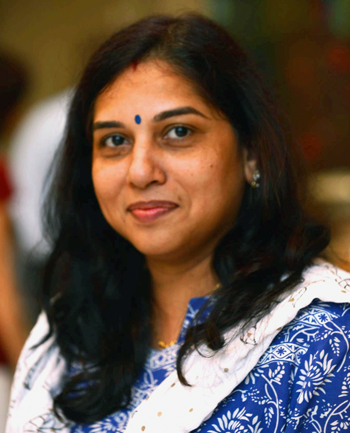
ProfilesDr. Archana Shrivastava is Associate Professor & Head of the Business Communication Area at Birla Institute of Management Technology, India.

Archana ShrivastavaHaving worked at various universities and colleges, she has 19 years of research, teaching and training experience. Dr. Shrivastava earned her Ph.D. and M.A. in English literature from Dr. Hari Singh Gour University, Sagar in M.P. She is a Thomas certified professional and can perform Personal Profile Analysis (PPA) and Human Job Analysis (HJA). She is trained to teach “Business English Certificate Course” and is also an active member of the Association for Business Communication, Communication Institute of Greece, and Eastern Communication Association.

Her current research and publications are in the areas of cross-cultural communication, leadership, team building, skill development. She has participated and presented papers in various conferences both in India and abroad. She has authored numerous case studies and research papers published in journals like IVEY, Emerald,  and Case Centre (European Case Clearing House). She is a recipient of a travel grant awarded by AICTE in 2015 to present her research at Columbia University in New York. She is the recipient of the best paper award in 2017 at the conference in Oxford University, and in 2018 in the international conference at Teri University.

Dr. Shrivastava has more than 19 years of academic experience to teach/train a variety of courses including: Business Communication, Soft Skills, Business Etiquette, Handling Interviews, Presentation Skills, Nonverbal Communication, Audience Analysis, Crisis Communication, Conflict Management, Negotiation Skills, Intercultural Communication, and Empathic Listening. She has been conducting trainings and Management Development Programmes (MDPs) for senior executives of several renowned  organizations and PSUs in India, including NTPC, NHPC, GAIL, IFFCO, and Power Grid. She has also been mentoring and developing students in the area of Soft Skills, especially People Skills.

Selected Publications

Shrivastava A. (2018). Using connectivism theory and technology for knowledge creation in cross-cultural communication. Research in Learning Technology, 26.

Shrivastava, A. (2018). A small initiative in the journey of making leaders with the help of authentic leadership model. Kybernetes, 47(10), 1956-1972.

Shrivastavam, A., Midha, M., & Vama, R. (2017). Employability skills: A comparative study of students from metro and two tier cities in India. FOCUS: The International Journal of Management, 12(2), 51-58.

Shrivastava, A., & Midha, M. (2016) Transactional style inventory: A tool to enhance interpersonal effectiveness. International Journal on Leadership, 4(2).

Shrivastava, A., & Srivastava A. (2016). Measuring communication competence and effectiveness of ASHAs (accredited social health activist) in their leadership role at rural settings of Uttar Pradesh (India). Leadership in Health Services, 29(1), 69-81.

Shrivastava, A., & Bindra, A. (2015). Re-designing organizational communication model of Akosha: An online consumer forum in India to resolve consumer complaints. The Case Centre, Reference no. 315-033-1.

Shrivastava, A. (2014). Active empathic listening as a tool for better communication. International Journal of Marketing and Business Communication, 3(3/4), 13-18.

Shrivastava, A. (2014). Sustainable development and inclusive growth model for improving organic agriculture in India: A case study on communication and awareness strategies of Morarka Foundation. The Case Centre, Reference number 914-017-1.


Work for CID:
Archana Shrivastava has served as a reviewer for translations into Hindi.

Tim Steffensmeier Profile

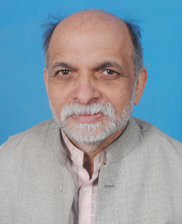
ProfilesTim Steffensmeier is an associate professor and director of the Leadership Communication doctoral program at the Staley School of Leadership Studies at Kansas State University. This is a joint appointment as director of research at the Kansas Leadership Center based in Wichita, KS.

Tim Steffensmeier Tim’s publications focus on public deliberation, rhetoric, and civic leadership. This research has been grant funded by the National Science Foundation, Kettering Foundation, and Interactivity Foundation. Steffensmeier is a former department head of Communication Studies at Kansas State University (2012-2017) and served as editor for the Journal of Public Deliberation. Tim has a Ph.D. from the University of Texas, Austin in Communication Studies/Rhetoric. His expertise includes consulting experience with companies and communities on leadership development and communication.
His publications include:

PytlikZillig, L. M., Steffensmeier, T., Campbell Hibbs, A., Champion, B., Hunt, E. D., Harrington, J., Jr., Spears, J., Umphlett, N., Bruning, R., & Kahl, D. (2013). Fostering climate change education in the Central Great Plains: A public engagement approach. International Journal of Sustainability, 8(1), 161-177.

Steffensmeier, T. (2010) Building a public square: An analysis of community narratives. Community Development, 41(2), 255-268.

Steffensmeier, T. & Schenck-Hamlin, W. (2009) Argument quality in public deliberations. Argumentation and Advocacy, 45(1), 21-36.

Pradeep Prabhakar Gokhale Profile

Profiles

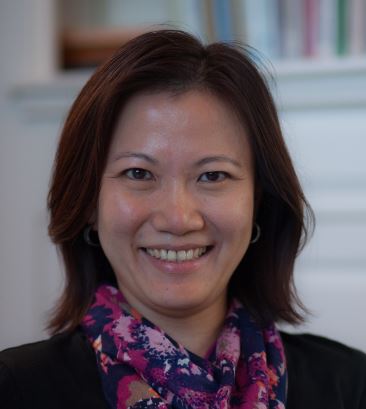
Pradeep Prabhakar Gokhale is Dr. B. R. Ambedkar Research Professor at the Central University of Tibetan Studies, Sarnath (Varanasi), India.

GokhaleHe retired in 2012 as Professor of Philosophy from the University of Pune after 31 years of teaching. His research areas include classical Indian philosophies: Buddhism, Lokāyata, Yoga, Jainism; Indian epistemology and logic; Indian moral philosophy; social philosophy and philosophy of religion: Ambedkar’s thought and contemporary Buddhism.

Authored books in English are: Inference and fallacies discussed in Indian logic; Vādanyāya of Dharmakirti: The logic of debate; Hetubindu of Dharmakirti: A point on probans; Recollection, recognition and reasoning: A study in the Jaina theory of Paroksha Pramana (co-authored); and Lokāyata/Cārvāka: A philosophical inquiry. Authored books in Marathi are: Viṣamatecā Puraskartā Manu; and Tattvacintaka Cārvāka. Edited books in English are: The philosophy of Dr. B. R. Ambedkar; Studies in Indian moral philosophy: Problems, concepts and perspectives (co-edited); and Buddhist texts and traditions (co-edited). Edited books in Marathi are: Vjñānāce Tattvajñāna (co-edited); and Bauddha-vicāradhārā. In addition he has around 45 (English) and 60 (Marathi) publications in various academic journals and anthologies. In addition, he has worked in different editorial capacities (1979-2011) for the quarterly philosophical journal in Marathi, Paramarsha, published by the department of Philosophy, University of Pune, and is presently a member of the editorial boards of Paramarsha and Paramarsha (Hindi).


Work for CID:

Pradeep Prabhakar Gokhale translated KC63: Interkulturelle Philosophie into Marathi.

Yea-Wen Chen Profile

ProfilesYea-Wen Chen (M.A. University of North Texas, Ph.D. University of New Mexico) is an Associate Professor in the School of Communication and Director of the Institute for Dialogue and Social Justice at San Diego State University.

Yea-Wen Chen

Between spring 2019 and fall 2020, she served as a Professor of Equity co-facilitating seminars on equity, implicit bias, and microaggressions on her campus. Her research examines how communication—including silence—about cultural identities impacts diversity, inclusion, and social justice across contexts such as identity-based nonprofit organizations. She is the winner of numerous top paper awards at regional, national, and international communication conferences. Dr. Chen has published over 40 works, including peer-reviewed articles in Journal of International and Intercultural Communication, Journal of Intercultural Communication Research, and Departures in Critical Qualitative Research. She has co-edited Our Voices: Essays in Culture, Ethnicity, and Communication (6th Edition, Oxford University Press, 2015), and Postcolonial Turn and Geopolitical Uncertainty: Transnational Critical Intercultural Communication Pedagogy (Rowman & Littlefield, 2021).

Key Publications:

Chen, Y.-W., Black, F., Devos, T., Hernandez, R., Jayawardene, S., Reinholz, D. L., & Villodas, F. (2021). Becoming Professors of Equity at San Diego State University: Reflecting on professional seminars on implicit biases and microaggressions. In H. Oliha-Donaldson (Eds.), Confronting critical equity and inclusion incidents on campus: Lessons learned and emerging practices. Routledge.

Chen, Y.-W., & Lawless, B. (2019). Teaching critical moments within neoliberal universities: Exploring critical intercultural communication pedagogy. Journal of Intercultural Communication Research, 48(5), 553-573. doi:10.1080/17475759.2019.1683056

Chen, Y.-W., Chalko, K., & Bonilla, M. (2019). When religion meets academia: Millennial Christians becoming cultural Others on a minority-serving campus in the United States. Journal of International and Intercultural Communication, 12(4), 325-343. doi:10.1080/17513057.2018.1557732

Chen, Y.-W. (2018). “Why don’t you speak (up), Asian/immigrant/woman?”: Rethink silence and voice through family oral history. Departures in Critical Qualitative Research, 7(2), 29-48. doi:10.1525/dcqr.2018.7.2.29

Chen, Y.-W., & Lawless, B. (2018). “Oh my god! You have become so Americanized”: Paradoxes of adaptation and strategic ambiguity among female immigrant faculty. Journal of International and Intercultural Communication, 11(1), 1-20. doi:10.1080/17513057.2017.1385825

  *Translation article: Chen, Y.-W., & Lawless, B. (January 11, 2018). Challenging “otherness”: Female immigrant faculty in the U.S. and their struggle to adapt. Communication Currents.

Chen, Y.-W., & Collier, M. J. (2012). Intercultural identity positioning: Interview discourses from two identity-based nonprofit organizations. Journal of International and Intercultural Communication, 5(1), 43-63. doi:10.1080/17513057.2011.631215

  *Translation article: Chen, Y.-W., & Collier, M. J. (April 1, 2012). Communication about cultural identity differences matters for nonprofits. Communication Currents.

Miguel Ángel Guerrero Ramos Profile

ProfilesMiguel Ángel Guerrero Ramos is a Sociologist at the National University of Colombia. Master’s Student in Human Rights at the Pedagogical and Technological University of Colombia (UPTC).

Miguel Guerrero RamosMember of Group Research Con Paso Crítico of the UPTC. Author of the novels Observing Reality Through Desire, and Deep Down in the Pupils of Infinite Time, among others. His research interests are: critical theory of biosocial undecidability, human rights, pragmatic sociology, and geopolitics, among others.
His blog: sociologiaandreflexion.blogspot.com.es
Email: maguerreror[at]unal.edu.co.


Work for CID:

Miguel Ángel Guerrero Ramos translated KC28: Postcolonialism and KC72: Intertextuality into Spanish, and KC28: Postcolonialism into Italian. Most importantly, he gets credit for first suggesting that the Key Concepts be translated.

Kenan Çetinkaya Profile

ProfilesKenan Çetinkaya (Ph.D.) was born in Malatya, Turkey. He has been working at Bozok University Department of Philosophy and Religious Studies, Turkey since 2013.

kenan cetinkaya photoHe holds a BA (2006) in Islamic Education from Ankara University, and a MA (2009) in the Theological Studies from the University of Saint Thomas, Houston, TX.  He earned his Ph.D. (2014) from the Department of Religion, Temple University, Philadelphia, PA. His dissertation title is Turkish Response to the Christian Call for Dialogue. He is editor of a Turkish book, Birlikte Yaşama Kültürü ve Diyalog [Coexistence and Dialogue] which was published in 2014.

Some of his published papers include:

Çetinkaya, K. (2015). The importance of dialogue in Turkey. Journal of Ecumenical Studies, 50, 167-173.

Çetinkaya, K. (2014). Three Turkish views of interfaith dialogue. In Nathan R. Kollar & Muhammad Shafiq (Eds.),  Sacred texts and human contexts: A North American response to “A common word between us and you.” North Charleston, SC: CreateSpace Independent Publishing Platform.


Work for CID:

Kenan Çetinkaya wrote KC96: Interreligious Dialogue. He also translated  KC1: Intercultural Dialogue, KC8: Public Dialogue, KC22: Cultural Identity and KC62: Diaspora into Turkish.

Anastasia Aldelina Lijadi Profile

ProfilesAnastasia Aldelina Lijadi joined the International Institute for Applied Systems Analysis in September 2017 as Research Scholar with the World Population (POP) Program. She is part of the team working under a 2017 ERC grant to make unconventional cross-disciplinary contributions in developing new human well-being indicators.

Anastasia Lijadi

Anastasia completed her PhD in Psychology at the University of Macau in 2015. Her PhD dissertation won the 2015 Atlas TI Award for the best dissertation using qualitative methods at PhD level from the International Institute of Qualitative Methodology, University of Alberta.  She received her master degree in Counseling and Psychotheraphy from the University of Saint Joseph, Macau, in 2010.

Her recent publications include:

Lijadi, A. A. (2019). Third Culture Kids. In P. Moy (Ed.), Oxford Bibliographies in Communication. New York: Oxford University Press.

Lijadi, A. A. (2018, November 6). Third culture kids: Citizens of the world or somewhere in-between? Bundeszentrale für politische Bildung [Federal Agency for Civic Education].

Lijadi, A. A. (2018). “I am not weird, I am Third Culture Kids”: Identifying enabling modalities for place identity construction among high mobility populations. Journal of Migration and Identity Studies, 12 (2), 2-24.

Lijadi, A. A., & Van Schalkwyk, G. J. (2017). Place identity construction of Third Culture Kids: Eliciting voices of children with high mobility lifestyle. Geoforum, 81, 120-128. doi: 10.1016/j.geoforum.2017.02.015.

Lijadi, A. A. & Van Schalwyk, G. J. (2017). Homesickness and perceived university support of first year undergraduate students: The Macau experience. College Student Journal, 51(3).

Lijadi, A. A. & Van Schalkwyk, G. J. (2016). “The international schools are not so international after all”: Online focus group study on educational platform for Third Culture Kids. International Journal of School and Education Psychology, 6(1). http://dx.doi.org/10.1080/21683603.2016.1261056.

Lijadi, A. A., & Van Schalkwyk, G. J. (2014). Narratives of Third Culture Kids: Commitment and reticence. The Qualitative Report, 19, Article 49, pp. 1-18.

Lijadi, A. A. (2014). Ethnic estrangement and social mobility in Macao: Perspective of youth on intergenerational transfer of ritual and tradition. International Proceeding of Economic Development and Research, 71, 74-78. DOI: 10.7763/IPEDR. 2014. V71. 14.


Work for CID:

Anastasia Aldelina Lijadi wrote KC12: Third Culture Kids. She translated   KC12: Third Culture Kids and KC94: Cross-Cultural Kids into Indonesian. And she was one of the participants in the Roundtable on Intercultural Dialogue in Asia, co-sponsored by CID.

Toussaint Nothias Profile

Profiles

Toussaint Nothias is a postdoctoral fellow at the Digital Civil Society Lab. He holds a PhD in Media and Communication from the University of Leeds.

Toussaint Nothias

His research explores journalism, social media and civil society in Africa. In the past, he has conducted interviews among foreign correspondents to understand how the global image of Africa is produced. He has also done research with Kenyan journalists to examine their work practices and the impact of social media on their reporting of elections, terrorism, and the ICC investigation in Kenya. His postdoc fellowship project, titled Free Basics and the African Digital Civil Society, looks at the implementation of Facebook’s initiative to provide free Internet across various African countries, and its impact on local media production and civil society groups. The project engages a range of debates about digital advocacy and activism in the Global South, tech corporation’s investments in network infrastructures, net neutrality, civic engagement and social media platforms in politically volatile contexts. In parallel, Toussaint is developing a sharable, open-source tool at the intersection of technology, journalism, and scholarship. The Africa Stereotype Scanner (ASTRSC) deploys digital technologies to scan for damaging stereotypes and implicit biases in reporting about Africa. In 2017, Toussaint organized the workshop “African Media Studies in the Digital Age” at Stanford, and in 2018 he received the Stuart Hall Award from the IAMCR for his work on Twitter in Kenya.

Selected publications:

Nothias, T. & Cheruiyot, D. (2019) A “hotbed” of digital empowerment? Media criticism in Kenya between playful engagement and co-option. International Journal of Communication, 13, 136-159.

Nothias, T. (2018) How Western journalists actually write about Africa. Journalism Studies, 19(8), 1138-1159.

Paterson, C., & Nothias, T. (2016). Representation of China and the US in Africa in online global news. Communication, Culture, Critique, 9(1), 107-125.

Nothias, T. (2016). Mediating the distant Other for the distant audience: How do western correspondents in East and Southern Africa perceive their audience. In M. Bunce, S. Franks & C. Paterson (Eds.), Africa’s media image in the 21st century: From the “heart of darkness” to “Africa rising.” Routledge: London.

Nothias, T. (2014). Hopeful, rising, new: Visualizing Africa in the age of globalisation. Visual Communication, 13(3): 323-339.

Nothias, T. (2014). Afro-pessimism in the French and British press coverage of the 2010 South African World Cup. In T. Chari & N. Mhiripiri (Eds.), African football, identity politics and global media narratives: The legacy of the FIFA 2010 World Cup (pp. 285-304). Basingstoke, UK: Palgrave MacMillan.