Impossible interculturality by Robert Aman

Book announcement:

Aman, Robert. (2014). Impossible Interculturality? Education and the Colonial Difference in a Multicultural World. Linköping, Sweden: Linköping University Electronic Press.

Abstract: An increasing number of educational policies, academic studies, and university courses today propagate ‘interculturality’ as a method for approaching ‘the Other’ and reconciling universal values and cultural specificities. Based on a thorough discussion of Europe’s colonial past and the hierarchies of knowledge that colonialism established, this dissertation interrogates the definitions of intercultural knowledge put forth by EU policy discourse, academic textbooks on interculturality, and students who have completed a university course on the subject. Taking a decolonial approach that makes its central concern the ways in which differences are formed and sustained through references to cultural identities, this study shows that interculturality, as defined in these texts, runs the risk of affirming a singular European outlook on the world, and of elevating this outlook into a universal law. Contrary to its selfproclaimed goal of learning from the Other, interculturality may in fact contribute to the repression of the Other by silencing those who are already muted. The dissertation suggests an alternative definition of interculturality, which is not framed in terms of cultural differences but in terms of colonial difference. This argument is substantiated by an analysis of the Latin American concept of interculturalidad, which derives from the struggles for public and political recognition among indigenous social movements in Bolivia, Ecuador and Peru. By bringing interculturalidad into the picture, with its roots in the particular and with strong reverberations of the historical experience of colonialism, this study explores the possibility of decentring the discourse of interculturality and its Eurocentric outlook. In this way, the dissertation argues that an emancipation from colonial legacies requires that we start seeing interculturality as inter-epistemic rather than simply inter-cultural.


Andrew R. Smith Profile

ProfilesDr. Andrew R. Smith is Professor and Graduate Program Head in the Department of Communication Studies at Edinboro University (PA), where he has been teaching since 1993.

Andrew Smith

He also coordinates the web-based Graduate Certificate in Conflict Management. He served, for the 1998-99 academic year, as Senior Fulbright Fellow in Communication and Culture at the Faculty of Letters, Department of English, Mohammed V University in Rabat, Morocco.

He returns regularly to Morocco to conduct seminars and research as a member of Research Group on Language, Culture and Development at the Center for Doctoral Research, Mohammed V University, supported by various granting agencies. In 2011 he was awarded a Fulbright Specialist grant to continue this work. Other faculty appointments include Villanova University, Southern Illinois University, Lewis and Clark College, and The Tokyo Center for Language and Culture. In 2009 he was inaugurated as a Fellow in the International Communicology Institute.

He is coeditor (with Lenore Langsdorf) of and contributor to Recovering Pragmatism’s Voice: The Classical Tradition, Rorty and the Philosophy of Communication (SUNY Press), and recently authored the monograph Epistemology and Ethics in Human Science Research (a primer for graduate student research). He has published essays in Communication Theory, Human Rights Quarterly, Cultural Critique, Russian Journal of Communication, Human Studies, Text and Performance Quarterly and other journals and edited volumes. Recent publications concern freedom of expression, assembly and movement in authoritarian regimes, intercultural conflict, and public discourse in Morocco specifically. Forthcoming essays address issues pertaining to the aftermath of the “Arab Spring” with regard to the mass displacements of people of many nationalities throughout North Africa and the Middle East, and the increasing presence of “cyber-baltagiya” that sabotage websites of dissidents in the Arab world generally. Current research focuses on developing a theory of intractable conflict from a communicological perspective. Many of his papers are available for download.

Andrew teaches courses in intercultural and intractable conflict, language and human conduct, the language of war, freedom of speech, communication ethics, critical/interpretive and qualitative research methods, and related courses at the graduate and undergraduate levels. He has directed over 30 Masters theses and co-supervises dissertations through the Fulbright joint supervision program in association with the Moroccan American Center for Educational and Cultural Exchange.


Work for CID:

Andrew Smith wrote KC18: Intractable Conflict.

Key Concept #18: Intractable Conflict by Andrew R. Smith

Key Concepts in ICDThe next issue of Key Concepts in intercultural Dialogue is now available. This is KC18: Intractable Conflict by Andrew R. Smith. As always, all Key Concepts are available as free PDFs; just click on the thumbnail to download.Lists organized  chronologically by publication date and numberalphabetically by concept in English, and by languages into which they have been translated, are available, as is a page of acknowledgments with the names of all authors, translators, and reviewers.

kc18-sm

Smith, A. R. (2014). Intractable conflict. Key Concepts in Intercultural Dialogue, 18. Available from:
https://centerforinterculturaldialogue.org/wp-content/uploads/2014/06/key-concept-intractable-conflict.pdf

The Center for Intercultural Dialogue publishes a series of short briefs describing Key Concepts in intercultural Dialogue. Different people, working in different countries and disciplines, use different vocabulary to describe their interests, yet these terms overlap. Our goal is to provide some of the assumptions and history attached to each concept for those unfamiliar with it. As there are other concepts you would like to see included, send an email to the series editor, Wendy Leeds-Hurwitz. If there are concepts you would like to prepare, provide a brief explanation of why you think the concept is central to the study of intercultural dialogue, and why you are the obvious person to write up that concept.


Creative Commons License
This work is licensed under a Creative Commons Attribution-NonCommercial-NoDerivatives 4.0 International License.

Cultural Snapshot contest 2014

CULTURAL SNAPSHOT landscape observatory

AWARD CEREMONY 10-13 NOVEMBER 2014:
– First Prize 500€
– Second Prize 300€
– Third Prize 200

“A journey into the world of knowledge of our cultural heritage and traditions with the support of the photograph. A «book on the world» to establish an intercultural dialogue where each photographer/author becomes narrator of his daily life scrutinized, analyzed and described in all its many historical and evolutionary aspects. The pictures tell what we were and what we are: historic monuments, people, art, landscape, music, entertainment and local traditions. Through the photographs will be possible to strengthen the dialogue between peoples, all supported by a unique form of language: the emotion. So the images become the universal language of the «book on the world». All this will be part of baggage in the long path of life that every individual will always bring with him and that will fill each day with new and interesting emotions.” –Olimpia Niglio, Professor of Architectural Conservation, Kyoto University

On the occasion of the 18th General Assembly  ICOMOS 2014 (International Council on Monuments and Sites) to be held in Florence in November 2014, the Life Beyond Tourism® portal is promoting the photo contest:  “Cultural Snapshot!” Through the portal , the Fondazione Romualdo Del Bianco® wants to gather images from all over the world that represent and compare different points of view on heritage and traditional knowledge. We want you to share your world through images. Feel free to use any camera that best represents you and your point of view (phone, digital camera, analog …).

The photo competition will close August 31, 2014 and the public will be able to vote until September 10,  2014. The results will be announced by September 30, 2014. The selected material should be sent for printing by  October 10, 2014.

For further information, go to the CULTURAL SNAPSHOT landscape observatory website.

Paola Giorgis Profile

ProfilesPaola Giorgis teaches English Language, Literature and Visual Arts in Italian high schools and holds a PhD in Anthropology of Education and Intercultural Education.

Paola Giorgis

She is co-founder and member of wom.an.ed – women’s studies in anthropology and education. Her main interest interest regards a critical and intercultural approach to Foreign Language Education, that is, how Foreign Language Education can be used to develop an awareness of different languages, representations and cultural conceptualizations able to favor intercultural communication. All through her teaching years, she has observed many episodes which confirm the capability of (foreign) language(s) to foreground many aspects connected both to personal and collective identities, dynamics and representations, displaying how learning and using a non-mother tongue can question, challenge and problematize meanings, assumptions and representations taken-for-granted, thus remoduling the perception and the representation of the self and others. Therefore, she believes that Foreign Language Education should undergo further several radical shifts, definitively abandoning an essentialist view of the target language/culture to foster a more nuanced, and critical, view of the relation between language and culture.

In her PhD research, she investigated cross-linguistic interactions among adolescents in multicultural and plurilinguistic contexts from the perspective of Linguistic Anthropology, Intercultural Education, and Critical Linguistics and Pedagogies. Her findings show that cross-linguistic interactions reshape personal and collective identities, constantly moving and recombining the (narrated) borders of language, identity and ethnicity: bottom-up language practices can facilitate intercultural encounters and create spaces in-between for trans-cultural affiliations, and are also able to reveal aspects linked to language creativity and to the personal agency of speakers as social agents.

She also focuses on the issue of power connected to languages, and on how Critical Pedagogies can address them, examining in particular the challenges and the opportunities advanced by the English language(s). At the intersection of global phenomena and local appropriations, of norms and variations, of homogenization and subversion, English has triggered fierce debates on the linguistic, sociocultural, political, ideological and pedagogical implications of its widespread, but also on the potentially creative and critical appropriations from below that it can elicit. She assumes that, precisely for its multifaceted quality and the controversies it arises, English language(s) can represent the ideal site to observe how individual and collective representations of culture and identity move through language affiliations and appropriations. She is also interested in what could be called ‘Applied Literary Criticism in L2’, as she examines the experience of the literary text in L2, and in particular of Poetry in L2, as an open space for a renewed imagination able to disclose one’s emotions and empathize with others’, in a way less conditioned by memories and (self-appointed or given) roles connected to one’s linguacultural background.

She is affiliated with ALTE (Association of Language Testers in Europe), ESTIDIA (European Society for Transcultural and Interdisciplinary Dialogue), IAIE (International Association for Intercultural Education), I-LanD (Identity, Language and Diversity), lend (linguistica e nuova didattica), Researching Multilingually at the Border, and VAC (Visual Arts Circle). She is referee for Rhetoric and Communications E-Journal, an online journal on Applied Linguistics, and a referee and book reviewer for Intercultural Education, a journal published by Routledge, Taylor & Francis

She has published the monograph Diversi da sé, simili agli altri. L2, letteratura e immaginazione come pratiche di pedagogia interculturale (Different from One’s Self, Similar to Others: L2, Literature & Imagination as Practices of Intercultural Education), Roma: CISU (2013), as well as chapters in collective volumes, articles in international journals, and participated at several international conferences. She has published a book as well:

Giorgis, P. (2018). Meeting foreignness: Foreign languages and foreign language education as critical and intercultural experiences. Lanham, MD: Rowman & Littlefield.

More recent publications:

Giorgis, P. (2025). Otherness/Othering. In P. Moy (Ed.), Oxford bibliographies in communication. New York, NY: Oxford University Press.

Giorgis, P. (2023). Critical Cultural Linguistics (CCL): Challenging the cultural (re)production of Otherness. In F. Polzehagen & M. Reif (Eds.), Cultural linguistics, ideologies and Critical Discourse Studies. Amsterdam: John Benjamins.

Giorgis, P., & Valente, A. C. (2023). Intercultural Education, Otherness, and Collaborative Literacy. In Other Words Dictionary: A Case Study. In N. Palaiologou (Ed.), Rethinking intercultural education in times of migration and displacement. Newcastle-upon-Tyne: Cambridge Scholars Publishing.

and she co-edited a special issue on Rhetoric of Otherness for Rhetoric and Communications Journal, 50 (2022).

Paola Giorgis may be contacted via email.


Work for CID:

Paola Giorgis is author of KC51: Critical Discourse Analysis, and KC88: Critical Cultural Linguistics, and translator of KC1: Intercultural Dialogue, and KC51: Critical Discourse Analysis into Italian, as well as co-translator for KC14: Dialogue, KC37: Dialogue Listening, KC39: Otherness and The Other(s), and KC81: Dialogue as a Space of Relationship. She also serves as a frequent reviewer for Italian translations.

She has written 3 guest posts: On translation as an intercultural practiceIntercultural communication or post-cultural communication? Reflecting on mistakes in intercultural encounters; and Teaching EFL with a hidden agenda: Introducing intercultural awareness through a grammar lesson.

She was interviewed about critical discourse analysis, translation as an intercultural practice, and intercultural dialogue.

Her students won 2nd place in the 2018 CID Video Competition, and prepared a video about the process, “The Making of…”: A Path between Cultures to help competitors in the 2019 competition. In 2020, a different cohort of students prepared the video We Rise, in response to COVID-19.

Diversity in Transcultural/Int’l Comm conference (Germany)

Diversity in Transcultural and International Communication
October 2-3, 2014
Haus der Wissenschaft, Bremen, Germany

Conference of the International and Intercultural Communication Section of the German Communication Association (DGPuK) in Cooperation with the Creative Unit “Communicative Figurations” at the University of Bremen
Hosted by the Institute for Media, Communication and Information Research (ZeMKI), University of Bremen
Coordination team: Stefanie Averbeck-Lietz, Rebecca Venema, Gabriele Gerber

The conference addresses both the meta-analysis of “diversity” and an analysis of the organization and practice of diversity. Diversity concepts take different sociocultural categories into account and implement these in organizational and institutional contexts. As such “diversity“ can be seen both as a normative concept and as a social phenomenon. Normative ideas can be found in concepts such as “representation“ (e.g. the representation of social minorities in the media), “participation“ (the participation in public communication of diverse layers and groups within the population), “plurality” or “variety” (among communicators, contents and opinions).

Does our discipline provide the appropriate tools for researching diversity in communication processes? Which theories and concepts are available for the research of communication ethics in inter-national and/or transcultural communication with respect to the phenomenon diversity? Which normative and empirical foundations are they based on? This leads to a second, more application-oriented issue and potential key topic of the conference: diversity as an operational instruction, task and/or practice.

Contributions on the following topics are welcomed:
1. Theoretical Concepts of Diversity
•   State of the art: disciplinary, interdisciplinary and transdisciplinary approaches; basic theories and medium-range theories concerning the research of “diversity”
•   Boundaries and overlaps of terms and theories concerning the concepts of “cosmopolitanism,” “multiculturalism,” “interculturalism,” “transculturalism” and “hybridity” among others
•   The typology and analysis of intercultural communication processes and situations from the point of view of communication ethics
•   International comparisons: Which diversity concepts exist and how do other research communities in other countries research “diversity”? Is diversity research euro-centric?

2. Empirical Research on Diversity
•   Public representations and constructions of social differences and equality in mass media content, in (micro-)blogs, social media, event communication, PR etc.
•   Analysis of public and/or academic discourse on “diversity“
•   Diversity in media professions (public visibility of those working in media professions such as journalism, PR, advertising, film, theatre etc.)
•   Diversity as a Norm of communication ethics (e.g. in international/ intercultural communication)
•   Diversity management in media corporations
•   Case studies on diversity as an element and normative control parameter of diverse communication processes (political communication, journalism, PR, company and organizational communication…)
•   Diversity and justice under circumstances of mediatization and globalisation
•   Diversity as a factor in media and communication politics and policies

Submission and selection of papers
Please send your anonymized proposal for a 20-minute presentation in English (preferred) or German to Prof. Dr. Stefanie Averbeck-Lietz no later than JUNE 10, 2014 (using a single pdf file). The abstract should not be longer than 8000 characters (including blank spaces) and should be assigned to the conference topics. Please add a title page to the abstract containing the name(s) and address(es) of the presenter(s) and the title of the presentation. All submissions will be anonymously peer-reviewed according to the criteria of originality, relevance, theoretical foundation, appropriateness of the methods used, clarity of language, and reference to the conference theme. Submitters will be informed about the outcome of the selection process by July 2014.

Key Concept #17: Multilingualism by Josep Soler-Carbonell

Key Concepts in ICDThe next issue of Key Concepts in intercultural Dialogue is now available. This is KC17: Multilingualism by Josep Soler-Carbonell. As always, all Key Concepts are available as free PDFs; just click on the thumbnail to download.Lists organized  chronologically by publication date and numberalphabetically by concept in English, and by languages into which they have been translated, are available, as is a page of acknowledgments with the names of all authors, translators, and reviewers.

kc17-sm

Soler-Carbonell, J. (2014). Multilingualism. Key Concepts in Intercultural Dialogue, 17. Available from:
https://centerforinterculturaldialogue.org/wp-content/uploads/2014/06/key-concept-multilingualism2.pdf

The Center for Intercultural Dialogue publishes a series of short briefs describing Key Concepts in intercultural Dialogue. Different people, working in different countries and disciplines, use different vocabulary to describe their interests, yet these terms overlap. Our goal is to provide some of the assumptions and history attached to each concept for those unfamiliar with it. As there are other concepts you would like to see included, send an email to the series editor, Wendy Leeds-Hurwitz. If there are concepts you would like to prepare, provide a brief explanation of why you think the concept is central to the study of intercultural dialogue, and why you are the obvious person to write up that concept.


Creative Commons License
This work is licensed under a Creative Commons Attribution-NonCommercial-NoDerivatives 4.0 International License.

Università della Svizzera italiana 2014

WLH and PraxmarerFrom May 20-30, 2014, I had a wonderful invitation to stay in Cimo, Switzerland (a village just outside Lugano), with Peter Praxmarer, the executive director of the European Master in Intercultural Communication (EMICC), which is coordinated through the Università della Svizzera italiana (known in English as the University of Lugano). He also collaborates with, and teaches for, the Master of Advanced Studies in Intercultural Communication (MIC), as well as a number of other European universities.

My goal was to learn more about the EMICC, an intensive and international semester-long study of intercultural communication jointly offered by ten European universities since 2002. This program is a model of international collaboration for graduate education, and an innovative form of what in the USA is called “study abroad,” ensuring that students not only learn about intercultural communication at a theoretical level, but also practice it. We were able to discuss not only some of the logistics of this program, but also shared interests in intercultural communication more generally, as well as inventing future possibilities for collaboration.

While in Lugano, I was able to connect also with Prof. Bertil Cottier, Director of the Institute for Public Communication at USI. Trained as a lawyer, one of his current interests is in data protection and new technologies. As it turns out, the Institute will be conducting a search for a faculty member specializing in intercultural communication shortly – keep an eye on this website for the details.

I also met with Alexandra Stang, a graduate student at the University of Duisburg-Essen (in Germany) currently studying the Intercultural Campus platform, “an international university network created for intercultural learning.” She was in town to interview Peter Praxmarer, and took the opportunity to interview me as well.

Wendy Leeds-Hurwitz, Director
Center for Intercultural Dialogue

Bergamo (Italy) visit 2014

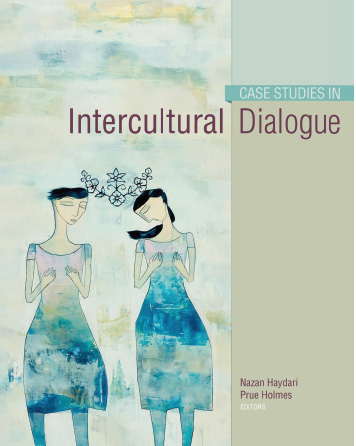
WLH_ManganoOn May 26, 2014, I was able to re-connect with Maria Flora Mangano, one of the participants in the NCA Summer Conference on Intercultural Dialogue, held in Istanbul, in 2009. We have kept in touch, as she has kept in touch with others from that event, but this is the first time we have had the opportunity to meet in person again. It took a bit of travel (I was coming in from Lugano, Switzerland, and she was coming from her home near Rome), but the conversation was worth the effort. Her work will be familiar to regular visitors to this website, as described in her post on A lesson dedicated to the genocide in Burundi: An occasion of dialogue as a space of relationship among cultures.” A chapter of hers is included in Case Studies in Intercultural Dialogue, currently in press with Kendall Hunt, and one of the results of the Istanbul conference.

Although Maria Flora already holds a PhD and has been teaching for many years now, she is currently pursuing further studies at the University of Bergamo, which is why we met there. Much of the University is located in the old city, Bergamo Alta, dating to Roman times, and many of the faculty are housed in historic buildings. This part of the city  is especially impressive, from the funicular ride up the hill on which it rests, to the grand views once you arrive. Many of Maria Flora’s classes are held in a former monastery in the lower city, with a stunning courtyard, also impressive.

Wendy Leeds-Hurwitz, Director
Center for Intercultural Dialogue

Communication in Emerging Democracies – Grants

Call for Proposals
Grants from the Dale Leathers Fund to Promote Communication Studies in Emerging Democracies
National Communication Association

NCA seeks proposals for activities that promote scholarship and teaching of Communication Studies to benefit emerging democracies and their peoples. Such activities may include (but are not limited to) the following:
*International travel for residents of emerging democracies to attend conferences or advanced training in Communication Studies
*International travel for U.S. residents to disseminate Communication scholarship or to conduct training in Communication Studies in emerging democracies
*Procuring and disseminating scholarly and instructional materials in Communication Studies for use by institutions within emerging democracies
*Research about various topics in communication conducted by residents of emerging democracies who would otherwise lack adequate support for such research
*Research about communication phenomena in emerging democracies, which may be conducted by U.S. scholars or by others, and which promises to directly or indirectly promote effective communication practices

General Procedures for Proposals
Proposals should not exceed 10 pages and shall include the following information:
(1)      a rationale for considering the target nation an emerging democracy;
(2)      a clear statement of methods or listing of activities, depending on the nature of the proposal;
(3)      a clear statement of expected outcomes and their relationship to the purpose of the grant;
(4)      a clear statement of the intended use of monies provided by the grant;
(5)      an abbreviated, 3 page CV of applicant or principal investigator.

Deadline to submit proposal is October 1, 2014.

Visit www.natcom.org/LeathersFund for application materials and additional information.