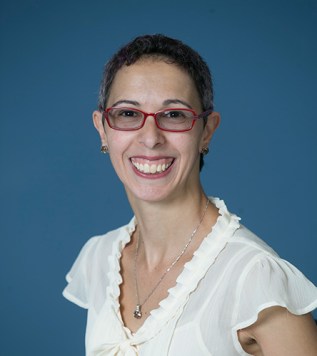
Yea-Wen Chen Profile

ProfilesYea-Wen Chen (M.A. University of North Texas, Ph.D. University of New Mexico) is an Associate Professor in the School of Communication and Director of the Institute for Dialogue and Social Justice at San Diego State University.
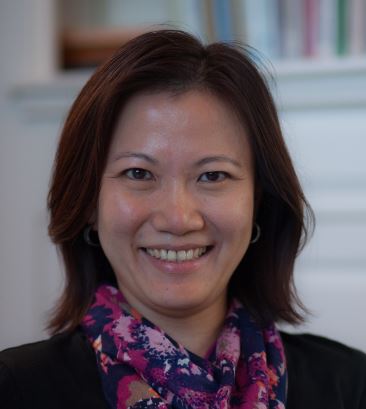
Yea-Wen Chen

Between spring 2019 and fall 2020, she served as a Professor of Equity co-facilitating seminars on equity, implicit bias, and microaggressions on her campus. Her research examines how communication—including silence—about cultural identities impacts diversity, inclusion, and social justice across contexts such as identity-based nonprofit organizations. She is the winner of numerous top paper awards at regional, national, and international communication conferences. Dr. Chen has published over 40 works, including peer-reviewed articles in Journal of International and Intercultural Communication, Journal of Intercultural Communication Research, and Departures in Critical Qualitative Research. She has co-edited Our Voices: Essays in Culture, Ethnicity, and Communication (6th Edition, Oxford University Press, 2015), and Postcolonial Turn and Geopolitical Uncertainty: Transnational Critical Intercultural Communication Pedagogy (Rowman & Littlefield, 2021).

Key Publications:

Chen, Y.-W., Black, F., Devos, T., Hernandez, R., Jayawardene, S., Reinholz, D. L., & Villodas, F. (2021). Becoming Professors of Equity at San Diego State University: Reflecting on professional seminars on implicit biases and microaggressions. In H. Oliha-Donaldson (Eds.), Confronting critical equity and inclusion incidents on campus: Lessons learned and emerging practices. Routledge.

Chen, Y.-W., & Lawless, B. (2019). Teaching critical moments within neoliberal universities: Exploring critical intercultural communication pedagogy. Journal of Intercultural Communication Research, 48(5), 553-573. doi:10.1080/17475759.2019.1683056

Chen, Y.-W., Chalko, K., & Bonilla, M. (2019). When religion meets academia: Millennial Christians becoming cultural Others on a minority-serving campus in the United States. Journal of International and Intercultural Communication, 12(4), 325-343. doi:10.1080/17513057.2018.1557732

Chen, Y.-W. (2018). “Why don’t you speak (up), Asian/immigrant/woman?”: Rethink silence and voice through family oral history. Departures in Critical Qualitative Research, 7(2), 29-48. doi:10.1525/dcqr.2018.7.2.29

Chen, Y.-W., & Lawless, B. (2018). “Oh my god! You have become so Americanized”: Paradoxes of adaptation and strategic ambiguity among female immigrant faculty. Journal of International and Intercultural Communication, 11(1), 1-20. doi:10.1080/17513057.2017.1385825

  *Translation article: Chen, Y.-W., & Lawless, B. (January 11, 2018). Challenging “otherness”: Female immigrant faculty in the U.S. and their struggle to adapt. Communication Currents.

Chen, Y.-W., & Collier, M. J. (2012). Intercultural identity positioning: Interview discourses from two identity-based nonprofit organizations. Journal of International and Intercultural Communication, 5(1), 43-63. doi:10.1080/17513057.2011.631215

  *Translation article: Chen, Y.-W., & Collier, M. J. (April 1, 2012). Communication about cultural identity differences matters for nonprofits. Communication Currents.

Miguel Ángel Guerrero Ramos Profile

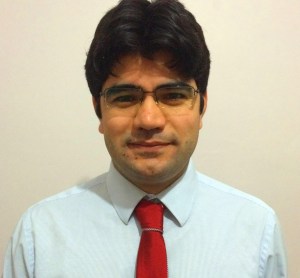
ProfilesMiguel Ángel Guerrero Ramos is a Sociologist at the National University of Colombia. Master’s Student in Human Rights at the Pedagogical and Technological University of Colombia (UPTC).

Miguel Guerrero RamosMember of Group Research Con Paso Crítico of the UPTC. Author of the novels Observing Reality Through Desire, and Deep Down in the Pupils of Infinite Time, among others. His research interests are: critical theory of biosocial undecidability, human rights, pragmatic sociology, and geopolitics, among others.
His blog: sociologiaandreflexion.blogspot.com.es
Email: maguerreror[at]unal.edu.co.


Work for CID:

Miguel Ángel Guerrero Ramos translated KC28: Postcolonialism and KC72: Intertextuality into Spanish, and KC28: Postcolonialism into Italian. Most importantly, he gets credit for first suggesting that the Key Concepts be translated.

Kenan Çetinkaya Profile

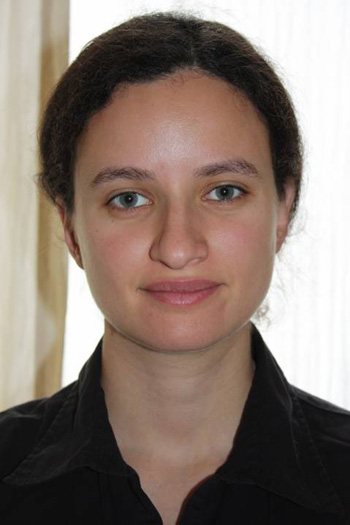
ProfilesKenan Çetinkaya (Ph.D.) was born in Malatya, Turkey. He has been working at Bozok University Department of Philosophy and Religious Studies, Turkey since 2013.

kenan cetinkaya photoHe holds a BA (2006) in Islamic Education from Ankara University, and a MA (2009) in the Theological Studies from the University of Saint Thomas, Houston, TX.  He earned his Ph.D. (2014) from the Department of Religion, Temple University, Philadelphia, PA. His dissertation title is Turkish Response to the Christian Call for Dialogue. He is editor of a Turkish book, Birlikte Yaşama Kültürü ve Diyalog [Coexistence and Dialogue] which was published in 2014.
Some of his published papers include:

Çetinkaya, K. (2015). The importance of dialogue in Turkey. Journal of Ecumenical Studies, 50, 167-173.

Çetinkaya, K. (2014). Three Turkish views of interfaith dialogue. In Nathan R. Kollar & Muhammad Shafiq (Eds.),  Sacred texts and human contexts: A North American response to “A common word between us and you.” North Charleston, SC: CreateSpace Independent Publishing Platform.


Work for CID:

Kenan Çetinkaya wrote KC96: Interreligious Dialogue. He also translated  KC1: Intercultural Dialogue, KC8: Public Dialogue, KC22: Cultural Identity and KC62: Diaspora into Turkish.

Anastasia Aldelina Lijadi Profile

ProfilesAnastasia Aldelina Lijadi joined the International Institute for Applied Systems Analysis in September 2017 as Research Scholar with the World Population (POP) Program. She is part of the team working under a 2017 ERC grant to make unconventional cross-disciplinary contributions in developing new human well-being indicators.

Anastasia Lijadi

Anastasia completed her PhD in Psychology at the University of Macau in 2015. Her PhD dissertation won the 2015 Atlas TI Award for the best dissertation using qualitative methods at PhD level from the International Institute of Qualitative Methodology, University of Alberta.  She received her master degree in Counseling and Psychotheraphy from the University of Saint Joseph, Macau, in 2010.

Her recent publications include:

Lijadi, A. A. (2019). Third Culture Kids. In P. Moy (Ed.), Oxford Bibliographies in Communication. New York: Oxford University Press.

Lijadi, A. A. (2018, November 6). Third culture kids: Citizens of the world or somewhere in-between? Bundeszentrale für politische Bildung [Federal Agency for Civic Education].

Lijadi, A. A. (2018). “I am not weird, I am Third Culture Kids”: Identifying enabling modalities for place identity construction among high mobility populations. Journal of Migration and Identity Studies, 12 (2), 2-24.

Lijadi, A. A., & Van Schalkwyk, G. J. (2017). Place identity construction of Third Culture Kids: Eliciting voices of children with high mobility lifestyle. Geoforum, 81, 120-128. doi: 10.1016/j.geoforum.2017.02.015.

Lijadi, A. A. & Van Schalwyk, G. J. (2017). Homesickness and perceived university support of first year undergraduate students: The Macau experience. College Student Journal, 51(3).

Lijadi, A. A. & Van Schalkwyk, G. J. (2016). “The international schools are not so international after all”: Online focus group study on educational platform for Third Culture Kids. International Journal of School and Education Psychology, 6(1). http://dx.doi.org/10.1080/21683603.2016.1261056.

Lijadi, A. A., & Van Schalkwyk, G. J. (2014). Narratives of Third Culture Kids: Commitment and reticence. The Qualitative Report, 19, Article 49, pp. 1-18.

Lijadi, A. A. (2014). Ethnic estrangement and social mobility in Macao: Perspective of youth on intergenerational transfer of ritual and tradition. International Proceeding of Economic Development and Research, 71, 74-78. DOI: 10.7763/IPEDR. 2014. V71. 14.


Work for CID:

Anastasia Aldelina Lijadi wrote KC12: Third Culture Kids. She translated   KC12: Third Culture Kids and KC94: Cross-Cultural Kids into Indonesian. And she was one of the participants in the Roundtable on Intercultural Dialogue in Asia, co-sponsored by CID.

Toussaint Nothias Profile

Profiles

Toussaint Nothias is a postdoctoral fellow at the Digital Civil Society Lab. He holds a PhD in Media and Communication from the University of Leeds.

Toussaint Nothias

His research explores journalism, social media and civil society in Africa. In the past, he has conducted interviews among foreign correspondents to understand how the global image of Africa is produced. He has also done research with Kenyan journalists to examine their work practices and the impact of social media on their reporting of elections, terrorism, and the ICC investigation in Kenya. His postdoc fellowship project, titled Free Basics and the African Digital Civil Society, looks at the implementation of Facebook’s initiative to provide free Internet across various African countries, and its impact on local media production and civil society groups. The project engages a range of debates about digital advocacy and activism in the Global South, tech corporation’s investments in network infrastructures, net neutrality, civic engagement and social media platforms in politically volatile contexts. In parallel, Toussaint is developing a sharable, open-source tool at the intersection of technology, journalism, and scholarship. The Africa Stereotype Scanner (ASTRSC) deploys digital technologies to scan for damaging stereotypes and implicit biases in reporting about Africa. In 2017, Toussaint organized the workshop “African Media Studies in the Digital Age” at Stanford, and in 2018 he received the Stuart Hall Award from the IAMCR for his work on Twitter in Kenya.

Selected publications:

Nothias, T. & Cheruiyot, D. (2019) A “hotbed” of digital empowerment? Media criticism in Kenya between playful engagement and co-optionInternational Journal of Communication, 13, 136-159.

Nothias, T. (2018) How Western journalists actually write about Africa. Journalism Studies, 19(8), 1138-1159.

Paterson, C., & Nothias, T. (2016). Representation of China and the US in Africa in online global news. Communication, Culture, Critique, 9(1), 107-125.

Nothias, T. (2016). Mediating the distant Other for the distant audience: How do western correspondents in East and Southern Africa perceive their audience. In M. Bunce, S. Franks & C. Paterson (Eds.), Africa’s media image in the 21st century: From the “heart of darkness” to “Africa rising.” Routledge: London.

Nothias, T. (2014). Hopeful, rising, new: Visualizing Africa in the age of globalisation. Visual Communication, 13(3): 323-339.

Nothias, T. (2014). Afro-pessimism in the French and British press coverage of the 2010 South African World Cup. In T. Chari & N. Mhiripiri (Eds.), African football, identity politics and global media narratives: The legacy of the FIFA 2010 World Cup (pp. 285-304). Basingstoke, UK: Palgrave MacMillan.

Johanna Maccioni Profile

ProfilesJohanna Maccioni is a a clinical psychologist in Brussels, Belgium. After 5 years study in psychology, she obtained a D.E.S. (Diplôme d’Etude Spécialisé) in adult psychotherapy and passed the “Agregation” (which enables her to teach within universities).

Johanna Maccioni

She worked in hospitals in oncology and other units for ten years (in Belgium and in Martinique-France). For four years at Brugmann Hospital, she coordinated a project funded by the Belgian National Cancer Plan to improve migrants’ hospital care. In 2010, this project won the Gert Noel prize from the Belgian King Baudouin Foundation (the foundation supports justice, democracy and diversity in society), and this project inspired other units in other hospitals. After that, Maccioni began teaching Social Psychology, Intercultural Psychology, Group Dynamics and Clinical Systemic Therapy at the Haute Ecole Leonard de Vinci, a school specializing in paramedical training. As of September 2015, she is teaching a course on “Interculturalism in Health” (this is the second course on the subject offered in Belgium, after “Health and Culture” given by Dr. Louis Ferrand in Anvers University for doctors). She also trains doctors and paramedics who are currently working on this subject. In addition, she participates in a group project on how to improve migrants’ hospital care, organized by the Interfederal Center for Equal Opportunities (UNI-A: Centre Interfédéral pour l’Egalité des Chances, a public institution fighting discrimination).

Publications include:

Maccioni, J. (2019). Le-La patient.e étranger.ère et sa famille face au cancer: Un projet d’accompagnement multiculturel. In A. Heine & L. Licata (Eds.), La psychologie interculturelle en pratiques (pp. 189-200). Bruxelles : Mardaga.

Maccioni, J. & Heine, A. (2019). Dispositif de formation des soignant.e.s aux compétences interculturelles. In A. Heine & L. Licata (Eds.), La psychologie interculturelle en pratiques (pp. 373-384). Bruxelles : Mardaga.

Maccioni, J., & Juliens, C.  (2016). Sur les compétences interculturelles: Enjeux et pratiques. Special issue of Les Politiques Sociales, 3/4.

Maccioni, J. (2014). Vers la compétence interculturelle dans les soins. Contact, 139, 11-12.

De Pauw, S., Maccioni, J., & Efira, A. (2014). Patients drépanocytaires: Quel accompagnement médical spécifique lors de l’adolescence? Revue médicale de Bruxelles, 35, 87-95.

[Création de livret]. (2012). Entre soignants et patients croyants: 4 représentants religieux nous informent. Question Santé ASBL, 1-27.

Maccioni, J., Etienne, A., & Efira, A. (2012). Le patient étranger face au cancer : projet d’accompagnement multiculturel. Santé Conjuguée, 59, 13-17.

Maccioni, J., Etienne, A., & Efira, A. (2011). Accompagnement multiculturel de patients étrangers. Agenda Interculturel, 289, 18-20.


Work for CID:

Johanna Maccioni wrote Constructing Intercultural Dialogues #1: Lullabies, as well as a guest post, Overlanding from Brussels to Kuala Lumpur: A few comments on interactions along the way. She also has served as a reviewer for French.

Jane Jackson Profile

ProfilesJane Jackson (PhD, OISE/University of Toronto) is professor in the English Department at the Chinese University of Hong Kong (CUHK), where she teaches undergraduate and postgraduate courses in intercultural communication.

Jane JacksonShe also supervises postgraduate research in language and intercultural communication; identity; student and academic mobility; international and intercultural education; intercultural competence; autonomous learning; English as a second language education; informal language learning; and intercultural transitions.
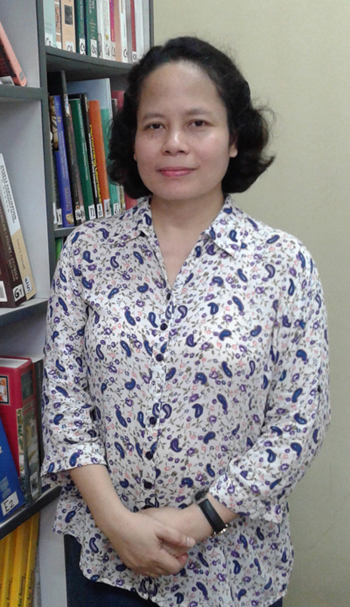
Professor Jackson has teaching and research experience in many countries/regions: Canada, the USA, the Sultanate of Oman, Egypt, Mainland China, the U.K., and Hong Kong SAR. Recognized for innovative teaching practices, she is the recipient of CUHK’s 2013 Education Award and a member of the University’s Teaching Excellence Ambassador Program, which promotes effective teaching and learning.

Her research interests include intercultural communication/education, language and identity, multiculturalism/multilingualism, and education abroad. With the support of competitive research grants, Professor Jackson has been investigating the ‘whole person development’ of international exchange students from Greater China as well as the language and intercultural learning of incoming international students in Asia. Teaching Development grants have enabled her to design and offer research-inspired blended and fully online courses that aim to promote intercultural competence and optimize education abroad learning. Professor Jackson is a frequent speaker at international conferences that center on intercultural learning, teaching, and research. She has published widely in academic journals and has many chapters in edited collections. Recent books include Introducing Language and Intercultural Communication (Routledge, 2014), The Routledge Handbook of Language and Intercultural Communication (Routledge, 2012) (editor), Intercultural Journeys: From Study to Residence Abroad (Palgrave MacMillan, 2010), and Language, Identity, and Study Abroad: Sociocultural Perspectives (Equinox, 2008).

She is an elected fellow and Board member of the International Academy for Intercultural Research (IAIR) and a member of the International Association for Languages and Intercultural Communication (IALIC). She also serves on the editorial board of the International Encyclopedia of Intercultural Communication (Wiley-Blackwell) and is a member of the advisory board of the Language and Intercultural Communication journal. Professor Jackson is an Editorial Board member for Study Abroad Research in Second Language Acquisition and International Education and the International Journal of Bias, Identity and Diversities in Education.

See her webpage for further information and contact details.


Work for CID:
Jane Jackson wrote KC78: Language and Intercultural Communication.

Belinda Espiritu Profile

ProfilesBelinda F. Espiritu is an associate professor of communication in the University of the Philippines Cebu. She teaches communication theory and research, development communication, speech communication, and media studies. Her research interests include cultural studies, intercultural communication, religion and communication, peace and development studies, and Internet communication.

Belinda EspirituShe has published research articles in local and international communication and literary journals on transnational audience reception of Korean television dramas; communication, civil society groups, the public sphere, and governance; intercultural communication between Christians and Muslims in the Philippines; Islamophobia and negative media portrayal of Islam; and literary critical essays. She has also written essays on the ideology of peace; reviews of the books of Maulana Wahiddudin Khan, an Islamic teacher advocating for peace; and her reflections on life, society, and spirituality published in newageislam.com, globalresearch.ca, and metrocebunews.com.

She has spoken in seminars for teachers about peace education, violence and conflict resolution and has been a resource speaker to Episcopalian priests on the use of communication for evangelization and to Philippine soldiers and military officers on purpose-driven life and goal-setting. She holds a Bachelor in Secondary Education degree with a major in English, a Master of Arts degree in Comparative Literature, and a Doctor of Philosophy degree in Communication from the University of the Philippines in Diliman, Quezon City.

Her publications include:

Espiritu, B. F. (2019). Negative stereotypes of Muslims have fueled the rise of Islamophobia. In E. Lucas (Ed.), Islam in society: Global viewpoints (pp. 35-43). New York: Greenhaven Publishing.

Espiritu, B. F. (2017). The Lumad struggle for social and environmental justice: Alternative media in a socioenvironmental movement in the Philippines. Journal of Alternative and Community Media, 2, 45-59.

Espiritu, B. F. (2015, July 18). The Battle against GMOs in the Philippines: Confronting the WTO’s Attempts to Destabilize Sustainable AgricultureGlobal Research.

Espiritu, B. F. (2015, May 6). How to Have Peace in the Holy Land: Implications for Interfaith Dialogue. New Age Islam.

Espiritu, B. F. (2015, April 3). Islamophobia and the “Negative Media Portrayal of Muslims”: An Exposition of Sufism, A Critique of the Alleged “Clash of Civilizations”. Global Research.

Espiritu, B. F. (2015, March 26). Neoliberal Capitalism’s Fatal Flaws: A Call for an Alternative Economic System. Global Research. 

Espiritu, B. F. (2015, March 14). The Destructive Impacts of Corporate Mining in the Philippines: The Tampakan Copper-Gold Mining Project in MindanaoGlobal Research.

Espiritu, B. F. (2014). The Public Sphere, Blogs, and the Pork Barrel Scam: Online Citizens’ Voices on Corruption and Governance in the Philippines. Media Asia, 41(4), 343-354.

Espiritu, B. F. (2011, August). Transnational audience reception as a theater of struggle: Young Filipino women’s reception of Korean television dramas. Asian Journal of Communication, 21(4), 355-372.

Espiritu, B.F. (2006). From fears and prejudices to intercultural solidarity: A study of interpersonal/ intercultural communication in Muslim-Christian relations in selected areas of Metro Manila, Philippines. Religion and Social Communication:  Journal of the Asian Research Center for Religion and Social Communication, 4(2), 77-97.

Espiritu, B.F. (2005). Communication, participation and governance: Discursive democracy and communitarianism in the Philippines. Media Asia: An Asian Communication Quarterly, 32(4), 240-248.

Espiritu, B.F. (2004). The cry of the poor and the oppressed: Theodicy and existentialism in the historical and socio-political contexts of Francisco Sionil Jose’s novels. KINAADMAN: A Journal of Southern Philippines, 26.

Espiritu, B. F. (2004). A call to subversion: Women’s disempowerment and empowerment in Lina Espina Moore’s Heart of the Lotus and other novels”, in Interdisciplinary Literary Studies: A Journal of Criticism and Theory, 6(1), 21-36.

Espiritu, B. F. (2001). From journey to journey: Identity and nationhood in F. Sionil Jose’s Po-on and Viajero. Danyag: Journal of Humanities and the Social Sciences of the University of the Philippines in the Visayas, 6(2), 211-232.


Work for CID:
Belinda Espiritu wrote the guest post, Peace Profile of Sebastiano D’Ambra.

Lauren Mackenzie Profile

ProfilesDr. Lauren Mackenzie is Professor of Military Cross-Cultural Competence at the Center for Advanced Operational Culture Learning (CAOCL), Marine Corps University, Quantico, VA.

Lauren Mackenzie

She also currently serves as the Marine Corps University faculty council president as well as an adjunct Professor of Military/Emergency Medicine at the Uniformed Services University of Health Sciences. She conducts research relating to cross-cultural competence, oversees culture-related curriculum development and outcomes assessment, and delivers communication and culture lectures across the Professional Military Education spectrum, to include the Marine Corps Command & Staff College, War College, Expeditionary Warfighting School, and the College of Enlisted Military Education. Recently, she was invited to provide “Intercultural Communication” presentations at the Women, Peace & Security annual conference, the FBI Academy, the U.S. Naval War College and the Walter Reed Army Institute of Research, among others. From 2009-2014, Dr. Mackenzie served as Associate Professor of Cross-Cultural Communication at the U. S. Air Force Culture and Language Center where she taught resident electives at the Air Command & Staff College and designed and delivered the “Introduction to Cross-Cultural Communication” on-line course, completed by over 1,000 Airmen annually.

Dr. Mackenzie earned her M.A. and Ph.D. in Communication from the University of Massachusetts and has taught intercultural competence courses throughout the Department of Defense over the past ten years. Prior to working for the Department of Defense, she taught a variety of intercultural and interpersonal communication courses at the University of Massachusetts, the State University of New York Potsdam, and Columbus State University, among others. Dr. Mackenzie’s most recent publications are devoted to best practices in military on-line culture learning and assessment, with recent entries in the International Encyclopedia of Intercultural Communication and the Handbook of Communication Training. She is also the co-author with Dr. Kerry Fosher of the Culture General Guidebook for Military Professionals.

Selected Publications:

Mackenzie, L. & Post, K. (2019). Relationship repair strategies for the military professional: The impact of cultural differences on expectations and applications. Marine Corps University Journal, 10(1), 128-141.

Mackenzie, L. & Tenzek, K. (2018). Cultural variation in end-of-life conversations: Using Cultural Discourse Analysis as a tool to analyze case studies designed for professional military education. In M. Scollo & T. Milburn (Eds.), Engaging and transforming global communication through Cultural Discourse Analysis (pp. 91-110). Teaneck, NJ: Farleigh Dickinson University Press.

Steen, S., Mackenzie, L. & Buechner, B. (2018). Incorporating cosmopolitan communication into diverse teaching and training contexts:  Considerations from our work with military students and veterans. In D. Becker & J.D. Wallace (Eds.), Handbook of communication training: A best practices framework for assessing and developing competence (pp. 401-413). New York: Routledge.

Mackenzie, L. & Miller, J. (2017). Military cross-cultural competence. In Y. Y. Kim & K. McKay-Semmler (Eds.), International Encyclopedia of Intercultural Communication. Wiley Blackwell.

Mackenzie, L. & Wallace, M. (2015). Intentional design: Using iterative modification to enhance online learning for professional cohorts. In T. Milburn (Ed.), Communicating user experience: Applying local strategies research to digital media design (pp. 155-182). Lanham, MD: Lexington.

Mackenzie, L. (2014). Strategic enablers: How intercultural communication skills advance micro-level international security. Journal of Culture, Language & International Security, 1(1), 85-96.

Mackenzie, L., & Wallace, M. (2014). Cross-cultural communication contributions to professional military education: A distance learning case study. In R. Greene-Sands & A. Greene-Sands (Eds.), Cross-cultural competence for a 21st century military. Lanham, MD: Lexington.

Mackenzie, L., Fogarty, P., & Khachadoorian, A. (2013). A model for military online culture education: Key findings and best practices. EDUCAUSE Review. 48(4).

Areas of Interest:
Military Cross-Cultural Competence, Communication of Respect , On-line Military Culture Education, Intercultural Situational Judgment Tests


Work for CID:
Lauren Mackenzie wrote the guest post, Military Cross-Cultural Competence.

Anastacia Kurylo Profile

ProfilesAnastacia Kurylo, Ph.D. (Rutgers University) is an assistant professor in the Communication Studies Department at St. Joseph’s College in New York.

Anastacia-Kurylo_CommunicationsHer research focuses on stereotypes communicated in interpersonal, intercultural, organizational, and new media contexts. Specifically, she explores the ways in which stereotypes are constructed through interpersonal communication and how this interactional and collaborative process facilitates stereotype maintenance within a cultural knowledge base.

Dr. Kurylo has written over 25 publications including authoring The Communicated Stereotype: From Celebrity Vilification to Everyday Talk and editing Inter/Cultural Communication: Representation and Construction of Culture. Most recently she has worked on two projects related to new media. First, she has co-edited a special issue of the International Journal of Interactive Communication Systems and Technologies titled Intercultural New Media Research for the 21st Century. Second, she has co-edited a new book titled Social Networking: Redefining Communication in the Digital Age. Both projects advance this vibrant area of research in which new media is viewed as integral to exploring communication practices, their outcomes, and their implications. As assistant director of the Center for Intercultural New Media Research, Dr. Kurylo focuses on facilitating collaborative research opportunities for those interested in new media in the context of intercultural communication specifically.

Professor Kurylo is President of the New York State Communication Association and organized their 73rd annual conference last October. She is also the chair of the Board of Trustees of The Quad Preparatory School, and former president of the New York Chapter of the Tri-State Diversity Council. She has served as a reviewer for several journals and is an Associate Editor of the Atlantic Journal of Communication.


Work for CID:
Anastacia Kurylo wrote KC55: Stereotypes.