E. MA. Human Rights & Democratisation (Italy)

Call for E.MA 2014/2015
Due to demand, the deadline for applications for E.MA 2014/2015 has been extended to 15 April 2014. Check the admission requirements to apply for this leading European Master’s Programme in Human Rights and Democratisation to enhance your knowledge, gain practical skills, develop competences and boost your career in these fields.

E.MA offers a unique learning and human experience through this intensive one-year Master’s programme articulated in two semesters: a First Semester from September to January in Venice (Italy) and a Second Semester from February to July in one of the 41 E.MA universities in the EU.

The historic and peaceful location of the Monastery of San Nicolò in Venice Lido will be the setting where you will meet, learn, study and debate with our international network of academics, field practitioners and experts in human rights, development and institution building.

Join the community of more than 1300 human rights professionals and defenders holding the E.MA Joint Degree and now working in national, international, governmental, inter- and non-governmental organisations, as well as academic institutions, dealing with human rights and democratisation.

WFI grants call 2014/15

WFI Research Grants: Call for 2014/15 Grant Applications

Villanova University’s Waterhouse Family Institute for the Study of Communication and Society (WFI) has set the next application deadline for WFI Research Grants for 2014/15 as Monday, May 5, 2014. The WFI – endowed by Mr. Lawrence Waterhouse, Jr., and housed within Villanova University’s Department of Communication – was founded on the principle that the study and practice of communication requires attention to values, ethics and social justice. One of the ways that we enact this mission is through the annual funding of research grants. These grants support the scholarly work of Communication scholars across the world, work examining communication, its impact on the world around us and its ability to create social change and social justice.

Communication scholars across the nation, and across the world, are invited to apply for funds to support initial or ongoing phases of scholarly research aimed at presentation and publication. Although we do not limit our grants to a specific methodological orientation or subdisciplinary focus, all projects supported by the WFI have two things in common: they make communication the primary, and not secondary, focus, and they engage communication in terms of its impact on the world around us, its ability to create social change. WFI Research Grants are available to faculty at any institution of higher education, postdoctoral researchers, and other doctoral-level scholars. However, eligibility to apply for the WFI grant program is limited to those in Communication or a closely related discipline. Awards are typically in the range of $5000-10,000, and may be applied to the hiring of graduate assistants, acquisition of resources or equipment, travel, and/or any other appropriate research related expenses. However, these funds may not be used to provide or supplement faculty salaries. For more details on the WFI and this research grant process-including specific information on the grant application requirements-please visit the WFI website.

For questions concerning eligibility, or the nature of projects supported, please contact the Director of the WFI, Dr. Bryan Crable.

NOTE: the Center for Intercultural Dialogue has a memorandum of understanding with WFI.

U Waterloo (Canada) lecturer positions

Definite Term Lecturer Positions in Speech Communication at University of Waterloo

The Department of Drama and Speech Communication at the University of Waterloo invites applications for one one-year Definite Term Lecturer in Speech Communication; and for one three-year Definite Term Lecturer position, both with a preferred start date of August 1, 2014. While the latter position is initially a three-year contract position, the successful candidate for the latter position will be entitled to consideration for Continuing Lecturer status at the completion of the contract. Based in a liberal arts faculty with high national and international standards, the Speech Communication program currently serves approximately 140 majors and offers eight different degree programs, including three and four year regular and honours programs, an Arts and Business degree option, and a minor and specialization. The program has concentrations in four areas: Intercultural Communication; Interpersonal/Organizational Communication; Performance Studies; and Public and Digital Communication.

These positions involve teaching eight courses per academic year in the fall, winter, and spring terms (80% of the appointment); and various service and administrative responsibilities (20% of the appointment). It is anticipated that both Definite Term Lecturers will teach communication courses specifically designed for students outside of the Faculty of Arts, as well as courses within the Speech Communication program. Strong candidates will be able to integrate theory and practice in courses in one or more of the following areas: performance studies; public speaking, interpersonal communication, small group communication, organizational communication, intercultural communication, and/or public and digital communication. Demonstrated excellence in undergraduate teaching, a commitment to experiential learning, experience liaising with university faculty and staff, and familiarity with diverse groups of students will be assets.

All qualified candidates are encouraged to apply; however, Canadians and Permanent Residents of Canada will be given priority. The University of Waterloo encourages applications from all qualified individuals, including women, members of visible minorities, native peoples, and persons with disabilities. This appointment will remain open until a suitable candidate has been hired. Send letters of application, complete CV, and names of three referees to: Dr. Jennifer S. Simpson, Chair, Department of Drama and Speech Communication, University of Waterloo, 200 University Avenue West, Waterloo, Ontario N2L 3G1. Review of applications will begin April 30, 2014.

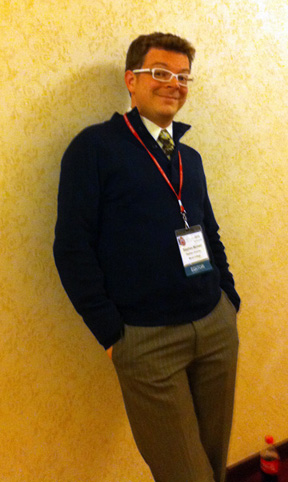
Stephen Croucher Profile

ProfilesStephen Croucher (PhD, University of Oklahoma, 2006) is Head of the School of Communication, Journalism and Marketing, Massey University, Wellington, New Zealand.

Stephen Croucher

His research focuses on three main area of interest. First, the cultural adaptation process. Within this area of study he has explored adaptation in 15 nations. Within these studies he has shown through qualitative and quantitative analyses that current models of adaptation do not adequately describe: the fusion of identities that occur during adaptation, and the influence/resistance of the host culture. Second, and closely related to cultural adaptation, is his work into integrated threat theory. In these studies Croucher has shown how many dominant cultural groups in Europe, North America, and Asia fear immigrant and minority communities. These fears (prejudice) lead to less acceptance of adaptation overtures from the minority groups. Third,  he studies the relationships between communicative behaviors/traits and religious identification and religiosity. In this line of work he has found religion (identity and religiosity) to have a significant effect on a variety of traits/behaviors.

Croucher has published 4 books and more than 50 articles in journals such as: Communication Monographs, Journal of International and Intercultural Communication, Management Communication Quarterly, Communication Studies, International Journal of Conflict Management, and Journal of Intercultural Communication Research. 

Croucher is active in various professional associations and has served in a variety of capacities: Vice-Chair of the Intercultural Division of the International Communication Association, editor of the Journal of Intercultural Communication Research and Speaker & Gavel, and World Communication Association Vice President for Europe. He has also served on the editorial board of numerous journals: Communication Studies, Journal of International and Intercultural Communication, International Journal of Conflict Management, Mass Communication and Society, and the Western Journal of Communication. 


Work for CID:

Stephen Croucher was one of the participants in the Roundtable on Intercultural Dialogue in Asia, co-sponsored by CID.

New Intercultural Dialogue book out

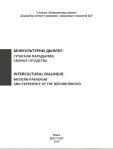
Intercultural dialogue: Modern paradigm and experience of the neighborhood has just been published as an ebook, and is available for free (just click on the thumbnail below if you want a copy). The editor is Liubou Uladykouskaja, Director of the Institution Intercultural Dialogue in Minsk, Belarus.

ICD-Belarus-coverIn the original Cyrillic, the citation would be:

Міжкультурны дыялог: сучасная парадыгма і во­пыт су­cедства : зб. навук. арт. / склад. і навук. рэд.Л. Уладыкоўская. – Мінск : ДIКСТ БДУ, 2014.


This collection includes selected materials from the international scientific conference of the same name organized by the Polish Institute in Minsk, the State Institute of Management and Social Technologies of the Belarusian State University, the Institution “Intercultural Dialogue” (held in Minsk on May 24, 2013) , as well as scientific developments of foreign authors. The articles discuss various aspects and modern concepts of intercultural dialogue and the basis of its research methodology. Chapters are written in Belarusian, Polish, English and Russian; the authors are from the US, Belarus, Poland, and Ukraine.

The one chapter in English is by the CID Director, Wendy Leeds-Hurwitz, based on a paper delivered at the World Forum on Intercultural Dialogue in Baku, Azerbaijan in 2011. In English, that citation would be:

Leeds-Hurwitz, W. (2014). Dialogue about dialogue: Taking a (meta)communication perspective on intercultural dialogue. In L. Uladykouskaja (Ed.), Intercultural dialogue: Modern paradigm and experience of the neighborhood (pp. 6-13). Minsk, Belarus: Belarusian State University.

Website Consultant UNU-GCM (Barcelona)

Website Consultant

UNU-GCM seeks a part-time Website Consultant to maintain and update its websites. The ideal candidate is highly efficient and works well in a fast-paced and professional team environment, dealing effectively with the organization’s technical demands. The right individual for this role will be a motivated and energetic consultant, who takes initiative, enjoys finding solutions to a varying number of challenges, is detail-oriented, and takes pride in his/her work. S/He must be fluent in English, with a good command of Spanish and Catalan. Web programming, graphic design, skilled communication and database administration are all elements of this position.

Download the full details here:  icon Vacancy Announcement – Website Consultant (391.44 kB)

Communications Consultant UNU-GCM (Barcelona)

Communications Consultant

UNU-GCM seeks a part-time Communications Consultant. The ideal candidate is highly efficient and works well in a fast-paced and professional team environment, dealing effectively with the organization’s communication. The right individual for this role will be a motivated and energetic Communications consultant, who takes initiative, enjoys finding solutions to a varying number of challenges, is detail-oriented, and takes pride in his/her work. S/He must be fluent in English, with a good command of Spanish and Catalan. The ability to build strong links with mainstream media and press in Catalonia, elsewhere in Spain and more internationally, is an important element of this position, as is the ability to project the work of UNU-GCM internationally. Familiarity with social media is also required.

Download the full details here:  icon Vacancy Announcement – Communications Consultant (388.63 kB)

Migration Post-doc UNU-GCM (Barcelona)

Visiting Researchers Programme

UNU-GCM is currently offering THREE places of three months each to post-doctoral researchers in the Humanities and Social Sciences with expertise in the area of statelessness and transcontinental migration. Their Visiting Researchers Programme gives qualified researchers an opportunity to research topics related to the ongoing research programme on Statelessness and Transcontinental Migration, and to participate in UNU-GCM activities. Visiting Researchers will be expected to reside in Barcelona and work from our office in the Sant Pau Art Nouveau Site in Barcelona.

Download the full details here:  icon Visiting Researchers Programme (UNU – GCM) (135.92 kB)

Anthropocene Campus Berlin 2014

ANTHROPOCENE CAMPUS
November 14–22, 2014
Haus der Kulturen der Welt, Berlin
Call for Applications
deadline: April 30, 2014

Encouraging new forms of transdisciplinary discourse and research the anthropocene project 2013/14 at Haus der Kulturen der Welt, Berlin (HKW) aims to investigate the manifold implications of the Anthropocene hypothesis for cultures of knowledge. If indeed humankind has become the dominant biogeophysical force, effecting changes on a planetary scale, how can the arts, sciences and humanities contribute to a critical awareness, understanding and responsible co-shaping of these transformations? How can creative and problem-oriented modes of knowledge production and educational practices be developed?

The anthropocene curriculum addresses these questions by way of a cross-disciplinary experiment in higher education. Initiated by HKW and the Max Planck Institute for the History of Science, Berlin (MPIWG) the project has brought together a group of 27 renowned university teachers from science, the humanities, and art & design. They are collaboratively developing a set of topics relevant to the Anthropocene in an attempt to encourage the integration of cross-disciplinary thinking, mutual learning, and civic commitment in the curricula of universities and research institutions.

This exemplary curriculum will be put into teaching practice at the anthropocene campus taking place november 14-22, 2014 at HKW in Berlin. One hundred international participants will be given the opportunity to engage in this curricular experiment, contributing their own perspectives and expertise. The campus provides a transdisciplinary co-learning space for young scholars from a wide range of disciplinary, academic, and professional backgrounds and opens up a forum for exploring the scopes, scales, and designs of Anthropocene relevant knowledge. The anthropocene campus will be a central component of a series of public events at HKW–including lectures, workshops, exhibitions, screenings, and artistic events – by which the two-year anthropocene project will come to its close.

Applicants should be strongly committed to interdisciplinary collaboration and demonstrate a broad interest in Anthropocene related research questions. Active participation is expected both during the Campus as well as in pre- and postwork to be assigned by the instructors.

An essential part of the output of the anthropocene curriculum will be the collaborative production of an anthropocene coursebook. The online platform will serve as central tool for the development and communication of syllabi, coursework, and the coursebook, and provide a long-time discussion space for all participants.

More information on the background of this project, seminar contents, the instructors, selection criteria and the application procedure can be found here.

Applicants
The call primarily addresses doctoral students (or equivalent) from a wide range of disciplinary backgrounds in the sciences, humanities, engineering, design, and the arts. However, excellent final-year master’s degree candidates as well as postdocs are also encouraged to apply. Moreover, the call extends to researchers and actors from outside of academia, including research oriented institutions from civil society, the arts and politics (e.g. think-tanks, NGOs).

Working language
The working language will be English.

Procedure
All applications must be made using the online application form on our website:
anthropocene-curriculum.org, and submitted no later than April 30, 2014. Applicants must submit a CV, a brief description of their interest in the Anthropocene–as well as the anthropocene curriculum project in particular–and name a reference person.

Acceptance
Letters will be sent out until May 30, 2014. Registration for the campus begins on June 16, 2014 on the website, where participants will have the opportunity to choose their individual course from among the series of seminars.

Registration & funding
The registration fee of € 100 covers meals and accommodation. The participants are expected to procure their own travel funding. A very limited number of need-based travel grants can be provided. Please indicate and specify your necessity in the application form.

Contact
For further questions or information contact us.

The Anthropocene Curriculum is part of the Anthropocene Project. The Anthropocene Project is an initiative of Haus der Kulturen der Welt in cooperation with the Max Planck Society, Deutsches Museum, the Rachel Carson Center for Environment and Society, Munich and the Institute for Advanced Sustainability Studies, Potsdam.


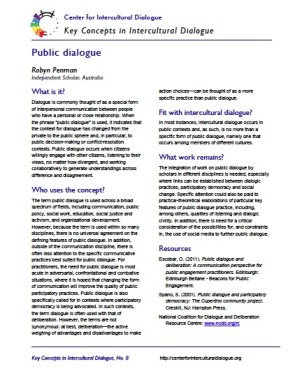
Key Concepts #8: Public Dialogue by Robyn Penman

Key Concepts in ICDThe next issue of Key Concepts in intercultural Dialogue is now available. This is KC8: Public Dialogue by Robyn Penman. As always, all Key Concepts are available as free PDFs; just click on the thumbnail to download. Lists organized  chronologically by publication date and numberalphabetically by concept in English, and by languages into which they have been translated, are available, as is a page of acknowledgments with the names of all authors, translators, and reviewers.

KC8-sm

Penman, R. (2014). Public dialogue. Key Concepts in Intercultural Dialogue, 8. Available from:
https://centerforinterculturaldialogue.org/wp-content/uploads/2014/03/key-concept-public-dialogue.pdf

The Center for Intercultural Dialogue is publishing a series of short briefs describing Key Concepts in intercultural Dialogue. The logic is that different people, working in different countries and disciplines, use different vocabulary to describe their interests, yet these terms overlap. Our goal is to provide some of the assumptions and history attached to each concept for those unfamiliar with it. As there are other concepts you would like to see included, send an email to the series editor, Wendy Leeds-Hurwitz. If there are concepts you would like to prepare, provide a brief explanation of why you think the concept is central to the study of intercultural dialogue, and why you are the obvious person to write up that concept.


Creative Commons License
This work is licensed under a Creative Commons Attribution-NonCommercial-NoDerivatives 4.0 International License.