Robyn Penman Profile

ProfilesRobyn Penman (PhD, University of Melbourne) is an independent communication scholar and consultant to government on communication and social policy matters.

Robyn PenmanShe was a Founding Director of the Communication Research Institute of Australia (1987-2000) and an Adjunct Professor in Communication at the University of Canberra (1999-2005). Robyn is a past President (1985-6) and Life Member of the Australian and New Zealand Communication Association, has served on the International Communication Association board (2002-3) and is a Visiting Senior Member, Linacre College, Oxford (1987). She was also the Associate Editor of the Australian Journal of Communication (1984-2003) and has served on the editorial boards of Communication Theory and Human Communication Research. She is currently a board member of the CMM Institute, Co-Director of the Cosmopolis2045 project, and General Editor of CMMi Press.

Robyn has devoted her scholarly career to the development of a practical-theoretic approach to understanding communicating as a relational practice. She has been equally as focused on asking questions about what makes for good communicating, especially in the public, civic sphere, and how this understanding can be used to make better social worlds. She is the author of five books—Communication Process and Relationships, Not the Marrying Kind (with Yvonne Stolk), Reconstructing Communicating: Looking to a Future, Making Better Social Worlds (with Arthur Jensen) and Justice in the Making: Relating, Participating, Communicating—along with many book chapters and journal articles.

Robyn welcomes contact via email.


Work for CID:

Robyn Penman has written KC4: Coordinated Management of Meaning (CMM), KC8: Public Dialogue, KC15: Cultural Pluralism, KC29: Dialogue Civility, and KC37: Dialogic Listening. She has also written two guest posts, Feeling Felt: The Heart of the Dialogic Moment? and Dialogue in the Interests of Justice. And she provided a book review of The coordinated management of meaning: A festschrift in honor of W. Barnett Pearce. Finally, she served as initial graphic design consultant for CID, establishing the format for Key Concepts in Intercultural Dialogue.

Andrew R. Smith Profile

ProfilesDr. Andrew R. Smith is Professor and Graduate Program Head in the Department of Communication Studies at Edinboro University (PA), where he has been teaching since 1993.

Andrew Smith

He also coordinates the web-based Graduate Certificate in Conflict Management. He served, for the 1998-99 academic year, as Senior Fulbright Fellow in Communication and Culture at the Faculty of Letters, Department of English, Mohammed V University in Rabat, Morocco.

He returns regularly to Morocco to conduct seminars and research as a member of Research Group on Language, Culture and Development at the Center for Doctoral Research, Mohammed V University, supported by various granting agencies. In 2011 he was awarded a Fulbright Specialist grant to continue this work. Other faculty appointments include Villanova University, Southern Illinois University, Lewis and Clark College, and The Tokyo Center for Language and Culture. In 2009 he was inaugurated as a Fellow in the International Communicology Institute.

He is coeditor (with Lenore Langsdorf) of and contributor to Recovering Pragmatism’s Voice: The Classical Tradition, Rorty and the Philosophy of Communication (SUNY Press), and recently authored the monograph Epistemology and Ethics in Human Science Research (a primer for graduate student research). He has published essays in Communication Theory, Human Rights Quarterly, Cultural Critique, Russian Journal of Communication, Human Studies, Text and Performance Quarterly and other journals and edited volumes. Recent publications concern freedom of expression, assembly and movement in authoritarian regimes, intercultural conflict, and public discourse in Morocco specifically. Forthcoming essays address issues pertaining to the aftermath of the “Arab Spring” with regard to the mass displacements of people of many nationalities throughout North Africa and the Middle East, and the increasing presence of “cyber-baltagiya” that sabotage websites of dissidents in the Arab world generally. Current research focuses on developing a theory of intractable conflict from a communicological perspective. Many of his papers are available for download.

Andrew teaches courses in intercultural and intractable conflict, language and human conduct, the language of war, freedom of speech, communication ethics, critical/interpretive and qualitative research methods, and related courses at the graduate and undergraduate levels. He has directed over 30 Masters theses and co-supervises dissertations through the Fulbright joint supervision program in association with the Moroccan American Center for Educational and Cultural Exchange.


Work for CID:

Andrew Smith wrote KC18: Intractable Conflict.

Paola Giorgis Profile

ProfilesPaola Giorgis teaches English Language, Literature and Visual Arts in Italian high schools and holds a PhD in Anthropology of Education and Intercultural Education.
Paola Giorgis

She is co-founder and member of wom.an.ed – women’s studies in anthropology and education. Her main interest interest regards a critical and intercultural approach to Foreign Language Education, that is, how Foreign Language Education can be used to develop an awareness of different languages, representations and cultural conceptualizations able to favor intercultural communication. All through her teaching years, she has observed many episodes which confirm the capability of (foreign) language(s) to foreground many aspects connected both to personal and collective identities, dynamics and representations, displaying how learning and using a non-mother tongue can question, challenge and problematize meanings, assumptions and representations taken-for-granted, thus remoduling the perception and the representation of the self and others. Therefore, she believes that Foreign Language Education should undergo further several radical shifts, definitively abandoning an essentialist view of the target language/culture to foster a more nuanced, and critical, view of the relation between language and culture.

In her PhD research, she investigated cross-linguistic interactions among adolescents in multicultural and plurilinguistic contexts from the perspective of Linguistic Anthropology, Intercultural Education, and Critical Linguistics and Pedagogies. Her findings show that cross-linguistic interactions reshape personal and collective identities, constantly moving and recombining the (narrated) borders of language, identity and ethnicity: bottom-up language practices can facilitate intercultural encounters and create spaces in-between for trans-cultural affiliations, and are also able to reveal aspects linked to language creativity and to the personal agency of speakers as social agents.

She also focuses on the issue of power connected to languages, and on how Critical Pedagogies can address them, examining in particular the challenges and the opportunities advanced by the English language(s). At the intersection of global phenomena and local appropriations, of norms and variations, of homogenization and subversion, English has triggered fierce debates on the linguistic, sociocultural, political, ideological and pedagogical implications of its widespread, but also on the potentially creative and critical appropriations from below that it can elicit. She assumes that, precisely for its multifaceted quality and the controversies it arises, English language(s) can represent the ideal site to observe how individual and collective representations of culture and identity move through language affiliations and appropriations. She is also interested in what could be called ‘Applied Literary Criticism in L2’, as she examines the experience of the literary text in L2, and in particular of Poetry in L2, as an open space for a renewed imagination able to disclose one’s emotions and empathize with others’, in a way less conditioned by memories and (self-appointed or given) roles connected to one’s linguacultural background.

She is affiliated with ALTE (Association of Language Testers in Europe), ESTIDIA (European Society for Transcultural and Interdisciplinary Dialogue), IAIE (International Association for Intercultural Education), I-LanD (Identity, Language and Diversity), lend (linguistica e nuova didattica), Researching Multilingually at the Border, and VAC (Visual Arts Circle). She is referee for Rhetoric and Communications E-Journal, an online journal on Applied Linguistics, and a referee and book reviewer for Intercultural Education, a journal published by Routledge, Taylor & Francis

She has published the monograph Diversi da sé, simili agli altri. L2, letteratura e immaginazione come pratiche di pedagogia interculturale (Different from One’s Self, Similar to Others: L2, Literature & Imagination as Practices of Intercultural Education), Roma: CISU (2013), as well as chapters in collective volumes, articles in international journals, and participated at several international conferences. She has published a book as well:

Giorgis, P. (2018). Meeting foreignness: Foreign languages and foreign language education as critical and intercultural experiences. Lanham, MD: Rowman & Littlefield.

More recent publications:

Giorgis, P. (2025). Otherness/Othering. In • P. Moy (Ed.), Oxford bibliographies in communication. New York, NY: Oxford University Press.

Giorgis, P. (2023). Critical Cultural Linguistics (CCL): Challenging the cultural (re)production of Otherness. In F. Polzehagen & M. Reif (Eds.), Cultural linguistics, ideologies and Critical Discourse Studies. Amsterdam: John Benjamins.

Giorgis, P., & Valente, A. C. (2023). Intercultural Education, Otherness, and Collaborative Literacy. In Other Words Dictionary: A Case Study. In N. Palaiologou (Ed.), Rethinking intercultural education in times of migration and displacement. Newcastle-upon-Tyne: Cambridge Scholars Publishing.

and she co-edited a special issue on Rhetoric of Otherness for Rhetoric and Communications Journal, 50 (2022).

Paola Giorgis may be contacted via email.


Work for CID:

Paola Giorgis is author of KC51: Critical Discourse Analysis, and KC88: Critical Cultural Linguistics, and translator of KC1: Intercultural Dialogue, and KC51: Critical Discourse Analysis into Italian, as well as co-translator for KC14: Dialogue, KC37: Dialogue Listening, KC39: Otherness and The Other(s), and KC81: Dialogue as a Space of Relationship. She also serves as a frequent reviewer for Italian translations.

She has written 3 guest posts: On translation as an intercultural practiceIntercultural communication or post-cultural communication? Reflecting on mistakes in intercultural encounters; and Teaching EFL with a hidden agenda: Introducing intercultural awareness through a grammar lesson.

She was interviewed about critical discourse analysis, translation as an intercultural practice, and intercultural dialogue.

Her students won 2nd place in the 2018 CID Video Competition, and prepared a video about the process, “The Making of…”: A Path between Cultures to help competitors in the 2019 competition. In 2020, a different cohort of students prepared the video We Rise, in response to COVID-19.

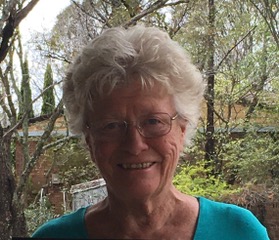
Leonarda Garcia-Jimenez Profile

Profiles

Leonarda Garcia-Jimenez, Ph.D. in Communication, is Associate Professor at the University of Murcia (Spain) and Affiliate Faculty at Colorado State University (USA).

Leonarda García-Jiménez

Throughout her career, she has also taught and researched in other US, Swiss, Mexican, Colombian and Spanish universities. Dr. García-Jiménez has published more than forty works in communication theory, media culture and intercultural communication. Her H Index in Google Scholar Citations is 10. She loves spending time by the Mediterranean Sea. .

Garcia-Jimenez has done more than forty works (articles, books, chapters, as well as conference papers) on her specialist field of study: communication theory, culture and media. Her works have been published in Communication Monographs, European Journal of Communication, Estudios del Mensaje Periodistico, ZER, Razon y Palabra, Catalan Journal of Communication and Cultural Studies among others. Her book about communication theory published in one of the most important publishing companies of Latin America and Spain (Tecnos, 2007) sold out the first edition (1500 books). She has participated in some of the most important conferences in communication (WAPOR, ICA, NCA, IAMCR, ECREA, Bienal de Comunicacion, IBERCOM, ISA, etc.).

Her most recent publications focus on communication as a constitutive phenomenon that transforms the world. This approach has been developed in  epistemological and practical (cross cultural comparison) ways like “Some Foundational Conceptions of Communication: Revising and Expanding the Traditions of Thought” (Empedocles: European Journal for the Philosophy of Communication, 2012) or “The Pragmatic Metamodel of Communication: A Cultural Approach to Interaction” (Studies in Communication Sciences, 2014). She is also developing with her research group from Universitat Pompeu Fabra (Barcelona) the analysis of discourses about interculturality (intercultural interaction) in television news as a way of promoting a more dialogical/conciliatory world.

Leonarda thinks that education in the understanding of communication (in epistemological, interpersonal, media or socio-cultural ways) would promote a better and more peaceful world.

Federica Setti Profile

Profiles

Federica Setti holds a PhD in Anthropology and Education at the University of Turin.

Federica Setti


As part of her PhD she has carried out an ethnographic study of education and relationships between Roma and non-Roma among a Sinti family network and in a middle school attended by their teenager children in Trento. She was visiting scholar at the University of Edinburgh, based at STEP (Scottish Traveller Education Programme). She carried out ethnographic research among a Dassikané Roma family network and in a primary school attended by their children in Turin as part of her MA in Cultural Anthropology and Ethnology.

Her research interests include Romani studies; Cultural and Medical Anthropology; Migration studies and Anthropology of Death. She carried out ethnographic research into Moroccan peoples’ migration experiences between Italy and Morocco and an ethnography of mourning processes, related to relatives of patients attended by a palliative care centre in Trento, for her BA degree in Cultural Anthropology and Ethnology. The latter is published in the The Italian Journal of Palliative Care under the title “Processes of Mourning: Ethnography and Life histories in Trentino.” She also concentrated on the history of relationships between majority societies and minorities, particularly through an archival research on the special classes ‘Lacio Drom’ activated in Italy only for those called ‘Gypsies’, with an exonym, published in the article “‘You, Gadže, see school in one way. We, Sinti, see it in another way’: An ethnography of education and school pathways of Sinti and non-Sinti in Trento,” in Trentino’s Archive Journal.

The monograph about her PhD research, titled “In A Matter of Perspectives: Ethnography of Education and of Relationships between Roma and non-Roma” is in publication, in Italian, with the publisher CISU (Rome). Furthermore, the journal articles she wrote related to her PhD ethnography are forthcoming, including “The implications of ‘naming’ on Roma and Sinti right to education and social inclusion: an ethnography of education among a Sinti family network,” prepared for the Special Issue “On the education of Roma, Travelers and ‘occupational nomads’. Research findings and questions that interrogate researchers and educators,” to be published in Intercultural Education Journal.

She was Teaching Fellow, Lecturer and Exam committee member in Anthropology of Education, Intercultural Education and Educational Processes in Multicultural Societies (chair: Professor Francesca Gobbo) at the University of Turin, for four years. She is in the Teachers of Italian as Foreign language’s Province of Trento’s register and taught for three years Italian as foreign language to migrant and Roma students in middle schools. She is a member of the European Academic Network on Romani Studies, the Gypsy Lore Society and the URBA-ROM Network. She is also co-founder and member of wom.an.ed – women’s studies in anthropology and/of education. She is reachable via email.

Margarita Kefalaki Profile

Profiles

Dr. Margarita Kefalaki is the founder and current President of Communication Institute of Greece (COMING).

Margarita Kefalaki

She holds a Ph.D. in Cultural Communication and a Master degree in Communication from Pascal Paoli University in Corsica (France). Additionally she holds a Bachelor degree in cultural communication and organization of events from Vauban University in Nimes (Montpellier III).

Her research focuses on intercultural communication, particularly the role of music and dance to connect people and nations. Margarita is also interested in communication and its connection with media, tourism, marketing and management. Margarita has taught in several universities in Greece and France, and has published widely in academic and policy journals such Journal of ‘Business and Management Research’ and the ‘International Small Business Journal’.  Moreover, she has successfully led several intercultural projects inclluding the creation of a musical disc in three languages (Action3 of the European Program for young People of INJEP).  Margarita believes that we can better communicate through intercultural comprehension, communication, exchange and education Academics can contribute to this exchange process. This is what she is trying to achieve with the establishment of the Communication Institute of Greece and the organization of International Academic Conferences.


Work for CID:

Margarita Kefalaki wrote a guest post, Intercultural Dialogue via Organizing International Academic Conferences. She also translated KC1: Intercultural Dialogue into Greek, and has reviewed translations into Greek.

Shirley Saenz Profile

ProfilesShirley Saenz is a cross-cultural trainer and business partner at ICEBERG Cultural Intelligence, the leading intercultural consulting firm in Latin America, and president of SIETAR Argentina.

Shirley Saenz

She has been actively working in the cross-cultural field training and counseling global teams, international business managers and professionals with international exposure in several industries. During the last years, Shirley has been living and working overseas throughout Colombia, France, China, Brazil, Argentina and the United States, which allowed her to gain a deep understanding of these cultures. Shirley’s primary research interests have been the cultural differences among Latin American countries, the impact of language on culture, and intercultural communication in multicultural and virtual teams.


Work for CID:

Shirley Saenz translated KC3: Intercultural Competence, KC5: Intercultural CommunicationKC10: Cross-Cultural Dialogue, and KC55: Stereotypes into Spanish. She has also reviewed translations into Spanish.

Altay A. Manço Profile

ProfilesAltay A. Manço has a doctorate in social psychology at the Université de Liège (Belgium).


Altay Manço

He has done a lot of work in the areas of educational psychology and social integration and the psycho-sociology of immigration, especially Turkish. Since 1986, he has worked as a consultant for many institutions and associations on this topics in various European countries and, more recently, in Canada. Manço has also been working with the Université de Paris V since 1998, and with the Université de Sherbrooke in Quebec. Since 1996, he has been the Science Director of the Institut de Recherche, Formation et Action sur les Migrations. IRFAM is a source body set up by stakeholders in the field as well as university researchers for social action, educational professionals, etc. As a continuing education association mandated to develop diversity in our societies, IRFAM manages the collection “Compétences interculturelles” from Éditions Harmattan (Paris) and publishes a quarterly Internet newsletter called “Diversités et Citoyennetés.”

Selected recent books

A. MANÇO et C. BARRAS. 2013. La diversité culturelle dans les PME. Accès au travail et valorisation des ressources, Paris, L’Harmattan.

A. MANÇO et C. ASCHENBROICH. 2013. Migrants solidaires, projets jumelés. Pratiques et coopérations transnationales, Paris, L’Harmattan.

A. MANÇO et P. ALEN. 2012. Appropriation du français par les migrants. Rôles des actions culturelles, Paris, L’Harmattan.

S. AMORANITIS, A. MANÇO. 2011. Migration et développement en Europe. Politiques, pratiques et acteurs, Bruxelles, EUNOMAD.

A. MANÇO et S. AMORANITIS. 2010. Migrants et développement. Politiques, pratiques et acteurs en Belgique, Paris, L’Harmattan.

S. AMORANITIS, D. CRUTZEN, A. MANÇO et al. 2010. Développer le mainstreaming de la diversité. Recueil analytique d’outils d’intervention pour la valorisation de la diversité, Liège, IRFAM.

A. MANÇO et C. BOLZMAN (éds). 2010. Transnationalités et développement. Rôles de l’interculturel, Paris, L’Harmattan.

K. HADDAD, A. MANÇO et M. ECKMANN (éds). 2009. Antagonismes communautaires et dialogues interculturels. Du constat des polarisations à la construction des cohésions, Paris, L’Harmattan.

M. SARLET et A. MANÇO (éds). 2008. Tourismes et diversités : facteurs de développement ?, Paris, L’Harmattan.

J. DEPIREUX et A. MANÇO (éds). 2008. Formations d’adultes et interculturalité. Innovations en pays francophones, Paris, L’Harmattan.

A. MANÇO (éd.). 2008. Valorisation des compétences et co-développement. Africain(e)s qualifié(e)s en immigration, Paris, L’Harmattan.

A. MANÇO. 2006. Processus identitaires et intégration. Approche psychosociale des jeunes issus de l’immigration, Paris, L’Harmattan.

A. MANÇO (Coord.). 2006. Turcs en Europe. L’heure de l’élargissement, Paris, L’Harmattan.

M. VATZ LAAROUSSI et A. MANÇO (éds). 2003.  Jeunesses, citoyennetés, violences. Réfugiés albanais en Belgique et au Québec, Paris, L’Harmattan.

D. CRUTZEN et A. MANÇO (éds). 2003. Compétences linguistiques et sociocognitives des enfants issus de migrants. Turcs et Marocains en Belgique, Paris, L’Harmattan.

A. MANÇO. 2002. Compétences interculturelles des jeunes issus de l’immigration. Perspectives théoriques et pratiques, Paris, L’Harmattan.

Selected recent bibliography in English:

A. MANÇO & P. ALEN. 2012.  Newcomers in Educational System: The Case of French-Speaking Part of Belgium. Sociology Mind, 2(1), 116-126.

A. MANÇO & S. AMORANITIS (Eds.). (2005). Recognition of Islam in European Municipalities: Actions Against Religious Discrimination. Migrations Letters, 2(3).

John Stewart Profile

Profiles

John Stewart serves as Special Assistant to the President at the University of Dubuque in Dubuque, Iowa.

John Stewart

He was Vice President for Academic Affairs at UD from 2001-2010, and on the Communication faculty at the University of Washington in Seattle from 1969-2001. He also taught full-time at the University of Wisconsin-Stout and filled visiting professor/ lecturer positions at a number of institutions, including the University of Hawaii-Manoa, Texas A&M, Gonzaga, California State University-Fresno, Wake Forest, Hebrew University, and the Universities of Tel Aviv and Haifa.

John’s primary research interests have been the philosophy of language, the philosophy and practice of dialogue, and the philosophy and practice of interpretive research. He articulated a relational view of language in Language as Articulate Contact: Toward a Post-Semiotic Philosophy of Communication (1995) and the edited volume, Beyond the Symbol Model: Reflections on the Representational Nature of Language (1996), both published by SUNY Press. His approach to dialogue has been developed in several articles and chapters, including “Foundations of Dialogic Communication,” Quarterly Journal of Speech, 65 (1978), 183-201; “Dialogue as Tensional, Ethical Practice,” with Karen Zediker, Southern Communication Journal, 65 (2000), 224-242; and “Relationships Among Philosophies of dialogue,” with K. E. Zediker and L. L. Black, in Dialogic Approaches to Communication, R. Anderson, L. A. Baxter, & K. N. Cissna (Eds.) (Sage, 2003).

John’s edited textbook, Bridges Not Walls: A Book About Interpersonal Communication is currently in its 11th edition with McGraw Hill, and his co-authored Together: Communicating Interpersonally is in its 6th edition with Oxford.

He is currently focused on revising his communication self-help book, U&ME: Communicating in Moments that Matter (Taos Institute Publications, 2013), which is available in print and e-book versions. Excerpts from, and news about U&ME are available on its Facebook site, and John’s biography, interpersonal communication blog, and information about his other publications are can be found at www.johnstewart.org.


Work for CID:
John Stewart wrote KC14: Dialogue.

Giovanna Dell’Orto Profile

Profiles

Giovanna Dell’Orto is an Associate Professor in the School of Journalism and Mass Communication of the University of Minnesota.

Giovanna Dell'Orto

Her research focuses on international mass communication, particularly the role of the media and mediated discourses in international affairs, historically and currently. Her latest book, “AP Foreign Correspondents in Action: World War II to the Present” (Cambridge University Press, 2015), reveals for the first time the story behind the stories that have brought the world home to America, focusing on changing journalistic practices. In 2013, she published two books: “American Journalism and International Relations” (Cambridge University Press), a monograph on the interplay between US foreign correspondence and foreign policy over 160 years, and “Reporting at the Southern Borders” (Routledge), an edited volume on journalism and immigration at the southern frontiers of the US and the EU.

Dr. Dell’Orto received her Ph.D. in Mass Communication from the University of Minnesota in 2004. She has also worked as reporter and editor for The Associated Press, most recently in the capacity of immigration reporter. She is the author of two monographs (“Giving Meanings to the World”, 2002, and “The Hidden Power of the American Dream”, 2008), which dealt with international journalism and its ability to construct images across national borders. Together with Professor Emerita Hazel Dicken-Garcia, she has also authored a book about journalists’ understanding of First Amendment rights, “Hated Ideas and the American Civil War Press” (2007).


Work for CID:

Giovanna Dell’Orto served on the CID Advisory Board 2014-20, and has reviewed translations into French.