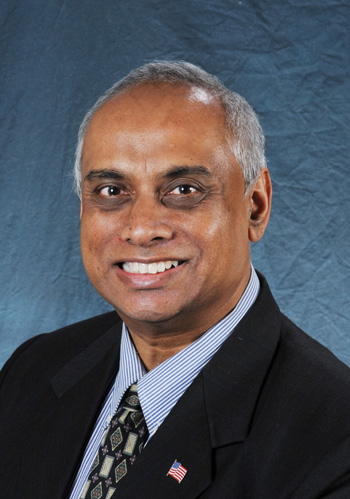
Ramin Hajianfard Profile

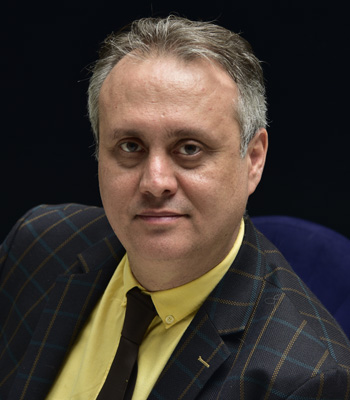
ProfilesRamin Hajianfard (Ph.D., International Islamic University of Malaysia) is senior lecturer in Art & Design at the University Pendidakan Sultan Idris, in Selangor, Malaysia.

Ramin Hajian FardHis main area of research is on Mughal miniature painting, with a secondary emphasis on interfaith dialogue during the Mughal Empire of India. His MA was on peace painting, resulting in the following article:
• Hajianfard, R. (2013). Iranian painters for peace. Peace Review: A Journal of Social Justice, 25(2), 284-290.

He has written multiple entries for encyclopedias: six entries for The Great Events in Religion: An Encyclopedia of Pivotal Events in Religious History (English), and five entries for the Great Islamic Encyclopedia (Persian).

He has published articles in both Persian and English including:

• Hajianfard, R. (2013). An introduction to the art of illuminating the Qur’an. Journal of Arts, Culture & Heritage, 2, 95-109 (English).

• Hajianfard, R. (2012-2013). Hajj painting: A traditional Egyptian art celebrating the Hajj. Bulletin of International Institute of Islamic Science, Thought and Civilization, 4, 12-13.

• Hajianfard, R. (2014). French orientalist painting: Colonial views or an artistic approach? In B. Atashinjan (Ed.), Naghd-e Nāmeh-e Honar [Professional Book (vol. 6) on the Research and Art Criticism] (pp. 25-45). Tahran: Mugham (Persian).

He has also translated multiple books, articles, and book chapters, about music, art, and philosophy, into Persian for publication in Iran.

He was the winner of the second prize for publishing and research at the University of Applied Science and Technology, Iran, 2013.

A video presentation he recently made, Persian Manuscripts of Ramayana || Illustrative Miniature Paintings, is now available on YouTube. (His part begins at 15:27.)


Work for CID:

Ramin Hajianfard wrote KC75: Sulh-i-Kul and KC83: Intercultural Aesthetics. He has translated KC1: Intercultural DialogueKC2: Cosmopolitanism, KC3: Intercultural CompetenceKC4: Coordinated Management of Meaning, KC5: Intercultural CommunicationKC6: Intercultural CapitalKC7: Intergroup Relations DialogueKC8: Public Dialogue, KC10: Cross-Cultural Dialogue, KC75: Sulh-i-Kul, and KC83: Intercultural Aesthetics into Persian. He also has served as a reviewer for translations into Persian. He is currently working on a project looking at visual art as a tool for intercultural dialogue between sister cities, and is interested in hearing from people with overlapping interests.

Dai Xiaodong Profile

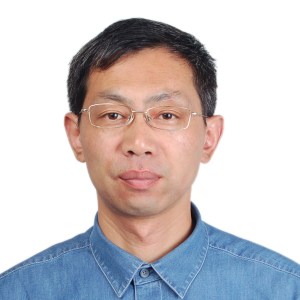
ProfilesDai Xiaodong is associate professor at the Foreign Languages College of Shanghai Normal University (SHNU), P. R. China.

Dai XiaodongPresently he serves as the executive chief of Intercultural Communication Research Center of SHNU, and the vice president of China Association for Intercultural Communication (CAFIC). His major research interests are identity negotiation and intercultural competence. In 2007-2008, he won a Fulbright grant and conducted research at the Department of Communication Studies of University of Rhode Island in the US. He has published numerous articles which have appeared in Chinese Journal of European Studies, American Studies Quarterly, World Economics and Politics, Contemporary International Relations, International Survey, China Media Research, Academic Research, and so forth.

His recent books include Identity and Intercultural Communication (I): Theoretical and Contextual Construction (2010, co-edited with Steve J. Kulich), Identity and Intercultural Communication (II): Conceptual and Contextual Applications (2011, co-edited with Steve J. Kulich), Intercultural Communication Theories (2011), Intercultural Adaptation: Theoretical Explorations and Empirical Studies (2012, co-edited with Steve J. Kulich), and Intercultural Communication Competence: Conceptualization and its Development in Cultural Contexts and Interactions (2014, co-edited with Guo-Ming Chen).


Beth Bonniwell Haslett Profile

ProfilesBeth Bonniwell Haslett (Ph.D., University of Minnesota) is Professor Emerita in the Department of Communication at the University of Delaware.

Beth HaslettHer research and teaching interests span organizational and intercultural communication. More specifically, her scholarship focuses on issues of face, cross-cultural communication and the social impact of information and communication technologies. Her current research focuses on differences and similarities across Eastern and Western approaches to communication and cognition, and using Goffman’s concept of Face as an approach to communicative competence.

Dr. Haslett has written four books (Communication: Strategic Action in Context; The Organizational Woman, with F.L.Geis and M.R.Carter; Children Communicating, with W. Samter; and Communicating and Organizing in Context.) This last is her most recent book, and it integrates Giddens’ structuration theory with Goffman’s interaction order and develops a new theoretical perspective, the theory of structurational interaction. From this theoretical framework, it is possible to integrate both the macro- and micro-levels of communication as they contribute to social change, institutional change and globalization, particularly in cross-cultural and organizational settings. Both digital and interpersonal forms of communication are integrated within this framework.

She has also served as chairperson of the Language and Social Interaction Division of the National Communication Association. In addition, Dr. Haslett has served on the editorial boards of Human Communication Research, Communication Monographs, Communication Education, Communication Studies, Journal of Family Communication, Communication Quarterly, Journal of Communication, and Western States Journal of Communication, and reviews for other journals. She has published over 40 articles and book chapters, and presented more than 60 papers at national and international conferences.


Work for CID:
Beth Haslett wrote KC74: Face.

Jolanta A. Drzewiecka Profile

ProfilesJolanta A. Drzewiecka is Senior Assistant Professor and Intercultural Communication Chair at the Università della Svizzera italiana, Lugano, Switzerland.  Visiting Professor, University of Zürich, Zürich, Switzerland (Fall, 2015)

Jolanta Drzewiecka My research centers on construction of cultural, racial, and national differences in discourse.  I am particularly interested in contexts of systemic collapse and transition, regional and global integration, and rescaling of government. I focus on two areas: negotiation of belonging and public memories.

Immigrant identity: incorporation and representation

My work examines how immigrants negotiate identities and are represented by media.  I am developing  an innovative way of understanding how immigrants are incorporated within racial hierarchies that perpetuate domination and inequality (Drzewiecka & Steyn, 2009; Drzewiecka  & Steyn, 2012; Pande & Drzewiecka, under review).  With my South African collaborator, Melissa Steyn, I proposed a framework of incorporation as discursive intercultural translation based on a study of how Polish immigrants are incorporated racially within the distinct South African racial regionalism (Drzewiecka & Steyn, 2009).  We theorize translation as a creative and strategic process of meaning integration that results in immigrants’ reframing themselves to bid for inclusion and belonging in their new place.  Our concept of translation is based in postcolonial theory and highlights the complex processes whereby immigrants understand and connect new meanings and position themselves within racial hierarchies.  We extended this work to theorise how the symbolic and the material are inseparably interlaced to form immigrant identities (Drzewiecka & Steyn, 2012).   We demonstrated that Polish immigrants were incorporated and incorporated themselves in ways that supported continuing white domination in cultural, institutional and economic structures.  The most recent project extends the concept of racial incorporation by connecting identity capital and emotions to negotiation of belonging.

I also explore representations of immigrants in newspapers.  A recent paper examines how Polish post-EU accession migrants are represented in British newspapers (Drzewiecka, Hoops & Thomas, 2014).  We zero in on the role of media in legitimating the changing scales of government as well as precarious citizenship in representations of migrants in the European Union.  This is a rich area for application;  a follow up study examines the US immigration reform debate focusing on how citizenship and rights are shaped by the state adjusting to globalizing conditions (Drzewiecka, Pande & Saurbier, 2014).

Public memories

Another productive line of research centers on public memories, particularly those of racist violence.  In a recent project, I demonstrated through a psychoanalytic reading how knowledge of the past antisemitic violence has been blocked and the victims rendered unrecognisable to protect the fictions of the Polish gentile self (Drzewiecka, 2014).  Another paper examines the discourses of historical wound in media and how they are shaped and shape relations with the other. My current book project extends the psychoanalytical rhetorical approach to understand how memories of racial others recuperate and purify the nation in response to ongoing and new global challenges to national purity and exclusivity. Further, I am co-editing (with Susan A. Owen and Peter Ehrenhaus) a special issue of the Journal of International and Intercultural Communication on public memories, culture and difference.  The issue is scheduled for publication in 2016.

I had the pleasure of serving as the Chair of the International and Intercultural Communication Division of the National Communication Association, USA.

Selected publications

Hoops, J., Thomas, R., & Drzewiecka, J. A. (2015). Polish plumber as a pawn in the British newspaper discourse on Polish post-EU enlargement immigration to the U.K.  Journalism. Published online before print May 31, 2015, doi: 10.1177/1464884915585960.

Drzewiecka, J. A. (2014). Aphasia and a legacy of violence: disabling and enabling knowledge of the past in Poland. Communication and Critical/Cultural Studies, 11, 362-381.

Drzewiecka, J. A., Hoops, J., & Thomas, R. (2014). Rescaling the state and disciplining workers in discourses on EU Polish migration in UK newspapers. Critical Studies in Media Communication, 31, 410-425.

Drzewiecka, J. A., & Steyn, M. (2012). Racial immigrant incorporation: material-symbolic articulation of identities. Journal of International and Intercultural Communication, 5, 1-19.

Drzewiecka, J. A., & Steyn, M. (2009). Discourses of exoneration in intercultural translation: Polish immigrants in South Africa. Communication Theory, 19, 188-218.


Work for CID:

Jolanta Drzewiecka wrote KC56: Racial Incorporation and KC62: Diaspora. She was also one of the participants at the National Communication Association‘s Summer Conference on Intercultural Dialogue in Istanbul, Turkey, which led to the creation of CID.

Sara Greco Profile

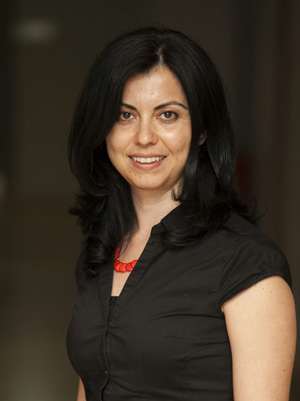
ProfilesSara Greco is Senior Assistant Professor of Argumentation at the Università della Svizzera italiana (Lugano, Switzerland). Her research interests cover different aspects of the analysis of argumentative interactions, both written and oral.

Sara GrecoIn particular, she has been working on the role of argumentation in conflict resolution, specifically in relation to dispute mediation (Greco Morasso 2011, 2018, 2020) and to social controversies. In her view, argumentative dialogue can be seen as a means to solve disagreement and, thus, as an alternative to conflict.

Sara Greco has also worked on inner conflict and how people make their decisions on the basis of dialogue with themselves. She has been working in particular with the case of how international migrants make their crucial migration decisions (Greco Morasso 2013, Greco 2015). Besides, she has done research on children’s argumentation (Greco et al. 2018).

In her work, Sara Greco has developed theoretical concepts of argumentation theory, in particular framing and reframing, issue, and argument schemes (Rigotti & Greco 2019); she has equally been analysing specific cases of communicative interaction in different contexts, using methods from Discourse Analysis, argumentation and linguistic semantics-pragmatics.

Sara Greco is on www.academia.edu and www.researchgate.net, and on her institutional website.

A selection of her recent publications includes:

Greco, S. (2020). Dal conflitto al dialogo: Un approccio comunicativo alla mediazione. Santarcangelo di Romagna: Maggioli.

Rigotti, E., and Greco, S. (2019). Inference in argumentation: A topics-based approach to argument schemes. Cham: Springer (Argumentation Library).

Greco, S. (2018). Designing dialogue: Argumentation as conflict management in social interaction. Tranel – Travaux Neuchâtelois de Linguistique, 68, 7-15.

Greco, S., Perret-Clermont, A.N., Iannaccone, A., Rocci, A., Convertini, J., & Schär, R. (2018). The analysis of implicit premises within children’s argumentative inferences. Informal Logic, 38(4), 438-470.

Greco Morasso, S. (2015). Argumentation from analogy in migrants’ decisions. Proceedings of the ISSA Conference, Amsterdam, July 2014. Ed. B. Garssen et al.

Bijnen, E., van, & Greco, S. (2018). Divide to unite: Making disagreement explicit in dispute mediation. Journal of Argumentation in Context, 7(3), 285-315.

Greco, S., Schär, R., Pollaroli, C., & Mercuri, C. (2018). Adding a temporal dimension to the analysis of argumentative discourse: Justified reframing as a means of turning a single-issue discussion into a complex argumentative discussion. Discourse Studies, 20(6), 726–742.

Xenitidou, M., & Greco Morasso, S. (2014). Parental discourse and identity management in the talk of indigenous and migrant speakers. Discourse & Society, 25(1), 100-121.

Greco Morasso, S. (2013). Multivoiced decisions. A study of migrants’ inner dialogue and its connection to social argumentation. Pragmatics & Cognition, 21(1), 55-80.

Greco Morasso, S., & Zittoun, T. (2014). The trajectory of food as a symbolic resource for international migrants. Outlines. Critical Practice Studies, 15(1), 28-48.

Greco Morasso, S. (2011). Argumentation in dispute mediation: A reasonable way to handle conflict. Amsterdam/Philadelphia: John Benjamins.


Work for CID:

Sara Greco wrote KC73: Argumentative Dialogue, and translated it into Italian.

Marc Hermeking Profile

ProfilesMarc Hermeking (Dr. Phil.), is scientific lecturer in cross-cultural marketing, product development and marketing communications with a special focus on culture & ICT, technical communication and cross-cultural transfer of technology.

Marc HermekingHe is affiliated with the Institute for Intercultural Communication at the University of Munich (LMU), Germany, where he earned his doctoral degree with his inaugural dissertation on the cultural influences on the handling of industrial technology (Kulturen und Technik, 2001). In recent years, he focused on the Influence of culture on all kinds of computer-mediated communication.

Some of his publications are, for example:

(2015). Das Mobiltelefon im Kulturvergleich: Exemplarische Forschungsfelder interkultureller Technik-Kommunikation. In: Banse, G. / Rothkegel, A. (Eds.): Neue Medien: Interdependenzen von Technik, Kultur und Kommunikation (eCulture – Network Cultural Diversity and New Media, vol. 19, pp. 143-161). Berlin: Trafo.

(2013). Kulturelle Aspekte technischer Sicherheit: Interkulturelle Sicherheitskommunikation. In S. Stumpf, E. Schuch & U. Meyer (Eds.), Technik und Kultur: Anwendungsorientierte Beiträge zu einem Spannungsfeld (pp. 51-62). Lengerich: Pabst Science Publishers.

(2012). Cultural aspects of technology and documentation: Contributions from the field of intercultural communication. In A. Rothkegel & S. Ruda (Eds.), Communication on and via Technology (pp. 203-216). Berlin: Mouton de Gruyter.

(2011). Culture, Online Technology and Computer-mediated Technical Documentation: Contributions from the Field of Intercultural Communication. In K. St.Amant & S. Kelsey (Eds.), Computer-Mediated Communication across Cultures: International Interactions in Online Environments (pp. 77-90). Hershey, PA: Information Science Reference/IGI.

(2010). Kultur und Technik: Schnittstellen für die Interkulturelle Kommunikation. In G. Banse G. & A. Grunwald (Eds.), Technik und Kultur: Bedingungs- und Beeinflussungsverhältnisse (pp. 163-178). Karlsruhe: KIT Scientific Publishing.

(2008). Lokalisierung von Webseiten – Interkulturelle Marketing-Kommunikation. MDÜ – Fachzeitschrift für Dolmetscher und Übersetzer, 55(3), 48-53.

(2005, re-issued 2006): Culture and Internet Consumption: Contributions from Cross-cultural Marketing and Advertising. Journal of Computer Mediated Communication, 11(1), 192-216.

(2001). Kulturen und Technik: Techniktransfer als Arbeitsfeld der Interkulturellen Kommunikation. Beispiele aus der arabischen, russischen und lateinamerikanischen Region. Münster/München/New York: Waxmann

See more at his university webpage.


Work for CID:

Marc Hermeking has served as a reviewer for German translations.

Çiğdem Bozdağ Profile

ProfilesÇiğdem Bozdağ is an assistant professor in the department of New Media at the Kadir Has University, Istanbul. Bozdağ’s research and teaching focus on digital media, intercultural communication, migration, globalization, and education and media technologies.

Cigdem BozdagHer recent research was about online intercultural school networks between Germany and Turkey. Bozdağ completed her Ph.D. at the University of Bremen in January 2013. In her thesis, she analyzed the websites of the Moroccan and Turkish diaspora and their role in ethnic community building, within a mediated emerging social space. From 2008 to 2010, she worked at the same university in the research project “Communicative Connectivity of Ethnic Minorities: The Integrative and Segregative Potential of Digital Media for Diasporas.” Moreover, she worked on an EU-funded research project, entitled “ICT and Cultural Diversity.” After the Ph.D., Bozdağ worked as a Mercator-IPC fellow at the Sabanci University, Istanbul. She received her M.A. degree from the University of Bremen, in the field of media culture. Her bachelor degree is from Boğaziçi University, in the field of political science and international relation.

Bozdağ recently wrote a report on Intercultural Learning In Education Through Information And Communication Technologies (Istanbul Policy Center, 2014), is the co-author of the book Mediale Migranten: Mediatisierung und die kommunikative Vernetzung der Diaspora (Springer, 2011) and author of the book Aneignung von Diasporawebsites (Springer, 2013). Her recent papers appear in the Journal of Global Media and Communication (2014), in Case Studies in Intercultural Dialogue (Edited by Nazan Haydari and Prue Holmes, 2014) and in Crossings: Journal of Migration & Culture (2014).

Dominic Busch Profile

ProfilesDominic Busch is a Professor of Intercultural Communication and Conflict Research at Universität der Bundeswehr München, Germany. He received his doctorate in 2005 at Europa-Universität Viadrina Frankfurt (Oder), Germany. From 2006 to 2011 he was a Junior Professor in Intercultural Communication at Europa-Universität Viadrina Frankfurt (Oder).

Dominic BuschIn his research on intercultural communication, he explores the epistemological, ontological, and axiological premises of how intercultural communication is approached from an academic angle. To this end, he takes the perspective of discourse analysis. While research on intercultural communication often has strong disagreements between different paradigms, the minimum common ground is that culture and intercultural communication are talked about in both academia and in Western societies’ everyday life. Culture and intercultural communication are thus objects of discourse, and thus first and foremost discursive constructions. Several characteristics of the field of intercultural communication can be observed on the basis of this assumption:

Both everyday discourses and academic discourses around intercultural communication constitute themselves in such a way that their object never ceases to be perpetuated and never disappears – even if this might actually represent a plausible goal of dealing with it. Discourses are shaped by power structures and hegemonies, and this is how core understandings of intercultural communication emerge. Their permanent self-preservation can also be described by the phenomenon of the dispositive after Michel Foucault, as Dominic Busch shows in his 2013 book. Discourse on intercultural communication fabricates problems for which, at the same time, it always provides only partial solutions. Even the strongest paradigm shift cannot overcome this, but will always only reinforce the dispositive.

At the same time, the discourse on intercultural communication is never void of interests, and research is never strictly heuristic: the study of intercultural communication is always based on societies’ aspirations of an ideal coexistence. The perceptions of problems are impossible without visions of how things should actually be better. Visions, however, traditionally do not have a seat in social science research; they are often regarded as unscientific. However, we cannot really understand how research questions are framed and how studies in this field are arranged if authors and readers would not share ideals about how to deal with interculturality, ideals that are only subtly expressed in the texts.

In his research, Dominic Busch aims to show how research on intercultural communication seeks to deal with this dilemma. To this end, it is first necessary to uncover and identify the normative ideas on how to deal with interculturality – which can also be referred to as visions. Based on a discourse analysis of academic texts on intercultural communication over a period of 50 years, Dominic Busch shows in his article “The Changing Discourse of Intercultural Ethics” how these orientations change over time. Instead of a linear development, these re-orientations have been rather circular. Only in recent times a parallel diversification of different orientations in intercultural writings can be observed – along with a new disorientation and open search in an increasingly complex world, questioning old paradigms more and more.

A comparison with overarching social science paradigms and epistemologies, however, reveals how dominant these ethical orientations are. Social research is debating the implementation of post-qualitative research methods with the aim of avoiding exerting epistemic violence through research. This should involve authors reflecting more on their own positionality and instead of researching their partners, they should give voice to these partners themselves. In their article “New Methodologies – New Interculturalities?” Dominic Busch and Emilian Franco explore how papers in the research field of intercultural communication manage these issues by using new methods such as participatory research, autoethnography, and arts-based research. From a critical point of view, Busch and Franco find that many studies often do not really meet the standards of such methodologies. However, Busch and Franco show that, seen as parts of an ethical discourse on interculturality, these new methods serve as a basis for authors’ ethical and visionary reflections on a desirable way of dealing with interculturality.

Intercultural mediation is a powerful example of this visionary orientation in discourses on intercultural communication. A great many different disciplines share some interest in intercultural mediation: These include, for example, cultural anthropology, translation research, foreign language didactics, and political science research on international relations, in addition to research on intercultural communication and conflict management. Upon closer examination, these disciplines often conceive of intercultural mediation in very different ways. However, there is one common vision that unites them: that constructive pathways to intercultural understanding will always exist. This is reason enough from an ethical point of view to further promote and develop such fields of research. The Routledge Handbook of Intercultural Mediation by Dominic Busch provides an insight into this interdisciplinary field and its potentials.

Discourse analysis should therefore not be seen only as criticism, but always as a constructive prospect for development. Even more, the insight into the constructivist character of notions of cultures may open the opportunity (and the responsibility) to encourage forms of intercultural dialogue on a local and on a global level to discuss and to define notions of how positive (intercultural) coexistence may be designed. In these respects, Dominic Busch explores the potential of concepts like intercultural sustainability as well as contributions from cosmopolitanism to intercultural dialogue.

For more detailed information as well as a list of German language publications please visit Dominic Busch’s website.

Selected publications in English:

Busch, D. (Ed.). (2023). The Routledge handbook of intercultural mediation. New York: Routledge.

Busch, D., & Franco, E. (2022). New methodologies—New interculturalities? The visionary discourse of post-qualitative research on the intercultural. Language and Intercultural Communication, 1–13. DOI: 10.1080/14708477.2022.2133136.

Busch, D. (2021). The changing discourse of intercultural ethics: A diachronic meta-analysis. Journal of Multicultural Discourses, 16(3), 189–202. DOI: 10.1080/17447143.2020.1803887.

Busch, D. (2019). Intercultural conflict mediation. In P. Moy (Ed.), Oxford bibliographies in communication. New York: Oxford University Press.

Busch, D., & Möller-Kiero, J. (2017). Sustainability and ethnic peace discourse: In search for synergies from bringing together discourses on intercultural communication and on global sustainability. ESSACHESS: Journal for Communication Studies, 10(1), 217-237.

Busch, D. (2016). Does conflict mediation research keep track with cultural theory? A theory-based qualitative content analysis on concepts of culture in conflict management research. European Journal of Applied Linguistics, 4(2), 181-207.

Busch, D., & Möller-Kiero, J. (2016). Rethinking interculturality will require moral confessions: Analysing the debate among convivialists, interculturalists, cosmopolitanists and intercultural communication scholars. Interculture Journal, 15(26), 43-57.

Busch, D. (2015). Conflict Management in Organizations. In A. D. Smith, X. Hou, J. Stone, R. Dennis, & P. Rizova (Eds.), The Wiley Blackwell encyclopedia of race, ethnicity, and nationalism (pp. 1–5). John Wiley & Sons. DOI: 10.1002/9781118663202.wberen340.

Busch, D. (2015). Culture is leaving conversation analysis, but is it really gone? The analysis of culturalist performances in conversationJournal of Intercultural Communication, 39, 1-17.

Busch, D. (2015). Mediation. In J. M. Bennett (Ed.), The Sage encyclopedia of intercultural competence (pp. 608–611). Sage. DOI: 10.4135/9781483346267.n199.

Busch, D. (2012). Cultural theory and conflict management in organizations: How does theory shape our understanding of culture in practice? International Journal of Cross Cultural Management, 12(1), 9–24. DOI: 10.1177/1470595811413106.

Busch, D. (2010). Shopping in hospitality: Situational constructions of customer–vendor relationships among shopping tourists at a bazaar on the German–Polish border. Language and Intercultural Communication, 10(1), 72–89. DOI: 10.1080/14708470903452614.

Busch, D. (2009). What kind of intercultural competence will contribute to students’ future job employability? Intercultural Education, 20(5), 429–438. DOI: 10.1080/14675980903371290.


Work for CID:

Dominic Busch has written a guest post, Some Observations on Internal Social Discourses on the Recent Increase of Refugee Immigration into Germany, as well as KC76: Intercultural Sustainability and KC106: Intercultural Medication. He has translated KC1: Intercultural DialogueKC2: CosmopolitanismKC76: Intercultural Sustainability, and KC106: Intercultural Mediation into German. He also frequently reviews translations into German.

Debashis ‘Deb’ Aikat Profile

ProfilesA former journalist, Debashis “Deb” Aikat (pronounced EYE-cut) is Associate Professor, and since 1995 has been based in the School of Journalism and Mass Communication at the University of North Carolina at Chapel Hill, which is classified by the Carnegie Foundation as a leading research university.

Deb Aikat, School of Journalism, at the University of North Carolina at Chapel Hill.An award-winning researcher and teacher, Dr. Aikat theorizes the role of social media, international communication, news media and the future of communication in the digital age. Dr. Aikat’s research interests range across the media. His research has been published in book chapters and refereed journals such as First Amendment Studies, Health Communication, International Journal of Interactive Communication Systems and Technologies, Global Media and Communication, Electronic Journal of Communication, Popular Music and Society, Convergence: The Journal of Research into New Media Technologies, and publications of the Association for Computing Machinery (ACM), and Microsoft Corporation. His research has been funded by the government (e.g. the US Department of State, US Department of Education’s Title VI grants), corporate foundations (e.g. the Freedom Forum, the Scripps Howard Foundation) and the industry (e.g. IBM, Knight Ridder). He has consulted pro bono with the Town of Chapel Hill, Orange County (NC), and the Chapel Hill-Carrboro City Schools among other organizations.

The Scripps Howard Foundation recognized Dr. Aikat as the inaugural winner of the “National Journalism Teacher of the Year award” (2003) for his “distinguished service to journalism education.” The International Radio and Television Society named him the Coltrin Communications Professor of the Year (1997). Dr. Aikat served from 2007 through 2013 as an elected member of the Accrediting Council on Education in Journalism and Mass Communications (ACEJMC), which evaluates journalism and mass communications programs in universities. He chaired in 2009-10 the Association for Education in Journalism and Mass Communication (AEJMC)’s Committee on Teaching. He has served since 2011 as an elected member of the AEJMC’s Committee on Professional Freedom &
Responsibility, which is designated as the “conscience of AEJMC” for fostering freedom, ethics, diversity, and public service.

Besides teaching on-campus classes, Dr. Aikat has taught online courses since 1997. He conceptualized in 1997 UNC’s first online course in journalism and developed in 2003 a graduate level online certificate program in “Technology and Communication.” He has won fellowships from renowned research institutions such as the Institute for the Arts and Humanities (2000 & 2003) and the Journalism Leadership Institute in Diversity (2004-05) of the AEJMC and the Association of Schools of Journalism and Mass Communication (ASJMC).

His research and teaching excellence awards include a 2015 Scripps Howard Foundation Research Grant to Foster Academy-Industry Ties, AEJMC Top Research Paper Awards, a Distinguished Teaching Award for Post-Baccalaureate Instruction (2003), UNC-Chapel Hill’s highest honor for excellence in graduate studies, the David Brinkley Teaching Excellence Award (2000), AEJMC’s Baskett Mosse Award (1999), the Tanner Faculty Award for Excellence in Undergraduate Teaching (1999), the UNC-Chapel Hill Students’ Undergraduate Teaching Award (1998), and an IBM Research Fund Award (1995). Several UNC-Chapel Hill senior classes honored him with the Edward Kidder Graham-Favorite Faculty Awards (1997 through 2005). He was selected by his peers to serve on the UNC Honor Court’s Faculty Hearings Board Panel that adjudicates violations of academic honesty, personal integrity, and responsible citizenship.

Dr. Aikat earned in 1995 a Ph.D. in Mass Communication and Journalism from the Ohio University’s Scripps School of Journalism. He completed in 1990 a Certificate in American Political Culture from the New York University. He has lectured in Asia, Australia, Europe, and the Americas. He graduated with academic distinction by attaining first rank in M. A. Journalism in 1990 from the University of Calcutta, India, where he also earned a B. A. with honors in English literature in 1984. He worked as a journalist in India for the Ananda Bazar Patrika’s The Telegraph newspaper from 1984 through 1992. He also reported for the BBC World Service.

Born in India, Dr. Aikat and his wife, Dr. Jay Aikat, became U.S. citizens in 2003. Jay serves on the faculty in the Department of Computer Science at UNC-Chapel Hill. They live in Chapel Hill, North Carolina, with their two children.

Nancy Duxbury Profile

ProfilesNancy Duxbury holds a doctorate in Communication from Simon Fraser University, Canada, specializing in cultural policy. Since 2009, she has been a Senior Researcher at the Centre for Social Studies, University of Coimbra, Portugal and, since 2010, Co-coordinator of its Cities, Cultures and Architecture Research Group.
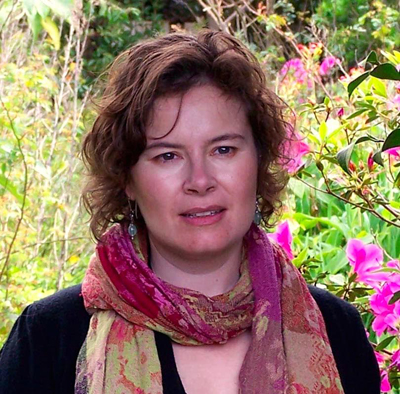
Nancy DuxburyHer research has examined the integration of culture in local sustainable development, with an emphasis on the policy and planning frameworks that enable this; culture-based development models in smaller communities; and the emerging interdisciplinary field of cultural mapping, which bridges insights from academic inquiry, community practice, and artistic approaches to understanding and articulating place. Building on these foundations, she is now the Principal Investigator for a major three-year research and demonstration project on creative tourism in Portugal, entitled “CREATOUR: Creative Tourism Destination Development in Small Cities and Rural Areas.” The project involves five Portuguese research centres and 40 pilots, and aims to link the cultural and tourism sectors within a context of inclusive and sustainable local and regional development. Her research is interdisciplinary in nature and her events and publications are designed as meeting places that bring together academic and practice-based knowledges, including artistic perspectives and approaches.

She is a member of the European Expert Network on Culture, and was Chair of the Policies working group of a European research network on “Investigating Cultural Sustainability” (2011-2015). She is also an Adjunct Professor of the School of Communication at Simon Fraser University, of the School of Urban and Regional Planning at University of Waterloo, and of the Department of Journalism, Communication, and New Media at  Thompson Rivers University, Canada. She was co-founder and Director of Research of the Creative City Network of Canada, and received a Cultural Leadership Award from the organization in 2017.

More information on her research and publications can be obtained from her academic homepage.

Selected publications

Books

Duxbury, N., Rahim, S., Silva, S., and Vinagre de Castro, T. (Eds.). (2024). Creative tourism, regenerative development, and destination resilience: Insights and reflections. Coimbra, Portugal: CREATOUR Observatory on Culture and Tourism for Local Development, Centre for Social Studies, University of Coimbra. ISBN: 978-989-8847-85-0..

Duxbury, N., & G. Richards (Eds.). (2019). A research agenda for creative tourism. Cheltenham, UK: Edward Elgar Publishing.

Duxbury, N., Garrett-Petts, W. F., & Longley, A. (Eds.). (2018). Artistic approaches to cultural mapping: Activating imaginaries and means of knowing. London: Routledge.

Kangas, A., N. Duxbury, & C. De Beukelaer (Eds.). (2018). Cultural policies for sustainable development. London: Routledge.

Duxbury, N., Garrett-Petts, W. F., & MacLennan, D. (Eds.). (2015). Cultural mapping as cultural inquiry. New York: Routledge.

Hristova, S., Dragićević Šešić, M., & Duxbury, M. (Eds.). (2015). Culture and sustainability in European cities: Imagining Europolis. London: Routledge.

Duxbury, N. (Ed.). (2013). Animation of public space through the arts: Toward more sustainable communities. Coimbra: Almedina.

Guest edited journal issues

Kangas, A., Duxbury, N., & De Beukelaer, C. (Eds.). (2017). Special issue: Cultural policies for sustainable development. International Journal of Cultural Policy, 23(1).

Duxbury, N., & Longley, A. (Eds.). (2016). Special issue: Cultural mapping: Making the intangible visible. City, Culture and Society, 7(1).

Duxbury, N., & Jeannotte, M. S. (Eds.). (2015). Special double issue: Cultural mapping in planning and development contextsCulture and Local Governance / Culture et Gouvernance Locale, 5(1-2).

Saper, C., & Duxbury, N. (Eds.). (2015). Special Issue: Mapping culture multimodally. HyperRhiz, 12.

Duxbury, N., Canto Moniz C., & Sgueo, G. (Eds.). (2013). Special Issue: Rethinking urban inclusion: Spaces, mobilisations, interventions. Cescontexto – Debates, 2.

Duxbury, N., Fortuna, C., Bandeirinha, J. A., & Peixoto, P. (Eds.). (2012). Special Issue: Em torno da cidade criativa (Beyond the creative city). Revista Crítica de Ciências Sociais, 99.

Duxbury, N., & Jeannotte, M. S. (Eds.). (2011). Special double issue: Culture and sustainable communitiesCulture and Local Governance / Culture et Gouvernance Locale, 3 (1-2).

Articles

Duxbury, N., Bakas, F. E. & Pato de Carvalho, C. (2019). Why is research–practice collaboration so challenging to achieve?: A creative tourism experiment. Tourism Geographies.

Bakas, F. E., Duxbury, N., & Vinagre de Castro, T. (2019). Creative tourism: Catalysing artisan entrepreneur networks in rural Portugal. International Journal of Entrepreneurial Behaviour and Research, 25(4), 731-752.

Bakas, F. E., & Duxbury, N. (2018). Development of rural areas and small cities through creative tourism: The CREATOUR project.Revista: Anais Brasileiros de Estudos Turísticos (ABET), 8(3) (Set./Dez.), pp. 74-84.

Kangas, A., Duxbury, N., & De Beukelaer, C. (2017). Introduction: Cultural policies for sustainable development. International Journal of Cultural Policy, 23(1).

Duxbury, N., Kangas, A., & De Beukelaer, C. (2017). Cultural policies for sustainable development: Four strategic paths. International Journal of Cultural Policy, 23(1).

Longley, A., & Duxbury, N. (2016). Introduction: Mapping cultural intangibles. City, Culture and Society, 7(1): 1-7.

Duxbury, N. (2015). Positioning cultural mapping in planning and development contexts: An introduction. Culture and Local Governance, 5(1-2): 1-7.

Jeannotte, M.S., & Duxbury, N. (2015). Advancing knowledge through grassroots experiments: Connecting culture and sustainability. Journal of Arts Management, Law and Society, 45(2), 84-99.

Duxbury, N., & Saper, C. (2015). Introduction: Mapping culture multimodally. HyperRhiz, 12.

Carvalho, C. P., & Duxbury, N. (2014). Artistic intervention projects and cultural memory: Experiences from Portugal’s centre region. Culture / Kultura: International Journal for Cultural Research, 4(8), 21-32.

Duxbury, N. (2014). Cultural governance in sustainable cities. Kult-ur: Interdisciplinary journal on the culture of the city, 1(1), 165-182. doi: http://dx.doi.org/10.6035/Kult-ur.2014.1.1.7.

Duxbury, N., & Jeannotte, M. S.. (2012). Including culture in sustainability: An assessment of Canada’s integrated community sustainability plans. International Journal of Urban Sustainable Development, 4(1), 1‑19. doi:10.1080/19463138.2012.670116

Book chapters

Duxbury, N. (2019). Thoughts on future directions: Art and culture in transformations toward greater sustainability. In V. Riccardi & V. Ferreira (Eds.), Creative responses to sustainability – Portugal green guide 2019 (pp. 9-14). Singapore: Asia-Europe Foundation (ASEF).

Duxbury, N., & Richards, G. (2019). Towards a research agenda for creative tourism: Developments, diversity, and dynamics. In N. Duxbury & G. Richards (Eds.), A research agenda for creative tourism (pp. 1–14). Cheltenham, UK: Edward Elgar Publishing.

Duxbury, N., & Richards, G. (2019). Towards a research agenda in creative tourism: A synthesis of suggested future research trajectories. In N. Duxbury & G. Richards (Eds.), A research agenda for creative tourism (pp. 182–192). Cheltenham, UK: Edward Elgar Publishing.

Duxbury, N., Garrett-Petts, W. F., & Longley, A. (2018). An introduction to the art of cultural mapping: Activating imaginaries and means of knowing. In N. Duxbury, W. F. Garrett-Petts & A. Longley (Eds.), Artistic approaches to cultural mapping: Activating imaginaries and means of knowing. London: Routledge.

Duxbury, N., Kangas, A., & De Beukelaer, C. (2018). Cultural policies for sustainable development: Four strategic paths. In A. Kangas, N. Duxbury & C. De Beukelaer (Eds.), Cultural policies for sustainable development. London: Routledge.

Kangas, A., Duxbury, N., & De Beukelaer, C. (2018). Introduction: Cultural policies for sustainable development. In A. Kangas, N. Duxbury, & C. De Beukelaer (Eds.), Cultural Policies for Sustainable Development. London: Routledge.

Ferreira, I., & Duxbury, N. (2017). Cultural projects, public participation, and small city sustainability. In K. Soini, S. Asikainen, K. Plebanzcyk, L. Rojac-Mijatovic, & C. Brites (Eds.), Perspectives for culture in sustainable futures: Theories, policies, practices. Jyväskylä, Finland: University of Jyväskylä.

Duxbury, N., Baltà, J., Hosagrahar, J., & Pascual, J. (2016). Culture in urban development policies: An agenda for local governments. In Culture: Urban future – Global report on culture for sustainable urban development (pp. 204-211). Paris: UNESCO.

Cardielos, J.P., Lobo, R., Peixoto, P., Mota, E., Duxbury, N., & Caiado, P. (2016). Mondego: o surdo murmúrio do rio. In P. Peixoto & J.P. Cardielos (Eds.), A Água como património: Experiéncias de requalificação das cidades com água e das paisagens fluviais (pp. 95-112). Coimbra: Impressa da Universidade de Coimbra (Coimbra University Press).

Duxbury, N., & Jeannotte, M. S. (2015). Making it real: Measures of culture in local sustainability planning and implementation. In L. MacDowall, M. Badham, E. Blomkamp, and K. Dunphy (Eds.), Making culture count: The politics of cultural measurement. Hampshire, UK: Palgrave Macmillan.

Duxbury, N., Garrett-Petts, W. F., & MacLennan, D. (2015). Cultural mapping as cultural inquiry: Introduction to an emerging field of practice. In N. Duxbury, W.F. Garrett-Petts & D. MacLennan (Eds.), Cultural mapping as cultural inquiry (pp. 1-42). New York: Routledge.

Duxbury, N. (2015). European cities as cultural projects: Where is culture in urban sustainability policy? In S. Hristova, M. Dragićević Šešić & N. Duxbury (Eds.), Culture and sustainability in European cities: Imagining Europolis (pp. 69-85). London: Routledge.

Duxbury, N., & Jeannotte, M. S. (2013). Global cultural governance policy. In G. Young & D. Stevenson (Eds.), The Ashgate research companion to planning and culture (pp. 361-376). London: Ashgate.

Duxbury, N., Cullen, C., & Pascual, J. (2012). Cities, culture and sustainable development. In H.K. Anheier, Y.R. Isar & M. Hoelscher (Eds.), Cities, cultural policy and governance (pp. 73-86). London: Sage.

Nelson, R., Duxbury, N., & Murray, C. (2012). Cultural and creative economy strategies for community transformation: Four approaches. In J. Parkins & M. Reed (Eds.), The social transformation of rural Canada: New insights into community, culture and citizenship (pp. 368-386). Vancouver: University of British Columbia Press.

Duxbury, N. (2011). Shifting strategies and contexts for culture in small city planning: Interlinking quality of life, economic development, downtown vitality, and community sustainability. In A. Lorentzen & B. van Heur (Eds.), Cultural political economy of small cities (pp. 161-178). London: Routledge.

Duxbury, N., & Murray, C. (2010). Creative spaces. In H.K. Anheier, Y.R. Isar & C. Waterman (Eds.), Cultural expression, creativity and innovation. London: Sage.


Work for CID:

Nancy Duxbury wrote KC69: Cultural Mapping.