Richard Buttny is a professor of communication and rhetorical studies at Syracuse University.
His research interests include discursive analysis, ethnopolitical discourse, and environmental conflicts.
Sample publications:
Sandel, T.L., Buttny, R. & Varghese, M. (2019). Online exchange across three contexts: An analysis of culture and technological affordances. Journal of Intercultural Communication Research, 48, 52-71.
Buttny, R. (2018). Commentary on accounts for breaking the silence: An Israeli discourse of dissent. Journal of Multicultural Discourses, 13, 17-22.
Buttny, R., & Hashim, A. (2015). Dialogue on ‘1 Malaysia’: The uses of metadiscourse in ethnopolitical accounting. Discourse & Society, 26(2), 147-164.
Buttny, R., Hashim, A., & Kaur, K. (2013). Ethnopolitical discourse among ordinary Malaysians: Diverging accounts of “the good-old days” in discussing multiculturalism. Text & Talk, 33(3), 289-309.
Buttny, R. (2003). Multiple voices in talking race: Pakeha reported speech. in the discursive construction of the racial other. In H. van den Berg, M. Wetherell & H. Houtkoop-Steenstra (Eds.), Analyzing race talk: Multidisciplinary perspectives on the research interview (pp. 103-118). Cambridge University Press.
See his web page for more specifics. See description of his Fulbright in Malaysia, already published elsewhere on this site.
The number of peer-reviewed, open access electronic journals is increasing, helping to share knowledge across national boundaries. The newest is View, which, given their focus on visual content, is multi-media as well. Their editorial policy states: “This journal provides immediate open access to its content on the principle that making research freely available to the public supports a greater global exchange of knowledge.” I could not agree more. Information about the current issue follows.
VIEW, the Journal of European Television History and Culture is the first peer-reviewed, multi-media and open access e-journal in the field of European television history and culture. It offers an international platform for outstanding academic research and archival reflection on television as an important part of our European cultural heritage. The journal is proud to present its third issue: European Television Memories. It has been guest-edited by Jérôme Bourdon and Berber Hagedoorn and is freely available.
In the context of the fast development of media studies, the third issue of VIEW highlights debates around the moving borders of national memories, fostered by television in the context of European history. The articles in this issue focus on the contribution of European television researchers, covering all three areas of media studies: production, text and reception.
– ‘Remembering Our First TV Set’. Personal Memories as a Source for Television Audience History – Cecilia Penati
– “It’s just so hard to bring it to mind”: The Significance of ‘Wallpaper’ in the Gendering of Television Memory Work – Hazel Collie
– Martin Luther in Primetime. Television Fiction and Cultural Memory Construction in Cold War Germany – Stewart Anderson
– The Production of Czechoslovakia´s Most Popular Television Serial ‘The Hospital on the Outskirts’ and its Post-1989 Repeats – Petr Bednařík
– Parallel Stories, Differentiated Histories. Exploring Fiction and Memory in Spanish and Portuguese Television – José Carlos Rueda Laffond, Carlota Coronado Ruiz, Catarina Duff Burnay, Susana Díaz Pérez, Amparo Guerra Gómez, Rogério Santos
– Looking for What You Are Looking for: A Media Researcher’s First Search in a Television Archive – Jasmijn Van Gorp
EXPLORATIONS
– Television as a Hybrid Repertoire of Memory. New Dynamic Practices of Cultural Memory in the Multi-Platform Era – Berber Hagedoorn
– Why Should We Study Socialist Commercials? – Anikó Imre
– Window to the West: Memories of Watching Finnish Television in Estonia During the Soviet Period – Annika Lepp, Mervi Pantti
– The Life and Afterlife of a Socialist Media Friend. On the Longterm Cultural Relevance of the Polish TV Series ‘Czterdziestolatek’ – Kinga S. Bloch
– Chronology and Ideology. Temporal Structuring in Israeli Historical Documentary Series – Bosmat Garami
– Great Escapes from the Past. Memory and Identity in European Transnational Television News – Andreas Widholm
– Memory, Television and the Making of the BBC’s ‘The Story of Wales’ – Steve Blandford, Ruth McElroy
VIEW is published by the Netherlands Institute for Sound and Vision in collaboration with Utrecht University, Maastricht University and Royal Holloway University of London. It is supported by the EUscreenXL project, the European Television History Network and the Netherlands Organization for Scientific Research.
The Department of State would like to encourage interested members to apply for the United Nations Young Professionals Program (YPP). The YPP program is a wonderful opportunity for young persons under 32 who speak English and/or French fluently, hold a first level university degree and are a national of a participating UN country, such as the United States.
The families of interest for 2013 are: Administration, Finance, Legal Affairs, Public Information (Public Information may be of particular interest to communication majors) and Statistics.
For more information on the YPP program, please see the UN Careers website.
Identity, Culture, and Communication among Italian Americans
Call for book chapter proposals on Italian American identity, for edited book.
This book aims to explore how Italian Americans communicate their identities in specific locations around the United States. While there has been some research conducted on migration patterns, sociology, and folklore of Italian Americans, there is very little documentation of their communication experience and of regional differences in those experiences. This is a unique opportunity for communication scholars to contribute to the area of intercultural communication, and to begin an interdisciplinary conversation between the two fields. We invite proposals that reveal the multiple and complex cultural constructions of Italian American identity represented in local communities. This volume will approach topics from a number of critical and theoretical perspectives.
Essays may explore, but are not limited to, the following themes:
How Italian Americans form and sustain identities through language, speech acts, rituals, cultural artifacts, media, or networks.
What Italian Americans make of their own communication practices.
The cultural contexts of Italian American communication.
Italian American interpersonal communication.
Local forms of communication in Italian American communities.
How Italian Americans construct or share cultural spaces in their communities.
Symbolic meanings in Italian American communication practices.
Italian American self-representation versus media representation.
Italian Americans communication with other ethnic groups.
Please submit proposals of 300-500 words (as word file) or inquiries to Denise Scannell, Assistant Professor, New York City College of Technology, no later than October 15, 2013.
Andreas Pöllmann (Ph.D., 2008, M.A., 2004, Department of Sociology, University of Essex, UK) is a full time researcher and lecturer in intercultural education at Paderborn University in Germany.
He is a member of the International Sociology Association (i.e., Racism, Nationalism and Ethnic Relations, Sociology of Education, and Sociology of Migration Research Committees). His works have appeared in Compare: A Journal of Comparative and International Education, Educational Studies, European Societies, and SAGE Open – focusing on feelings of national and supranational attachment, inclusive forms of national identity, intercultural education, and the notion of intercultural capital. He is currently conducting conceptual and empirical research on sociocultural inequalities in the realization of intercultural capital, with a particular interest in the (unfulfilled) potential of schooling and school management. Further regularly updated information will be available on academia.edu
I applied for one of the Center for Intercultural Dialogue‘s microgrants funded by the National Communication Association to explore the possibilities of meeting with researchers in London. Currently, I am looking at using communication methods to better implement and evaluate the roll out, implementation and uptake of HIV biomedical interventions among gay and bisexual men in the United States. Because of the disproportionate impact of HIV in the United States on certain groups, my work focuses on African American, Latino and HIV-positive gay men – all populations that experience persistent structural barriers in the healthcare system.
Matching funds The Hofstra University School of Communication supported this project with a faculty research support grant. The matching funds covered the costs of housing and food while at the host institution.
Local host The Global Forum on Men who have Sex with Men (MSM) hosted a Pre-Conference focused on gay and bisexual men at the International AIDS Conference 2012 in Washington, DC. I chaired the panel on HIV, community mobilization and immigrant MSM. On the panel, Ibidun Fakoya, Research Fellow at University College London presented her formative assessment of African gay men living with HIV in London. Ibidun Fakoya works with Dr. Fiona Burns on the advancing Migrant Access to health Services in Europe (aMASE). aMASE uses a multi-site Community Advisory Group to assess clinical and health care access for migrants in Europe with some focus on MSM and substance users. As such, aMASE is constructing a framework for effectively working with mobile and marginalized populations in assessing healthcare. In follow up conversations and through social media, a relationship emerged on common research interests. Through these conversations, the project emerged and additional meetings were made through Ibidun Fakoya and social media. In the past few years, I have developed a network of other advocates and researchers who are active on twitter and whose specialty is health disparities and the gay, lesbian, bisexual and transgender communities.
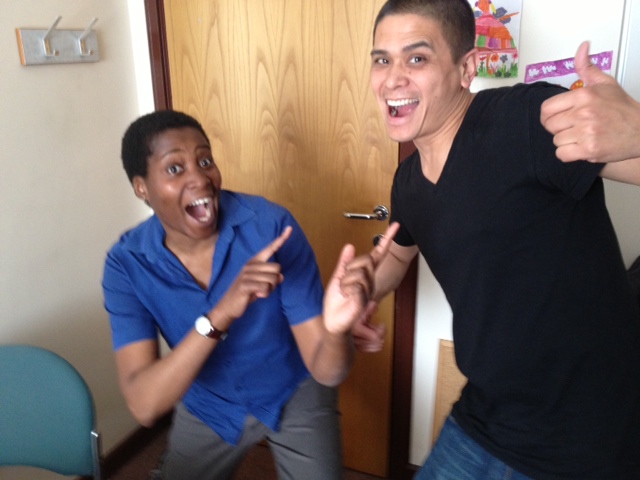
Ibidun Fakoya, Andrew Spieldenner
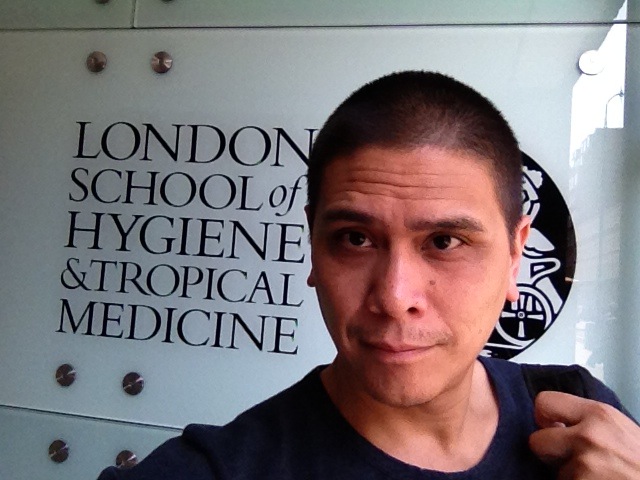
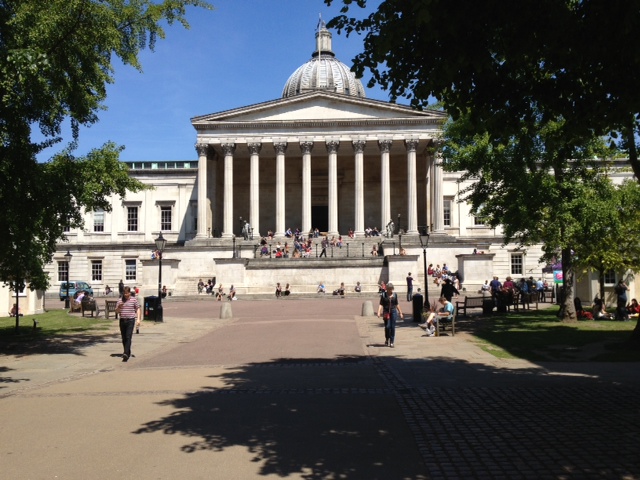
Trip itinerary My colleagues were generous with their time. I visited University College London, Birkbeck College and the London School of Hygiene and Tropical Medicine. Each meeting opened up other doors to consider – with other researchers, community groups, medical providers, and health policy institutions.
Ibidun “Ibi” Fakoya and Dr. Fiona Burns of University of College London aMASE project were my primary hosts. Ibi and I met with the Community Mobilization Coordinator to discuss the Community Advisory Group and the implementation of the research survey in multiple countries in clinic and community settings. We brainstormed on possible community partners to achieve the target survey populations in the United Kingdom (UK), Germany, Spain and Italy. I was able to review the processes that aMASE has implemented to get a shared research tool and protocols across all partner sites. In addition, Ibi and I reviewed social marketing and health messaging in order to develop marketing materials. Ibi was instrumental in coordinating with the other researchers for my trip.
At the University College London, I met with Professor Graham Hart on HIV and gay men in the London and New York City, focusing on the vastly different healthcare systems in the two countries. Professor Hart is Dean of the School, and he has extensively researched HIV and gay men. Professor Hart was interested in how the differing healthcare systems and social attitudes about health impact the treatment and service environment for gay men of varied racial/ethnic and socioeconomic backgrounds. He gave several referrals to visit community groups and health policy institutions.
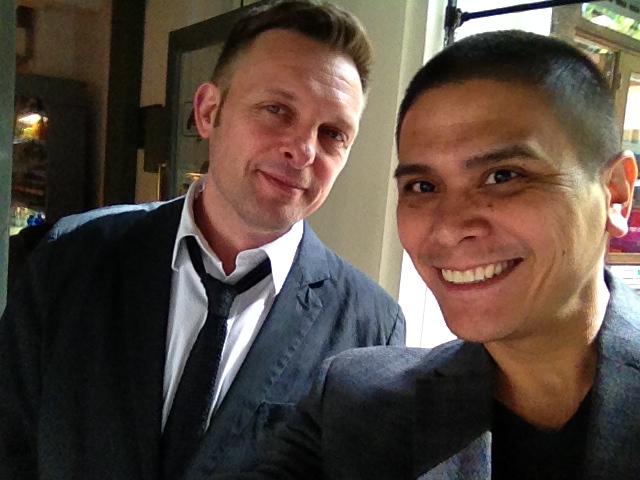
Professor Matthew Weait of Birkbeck College is an expert on HIV criminalization laws. We discussed the ways that HIV criminalization laws operate in various countries, and how cultural views frame the laws. We also examined the concurrent passage of gay marriage legislation in Maryland alongside an enhancement of the state’s HIV criminalization law. We discussed the importance of translating research and policy into accessible language in order to mobilize community members.
Matt Weait, Andrew Spieldenner
Dr. Catherine Dodds and Dr. Ford Hickson of the Sigma Research Group are currently housed at the London School of Hygiene and Tropical Medicine. The Sigma Research Group has been on the forefront of research in the UK on gay men and HIV. They have conducted surveys at gay prides in the UK for over a decade, and have implemented several Community-Based Participatory Research (CBPR) projects alongside community partners. We had an intense discussion about harm reduction in HIV, the limits to current public health discourse on gay men and HIV, methods of conducting CBPR projects (including the use of Skype), and how communication – as a field – can be used in public health research.
Further activities There are several future activities possible in the future. Many of these involve future correspondence and research support. We acknowledged that there were several meetings about HIV and our respective fields that may be of interest to the others. Dr. Hickson, Dr. Dodds and Professor Weait committed to ongoing communication about projects and possible next dates for meetings when we happened to be in the same event (such as the International AIDS Conference 2014).
Ibidun Fakoya and I sketched out two different research projects to advance, and we are looking to collaborate over the next two years on these projects.
Finally, I plan to return to Europe summer of 2014 on another project, where I will be renewing my relationships with these researchers.
[NOTE: Andrew Spieldenner’s original project proposal is available here.]
HOW DO I KNOW IF IT’S WORKPLACE BULLYING? CULTURE MATTERS
Project Description
The National Communication Association micro grant provided through the Center for Intercultural Dialogue allowed me to begin a very productive conversation and collaboration with renowned European workplace bullying researcher, Dr. Denise Salin (Hanken School of Economics, Finland). I first connect Dr. Salin after reading her extensive research on workplace bullying and the organization from the European perspective. Dr. Salin and I, along with our project partner, Dr. Suzy Fox (Professor, Loyola University, Chicago) are in the planning stage of a large multi-national research study on conceptions of workplace bullying. Our conversations allowed me to better understand workplace bullying from a European perspective and helped shed light on pertinent issues when investigating bullying from a culture perspective. In order to begin this effort, I needed to raise research funds to allow attendance at the planning meeting in Helsinki, Finland.
Renee Cowan, Denise Salin
Raising Funds for the Trip To fund this international collaboration trip, I estimated I would need $2,400 for airfare and hotel arrangements. I was granted $900 from the National Communication Association through the Center for Intercultural Dialogue and $1200 in a Faculty Research Grant from the University of Texas at San Antonio. This covered the majority of costs associated with the trip and I personally supplemented the remaining sum. Our meeting was highly successful and because of the trip we are advancing through Phase 1 of the project.
The Project During our meeting we discussed and finalized a three-phase international workplace bullying project. From a U.S. human resources perspective, workplace bullying (WB) is defined as “Actions and practices that a ‘reasonable person’ would find abusive, occur repeatedly or persistently, harm or are intended to harm the target, and result in economic, psychological, or physical harm to the target and/or create a hostile work environment” (Fox, Cowan & Lykkebak, 2012, p. 10). While WB is a universal phenomenon, there are institutional, legal, organizational, and cultural factors that necessitate different approaches to bullying in different parts of the world. We determined our guiding research question: based on the assumption that the violation of national, gendered, or other cultural norms will be perceived as rude, crude, or bullying behavior, to what extent will national differences in cultural values and communication norms be associated with differences in behaviors perceived to constitute workplace bullying?
The Center for Intercultural Dialogue grant allowed me to meet with Drs. Salin and Fox to discuss and refine our three-phase intercultural bullying research project. We held this meeting during the week of June 1-8, 2013. During this week-long meeting we were able to discuss important logistics of our international project including securing grants, our project schedule, securing country partners, and specifics of data collection. The meeting was very productive and we are now able to move forward with data collection for Phase 1 in Summer 2013. We hope to complete the full project by Fall 2015. We have secured collaboration from country partners in Argentina, Poland, Bahrain, Turkey, India, Australia, Austria, China, Greece, Mexico, the Caribbean, Puerto Rico and we have collaborators who have expressed interest in the United Kingdom and Israel. What follows are more details on the project:
Phase 1. In this phase we have determined the participating countries and collaborators, gained commitment and alignment of the team members, developed the collaboration protocols and project guidelines, and began creating the interview and survey measures. The two main clusters of materials will be common measures of cultural characteristics and communication norms, an initial set of bullying items based on popular Workplace Bullying measures and semi-structured interview protocols. Focus groups in the U.S. and Finland will be conducted. We have largely completed Phase one and plan to conduct most focus groups by the end of Summer 2013.
Phase 2. Focus group, interview and survey materials will be translated and back-translated, supplemented by culture-specific questions contributed by our country researchers. Each collaborator will conduct interviews with a minimum of 15 respondents, and will include Human Resource professionals, managers who have handled bullying incidents, and union leaders or other employee representatives.
The focus groups and interviews will seek to uncover underlying cultural assumptions, values, norms, and perceptions that contribute to judgments of workplace bullying behaviors. For each culture, we will work with the collaborators to develop a comprehensive and specific set of behaviors that employees in that culture would consider to be workplace bullying. This will be the starting point for the next phase, the survey.
Suzy Fox, Renee Cowan, Denise Salin
The project will produce strong intellectual significance by attending to the question: To what extent are national differences in cultural values, communication norms and gender roles associated with differences in a) behaviors perceived to constitute workplace bullying, b) how individuals and organizations respond to perceived workplace bullying, and c) preferences for organizational and public policies, including specific roles assigned to HR professionals in efforts to counter workplace bullying?
This research will result in several direct outputs that will be beneficial for both U.S.-based and global HR departments: 1) specific guidelines for what should be effective practice in addressing WB from a training standpoint, 2) specific guidelines for anti-bullying policy for global and U.S.-based organizations, 3) guidelines for identifying and addressing WB in both local and multicultural contexts, 4) dispute resolution guidelines and procedures and 5) suggestions for incorporating anti-bullying considerations into organizations’ formal performance management and disciplinary systems. The project’s potential broader impacts are to offer guidance to Human Resource Professionals (HRPs) and managers in defining, recognizing and responding to workplace bullying complaints and situations, and to help multinational corporations develop guidelines that enable people from diverse national backgrounds to work together.
REFERENCE
Fox, S., Cowan, R. & Lykkebak, K. (2012). Revision of the workplace bullying-checklist: workplace bullying policy survey for HR professionals. Proceedings, Academy of Business Research, New Orleans, March 15, 2012.
[NOTE: Renee Cowan’s original project proposal is available here.]
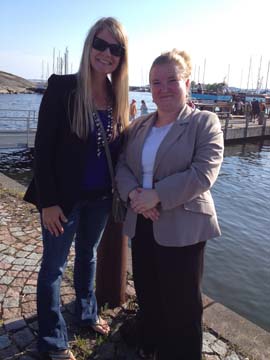
On June 17, 2013, I was one of three co-authors of a paper entitled “Robert E. Park’s contribution to the history of intercultural communication” for the New Histories of Communication Study Preconference, at the International Communication Association convention in London. My co-authors were Filipa Subtil and José Luis Garcia, who I met last year while in Portugal. Dave Park, Peter Simonson and Philip Lodge did a great job of organizing the preconference. A group photo of 60 of the 80 participants is available here.
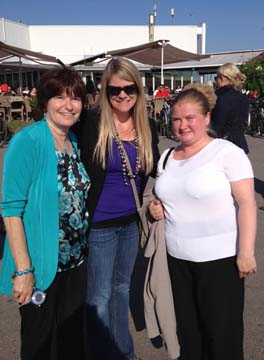
And after the preconference came the conference proper. ICA has really worked on becoming a more truly international organization (it’s now up to about 45% international members). As a result, this conference was the perfect ending for the last six months of travel because I connected again with other scholars I had last met in the countries where they live and work: China (Jiang Fei and Kuo Huang), Saila Poutiainen (Finland), John Wilson (Northern Ireland), Saskia Witteborn and Ling Chen (Hong Kong), Todd Sandel (Macau), Tamar Katriel, Esther Schely-Newman and Ifat Maoz (Israel), Cindy Gallois and Jeff Pittam (Australia). And Casey Lum, who I last met in Hong Kong, though he lives in the US. Of course, I also met a variety of friends and colleagues, both international and from the US (Richard Buttny, Theresa Castor, Don Ellis, Larry Gross, Beth Haslett, Evelyn Ho, Klaus Krippendorff, Dave Park, Jeff Pooley, Jeff Robinson, Karen Tracy and Bob Craig, Steve Wilson, Cynthia Stohl, Bill Eadie, Natasha Shrikant, François Cooren (Canada), Akiba Cohen (Israel), Olga Ivanovna Matyash (Russia), among many others – sorry not to be able to name everyone!), as well as several directly connected with this Center or the Council that is its parent organization (Linda Steiner, Brenda Berkelaar, Michael Haley). And I was glad to discover new international colleagues (Sheila Lodge, UK; Marion Wrenn, now at Princeton, but shortly to be in Abu Dhabi; John Laprise, Qatar; Zrinjka Peruško, Croatia; Boguslawa Dobek-Ostrowska, Poland; Raul Fuentes Navarro, Mexico; Peter Putnis, Australia, among others). As a result, some new researcher profiles and guest posts will be appearing on this site over the next month or so. Some of the conversations were about the possibilities permitted by social media and new publishing choices, so stay tuned for additions to this site as a result.
Wendy Leeds-Hurwitz, Director
Center for Intercultural Dialogue
A general call is being circulated – feel free to respond directly, as described below.
“We would like to hear from you – what role should culture play in EU external relations?
In 2012 a consortium consisting of eight members, led by the Goethe Institute, Brussels, was tasked by the European Commission to carry out the preparatory action ’Culture in EU external relations” launched by the European Commission and approved by the European Parliament.
The purpose of the action is to facilitate an on-going process of research, exchange of knowledge and support policy reflection in strengthening the role of culture in external relations.
In particular, the preparatory action will contribute to formulating recommendations for a strategy on culture in EU’s external relations on basis of the comprehensive mapping exercise and consultation process involving 54 countries worldwide. Watch and hear Professor of Cultural Policy Studies Yudhishthir Raj Isar, team leader, shortly explaining the aim and purpose of the Preparatory Action.
The Preparatory Action is running until mid-2014 along with the online discussion. To sum up the process, we converge the results into a final conference in April 2014 where future recommendations for policy makers are made and the strategic approach towards mobilising action on culture in external relations is presented.
It is our goal to raise awareness of the project and make the debate on Culture in EU external relations as strong as possible by involving wider public, civil society, culture institutions, artists, public bodies and individuals who have knowledge to add and comments to share. So, please tell us what do you think?
Please visit our website/blog and join the discussion, or post a video, picture or comment #CultExtRel on Facebook, Twitter or LinkedIn. And subscribe to our Newsletter to be on top on the latest research in the field – and add your perspective and knowledge to it.
We are looking forward to passing on your recommendations to the policy makers, the European Parliament and interested parties.”
The Department of Communications and New Media at the National University of Singapore (NUS) has posted ads and seeks to hire for three positions, one at the Assistant Professor level and two at the Associate Professor level. For application info, please visit this website.
1) A tenure track Assistant Professor in Health Communication for July 2014. Candidates must have a Ph.D. in Communication or a closely related field. ABDs are encouraged to apply, but a Ph.D. degree is required by date of appointment. The successful candidate should demonstrate a clear promise of research excellence in health communication. We are interested in candidates who explore health communication using participatory and culture-centered methodologies or approaches. The successful candidate will teach a range of courses in Health Communication and Communication Management/Public Relations, and work closely with the Center for Culture-Centered Approach to Research and Evaluation (CARE) at NUS. CARE is a global hub for health communication research that uses participatory and culture-centered methodologies to develop community-driven health communication solutions. Application deadline for this position is: September 30, 2013.
2. Associate Professor in Health Communication and/or Communication Management. Candidates must have a Ph.D. in Communication or a closely related field, and demonstrated excellence in teaching and research. We are interested in scholars who approach communication through new and emergent media perspectives and value diverse research methods. The successful candidate will be expected to teach a range of courses in health communication and communication management/public relations, and play active roles in developing the Department’s graduate program and mentoring graduate students.
3. Associate Professor in Media Studies/New Media. The successful candidate should have a Ph.D. in Communication or a closely related field, who has demonstrated excellence in teaching and research. We seek a colleague to conduct teaching and research in one or more of the following specializations in New Media: (a) Freedom of Speech, Regulation, and Control, and (b) Public Discourse and Public Participation. We are interested in scholars with a record of research or a research interest in Asian contexts.
Application deadline for positions two and three: August 31, 2013.

 Richard Buttny is a professor of communication and rhetorical studies at Syracuse University.

 Center for Intercultural Dialogue