 Dr. Federico Subervi-Vélez is currently, Co-Editor-in-Chief of The Oxford Encyclopedia of Race, Ethnicity and Communication (scheduled for publication in 2022), and Honorary Associate/Fellow of the Latin American, Caribbean and Iberian Studies Program at the University of Wisconsin-Madison.
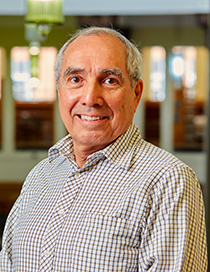 In 2018 he was Visiting Leverhulme Professor at the School of Media & Communication within the Faculty of Arts, Humanities and Cultures of the University of Leeds, United Kingdom. While there he conducted research about the media system and politics in Puerto Rico, a topic about which his co-authored book is titled: The News Media in Puerto Rico: Journalism in Colonial Setting and in Times of Crises(2020). In the United Kingdom he delivered lectures at the University of Leeds, and also at Cambridge University, Oxford University, Goldsmiths College-London, Sterling University, and the University of Liverpool among others.
His previous academic job was as Full Professor at the School of Journalism & Mass Communication and as Provost Faculty Associate for Diversity, Equity and Inclusion at Kent State University in Ohio, where he helped develop the College of Communication and Information doctoral program while continuing his research about Latinos and media issues. Prior to that, he was Full Professor and Director of the Center for the Study of Latino Media and Markets at the School of Journalism and Mass Communication, Texas State University. He’s also been a professor at the University of Texas at Austin, and the University of California at Santa Barbara.
Subervi-Vélez earned his BA in Social Sciences and his MA in Public Communication from the University of Puerto Rico, Río Piedras campus. His Ph.D. in Mass Communication was earned at the University of Wisconsin-Madison. Since the early 1980s, he has been conducting research, publishing and teaching on a broad range of issues related to the mass media and ethnic minorities, especially Latinos in the United States. In addition to more than fifty journal articles, essays, book chapters and reports on these subjects, he is the editor and an author of the book The Mass Media and Latino Politics. Studies of U.S. Media Content, Campaign Strategies and Survey Research: 1984-2004 (NY: Routledge, 2008).
Subervi-Vélez has been Fulbright Research Professor in Brazil and in Chile. He was a UNESCO professor at the Universidade Metodista de São Paulo, and visiting professor at St. Petersburg State University, the University of Amsterdam, the Universidad Diego Portales and the University of Santiago in Chile, the Universidad Federal de Río Grande do Norte en Natal-Brazil, the University of Zeppelin in Germany, and the Instituto de Comunicación, Artes y Humanidades de Monterrey, México. Subervi-Vélez has delivered academic presentations at numerous universities in the U.S. and Latin America, and was one of the cultural consultants for Nickelodeon’s Dora the Explorer and for Scholastic Entertainment’s The Misadventures of Maya and Miguel, and served as advisor for PBS’ Oh Noah!
From his home in Austin, Subervi-Vélez divides his time between his duties as member of the Advisory Board of ¡Boricua!, an emerging Internet radio organization, and as member of the Advisory Council of Child Trends’ Hispanic Institute. He also serves on the editorial boards for Journalism & Mass Communication Quarterly, Journalism Educator, The Howard Journal of Communications, the Revista Latinoameriana de Ciencias de la Comunicación, and Cuadernos Inter.C.A.Mbio Sobre Centroamérica y el Caribe.
In 2015 he was founding member and president of the Association of Latino Media, Markets & Communication Research. From 2013-2019, he served on the Board of Directors of the Latino Public Radio Consortium, for which he held the post of Secretary for three years. In 2017, he also served on the Board of Directors of the National Association for Media Literacy Education. To help the Latino community in Texas, he worked as Chair of the Board of Directors of Latinitas, Inc., a non-profit organization whose vision is to empower Latino youth through media and technology, an organization that had its genesis in 2002 in one of Subervi-Vélez’s classes at the University of Texas.
Based on his lifelong work on diversity research and teaching, in 2012, the Association for Education in Journalism & Mass Communication honored him with the Lionel L. Barrow, Jr. Award for Distinguished Achievement in Diversity Research and Education. In 2017, the National Association of Hispanic Journalists also recognized his teaching, research and community service by inducting him into the organization’s Hall of Fame.
One of his most recent publications, co-authored with Tania Cantrell Rosas-Moreno, is titled “The Imperative of Latino-Oriented Media and News Literacy,” (pp. 109-119) in W.G. Christ & B.S. De Abreu (Eds.), Media Literacy in a Disruptive Media Environment, (2020, Routledge).
Work for CID: Federico Subervi-Vélez served on the CID Advisory Board 2020-23, and also has served as a reviewer for Spanish translations.

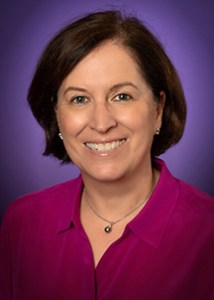 She is an American journalism historian who studies news as an agent of democracy, specializing in English- and Spanish-language news, the immigrant press, and coverage of underrepresented groups. Garza is the author of the award-winning They Came to Toil: Newspaper Representations of Mexicans and Immigrants in the Great Depression (University of Texas Press, 2018). They Came to Toil examines English- and Spanish-language news coverage of immigrants during the longest economic downturn in the United States. She is a founding faculty member of TCU’s interdisciplinary department of Comparative Race and Ethnic Studies (CRES). Her work has been published in Journalism History, American Journalism, and the Howard Journal of Communications.

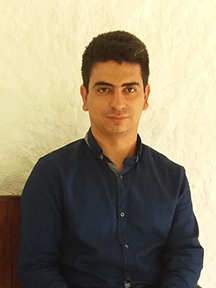 He holds a bachelor degree in the teaching of English as a foreign language from Universidad Surcolombiana and a master´s degree in English language teaching from the same university. In addition to his current studies, he is working as a co-researcher within the framework of the research group “APRENAP” from Universidad Surcolombiana while being also part of a research hotbed at Universidad Nacional de Colombia.

 Center for Intercultural Dialogue