
 Eva Berger is a senior lecturer at the School of Media Studies of the College of Management Academic Studies (COLMAN), where she also served as Dean (2006-2012). She holds a B.A. from the Department of Film and Television at Tel-Aviv University (1985) and an M.A. (1986) and a Ph.D (1991) in Media Ecology from New York University.
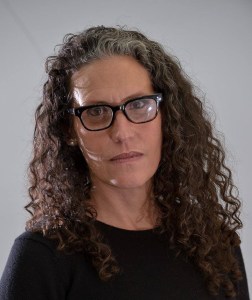
Dr. Berger has taught at NYU, Tel Aviv University, the Kibbutzim College of Education and the Sam Spiegel Film School, and has been part of the faculty at COLMAN for close to 30 years. She has served on numerous boards and public service organizations including the Israel Peace Initiative, Israel Press Council, and Institute of General Semantics.
Eva has been a frequent commentator in the Israeli press on issues relating to media, language, gender and culture. She served on the editorial board of EME: Explorations in Media Ecology (the journal of the Media Ecology Association), and is currently a member of the Editorial Board of Giluy Daat, a Multidisciplinary Journal on Education, Society and Culture, as well as member of the Board of Trustees of ETC.: A Review of General Semantics. She served as Chairwoman of the board of Women in the Picture (the Association for the Advancement of Women in the Visual Arts).
She is the author of various articles and book chapters in the fields of Communication and Media Studies. Eva’s research interests are Media Ecology, Gender, Advertising, Media and Technology, Health Communication, and General Semantics.
Publications include:
Berger, E. & Berger, I. (2014). The communication panacea: Pediatrics and general semantics. Fort Worth, TX: Institute of General Semantics.
Berger, E., & Berger, I. ( 2012). Hassan, Ami and Dalia’s mom: Narrative medicine in pediatrics. In R. Ahmed & B. Bates (Eds.), Medical communication in clinical contexts. Dubuque, IA: Kendall Hunt.
Berger, E., & Na’aman, D. (2011). Combat cuties: Photographs of Israeli women soldiers in the Israeli press since the 2006 Lebanon war. Media, War and Conflict, 4(3), 269 – 286.
Berger, E. (2010). Recapitulation, medical imaging technologies and media of communication: The medium is the message. EME: Explorations in Media Ecology, 9(4), 225-237.
Berger, E. (2008). Orality v. monotheism or media v. narratives: Biblical heroes and the media environment of the spoken word. In S. Drucker & G. Gumpert (Eds.), Heroes in a global world. Cresskill, NJ: Hampton Press.
Berger, E. (2008). The Postmanian dialogue: Education on TV, for TV and about TV. In N. Aloni (Ed.), Empowering dialogues in humanistic education: Theoretical and practical aspects. Bnei Brak: Hakibbutz Hameuchad Publishers, Sifriat Kav Adom. [Hebrew]
Berger, E., & Lavie-Dinur, A. (2007). Conservative outlook and liberal reflection: Homosexuals in Israeli television commercials. EME: Explorations in Media Ecology, 6(1), 35-48.
Shoval, G., Zalsman, G., Polakevitch, J., Shtein, N., Sommerfeld, E., Berger, E., & Apter, A. (2005). Effect of the broadcast of a television documentary about a teenager’s suicide in Israel on suicidal behavior and methods. Crisis, 26(1), 20-24.
Berger, E. (2004). The exhaustion of the literacy metaphor in education. EME: Explorations in Media Ecology, 3(2), 131-137.
Work for CID:
Eva Berger translated KC:35 Media Ecology into Hebrew.

 She graduated from Fudan University with a Bachelor’s degree in Translation and the University of Hong Kong with a Master’s degree in China Development Studies. Her research interests span China studies, historical climate change and its educational practice, comparative literature, and native American studies. She has contributed to publishing projects of notable prize winners including The Sympathizer (100th Pulitzer Prize winner) & The Refugees by Viet Thanh Nguyen, Collected Poems: 1931-2001 by Czeslaw Milosz (Nobel Laureate), No Room for Small Dreams: The Making of Modern Israel by Shimon Peres (former Israeli President), as well as works by Paul A. Cohen, Ezra F. Vogel, and Henry Kissinger.
 Her research interests include multiculturalism, intercultural communication and competence, intercultural language learning, study abroad programmes, internationalisation and internationalisation at home processes as well as the use of online educational tools in teaching. She is actively involved in international projects focusing on multicultural education and the development of intercultural competence in healthcare settings. She is member of the Hungarian Association of Teachers and Researchers of Languages for Specific Purposes and the European Association of Language Teachers for Healthcare. She is on




 Her research interests include the intersections of: rhetorical theory and criticism, feminist theories of communication, environmental communication and rhetoric, and intercultural communication and rhetoric. She is especially interested in these areas of inquiries in Asia and Latin America. She has completed research projects in and about Indonesia, Mexico, and Costa Rica.
 Center for Intercultural Dialogue