Questioning geocultural boundaries

CALL FOR PAPERS

Communication Theory special issue on “Questioning geocultural boundaries of communication theories: De-Westernization, cosmopolitalism and globalization”

Guest editors: Silvio Waisbord and Claudia Mellado
Submission deadline: April 1, 2013

Although Western perspectives have been dominant in the study of communication, scholars have called for the emancipation of non-Western theories and new conceptual and theoretical perspectives. Researchers have shown the importance and vitality of communication theories grounded in various philosophical conceptions in Africa, Asia and Latin America. This call should not be understood as an effort to “de-Westernize” communication studies. On the contrary, the task is to explore whether non-Western perspectives expand the analysis and challenge central assumptions and arguments.

Communication Theory therefore invites authors to submit papers for a future special issue on “Questioning geocultural boundaries of communication theories: De-Westernization, cosmopolitalism and globalization.” Contributions could analyze current theoretical developments in communication studies across the world, revisit epistemological and historical foundations, examine the integration of Western and non-Western perspectives in communication studies, the uses of theories of global comparative research, discuss the relevance of non-Western theories and models, and successful and failed efforts at theoretical cross-pollination. Submissions may address but should not be limited to the following
questions:

– Amidst the globalization, indigenization, and hybridization of communication and cultures, what do we mean by non-Western and Western theories?
– What are non-Western communication theories? Are they primarily based on non-individualistic, communitarian notions of self and universalistic premises?
– What are the commonalities and differences among non-Western theories? What contributions and differences do they offer?
– How do non-Western theories reframe questions and arguments grounded in Western theories?
– Is it valid to denominate theories on the basis of geo-cultural origin? How are essentialist positions reaffirmed? How and by whom or what are they challenged?

Manuscripts must be submitted by April 1, 2013, through the online submission system of Communication Theory. Authors should indicate that they wish to have their manuscript considered for the special issue. Inquiries can be sent to Silvio Waisbord (waisbord AT gwu.edu) and Claudia Mellado (claudia.mellado AT usach.cl).

U Queensland postdoc

The Centre for Critical and Cultural Studies (CCCS) at the University of Queensland (Brisbane, Australia) is seeking expressions of interest for applications for 3 year UQ Postdoctoral Research Fellowships for 2014-2016. The UQ postdoctoral scheme seeks to attract talented early career researchers with well-developed research programs and strong track records. The fellowships support full time research, although it is possible to organise some teaching experience if desired.

If successful the applicant will be based in the CCCS, a leading Australian research centre in the humanities that supports broad-ranging research in cultural and media studies. Current research emphases include the environmental humanities, surveillance studies, television studies, Australian cultural history, cinema studies, new materialities, celebrity, and media anthropology. The Centre provides a rigorous, supportive and collaborative research environment and has assisted many outstanding early career researchers to develop their research capacities and careers. It has also helped UQ earn top ERA rankings in cultural and media studies research.

Applicants for UQ Postdoctoral Fellowships must have no more than five years full time professional research experience or equivalent part time experience since the award of a Ph.D. An applicant who does not hold a doctoral degree at the time of application may be offered an appointment if evidence is subsequently provided that a doctoral thesis will be submitted by the end of 2013. Assessment criteria will include the excellence of the researcher and the quality of the research program to be undertaken. Applicants must have an outstanding track record relative to opportunity and a demonstrated capacity for undertaking original work. In addition, the selection process will consider the alignment of the proposed research with existing research strengths in the Centre. Typically, applicants have already published their work in top academic journals or have demonstrated similar research achievements.

The 2012 salary range for the award ranged from A$68,000 to $76,000 per annum based on experience. The fellowship also comes with maintenance funds (to be spent on research, travel, and equipment) totalling $20,000 over three years and relocation reimbursement. For more details about the UQ Postdoctoral Research Fellowships, including eligibility and assessment criteria, see here.

SUBMITTING EXPRESSIONS OF INTEREST
If you are interested in applying for a UQ Postdoctoral Fellowship through the CCCS, the first step is to contact Professor Gay Hawkins (Director) at admin.cccs AT uq.edu.au with an expression of interest. This should involve a copy of your CV and a one page outline of your proposed research project.

The deadline for receiving expressions of interest is 8 April. You will be notified as to the success of your EOI by 19 April.

If you are selected to proceed to the next stage and submit a formal application to the UQ Postdoctoral Research Fellowships through the CCCS you will have until the end of May to prepare your application. Final dates for submission are not yet available but this is the usual timeframe.

To learn more about the work of CCCS, potential applications are strongly advised to visit the CCCS website. A brief snapshot of current staff and their research projects are listed in the right column to give a preliminary overview.


Save

Rhode Island College job ad

The Department of Communication at Rhode Island College invites applications for a full-time, a tenure track position at the rank of Assistant Professor for Fall 2013 to teach Public and Professional courses including Interpersonal Communication, Conflict Resolutions, Research Methodologies, and Public Speaking.

The Department of Communication serves approximately 400 majors in Public and Professional Communication, Mass Media, PR/Ad, and Speech, Language, and Hearing Sciences. Join a forward-looking and collegial department in a well-regarded regional institution with great traditions and dynamic culture. The Greater Providence metropolitan area offers easy access to the East Coast cultural centers, ocean shore, parks and forests, and many options for urban or suburban life styles.  Established in 1854, Rhode Island College is a comprehensive mid-size institution of approximately 9,000 students.

Requirements include: Ph.D. in Communication (must have Ph.D. before August 15th; experience teaching above courses; extensive knowledge of contemporary communication theories and practices.

Preferred Qualifications include:  Quantitative research methods competency; evidence of effective undergraduate teaching in the above courses.

The Position is open until filled, but priority will be give to applicants who apply by April 7, 2013.

IMPORTANT: For full job description and application procedures*, see our website.


Save

Intercultural Competences – UNESCO

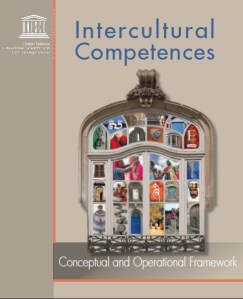
“UNESCO”UNESCO has just published “Intercultural competences: A conceptual and operational framework.” (Paris, France: UNESCO, 2013).

interculturalcomp_cover

This document is a synthesis of, and expansion upon, the numerous documents prepared for, and especially the discussion held during, the UNESCO Experts Meeting on Intercultural Competences, October 21-22, 2011, in Paris, France, organized by the Intersectoral Platform for a Culture of Peace and Non-Violence under the coordination of Katérina Stenou (who also serves as a member of this Center’s Advisory Board). The report benefited particularly from the following sources: a) five regional reports prepared by Milena Dragićević Šešić & Sanjin Dragojević, Alejandro Grimson, Prue Holmes, Melissa Steyn, and Magdi Youssef; b) a synthesis thereof by Darla Deardoff; and c) the stimulating discussions at the experts’ meeting, which included not only all of the regional report authors except Dragojević and Steyn, but also Eric Cattelain, Yolanda Onghena, Hanna Schissler, and Yves Winkin. In addition, many of UNESCO’s Chairs on Interreligious Dialogue for Intercultural Understanding joined the discussion on October 22, 2011. I drafted this report on behalf of the group, and with considerable input from the others, as well as from UNESCO staff. My thanks to Katérina Stenou for involving me in this project, and to the amazing set of international colleagues I met during the process.

This was the first time I was asked to participate in the design of a publication as well as the content, so I also thank the designers involved in the process for teaching me so much. The images of people or writing included in the report were provided by UNESCO; all of the other photographs were taken either by me or my husband on our international travels over the past several years. The cover uses a photograph of a hotel window in downtown Coimbra, Portugal, taken while I was there as a Fulbright Senior Scholar – the ultimate result of a connection made by Eric Cattelain at the experts meeting, and a good example of just the sort of expanding international network that this Center is designed to facilitate.

Wendy Leeds-Hurwitz
Director, Center for Intercultural Dialogue

(See this discussion of the document by AFS.)

Update: Now available also in Arabic, FrenchSpanish and Russian.

Venice Academy of Human Rights 2013

The Venice Academy of Human Rights will take place from 8 – 19 July 2013. The theme of this year’s academy is ‘Obligations of States.’ Online registration is open until 5 May 2013. You can view the detailed programme here.

Faculty of the Venice Academy 2013

General Course
Jeremy Waldron
University Professor, New York University School of Law

Christian Reus-Smit
Professor of International Relations at the University of Queensland

Malcolm Shaw
Senior Fellow at the Lauterpacht Centre for International Law and Research Professor (formerly Sir Robert Jennings Chair) in International Law at the University of Leicester

Brigitte Stern
Professor of International Law at the University of Paris I, Panthéon-Sorbonne

Françoise Tulkens
former Judge and Vice-President of the European Court of Human Rights

Neil Walker
Regius Professor of Public Law and the Law of Nature and Nations at the School of Law, University of Edinburgh

Key Facts
Participants: Academics, practitioners and PhD/JSD students
Type of courses: Lectures, elective seminars and optional workshops
Number of hours: 24 hours of compulsory courses (plenum), min. 16 hours of elective and optional courses (smaller groups)
Location: Monastery of San Nicolò, Venice – Lido, Italy
Fees: 600 €

The Venice Academy of Human Rights is an international programme of excellence for human rights education, research and debate. It forms part of the European Inter-University Centre for Human Rights and Democratisation (EIUC).

The Academy offers interdisciplinary thematic programmes open to academics, practitioners and doctoral students with an advanced knowledge of human rights.

A maximum of 60 participants will be selected.

Participants attend morning lectures, afternoon seminars and workshops and can exchange views, ideas and arguments with leading international scholars and experts. This includes the opportunity to present and discuss their own “work in progress” such as drafts of articles, chapters of doctoral theses or books and other projects.

At the end of the programme, participants receive a Certificate of Attendance issued by the Venice Academy of Human Rights.

Save

Intercultural Dialogue: Saudi Arabia

Guest PostsListening carefully to intercultural dialogue in Saudi Arabia
by Trudy Milburn.

Asked to travel to Riyadh, the capital of Saudi Arabia last March to conduct training sessions at a local university I felt some trepidation, but ultimately agreed to go.  Fear of terrorist activity against foreigners was my main concern.  However, since I study intercultural communication, I was excited to learn first-hand about a culture and a region that seemed to only be in the news because of oil and war.

One interaction I witnessed in a public square has remained somewhat of a mystery.

Our guide escorted my colleague and I to the old city-center that functions as an historic landmark and museum. As we arrived, we heard the call from the loud-speakers near minarets to prayer time.  Everyone began moving in the direction of the nearest mosque. Some women knelt to pray on prayer rugs in or near the shops. I asked about the difference, and was told that the women can pray anywhere, it is only men who must go to the mosque. Our guide himself was exempt for two reasons, he was still a student and because he was working.

Standing quite near us, by the entrance to this museum, were about three or four young men, perhaps in their early twenties.  Their dress identified them as Muslim, but since they did not wear head coverings, I could not tell if they were Saudi men.  We watched an elderly woman approach the group of men and speak loudly, gesturing towards the mosque.  From an American perspective, it seemed that she was berating them for not going to the mosque.  Her tone and the volume of her talk made it sound like she was really disapproving of them. She stood near to the group and continued in this manner for some time. In comparison to her, the few others remaining in the square were quiet and you could begin to hear the chanting of the prayer from the mosque’s loudspeakers. She seemed to be causing quite a scene and the men shifted their stances as she approached, backed off, and re-approached.

We asked our guide what she was saying.  From our American perspective, we imagined that she must be chastising them for not attending the prayer with everyone else. What our guide told us surprised us.  He said that she was beseeching them, as good sons, to attend.  To confirm my recollection, I asked my colleague and he recounted that we were told that she was telling the men how much she cared for them and loved them and that they should be good and pray. My colleague was holding the camera taking the video while I was speaking; we saw interaction in the background. Here’s the video, since the individuals are too far away to identify.

The rhetorical choices she made to persuade these men to go to the mosque initially suggested she was breaking the social norm whereby women typically respond to men’s lead.  However, her ability to shift the frame and take the role of a concerned parent who was merely reminding them of their duty to Allah, indicates a rhetorical sensitivity we would be wise to heed.  Perhaps some situations where dialogue seems impossible actually have spaces where, given the proper roles, one can make statements that otherwise would be considered unlikely or impossible.

Download the entire post as a PDF.

Trudy Milburn Profile

Profiles

Trudy Milburn is is associate vice president for academic affairs at Southern Connecticut State University.

Trudy Milburn

Her academic work examines the ways membership categories are enacted and displayed in various organizational and professional settings, both online and face-to-face.

Dr. Milburn has been a tenured Associate Professor at California State University, Channel Islands and Baruch College/City University of New York. You can read more about her professional accomplishments in her e-portfolio and see her brief analysis of rhetorical communication in Riyadh, Saudi Arabia here.

Selected Publications

Scollo, M. & Milburn, T. (Eds.). (2019). Engaging and transforming global communication through Cultural Discourse Analysis: A tribute to Donal Carbaugh. Madison, NJ: Fairleigh Dickinson Press.

Milburn, T. (Ed.). (2015). Communicating user experience: Applying local strategies research to digital media design. Lanham, MD: Lexington Books.

Gilbertz, S. & Milburn, T. (2011).  Citizen discourse on contaminated water, superfund cleanups, and landscape restoration: (Re)making Milltown, Montana. Amherst, NY: Cambria Press.

Milburn, T. (2009). Nonprofit organizations: Creating membership through communication.  Cresskill, NJ: Hampton Press.


Work for CID:

Trudy Milburn has written multiple guest posts: Intercultural Visual Communication, Dialogue About Border Crossers, How Conducting Assessment is Similar to Learning About New Cultures, Assessing Intercultural Competency, Part II, and Listening Carefully to Intercultural Dialogue in Saudi Arabia. In addition she is the author of KC111: Membership Categorization Analysis.

Where are you from?

The Where Are You From? Project (WAYF) is a series of video interviews with immigrants, citizens, new and long-term residents, and refugees in North Carolina, USA. The WAYF Project puts a face on immigration and uses technology to understand the human tendency and the right to move. We collect and share stories about mobility using a free and public platform that exposes users to the human aspect of migration, while teaching about multiple places, countries, and cultures.

The premise that everyone has a history of movement and the personal stories of the WAYF Project are particularly salient as the United States and other nations debate immigration reforms and look for alternative policies for all immigrants, from high skilled workers who enter legally to those who cross the border without documents.

Visit our multimedia website, explore the interactive map, and share the WAYF interviews with anyone interested in citizenship, mobility, and immigration.

CFP IAIR conference panel

Call for Papers and Discussants for the 2013 8th biennial IAIR Conference: Reno/Lake Tahoe
Symposium Proposal on IC History Pioneers, Paradigms, and National Developments

For the upcoming June 23-27, 2013 8th biennial conference of the IAIR, we have been notified that there is still space in the schedule and that the deadline for submissions is extended to March 15, 2013.  Please consider if you have content that might contribute to this session proposal (admittedly being expanded rather late) and contact us soon.

Because the theme of this conference is “Pushing the Frontiers of Intercultural Research: Asking Critical Questions,” we propose that one of the important questions to answer concerns evaluation of the
history and status of our diverse intercultural discipline(s). More specifically, it seems critical at this juncture to assess:
(1) What are the enduring contributions of pioneering intercultural trainers, scholars, and practitioners?
(2) How and why have various national/ethnic trajectories in IC expanded, redefined, or repositioned the boundaries and knowledge base of the IC field(s)?
(3) How have the developments of differing paradigms contested and/or contributed to the various expressions now referred to under the “intercultural communication” [IC] rubric?

This is a dialogue that was crystallized in 2010 at two German government sponsored conferences, first at the Berlin “Sino-German Conference on Intercultural Communication” (March 28-April 1) and then
the Shanghai “Chinese IC Disciplinary Development Symposium” (June 11-14). Discussions at those gatherings in part prompted an initiative to document the history of early IC influencers, recently published as the 2012 IJIR Special Issue on “Early American pioneers of intercultural communication“ (Vol. 36(6), which included 14 articles). In compiling that volume, the editors adopted a biographical approach, but acknowledged gaps in both important figures not yet covered as well as the need for developing a more thorough sociology of our IC knowledge (Kulich & Zhang, 2012, pp. 885-901). This session is being organized to continue to address such needs.

Kulich’s opening and concluding articles in the 2012 IJIR issue (available online) suggested the need to cover other important IC pioneers (such as Harry Triandis, Richard Brislin, Mitsuko Saito, David Hoopes, Peggy Pusch, Clifford Clarke, William Howell, William Gudykunst, Young Yun Kim, Stella Ting-Toomey, Mitchell Hammer, Al Wight, Marshall Singer, George Renwick, Stephen Rhinesmith, Robert Moran, Shiela Ramsey, Lynn Tyler, Donald Klopf, Satoshi Ishii, John Berry, Dan Landis, William Starosta, Mary Jane Collier, Geert Hofstede, Alexander Thomas, along with a LONG list of MANY others, and many apologetically NOT yet listed, with influences from and around the world).

One concern, however, is that single scholar/practitioner biographies may not provide as highly-cited journal contributions as work that is more integrative. Seeking to address this, we welcome papers for this session that discuss people, analyze paradigms, organizations, national developments, or other aspects of our shared or divergent history, especially seeking to further a sociology of science for the
IC field(s):
* the analysis of specific intercultural groups/schools of scholars, events, places, programs,
* the interactions/collaboration or divergences of concurrent intercultural pioneeers,
* the history of IC in varied national contexts/ their development landscapes,
* the challenges and contributions of cross-national IC collaborations,
* the framing of contrasting IC paradigms and those who championed them, and/or
* analyzing their effects on the development of IC in different places or persuasions, or
* critical correctives to mainstream IC history, alternative tracks/standpoints/marginalized groups or approaches to studying or doing IC.Discussions are underway for several possible publication outlets for
contributions to this symposium. Some may be selected as articles for another IJIR Special Issue (tentatively possible in 2016), or as key chapters in theme volumes in the Shanghai-based Intercultural Research book series (5 volumes currently published), or as an eventual IJIR “Handbook on the History and Status of Intercultural Communication Research.”

The proposed session is organized by Steve J. Kulich with feedback from a panel composed of Michael Prosser, Jackie Wasilewski, Special Issues Editor Dan Landis, IJIR Editor Colleen Ward and confirmed contributions from Clifford Clarke, Holly Kawakami, and others.

Proposals for contributions for this special conference session should be sent to Steve.Kulich@gmail.com and also to kulich@shisu.edu.cn and should include a 200-500 word abstract detailing the content to be covered or issues to be addressed (before March 15). Responses on inclusion and the tentative design of the symposium session will be sent out before March 18, 2013.

Summer 2013 Shanghai

Villanova University is hosting two fantastic summer programs in Shanghai, China, in 2013. The programs best fit the undergraduate students who are looking to have an international communication internship this summer and/or interested in intercultural communication, Chinese language (any level) and culture, double majors or major & minor in Communication and Business or Asian Studies (or related areas), or simply hope to become a globalized citizen and experience formal and informal learning in one of the world’s fastest growing economies. Shanghai has been rated as one of the world’s top-20 metropolitan cities and “#1 in attracting foreign capital investment and job-creating projects” (The Atlantic, 2011). Here are some highlights:
1.     Intern and Study in Shanghai, China (via Villanova School of Business or VSB)
*       Internship placements over 5 weeks of the program, for 150 hours total (past internship placements: Citibank, IPSOS, McKinsey).
*       A 3-credit course: ECO 3108 Transition of Chinese Economy.
*       A “Survival Chinese Language” training.
*       Cultural excursions: (a) Survival in Shanghai (inc. a boat tour, museum visit, and an acrobatic show) and (b) 2-week cultural excursion, inc. Shanghai to Shandong (Confucian and Taoist traditions), to Beijing (Forbidden City, Summer Palace, the Great Wall of China, Ming Tombs, and Chengde Summer Resort)
*       6 credits in total.
*       Dates: 6/26-8/13, 2013.
*       Cost: Approximately $7,700 (including tuition, housing, PRC visa, and tour; excluding airfare and meals).

2.     Intensive Chinese Language and Culture (via Global Interdisciplinary Studies or GIS)
*       Study and live in the heart of Shanghai.
*       Two 4-week-long courses: (a) Chinese language course (placed to different classes based on language level) and (b) a cultural course. Students may earn 6-9 credits depending on the Chinese language course level. The courses are sponsored by Shanghai Jiao Tong University.
*       Offers an opportunity for all students, at any Chinese language levels, to explore the Chinese language, culture, literature, history, art, theatre, business, society, and Chinese lifestyle.
*       Cultural excursions: (a) Survival in Shanghai (inc. a boat tour, museum visit, and a acrobatic show) and (b) 2-week cultural excursion, inc. Shanghai to Shandong (Confucian and Taoist traditions), to Beijing (Forbidden City, Summer Palace, the Great Wall of China, Ming Tombs, and Chengde Summer Resort)
*       Dates: 7/7-8/13, 2013.
*       Cost: Approximately $5,800 (including tuition, housing, host university health insurance, PRC visa, and tour; excluding airfare and meals).

Both programs are competitive. Please contact Dr. Qi Wang for application procedures or questions at q.wang AT villanova.edu.