Daan Bauwens Profile

ProfilesDaan Bauwens has an M.A. in psychology and is a journalist for the Belgian and international press, combining narrative and anthropological journalism in newspaper articles and prose.

Daan Bauwens

By way of extensive ethnography, since 2008 his research focuses strongly on the influence of culture on interpersonal and intercultural communication. His main interests are conflicting worldviews with violent or non-violent consequences, the influence of religiosity on communicative behavior and the effects of a diaspora on native cultures.

Research topics and publications include: the Israeli mindset and youth culture, the Kurdish cultural struggle in Southeast Turkey, gender and Arab-Berber conflicts in Morocco, Japanese business culture and gender issues, and the structure of political processes in Belgium and the European Union.

In 2014, Daan Bauwens received a Fulbright grant for long-term research and a series of publications on the deep effects of multiculturality and superdiversity on the urban culture of Manhattan and Brooklyn. This research takes place in 2015, with the support and collaboration of New York City ngo City Lore.

NOTE: CID facilitated the connection between Bauwens and City Lore.

Mark C. Hopson Profile

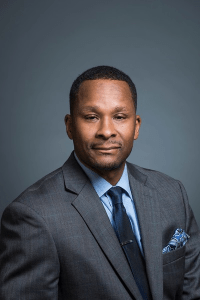
ProfilesMark C. Hopson, Ph.D. (2005, Ohio University) is associate professor of intercultural communication at George Mason University, and director of African and African-American studies.

He teaches undergraduate and graduate classes in African American Studies, Intercultural Communication, the Rhetoric of Social Movements, Rhetorical Traditions, and Organizational Communication. His research and publications include critical intercultural communication, rhetoric, diversity, and the communication of violence prevention.

Dr. Hopson served as Chair of the International and Intercultural Division of the National Communication Association (2017). Additionally, he is a committee member for Research on Black Male Achievers, National Guide Right Program (since 2015). Most recently he served as Director of the PhD Program in the Department of Communication (2014 – 2017).

Previous assignments include Chair of the African American Communication and Culture Division/NCA (2008); Communication Specialist for GMU’s international collaboration to reduce gang violence in Trinidad and Tobago (2009); Committee member for the Police-Community Relations Project at GMU (2013); and Co-director of Campus Climate Committee at GMU (2014).

Dr. Hopson facilitates Changing Lives Through Literature (CLTL) for Fairfax County Public Libraries. CLTL is a nationally recognized alternative sentencing program for juvenile offenders. Additional workshops and facilitations include relationship abuse, sexual assault and violence prevention provided to more than 6,000 learners.

Recent awards include the 2018 Community Service Award from the Dulles-Leesburg (VA) Alumni Chapter of Kappa Alpha Psi Fraternity; the 2011 Spirit of Martin Luther King Award, George Mason University, Fairfax, VA; and contributor to R. L. Jackson’s (Ed.) Encyclopedia of identity (Sage) awarded 2011 Outstanding Resource at the Winter Conference of the American Library Association.

Beth Fisher-Yoshida Profile

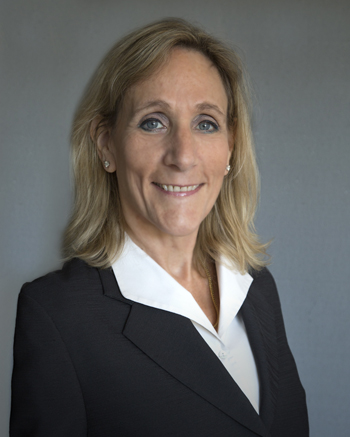
ProfilesDr. Beth Fisher-Yoshida is a Facilitator, Educator, Mediator and Executive Coach, who partners with clients to develop initiatives that will foster change resulting in improved communication, organizational performance and quality of life.

Beth Fisher-Yoshida

She is President and CEO of Fisher Yoshida International, LLC, and clients have included global organizations in the Fortune 100, private sector, nonprofit and government sectors, military and security forces, communities, school districts and academic institutions. Dr. Fisher-Yoshida is Director and Faculty of the Master of Science in Negotiation and Conflict Resolution and Co-Chair of the Advanced Consortium for Cooperation, Conflict and Complexity (AC4) at the Earth Institute, both at Columbia University. She serves on the Boards of the CMM Institute for Personal and Social Evolution, Human Dignity and Humiliation Studies, and the International Advisory Board of Sunkhronos Institue.

Dr. Fisher-Yoshida takes a systemic approach to working on complex issues with multiple stakeholders through facilitated, interdisciplinary collaborative processes. She has more than 25 years experience in the areas of change management; leadership development; conflict resolution management systems, negotiation and mediation; intercultural communication and diversity; team development and effectiveness; and performance management. She has worked globally across a variety of industries including Asia and the Middle East, Africa, Europe and North America, in finance, pharmaceuticals, consumer goods, education, military and the arts.

Dr. Fisher-Yoshida has been working globally with the United Nations and WHO as an external consultant for more than 18 years. She worked as faculty in the Eisenhower Leadership Development Program, a joint collaboration between West Point and Columbia University. Prior to that she was a Training Manager with McKinsey & Company, Japan, a management-consulting firm that focuses on working with top leadership and management on strategy.

She has published many articles, chapters, and has authored and edited books. Her main areas of expertise in consulting and writing involve conflict resolution and collaborative processes, intercultural communication, transformative learning and Coordinated Management of Meaning (CMM), which takes a communication perspective.

Dr. Fisher-Yoshida received her Ph.D. in Human and Organizational Systems and MA in Organization Development from Fielding Graduate University in Santa Barbara, California. She graduated with honors when she received her MA from Columbia University. She received both a BA and a BS from Buffalo State College. Dr. Fisher-Yoshida is a Certified Clinical Sociologist (CCS). She speaks conversational Japanese and lived and worked in Japan for 13 years.


Work for CID:
Beth Fisher-Yoshida wrote KC54: Critical Moments and KC77: Negotiation.

Hatice Sitki Profile

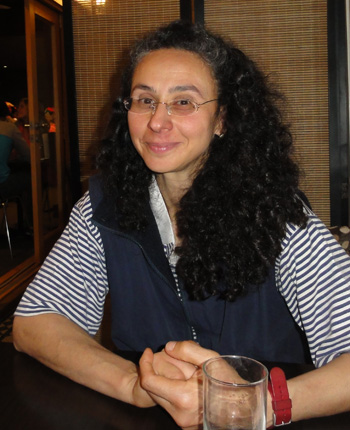
ProfilesDr. Hatice Sitki is the founder and principal consultant of SERSA, National Myths and Symbols Consultancy.

Hatice Sitki

She has a PhD in Communication from Deakin University, as well as an MA and BA in Communication from the University of Canberra. Her research specializations include: semiotics, myths and symbols as they manifest in the following areas: branding national myths and symbols (BNMS) collective group identity/interactions; Europe/EU/Türkey; multiculturalism and polyculturalism, indigenous group identity, re-identitification of diasporas; and branding peace. Sitki has given presentations on: cultural identity of ASEAN;  cultural identity of Europe and EU; cultural identity of Türkey; Australian national identity; multiculturalism; cultural identity of Vancouver, Shanghai and Canberra; cultural sovereignty for Australian Indigenous Peoples; Peace studies; diplomatic cultural studies; how to achieve tourism, merchandising of national identity for profit and cultural inclusiveness. She is  founding President of SIETAR Australasia.

A selection of Hatice’s papers are below:

Sitki, H (2013). Time to celebrate city’s multicultural identity. Canberra Times.

Sitki, H. (2012). Branding (inter) national myths and symbols for peace: How to meet your ‘other’ Türkey and Europe/EU. Ankara, Turkey: Institute for Cultural Diplomacy.

Sitki, H. EU-Türkey: Atatürk and Charlemagne on your Euro notes. Café Babel.

Sitki, H. (June 28, 2013). Türkish spring, Erdogan’s winter. Online Opinion.

Guo-Ming Chen Profile

Profiles

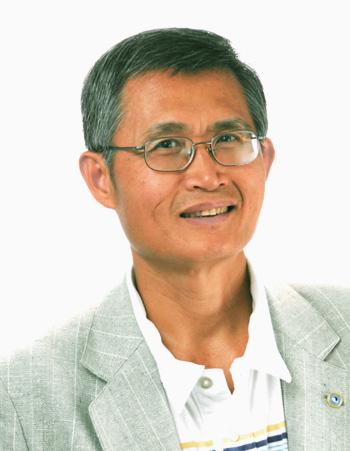
Guo-Ming Chen is Professor of Communication Studies at the University of Rhode Island.

Guo-Ming ChenHe was the recipient of the 1987 outstanding dissertation award presented by the NCA International and Intercultural Communication Division. Chen is the founding president of the Association for Chinese Communication Studies. He served as Chair of the ECA Intercultural Communication Interest Group and at-large member of the SCA Legislative Council, and currently he is the President of the International Association for Intercultural Communication Studies. He is also the co-editor of Intercultural Communication Studies, China Media Research, and International and Intercultural Communication Annual, and serves on the editorial board of different professional journals.

Chen’s primary research interests are in intercultural/organizational/global communication. In addition to receiving various awards and honors, Chen has published over 150 papers, book chapters, and essays in Communication Yearbook, Journal of Cross-Cultural Psychology, China Media Research, Human Communication, Communication Research Reports, Intercultural Communication Studies, The Howard Journal of Communications, Journal of Psychology, etc.

Chen has (co)authored and (co)edited 35 books and journal special issues, including Foundations of Intercultural Communication, Communication and Global Society, A Study of Intercultural Communication Competence, Dialogue Among Diversities, Study of Chinese Communication Behaviors, Chinese Conflict Management and Resolution, Introduction to Intercultural Communication, Theories and Principles of Chinese Communication, Asian Perspective of Culture and communication, Communication Research Methods, Communication Theories, and others.

Chen continues to be active in teaching, scholarship and in professional, university, and community services.


Work for CID:
Guo-Ming Chen wrote KC52: Harmony.

Juana Du Profile

ProfilesJuana Du is associate professor in the Master of Arts in Intercultural and International Communication on-campus program at Royal Roads University in Victoria, BC, Canada.

Juana DuShe draws on personal experience from working in Beijing, Hong Kong, Germany, United States and Canada to frame the way she studies culture, communication and organizations. Du’s professional experience includes cross-cultural adaptation, corporate communication, organizational culture and innovation. She has worked internationally with multinational enterprises, and has acted as a communication research consultant for subsidiaries of MNEs. She provided strategic and tactical advice to Western and Chinese companies to improve the performance of their global operations in talent management, negotiation, multi-cultural teams and innovation.

Her research fields of interest include Asian communication, intercultural communication, intercultural competency and organizational communication. Her interest in the role of culture in communication in different social contexts at various level of interaction and in intercultural encounters has been a center of research and scholarship. She has been conducting research on such topics as cross-cultural adaptation of sojouners, intercultural training, Chinese traditional value orientations, intercultural conflict in M&As, managerial communication in business organizations, organizational culture and learning, knowledge sharing and transfer in MNEs.

Her research on intercultural communication within organizational settings is driven by solving complex problems in the real world. She has worked with many multinational enterprises for different research projects. Currently she is working on a research project on intercultural competence with collaboration with CNPCI (China National Petroleum Co. International).

Du was a post-doctorate researcher at New York University, and a visiting scholar at Techinische Universitat Bergakademie Freiberg in Germany and at Ohio University in U.S. She has published numerous book chapters and peer-reviewed journal papers. She has presented at several international conferences, including the International communication Association, the National Communication Association, the Academy of International Business, and the Shanghai Normal University International Conference of Intercultural Communication. She got the Best Student Paper Award of intercultural communication division of ICA (International Communication Association) in 2009.


Work for CID:
Juana Du wrote KC52: Guanxi, has served as a reviewer of translations into Simplified Chinese, and has co-authored a guest post on Museums as Third Spaces for Intercultural Dialogue.

Michele Koven Profile

ProfilesMichele Koven is Professor in the Department of Communication at the University of Illinois at Urbana-Champaign, with courtesy appointments in the Departments of Anthropology. French, Global Studies, and the Center for Writing Studies.
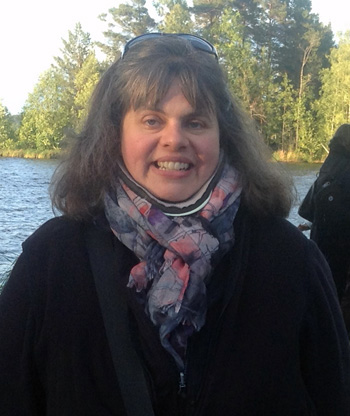
Michele Koven

Using ethnographic and discourse analytic approaches, her research interests include how people enact, infer, and evaluate images of social types in interaction. She is particularly interested in people’s interpretations and experiences of their own and others’ « identities » in multilingual contexts She has most extensively addressed these issues through the prism of oral storytelling among young people of Portuguese origin, raised in France. More recently, she has begun exploring these issues in social media.

Publications

Marques, I. S., & Koven, M. E. J. (2017). “We are going to our Portuguese homeland!”: French Luso-descendants’ diasporic Facebook conarrations of vacation return trips to Portugal. Narrative Inquiry27(2), 286-310.

Koven, M. E. J. (2016). Essentialization strategies in the storytellings of young Luso-descendant women in France: Narrative calibration, voicing, and scale. Language and Communication46, 19-29.

Jaffe, A., Koven, M. E. J., Perrino, S., & Vigouroux, C. (2015). Heteroglossia, performance, power, and participation. Language in Society, 44(2) , 135-139.

Koven, M. E. J., & Simões Marques, I. (2015). Performing and evaluating (non)modernities of Portuguese migrant figures on YouTube: The case of Antonio de Carglouch. Language in Society 44(2), 213-242.

Koven, M. E. J. (2014). Interviewing: Practice, ideology, genre, and intertextuality. Annual Review of Anthropology43, 499-520.

Koven, M. (2013). Antiracist, modern selves and racist, unmodern others: Chronotopes of modernity in Luso-descendants’ race talk. Language and Communication. 33(4), 544-558.

Koven, M. (2013). Speaking French in Portugal: An analysis of contested models of emigrant personhood in narratives about return migration and language use. Journal of Sociolinguistics, 17(3), 324-354.

Koven, M. (2007). Selves in two languages: Bilingual verbal enactments of identity in French and Portuguese. Amsterdam: John Benjamins.

Koven, M. (2004). Transnational perspectives on sociolinguistic capital among Luso-descendants in France and Portugal. American Ethnologist, 31(2), 270-290.


Work for CID:
Michele Koven wrote KC72: Intertextuality and translated it into French; she has also served as a reviewer of French translations.

Howard Giles Profile

ProfilesHowie Giles, past Head of Psychology and Chair of Social Psychology at the University of Bristol, England, has been Professor of Communication at the University of California, Santa Barbara (with affiliations with Linguistics and Psychology) since 1989.  He is a Charter Fellow of the Intercultural Academy and elected Fellow of other Associations in Psychology, Communication, and Gerontology.

Howard_Giles

Giles has worked in language, intercultural, interpersonal, health, lifespan, and media arenas, with intergroup communication being his umbrella identification; the other subfields are subtended by this.  In this regard, he was editor of the 2012 Handbook of Intergroup Communication and with Jake Harwood is co-editor of the upcoming Oxford Research Encyclopedia of Intergroup Communication.  With Antonis Agardiki, he will be co-convening the 1st International Symposium on Intergroup Communication in Thessaloniki in June 2017.  Giles is currently Chair of the International Communication Association’s Intergroup Communication Interest Group which he founded with Scott Reid in 2003, and was co-founder with Peter Robinson of the International Conferences on Language and Social Psychology (ICLASP); the 15th ICLASP will occur in Bangkok in 2016.

Conducting cross-cultural research across dozens of nations and ethnic communities around the world, Giles has worked in an array of intercultural settings, including between-gender, interability, interethnic, intergenerational, police-community, and gay-straight relations.  Within these, for example, he has explored language attitudes, ethnic identity, tourism, acculturation, and successful aging.  Among the research questions he has posed are:

•    How when, and why do we mark our many social identities via language and communicative practices – and how transactively doing so sustains, reshapes these very same identities?

•    How do we age successfully as well as possibly unsuccessfully from different cultures’ standpoints, and how can communication be empowering or disempowering in these regards?

An integrative framework across these domains has been Communication Accommodation Theory, being its architect in the early 1970s (see Key Concepts in Intercultural Dialogue, #48).   Giles has recently been working to inject the salience of “culture” into intergroup theory and was editor of the “Intergroup and Intercultural” section of the International Encyclopedia of Communication (2008-).  Elected Past President of the International Communication Association and the International Association for Language and Social Psychology, Giles is founding/current Editor of the Journal of Language and Social Psychology (1981-) and the Journal of Asian Pacific Communication (1990-) as well as elected Editor of Human Communication Research (1995-98.  He is also General Editor for Peter Lang Publishers of a book series entitled, ”Language as Social Action.”

Giles spent much of his “leisure” time as a Reserve Detective Lieutenant in the Santa Barbara Police Department.  He did this for 15 years and was the recipient of over a dozen outstanding service awards.  This experience fueled his interest in researching police-community relations which is currently a very hot topic in the American media and public discourse.

It is possible to download his vita, or send him an e-mail.


Work for CID:
Howie Giles wrote KC48: Communication Accommodation Theory.

Peter Praxmarer Profile

ProfilesPeter Praxmarer, lic.oec.publ. (University of Zurich, 1977) and Docteur ès sciences politiques (The Graduate Institute, Geneva, 1984), is, since 2003, Executive Director of EMICC (European Masters in Intercultural Communication), a network of ten European universities specializing in intercultural communication, at Università della Svizzera italiana (USI) Lugano, Switzerland.

Peter Praxmarer
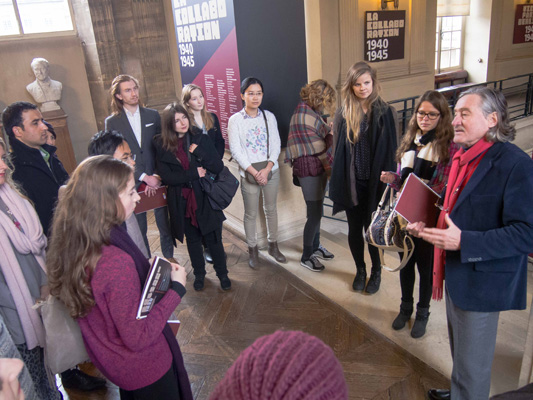
Praxmarer (right) with students of the 2014 Paris Eurocampus in the Archives nationales de France, Paris

For a number of years he taught international politics and relations in the United States (Temple University, University of Pennsylvania, Brown University and University of Rhode Island). He also was a consultant for UNITAR and the United Nations University on issues of social development, and has worked in the private sector (publishing, agriculture, art and antiques). During the wars in ex-Yugoslavia he participated in a fact-finding and assessment mission visiting UN peacekeeping forces in the Krajina region (Croatia), and served as Field and Training Coordinator with the OSCE Mission in Kosovo, for which he has also developed training programs in the field of democratization and good governance.

His main research focus is on epistemological issues (conceptualizations) in IC studies and the social sciences in general. His teaching is mainly on conceptualizations of “The Other”, as well as on intercultural communication in international organizations, and in particular peace communication in post-conflict and emergency contexts. He also works on academic cultures.

During the past ten years he has taught and lectured at more than two dozen universities in Europe and the US, and supervised a number of Bachelor and Master theses for students at different universities.

He also gives workshops and training courses in intercultural communication for different publics, including teachers at various levels, tourism professionals, immigration officials, paramedical personnel, healthcare professionals and managers.


NOTE: Peter Praxmarer passed away quite suddenly on November 5, 2017. He was a good friend to CID and will be sorely missed. A few concrete results of our frequent conversations follow. He wrote Key Concepts in Intercultural Dialogue #39: Otherness and the Other(s), translated it into both German and Italian, compiled a reader with study materials on intercultural communication competence, and prepared a poem, Languages of Peace. He wrote a guest post on Charlie Hebdo and intercultural dialogue, and responded at length to a guest post by Dominic Busch on refugees in Germany. During a Skype call with me, he came up with the concise definition of intercultural dialogue that was turned into CID Poster #3.
– Wendy Leeds-Hurwitz

Sara Mills Profile

Profiles

Sara Mills is a Research Professor in Linguistics at Sheffield Hallam University in the UK.

Sara Mills


She has published on feminist linguistics, mainly sexism and gender and politeness. Her recent research has specifically focused on politeness, and she is also interested in how groups communicate on social media, languages, and perceptions of “management-speak.”


Work for CID:
Sara Mills wrote KC46: Politeness.