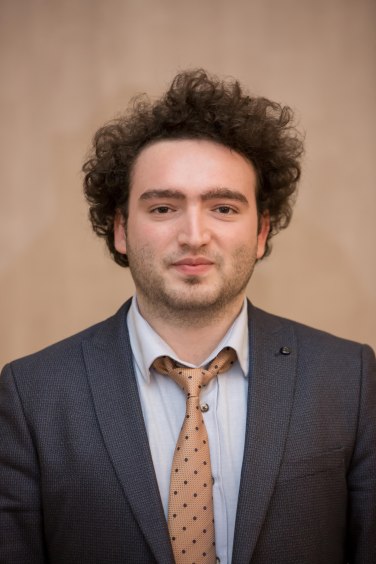
Yan Sun Profile

ProfilesYan Sun gained her Ph.D. in English Literature at Shanghai International Studies University. She is a Judicial Master at the Law School of Fudan University.
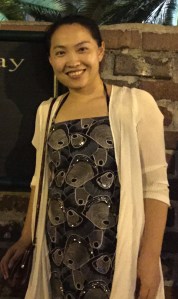
Yan Sun

In 2007-2008 she was Fulbright visiting scholar at Mississippi Valley State University, and in 2014-2015 visiting scholar at John Jay College of Criminal Justice, City University of New York.  She is a certified Standard Chinese Test Examiner at China Language Test Center (Shanghai). Her research interests focus on law, literature and legal history.

Recent Publications:

Sun, Y. (2015).  Britain and Western Africa [殖民与后殖民时期英国与英属西非各国之间的关系]. In Cao & Deming (Eds.), EU and Africa from Historical and Cultural Perspectives(pp. 160-168).  Shanghai:  Shanghai Foreign Education Press.

Sun, Y. (2015). Judicial realism and William Brown’s Clotel. English and American Literary Studies (英美文学论丛), 252-263.

Sun, Y. (2015). Afanti and his family series (Translated, 4 books). Shanghai: Shanghai Foreign Education Press.

Sun, Y. (2015 ) Afanti and Little Donkey Series (Authored, 3 books). Sudan: Fudan University Press.

Sun, Y. (2014). Little Cricket Gery series (Translated, 12 books). China Technology Press.

Sun, Y. (2008). Southern American culture series [美国南方文化]. Teach Yourself English[英语自学], Issues 7-12, pp. 19-21; 18-19; 20-21; 17-18; 20-21; 17-19.


Work for CID:

Yan Sun has translated KC75: Sulh-i-kul, KC76: Intercultural SustainabilityKC77: NegotiationKC78: Language and Intercultural CommunicationKC79: Social CohesionKC80: Cultural Discourse Analysis, and KC81: Dialogue as a Space of Relationship into Simplified Chinese.

Akari Takenishi Profile

ProfilesAkari Takenishi has recently completed a Master’s degree in International and Intercultural Communication at Royal Roads University in Canada.

Akari Takanishi photoShe earned her Bachelor’s degree in Geography, focusing on the cultural and social aspects of Geography at the University of Victoria. She is interested in studying multiculturalism in Canada. Examining her personal experiences as an international student from Japan, she wrote about the influences of multiculturalism on self-representation of identity in society. While completing her Master’s, she also served as research assistant for a study examining the impacts of social media on higher education.

Akari has served as an interpreter and translator, believing that the power of knowledge is limitless and translation is one of the most influential ways to make knowledge reach a greater audience. She has translated several TED talks into Japanese, including:

  • “You don’t need an app for that” By Toby Shapshak
  • “Don’t insist on English” By Patricia Ryan
  • “How to air-condition outdoor spaces” By Wolfgang Kessling
  • “Learning from Sherman the shark” by Jim Toomey
  • “The economic injustice of plastic” by Van Jones

Having grown up in a small village in Japan, she appreciates nature and enjoys growing plants. She became involved in her family tea farm as a distributor dealing with a local tea shop in Canada. Her life has brought her unexpected opportunities and excitement and she feels fortunate to be surrounded by friends, family and mentors who support her personal life as well as academic pursuits. Her academic interests include:

  • Designing a platform where small farmers around the world can share their knowledge and experience with sustainable farming methods, resource management, and reliable market building.
  • Investigating the role of eco-politics in international relations and how it challenges international relations theory in global environmental conflicts.
  • Investigating the academic language proficiency of international graduate students studying in North America and the accuracy of scores of English proficiency tests in portraying academic language skills.

Akari is currently increasing her translation skills, focusing on articles and journals related to intercultural communication and competence. She would like to connect with any individuals or groups who share similar academic interests to discuss future projects and opportunities. As a recent graduate, she is excited to share her knowledge and skills, and learn more from others, hoping that she can be a part of a positive change for a socially and environmentally sustainable future.


Work for CID:
Akari Takenishi wrote KC92: Kintsugi, and also translated it into Japanese.

Yan Qiu Profile

ProfilesYan Qiu holds an M.A. in Intercultural and International Communication from Royal Roads University, and is currently a Ph.D. student in the Department of Sociology and Legal Studies at the University of Waterloo, both in Canada. She has a solid academic foundation in intercultural communication, media studies, and cultural theory.

Currently, Yan applies her expertise as a Graphic Design Consultant, creating visual content for academic dissemination. In addition, she works as an AI Writing Expert, providing linguistic and cultural insights to help develop AI language models.
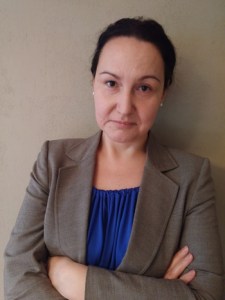

Yan utilizes social media to craft engaging narratives that foster audience connection and enhance brand visibility, using digital platforms as a tool for meaningful interaction and community building. Yan is also a member of the Certified Management Accountant Association, leveraging her knowledge in financial management and analysis to bring an interdisciplinary perspective to her academic and professional work.

Previously, as a research assistant at Royal Roads University, Yan worked on projects related to Chinese media history, literature, and industry practices, her research has been integrated into academic course materials.

Yan has travelled extensively, exploring numerous countries and cities, and immersing herself in diverse cultures, languages, and cuisines. These journeys have enriched her academic research and helped her develop a deeper understanding of how media and communication intersect with cultural identities.


Work for CID:

Yan Qiu has translated KC1: Intercultural Dialogue, KC5: Intercultural Communication, KC10: Cross-Cultural Dialogue, KC11: Intercultural Discourse and CommunicationKC17: Multilingualism, KC19: Multiculturalism, KC22: Cultural Identity, KC25: Metacommunication, KC95: Transnational Media, KC99: Translanguaging, and KC100: Transcultural Communication into Simplified Chinese. Starting in 2024, she took on a role as the Center’s graphic design consultant, and has done the necessary work to revise the original designs for the French, German, and Italian translations of the CID Posters.

Inga Milēviča Profile

Profiles

Inga Milēviča was born and lives in Latvia. She has a Ph.D. in contrastive and comparative linguistics.

Inga Milevica

She currently serves as Docent at Alberta College, The University College of Economics and Culture, and Riga Technical University (academic courses: Rhetoric and Presentation Skills, Introduction into Communication Theory, Business Ethics, Corporate Culture, Business Communication and professional Ethics, Stylistics, and Culture of Latvian Language), and has been Guest Lecturer at Comenius University (Bratislava, Slovakia); Eotvos Lorand University, Budapest (Hungary); Eurasian National University (Astana, Kazakhstan); Uniwersytet Łódzki, (Lodz, Poland); Universidade do Minho, (Braga, Portugal). Since 2014 she has been a member of the Association for Business Communication (ABC); since 2016 she has been a member of the Liaison Committee of ABC. In 2014 she received one of the CID Micro-grants funded by ABC, for travel to a conference in Japan.

Milevica is the author of 3 monographs and more than 100 articles in comparative linguistics, cinematic text and translation and gender journalism. Some of her published papers include:

Milevica, I. (2014). Cinematic text and translations: Film adaptations. British Journal of Science, Education and Culture, 1(5), 8-15.

Milēviča, I. (2017). American cinematic text and translation. European Journal of Literature and Linguistics, 38-44.

Milēviča, I. (2018). Study tours and generation Y: Opportunities and challenges. Евразийский Союз Ученых, 11 (56), 3-6.

Milēviča, I. (2018) Power point presentation and the image of high school teacher. Proceedings of Academics World International Conference, Tashkent, 1-7.


Work for CID:

Inga Milēviča wrote Constructing Intercultural Dialogues #8: A Flying Miracle. She has also translated KC5: Intercultural Communication and KC55: Stereotypes into Russian, and KC5: Intercultural Communication and KC55: Stereotypes into Latvian. She received a micro-grant for travel to Japan from CID, funded by the Association for Business Communication.

Marika Preziuso Profile

Profiles Marika Preziuso is Associate Professor of World Literature at the Massachusetts College of Art and Design. She holds a Ph.D. in Literature from the Caribbean Diaspora and an M.A. in Gender, Society and Culture, both from the University of London, UK.

Marika Preziuso

She writes: I teach 20th century and contemporary postcolonial literature, particularly by migrant and diasporic writers, and speculative fiction of the uncanny, magic realism and Afrofuturism.  The transnational scope of my classes actively invites students to cultivate the skill of intercultural understanding, specifically for visual artists and designers. In summer 2019 I designed and taught a graduate seminar titled “Intercultural Lab for Artists,” which focused on the intersections of craft, world, and self.

My working definition of Intercultural Understanding is: the orientation to any meaningful encounter across differences in which all parties involved recognize each other’s complexities, specificity, and dignity, and choose to engage with them from a self-reflective, dynamic and culturally responsive place.

At MassArt, I am the organizer of Creative Counterpoints,an annual series in its fourth year, devoted to the intersections of narratives of creativity and difference as investigated by visual artists, writers, public intellectuals, and other culture makers.

My academic research examines the intercultural pedagogies that result from transnational visual and literary narratives. These employ strategies of resistance and “opacity” to critique and expand Western imaginaries of “otherness” and create syncretic safe and radical spaces for their authors and their art.

My most recent publication is my conversation with artist Wangechi Mutu, titled “Is America Really Full?”, which is forthcoming in Transition, the magazine of the Hutchins Center for African and African-American Research at Harvard University.

I am a published poet and a RYT yoga instructor and meditation guide. My poetry stems from an intentional practice of “counterpoint”. As an immigrant woman, an academic of diaspora studies, a white “other” in a sea of American whiteness, I navigate layers of difference at times as a deficit, at times as an excess, a surplus. My poetry stems from this constant, exhausting and yet rewarding process of counterpoint, an alchemy, a (mis)translation. These qualities are both my curse and the lens through which I observe and make sense of the world, from the space of a sideway outsider, and suspicious insider space.

Outside Massart, I lead creative workshops in partnership with local communities in Boston to weave the practices of meditation, journaling, story-telling and verse in translation as gateways to explore our emotions and experiences as honorable and to practice holding space for them with curiosity, compassion, and a sense of humor. I particularly welcome the opportunity to work with creatives who straddle languages, cultures, and complex personal histories and support them in the (re)kindling of their creative light.

Academic website

Creative writing workshops


Work for CID:
Marika Preziuso offered her students credit if they would create potential CID Posters.

Lauren Mark Profile

ProfilesLauren Mark is a doctoral student and Graduate Teaching Associate at the Hugh Downs School of Human Communication at Arizona State University. Lauren is currently researching the possibility of bringing Asian epistemologies to Western contexts.

Lauren Mark

She is a certified Civil Dialogue Facilitator and holds an M.Ed in Educational Organization, Leadership and Policy, an M.A. in Dance, and a B.A. in English Literature and French. Prior to joining Hugh Downs, Lauren worked as a co-founder and project manager of two cross-cultural learning organizations in Taipei, Taiwan – Becoming, 緣創an intercultural development platform, and the East West Culture Project. Lauren has also worked as a translator and interpreter in Taiwan and Israel across a variety of business and artistic sectors.Rooted in her experiences in the field, Lauren’s general research interests focus on identity shifts in acculturation. Her studies focus on the intersection of ethnic, linguistic and performative factors in acculturation, as well as how local cultures influence people’s ways of being.

Pedagogically, Lauren explores innovative means to bring embodied self-reflexivity to classroom contexts, within courses such as Communication and Creativity, Intercultural Communication, and Identity, Performance, and Communication. Her work in this arena began with her thesis work, Visible Histories, in which she explored how the sharing of embodied reminiscence and the collective physical reconstruction of memories served as a meeting ground for multiple generations exploring the art of dance. Lauren continues to experiment with ways that purposeful nonverbal communication can enhance reflexivity and promote collective care. This is an extension of her previous work in Taiwan, where she managed creative interdisciplinary labs and choreographed works that tested the boundaries between audience and performers.

Publications:

Mark, L. (2019). An Exploratory study of part time minorities: Finding home as a minority member. Journal of Intercultural Communication Research, 3. doi: 10.1080/17475759.2019.1602071

Wells, T., Mark, L., and Sandoval, J. (2019). Affect, space and the everyday: A reconsideration of waste in academic inquiry. Taboo: The Journal of Culture and Education. Special Ed. Waste. [Manuscript accepted].

Ray, C. D., Floyd, K., Mongeau, P. A., Mark, L., Shufford, K. N., & Niess, L. C. (2019). Planning improves vocal fluency and appearance of concern when communicating emotional support. Communication Research Reports, 36, 57-66. doi: 10.1080/08824096.2018.1560251

Brezis, R. S., Singhal, N., Daley, T., Barua, M., Piggot, J., Chollera, S., Mark, L., & Weisner, T. (2016). Self- and other-descriptions by individuals with autism spectrum disorder in Los Angeles and New Delhi: Bridging cross-cultural psychology and neurodiversity. Culture and Brain, 4(2), 113-133.


Work for CID:
Lauren Mark wrote Constructing Intercultural Dialogues #7: When the East Meets the Middle East.

Gabriel Furmuzachi Profile

ProfilesGabriel Furmuzachi has a Ph.D. in philosophy from the University of Vienna (Austria).

Gabriel Furmuzachi

His academic work deals with issues such as multiculturalism and cosmopolitanism, language learning, communication and narrative identity. His present research interests gravitate around the idea of dialogue as a means of bringing cultures closer and of cosmopolitanism (both in its guise as identity and responsibility and as moral and institutional cosmopolitanism). He also has written essays about metaphors and emotions, the accommodationist use of reason in Canadian philosophy, the relationship between reason and nature, aesthetics and more.His non-academic work consists in surveying the international fine art trade (with emphasis on Eastern European art), buying and selling nineteenth and twentieth century paintings.

He is also involved in a series of projects spread on a wide cultural spectrum including, for example, Space and Place (a non-profit group based in Vienna, Austria, focused on urbanism and social interventions aiming at promoting cultural and social diversity in the city), Liternautica (a Romanian literature portal where he is part of the editorial team, encouraging young and established Romanian writers and building bridges between literary traditions) and Revista Timpul (where he is contributing with interviews and essays on various themes).


Work for CID:

Gabriel Furmuzachi wrote a guest post, Migration, Language and Dialogue, and conducted an interview: Vienna Coffeehouse Conversations: An interview with Eugene Quinn. He also translated KC1: Intercultural Dialogue, KC3: Intercultural Competence, and KC16: Migration into Romanian.

Emin Yiğit Koyuncuoğlu Profile

ProfilesEmin Yiğit Koyuncuoğlu is part of the European Solidarity Corps for Fundacja EkoRozwoju, an environmental organization in Wraclaw, Poland.

He has a BA in Communication Design and Management from the University of Anadolu (Turkey), including a year of studying Tourism Management at the University of Primorska (Slovenia). After graduation, he spent a year as Communications Assistant to Darüşşafaka Society, the oldest educational NGO in Turkey, providing high quality primary and high school education to students whose parent(s) are deceased.

While a student, he completed a Marketing internship in Tallinn (Estonia), and worked as a tour guide and as a staff member with Tourcon Turizm ve Kongre Hizmetleri in Antalya (Turkey), helping that organization prepare for national and international conferences. As a travel enthusiast and hitchhiker, he manages a Facebook page about his experiences, improving social media and video editing skills. He considers himself a linguaphile currently learning the art of translation.


Work for CID:

Emin Yiğit Koyuncuoğlu translated KC78: Language and Intercultural Communication, and KC94: Cross-Cultural Kids into Turkish.

Amparo Huertas Bailén Profile

ProfilesAmparo Huertas Bailén (Ph.D., UAB, Spain) is professor in the Department of Audiovisual Communication and Advertising at Autonomous University of Barcelona (UAB) and director of the Institute of Communication at UAB (InCom-UAB).

Amparo Huertas

She is also a member of the Table for the Diversity in Broadcasting (Audiovisual Council in Catalonia-Spain). Her research is focused on the relationship between culture and communication from the perspective of social minorities. The objective of most of her projects is to understand the cultural consumption of migrant population and its influence on their adaptation process in a new country with gender perspective.

Selected publications:

Huertas, A. (2020). Interreligious dialogue in public service broadcasting. A case study in Catalonia (Spain). Religions, 11(9), 441.

Huertas, A., & Peres, L. (2020). Migrantes que se autoproclaman autoridades discursives: “¿Qué pasa con Venezuela?” Revista CIDOB d’Afers Internacionals, 124, 147-169.

Huertas, A. (2019). Migrantes en el entorno digital: Espacios y conexiones. In V. Rocco Lozano (Ed.), Éxodos y geopolíticas (pp. 119-137). Madrid, Spain: Editorial Dykinson.

Huertas, A. (2016). Culturas que conviven, ¿pero se interrelacionan? In G. Lobillo, A. Castro-Higueras, A. Sedeño, & M. Aguilera (Eds.). Prácticas culturales y movimientos sociales en el Mediterráneo: ¿Un cambio de época?  (pp. 13-22). Málaga, Spain: Universidad de Málaga.

Huertas, A., & Martínez, Y. (2016). La adaptación de la población migrante desde sus consumos culturales. In F. Gervasi (Ed.), Diversidades: Perspectivas multidisciplinarias para el estudio de la interculturalidad y el desarrollo social (pp. 185-210). Coahuila, México: Universidad Autónoma de Coahuila; Ediciones de Laurel.

Huertas, A., & Martínez, Y. (2013). La educación mediática como herramienta de integración social en contextos migratorios: estudio de casos a partir de mapeados de proyectos. In D. Aranda, F. Sánchez & S. Creus (Eds.), Educación, medios y cultura de la participación. (pp. 263-278). Barcelona, Spain: Editorial UOC .

Huertas, A., & Martínez, Y. (2013). Maghrebi women in Spain: Family roles and media consumption. Observatorio (OBS*), Special Issue , 111-127.

Cogo, D., Elhajji, M., & Huertas, A. (Eds.) (2012). Diásporas, migraciones, tecnologías de la comunicación e identidades transnacionales. Bellaterra, Spain: Institut de la Comunicació, Universitat Autònoma de Barcelona.

Leila Monaghan Profile

Profiles

Leila Monaghan (Ph.D., UCLA) teaches linguistic and cultural anthropology at Northern Arizona University. Leila Monaghan

Her research interests are broad and include the history of Deaf communities, the impact of HIV/AIDS, the narrative construction of disability, and the role of Native women in the Plains Indian Wars. Co-edited books include Many Ways to be Deaf, and Barriers and Belonging: Personal Narratives of Disability. She is also editor of the new journal Language, Culture and History.

Selected publications:

Jarman, M., Monaghan, L., & Harkin, A. Q. (Eds.). (2017). Barriers and belonging: Personal narratives of disability. Philadelphia: Temple University Press.

Monaghan, L. (2012) Perspectives on intercultural communication and discourse. In C.B. Paulston, S. Kiesling & E. Rangel (Eds.), Handbook of intercultural discourse and communication (pp. 19-36). Malden, MA: Wiley-Blackwell.

Monaghan, L. F., Schmaling, C., Nakamura, K., & Turner, G. H. (Eds.). (2003). Many ways to be deaf: International variation in Deaf communities. Washington, DC: Gallaudet University Press.

Monaghan, L., Goodman, J., & Robinson, J.M. (Eds.). (2012). A cultural approach to interpersonal communication: Essential readings. Malden, MA: Wiley/Blackwell.

Senghas, R.J., &  Monaghan, L. (2002) Signs of their times: Deaf communities and the culture of language. Annual Review of Anthropology, 31(1), 69-97.


Work for CID:

Leila Monaghan wrote KC11: Intercultural Discourse and Communication, and Constructing Intercultural Dialogues #5: Intercultural Dialogue and Deaf HIV/AIDS, as well as a guest post on Intercultural Challenges of the Deaf HIV/AIDS Epidemic.


NOTE: Leila Monaghan passed away in February 2022. She was one of the first to mention the Istanbul conference on intercultural dialogue in 2009 in print, a delight to correspond with, and she will be sorely missed.
– Wendy Leeds-Hurwitz