Unity in Diversity – World Civil Society – India Launch

Unity in Diversity – World Civil Society
Mumbai, India
15-16 March 2016
Planetary Citizens Assembly
India Launch

* Building intercultural, inter-ethnic, inter-religious, inclusive and sustainable society
* Working in collaboration with the United Nations.

The launch of the India Assembly is a significant step, and you are invited!

Mar 15, 2016 OFFICIAL LAUNCH EVENT
5:00 pm (for a 5:30 pm start)
KC College Auditorium, Churchgate Mumbai 400020

Mar 16, 2016 WORKSHOP & GARDEN INAUGURATION
9:30 am – 5:00 pm
Roundtable: Business for building Unity in Diversity
Workshop: Policy, team, action plan of the Unity in Diversity Indian Chapter
Where: Thadomal Shahani Centre for Management, 257 SV Road, (next to
Shroff Eye Hospital, Bandra, Mumbai 400050
Inauguration: Unity in Diversity Peace Garden, Muktanand Peace Garden, off
Linking Road, Mumbai 54

Objectives of the India launch event:
• to form a “National Steering Committee” in India; which will coordinate continuous collaboration among civil society, private business sector, governments, religions, spiritual organisations, and work towards building inclusive societies,
• to establish a grassroots “Community Leadership Team; which will work with local communities in creating and implementing projects to strengthen civil society via dialogue and understanding,
• to lay the foundation of the Policy of the Indian Unity in Diversity – World Civil Society Assembly and to create the first action plan based on this policy, and
• to establish collaboration between the UN Alliance of Civilizations India Focal Point, UN associated organisations and the India civil society; in order to contribute to reaching the UN’s Sustainable Development Goals.

Who is invited
Corporate leaders, youth groups, women’s groups, media, educationists, migrants, sports, music arts and entertainment, volunteer groups, faith or spiritual groups, community organizations, cultural & ethnic groups, multicultural & diaspora organizations, congress bodies, councils, individuals with an interest in intercultural understanding, prominent thought leaders, etc., and everyone who believes in the vision of the Unity in Diversity.

Presented and organized by
Global Dialogue Foundation (GDF), Melbourne Australia, Shahani Group, Mumbai India, in collaboration with: UN Alliance of Civilizations & NGO DPI.

U Nizwa job ad: Applied Linguistics/TESOL (Oman)

Lecturer / Assistant Professor / Associate Professor / Full Professor in Applied Linguistics / TESOL
University of Nizwa – Department of Foreign Languages
Expires: 12th March 2016

We are seeking motivated, well-qualified academics to teach English classes for university-wide EAP courses, and on courses in the BA and MA English language programmes in the Department of Foreign Languages, University of Nizwa, Oman. Applicants should be able to begin work at the beginning of the Fall 2016 academic semester (August / September).

Requirements:
The ideal candidate will have the following profile:

Lecturer:
• MA in Applied Linguistics / TESOL from an recognized Anglophonic university

Assistant Prof / Associate Prof / Prof:
• PhD in Applied Linguistics / TESOL from an recognized Anglophonic university
• Research track record and proof of an ongoing commitment to research activities
• Experience in supervising MA theses

For all ranks:
• Higher education teaching experience in a relevant specialism for a minimum of two years
• Computer / media literacy including use of a LMS
• Experience of working in an L2 English academic context.

Job Description
The successful applicant will be expected to:
• teach modules in the university-wide English courses, and on BA and MA English language programmes (according to rank)
• contribute to the development of courses, and the development of student learning opportunities
• collaborate with other teachers working on the programmes
• supervise BA undergraduate final year projects and MA dissertations as required
• undertake necessary administrative tasks

Application Information
Applicants should send their CV and covering letter via email.

U Loughborough job ad: Research Fellowships

University of Loughborough
Vice-Chancellor’s Research Fellowships

Our researchers are renowned for the quality and relevance of their work, driven by the need to address real-life issues. They contribute at the very highest levels to new knowledge and understanding, helping business and industry to compete more effectively, shaping public policy and, ultimately, improving the quality of people’s lives. Now we are looking for the brightest stars to become Vice-Chancellor’s Research Fellows. You’ll be creative and passionate about your research, with a clear vision of how it could make a difference to the world – and the ambition to make it happen. With a growing international reputation for the quality of your work, developed through your post-doctoral experience, you will become a research leader of the future. With us you’ll achieve that potential in a supportive, collaborative and family-friendly research environment. If you’re interested in applying, you must have a completed PhD and be able to show how your research is affiliated to one of Loughborough’s Schools.

Closing date for applications: 11 March 2016

Job description
These Vice-Chancellor’s Research Fellowships are a critical part of our investment in research excellence and are designed to support early-career individuals who are developing an international reputation for the quality of their research. Each Fellowship will significantly enhance the research capability of the University in the area(s) proposed by the Fellow and agreed with the hosting School.

Request for Best Practices: UNIVERSO and Migrants

Gustave Teh, an intercultural mediator with the intercultural association, UNIVERSO, based in Bologna, Italy, asks for information on best practices of all those affiliated with the Center for Intercultural Dialogue.

“Our main objective is aimed at promoting sociocultural growth in the society for both migrants and nationals. We have been operating since 2002 in the territory and have close to 2000 registered users. Recently, due to the immigration crises in Italy we have decided to focus our attention on those activities that will ease and facilitate migrant integration policies and the freewill return back home for migrants with regular or irregular residence permits. Our dear request to you is to help us get into contact with good practices around your global collaborators network which will permit us test and implement new welcome, welfare and well being strategies for migrants with special consideration for women and young mothers.”

Please email Gustave Teh directly with ideas, although you’re also welcome to post comments in response.


Copenhagen Multimodality Day (Denmark)

Copenhagen Multimodality Day
New adventures

Centre of Interaction Research and Communication Design
University of Copenhagen, 18 November, 2016
Proposal Deadline: 20 June, 2016

Multimodality Day is an annual research seminar held at the University of Copenhagen. The aim of the seminar is to bring together researchers who study interaction from a multimodal perspective. This year’s seminar invites proposals for paper presentations related to the general theme of New adventures within video ethnography, EM/CA, multimodality and interaction analysis. We intend for this theme to generate a broad range of presentations and discussions related to the further development of the multimodal paradigm as a comprehensive theory and method. The keynote speaker is Professor Lorenza Mondada, University of Basel and University of Helsinki.

We especially encourage paper presentations that deal with methodological issues and/or presents novel solutions to methodological issues and cross disciplinary issues. Such presentations could focus on (but are not restricted to) the following themes:
*What can or cannot be translated from the original CA-vocabulary to the material world and to embodied actions, e.g. embodied adjacency pairs, embodied repair, turn taking through material actions, etc. (e.g. Keevallik, 2014; Mondada, 2014; Ivarsson & Greiffenhagen, 2015).
*How to work with and establish understanding about subtle features like feelings and cognition, e.g. how to combine Distributed Cognition (DC) with EM/CA? (e.g. Hutchins, 2006; Enfield, 2013).
*How to develop a common transcription system for representation of embodied conduct (e.g. Mondada, 2007, 2012b; Laurier, 2014)?
*How to analyze the ways multimodal resources are assembled within a multiactivity, i.e. a sequential and simultaneous setting (e.g. Mondada, 2012a; Goodwin, 2013; Haddington, Keisanen, Mondada, & Nevile, 2014)?
*How to secure a relevant understanding of the relevant context and secure reliable and valid results when doing video ethnography (e.g. Luff & Heath, 2012)?
*How to demarcate the distinctive features for an EM/CA multimodal analysis compared to e.g. multimodality studies by Kress (2009) or Norris (2011)?

We welcome empirical papers, discussions and theoretical papers that take EM/CA, interaction analysis, video ethnography and multimodality studies as points of departure for new theoretical and methodological considerations. We encourage presentations based on studies from all types of empirical settings.

Abstract presentation from Lorenza Mondada Body and language in interaction: the challenges of multimodality

This talk discusses recent advances within the field of Conversation Analysis concerning the study of video materials. On the basis of actual data, it reflects on the challenges the analysis of social interaction is confronted to, when considering detailed temporal arrangements of a diversity of multimodal resources, including language, gesture, gaze, body postures and movements. Key conceptual principles of Conversation Analysis will be discussed in this respect, like temporality and sequentiality. Multimodal resources are assembled for the organization of actions in a way that relies both on successivity and simultaneity – and even several parallel, though coordinated, simultaneities. How sequentiality – as a fundamental principle for the organization of human interaction – operates in such conditions is interesting to look at in detail. Some complex activities (and even multiactivities) will be scrutinized in detail – including discussions of how to represent and transcribe them – in order to tackle these questions. Among them, walking together is an interesting case, because it mobilizes the entire body of walkers, it is literally organized step by step, it provides for the embodied accountability of projected bodily trajectories, and it offers an example of complex instances of bodily coordination, characterizing walking in silence as well as walking and talking.

Practical information
This one-day research seminar is being prepared and organized by the Centre for Interaction Research and Communication Design at the University of Copenhagen. We are aiming for about 30-40 participants during the day, which is planned as a single-track research seminar. The seminar is free of charge, but participants should email Brian Due for registration.

Research seminar programme
09:30-10:00 Coffee and welcome
10:00-12:00 Paper presentations
12:00-13:00 Lunch
13:00-14:00 Keynote speech by Lorenza Mondada
14:00-15:00 Paper presentations
15:00-15:30 Coffee break
15:30-17:00 Paper presentations
17:00-17:30 Discussions
18:30- Dinner in downtown Copenhagen

Submission, abstracts and deadlines
Abstracts should not exceed 300 words and should include the title of the paper, research topic, method, empirical data, theoretical approach, findings and references.

The deadline for submitting abstracts is 20 June, 2016.

Notification of acceptance by 20 August, 2016

Please ensure that your abstract is anonymized by removing all features from the text and the document properties that may help to identify you as the author of the text. Presentations should be 30 minutes long (20 min presentation + 10 min discussion). The research seminar language is English. Abstracts should be emailed to Brian Due.

Travel and location maps
The seminar will take place at University of Copenhagen
Room 27.0.09
Njalsgade 120, 2300 Copenhagen S
Travel information

Organizing and scientific committee
The Centre for Interaction Research and Communication Design is organizing the research seminar and the scientific committee consists of Brian L. Due and a double-blind review process. Any comments or questions can be addressed to Brian Due at bdue@hum.ku.dk

References
Enfield, N. J. (2013). Relationship Thinking: Agency, Enchrony, and Human Sociality. OUP USA.
Goodwin, C. (2013). The co-operative, transformative organization of human action and knowledge. Journal of Pragmatics, 46(1), 8–23. http://doi.org/10.1016/j.pragma.2012.09.003
Haddington, P., Keisanen, T., Mondada, L., & Nevile, M. (2014). Multiactivity in Social Interaction: Beyond multitasking. Amsterdam ; Philadelphia: John Benjamins Publishing Company.
Hutchins, E. (2006). The distributed Cognition Perspective on Human Interaction. I N.J. Enfield, S.C.Levinson (eds.) Roots of human sociality: culture, cognition and interaction. Berg Press.
Ivarsson, J., & Greiffenhagen, C. (2015). The Organization of Turn-Taking in Pool Skate Sessions. Research on Language and Social Interaction, 48(4), 406–429. http://doi.org/10.1080/08351813.2015.1090114
Keevallik, L. (2014). Turn organization and bodily-vocal demonstrations. Journal of Pragmatics, 65, 103–120. http://doi.org/10.1016/j.pragma.2014.01.008
Kress, G. (2009). Multimodality: A Social Semiotic Approach to Contemporary Communication. London ; New York: Routledge.
Laurier, E. (2014). The Graphic Transcript: Poaching Comic Book Grammar for Inscribing the Visual, Spatial and Temporal Aspects of Action: The Graphic Transcript. Geography Compass, 8(4), 235–248. http://doi.org/10.1111/gec3.12123
Luff, P., & Heath, C. (2012). Some «technical challenges» of video analysis: social actions, objects, material realities and the problems of perspective. Qualitative Research, 12(3), 255–279. http://doi.org/10.1177/1468794112436655
Mondada, L. (2007). Commentary: Transcript Variations and the Indexicality of Transcribing Practices. Discourse Studies, 9(6), 809–821.
Mondada, L. (2012a). Talking and driving: Multiactivity in the car. Semiotica, 2012(191). http://doi.org/10.1515/sem-2012-0062
Mondada, L. (2012b). The conversation analytic approach to data collection. I J. Sidnell & T. Stivers (Red.), The Handbook of Conversation Analysis (s. 304–333). Blackwell-Wiley.
Mondada, L. (2014). The local constitution of multimodal resources for social interaction. Journal of Pragmatics, 65, 137–156. http://doi.org/10.1016/j.pragma.2014.04.004
Norris, S. (Red.). (2011). Multimodality in Practice: Investigating Theory-in-Practice-through-Methodology. New York: Routledge.


U Oxford job ad: Research Fellowship in Global Refugee Policy

Junior Research Fellowship in Global Refugee PolicyRefugee Studies Centre (RSC)
University of Oxford – Oxford Department of International Development
Closes: 11th March 2016

Oxford Department of International Development, Queen Elizabeth House, 3 Mansfield Road, Oxford

In the context of various refugee crises including the European context, the RSC is launching a centre-wide project called ‘Rethinking Refuge.’, which will include a series of workshops and seminars. To advance this project and to stimulate creative academic reflection relating to refugee policy, the RSC seeks a JRF in Global Refugee Policy. The JRF will work collaboratively on the development of this centre-wide initiative, work with RSC staff on a series of joint outputs notably on ‘responsibility-sharing in the refugee regime’, and undertake independent research. The successful candidate may be asked to teach an option course on the MSc in RFM Studies. The post is full-time, for a fixed-term of 2 years, to start in April 2016 or as soon as possible thereafter.

Applicants should have: a doctorate (or be close to completing a doctorate) in a relevant social science discipline (e.g. politics, international relations, public policy, law, modern history, geography, anthropology, or sociology) with a focus on refugee issues; a track record of publishing work in highly ranked, peer-reviewed academic publications, including a sole authored publication in a highly regarded journal in a relevant field, or in leading academic press; proven interest in refugee policy, demonstrated by engagement with relevant institutions and/or policy processes; ability to organise and convene academic events that engage both academics and policy-makers in dialogue; excellent communication skills, including the ability to write for publication, present research proposals and results, and represent the Refugee Studies Centre at meetings; and the potential to make a significant academic contribution to the field of Refugee and Forced Migration Studies.

Applications for this vacancy are to be made online. You will be required to upload a supporting statement and CV as part of your online application.

Only applications received before 12.00 noon on Friday 11 March 2016 can be considered.

Business Communication and Leadership in Hong Kong

Business Communication and Leadership in Hong Kong
Summer Travel Program
June 24-July 21, 2016
Led by Professor Robert M. (Bob) McCann
UCLA Anderson School of Management

This summer study program is open to undergraduate students from any university, and is open to students of all majors!

As one of the world’s leading financial and trade centers, Hong Kong represents an ideal place to embark upon this program’s two core content areas – business communications and business leadership.

Students will experience global business first-hand as they meet local business leaders, visit key cultural and business sights, learn from professors with extensive regional knowledge, and immerse themselves in the economic giant of Hong Kong. The program takes place at the prestigious University of Hong Kong and is hosted by the UCLA international institute.

Courses Offered:
International and Area Studies 110a: Strategic Business Communication
International and Area Studies 110b: Business Leadership: Global Perspective

Questions?
Contact: Undergrads@International.ucla.edu


A Global Force for Human Rights? (Spain)

Workshop in Seville: ‘A global force for human rights? Assessing the EU’s comprehensive approach to human rights in crisis management and conflict’
March 11, 2016

About the workshop
The workshop will consist of two panels. The first panel will deal with the applicable regulatory frameworks regarding human rights violations in conflicts and the protection of vulnerable groups. The second panel will discuss the integration of human rights and international Humanitarian Law (IHL) and democracy/rule of law principles and tools into the Common Security and Defence Policy (CSDP) and missions and evaluating their impact on vulnerable groups.

The keynote speech is entitled “A Global Force for Human Rights? Preliminary Findings from the FRAME Project” by Prof. Dr. Jan Wouters. Speakers include Prof. Dr. Gerd Oberleitner, University of Graz/ETC Graz; Prof. Dr. Francesco Seatzu, University of Cagliari; Dr. Mikaela Heikkilä, Åbo Akademi University; Prof. Dr. Elisabeth Salmón, Pontificia Universidad Católica del Perú; Prof. Dr. Cristina Churruca, University of Deusto; Ms. Ines Thevarajah, Human Rights Focal Point at the CPCC (EEAS); and Mr. Gabino Regalado de los Cobos, Colonel, EUTM Mali.

Register
If you would like to attend the workshop, please register with Laura Iñigo.

Programme
The programme of the workshop can be found here.

Abstract
The TEU directs the Union to respect human rights whenever it conducts activities on the international scene, including EU external policies in response to conflicts and crisis situations. The promotion of human rights at the international level is one of the principal objectives of the EU´s external action (Art. 3, para. 5). This principle is formulated in Art. 21, paragraph 2 under the Union´s commitment to `define and pursue common policies and actions, and (to) work for a high degree of cooperation in all fields of international relations, in order to: … b) consolidate and support democracy, the rule of law, human rights and the principles of international law’. In the 2012 Strategic Framework on Human Rights and Democracy and the 2015-2019 Action Plan for its implementation the EU addresses current and anticipates future challenges in the field and indicates solutions to enhance policy effectiveness and coherence, by proposing a comprehensive human rights approach to conflicts and crisis´ (third strategic area of the Action Plan).

This international conference is organised by the Research Group ‘Human Rights and Globalisation’ (SEJ055) of the University of Seville, and aims at discussing the findings of the FRAME project regarding the European Union external policies in response to conflicts and crisis situations. One of the main objectives of FRAME is to survey and analyse contemporary human rights violations especially against vulnerable groups, within the context of conflict and crisis within and among States, between and within communities and their link with historical and cultural factors.

This conference seeks to address ways to prevent and overcome violence through the critical assesment of the instruments available to the EU to integrate human rights, humanitarian law and democracy/rule of law principles in these policies with a focus on vulnerable groups in society (e.g., children, internally displaced persons and refugees).

Venue
The workshop will take place at the Law School of the University of Seville located at the Campus Pirotecnia, Av. Enramadilla 18-20, 41018, Seville (Spain).

Study International Communication Summer 2016 (England)

Study International Communication in England, Summer 2016

Are you a graduate or upper-level undergraduate student in communication looking to earn 3 credits for a 12-day study abroad experience in England for Summer 2016?

Then please consider CCOM 7070 International Corporate Communication and Culture offered at Fairleigh Dickinson University’s Wroxton College located in Oxfordshire, England, from May 29 – June 10, 2016.

The course consists of invited speakers, case studies, site visits, and trips to London, Stratford-upon-Avon, and Oxford. The main objective of the course is make students familiar with the cultural, historical, and political contexts in which international business transactions take place. Students will also attend a day of seminars at the Harris-Manchester College of Oxford University ending with High Dinner with the Oxford students.

Wroxton College is the British campus of Fairleigh Dickinson University, situated in the ancestral home of Lord North in Oxfordshire. The main College building is Wroxton Abbey, a fully modernized Jacobean mansion on 56 acres of its own lawns, lakes and woodlands. Originally constructed as an Augustinian priory in 1215, Wroxton Abbey has accommodated several British monarchs and statespeople such as Theodore Roosevelt. It now houses the College’s classrooms and seminar rooms, the library, fully modernized student lodging facilities, and computer laboratories.

At Fairleigh Dickinson University, participating students are drawn from the MA in Corporate and Organizational Communication, the MA in Organizational Behavior, and selected upper-level undergraduate students.

Students from other universities and colleges are warmly invited to register with permission of the course leader, Gary Radford.

Full details about the course, tuition and fees, photographs, and programs from prior years, can be found online. If you have questions, email Prof. Gary Radford.

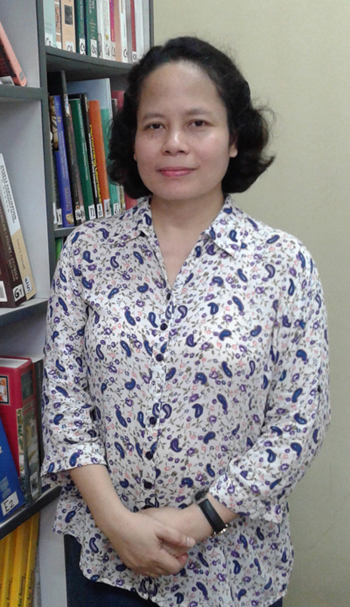
Belinda Espiritu Profile

ProfilesBelinda F. Espiritu is an associate professor of communication in the University of the Philippines Cebu. She teaches communication theory and research, development communication, speech communication, and media studies. Her research interests include cultural studies, intercultural communication, religion and communication, peace and development studies, and Internet communication.

Belinda EspirituShe has published research articles in local and international communication and literary journals on transnational audience reception of Korean television dramas; communication, civil society groups, the public sphere, and governance; intercultural communication between Christians and Muslims in the Philippines; Islamophobia and negative media portrayal of Islam; and literary critical essays. She has also written essays on the ideology of peace; reviews of the books of Maulana Wahiddudin Khan, an Islamic teacher advocating for peace; and her reflections on life, society, and spirituality published in newageislam.com, globalresearch.ca, and metrocebunews.com.

She has spoken in seminars for teachers about peace education, violence and conflict resolution and has been a resource speaker to Episcopalian priests on the use of communication for evangelization and to Philippine soldiers and military officers on purpose-driven life and goal-setting. She holds a Bachelor in Secondary Education degree with a major in English, a Master of Arts degree in Comparative Literature, and a Doctor of Philosophy degree in Communication from the University of the Philippines in Diliman, Quezon City.

Her publications include:

Espiritu, B. F. (2019). Negative stereotypes of Muslims have fueled the rise of Islamophobia. In E. Lucas (Ed.), Islam in society: Global viewpoints (pp. 35-43). New York: Greenhaven Publishing.

Espiritu, B. F. (2017). The Lumad struggle for social and environmental justice: Alternative media in a socioenvironmental movement in the Philippines. Journal of Alternative and Community Media, 2, 45-59.

Espiritu, B. F. (2015, July 18). The Battle against GMOs in the Philippines: Confronting the WTO’s Attempts to Destabilize Sustainable AgricultureGlobal Research.

Espiritu, B. F. (2015, May 6). How to Have Peace in the Holy Land: Implications for Interfaith Dialogue. New Age Islam.

Espiritu, B. F. (2015, April 3). Islamophobia and the “Negative Media Portrayal of Muslims”: An Exposition of Sufism, A Critique of the Alleged “Clash of Civilizations”. Global Research.

Espiritu, B. F. (2015, March 26). Neoliberal Capitalism’s Fatal Flaws: A Call for an Alternative Economic System. Global Research. 

Espiritu, B. F. (2015, March 14). The Destructive Impacts of Corporate Mining in the Philippines: The Tampakan Copper-Gold Mining Project in MindanaoGlobal Research.

Espiritu, B. F. (2014). The Public Sphere, Blogs, and the Pork Barrel Scam: Online Citizens’ Voices on Corruption and Governance in the Philippines. Media Asia, 41(4), 343-354.

Espiritu, B. F. (2011, August). Transnational audience reception as a theater of struggle: Young Filipino women’s reception of Korean television dramas. Asian Journal of Communication, 21(4), 355-372.

Espiritu, B.F. (2006). From fears and prejudices to intercultural solidarity: A study of interpersonal/ intercultural communication in Muslim-Christian relations in selected areas of Metro Manila, Philippines. Religion and Social Communication:  Journal of the Asian Research Center for Religion and Social Communication, 4(2), 77-97.

Espiritu, B.F. (2005). Communication, participation and governance: Discursive democracy and communitarianism in the Philippines. Media Asia: An Asian Communication Quarterly, 32(4), 240-248.

Espiritu, B.F. (2004). The cry of the poor and the oppressed: Theodicy and existentialism in the historical and socio-political contexts of Francisco Sionil Jose’s novels. KINAADMAN: A Journal of Southern Philippines, 26.

Espiritu, B. F. (2004). A call to subversion: Women’s disempowerment and empowerment in Lina Espina Moore’s Heart of the Lotus and other novels”, in Interdisciplinary Literary Studies: A Journal of Criticism and Theory, 6(1), 21-36.

Espiritu, B. F. (2001). From journey to journey: Identity and nationhood in F. Sionil Jose’s Po-on and Viajero. Danyag: Journal of Humanities and the Social Sciences of the University of the Philippines in the Visayas, 6(2), 211-232.


Work for CID:
Belinda Espiritu wrote the guest post, Peace Profile of Sebastiano D’Ambra.