MPI Europe: Policy Analyst (Belgium)

“JobPolicy Analyst/Senior Policy Analyst, Migration Policy Institute Europe, Brussels, Belgium. Deadline: 6 May 2019.

Migration Policy Institute Europe (MPI Europe) is a nonprofit, independent research institute based in Brussels, Belgium that aims to provide a better understanding of migration in Europe and thus promote evidence-based policymaking. MPI Europe provides authoritative research and practical policy design to governmental and nongovernmental stakeholders who seek more effective management of immigration, immigrant integration, and asylum systems as well as successful outcomes for newcomers, families of immigrant background, and receiving communities in Europe. MPI Europe works collaboratively with the International Program of its sister organization, the Migration Policy Institute (MPI), based in Washington, DC.

MPI Europe seeks a highly motivated Policy Analyst/Senior Policy Analyst to join its dynamic team in Brussels. The successful candidate will demonstrate exceptional writing, editing, and analytical skills and a thorough understanding of European policy frameworks and systems to manage immigration and asylum. Salary will be commensurate with qualifications and experience.

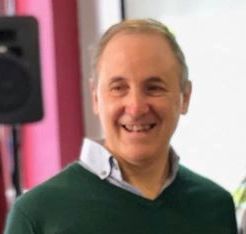
Ruben Mazzei Profile

ProfilesRuben Daniel Mazzei is a university EFL and literature teacher and a sworn translator (Universidad Nacional de La Plata) and is currently working on his thesis in Linguistics. He teaches at primary, secondary, tertiary and university levels, and is a researcher for University of Buenos Aires.

Ruben Mazzei

He has delivered and produced CPD courses and materials since 2005 for Dirección de Formación Continua -Province of Buenos Aires- and has coordinated the team of CPD teachers for the Ministry of Education for nine years.

He has recently participated in the updating of the Curriculum Design for English in Primary School for the Ministry of Education and for Secondary School (E.S.B.) He is also a speaking examiner for Cambridge University. He has participated in several of the British Council activities such as developing material, facilitating reading groups and coordinating the Connecting Classrooms programme for Argentina. He has facilitated workshops for the British Council on Global Citizenship and Global Education accredited by the University of London and workshops for the British Council Core Skills Programme both in Argentina and abroad.

He is also an adjunct professor at the University of Buenos Aires –College of Pscychology- where he coordinates and designs materials for E.A.P reading courses and academic literacies. At initial teacher education (profesorado de inglés) he teaches World Literature with a strong connection to intercultural competence/awareness, identity, otherness, and language as a resource to convey meanings and cultures.

Ruben Mazzei´s research interests are interculturality (also as part of the international projects he coordinates at primary and secondary school), academic literacies, genre-based pedagogy- including multimodality- and didactics in Higher Education.

Some of his publications can be found on his Academia.edu page.


Work for CID:
Ruben Mazzei translated KC11: Intercultural Discourse and Communication, and KC44: Multimodality into Spanish. He has also served as a judge for the 2019 CID Video Competition.

Food and Cultural Identity as a Pedagogical Tool

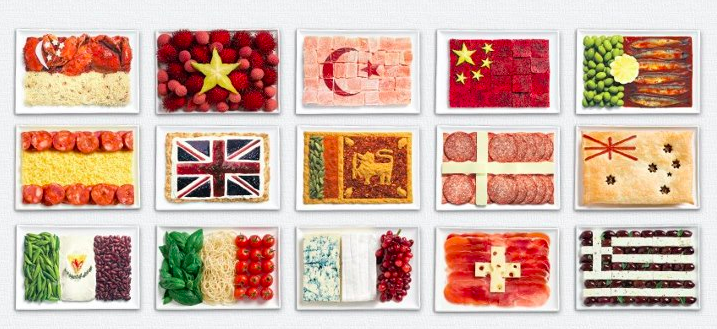
Intercultural PedagogyPrint advertisements created by TBWA, Australia, in 2009 for the Sydney International Food Festival, show flags for different countries made out of their traditional foods.

Sydney International Food Festival

So far the campaign has received a lot of attention from design and advertising sites, as in this analysis by Ads of the World, which includes images of the flags and details as to the designers, or from food websites, as with Kitchn, which focuses on the foods chosen. @Sietar_UK  tweeted about it in 2019; clearly they are correct that the campaign should get attention from those interested in intercultural matters, even a decade late. In particular, these flags made of foods should be a good way to get students actively involved in thinking about cultural differences while doing something creative, such as asking them to create flags for additional countries (especially ones to which students have connections), or to research the particular foods chosen and how they are traditionally prepared, and/or what other countries have already adopted them.

U London PHD Studentship: Multilingualism (UK)

“Studentships“PHD Studentship offered by Consortium of the Humanities and the Arts South-East England, based at SOAS, University of London: Multilingualism in perspective: Language practices, identities and ideologies in the Sylheti community in Tower Hamlets, London. Deadline extended to 17 May 2019.

Applications invited for a fully funded PhD study in collaboration with the Osmani Trust, based at the Osmani Centre (Tower Hamlets, London), with academic supervision at SOAS and at Goldsmiths, University of London (both partners in the Consortium of the Humanities and the Arts South-East England (CHASE)).  The PhD will focus on language practices, identities and ideologies in the Sylheti community in Tower Hamlets, London. The main criterion is that the candidate should have an interest in Sylheti and a commitment to community engagement. Candidates should ideally have some competence in Sylheti, or be willing to learn Sylheti; if necessary, language training will be provided through mentoring by fluent speakers. We are particularly interested in candidates with a specialisation in the sociolinguistics of multilingualism and diversity. The PhD is already partially defined in terms of data source and broad theoretical orientation, but the student will be able to put their own stamp on it. The studentship is available to UK/EU citizens, for both full-time and part-time study.

CFP From West to East: Metamorphoses of Discourses in Europe (Romania)

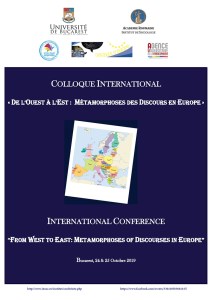
ConferencesCall for Papers: From West to East: Metamorphoses of Discourses in Europe, Bucharest, Romania, 24-25 October 2019. Deadline extended to 26 May 2019.

In a European context marked by the development of antagonistic positions, actors, strategies and discourses, where our interactions have shifted more and more into a virtual environment, this conference aims at questioning the current meanings of the discourses on West-East relationship in the European Union, as well as its transformation, given the local, regional and European contexts and challenges. The scientific interest of the conference aims to revisit the central theme of the European idea which has both brought together and divided for a number of centuries, the different regions of Europe, making possible the European construction of present days. The latter seems to have assumed a sensitive mission of perpetual discursive transformation, again challenged by the new media – an exogenous factor that causes true metamorphoses of European discourses circulating from the West to the East, from the North to the South and vice versa. An emerging discourse, taking various forms, often translated into counter-speech, seems to dominate and challenge the European public sphere under construction. Its scientific examination remains difficult to determine, if studied from the point of view of a single discipline. This is why the interdisciplinary opening within the large field of social sciences and humanities is to be considered the scientific challenge of this conference.

The languages of the conference are French and English, so there are two calls for papers, one in French and one in English.

UPDATE: The conference website now  has programs in both French and English.


KC5 Intercultural Communication Translated into German

Key Concepts in ICDContinuing translations of Key Concepts in Intercultural Dialogue, today I am posting KC#5: Intercultural Communication, which I wrote in 2014, and which Alina Timofte has now translated into German.

As always, all Key Concepts are available as free PDFs; just click on the thumbnail to download the PDF. Lists organized chronologically by publication date and numberalphabetically by concept in English, and by languages into which they have been translated, are available, as is a page of acknowledgments with the names of all authors, translators, and reviewers.

KC5 Intercultural Communication_GermanLeeds-Hurwitz, W. (2019). Interkulturelle Kommunikation. (A. Timofte, trans.) Key Concepts in Intercultural Dialogue, 5. Available from:
https://centerforinterculturaldialogue.org/wp-content/uploads/2019/03/kc5-intercultural-communication_german.pdf

The Center for Intercultural Dialogue publishes a series of short briefs describing Key Concepts in Intercultural Dialogue. Different people, working in different countries and disciplines, use different vocabulary to describe their interests, yet these terms overlap. Our goal is to provide some of the assumptions and history attached to each concept for those unfamiliar with it. As there are other concepts you would like to see included, send an email to the series editor, Wendy Leeds-Hurwitz. If there are concepts you would like to prepare, provide a brief explanation of why you think the concept is central to the study of intercultural dialogue, and why you are the obvious person to write up that concept.


Creative Commons License
This work is licensed under a Creative Commons Attribution-NonCommercial-NoDerivatives 4.0 International License.

Purdue U: Intercultural Research Specialist (USA)

“JobIntercultural Research Specialist, Purdue University, Indiana. Deadline: Open until filled; posted March 15, 2019.

This is an open rank search at either the Specialist (P2) or Senior Specialist (P3) level for a position in Purdue’s Center for Intercultural Learning, Mentorship, Assessment and Research (CILMAR). The Senior Intercultural Research Specialist will be a seasoned interculturalist with both a theoretical understanding of intercultural communication and experience applying theory and best practices to the design and implementation of scholarship in this discipline. Candidates who are not eligible for a senior position but demonstrate potential for success in this role with evidence of interest in intercultural learning and transferable research skills will be considered at the Specialist level. The (Senior) Intercultural Research Specialist will work closely with CILMAR Intercultural Learning Specialists as well as faculty, staff, and students to support cutting-edge intercultural scholarship, especially research that advances the discipline’s understanding of intercultural competence development in higher education settings. The research specialist will be expected to engage competently with quantitative and qualitative data, individually and on teams, and on both externally and internally funded projects. In addition, this position involves mentoring others in the development of intercultural competence, creating and presenting intercultural interventions, debriefing participants on the results of intercultural assessments, and disseminating information about CILMAR’s work in and beyond Purdue.

Aarhus U: 2 Intercultural Positions (Denmark)

“Job1. Professor of Intercultural Studies, School of Communication and Culture, University of Aarhus, Denmark. Deadline: 2 April 2019.

The School of Communication and Culture at Aarhus University invites applications for the position of Professor of Intercultural Studies. The appointment is permanent and begins on 1 December 2019 or as soon as possible thereafter. The position is at the Department of German and Romance Languages or the Department of English, both part of the School of Communication and Culture, and it includes tasks and responsibilities in all of Aarhus University’s core activities in the areas of research, teaching and supervision, talent development and knowledge exchange related to intercultural studies.

Applicants must have extensive, thoroughly documented international research experience at the highest level in intercultural studies and related fields of research. They must also be able to document international research in one, or preferably more than one, of the following fields: (a) theory and analysis of organisations, (b) global entrepreneurship, (c) intercultural management, (d) transcultural negotiation, and (e) conflict management.

2.

Professor of foreign-language pedagogy,  School of Communication and Culture, University of Aarhus, Denmark. Deadline: 2 April 2019.

Applications are invited for the position of professor in foreign-language pedagogy at the School of Communication and Culture. The appointment is permanent and begins on 1 December 2019 or as soon as possible thereafter. The position is at the Department of German and Romance Languages or the Department of English, both part of the School of Communication and Culture, and it includes tasks and responsibilities in all of Aarhus University’s core activities in the areas of research, teaching and supervision, talent development and knowledge exchange related to foreign-language pedagogy.

The School of Communication and Culture wishes to strengthen foreign-language pedagogy, and in this connection the successful applicant will be expected to work with the Danish National Centre for Foreign Languages.
More specifically, they are looking for a dedicated applicant who has contributed substantially to research and/or teaching in the area of foreign-language learning and teaching with the focus on upper-secondary school/high school and university levels. In addition, it will be considered an advantage if the applicant can document research and/or teaching qualifications within related areas such as grammar, translation, intercultural communication and sociolinguistics. The applicant must also be qualified to teach core courses at all levels within the above-mentioned areas. Applicants must have a native or near-native command of either English, French, German or Spanish.


Jewish-Muslim Interactions and Narratives in UK and France

Resources in ICD“ width=Everett, S. S., & Gidley, B. (2018). Getting away from the noise: Jewish-Muslim interactions and narratives in E1/BarbèsFrancosphères7(2), 173-196.

Abstract: This article offers a comparative lens on intercultural and interreligious encounter in urban contexts in France and the UK, focusing on the commonalities and specificities of different national and municipal contexts. It offers an account of three forms of encounter, based on extensive fieldwork in two neighbourhoods of Paris and London: commercial interdependencies embedded in early phases of immigration; voluntaristic ‘interfaith-from-above’ policies shaped by state agendas developed since the beginning of the twenty-first century; and still emerging ‘interculturalism-from-below’ generated by second- and third-generation children of immigrants, which is marked by nostalgia and selective reading of local heritage. In doing so, it bypasses the sharp disciplinary and methodological divides that separate research on Jewish histories and cultures, Muslim communities, immigrant quarters, and postcolonial/minority ethnic contexts. It aims instead to show how intercultural and interfaith encounters often occur in mundane spaces, and operate through and despite forms of ambivalence, and in this respect offer a context in which to displace the terms of spectacular accounts of racial and civilizational conflict.

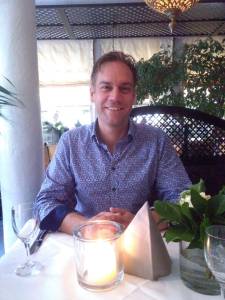
István Fekete Profile

ProfilesIstván Fekete did his postdoctoral training in psycholinguistics at the University of Oldenburg, Germany, where he worked also as a consultant in statistics and research methods.

István Fekete

Previously, he was a research fellow at the Research Institute for Linguistics of the Hungarian Academy of Sciences and earlier a research assistant at the Department of Cognitive Science of the Budapest University of Technology and Economics, where he received his PhD in psycholinguistics in 2013. He earned his M.A. degrees in English and German language and literature from Eötvös Loránd University, Budapest in 2006.

His research focuses on psycholinguistics, cognitive linguistics, semantics and pragmatics, the understanding of exhaustivity in wh-phrases, and isolating language disorder using machine-learning approaches. His wider research interests include interdisciplinary work and the application of advanced statistical methods to linguistic data. He has worked with EEG, eye-tracking and behavioral methods.

For publications, please see
https://loop.frontiersin.org/people/491179/overview