Janny Leung: COVID-Sensitive Kanji

Guest Posts

COVID-Sensitive Kanji. Guest post by Janny H. C. Leung.


New words or phrases, such as covidiot and Zoom fatigue, cropped up in the English language in the past year as a creative response to the pandemic. Yet, the most Covid-complaint neologism may be found in a non-alphabetical language. The winner of the 11th round of the Sousaku Kanji Contest is a redesigned character that separates the two persons (人) in a seat (座) to make sure that they comply with social distancing measures in 2020.

old and new kanji

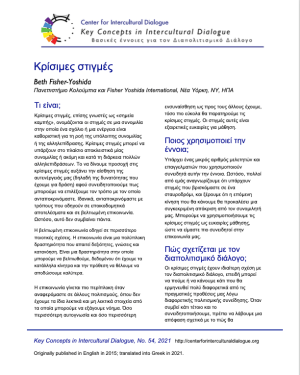
Download the entire post, which includes discussion of several other kanji, as a PDF.

CFP M/C Journal: Zoom (Australia)

“Publication Opportunities

Call for Papers: Special issue on “Zoom” for M/C Journal (A Journal of Media and Culture). Deadline: April 16, 2021.


On 9 March 2020, just two days before the World Health Organization would name the COVID-19 outbreak a global pandemic, Italy declared a nation-wide lockdown. Over the following weeks, cities, states, and nations around the world would do the same, dramatically changing the social landscape for millions of individuals. Overnight, it seemed, Zoom became the default modality for remote engagement, rapidly morphing from brand name to eponymous generic—a verb and a place and mode of being all at once. In an era of COVID-19, our relationships and experiences are deeply intertwined with our ability to “zoom.”

This issue of M/C Journal will explore the impacts and implications of Zoom and other teleconferencing platforms one year after the start of the COVID-19 pandemic. Editors seek a wide range of submissions that will explore how a simple, four letter word has come to encapsulate a distinct moment in human history. How do we Zoom, and why?

Call for PEaCH Ambassadors for Bilingualism (Online)

“Collaborative

Call for PEaCH Ambassadors, PEaCH Project, Ghent University, Ghent, Belgium. Note the short deadline: 15 January 2021.


PEaCH stands for “Preserving and promoting Europe’s cultural and linguistic heritage through empowerment of bilingual children and families.” The project supports European families raising bilingual and multilingual children. PEaCH will do this in the form of a handbook for parents, informative videos and an online collection of ready-to-use materials in 24 EU languages. PEaCH will also offer advice to educators interested in this topic as well as create a European network of PEaCH Ambassadors.

The PEaCH Ambassadors will represent the PEaCH Project on a local and national level in their respective language regions. They will support families and educators raising bilingual and multilingual children by promoting the PEaCH Project’s positive message about bilingualism and sharing the PEaCH materials. The PEaCH Ambassadors will be officially recognized and listed on the PEaCH website. PEaCH will offer training for the role through webinars, discussions with project partners and peers, as well as online documents and platforms. This is an unpaid volunteer position. We would want PEaCH Ambassadors to spend a minimum of two hours per month in their role, but of course welcome additional time spent on sharing our message.

To apply, please send an email message to the PEaCH Project (not to CID!) by close of the 15th of January 2021 with the following information:

  1. Your name, where you live and which languages you speak. Please add links to any online presence (not required).
  2. Brief description of your background, with emphasis on the language aspect (CV not required), as well as of any other activities related to bilingualism.
  3. Why you are interested in becoming a PEaCH Ambassador.
  4. How you are in contact with multilingual families through your work or other activities.

How to raise a bilingual childThe parent guide How to raise a bilingual child has been already released in English.

The French, German, Italian, Romanian, and Spanish versions will be published between now and early April 2021.

A variety of other resources are also available at the same link.

KC87 Culture Shock Translated into Spanish

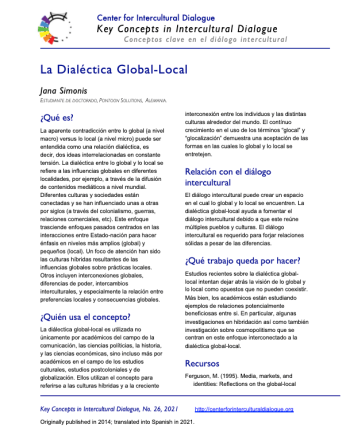
Key Concepts in ICDContinuing translations of Key Concepts in Intercultural Dialogue, today I am posting KC#87: Culture Shock, which Frank Fitzpatrick wrote for publication in English in 2017, and which  Jhon Eduardo Mosquera Pérez has now translated into Spanish.

As always, all Key Concepts are available as free PDFs; just click on the thumbnail to download. Lists of Key Concepts organized alphabetically by conceptchronologically by publication date and number, and by languages into which they have been translated, are available, as is a page of acknowledgments with the names of all authors, translators, and reviewers.

KC87 Culture Shock_SpanishFitzpatrick, F. (2017). Choque cultural. (J. E. Mosquera Pérez, Trans.). Key Concepts in Intercultural Dialogue, 87. Available from: https://centerforinterculturaldialogue.org/wp-content/uploads/2020/12/kc87-culture-shock_spanish.pdf

If you are interested in translating one of the Key Concepts, please contact me for approval first because dozens are currently in process. As always, if there is a concept you think should be written up as one of the Key Concepts, whether in English or any other language, propose it. If you are new to CID, please provide a brief resume. This opportunity is open to masters students and above, on the assumption that some familiarity with academic conventions generally, and discussion of intercultural dialogue specifically, are useful.

Wendy Leeds-Hurwitz, Director
Center for Intercultural Dialogue


Creative Commons License
This work is licensed under a Creative Commons Attribution-NonCommercial-NoDerivatives 4.0 International License.

UNESCO: Associate Editor (France)

“Job

Editor, International Institute for Educational Planning (IIEP), UNESCO, Paris, France. Deadline: 21 January 2021.


This position is located in the Information Services Unit of the UNESCO International Institute for Educational Planning (IIEP) in Paris and reports to the Information Services Team Leader. Under the supervision of the Team leader and in close collaboration with other team members, the incumbent is in charge of reviewing, revising and editing IIEP documents, such as manuscripts, concept notes, web news, institutional documents, etc. The incumbent supports in particular IIEP move towards e-publications, including through the provision of advise and assistance in this regard to IIEP staff. Because of the public nature IIEP content, the incumbent must demonstrate very good editorial skills and sound judgement in order to maintain IIEP’s excellent reputation.

U Colorado Denver: Lecturer in Communication (China)

“JobCommunication Instructor, International College of Beijing, University of Colorado Denver, Beijing, China. Deadline: open until filled, review begins February 15, 2021.

The University of Colorado Denver’s Department of Communication invites applications for a full-time, non-tenure-track teaching position at the International College of Beijing (ICB). The job will commence in September of 2021, with arrival potentially required several weeks before then due to evolving Covid-19 quarantine requirements. Depending on the performance of the individual hired, multi-year renewals are possible.

They seek a colleague who can teach a wide range of Communication courses touching upon new and digital media, strategic and workplace communication, and general major requirements, including COMM 1021, Introduction to Media Studies; COMM 2020, Communication, Citizenship, and Social Justice; and courses supporting one or more of the Department’s pathways in media and cultural studies, global and intercultural communication, and strategic communication. Above all else, they seek a dynamic and charismatic teacher committed to best practices in student-centered pedagogy and advancing the internationalization of communication via hands-on, skills-based, experiential, and problem-based learning.

Beijing Foreign Studies U: Multiple Faculty Positions (China)

“JobMultiple faculty positions at several levels, Beijing Foreign Studies University, Beijing, China. Deadline: 16 January 2021.

Professor/ Researcher; Associate Professor/ Associate Researcher; Lecturer/ Assistant Researcher in Journalism and Communication, School of Journalism and Communication.

Professor/ Researcher; Associate Professor/ Associate Researcher; Lecturer/ Assistant Researcher in African Languages and Literatures, School of African Studies.

Professor/ Researcher; Associate Professor/ Associate Researcher; Lecturer/ Assistant Researcher in Arabic Language and Literature, School of Arabic Studies.

Professor/ Researcher; Associate Professor/ Associate Researcher; Lecturer/ Assistant Researcher in Asian Languages and Literatures, School of Asian and African Studies.

Professor/ Researcher; Associate Professor/ Associate Researcher; Lecturer/ Assistant Researcher in English Language and Literature, School of English and International Studies.

Professor/ Researcher; Associate Professor/ Associate Researcher; Lecturer/ Assistant Researcher in European Languages and Literatures, School of European Languages and Cultures.

Professor/ Researcher; Associate Professor/ Associate Researcher; Lecturer/ Assistant Researcher in French Language and Literature, School of French and Francophone Studies.

Professor/ Researcher; Associate Professor/ Associate Researcher; Lecturer/ Assistant Researcher in German Language and Literature,
School of German Studies.

Professor/ Researcher; Associate Professor/ Associate Researcher; Lecturer/ Assistant Researcher in Japanese Language and Literature, School of Japanese.

Professor/ Researcher; Associate Professor/ Associate Researcher; Lecturer/ Assistant Researcher in Spanish and Portuguese Languages and Literatures, School of Spanish and Portuguese.

Professor/ Researcher; Associate Professor/ Associate Researcher; Lecturer/ Assistant Researcher in Russian Language and Literatures, School of Russian Studies.

UNESCO Invites Contributions to Futures of Education initiative

“UNESCO”If you are interested in participating in a cooperative CID-UNESCO focus group on the role of intercultural dialogue in the futures of education, then please read the following and send an email immediately as this event will be scheduled for late January at a mutually convenient day/time. We cannot guarantee participation, as this will be a small group, but you will also be able to organize your own event if so desired. There will only be one meeting, and then a report of the discussion sent in to UNESCO. 

UPDATE: Several focus groups are now full, thanks to the many responses – more details to be posted shortly as there are results to report. [Second update: the final report is now posted here]

UNESCO Futures of Education

UNESCO’s Futures of Education initiative is an ambitious attempt to rethink education and help shape the future. The initiative is catalyzing a global debate on how education, learning and knowledge need to be re-imagined in a world of increasing complexity, uncertainty, and precarity.

As part of this initiative, UNESCO has appointed a high-level International Commission of thought leaders with diverse expertise and perspectives from the worlds of politics, academia, the arts, science and business. The International Commission will prepare a report, to be released in November 2021, that will provide an agenda for action and discussion by policymakers and practitioners.

The report of the International Commission will emerge out of a range of work modalities that emphasize co-creation, a broad participatory and partnership structure, the inclusion of diverse perspectives, and the absence of pre-specified conclusions. Towards this end, UNESCO is encouraging individuals, organizations and networks to organize focus group discussions with their constituencies, inputs from which will feed into to the Commission’s work.

The objective of these consultations is to generate a set of diverse perspectives on the challenges and opportunities for education and learning that can be both anticipated/predicted and imagined/envisioned when looking towards the year 2050. Rethinking as well as fully reimagining the way we live together are key dimensions explored by UNESCO; this is why the Center for Intercultural Dialogue has been approached to mobilize its members in the organization of a focus group discussion. Please send an email asap if you wish to participate!

Janny H. C. Leung Profile

ProfilesJanny H. C. Leung is Dean of Liberal Arts at Wilfrid Laurier University, where she is also Professor of Law and Society and Professor of English. She was Professor of Linguistics in the School of English at the University of Hong Kong. She obtained her M Phil and PhD in English and Applied Linguistics from the University of Cambridge, an LLB from the University of London, and an LLM from Yale Law School.

Janny Leung

She was a Visiting Scholar at the Harvard Yenching Institute, the Faculty of Law of McGill University, and a Luce East Asia Fellow at the National Humanities Center (USA).

Broadly speaking, her research has revolved around the study of meaning. Her first line of research, developed from her doctoral work, focuses on the mapping between meaning and linguistic form in the acquisition and processing of language, using a psycholinguistic approach and a quantitative methodology. She was a founding member of the University of Hong Kong’s Speech, Language and Cognition Laboratory.

Her second and most current line of research lies in the emergent interdisciplinary area of language and law. She has published a monograph and a series of papers on challenges, ideologies and paradoxes in multilingual legal practice. She has also written about language rights, legal interpretation, unrepresented litigation, courtroom discourse, legal translation, and representations of law in the media. Her current government-funded project deals with the evolution of law in the modern communication environment.

Selected publications:

Leung, J. (2019) Shallow equality and symbolic jurisprudence in multilingual legal orders. New York, NY: Oxford University Press.

Leung, J. (2019). Does the world need more Canada? Legal multilingualism and strategic pluralism. Sherbrooke Law Review / Revue de droit de l’Université de Sherbrooke, 47 (2-3), 193-226.

Leung, J., & Durant, A. (Eds.) (2018) Meaning and power in the language of law. Cambridge, UK: Cambridge University Press.

Durant, A., & Leung, J. (2016) Language and law. London, UK: Routledge.


Work for CID:

Janny Leung wrote a guest post on COVID-sensitive kanji.

CFP Race Matters in JACR

“PublicationCall for Proposals: Special Issue: ‘Race Matters’ in Applied Communication Research, Journal of Applied Communication Research.  Deadline: February 11, 2021.

In 2008, Mark P. Orbe and Brenda J. Allen published a critique of race-related research appearing in the Journal of Applied Communication Research, and in doing so, conceptualized a typology of different genres of race-related scholarship in the field of communication. This proposed JACR special issue is designed to create an academic space that highlights applied communication research that centralizes race—and through intersectionality, other salient aspects of identity—in meaningful ways. In essence, the special issue situates JACR as a productive location for engaged research that centralizes race as both a theoretical anchor and powerful point of praxis. Authors are invited to submit proposals of theoretically-informed applied communication research that engages the social construction of race at the center of analysis. The guest editors for the proposed special issue are Mark P. Orbe, Western Michigan University, and Jasmine T. Austin, Texas State University.