
 Sabrina Sharma is an author in Australia, with a background in Christian Human Rights Law and Community engagement.

She was admitted to The Supreme Court of Victoria (Australia) in 2007 and later on to The High Court of Fiji in 2017. She founded The Fiji Rural Women Empowerment Network to assist disadvantaged women from rural areas across Fiji to access educational platforms and empowerment workshops. As International Ambassador to Almanah Hope Centre in Teidamu, Fiji she has worked with the Centre’s founders to empower widows and survivors of domestic violence across Fiji. Having worked extensively in Fiji across a cross-section of fields (Ministry, Domestic Violence awareness, poverty alleviation and more), she was awarded the Medal of the Order of Fiji in 2020 by Fiji’s former President and retired Major-General Konrote. She was further given the “2021 Champion for Change” Award by UK’s Lead5050 Organization in recognition for her community efforts and engagement.
Sabrina has returned to Australia where she continues to serve a multicultural and diverse community through positive engagement, dialogue and writing her books. One of her published works, Dialogue in Action, speaks of the importance of dialogue with others to deepen our appreciation and understanding of other cultures.
Sabrina’s contributions to community life and the legal sector can be found below:
- https://www.usfijitimes.org/news/local/fijis-human-rights-lawyer-sits-in-human-rights-panel-to-discuss-nsws-proposed-dying-bill/
- https://twitter.com/fijitimes/status/1208884008374812672
- https://www.fijitimes.com.fj/sabrina-khan-sharma-2021-champion-of-change-award-winner/
- https://fijisun.com.fj/tag/sabrina-iqbal-khan/
- https://www.fijitimes.com/people-sabrina-wears-many-hats/#:~:text=A%20domestic%20violence%20survivor%20herself,by%20her%20faith%20in%20God
- https://fijisun.com.fj/tag/human-rights-lawyer-sabrina-khan-sharma/
- https://fijisun.com.fj/2021/03/11/trauma-bond-takes-years-to-break-lawyer-tells/
- https://www.pressreader.com/fiji/the-fiji-times/20210309/281779926869864
Work for CID:
Sabrina Sharma wrote a guest post on dialogue as reflected thought.
 She holds a B.A. from University of Mannheim, Germany (2013) in Culture and Business Studies with a specialization in Romance linguistics and an M.A. in International Cultural and Business Studies from the University of Passau (2017). In her Ph.D. (2022) at the Chair of Intercultural Communication (University of Passau), she examined the transfer of organizational practices (quality management) of German family-led companies in Brazil from an interpretive paradigm using qualitative, case-based methodology. In addition, she has participated in projects examining the development of the research field of International and Intercultural Management.
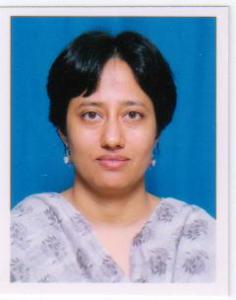 While her Ph.D. is in Russian, her specializations are in Linguistics, Lexicology, Translation Studies, and Comparative Literature. She founded the journal Kelyane Bhashantar, dedicated to direct translations from foreign languages into Marathi, and served as Chief Editor (2011-2016).
 She has passed the Japanese Language Proficiency Test at the N3 level. She completed her Bachelor’s degree in Mass Media, specializing in Advertising, at Ramanarain Ruia College, Mumbai, India.
 He completed a PhD in Mass Communication at Panjab University, Chandigarh, with a research focus on intercultural communicative competence among interstate migrants in Mumbai.. His research specializations are Intercultural Communicative Competence, Cultural Adoption, Cultural Assimilation, and Interpersonal Communication.

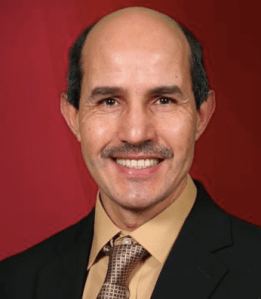 Brahim earned a Ph.D. in Education under the Language, Literacy and Culture concentration at the University of Massachusetts-Amherst College of Education, and has M.A.s in Education and Teaching French. He received his B.A. in English Language and Literature, along with Arabic and French teaching certificates, in Morocco. In addition to language courses, he teaches Introduction to Linguistic Anthropology and Introduction to Arab Cultures.
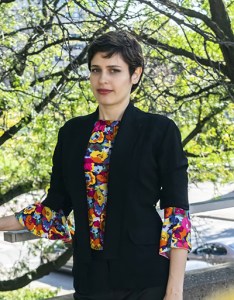
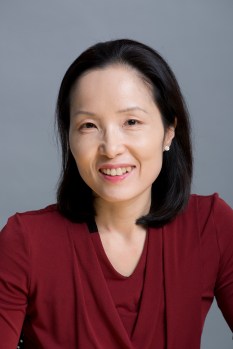 Jinhyun specializes in translation and interpreting and sociolinguistics with a focus on gender, intercultural communication, and language ideologies. Jinhyun’s research brings together interpreting and sociolinguistics to examine hitherto taken-for-granted cultural and linguistic phenomena through the unique prism of interpreters as social agents. By focusing on a shift in understanding away from the traditional mechanical view of interpreters as “translation machines” to a perspective which sees interpreters as social actors, she has been able to capture significant insights into the dynamics of dominant ideologies and societal power structures and their influences on linguistic and cultural practices in diverse socio-historical contexts.


