

Christine Develotte Profile

ProfilesChristine Develotte is a researcher in applied linguistics. She is currently a professor of Communication at the Ecole Normale Supérieure-INRP in Lyon and a member of the ICAR research lab.

For the last ten years her main research interests have been linked to computer-mediated communication (CMC). Her research includes two aspects: the semio-linguistic aspect of online communication and the social aspect, (focusing on the analysis of human behavior). Since 2002, the data have been taken mostly from fieldwork conducted in classrooms where distance learning and teaching interactions have been emphasized, particularly through her project Le français en (première) ligne. More recently she has been studying online multimodal conversation through desktop videoconferencing tools, examining gestures and mimicry as well as oral and written communication.

Spécialiste d’analyse du discours et intéressée par les questions associées au champ de l’interculturel, c’est par une approche discursive qu’elle traite des comparaisons culturelles médiatiques par exemple. En ce moment, elle est engagée dans une recherche européenne centrée sur les médias sociaux et étudie (avec Anthippi Potolia et Fred Dervin) leurs représentations dans différents journaux gratuits européens.


Work for CID:

Christine Develotte was one of the participants at the National Communication Association’s Summer Conference on Intercultural Dialogue in Istanbul, Turkey, which led to the creation of CID.


Leena Louhiala-Salminen Profile

ProfilesLeena Louhiala-Salminen is Professor and  Program Director of the Master’s Program in Corporate Communication at the Aalto University School of Business (AaltoBIZ) in Helsinki, Finland.

Her PhD is in Applied Linguistics (University of Jyväskylä, Finland). In addition, she has a Licentiate degree in English philology (University of Jyväskylä), an MSc in Economics and Business Administration from the Helsinki School of Economics (current Aalto University School of Business) and studies in communication (University of Helsinki).

Louhiala-Salminen’s main research interests include the various genres of business communication, the use of English as the business lingua franca, and corporate communication in international contexts. Her PhD focused on the notion of genre in business communication, with a particular emphasis on the generic qualities of the business fax. She has worked as researcher and project director in two major research projects funded by the Academy of Finland. The first one examined communication and language use in newly merged Finnish-Swedish companies, and the second project investigated business and corporate communication as business know-how of internationally operating companies and organizations.  Currently Louhiala-Salminen is involved, for example, in a study examining ‘corporate language’ and communication of strategy in multinational enterprises operating in Europe.

While serving on the Advisory Board of the Center for Intercultural Dialogue, Louhiala-Salminen represented the Association for Business Communication (ABC). She is an ABC member since 1991 and has served the organization e.g. as member and chair of the Publications Board.  In 2011 she was elected member of the ABC Board (Director at Large).


Work for CID:

Leena Louhiala-Salminen co-authored KC58: English as Business Lingua Franca (BELF), and co-translated it into Finnish. She served as a reviewer of micro-grants distributed by CID (some funded by the National Communication Association, and others by the Association for Business Communication). She also served on the CID Advisory Board 2010-17.

Shiv Ganesh Profile

ProfilesShiv Ganesh (PhD, Purdue University, 2000), is  a professor in the Department of Communication Studies in the Moody College of Communication at the University of Texas, Austin.

Shiv Ganesh

Shiv studies communication and collective organizing in the context of globalization and digital technologies. His work spans critical-institutional and poststructural approaches to communication, and is currently comprised of two strands; studies of technological transformations in collective action; and studies of dialogue, conflict and social change. His research is largely qualitative but has incorporated quantitative elements, and he has done fieldwork in a number of countries, including India, Aoteaora New Zealand, the United States, and Sweden.

Current projects include a study of advocacy and voice amongst indigenous people displaced by the creation of environmental reserves in India, as well as a large-scale survey of digital interaction and engagement dynamics amongst global networks of activists. His research has appeared in a number of journals including Communication MonographsCommunication TheoryHuman Relations, International Journal of Communication, Journal of Applied Communication ResearchManagement Communication QuarterlyMedia, Culture & Society, andOrganization Studies. 

Ganesh is a former editor-in-chief of the National Communication Association’s Journal of International and Intercultural Communication, and is on the editorial board of several other journals, including Communication TheoryInformation, Communication & SocietyJournal of CommunicationJournal of Applied Communication Research, Management Communication QuarterlyOrganization, and Women’s Studies in Communication. His research has won several awards from both the International Communication Association and the National Communication Association. Formerly, Ganesh served as Professor of Communication and Head of the School of Communication, Journalism and Marketing at Massey University in New Zealand.


Work for CID:
Shiv Ganesh co-authored KC27: Globalization.

Iris I. Varner Profile

ProfilesIris I. Varner is Professor Emeritus for International Business at Illinois State University where she was a professor and the Director of the International Business Institute.

Varner is a past President of the Association for Business Communication (ABC). She has won the ABC’s Outstanding Teaching Award and was named Fellow of ABC, and Distinguished Member of ABC. She received several departmental research and teaching awards. She is a native of Germany. She earned the Staatsexamen at the Albert-Ludwigs-Universitaet in Freiburg, Germany. She received her Ph.D., an M.A. in German literature and an MBA from Oklahoma University.

Varner’s research interests focus on the interaction between business management, culture, and communication. Varner is co-author of the book, Intercultural Communication in the Global Workplace. Varner has done research on expatriation, cultural adjustments for successful expatriation, and criteria determining expatriate success. She has also examined the composition of corporate boards in Asia, Europe and North America, focusing on gender representation and international preparedness. Varner is an adjunct professor at the University of Lugano, Switzerland and a visiting professor at the University of Dresden, Germany. In addition, she has given lectures and seminars in New Zealand, Hong Kong, China, Japan, Belgium, France, Russia, and Poland. She serves on the editorial board for the Journal of Business Communication, and the Business Communication Quarterly.

Saskia Witteborn Profile

ProfilesSaskia Witteborn (PhD, University of Washington, 2005) is Associate Professor in the School of Journalism and Communication at Chinese University of Hong Kong where she also directs the M.A. program in Global Communication. She is Associate Editor of the Journal of International and Intercultural Communication, past Chair of the Communication as Social Construction Division at NCA, and Research Associate of the University of Washington Center for Local Strategies Research (in affiliation with the United Nations Institute for Disarmament and Peace in Geneva).

Her research focuses on communicative practice and migration and how migrants create, adapt to, and enact ways of communicating and grouping in new sociocultural and political contexts (face-to-face and mediated). Moreover, her research explores how communication practices are constitutive of and constituted by transnational political, economic, and cultural processes and strategic interests. Saskia works mostly from an ethnographic and language and social interaction perspective and tries to understand how transnational migrants themselves perceive and create their sociopolitical and cultural realities. She has published on collective identity enactment by people with a migration background from Arab countries in the U.S., on social spaces, communication, and forced migration in Europe, on political advocacy by migrants from China in the U.S. and Germany as well as on Global Citizenship and Intercultural Dialogue in such journals as the Journal of Communication, Research on Language and Social Interaction, the Journal of International and Intercultural Communication, and Language and Intercultural Communication. A chapter on political advocacy and gender is published in Circuits of Visibility: Gender and Transnational Media Cultures (Ed., R. Hegde, NYU Press) and a chapter on forced migrants and new media practices is forthcoming in the Handbook of Global Media Research (Ed., I. Volkmer, Routledge).

Go to her website for further information and contact details.


Work for CID:

Saskia Witteborn wrote KC16: Migration. She served on the organizing committee for the National Communication Association’s Summer Conference on Intercultural Dialogue in Istanbul, Turkey, which led to the creation of CID, and was one of the participants in the Roundtable on Intercultural Dialogue in Asia, co-sponsored by CID.

William Evans Profile

ProfilesWilliam Evans, Ph.D., is a Professor in the Department of Telecommunication and Film at the University of Alabama. His research interests include content analysis, media audience measurement, and health and science communication.

He currently serves on the editorial board of Science Communication (a peer-reviewed journal). He has been principal investigator, senior personnel, or lead contractor for dozens of sizable grants and contracts, mostly related to the role of media in public health and in community emergence preparedness. As Director of the Institute for Communication and Information Research at the University of Alabama, a position he held from 2004 to 2010, Dr. Evans served as college-wide research administrator, identifying grant opportunities, preparing grant applications, and monitoring research ethics compliance for a faculty of more than 40 tenured and tenure-track professors. Dr. Evans is a member of the Broadcast Education Association (BEA) and has participated in eight of the ten most recent BEA annual meetings.


Work for CID:
William Evans served on the CID Advisory Board 2010-14.

Stephen A. King Profile

ProfilesStephen A. King earned his Ph.D. in Speech Communication at Indiana University in 1997 and currently is Professor and Chair of Communication at St. Edward’s University in Austin, Texas.

King’s research program includes a long-term interest in rhetoric, intercultural communication and popular culture. His first book, Reggae, Rastafari, and the Rhetoric of Social Control, was published by the University Press of Mississippi in December 2002. King traces how Jamaica’s popular music evolved both lyrically and musically from 1959-1980. The study also examines how the Jamaican government and its surrogates attempted to control Jamaica’s popular music and the Rastafarian movement. King’s second book, I’m Feeling the Blues Right Now: Blues Tourism and the Mississippi Delta, was published by the University Press of Mississippi in July 2011. Promotional efforts to market blues music rely heavily on blues myths and claims of authenticity, strategies that seek to satisfy the imaginations of blues tourists who travel to the Mississippi Delta to experience authenticity (and spend money) in the mythical “birthplace of the blues.” At the same time, efforts to obfuscate Mississippi’s past embody conscious efforts to privilege a sterilized historical narrative, a narrative that relies heavily on revisionist memory practices. For example, while promotional materials often highlight the Delta as the “home of the blues,” and spotlight the region’s rustic and “authentic” blues culture, there is, not surprisingly, precious little information on Mississippi’s depressing record of state-sponsored oppression of African Americans.

King’s work has also been published in a variety of journals, including Communication and Critical/Cultural Studies, Southern Communication Journal, Howard Journal of Communications, Popular Music and Society, and Caribbean Studies as well as in edited books such as The Resisting Muse: Popular Music and Social Protest (London: Ashgate Press, 2006), Popular Music and Human Rights, Volume I (London: Ashgate Press, 2011), Social Controversy and Public Address in the 1960s and Early 1970s: The Rhetorical History of the United States (Vol. 9, East Lansing: Michigan State University Press, 2017) and The Honky Tonk on the Left: Progressive Thought in Country Music (Amherst: University of Massachusetts Press, 2018). King and co-author Roger D. Gatchet (West Chester University—Pennsylvania) are currently working on a public memory project that explores how Mississippi is promoting its civil rights history as part of the state’s cultural heritage.


Work for CID:

Stephen King was one of the participants at the National Communication Association’s Summer Conference on Intercultural Dialogue in Istanbul, Turkey, which led to the creation of CID.

John R. Baldwin Profile

ProfilesJohn R. Baldwin is Professor of Communication and Coordinator of the Communication Studies Unit at Illinois State University.

John BaldwinIntercultural/ Intergroup Communication and Tolerance: My research interests usually involve culture or groupness in some way. In my dissertation (Ariz State Univ, 1994), I investigated how Caucasian Americans perceive the terms “race” and what behaviors they perceive to be “racist.” In various research projects, I am looking at the link between communication behaviors and stereotypes, at cross-cultural understandings of sexual harassment, at communicative strategies in interethnic romances, and at different ethnic perspectives at what constitutes “racism.”
Multidisciplinary Understandings of Culture: In different essays and a 2006 book on the definition of culture (Lawrence Erlbaum Associates), I strive to see how different disciplinary views, as well as different methods and even different assumptions about the world can inform our understandings of the nature of culture and of intolerance, such as racism and sexism.

Latin American Studies: I am also interested in communication in Latin America (Brazil specifically, though Latin America in general) and the social construction of gender, “race,” and nationality in Latin America. With knowledge of both Spanish and Portuguese, I have made presentations on Latin American communication and relationship patterns. I have published essays on the social construction of gender in Brazil and Latin America and done several presentations on the construction of “race,” particularly in Brazil. I have done consulting in Brazilian culture and taught Portuguese to local business professionals, as well as conducted training on cultural adjustment and on American culture for business sojourners. My next major research agenda will be to look at the social construction of “race” in Música Popular Brasileira (popular Brazilian music), and then to focus in on how it is negotiated in the work of specific artists, like Milton Nascimento, Tropicália (Caetano Veloso, Gilberto Gil), the Paralamas de Successo, and Legião Urbana.


Work for CID:
John Baldwin co-translated KC22: Cultural Identity into Portuguese.

Nazan Haydari Profile

ProfilesNazan Haydari is Associate Professor of Media School at Istanbul Bilgi University, Turkey. Her research and teaching areas consist of alternative media, feminist media, critical pedagogy, intercultural communication, and radio studies.

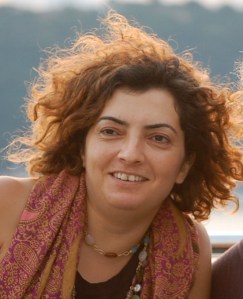
Nazan HaydariDuring her work years at Maltepe University, she was involved in the organization of NCA Summer Conference on Intercultural Dialogue with Wendy Leeds-Hurwitz. Among many outcomes of that Conference was the establishment of this Center for Intercultural Dialogue in 2010. Since the founding, she has served on the CID Advisory Board. In addition, she served as co-editor, with Prue Holmes, of the collection, Case Studies in Intercultural Dialogue published by Kendall Hunt in 2014. She is particularly interested in collaborative research on the practices of critical media pedagogy in various contexts and  the relationship between radio, gender and identity, has participated in the development of various media projects with street-involved children and youngsters, and serves as a Board Member of the Research and Implementation Center on Street Children (SOYAÇ) at Maltepe University as well as a member of Women’s Radio in Europe Network (WREN).

Currently, she has been working towards the completion of an oral history project with women radio producers of TRT (Turkish Radio and Television) from 1960s to 1990s. Her recent publications appear in Transnationalizing Radio Research: New Approaches to Old Media (edited by Golo Föllmer and Alexander Badenoch, Transcript Verlag Publications, 2018), The Wiley Blackwell-ICA International Encyclopedia of Intercultural Communication and Feminist Media Histories Journal. Haydari holds a Ph.D. in Communications and MAIA in Communication and Development from Ohio University, USA.

Contact her by email if you share interests.


Work for CID:

Nazan Haydari served on the Organizing Committee, and then was the Local Arrangements Chair for the National Communication Association’s Summer Conference on Intercultural Dialogue in Istanbul, Turkey, which led to the creation of CID. She co-edited the book resulting from that event, Case Studies in Intercultural Dialogue. She is a member of the CID Advisory Board.

In addition, she served as a reviewer of micro-grants distributed by CID (funded by the National Communication Association), and has been a reviewer for translations into Turkish. She also helped to organize and moderate the CID/UNESCO focus groups for the Futures of Education Initiative.

Barbara Hines Profile

ProfilesBarbara B. Hines (Ph.D. University of Maryland, M.A. American University, B.S. The University of Texas at Austin) is professor of journalism and director of the Graduate Program in Mass Communication and Media Studies, Howard University, Washington, DC.

Her research includes the history and development of scholastic and collegiate journalism, accreditation in higher education, public relations and journalism, with numerous publications in these and related areas.  She has served as president of the Association for Education in Journalism and Mass Communication and through foundation and U.S. State Department-funded programs has helped to train journalists from Europe, Asia and Africa.


Work for CID:
Barbara Hines served on the CID Advisory Board 2010-17.