
Katalin Egri Ku-Mesu, PhD, is Associate Tutor at the School of Arts, University of Leicester, UK.

She has a multidisciplinary background in languages, literatures and cultures, and she has taught and supervised at Hungarian and British universities at under- and postgraduate level in the broad disciplinary areas of English language and linguistics, English, American and postcolonial literature, English teacher training and education and applied linguistics. She has also taught Russian to students specializing in Russian language and literature and Hungarian to speakers of other languages. Katalin has also worked as Head of English for Academic Purposes (EAP) for a pathway organization, managing the delivery of EAP programs and supporting teachers across sixteen countries in Asia, Africa, South America and Europe.
Katalin’s research interests fall within the fields of postcolonial literature, World Englishes, cross-cultural pragmatics, sociolinguistics and cultural text-analysis. She is also interested in multilingualism, English language teaching and English teacher education, specifically the exploitation of literary material for language teaching purposes, the applicability of Western language teaching methods elsewhere in the world and the effect of extensive reading on language learning. She has researched various aspects of African literature, including the works of Ghanaian and Nigerian writers, cultural reference in Ghanaian English language fiction, and reading and censorship in Africa as well as the role of the mother tongue in teaching and learning English, creativity in the language classroom, academic literacies, genre pedagogy and language assessment.
For more information, please visit Katalin’s ORCiD or her LinkedIn profile.
Work for CID:
Katalin Egri Ku-Mesu translated KC23: Afrocentricity and KC73: Argumentative Dialogue into Hungarian.

 Dr. Childress previously worked at the University of Virginia’s Darden Graduate School of Business as the international career consultant, where she taught cross-cultural training seminars for faculty and MBA students, co-chaired the Dean’s International Advisory Board, taught a professional development course, and counseled domestic students on their job search overseas and international students on their job search in the U.S. Dr. Childress also served as Duke University School of Law’s director of special international projects, where she created programs to build bridges between international and U.S. students and developed Duke Law programs overseas, such as the Asia-American Institute of Transnational Law in Kyushu, Japan. Dr. Childress holds degrees from the University of Virginia, Harvard University, and George Washington University.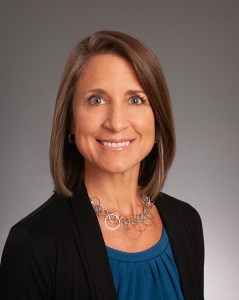

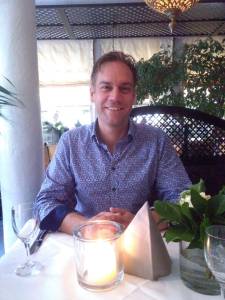
 She is also a practicing GlobeSmart Profile℠ certified consultant, utilizing the GlobeSmart Profile, a statistically validated cultural intelligence software developed by Aperian Global, mostly in academic contexts (as in her seminar “Globally Competent Citizens: Communicating Across Cultures”). Previously, she was a Research Fellow at the Center of Excellence “Cultural Foundations of Social Integration” at the University of Konstanz. The main activities within this academic position were working on a literary science project focusing on Austrian literature after 1945, as well as writing and publishing research articles in peer-reviewed journals.
 Her research interests include the intersections of: rhetorical theory and criticism, feminist theories of communication, environmental communication and rhetoric, and intercultural communication and rhetoric. She is especially interested in these areas of inquiries in Asia and Latin America. She has completed research projects in and about Indonesia, Mexico, and Costa Rica.
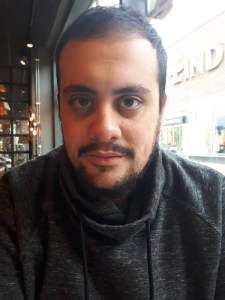 He attended the Padagogische Hochschule Freiburg (Germany) as part in the Erasmus exchange program, where he experienced first-hand the potential of intercultural communication. Later he finished his obligatory military service in Greece with distinction by helping register migrants in 2015, where he experienced the difficulty of intercultural communication with traumatized people. Later, even while working as a manager for Enterprise Car Rental, he continued helping by contributing to research projects like