Mine Krause Profile

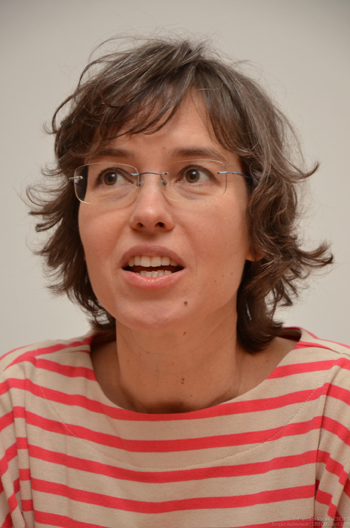
ProfilesMine Krause graduated with a double Ph.D. in Comparative Literature from the Universities of Bayreuth (Germany) and Pau (France) in 2009. Her doctoral thesis on scandal and angst in the works of Albee, Pinter, Ionesco, and Genet was published in 2010 by Peter Lang. She has worked as an assistant in the Literature and Linguistics departments of Bayreuth, Ankara, and Granada.
Mine KrauseBeing of Turkish-German origin, she has developed a particular research interest in cross-cultural studies with a focus on intercultural identity. Her first article in this field appeared in the Journal of Turkish Literature and dealt with the culinary language of Elif Shafak’s novel Baba ve Piç. Mine Krause has a blog about Turkish Literature and has interviewed a number of writers for the Turkish literary magazine Artful Living, among them Sema Kaygusuz, Ece Temelkuran, Mehmet Eroğlu and Latife Tekin. Since 2013, she has been a member of a research cluster on Interculturality and Literature at the Universities of Bayreuth and Shanghai.

An interview with her on the concept of interculturality in the context of a joint Ph.D. can be found here.

Selected Publications:

Krause, M. (2025). Multiple identities in the novels of Charmaine Wilkerson, Zadie Smith and Elif Shafak. In A. N. Éigeartaigh (Ed.), Collaboration, exchange and transformation in literary and cultural practices: Intercultural conversations (pp. 115-134). Cambridge Scholars.

Krause, M., Sun, Y., & Steppat, M. (2023). Punishing transgression in honor culture and face culture. Peter Lang.

Krause, M. (2021). The value of honor in the context of immigration: Elif Shafak’s Honour. In M. Steppat & Kulich (Eds.), Literature and interculturality (2): Valuations, identifications, dialogues (pp. 219-246). Shanghai, China: Shanghai Foreign Language Education Press.

Krause, M., & Sun, Y. (2021). Cultures of honor, cultures of face: Literary representations of gendered values. In M. Steppat & Kulich (Eds.), Literature and Interculturality (2): Valuations, Identifications, Dialogues (pp. 33-102). Shanghai, China: Shanghai Foreign Language Education Press.

Krause, M., & Steppat, M. (2021). Values and valuations: Lines of inquiry. In M. Steppat & Kulich (Eds.), Literature and Interculturality (3): From Cultural Junctions to Globalization (pp. 343-373). Shanghai, China: Shanghai Foreign Language Education Press.

Krause, M., Sun, Y., & Steppat, M. (2020). Honor, face, and violence: Cross-cultural literary representations of honor cultures and face cultures. Berlin, Germany: Peter Lang.

Krause, M. (2018). Tasting interculturality: Culinary visions of America in Elif Shafak’s The Bastard of Istanbul. In M. Steppat & S. Kulich (Eds.), Literature and interculturality (1): Concepts, applications, interactions (pp. 243-266). Shanghai, China: Shanghai Foreign Language Education Press.

Krause, M. (2018). From separating to uniting hyphen: Hyphenated identities in Gish Jen’s and Elif Shafak’s novels. In M. Steppat & S. Kulich (Eds.), Literature and interculturality (1): Concepts, applications, interactions (pp. 207-242). Shanghai, China: Shanghai Foreign Language Education Press.

Krause, M., & Shen, W. (2018). Intercultural concepts of identity. In M. Steppat & S. Kulich (Eds.), Literature and interculturality (1): Concepts, applications, interactions (pp. 425-448). Shanghai, China: Shanghai Foreign Language Education Press.

Krause, M. (2017). Screaming silence of female characters in Ayfer Tunç’s novel Dünya Ağrısı. Monograf Journal, 7, 159-178.


Work for CID:

Mine Krause has written a guest post, Sharing an exotic meal as a trigger of intercultural dialogue. She has also served as a reviewer for German translations.
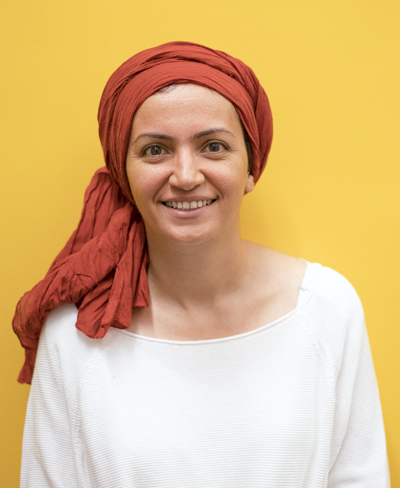
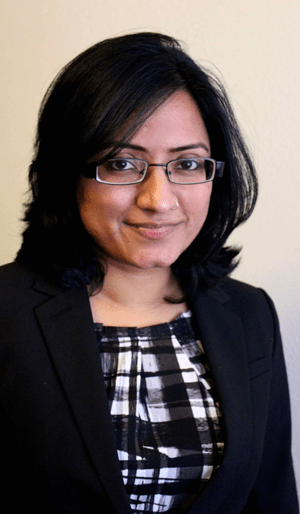
Fatemeh Hippler (Kamali-Chirani) Profile

ProfilesFatemeh Hippler (birth name: Kamali-Chirani) is currently a research associate at the Hannah Arendt Institute for Research on Totalitarianism (HAIT), TU Dresden (Dresden University of Technology), in Germany.

Fatemeh Kamali-Chirani

She received her BA (in Journalism) and her MA (in North American Studies) from Tehran University, Iran, where she was a journalist and NGO activist.

Fatemeh completed her PhD (2012-2018) at the University of Augsburg in Germany with a scholarship from Brot für die Welt (Bread for the World) on the subject of intercultural dialogue between Western and Muslim countries. From 2020 until January 2022, Fatemeh worked in Pakistan as a Visiting Research Fellow at SDPI (a development organization) and was a Visiting Faculty Member at Quaid-e-Azam University, Islamabad.

Her publications are in the areas of intercultural dialogue, foreign cultural policy, sustainable development, migrants and refugees (especially Afghans) in Germany and Pakistan.

She is currently working on the project “Women who migrated from, to and within Germany,” focusing on acculturation of Afghan women in Germany, as a researcher at HAIT, TU Dresden (Dresden University of Technology).

For further details, see her LinkedIn profile.

Selected publications:

In English

Kamali-Chirani, F. (2019). Review of Afiya S. Zia’s  Faith and feminism in Pakistan: Religious agency or secular autonomy? Digest of Middle East Studies, pp. 1-4. https://doi.org/10.1111/dome.12192

Kamali-Chirani, F. (2019). Does intercultural dialogue matter? The role of intercultural dialogue in the foreign cultural policy of Iran and Germany. Münster, Germany: Lit Verlag.

Kamali-Chirani, F. (2019). Review of Mohammad Zaman’s Islam in Pakistan: A history. Digest of Middle East Studies, 28(1),  1-5.

Hippler, J., & Kamali-Chirani, F. (2018). Cultural civil war. In European Union National Institutes for Culture, Culture Report: EUNIC Yearbook 2017/2018 (pp. 36-41). Stuttgart, Germany:  European Union National Institutes for Culture.

Kamali Chirani, F. (2018). Review of Baumgartner and Towner’s The Internet and the 2016 presidential campaign. International Journal of Communication, 12, 2940–2943.

Kamali Chirani, F. (2018). Review of Miriam Müller’s A spectre is haunting Arabia: How the Germans brought their communism to Yemen. Middle East Media and Reviews, 6(3).

Kamali Chirani, F. (2018) Review of Yadullah Shahibzadeh’s The Iranian political language: From the late nineteenth century to the present. Digest of Middle East Studies, 27(1), 157-160.

Kamali Chirani, F. (2017). Incapability of institutional structures as an obstacle for the intercultural dialogue between Iran and Germany. In O. Ernst (Ed.), Iran-Reader 2017 (pp. 109-111). Sankt Augustin/Berlin: Konrad-Adenauer Stiftung.

In German

Kamali Chirani, F. (2013). Dialog unter staatlicher Aufsicht [Dialogue under state supervision]. Welt-Sichten Journal, 6, 46-47.

In Farsi

Kamali Chirani, F. (2018). Potānsielhāy-e Goftoguy-e Farhangi dar Jāme’ey-e Ālmān [Potentials of intercultural dialogue in German society] Dialog Center of the Imam Musa Sadr Institut.

Shokrkhah, Y., &Shokrkhah, Y.Kamali Chirani, F. (2009). Ruznāmenegāri Hamrāh va Pušeš-e Xabari Jang-e Iraq: Motāle’āt-e Muredi-ye Foxnews [Embedded journalism and coverage of the 2003 Iraq war: Case study by Foxnews]. Iranian Journal of Cultural Research, 2(5), 156-171.


Work for CID:

Fatemeh Kamali-Chirani has written a guest post, Cultural diplomacy, intercultural dialogue, and sustainable development: A view of the cultural diplomacy potential of the city of Islamabad; and also written KC105: Acculturation, KC113: Assimilation, and KC117: Remote Acculturation. She has also translated KC14: Dialogue into German, and then KC14: Dialogue and KC105: Acculturation into Persian. In addition, she was interviewed about international relations and its connection to intercultural dialogue. See the description of her recent report on immigration to and from Pakistan, and also Constructing ICD #14: Intercultural case management: Addressing discrimination to empower migrants.

Renu Pariyadath Profile

Profiles

Renu Pariyadath is an Assistant Professor of Communication at University of South Carolina Upstate.

Renu Pariyadath

Her scholarship engages the intersection of critical cultural studies, environmental communication and social movement organizational communication. She also draws widely from transnational feminist theory, and sociological and anthropological scholarship on transnationalism. Her research typically examines communicative and relational practices and strategies for organizing in environmental justice movements, particularly in the context of transnational and other broad-based alliances to resist the global restructuring of lives and labor. She also takes interest in classroom practices of faculty of color in teaching critical cultural communication courses as well as the role of communication in helping one overcome stereotypes about Others.

Renu teaches Environmental Communication, Communicating for Social Change, Ethics in Human Communication, Organizational Communication, and Gender and Communication. She earned a doctorate in Communication Studies from the University of Iowa with a minor in Gender, Women’s and Sexuality studies, and has a Master’s degree in Communication from The Ohio State University.

Renu is actively involved in environmental justice movements in the U.S. and in India and was previously a financial journalist with Reuters in Bangalore, India. She is fluent in Hindi and Malayalam.

Publications:

Pariyadath, R., & Kline, S. L. (2016). Bridging difference: A sense-making study of the role of communication in stereotype change.  In S. K. Camara, D. K. Drummond & D. M. Hoey (Eds.), Communicating prejudice: An appreciative inquiry approach (pp. 1-20). Hauppauge, NY: Nova Science Publishers.

Pariyadath, R. (2015). From BP to Bhopal: Migrant practices of cultural translation for equitable development in the global south. In D. Broudy, J. Klaehn, & J. Winter (Eds.), News from somewhere: A reader in communication and challenges to globalization (pp. 243-258). Eugene, OR: Wayzgoose Press.

Pariyadath, R., & Shadaan, R. (2014). Solidarity after Bhopal: Building a transnational environmental justice movement. Environmental Justice, 7(5), 115-150.


Work for CID:
Renu Pariyadath wrote KC93: Transnationalism.

Filipa Subtil Profile

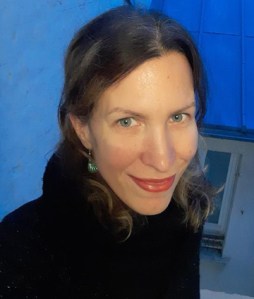
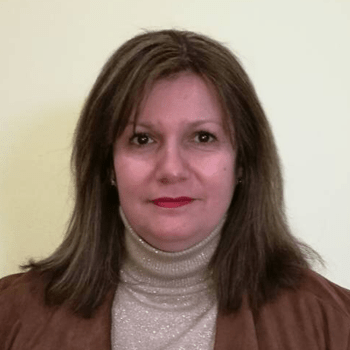
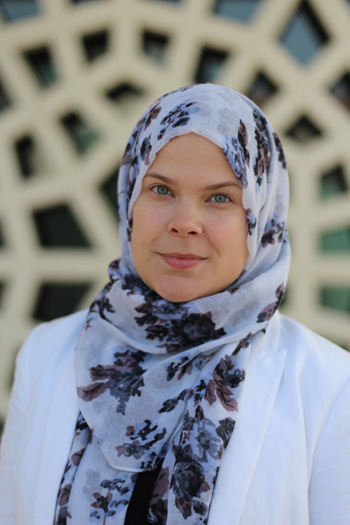
ProfilesFilipa Subtil holds a Ph.D. in Social Sciences from the Universidade de Lisboa. She is Assistant Professor at Escola Superior de Comunicação Social, Instituto Politécnico de Lisboa.

Filipa SubtilShe has been visiting scholar at the University of Iowa (2010) and Muhlenberg College (2008) in the US, at Universidade Cardinal Stefan Wyszyński in Poland (2017, 2018), and at Universidad de Navarra, Spain (2019). Between 2014 and 2018, she was editor-in chief of Comunicação Pública journal. Among her research interests are sociology of communication, social theory of the media in the USA and Canada, and frameworks of the media on gender issues. Her published work has appeared in international and national journals and books. Subtil is co-editor and author of Media and Portuguese Empire (Palgrave Macmillan, 2017) and A Crise do Jornalismo em Portugal [The Crisis of Journalism in Portugal](Deriva/Le Monde, 2017). She is also author of Compreender os Media. As Extensões de McLuhan (2006) [Understanding the Media: The McLuhan Extensions].


Work for CID:

Filipa Subtil has translated KC2: Cosmopolitanism, KC15: Cultural Pluralism, KC19: Multiculturalism, KC25: Metacommunication, KC30: Critical Intercultural Communication, KC39: Otherness and The Other(s), KC49: Intersectionality, and KC75: Argumentative Dialogue into Portuguese. She has also served as a reviewer for Portuguese.

Rania Spiridakou Profile

ProfilesRania Spiridakou was born in Montreal, Quebec, Canada. She is studying for a Ph.D. in Applied Linguistics at the Hellenic American University, Athens. She has an MA in TEFL from the University of Reading, UK and a BA in English Language and Literature from Deree, American College of Greece.

Her research interests include institutional language in both spoken and written discourse and blended learning. Rania is currently working on a project to integrate blended learning with L2 writing classes. She is particularly interested in investigating the quality of written work produced after exposure to multimodal material.

Rania’s 25 years of work experience includes English language teaching, syllabus design and running private language institutions in Greece. She has also worked as a translator and proof-reader for the Prefecture of Achaia, Greece. Rania works as an EAP tutor in summer pre-sessional courses at Nottingham University, UK. She was a proposal reviewer for the 2018 and 2019 TESOL  International Convention and an official reviewer for the TESOL 2020 Doctoral Student Forum.

She is a member of several research centers and groups, such as the Canadian Association of Applied Linguists, a Peer Mentor for the Journal of Belonging, Identity, Language, and Diversity (J-BILD), BALEAP, TESOL International, and TESOL Greece.


Work for CID:

Rania Spiridakou translated KC10: Cross-Cultural Dialogue, KC12: Third Culture Kids, KC17: Multilingualism and KC37: Dialogic Listening into Greek. She has also served as a reviewer for Greek.

Anastasia Karakitsou Profile

ProfilesAnastasia Karakitsou was born in Athens, Greece. She has an MA in Professional Language and Intercultural Studies from the University of Leeds, UK (Distinction, 2017), and a BA in English Language and Literature from the University of Athens, Greece (2012). She speaks Greek, English, German and Turkish.

Anastasia Karakitsou

During her 2010 Fall semester she took part in the Erasmus exchange program by attending the İstanbul Kültür Üniversitesi (Turkey), where she had a first-hand experience of the problems of ‘inappropriate’ as well as the potential of ‘appropriate’ intercultural communication. Then, she fell in love with observing and studying issues of language, culture and identity.

Anastasia is interested in linguistics, more specifically in the interdisciplinary domains of sociolinguistics, psycholinguistics, and anthropological linguistics. She focuses on how language is strategically used to shape our thoughts and actions, e.g. through racist and xenophobic rhetoric in politics and the media, and how intercultural differences are managed, e.g. in translation. What is more, she is fascinated by how the ‘language police’ works, for instance by how certain dialects and accents are functionalized to categorize people into upper and lower social classes. Her goal is to contribute to the formation of an open and diverse society by critically thinking about and resisting the linguistic and cultural status quo.

She has actively taken part in the research project The challenges in dealing with cultural practices that differ from one’s own in the intercultural communication exchange among individuals from diverse cultures managed by the University of Leeds, UK and the University of Guanajuato, Mexico (November 2017-February 2018). She has also worked as a Research Assistant for the research project The Anthropology of Swimming: Exploring Communication, Identity and Inclusivity in British Swimming Pools (University of Leeds, UK, July 2017).

She has worked mainly in the education and translation sector: as a TEFL (Teaching English as a Foreign Language) teacher, a Greek language teacher, an English language exams preparation coach, a student education service assistant, an EN>GR/GR>EN translator and proofreader.


Work for CID:

Anastasia Karakitsou wrote KC89: Xenophobia, as well as a guest post on Xenophobia vs. intercultural dialogue, and was interviewed about xenophobia. She has translated KC2: Cosmopolitanism, KC6: Intercultural Capital, KC8: Public Dialogue, KC14: Dialogue, KC15: Cultural Pluralism, KC16: Migration, KC19: Multiculturalism, KC25: Metacommunication, KC27: Globalization, KC33: Moral Conflict, KC34: World Englishes, KC38: Boundary Objects, KC40: English as a Lingua Franca, KC46: Politeness, KC51: Critical Discourse Analysis, KC52: Harmony, KC53: Conflict Management, KC54: Critical Moments, KC55: Stereotypes, KC76: Intercultural Sustainability, KC77: Negotiation and KC89: Xenophobia into Greek. She also has served as a reviewer for Greek.

Linda Hyökki Profile

ProfilesLinda Hyökki was born in Finland but identifies as a cosmopolitan and a life-long learner of languages and cultures, having lived, studied and worked so far in four foreign countries. She currently resides in Turkey and is a Research Associate at the Center for Islam and Global Affairs, Istanbul Sabahattin Zaim University, where her focus of research is on Islamophobia and Muslim minorities.

Linda Hyökki

She is also pursuing her Ph.D. at the Ibn Haldun University (Istanbul, Turkey) with a thesis on Finnish Muslim converts’ experiences on Islamophobia. She graduated in 2011 from the M.A. program “Language, Culture, and Translation” at the University of Mainz/Germersheim, Germany. As a fellow at the Center for Postnormal Policy and Future Studies (CPPFS) she teaches in workshops on Futures Studies for the Muslim youth. Linda’s research interests include Islamophobia Studies, conversion to Islam, identity formation, critical theory, qualitative study methods, multiculturalism and alternative epistemologies.

Linda’s academia.edu profile.


Work for CID:
Linda Hyökki wrote KC90: Islamophobia.

Khanh Bui Profile

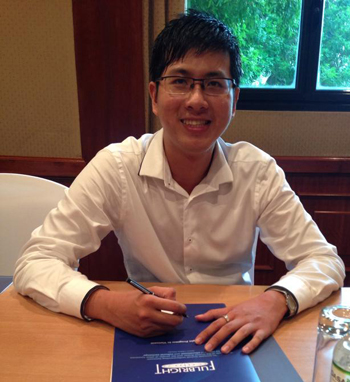
ProfilesKhanh Bui is currently a PhD student in Department of Language and Literacy Education at the University of Georgia, Athens, Georgia, majoring in TESOL and World Language Education. He is also a teacher educator working with K-12 pre-service teachers in a course entitled “Language and Culture in the classroom”.

Khanh Bui

He was granted a Fulbright Foreign Student Exchange Scholarship to get his Master of Education in TESOL at the University of Georgia in 2014 and graduated in 2016. His research interests are content-based language teaching, Systemic Functional Linguistics, and multimodalities in teaching mathematics.

Selected Publications:

Bui, K. (2015). Teachers’ concerns and solutions towards the implementation of digital storytelling in teaching English in ESL classroom in Asian countries. Journal of Journalism and Mass Communication, 5(9), 454-462.

Bui, K. (2014). Review of The book with no pictures. Journal of Language and Literacy Education, 11(1).

Bui, K., Dinh, T., & Kabilan, M. K. (2012). The implementation of ICT training among academic in Vietnamese universities. In M. K. Kabilan, W. K. Too & H. P. Widodo (Eds.), ICT & ELT: Research & Perspectives in South East Asia (pp. 214-228). Malaysia: Penerbit Universiti Sains Malaysia.

Conferences:

Bui, K. (2015). An investigation of pragmatics development during telecollaborative dialoguing between Vietnamese and American students. Paper presented at Language Education and Diversity Conference 2015, Auckland, New Zealand.

Bui, K. (2015). An examination of intercultural development during telecollaborative dialoguing between Vietnamese and American students. Paper presented at ALAA/ALANZ/ALTAANZ Conference, Adeleide, Australia.

Bui, K. (2015). My Fulbright journey. Paper presented at 2nd Fulbright Academic Symposium, Columbia, South Carolina, USA.

Bui, K. (2014). The implementation of project-based learning-An investigation and a case study in Lawrence S. Ting School, Ho Chi Minh City, Vietnam. Paper presented at 6th Engaging with Vietnam Conference, Eugene, Oregon, USA.

Bui, K (2013). An investigation of using Skype in teaching English to Vietnamese students. Paper presented at English Department Conference 2013, Ho Chi Minh City, Vietnam.

Bui, K. (2012). The utilization of ICT among academics in the universities in Vietnam. Paper presented at 4th Engaging with Vietnam Conference, Honolulu, Hawaii, USA.

Bui, K. (2012). Re-designing Speaking Activities in Textbooks for Vietnamese Highschool Students. Paper presented at CamTESOL (Cambodia Teachers of English as a Second Language) Conference, Phnom Penh, Cambodia.

Bui, K (2012). Ứng dụng hình thức dạy tình huống trong giảng dạy (The implementation of task-based language teaching in teaching English to highschool students). Paper presented at Youth Conference 2015, Ho Chi Minh City, Vietnam.

Bui, K. (2011). The implementation of task-based language teaching in teaching speaking for students in Vietnamese high schools. Paper presented at MELTA – Malaysian English Language Teaching Association Conference, Terengganu, Malaysia.


Work for CID:
Khanh Bui translated KC62: Diaspora into Vietnamese, and has served as a reviewer for Vietnamese.

Frank Fitzpatrick Profile

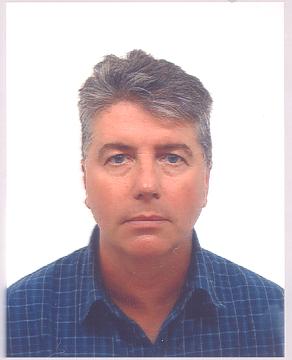
ProfilesDr Frank Fitzpatrick is an independent consultant in intercultural learning and development based in the UK.

Frank Fitzpatrick

He has a PhD in Cross-cultural Communication from Newcastle University, UK, a Masters in Business Administration from the University of Leicester, UK, and a Masters in Linguistics from the University of Surrey, UK, and is an experienced and qualified training professional. He has over 20 years of international experience in intercultural relations across Europe, Latin America and the Middle East and has worked in many different locations, including the UK, Spain, Italy, Portugal, the Balkans, Peru, Cuba, and Qatar, working with a wide range of governmental, educational and civil institutions. He also has extensive experience of successfully managing large and diverse groups of people from different cultural backgrounds. He has published in the field of language teacher education and on subjects of interest in cross-cultural business management, examining and redefining, in particular, the concept of “culture shock” in international relocation.

Selected publications:

Fitzpatrick, F. (2017). Taking the ‘culture’ out of ‘culture shock.’ Critical Perspectives on International Business, 13(4), 278-296.

Fitzpatrick, F. (2016). Voices from Cuba: Redefining culture shock. Saarbrucken: Lambert Academic Publishing.


Work for CID:
Frank Fitzpatrick wrote KC87: Culture Shock.