Leonarda Garcia-Jimenez Profile

Profiles

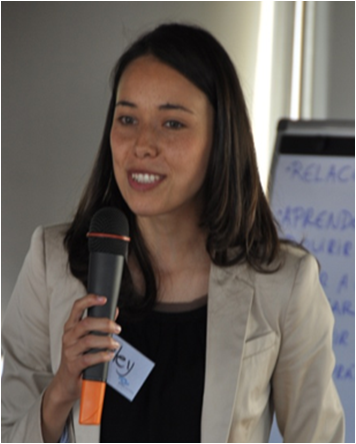
Leonarda Garcia-Jimenez, Ph.D. in Communication, is Associate Professor at the University of Murcia (Spain) and Affiliate Faculty at Colorado State University (USA).
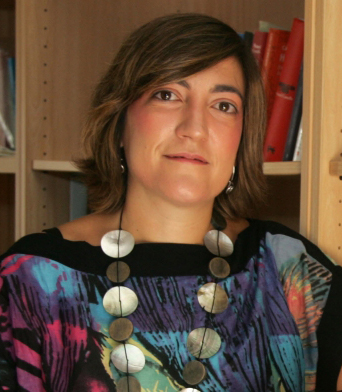
Leonarda García-Jiménez

Throughout her career, she has also taught and researched in other US, Swiss, Mexican, Colombian and Spanish universities. Dr. García-Jiménez has published more than forty works in communication theory, media culture and intercultural communication. Her H Index in Google Scholar Citations is 10. She loves spending time by the Mediterranean Sea. .

Garcia-Jimenez has done more than forty works (articles, books, chapters, as well as conference papers) on her specialist field of study: communication theory, culture and media. Her works have been published in Communication Monographs, European Journal of Communication, Estudios del Mensaje Periodistico, ZER, Razon y Palabra, Catalan Journal of Communication and Cultural Studies among others. Her book about communication theory published in one of the most important publishing companies of Latin America and Spain (Tecnos, 2007) sold out the first edition (1500 books). She has participated in some of the most important conferences in communication (WAPOR, ICA, NCA, IAMCR, ECREA, Bienal de Comunicacion, IBERCOM, ISA, etc.).

Her most recent publications focus on communication as a constitutive phenomenon that transforms the world. This approach has been developed in  epistemological and practical (cross cultural comparison) ways like “Some Foundational Conceptions of Communication: Revising and Expanding the Traditions of Thought” (Empedocles: European Journal for the Philosophy of Communication, 2012) or “The Pragmatic Metamodel of Communication: A Cultural Approach to Interaction” (Studies in Communication Sciences, 2014). She is also developing with her research group from Universitat Pompeu Fabra (Barcelona) the analysis of discourses about interculturality (intercultural interaction) in television news as a way of promoting a more dialogical/conciliatory world.

Leonarda thinks that education in the understanding of communication (in epistemological, interpersonal, media or socio-cultural ways) would promote a better and more peaceful world.

Federica Setti Profile

Profiles

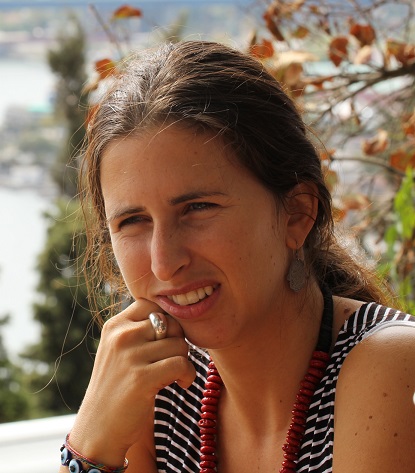
Federica Setti holds a PhD in Anthropology and Education at the University of Turin.

Federica Setti


As part of her PhD she has carried out an ethnographic study of education and relationships between Roma and non-Roma among a Sinti family network and in a middle school attended by their teenager children in Trento. She was visiting scholar at the University of Edinburgh, based at STEP (Scottish Traveller Education Programme). She carried out ethnographic research among a Dassikané Roma family network and in a primary school attended by their children in Turin as part of her MA in Cultural Anthropology and Ethnology.

Her research interests include Romani studies; Cultural and Medical Anthropology; Migration studies and Anthropology of Death. She carried out ethnographic research into Moroccan peoples’ migration experiences between Italy and Morocco and an ethnography of mourning processes, related to relatives of patients attended by a palliative care centre in Trento, for her BA degree in Cultural Anthropology and Ethnology. The latter is published in the The Italian Journal of Palliative Care under the title “Processes of Mourning: Ethnography and Life histories in Trentino.” She also concentrated on the history of relationships between majority societies and minorities, particularly through an archival research on the special classes ‘Lacio Drom’ activated in Italy only for those called ‘Gypsies’, with an exonym, published in the article “‘You, Gadže, see school in one way. We, Sinti, see it in another way’: An ethnography of education and school pathways of Sinti and non-Sinti in Trento,” in Trentino’s Archive Journal.

The monograph about her PhD research, titled “In A Matter of Perspectives: Ethnography of Education and of Relationships between Roma and non-Roma” is in publication, in Italian, with the publisher CISU (Rome). Furthermore, the journal articles she wrote related to her PhD ethnography are forthcoming, including “The implications of ‘naming’ on Roma and Sinti right to education and social inclusion: an ethnography of education among a Sinti family network,” prepared for the Special Issue “On the education of Roma, Travelers and ‘occupational nomads’. Research findings and questions that interrogate researchers and educators,” to be published in Intercultural Education Journal.

She was Teaching Fellow, Lecturer and Exam committee member in Anthropology of Education, Intercultural Education and Educational Processes in Multicultural Societies (chair: Professor Francesca Gobbo) at the University of Turin, for four years. She is in the Teachers of Italian as Foreign language’s Province of Trento’s register and taught for three years Italian as foreign language to migrant and Roma students in middle schools. She is a member of the European Academic Network on Romani Studies, the Gypsy Lore Society and the URBA-ROM Network. She is also co-founder and member of wom.an.ed – women’s studies in anthropology and/of education. She is reachable via email.

Margarita Kefalaki Profile

Profiles

Dr. Margarita Kefalaki is the founder and current President of Communication Institute of Greece (COMING).

Margarita Kefalaki

She holds a Ph.D. in Cultural Communication and a Master degree in Communication from Pascal Paoli University in Corsica (France). Additionally she holds a Bachelor degree in cultural communication and organization of events from Vauban University in Nimes (Montpellier III).

Her research focuses on intercultural communication, particularly the role of music and dance to connect people and nations. Margarita is also interested in communication and its connection with media, tourism, marketing and management. Margarita has taught in several universities in Greece and France, and has published widely in academic and policy journals such Journal of ‘Business and Management Research’ and the ‘International Small Business Journal’.  Moreover, she has successfully led several intercultural projects inclluding the creation of a musical disc in three languages (Action3 of the European Program for young People of INJEP).  Margarita believes that we can better communicate through intercultural comprehension, communication, exchange and education Academics can contribute to this exchange process. This is what she is trying to achieve with the establishment of the Communication Institute of Greece and the organization of International Academic Conferences.


Work for CID:

Margarita Kefalaki wrote a guest post, Intercultural Dialogue via Organizing International Academic Conferences. She also translated KC1: Intercultural Dialogue into Greek, and has reviewed translations into Greek.

Shirley Saenz Profile

ProfilesShirley Saenz is a cross-cultural trainer and business partner at ICEBERG Cultural Intelligence, the leading intercultural consulting firm in Latin America, and president of SIETAR Argentina.

Shirley Saenz

She has been actively working in the cross-cultural field training and counseling global teams, international business managers and professionals with international exposure in several industries. During the last years, Shirley has been living and working overseas throughout Colombia, France, China, Brazil, Argentina and the United States, which allowed her to gain a deep understanding of these cultures. Shirley’s primary research interests have been the cultural differences among Latin American countries, the impact of language on culture, and intercultural communication in multicultural and virtual teams.


Work for CID:

Shirley Saenz translated KC3: Intercultural Competence, KC5: Intercultural CommunicationKC10: Cross-Cultural Dialogue, and KC55: Stereotypes into Spanish. She has also reviewed translations into Spanish.

Altay A. Manço Profile

ProfilesAltay A. Manço has a doctorate in social psychology at the Université de Liège (Belgium).


Altay Manço

He has done a lot of work in the areas of educational psychology and social integration and the psycho-sociology of immigration, especially Turkish. Since 1986, he has worked as a consultant for many institutions and associations on this topics in various European countries and, more recently, in Canada. Manço has also been working with the Université de Paris V since 1998, and with the Université de Sherbrooke in Quebec. Since 1996, he has been the Science Director of the Institut de Recherche, Formation et Action sur les Migrations. IRFAM is a source body set up by stakeholders in the field as well as university researchers for social action, educational professionals, etc. As a continuing education association mandated to develop diversity in our societies, IRFAM manages the collection “Compétences interculturelles” from Éditions Harmattan (Paris) and publishes a quarterly Internet newsletter called “Diversités et Citoyennetés.”

Selected recent books

A. MANÇO et C. BARRAS. 2013. La diversité culturelle dans les PME. Accès au travail et valorisation des ressources, Paris, L’Harmattan.

A. MANÇO et C. ASCHENBROICH. 2013. Migrants solidaires, projets jumelés. Pratiques et coopérations transnationales, Paris, L’Harmattan.

A. MANÇO et P. ALEN. 2012. Appropriation du français par les migrants. Rôles des actions culturelles, Paris, L’Harmattan.

S. AMORANITIS, A. MANÇO. 2011. Migration et développement en Europe. Politiques, pratiques et acteurs, Bruxelles, EUNOMAD.

A. MANÇO et S. AMORANITIS. 2010. Migrants et développement. Politiques, pratiques et acteurs en Belgique, Paris, L’Harmattan.

S. AMORANITIS, D. CRUTZEN, A. MANÇO et al. 2010. Développer le mainstreaming de la diversité. Recueil analytique d’outils d’intervention pour la valorisation de la diversité, Liège, IRFAM.

A. MANÇO et C. BOLZMAN (éds). 2010. Transnationalités et développement. Rôles de l’interculturel, Paris, L’Harmattan.

K. HADDAD, A. MANÇO et M. ECKMANN (éds). 2009. Antagonismes communautaires et dialogues interculturels. Du constat des polarisations à la construction des cohésions, Paris, L’Harmattan.

M. SARLET et A. MANÇO (éds). 2008. Tourismes et diversités : facteurs de développement ?, Paris, L’Harmattan.

J. DEPIREUX et A. MANÇO (éds). 2008. Formations d’adultes et interculturalité. Innovations en pays francophones, Paris, L’Harmattan.

A. MANÇO (éd.). 2008. Valorisation des compétences et co-développement. Africain(e)s qualifié(e)s en immigration, Paris, L’Harmattan.

A. MANÇO. 2006. Processus identitaires et intégration. Approche psychosociale des jeunes issus de l’immigration, Paris, L’Harmattan.

A. MANÇO (Coord.). 2006. Turcs en Europe. L’heure de l’élargissement, Paris, L’Harmattan.

M. VATZ LAAROUSSI et A. MANÇO (éds). 2003.  Jeunesses, citoyennetés, violences. Réfugiés albanais en Belgique et au Québec, Paris, L’Harmattan.

D. CRUTZEN et A. MANÇO (éds). 2003. Compétences linguistiques et sociocognitives des enfants issus de migrants. Turcs et Marocains en Belgique, Paris, L’Harmattan.

A. MANÇO. 2002. Compétences interculturelles des jeunes issus de l’immigration. Perspectives théoriques et pratiques, Paris, L’Harmattan.

Selected recent bibliography in English:

A. MANÇO & P. ALEN. 2012.  Newcomers in Educational System: The Case of French-Speaking Part of Belgium. Sociology Mind, 2(1), 116-126.

A. MANÇO & S. AMORANITIS (Eds.). (2005). Recognition of Islam in European Municipalities: Actions Against Religious Discrimination. Migrations Letters, 2(3).

John Stewart Profile

Profiles

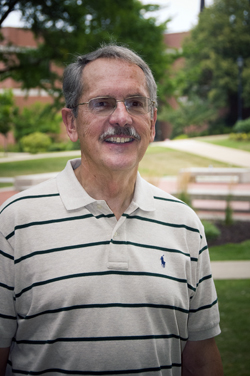
John Stewart serves as Special Assistant to the President at the University of Dubuque in Dubuque, Iowa.

John Stewart

He was Vice President for Academic Affairs at UD from 2001-2010, and on the Communication faculty at the University of Washington in Seattle from 1969-2001. He also taught full-time at the University of Wisconsin-Stout and filled visiting professor/ lecturer positions at a number of institutions, including the University of Hawaii-Manoa, Texas A&M, Gonzaga, California State University-Fresno, Wake Forest, Hebrew University, and the Universities of Tel Aviv and Haifa.

John’s primary research interests have been the philosophy of language, the philosophy and practice of dialogue, and the philosophy and practice of interpretive research. He articulated a relational view of language in Language as Articulate Contact: Toward a Post-Semiotic Philosophy of Communication (1995) and the edited volume, Beyond the Symbol Model: Reflections on the Representational Nature of Language (1996), both published by SUNY Press. His approach to dialogue has been developed in several articles and chapters, including “Foundations of Dialogic Communication,” Quarterly Journal of Speech, 65 (1978), 183-201; “Dialogue as Tensional, Ethical Practice,” with Karen Zediker, Southern Communication Journal, 65 (2000), 224-242; and “Relationships Among Philosophies of dialogue,” with K. E. Zediker and L. L. Black, in Dialogic Approaches to Communication, R. Anderson, L. A. Baxter, & K. N. Cissna (Eds.) (Sage, 2003).

John’s edited textbook, Bridges Not Walls: A Book About Interpersonal Communication is currently in its 11th edition with McGraw Hill, and his co-authored Together: Communicating Interpersonally is in its 6th edition with Oxford.

He is currently focused on revising his communication self-help book, U&ME: Communicating in Moments that Matter (Taos Institute Publications, 2013), which is available in print and e-book versions. Excerpts from, and news about U&ME are available on its Facebook site, and John’s biography, interpersonal communication blog, and information about his other publications are can be found at www.johnstewart.org.


Work for CID:
John Stewart wrote KC14: Dialogue.

Giovanna Dell’Orto Profile

Profiles

Giovanna Dell’Orto is an Associate Professor in the School of Journalism and Mass Communication of the University of Minnesota.

Giovanna Dell'Orto

Her research focuses on international mass communication, particularly the role of the media and mediated discourses in international affairs, historically and currently. Her latest book, “AP Foreign Correspondents in Action: World War II to the Present” (Cambridge University Press, 2015), reveals for the first time the story behind the stories that have brought the world home to America, focusing on changing journalistic practices. In 2013, she published two books: “American Journalism and International Relations” (Cambridge University Press), a monograph on the interplay between US foreign correspondence and foreign policy over 160 years, and “Reporting at the Southern Borders” (Routledge), an edited volume on journalism and immigration at the southern frontiers of the US and the EU.

Dr. Dell’Orto received her Ph.D. in Mass Communication from the University of Minnesota in 2004. She has also worked as reporter and editor for The Associated Press, most recently in the capacity of immigration reporter. She is the author of two monographs (“Giving Meanings to the World”, 2002, and “The Hidden Power of the American Dream”, 2008), which dealt with international journalism and its ability to construct images across national borders. Together with Professor Emerita Hazel Dicken-Garcia, she has also authored a book about journalists’ understanding of First Amendment rights, “Hated Ideas and the American Civil War Press” (2007).


Work for CID:

Giovanna Dell’Orto served on the CID Advisory Board 2014-20, and has reviewed translations into French.

Aimee Dawis Profile

ProfilesAimee Dawis teaches courses in cultural studies, qualitative research methods, ethnography, postmodernism and media and identity at the University of Indonesia’s Department of Communication within the School of Political and Social Sciences.

Aimee Dawis

She holds a Ph.D. in Media Ecology from New York University, an MPS (Master’s of Professional Studies) in Communication from Cornell University, and a B.A. in Communication Arts from Loyola Marymount University.

Her first book, The Chinese of Indonesia and Their Search for Identity: The Relationship between Collective Memory and the Media was based on her doctoral dissertation at NYU. It was published by Cambria Press, NY in 2009. An Indonesian version of the book was published by PT. Gramedia, the biggest Indonesian publishing house, in 2010. Her second book, Portraits of Inspiring Chinese-Indonesian Women, was first published by PT. Gramedia in Indonesia as a bilingual book (English and Indonesian) in 2012. An international version of the book, with an updated introduction, was published by Tuttle Publishing in March 2014.

Apart from these books, Dawis also regularly publishes her work on the ethnic Chinese in Indonesia, Indonesia-China relations, the overseas Chinese diaspora and media studies.


Work for CID:

Aimee Dawis was one of the participants in the Roundtable on Intercultural Dialogue in Asia, co-sponsored by CID.

Stephen Croucher Profile

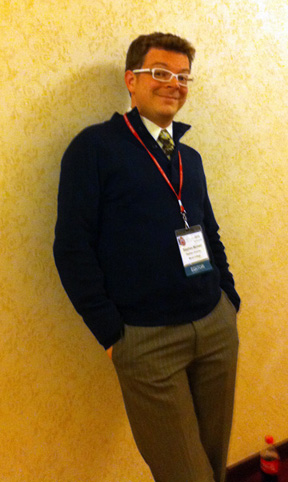
ProfilesStephen Croucher (PhD, University of Oklahoma, 2006) is Head of the School of Communication, Journalism and Marketing, Massey University, Wellington, New Zealand.

Stephen Croucher

His research focuses on three main area of interest. First, the cultural adaptation process. Within this area of study he has explored adaptation in 15 nations. Within these studies he has shown through qualitative and quantitative analyses that current models of adaptation do not adequately describe: the fusion of identities that occur during adaptation, and the influence/resistance of the host culture. Second, and closely related to cultural adaptation, is his work into integrated threat theory. In these studies Croucher has shown how many dominant cultural groups in Europe, North America, and Asia fear immigrant and minority communities. These fears (prejudice) lead to less acceptance of adaptation overtures from the minority groups. Third,  he studies the relationships between communicative behaviors/traits and religious identification and religiosity. In this line of work he has found religion (identity and religiosity) to have a significant effect on a variety of traits/behaviors.

Croucher has published 4 books and more than 50 articles in journals such as: Communication Monographs, Journal of International and Intercultural Communication, Management Communication Quarterly, Communication Studies, International Journal of Conflict Management, and Journal of Intercultural Communication Research. 

Croucher is active in various professional associations and has served in a variety of capacities: Vice-Chair of the Intercultural Division of the International Communication Association, editor of the Journal of Intercultural Communication Research and Speaker & Gavel, and World Communication Association Vice President for Europe. He has also served on the editorial board of numerous journals: Communication Studies, Journal of International and Intercultural Communication, International Journal of Conflict Management, Mass Communication and Society, and the Western Journal of Communication. 


Work for CID:

Stephen Croucher was one of the participants in the Roundtable on Intercultural Dialogue in Asia, co-sponsored by CID.

Polina Golovátina-Mora Profile

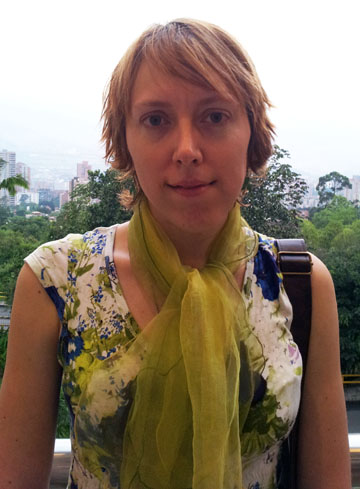
ProfilesDr. Polina Golovátina-Mora is an Associate Professor at the School of Social Sciences at Universidad Pontificia Bolivariana, in Medellín (Colombia).

Polina Golovatina Mora

She is an instructor for the PhD Program in Social Sciences and a Faculty Affiliate at the MA in Learning and Teaching Processes in Second Languages. Her current teaching duties focus on introduction to epistemology and graduate seminars on language, culture, and power. She has been a lecturer and visiting professor at universities in Russia, Czech Republic, and Colombia. She has also been a visiting researcher at the University of California-Berkeley and the University of Illinois at Urbana-Champaign.

Dr. Golovátina-Mora has a doctoral degree in history (Urals Federal University) and a master’s degree in Russian and Eastern European Studies (University of Illinois at Urbana-Champaign), the latter as a Fulbright Scholar. She was an Erasmus Mundus Postdoctoral Fellow at the Pultusk Academy of Humanities in Poland.

Her scholarship ranges across different languages and topics. A multilingual writer, she has published and presented her work in English, Russian, Polish, Czech, and most recently, Spanish. Her work includes articles and book chapters on historiography, representations of social processes (collective memory and identity construction, responses to the social structures and pressures). She has presented her work, including conference presentations, plenaries, and invited talks, in Colombia, the United States, Poland, Czech Republic, Finland, Turkey, Russia, Germany, and Italy. Her most recent research features narrative inquiry and discourse analysis studies on monstrous theory and how fear is constructed in contemporary cities and societies and through popular culture (especially in light of the renaissance of the vampire genre). Recent work (along with her husband, Dr. Raúl A. Mora) includes discussions of social and curricular constructions of bilingualism and multiculturalism and the use of Bourdieusian frameworks to analyze culture.

You can find out more about Dr. Golovátina-Mora’s scholarship through her website and her Academia.edu profile.


Work for CID:
Polina Golovátina-Mora co-authored KC19: Multiculturalism.