CFP: Multilingualism and Journalism in the Era of Convergence

CFP: Multilingualism and Journalism in the Era of Convergence
Edited by Lucile Davier (University of Geneva) and Kyle Conway (University of Ottawa)

Technological convergence, or the blurring of lines between formerly distinct media, has had a tremendous impact on the work journalists do. For one thing, it has contributed to the processes of globalization that have brought people into greater contact with cultural others. For another, it has made it possible for an ever smaller group of corporations to control an ever larger share of the media. As a result, journalists must become proficient with more aspects of production (combining video, text, and images) while reporting on a wider range of people and cultures and responding to the economic pressures that come with the concentration of media ownership.

This book will look at the ways journalists are making sense of and adapting to this changing environment. It will focus on those moments when they gather information in languages that their audiences do not speak. It will ask, what technologies do they use as they collect information, transform it into a story, and disseminate it to their readers, viewers, and listeners? It will examine questions of translation in the broadest possible sense-from the re-expression of bits of speech or text in a different language, to the rewriting of partial or complete news stories, to the explanation of how members of a foreign cultural community interpret an object or event.

The editors would like to invite submissions from a range of disciplines such as communication, translation studies, and sociology. Potential questions authors might address include (but are not limited to):

Platforms:
– In what contexts do journalists indicate that a source spoke or wrote in a different language?
– What modes of translation (e.g., subtitling, voice-over, etc.) do journalists use?
– Do journalists favour different modes of re-expression on different platforms?
– What strategies do they adopt for cross-platform or multimodal distribution?
– How do they adapt the same news story for multiple formats?
– Do ideas of newsworthiness vary depending on the platform?

Social implications:
– How visible are multilingual contexts for audiences?
– Do convergence phenomena contribute to the globalization or the localization of news?
– What are the implications of journalists’ practices for how audiences perceive cultural others?

To propose a chapter, please send an abstract to multilingualism.convergence@gmail.com. Abstracts should be 500 words long and submitted as .odt, .doc, .docx, or .rtf files. Proposal deadline: January 15, 2017. Initial acceptances sent: February 15, 2017. Deadline for full articles (6,000-8,000 words): May 31, 2017.

Key Concept #53: Conflict Management Translated into Chinese

Key Concepts in ICDContinuing translations of Key Concepts in Intercultural Dialogue, today I am posting KC53: Conflict Management, which Qi Wang wrote in English in 2015, and which she has now translated into Simplified Chinese.

As always, all Key Concepts are available as free PDFs; just click on the thumbnail to download. Lists of Key Concepts organized chronologically by publication date and number, alphabetically by concept, and by languages into which they have been translated, are available, as is a page of acknowledgments with the names of all authors, translators, and reviewers.

KC53 Conflict management_ChineseWang, Q. (2016). Intercultural capital [Simplified Chinese]. Key Concepts in Intercultural Dialogue, 53. Available from:
https://centerforinterculturaldialogue.org/wp-content/uploads/2016/12/kc53-conflict-management_chinese.pdf

If you are interested in translating one of the Key Concepts, please contact me for approval first because dozens are currently in process. As always, if there is a concept you think should be written up as one of the Key Concepts, whether in English or any other language, propose it. If you are new to CID, please provide a brief resume. This opportunity is open to masters students and above, on the assumption that some familiarity with academic conventions generally, and discussion of intercultural dialogue specifically, are useful.

Wendy Leeds-Hurwitz, Director
Center for Intercultural Dialogue


Creative Commons License
This work is licensed under a Creative Commons Attribution-NonCommercial-NoDerivatives 4.0 International License.

Northwestern U Postdoctoral Fellowships: Global, Comparative, International Affairs

NORTHWESTERN UNIVERSITY
Buffett Institute for Global Studies
Postdoctoral Fellowships in Global, Comparative, or International Affairs

The Buffett Institute for Global Studies at Northwestern University invites applications for two-year postdoctoral fellowships in the study of global, comparative or international affairs. Up to three Fellows will be selected. Applications are welcome from scholars from any range of social science or interdisciplinary perspectives whose research addresses global, international, or transnational social processes, problems, governance, or conflicts.

Fellowships will run from September 1, 2017, to August 31, 2019.

The salary is $55,000. In addition, Fellows are eligible for $5,000 per year to fund research and conference travel, and up to $2,000 in reimbursement for allowable relocation expenses in the first year. This is a full-time, benefits-eligible position.

Applicants must have received their PhD between January 2, 2015, and August 31, 2017.

Application deadline is January 3, 2017, at 5 p.m. (CT).

For a complete position description and application procedures, please click here

Northwestern University is an Equal Opportunity, Affirmative Action Employer of all protected classes including veterans and individuals with disabilities. Women and minorities are encouraged to apply. Hiring is contingent upon eligibility to work in the United States.

Copenhagen Winterschool in Sociolinguistics (Denmark)

Copenhagen Winterschool in Sociolinguistics
PhD School at the Faculty of Humanities at University of Copenhagen

The LANCHART Centre and the Department of Nordic Research at the University of Copenhagen once again invite applicants for a PhD winterschool in sociolinguistics. The winterschool will take place from 13th to 17th March 2017 at the University of Copenhagen.

The overall theme for the course is sociolinguistics understood broadly, and the participants will gain insights into different research fields within contemporary sociolinguistics. Focus is on newer developments and we will address studies of language, variation and change as well as ethnographic studies of language, mobility and diversity. We will discuss these issues both from a theoretical and an empirical perspective.

Teachers will be:
* Monica Heller (University of Toronto)
* Rickard Jonsson (University of Stockholm)
* Marie Maegaard, Janus Spindler Møller, Pia Quist (University of Copenhagen)
* Devyani Sharma (Queen Mary University of London)

Each day will consist of presentations of PhD-projects from particpants, discussions, and lectures from teachers:
* Monica Heller: Moorings and mobilities in francophone Canada: challenges of a critical sociolinguistic ethnography of unrooted nations
* Rickard Jonsson: Handling the Other in anti-racist talk: linguistic ethnography in a prestigious Stockholm upper secondary school
* Marie Maegaard, Janus Spindler Møller & Pia Quist: Different routes to the same destination: Dialect and standardization in the 21st century
* Devyani Sharma: New methods for studying social change through language variation

Course requirements: All participants should prepare a 20 minutes presentation of their project with a special focus on themes that they would like to have discussed as part of the course. This could be for instance theoretical or methodological issues, or it could be ongoing analyses that would benefit from a discussion. The idea is for all participants to get an opportunity to have their projects discussed, and to get comments from both teachers and other partipants.

Max. number of participants: 25.
ECTS: 5.3.

Applications: Applications for the course should consist of a 1 page presentation of your PhD-project, pointing out which questions/themes you would like to present and discuss as part of the winterschool. Please send this via email to phdschool@hum.ku.dk no later than January 5th, 2017. Please also register via the link in the box on the right no later than January 5th, 2017.

Readings: Readings will be announced to participants after acceptance.

Further information: For more information about the winterschool, please contact Janus Spindler Møller  or Marie Maegaard.

CFP AHRI 2017: Promotion & Enforcement of Human Rights

2017 AHRI CONFERENCE
The Promotion and Enforcement of Human Rights by International and Regional Organizations: Achievements, Challenges and Opportunities
27-28 April 2017, Leuven, Belgium

Deadline for abstract submissions: 2 January 2017

The Association of Human Rights Institutes (AHRI), the FRAME Project and the Leuven Centre for Global Governance Studies (KU Leuven) are pleased to announce a call for papers for the 2017 AHRI Conference, which will be held in Leuven. This international conference aims to take a broad and comparative view of the achievements and potential, but also of the challenges of international and regional organizations in promoting and enforcing human rights. Further details of the call can be found in the attached document.

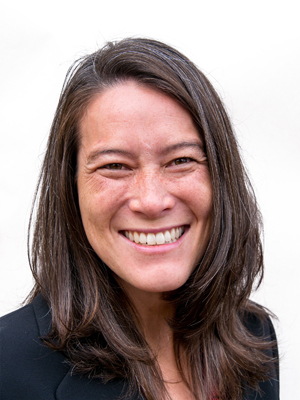
Narine Nora Kerelian Profile

ProfilesDr. Narine Nora Kerelian is a Lecturer with the Department of Asian and Policy Studies (APS) of the Faculty of Liberal Arts and Social Sciences (FLASS) at The Education University of Hong Kong (EdUHK).

Narine Kerelian

In addition to holding a PhD in Social Sciences from The University of Hong Kong, she is certified in intercultural theory and foundations. Dr. Kerelian obtained her MA in International Policy Studies from the Middlebury Institute of International Studies at Monterey, and her BA in Global Studies and French (Honors) from the University of California, Santa Barbara.

Dr. Kerelian’s research interests lie at the intersection of migration and social policy, with a focus on global cities in Asia. Her dissertation explores the sense of place of young transmigrant professionals in Hong Kong through transmigrant lived experience accounts, providing insights for talent mobility, migrant incorporation, and global city formation.

Dr. Kerelian has studied, worked and lived in the United States, Europe, and Asia. She has traveled to over 35 countries and enjoys seeing new places and trying new cuisines. She is fluent in Armenian, English and French.

Selected publications:

Arat, G., & Kerelian, N. N. (2019).The promotion of socially inclusive East Asian society: The Hong Kong case. Journal of Human Rights and Social Workhttps://doi.org/10.1007/s41134-019-00107-y.

Kerelian, N. N. & Jordan, L.P. (2018). Together separately? Young transmigrant professionals in ‘Asia’s World City’. Applied Mobilities, 1-20. Doi: 10.1080/23800127.2018.1426521.

Arat, G., & Kerelian, N. N. (2017). Reshaping the social work education system towards cultural competency: The Hong Kong case. International Social Work, 1-14. Doi: 10.177/0020872817725133.

Kerelian, N. N. (2016). Placing diversity: Graduate encounters with group work. Social Work with Groups, 1-6. doi:10.1080/01609513.2015.1065385

Kerelian, N. N., & Jordan, L. P. (2016). The highly-skilled in Hong Kong ‘Asia’s world city’ In Q. Xu & L. P. Jordan (Eds.), Migrant workers: Social identity, occupational challenges and health practices (pp. 191-212). New York: Nova.


Work for CID:
Narine Nora Kerelian co-authored KC79: Social Cohesion.

Witness for Peace Delegation to Mexico

Final call for delegates – reply asap!

Witness for Peace, a politically independent, nationwide grassroots organization working to support peace, justice and sustainable economies in the Americas, is looking for delegates to join Mexico: The Drug War and Social Control: Militarization, Displacement, and Migration from January 13th-22nd, 2017. Witness for Peace delegations are based in popular education and are powerful, transformative experiences. As an organization they have an excellent record working with Communication Studies departments to build international study abroad courses emphasizing social justice.

The January delegation to Mexico (which includes Mexico City and Oaxaca) will look at the intersection between economic policy, community, and culture. These experiences are paradigm changing for anyone with an interest in teaching intercultural and critical communication.

The application deadline has been extended but interested applicants should contact as soon as possible for more information and registration details:

James Dimock
Associate Professor of Communication Studies
Minnesota State University, Mankato

Or

Elise Roberts
Regional Organizer
Witness for Peace Upper Midwest

Mexico: The Drug War and Social Control: Militarization, Displacement, and Migration

The transnational corporate presence in Mexico has been increasing since NAFTA went into effect in 1994, and even more since constitutional reforms were passed in 2014. Today, the government prioritizes corporate rights and land concessions for energy extraction, while the human rights record for the U.S.-funded military and police has continued to worsen. Increased military funding for the Drug war has fueled the corruption and violence, and forced disappearances, torture, arbitrary detentions, and kidnappings have continued to increase. Find out how this state repression relates to the implementation of a neoliberal agenda and learn how U.S. Drug War policy has encouraged militarization and fueled migration north. Strengthen your analysis of the links between transnational corporate interests, military aid, state repression of social movements, and forced displacement and migration.

Participants on this delegation will:

-Investigate the Mérida Initiative (the $2.4 billion U.S. military aid package to Mexico) and learn how it has led to an increase in human rights abuses

-Hear about the organizing struggles and successes of communities in resistance

-Meet with Mexican human rights and land rights activists from different eras (1960’s through today)

-Strengthen a global movement against militarization and corporate control

Nilanjana Bardhan Profile

ProfilesDr. Nilanjana R. Bardhan (Ph.D., Ohio University) is professor and director of graduate studies in the Department of Communication Studies at Southern Illinois University Carbondale (SIUC).

Nilanjana BardhanDr. Bardhan’s teaching interests include intercultural/international communication, public relations and critical media and cultural studies. In her research, she particularly focuses on identity/difference/culture, diversity and inclusion, globalization and postcolonial theory. She teaches both graduate and undergraduate courses and has been awarded the Outstanding Faculty Teaching Award in the Department of Communication Studies at SIUC three times. She advised the department’s Public Relations Student Society of America (PRSSA) chapter for 10 years.

In 2019, Dr. Bardhan received the Women of Distinction Award from SIUC. This award recognizes employees for their sustained commitment to women and/or issues of diversity through demonstrated leadership, vision and action. At SIUC, she has been on the advisory board of the Global Media Research Center, serves on the Diversity Curriculum Committee/Diversity Council and on the Diversity Action Council for the SIUC system. She is currently a member of the National Communication Association (NCA) and the Public Relations Society of America (PRSA). She also serves on the board of the Plank Center for Leadership in Public Relations and co-chairs its Diversity and Inclusion Committee.

Dr. Bardhan is the co-editor of Public Relations in Global Cultural Contexts (Routledge) and Identity Research and Communication (Lexington Press), and the co-author of Cultivating Cosmopolitanism for Intercultural Communication (Routledge). The latter two books have won best book awards from the National Communication Association’s International and Intercultural Communication Division. She has published several book chapters, and articles in journals such as the Journal of International and Intercultural Communication, Communication Quarterly, Journal of Public Relations Research, Journal of Communication Management, Mass Communication & Society, Communication Education, Public Relations Review, International Journal of Strategic Communication and the Journal of Health Communication. She serves on the editorial boards of the Journal of International and Intercultural CommunicationPR Inquiry, and the International Journal of Strategic Communication.

Select Publications:

Books

Sobré-Denton, M. & Bardhan, N. (2013).  Cultivating cosmopolitanism for intercultural communication: Communicating as global citizens. New York: Routledge.

Bardhan, N., & Orbe, M. (Eds.). (2012). Identity research and communication: Intercultural reflections and future directions. Lanham, MD: Lexington Books.

Bardhan, N. & Weaver, C.K. (Eds). (2011). Public relations in global cultural contexts: Multi-paradigmatic perspectives. New York: Routledge.

Journal Articles

Bardhan, N., & Zhang, B. (2017). A post/decolonial view of race and identity through the narratives of U.S. international students from the global South. Communication Quarterly, 65(3), 285-306.

Patwardhan, P., & Bardhan, N. (2014). Worlds apart or a part of the world? Public relations issues and challenges in India.  Public Relations Review, 40(3), 408-419.

Bardhan, N. (2013). Constructing the meaning of globalization: A framing analysis of The PR Strategist. Journal of Public Relations Research, 25(3). 1-20.

Suo, C., & Bardhan, N. (2013). Charting the waters of globalization: An analysis of Haier’s strategic organizational communication. International Journal of Strategic Communication, 7(3). 186-206.

Bardhan, N. (2011). Slumdog Millionaire meets ‘India Shining’: (Trans)national narrations of identity in the South Asian diaspora. Journal of International and Intercultural Communication, 4(1), 42-61.

Book Chapters

Bardhan, N. (2019). Practicing public relations across cultures: The value of intercultural communication competence. In C. Kim (Ed.), Public relations: Competencies and practice (pp. 43-57). New York, NY: Routledge.

Bardhan, N. (2018). Telling the story of the Ebola health crisis: Cosmopolitan communication as a framework for public relations in global contexts. In J. Drzewiecka  & T. Nakayama (Eds.), Global dialectics in intercultural communication: Case studies (pp. 205-224). New York, NY: Peter Lang.

Bardhan, N. (2015). Building bridges along the edges of culture. In K. Sorrells & S. Sekimoto (Eds.), Globalizing Intercultural Communication: A Reader (pp. 55-62). Los Angeles: Sage Publications.

Bardhan, N., & Sobre-Denton, M. (2015). Interculturality, cosmopolitanism, and the role of the imagination: A perspective for communicating as global citizens. In M. Rozbicki (Ed.), Perspectives on interculturality (pp. 131-160). Palgrave Macmillan.

Bardhan, N., & Patwardhan, P. (2014). Public relations in a transforming environment: Perspectives from public relations leaders in India. In B. Berger & J. Meng (Eds.), Public relations leaders as sense makers: A global study of leadership in public relations and communication management (pp. 156-170). New York: Routledge.


Work for CID:

Nilanjana Bardhan wrote Constructing Intercultural Dialogues #4: America the Beautiful.

Key Concept #6: Intercultural Capital Translated into Persian

Key Concepts in ICDContinuing translations of Key Concepts in Intercultural Dialogue, today I am posting KC6: Intercultural Capital, which Andreas Pöllmann wrote in English in 2014, and which Ramin Hajianfard has now translated into Persian.

As always, all Key Concepts are available as free PDFs; just click on the thumbnail to download. Lists of Key Concepts organized chronologically by publication date and number, alphabetically by concept, and by languages into which they have been translated, are available, as is a page of acknowledgments with the names of all authors, translators, and reviewers.

KC6 Intercultural Capital_PersianPöllmann, A. (2016). Intercultural capital [Persian]. (R. Hajianfard, trans). Key Concepts in Intercultural Dialogue, 6. Available from:
https://centerforinterculturaldialogue.org/wp-content/uploads/2018/08/kc6-intercultural-capital_persian-revised.pdf

If you are interested in translating one of the Key Concepts, please contact me for approval first because dozens are currently in process. As always, if there is a concept you think should be written up as one of the Key Concepts, whether in English or any other language, propose it. If you are new to CID, please provide a brief resume. This opportunity is open to masters students and above, on the assumption that some familiarity with academic conventions generally, and discussion of intercultural dialogue specifically, are useful.

Wendy Leeds-Hurwitz, Director
Center for Intercultural Dialogue


Creative Commons License
This work is licensed under a Creative Commons Attribution-NonCommercial-NoDerivatives 4.0 International License.

Northeastern U Future Faculty Fellow (postdoc)

Northeastern University (Boston, MA) invites applications from candidates for the 2017-18 Northeastern University Future Faculty Fellowship (Postdoctoral) Program.

Northeastern University’s mission emphasizes translational research that addresses global challenges and enhances social wellbeing.  Northeastern University strives to create a vibrant and diverse community, characterized by collaboration, creativity, and unwavering commitment to excellence and an equally unwavering commitment to exhibiting respect for one another.  Northeastern celebrates diversity in all its forms and fosters a culture of respect that affirms inter-group relations and builds community.

Consistent with Northeastern’s mission, vision and core values, the objectives of the Future Faculty fellowship program are:

1)      to encourage and promote excellence and diversity in the pool of future faculty candidates in all disciplines at Northeastern;

2)      to introduce to Northeastern’s academic community postdoctoral researchers who are considering faculty careers;

3)      to enhance opportunities for academic careers for persons from diverse backgrounds who have demonstrated a commitment to an inclusive faculty and an inclusive academic experience for all students;

4)      to prepare Future Faculty Fellows for possible tenure-track appointments at Northeastern;

5)      to enhance the academic environment of Northeastern’s departments by providing opportunities for students and faculty to gain experience in multi-cultural, broadly diverse and inclusive work settings and research collaborations that improve the capacity of all their members.

The complete Future Faculty Fellowship description that includes eligibility, fellowship terms, and the online application information can be found online.