IAICS 2017 (China)

IAICS 2017In today’s world, globalization erases boundaries and leads to increased contact among various languages and cultures. While human contact and migration have always been present throughout history, e.g., on the Silk Road, today’s media and transport capacities facilitate contact and communication to an exponentially greater extent than ever before. As a consequence, the phenomena of diversity, interculturality and hybridity are intensified. Juxtaposed to increased contact ensuing from globalization are both the positive and negative aspects of the protectionist efforts of localism. The theme of this conference seeks to examine the context of these problems within the spheres of education, language, culture, and society.

Preregistration due February 28, 2017.

Save

Save

CFP ESTIDIA 2017: Dialogues Without Borders (Bulgaria)

Call for Papers
European Society for Transcultural and Interdisciplinary Dialogue
4th ESTIDIA Conference
Dialogues without Borders: Strategies of Interpersonal and Inter-group Communication
29-30 September 2017

Faculty of Philosophy
Sofia University “St. Kliment Ohridsky”
Sofia, Bulgaria

in partnership with

Institute of Rhetoric and Communications, Sofia
Centre for New Media and Transdisciplinary Dialogue, Constanţa

Sofia UniversityThe 4th ESTIDIA conference, to be held on 29-30 September, 2017, is hosted by Sofia University “St. Kliment Ohridski”, the oldest higher education institution in Bulgaria, founded in 1888, which has been consistently ranked as the top university in the country according to national and international rankings. The conference serves as a discussion forum for researchers and practitioners to showcase their dialogue-oriented work on current societal and community-related issues, and on methodological approaches to dialogue and strategies of interpersonal and inter-group Communication. The aim is to bring together senior and junior scholars and practitioners from a wide range of disciplines and professional orientations to critically explore, through dialogue, different perspectives on human thinking, communication strategies, interpersonal relations, socio-cultural traditions, political processes and business interactions by means of theory-based and practice-driven investigations.

Conference Theme

Most of the world’s population – and Europe is a case in point – lives in contexts that are becoming increasingly multi-ethnic, multi-lingual, multi-cultural. Travel across national boundaries is becoming an everyday activity for many, and new technologies allow individuals to communicate easily and cheaply across such boundaries, even if they stay at home. Meanwhile, hostilities between ethnic, national, religious, and other groups do not seem to be decreasing, but on the contrary, are being kindled by extremist groups and totalitarian leaders. To oppose, prevent and do away with such negative and dangerous developments in the 21st century, it is more important than ever to acquire an in-depth and nuanced understanding of how individuals communicate based on group or community memberships, and how communication allows or encourages group segregation and isolationist tendencies. It is languages – verbal language, sign language, body language – that constitute the basic channels of communication through which group stereotypes can be tolerated, changed, and/or resisted.

While the dynamics of interpersonal and intergroup relations has been a recurrent topic in several disciplines, such as psychology, social psychology (Tajfel 1978, 1982; Haslam et al 1998; Bar-Tal 2000) and political science (Sherif 1966; Pennebaker et al. 1997; Sidanius & Pratto 2001), research on communication and miscommunication in interpersonal and intergroup interaction has been conducted primarily within the fields of linguistics, sociolinguistics anthropology, rhetoric and communication studies (Hymes 1964; Gumperz 1971; Gudykunst 1998; Gudykunst & Mody 2002; Giles 2012; Berger 2014). A major advantage of these research strands lies in their intergroup perspective that considers people not only as individuals, but also as members of social groups (in terms of e.g., gender, age, ethnicity, nationality, region), and investigates the ways in which various social group memberships relate to the way that we communicate with each other.
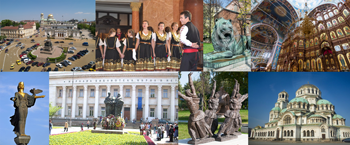
Sofia city

A major goal of this conference is to bring together scholars from a wide range of disciplines who are interested in sharing their expertise and in discussing and comparing their extensive empirical and theoretical findings, so as to achieve a synergy and a cross-fertilisation of perspectives and approaches that highlight the role of communication practices in dealing with challenging situations emerging in interpersonal and intergroup encounters in 21st century societies.

Save

Gustolab Study Abroad: Food Systems (Vietnam, Italy or Japan)

Gustolab International has announced an expansion of their popular Critical Studies on Food summer program. Beginning summer 2017, there will be three complementary programs in Vietnam, Italy, and Japan.

CRITICAL STUDIES ON FOOD SYSTEMS AND SUSTAINABILITY IN VIETNAM
DURATION: 4-week Full Immersion Program
WHEN: May 21 – June 18, 2017

COURSES OFFERED
* Food Systems in Vietnam (3 credits)
* Vietnam, Conflict, Contradiction and Change (3 credits)
* Vietnamese Language for Food and Business (up to 3 credits)

CRITICAL STUDIES ON FOOD SYSTEMS AND SUSTAINABILITY IN ITALY
DURATION: 5-week Full Immersion Program
WHEN: May 22, 2017 – June 24, 2017
WHERE: ROME, ITALY

COURSES OFFERED
* Critical Studies on Food Culture (3 credits)
* Food Media, Communication and Trends (3 credits)
* Food, Nutrition and Culture in Italy (3 credits)
* Food Waste in Italy (3 credits) NEW!
* Italian Language for Food and Business (Italian Lexicon for Food Studies) (3 credits)
* Elementary Italian Language (3 credits)
* Intensive Elementary Italian Language (6 credits, minimum of 8 participants)

CRITICAL STUDIES ON FOOD SYSTEMS AND SUSTAINABILITY IN JAPAN
SUMMER 2017
DURATION: 4-week Full Immersion Program
WHEN: July 2 – July 30, 2017
WHERE: Osaka, Japan

COURSES OFFERED
* Critical Studies on Japanese Food Culture (3 credits)
* Food Choice and Politics in Japan (3 credits)

Applications also open for Gustolab International programs in Italy (Rome, South and North Italy). Open enrollment programs are available to students from all universities.
Spring
Summer
Fall
Internship (several positions available!)


Key Concept #10: Cross-Cultural Dialogue Translated into Spanish

Key Concepts in ICDContinuing translations of Key Concepts in Intercultural Dialogue, today I am posting KC10: Cross-Cultural Dialogue, which I wrote and first published in English in 2014, and which Shirley Saenz has now translated into Spanish.

As always, all Key Concepts are available as free PDFs; just click on the thumbnail to download. Lists of Key Concepts organized chronologically by publication date and number, alphabetically by concept, and by languages into which they have been translated, are available, as is a page of acknowledgments with the names of all authors, translators, and reviewers.

KC10 Cross-Cultural Dialogue_SpanishLeeds-Hurwitz, W. (2017). Diálogo cross-cultural. (S. Saenz, Trans). Key Concepts in Intercultural Dialogue, 10. Available from: https://centerforinterculturaldialogue.org/wp-content/uploads/2017/02/kc10-cross-cultural-dialogue_spanish.pdf

If you are interested in translating one of the Key Concepts, please contact me for approval first because dozens are currently in process. As always, if there is a concept you think should be written up as one of the Key Concepts, whether in English or any other language, propose it. If you are new to CID, please provide a brief resume. This opportunity is open to masters students and above, on the assumption that some familiarity with academic conventions generally, and discussion of intercultural dialogue specifically, are useful.

Wendy Leeds-Hurwitz, Director
Center for Intercultural Dialogue


Creative Commons License
This work is licensed under a Creative Commons Attribution-NonCommercial-NoDerivatives 4.0 International License.

Johns Hopkins U SAIS Europe Job Ad: International Relations (Italy)

Assistant Professor of International Relations (Tenure-Track)
Johns Hopkins University, SAIS Europe, Bologna, Italy
Closes: 9th March 2017

Founded in 1943 and a Johns Hopkins division since 1950, The Paul H. Nitze School of Advanced International Studies of the Johns Hopkins University (SAIS) has been educating global leaders for more than 70 years. As a highly selective graduate institution with a distinguished faculty, SAIS consistently ranks as one of the top schools of international relations in the world. SAIS was founded to provide a practical approach to training students in international leadership and foreign relations, and to provide mid-career educational opportunities for those already working in related fields. To learn more about SAIS, visit www.sais-jhu.edu. 

Position:
SAIS is seeking to appoint a full-time, tenure-track, assistant professor in international relations (IR). Candidates who combine their work in international relations with an interest in international security would have an advantage; candidates with an interest in international law, conflict management, international development, or the foreign policy of the United States are also encouraged to apply. Candidates should be able to teach an introductory course in IR theory at the graduate level.

The position is located at the SAIS Europe campus in Bologna, Italy. The goal is to fill the position with an appointment starting on or soon after July 1, 2017. Interviews will be held in Bologna, Italy.

Qualifications:
A Ph.D. awarded by June 2017 will be a condition for employment. The ideal applicant will have strong academic credentials and a commitment to improve public policy. A record of excellence in teaching and publication record would be a distinct advantage.

Application:
Electronic submissions are preferred. A letter of application, curriculum vitae, and the names and contact details for three people who can provide letters of reference should be submitted to: SAISEuropeIRSearch@jhu.edu

Applications will be reviewed beginning February 15, 2017 and will be accepted until a final decision is made. Inquiries may be made to Professor Erik Jones (erik.jones AT jhu.edu).

U Birmingham Job Ads: Modern Languages (UK)

Lecturer/Senior Lecturer in Modern Languages
University of Birmingham – School of Languages, Cultures, Art History and Music
Closing date: 9th March 2017

The Department of Modern Languages at the University of Birmingham is seeking to make six appointments at Lecturer or (for suitable candidates) Senior Lecturer level. These posts are part of a significant programme of investment in the Department of Modern Languages. The appointments will both reinforce and expand existing research and education strengths, following the recent appointment of three Chairs. The Lecturers/Senior Lecturers will contribute to the Department’s renewed vision for the future of Modern Languages as it is studied and researched in the University.

The successful candidates will be excellent researchers, holding or close to completing a PhD or equivalent qualifications and with ambitious future agendas for research, impact, and external funding bids that complement and expand current activity in the Department. The appointees will be excellent teachers, and will contribute at all degree programme levels, including both core and specialist modules.

Applications are welcome both from candidates who undertake research in cultural study (broadly defined) and from those who undertake research in linguistics. The Department will give consideration both to applicants who specialize in one language area, and to those who specialize in more than one language.

The Department welcomes applications from specialists in any relevant time period, country, or geographical area, and also from those who undertake interdisciplinary work.  Areas of particular interest to the Department include: Translation & Interpreting; Modern Languages & Technology (including Inter-medial studies); Language Pedagogy; Exile; Sexuality; Atlantic Studies/Hemispheric Studies/Global cultural studies; Aesthetics and/or Cognitive Literary studies, but consideration will be given to all outstanding candidates.


Overseas Development Institute Job Ad: Humanitarian Policy (UK)

Senior Research Fellow – Humanitarian Policy Group
Overseas Development Institute, London
Closes: 9th March 2017

ODI aims to inspire and inform policy and practice to reduce poverty by locking together high-quality applied research and practical policy advice. ODI is the UK’s leading independent think tank on international development. Our Humanitarian Policy Group (HPG) is one of the world’s leading teams of independent researchers and information professionals working on humanitarian issues. It is dedicated to improving humanitarian policy and practice through a combination of high-quality analysis, dialogue and debate. We are looking for a Senior Research Fellow with world class knowledge of humanitarian policy issues to lead one or more strands of our research and policy development on conflict analysis and humanitarian responses, as set out by HPG’s upcoming Integrated Programme for 2017-2019.

You will join a dynamic team of researchers, policy experts and communications professionals, and will support the Head of HPG in helping to drive a multidisciplinary and innovative research programme through strategy development, fundraising, research, policy engagement and public affairs.

About the job:

  • Research and fundraising work: conducting high-quality, applied research, and seeking external funding for research proposals
  • Policy advice, public affairs and dissemination: represent ideas, knowledge and research findings to relevant policy makers and practitioners
  • Project management: implementation and management of research, advisory and public affairs projects, including staff and other team members

You will have:

  • Extensive experience in conflict analysis and deep knowledge of key issues and organisations in humanitarian assistance and development
  • Experience in policy-oriented research, demonstrated by an extensive track record of publications and reports;
  • Extensive developing-country experience;
  • Strong analytical skills, a capacity to write clearly, and excellent organisational and oral communication skills
  • A demonstrated capacity for policy advisory or public-affairs work, based on an analytical approach, and an innovative and creative communications ability.
  • An ability to translate research ideas into fundable projects
  • A demonstrated ability to work as part of a team

UWE Bristol Job Ad: Interactive Factual Media (UK)

Research Fellow – Interactive Factual Media (Digital Cultures Research Centre)
University of the West of England, Bristol – Department of Film & Journalism
Closes: 1st March 2017

Whether webdocs, interactive journalism, docugames, virtual reality, data storytelling; digital culture has seen the emergence and proliferation of new interactive factual forms, and the transformation of twentieth century modes of production, exhibition and reception. The i-Docs group within the DCRC explores these developments and their potential for producers, audiences and subjects. The centre now seeks a Research Fellow who will develop, disseminate, promote and strengthen DCRC’s research and knowledge exchange programme in this area.

Working across the DCRC’s local community, through regional, national and international connections, you will keep abreast of developments in the field; analysing and contextualising them in order to identify research themes and questions. You will work in partnership with researchers and creative industry on projects that address the critical or creative potentials of interactive factual, developing and supporting new research initiatives and grant proposals to a variety of external funding bodies. You will deliver high quality peer-reviewed research outputs and contribute to the preparation of outstanding REF impact case studies. In addition you will play a lead role in delivering & developing the i-Docs symposium and related events, including planning and execution. The role will include managing the i-Docs website and associated social media platforms, developing their potential for profile, research and knowledge exchange.

Qualifications – You will be nearing completion or have completed a PhD in a relevant field

This is an exciting opportunity for an ambitious and focused researcher to develop research in this emerging field as part of a highly engaged critical and creative community. The post-holder will work closely with DCRC professors and the centre director, with engagement across the research centre network.

Campus/location: City Centre
Fixed Term end date: 31 March 2019
Fixed term period (yrs/mths): 2 years

Newton International Fellowships (UK)

Newton International FellowshipsThe deadline for expressions of interest for the 2017-18 round is 22nd February 2017

All School of Advanced Study, University of London member institutes welcome proposals from suitably qualified applicants for the Newton International Fellowships scheme. These enable early-stage postdoctoral researchers from any country outside UK to work at UK research institutions with the aim of fostering long-term international collaborations.

Applicants must have a PhD, or be in the final stages of their PhD, provided it will be completed by the start of the fellowship. Fellowships are tenable for up to two years. They include a subsistence award of up to £24,000 per year, up to £8,000 per year for research expenses and a one-off payment of up to £2,000 for relocation expenses. Further specifications are available on the British Academy (for humanities and social sciences) and the Royal Society (for natural sciences) websites.

Deadline: Wednesday, 22nd March 2017.

Process: Expressions of interest must be sent to the relevant institute director (CC research AT sas.ac.uk) by 22nd February 2017.

Once approved, the application process will be coordinated by the School research service.

Save

Save

CFP Journalistic Practices in the Representation of the Migrant Crisis

CFP Journal of Applied Journalism and Media Studies

SPECIAL ISSUE
Should I post that picture or issue that story? Journalistic practices in the representation of the migrant crisis

Guest editors: Vittoria Sacco (Université de Neuchâtel) and Valérie Gorin (University of Geneva and Graduate Institute)

Human migration is not a new phenomenon. However, recently it has gained substantial space in media coverage. In particular, the images of the little Aylan, a child escaping Syria with his family, lying dead on Bodrum’s beach, have raised old ethical questions of journalistic practices. Aylan’s pictures were extremely powerful and not without symbolism, becoming icons of Syria’s tragedy. They went viral on social media, but they were also criticized. Several media opted not to show the images. The criticism centered on whether it was justifiable or ethical to direct readers’ attention to the conflict in Syria with stark images of an innocent victim. There were parallels to the images of Kim Phuc, the little girl running naked and screaming in Vietnam in 1972.

This very issue of audience engagement with crisis is a topic of heated debate in academia. In her book “Compassion fatigue: how the media sell disease, famine, war and death” (1999), Susan Moeller discusses audience engagement with the news coverage of war, conflict or other types of violence. The media has thus the potential to stress particular forms of engagement to mobilize the public and create a collective memory amongst audiences. Exposed daily to distant suffering, the audience can develop apathy and disengage with events, resulting in compassion fatigue.

Kerry Moore, Bernhard Gross and Terry Threadgold drive same message home in their book on “Migration and the Media” (2012). They try to trace the reporting practices that produce migration coverage. A large part of academic studies has otherwise explored visual representations of migrants and refugees in humanitarian appeals (Mannik 2012), emphasizing the role of aid agencies in framing visual stereotypes of helpless people (Rajaram 2002) or racializing, victimizing and feminizing the refugees (Johnson 2011). However, the questions around how the problem of compassion fatigue challenges journalistic practices, and what the news boundaries and standards when reporting crises should be in a digital online age, has had less attention in academic research.
This special issue of the “Journal of Applied Journalism and Media Studies” (AJMS) aims to shed some light on the complex ecosystem journalists covering the crisis face. It invites contributions on the relationship between journalistic practices and audience compassion fatigue, as well as the role of social media and new technologies on how to have it alleviated.

The guest editor welcomes contributions from both scholars and practitioners in the field of media and journalism studies and practice. Scholarly submissions can have a theoretical, analytic, critical, empirical or comparative angle.

Important deadlines and milestones
Prospective authors should submit an abstract not exceeding 250 words directly by email to the guest editors Vittoria Sacco (vittoria.sacco AT unine.ch) and Valérie Gorin (valerie.gorin AT unige.ch) by end of March 2016. Please mark your submission as “Special Issue on the migration crisis”.

Following peer-review, a selection of authors will be invited to submit a full paper (from 5000 to 8000 words) by end of September 2016. See full details about the journal and the prescribed format for manuscript submissions. Please note that acceptance of the abstract does not guarantee publication, given that all papers will be put through the journal’s peer-review process. Tentative publication date: Third issue of 2017