Global Cities: Education Program Manager (USA)

“JobEducation Program Manager, Global Cities, Inc., New York, NY, USA. Deadline: 30 September 2025.

Global Cities seeks an experienced, creative, and tech-savvy Education Program Manager to join its team of accomplished educators who design and implement the Global Scholars virtual exchange program. As part of Global Cities’ collaborative and innovative team, they apply a diverse skillset to create student-centered, project-based curricula, teacher professional development, and a lively e-classroom environment for young people worldwide. Their responsibilities also include liaising with Global Scholars classroom teachers, school leaders, and education district/ministry officials, and contributing insights to initiatives for all K-12 educators interested in integrating global competency into their curriculum and instruction.

Culture as a Space for Addressing Interconnected Global Crises

Applied ICD

Culture as a Space for Addressing Interconnected Global Crises, written by Ian Thomas (Head of Research and Insights, Arts, The British Council), and published by the International Institute for Sustainable Development, is an article worth reading.

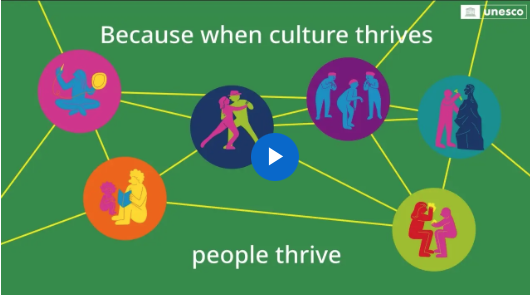
“In a fragmented global policy environment characterized by complex crises, culture possesses the ability to reshape public policy and development frameworks. It also plays a crucial role in preventing, responding to, and recovering from crises, from initiatives focused on heritage restoration to intercultural dialogue aid in post-crisis reconstruction. Community-driven cultural engagement, too, strengthens social and economic resilience.

This impact arises from culture’s ability to promote inclusivity, foster social cohesion, and encourage sustainable practices. By incorporating cultural perspectives and values into policymaking, societies can tackle challenges more effectively and establish more resilient and equitable development pathways.

Culture offers the narratives and frameworks that enable societies to comprehend themselves and their position in the world. These narratives can serve as potent instruments for shaping development priorities and advocating specific values.”

NIAS Safe Haven Fellowships 2026-27 (Netherlands)

FellowshipsSafe Haven Fellowships, Netherlands Institute for Advanced Study, Amsterdam, Netherlands. Deadline: 31 December 2025.

The NIAS Safe Haven Fellowship supports scholars at risk. The NIAS Safe Haven Fellowship is intended for scholars, artists, writers and journalists who are not able to do their work in their current location or circumstances, because of the consequences of conflict or war. The aim of the Safe Haven Fellowship Programme is to protect scholars whose work is restricted or obstructed by state or non-state entities, by offering them temporary relocation and enabling them to continue their work. Those who are facing severe infringements on their academic freedoms due to conflict or war are also welcome to apply. NIAS does not accept applicants affiliated to institutions that are boycotted by the Dutch state. Since February 2025, the University of Amsterdam (UvA) and Maastricht University (UM) are official partners of this programme.

A Safe Haven Fellowship is granted for a period of 5 months (Sept-Jan or Feb–June). Fellows are provided with an office, research facilities, communal lunch, participation in the NIAS community and commuting travel expenses or subsidized accommodation in Amsterdam. Fellows receive a stipend of of €3,500 per month.

On the date of your application, applicants must have at least three years of research experience since obtaining their doctorate if submitting a scientific proposal. In the case of an artistic or journalistic research proposal, a PhD or three years of research experience is not mandatory.

The project proposal must fit within the scope of humanities and/or social sciences.

The working language at NIAS is English. Applicants must have a good command of English to contribute effectively to the fellows group and receive input on their own research.

Princeton: Postdocs in International and Regional Studies (USA)

Postdocs
Postdoctoral research fellowships, International and Regional Studies, Princeton University, NJ, USA.  Deadline: 15 September 2025.

The Princeton Institute for International and Regional Studies (PIIRS) at Princeton University is pleased to announce the call for applications to the PIIRS Postdoctoral Fellowship Program for the 2026-27 academic year. As a leading global institution in interdisciplinary research on international issues, PIIRS is dedicated to advancing innovative scholarship that addresses the world’s most pressing challenges. The PIIRS Postdoctoral Fellows Program is integral to that mission.

They will award two postdoctoral fellowships to the 2026-27 cohort. PIIRS seeks recent PhDs in the Social Sciences who have demonstrated exceptional scholarship, congruent with the Institute’s intellectual focus, that simultaneously advances theoretical debates in their disciplinary field; creatively speaks to and engages with a multidisciplinary audience; and deepens substantive regional knowledge of specific places.

Appointments are for one year (12 months) with the possibility of renewal pending satisfactory performance and continued funding. Postdoctoral Research Associates (PDRAs) are expected to be in residence at Princeton or the local vicinity for the entire academic year or demonstrate to the program’s satisfaction the ability to be on campus on a daily basis and on short notice in order to fulfill responsibilities relating to in-person participation. The position requires PDRAs to be on campus at least four days per week.

CFP International Conference on Language and Social Psychology (USA)

ConferencesCall for papers: International Conference on Language and Social Psychology, University of Arizona, Tucson, AZ, USA, 19-22 May 2026. Deadline: abstract only 1 October 2025.

The International Conference on Language and Social Psychology (ICLASP19-Tucson) is a biennial event that brings together scholars from around the world to explore the multifaceted relationship between language and social psychological processes and outcomes. This year’s conference, ICLASP19-Tucson, highlights the ways in which language shapes and is shaped by social interactions, identities, relationships, and societal structures.

They invite submissions that address a wide range of topics, including but not limited to:

Accent and Accent Bias
Aging and Lifespan Communication
Communication Accommodation
Discourse and Rhetoric
Framing
Health and Wellbeing
Identity
Intercultural Communication
Intergroup Communication
Language Acquisition and Learning
Language Revitalization
Linguistic Bias
Multilingualism
Natural Language Processing
Personal Relationships
Social Media
Sociolinguistic Contexts
Stereotypes

Scoville Peace Fellowships 2026 (USA)

Fellowships

Call for applications: Herbert Scoville Jr. Peace Fellowship, Washington, DC, USA. Deadline for Spring 2026: 6 October 2025.

The Herbert Scoville Jr. Peace Fellowship Program invites recent college and graduate school alumni to apply for full-time, six-to-nine month fellowships in Washington, DC. Outstanding individuals will be selected to work with nonprofit, public-interest organizations addressing peace and security issues. Applications are especially encouraged from candidates with a strong interest in these issues who have prior experience with public-interest activism or advocacy.

Scoville Fellows will choose to work with one of the twenty-five organizations participating in the program. With the assistance of alumni, board, and staff, fellows will select a placement which best matches their interests and the needs of the host organization. Participating organizations provide office space and support, supervision and guidance for fellows’ work. With the exception of Congressional lobbying, fellows may undertake a variety of activities, including research, writing, and organizing that support the goals of their host organization.

Scoville Fellows create a project, in partnership with their host organizations, related to one of four broad areas, including: nuclear nonproliferation, climate and security, emerging technology threats, global health security. The one most closely aligned with the interests of the Center for Intercultural Dialogue is:

Peacebuilding and Conflict Resolution. This category includes but is not limited to: current and potential incursions within or between neighboring countries; conventional weapons and arms trade; cross-border refugee movements; ethnic tensions with security implications; atrocity prevention; building international and regional institutions to resolve conflicts; development and implementation of novel conflict resolutions strategies; counterterrorism and terrorism reduction strategies; supporting international agreements that can lead to peace, prosperity, and sustainability.

U Laval: Teaching Global Issues (Canada)

“JobTenure track faculty position in Teaching Global Issues, Graduate School of International Studies, Université Laval, Quebec City, Canada. Deadline: 30 September 2025.

The Graduate School of International Studies at Université Laval, located in Quebec City, Canada, invites applications for a faculty position in teaching global issues. The selected candidate will hold the Teaching Leadership Chair in Global Issues and will work in collaboration with the Faculty of Business Administration.

The Chair is dedicated to advancing pedagogical innovation and fostering critical thinking in both teaching and research. Its goal is to train students capable of analyzing the complexity of contemporary international dynamics. The selected candidate will play a pivotal role in shaping the school’s academic programs, producing knowledge in the field of international studies, and developing innovative teaching practices that benefit not only students, but also professionals, institutions, and members of the public engaged with global challenges.

Global issues encompass a wide range of pressing and interconnected problems that define the landscape of international relations. These include the dynamics, actors, and institutions involved in collective responses to today’s global governance challenges. Areas of expertise sought by the school include, but are not limited to, the following: global health and health security; climate governance, energy, and sustainable development; conflicts below the threshold of war (e.g., cyberattacks, propaganda, subversion, disinformation, sanctions, etc.); international migration and migration policies; transformation of the international order and reform of global institutions.

The study of global issues is inherently interdisciplinary and draws on a wide range of theoretical and methodological approaches. It seeks to enhance understanding of the increasing interdependence of societies, as well as the enduring tensions between state sovereignty and the imperative for international cooperation. From a pedagogical standpoint, the Chair will use innovative and cutting-edge techno-pedagogical tools to help students engage more effectively with complex global phenomena.

A research advisor will support the Chair in developing, planning, and submitting research grant applications, while also ensuring the Chair’s outreach activities are maximized. A budget will also be allocated to provide doctoral scholarships associated with the Chair.

Birmingham Newman U: International Student Coordinator (UK)

“JobInternational Student Coordinator, Birmingham Newman University, Birmingham, England, UK. Deadline: 10 September 2025.

Birmingham Newman University are seeking an enthusiastic and knowledgeable International Student Advisor. You will be responsible for the development, promotion and delivery of the University’s mobility programmes and partnerships as part of the wider enhancement opportunities for students. You will support incoming exchange students as part of our partnership agreements, liaising closely with partner institutions and ensuring incoming students receive an appropriate induction programme and are supported during their study semester.

You will act as the primary non-academic point of contact for international students, ensuring that students have a clear understanding of the support and opportunities available to them both within the University and in the local community. Additionally, you will be a point of expertise within the University on international student matters and will create and deliver training and guidance for colleagues and students on intercultural communications, immigration requirements, and share best practice from across the sector relating to engagement with learning and teaching, and community cohesion.

Peace by Prompt

Applied ICD

Peace by Prompt, by Lena Slachmuijlder, and published in the Tech and Social Cohesion substack, provides a fascinating description of two efforts to build AI tools to facilitate mediation and encourage peacebuilding.

Slachmuijlder focuses on two initiatives:

Akord AI and the peace accord library

“Developed by Conflict Dynamics International, Akord AI is a chatbot designed to support Sudanese peacebuilders, civil society actors, diplomats, and policy influencers. Instead of scraping the internet, it draws exclusively from a curated library of more than 3,000 resources—peace agreements, constitutional texts, case studies on women’s inclusion, and strategies from both global and local sources, in English and Modern Standard Arabic. Because Akord only draws on its curated library, it has so far avoided the hallucinations common in mainstream chatbots.”

Kinshasa’s AI Analyst

“In Kinshasa, a different experiment is unfolding. “Cocorico,” an AI chatbot developed by Kinshasa Television, isn’t just helping in the newsroom—it’s become an on-air analyst. It has weighed in on issues from the DRC–Rwanda peace talks to UN expert reports, government reshuffles, and legal cases.”

CFP: Academic Ethics, AI, and the Future of Humanities

“Publication

Call for papers: Academic ethics, AI, and the future of humanities, Orbis Linguarum (Ezikov svyat) . Deadline: 31 December 2025.

Ezikov Svyat – Orbis Linguarum plans to publish a section on academic ethics, artificial intelligence and the future of the humanities. In the last few years, we have witnessed a rapid development of artificial intelligence programmes, which have become an unavoidable factor not only in the field of technology and digital communication, but also in education, translation, literature, and art, as well as in the field of academic communication. Although they facilitate access to information and increase the opportunities for translation into different languages and for learning in a variety of fields, their use also raises many ethical issues related to copyright violations, false authorship, the generation of inaccurate and incomplete information by free and sometimes paid versions of the various AI programmes, etc.

Articles related to the proposed topic are welcome until 31st December 2025. They can be written in any of the Slavic languages, English, German, or French. All manuscripts will undergo a rigorous double-blind peer review process. Those of them that are approved will be published in 2026.

Ezikov Svyat – Orbis Linguarum is an open-access journal published by the Faculty of Philology at South-West University “Neofit Rilski” (Bulgaria). It has no publication fee and is included in databases such as ERIH+, SCOPUS, MLA, EBSCO, DOAJ, Index Copernicus, CEEOL, etc.