An Ethnographic Study of Ethnic Minority Students’ Multilingualism in Rural China

“Associate

An ethnographic study of ethnic minority students’ multilingualism in rural China: A conversation with Yizhe Jiang.

I have had the good fortune of sharing a conversation recently with Professor Yizhe Jiang (at the University of Macau) about her doctoral dissertation research in Guizhou Province, China. Her research on some important aspects of multilingualism of young ethnic minority students in Rural China involved extensive ethnographic fieldwork and, in my views, its outcome can help shed light on some important aspects of our work in intercultural communication and dialogue. This is the second installment of a series of conversations with colleagues in various disciplines for their insights and perspectives on matters and practices in this regard.

Casey Man Kong Lum, Associate Director, CID


Yizhe, thank you very much for sharing your research work and reflections with us. To better contextualize our conversation for our readers, what is the general focus or thesis of your Ph.D. dissertation research? How is the research focus relevant to intercultural communication or dialogue?

The title of my Ph.D. dissertation is The Nature of Multilingualism of Ethnic Miao and Dong Liushou Ertong in Rural China. This research is based on an ethnographic study of a unique group of children in Guizhou Province (貴州省), China. These children belong to the Miao (or Hmong) and Dong (or Kam) ethnic groups and live in the multiethnic and multilingual Jinping County (錦屏縣), which is part of Qiandongnan Miao and Dong Autonomous Prefecture (黔東南苗族侗族自治州) in Guizhou. They speak their ethnic languages (Miao or Dong), a regional Han Chinese dialect (Jinpinghua), standard Mandarin (Putonghua), and learn English in junior middle school. My study investigated their daily language use and functions at school, as well as their ideologies regarding these different language varieties.

Through many intercultural dialogues, the research highlighted how these children navigated various cultural contexts—Miao, Dong, and Han (the majority ethnic group in China), as well as modern and traditional, formal and informal, urban and rural dynamics.

What motivated you to pursue the subject matter? Why was researching the subject matter important to you, say, professionally and personally?

Due to significant economic disparities between major cities in eastern China and rural areas in the west, my study participants are ethnic minorities and Liushou Ertong (留守兒童), a unique group of children whose parents work in large cities for better incomes. Consequently, these children are often cared for by their grandparents and see their parents only a few times a year. Unlike their urban counterparts raised by their parents, these students show stronger proficiency in their ethnic languages, namely Miao or Dong, as they have to communicate with older relatives in their traditional villages. At school, they naturally switch between ethnic languages, Jinpinghua, and Putonghua for different communicative purposes. Intrigued by their linguistic repertoires and concerned about their living conditions, I am eager to explore their stories and share them with the outside world.

Please briefly describe your project’s field research sites and their relevance to address your questions.

A glimpse of the center of Jinping County (錦屏縣), Guizhou, China, September 2021

I took the above picture in the center of Jinping County, where two large rivers merge—part of the upper reaches of the Yangtze River. The government has implemented strict environmental protection laws and regulations. As a result, there are few large companies and factories in the area, causing most young adults to work outside the county. Consequently, many children here are Liushou Ertong, especially those living in remote villages.

All of my participants were enrolled in a suburban boarding middle school, featuring an equal representation of Miao and Dong students. Due to the accelerating pace of urbanization, fewer children remain in villages in Jinping, resulting in the closure of middle schools in remote areas. After graduating from village elementary schools in six Miao and Dong towns, these students enter the central middle school in suburban Jinping, where they spend five days a week and take a bus home on weekends.

Who were the main human subjects of your project’s field research, such as students, their families, teachers, school administrators, etc.)?

At the center of my study are four ethnic minority Liushou Ertong: Ling, Xian, Min, and Fei (pseudonyms). Ling and Xian are Miao girls from different villages in the same town, while Min is a Dong girl living half an hour away from Fei, a Dong boy from the same mountain range.

To understand the students’ language use at home, I interviewed their grandparents. I also interviewed four teachers: Mr. W, a Dong male history teacher who occasionally uses Dong in formal classes; Mr. W, the vice principal and English teacher who knows the school language policy well; Mr. P, a Dong female who served as their Chinese teacher and frequently communicated with the students’ families; and Mr. L, a Miao female English teacher who taught these students for one year. All are fluent in their ethnic languages and familiar with the students’ language habits.

What have been some of the biggest challenges facing you over the course of your fieldwork and how did you address these challenges?

First, my unfamiliarity with Guizhou Province presented a challenge, as I had never visited it before. To acclimate, I worked as an English teacher for a year, teaching 266 hours to build rapport with students and teachers while learning the local languages.

Second, transportation was an issue since many participants lived in remote villages, with some Dong students residing up to an hour and a half from downtown. The winding mountain roads often made me carsick, so I sometimes invited friends or family to drive with me. I also hosted students in my apartment for TV or homework sessions, fostering communication among diverse linguistic backgrounds.

Another challenge involved language barriers. While I gradually learned the local dialect, Jinpinghua, I struggled with Miao and Dong, which belong to different language families. This often required me to rely on student translations during interviews, necessitating repeated confirmations for clarity.

What were the most memorable moments, events, encounters, etc., that you experienced over the course of your fieldwork? Why were they memorable to you?

While reading this question, many memorable moments came to mind. One afternoon, when I was walking in the mountains with two girls, I discovered a beautiful crystal stone. A girl told me it was a flint, and they introduced me to various herbs along the path. Despite being their teacher, I learned a great deal about nature from these students.

Another highlight was participating in the Miao Tasting Festival, which celebrates rice growing. Jinping is sea of folk songs, with singing competitions and activities during every traditional festival. People dressed in their ethnic attire came from various villages and even neighboring provinces. I captured a photo of some Dong and Miao people in different styles of costumes, resting and chatting by a well.
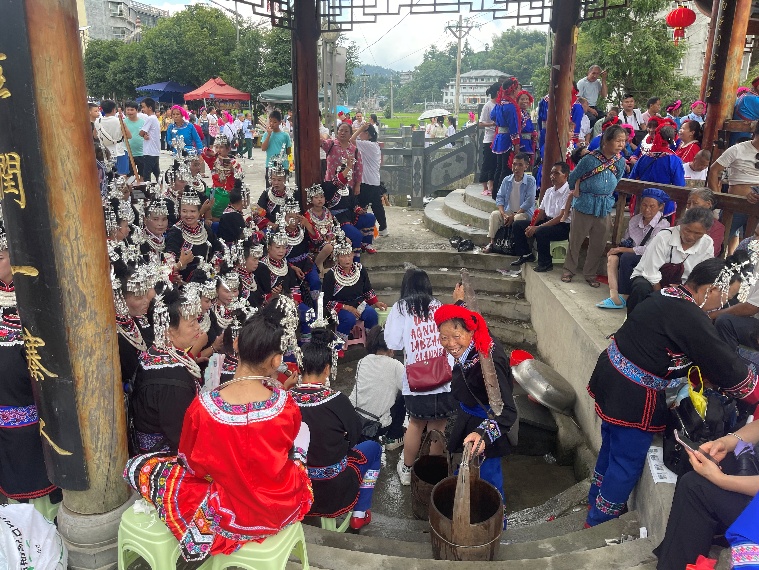
A Miao tasting festival underway in Ouli Town (偶里鄉), July 2023

I also attended a bullfighting competition, a favorite among the Dong people, which caused traffic jams even in the mountains.
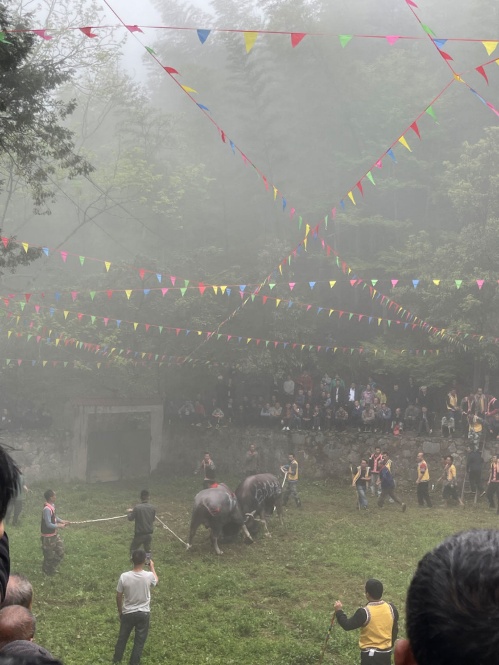
A bullfighting competition in action in Yandong Town (彥洞鄉), April 2023

The most touching moments were those spent in nature, truly experiencing “field” work. Observing students in rice fields, villages, and forests, I recorded the beautiful sounds of cicadas, birds, barking dogs, crowing roosters, and the sound of fish tails hitting the water in the rice fields, along with the elders singing Dong songs. I dedicated my thesis to this generous, poetic, and mysterious land of Guizhou Province.

What was the one most important lesson that you think you have walked away with from your ethnographic fieldwork?

I believe the most important lesson is to be patient. During my initial round of interviews with the children, they were uncertain about their use of and feelings toward different languages. I felt disappointed, fearing I might not uncover many interesting aspects.

However, as I grew more familiar with them, I discovered numerous intriguing moments. For example, Jinpinghua is commonly spoken in Miao villages near the downtown area, but it was almost inaudible in Dong towns. After spending a year at school, Dong students picked up this dialect from their Miao peers and those from downtown, eventually speaking it fluently.

What advice would you give to colleagues in the field who are interested in conducting ethnographic research in China (especially in rural China), such as things they must consider doing or preparing for and things they should avoid?

I believe the first step is to be patient, as people from these areas may be unfamiliar with being observed and interviewed. Most of them have never been interviewed before and often associate it with something serious and formal. It’s crucial to spend time with them, building close relationships that help them relax, trust you, and understand that your study is not an exam.

You also need to respect local culture and customs. For example, my students’ grandparents always cooked and waited for me to share a meal during my visits. Initially, I felt guilty, but I soon realized this was their custom. They feel sad if guests don’t join them for a meal. So, throughout the rest of my study, I always brought food or cooked with them, which provided many opportunities to observe their conversations in the kitchen.

Additionally, attending their traditional festivals and activities is always fascinating, as it allows you to witness people from different backgrounds gathering and engaging in intercultural communication.

In summary, reflecting upon my learning from Yizhe’s experience and insight, I would like to offer four Key Takeaways, as follows:

First, it is not uncommon that students in China of ethnic minority heritages are bilingual or multilingual, thus presenting unique challenges and opportunities to language or intercultural educators.

Second, rural education in China, especially in regard to world language education in rural China, remains a subject that has yet to receive an extent of academic attention it rightfully deserves.

Third, due to diverse and complex inter-regional or intra-cultural differences, conducting ethnographic research in China requires a great deal of preparation and patience even as the researchers may have come from a Chinese heritage.

Fourth, immersing oneself in ethnographic research, in the manner in which Dr. Jiang has endeavored, can be, and often is, a transformative experience for the researcher.

(Photo credits: Yizhe Jiang)

Download the entire post as a PDF.
From Traditional Wet Markets to Food Delivery by Drone

“Associate

From traditional wet markets to food delivery by drone, by Casey Man Kong Lum.

I have been traveling and conducting fieldwork in China, Hong Kong, and Taiwan quite extensively recently. In particular, I spent several months on two separate trips to Shenzhen. A stone’s throw away from Hong Kong, Shenzhen is one of the special economic zones and industrial metropolises in China. It was during my months-long stay in Shenzhen that I first witnessed food delivery by drone, something I had earlier read about in food or lifestyle blogs. Incidentally, the experience has also raised some questions that are useful to my ongoing research in urban foodways, communication, and intangible cultural heritage (Lum & de Ferriere le Vayer, 2016).

One of my first drone food delivery encounters took place on a Saturday inside Huanggang Park, which is an easy 20-minute walk from the Futian’s China border crossing to Hong Kong. Covering about 17.3 hectares of land, Huanggang Park is a recreational facility very popular among residents in the neighboring communities (e.g., exercising, family picnic, group activities). The park is full of all kinds of activities over the weekend, especially on clear days.

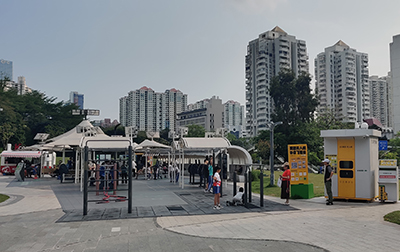
Drone pick-up station
Photo 1: The drone pickup station, with yellow signs on the right

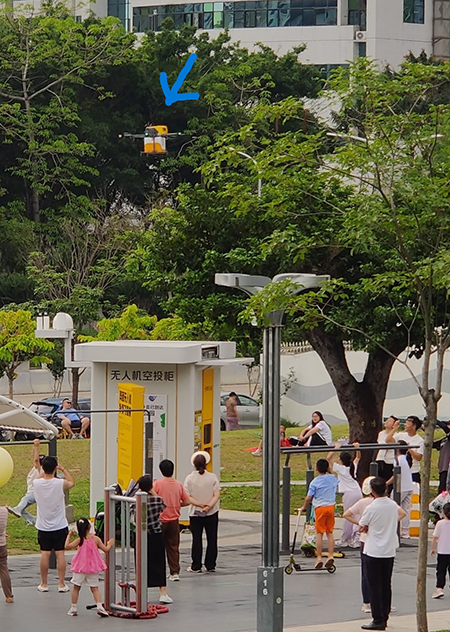
A relatively nondescript structure, the drone drop-off or pick-up station in Huanggang Park is located next to an area equipped with a number of digital exercise machines (see photo 1). The operation is run by Meituan (美团), a big food delivery platform in China with an estimated 65% of the market share. To order their take-out, the park goers use a dedicated app on their phone to scan in their account ID and food choices from an online menu. Their order would be delivered in a box to that station via a drone (see photo 2). After the box is dropped down a channel from the top of the station, the customers then use a QR code on the phone specific to their paid order to retrieve the delivery.

drone food delivery system
Photo 2: While increasingly popular, drone food delivery in Shenzhen continues to attract curious onlookers

While the e-commerce giant JD.com (Jing Dong or 京东) made China’s first drone delivery in a rural destination outside of Xi’an in November 2016 (Parmar, 2016), Meituan started its drone food delivery program in Shenzhen in 2021, four years after its own initial experimentation with the delivery method in 2017 (Yang, 2023). My initial archival research indicates that drone delivery is gaining acceptance from consumers across China. In addition to the kind of food delivery in urban settings described above, drone service can also deliver a variety of other goods, such as medical or other daily supplies; such services are especially useful to people living in hard-to-reach areas in the countryside.

Indeed, food delivery by drone is gaining popularity among consumers in China, such as those ordering take-out for a picnic in the park. However, my participant observation over more than six months seemed to suggest that drone food delivery has yet to become an everyday foodways practice as deeply ingrained as in-person food delivery. For example, currently drones cannot make delivery directly to individual apartment units in the thousands upon thousands of high-rise residential or office buildings in Shenzhen. (As a safety measure, all the balconies in the residential buildings in the community are sealed off with metal mesh.) Instead, such drone deliveries are made in pick-up venues (which may resemble vending machines) put in place by the delivery platform in a residential or office building nearby. For prompt food delivery that one can pick up at their own apartment’s doorstep, in-person delivery continues to be ubiquitous.

In fact, during our months-long stay at our hosts’ apartment in a residential high-rise across the street from Huanggang Park, I observed that the bulk of groceries were purchased from a selection of online delivery platforms. Our hosts consist of a young professional couple with their infant child and the latter’s live-in nanny and family cook. The family typically places grocery orders twice daily, once for lunch and the other for dinner. They also order cooked breakfast on some occasions if they need not go to the office early. Their orders typically consist of fresh produce and some form of protein, while in my experience in Shenzhen, customers have the option of ordering live seafood (e.g., as in shrimp are still swimming upon delivery in a sealed plastic bag). To avoid a delivery charge, a minimum purchase of about RMB38 (approx. $5.29) or RMB58 ($8.07) is required on popular grocery delivery platforms such as Xiaoxiang (小象) or Hema (河马), respectively. Otherwise, a delivery charge can be as low as RMB5 (app. $0.70).

Of course, none of the above is meant to suggest that more traditional forms of food shopping are becoming obsolete. In fact, it does not take much effort for visitors to witness and experience a multitude of food shopping practices throughout China, such as independent street vendors, small family grocers, traditional wet markets, supermarkets of all sizes having diverse corporate ownership, specialty stores that sell international products in high-end shopping malls, and so on. In fact, as house guests we often contributed various food items we acquired in traditional venues, such as neighborhood supermarkets, street vendors, shopping malls, etc.

But the proliferation and increasing presence of online food shopping and delivery platforms gives rise to some very interesting possibilities for research, such as examining the role of technological innovation in the transformation of foodways; the changing relationship or dynamic between people and their food, as well as the places or sellers in their neighborhood from which they acquire their food; issues related to class and gender in the evolving foodways; the rise of a convenience economy and changing consumer behavior in foodways; how, and the extent to which, traditional food vendors adjust to the changing food retail landscape; and so on.

Photo credit: Casey Man Kong Lum

References

Lum, C. M. K., & de Ferriere le Vayer, Marc. (Eds.). (2016). Urban foodways and communication: Ethnographic studies in intangible culture food heritages around the world. Lanham, MD: Rowman and Littlefield.

Parmar, T. (2016, Nov 14). This tech giant has kicked off drone delivery in rural China. Fortune.

Yang, Z. (2023, May 23). Food delivery by drone is just part of daily life in Shenzhen. MIT Technology Review.

Perspectives on World Language Education as Intercultural Learning

“Associate

Perspectives on world language education as intercultural learning: A conversation with a Mandarin teacher.

I have begun a series of conversations with colleagues in various disciplines for their insights and perspectives on matters and practices in intercultural communication and dialogue. The following is the first installment of these conversations. Our special guest in this conversation is Xiaofan Chen, a veteran Mandarin Chinese teacher in New York City.

Casey Man Kong Lum, Associate Director, CID


Xiaofan, thank you very much for agreeing to share your experience and insights. To begin with, how do you conceptualize and describe world language education as intercultural education and why?

As a world language teacher, I believe we should not only focus on students’ linguistic proficiency but also their ability to interact appropriately and effectively with people from different cultures. In the classroom, teachers should guide students to compare cultures with critical thinking and to question stereotypes, and learn to communicate with meaningful context. The purpose of learning a language in this global world is not only just developing linguistic skills, but also helping students navigate in or among diverse communities and having the ability to understand and respect different cultures. This will help them become global citizens.

By extension, what do you think students should expect to learn from studying world languages and why?

Linguistically, students develop four skills—reading, writing, listening, and speaking. This allows them to explore new environments and exchange new information. Culturally, students can learn about values in life through different cultural perspectives. One of our goals is to help students realize that they can see the world from diverse perspectives.

From your experience, and from your exposure to professional colleagues in your field over the years, what have been some of the key challenges facing students (at the grade levels you’re familiar with) studying Mandarin and why?

The first challenge is definitely tones. Mandarin is a tonal language, which is very different from English. The same syllable in Mandarin can mean completely different things depending on the tone. Students often struggle to hear, repeat, and differentiate tones in Mandarin.

Secondly, learning to write the Chinese characters – as opposed to the phonetic alphabet in English, for example – is also very challenging to students. Many characters provide no phonetic clues for pronunciation, and a lot of times students need to learn both pinyin, the Chinese phonetic alphabet, and characters at the same time. This requires a lot of time spent in memorization and it can cause frustration.

Thirdly, it is very hard for students to find authentic Mandarin language environments. My students are lucky to live in one of the most culturally and linguistically diverse cities in the world (New York City) and can access real life Mandarin speaking environments, such as Chinatown in Manhattan or Flushing in Queens. Unfortunately, this is not the case for everyone. A lot of students who live in smaller cities have trouble finding people or places they can practice the language with or in. This might lead to students’ lack of motivation and to drop the class. The difficulty of not having an authentic Mandarin language environment accessible means that in some areas, Chinese programs are being cut due to low enrollments.

From your experience and from your exposure to professional colleagues in your field over the years, what do you think are some of the best practices that Mandarin teachers use for helping their students address the challenges and why?

I’ve noticed when I put tones into songs and Total Physical Response (TPR) games, students tend to get more interested and have better understanding of them (e.g., Bui, 2018). Especially with TPR games, tones become muscle memory and the games increase engagement. When learning about characters, instead of pure memorization, I like to make up stories based on the character’s shapes and sounds and use more visual aids to help students remember them. I also have found out that learning radicals – the basic components that offer clues to a character’s meaning or pronunciation – can help students memorize characters faster (e.g., Clydesdale, n.d.). Bringing students to an authentic learning environment can also help with language learning. For example, each year we have guided trips to Chinatown and Flushing. Students can practice how to order food, greet someone, or express opinions with Chinese people in real life scenarios.

What have been some of your most gratifying experiences or outcomes as a Mandarin language teacher and why?

One of the best such outcomes is when students not only develop skills in the language but also have an interest in Chinese culture beyond the classroom. Students often try to find people with whom to practice their Mandarin outside of class, learn about Mandarin popular culture through music and TV shows, and so on. Some students also try authentic Chinese food from different regions. Some even plan trips to China! These always make me feel so rewarded as a language teacher.

What advice would you give to students in world language education who aspire to become world language teachers?

My advice to aspiring world language teachers is to stay curious and be open-minded. Language is not just studying grammar and vocabulary. It is also a way to make connections, find identity, and explore culture. A lot of times we need to figure out a way to combine the language and the culture into cohesive lessons.

References

Bui, G. (2018). Total physical response. In J. Liontas (Ed.), The TESOL encyclopedia of English language teaching. Oxford, UK: John Wiley and Sons.

Clydesdale, H. (n.d.). Radicals reveal the order of Chinese characters. Asia Society. Accessible Aug 3, 2025.

Download the entire post as a PDF.
What Can and Should We Learn From These Dark and Tragic Histories?

“Associate

I spent about three months between January and April 2024 traveling in several countries in Asia, including Singapore, Malaysia, Cambodia, Vietnam, China, Hong Kong, and Taiwan.

While the trip entailed a field research project about the use of visual media as a form of multicultural communication in Southeast Asia, I took advantage of the occasion to explore many local cultures or heritages in the vast region. For example, I visited some UNESCO World Heritage sites, such as Angkor Wat in Cambodia, the Singapore Botanic Gardens in Singapore, George Town in Malaysia, and Hoi An Ancient Town in Vietnam.

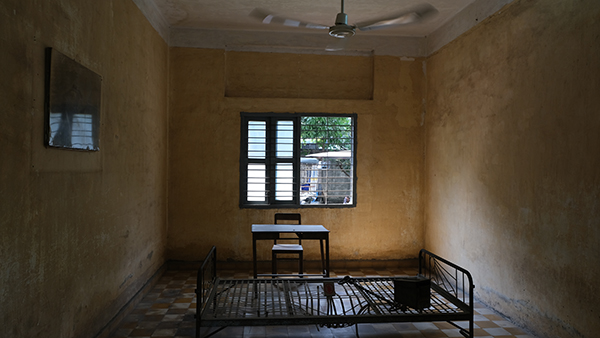
Some classrooms were repurposed as interrogation rooms at Tuol Sleng

But while the above heritage sites and many other such cultural resources were truly very remarkable, my visits of the Tuol Sleng Prison and the Choeung Ek Genocidal Center in Phnom Penh, Cambodia, have left a long-lasting impression on me. Both sites, and many other sites such as these that have been collectively called the Killing Fields, came from an extremely dark and bloody history that was the genocide (with up to three million people murdered) committed by the Khmer Rouge government under Pol Pot between 1976 and 1978.

I have read about the Cambodian genocide by the Pol Pot regime in media reports through the years since college, although I have never seen the 1984 British film The Killing Fields. But none of what I have read about this tragic history could have prepared me for the shock and sadness I experienced during my visits there.

Tuol Sleng, or S-21 Prison, was one of about 189 interrogation (read torture) centers during those tumultuous years under Pol Pot’s Khmer Rouge regime. It was inaugurated on April 17, 1980, as a memorial museum and has been open to the public since. According to the United States Holocaust Memorial Museum, “Between 14,000 and 17,000 prisoners were detained there, often in primitive brick cells built in former classrooms. Only 12 prisoners are believed to have survived.”

Located approximately 11 miles south of Phnom Penh’s city center, the Choeung Ek Genocidal Center is perhaps the most well-known among about 300 Killing Fields. Tuol Sleng was directly tied to the Choeung Ek site in that (“confessed”) prisoners from S-21 were sent to Choeung Ek for their summary execution. Close to 9,000 bodies were exhumed from the mass graves after they were initially discovered. When I was there, sections of the open-air fields were still cordoned off to prevent visitors from accidentally disturbing any human remains that were still buried there. Perhaps one of the most iconic symbols of Choeung Ek is the Buddhist stupa, which houses more than 5,000 human skulls that are encased behind acrylic glass.

My attendance at the various exhibits in both the Tuol Sleng and the Choeung Ek sites was nothing short of being surreal and, at times, bone-chilling. One of the most unforgettable parts of the visits has been our close proximity to the objects being on display. For example, in Tuol Sleng, which was housed in a repurposed school, we were standing right in front of the bed in the middle of several of the former classrooms where the prisoners were tied and tortured for their confession. In the extremely tight space inside the Buddhist stupa at Choeung Ek, we were literally inches away from the human skulls on display. I overheard a fellow traveler who refused to go inside the stupa precisely because they felt uncomfortable getting so close to the skulls.

Indeed, the visit to Tuol Sleng and Choeung Ek was by no means a positively pleasant experience, regardless of how educational it may have been. It certainly reminded me of my visit to Auschwitz I and Auschwitz II-Birkenau outside of Krakow, Poland, in 2018. In both cases, I walked away with more questions than I had answers. What can and should we learn from these dark and tragic histories?

Casey Man Kong Lum, Associate Director
Center for Intercultural Dialogue

Photo credit: Casey Man Kong Lum

Culturally Responsive Teaching and Intercultural Dialogue

“Associate

Culturally responsive teaching was one of the main themes in my second annual summer study abroad program on Intercultural Perspectives on Teaching and Learning at NYU London (July 3-17, 2023).

A defining measure of culturally responsive teaching is how, and the extent to which, teachers use “the cultural characteristics, experiences, and perspectives of ethnically diverse students as conduits for teaching them more effectively. It is based on the assumption that when academic knowledge and skills are situated within the lived experiences and frames of reference of students, they are more personally meaningful, have higher interest appeal, and are learned more easily and thoroughly” (Gay, 2002, p. 106).

Mayfair Primary School
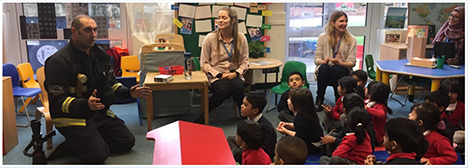
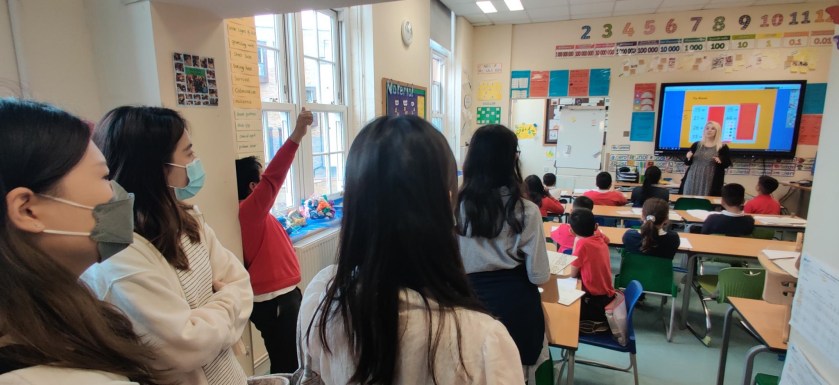
A class in session at Mayfair Primary School. (Photo credit: Mayfair Primary School)

This has been a useful concept to the graduate learners in my program this summer. Several of these learners are themselves in-service public-school teachers (from pre-K to middle school) in New York City with expertise in the like of music education, early childhood education, special education, etc. With from five to more than 25 years of teaching experiences among them, these learners have witnessed a steady influx of immigrant students from diverse national backgrounds and cultural heritages in their increasingly multicultural classrooms (e.g., Bardolf et al., 2023). While the diversity offers exciting possibilities for enhancing intercultural awareness among the students, it also presents a multitude of challenges in language teaching (e.g., ESL), intercultural adaptation, family support or engagement, professional development of the teaching staff, and so on. Hence, one of the course’s main learning objectives has been to identify the challenges facing their counterparts in London who teach in similarly multicultural settings, as well as how the latter address these challenges or take advantage of what these challenges may present.

In this regard, we visited two elementary schools and two secondary schools in London, Mayflower Primary School and St. Andrew’s (Barnsbury) CofE Primary School, as well as Parliament Hill School (an all-girls school) and William Ellis School (an all-boys school). These four public schools are in part defined by the multicultural and multilingual backgrounds of their respective student populations, while Mayflower Primary, located in the eastern borough of Tower Hamlets in London, has the distinction of enrolling about 90% of its students from multiple generations having Bangladeshi family heritage. While our field study did not uncover any one-size-fits-all curricular design or teaching method, we did discover that storytelling has been an effective culturally responsive pedagogy in these four schools.

Identifying itself as “a storytelling school,” for example, Mayflower Primary uses storytelling as a pedagogy throughout its curriculum, beginning with nursery school. Dependent upon the grade level, and with input from multiple sources (including teachers in the schools, students and their families, members from the school’s community, etc.), a number of stories are chosen to become an integral part of every class’s teaching and learning materials. Throughout the school year, teachers and their students engage in various reading, writing, discussion, interpretation, and re/telling of these stories, some of which are culturally relevant to the heritage backgrounds of the students. According to Heba Al-Jayoosi, Mayflower Primary’s Assistant Headteacher and Inclusion and Research Leader, storytelling has been an effective tool in helping students promote their skills in reading, writing, language development, communication, and so on.

Equally important is that storytelling can also promote students’ intercultural competence (Arasaratnam, 2014) which can, in turn, help facilitate intercultural dialogue (Leeds-Hurwitz, 2014) in the long run. In a special presentation on “Storytelling and the Early Years” to my students in the summer program, Alice Jones Bartoli of King’s College London spoke about how storytelling plays an important role in helping facilitate young children’s social and emotional development. Through dialogic reading, sustained shared attention, and re/telling of stories, especially those relevant to their heritage backgrounds, students come to develop their reading and writing or literacy skills, their self-confidence or self-image, as well as their creative expression abilities. Storytelling in such a teaching and learning context also enhances students’ exposure to stories with cultural or heritage elements that are at first unfamiliar to them, as they gain opportunities to listen to, reflect upon, and comprehend or understand cultural narratives other than their own.

All the learners in the program expressed in their individual final field research reports that they plan to utilize what they learned in London this summer either in furthering their graduate studies in social work or world language education or in acting as agents of change when they return to teach in their public schools in New York City. Of course, it is quite early to tell how and to what extent their experiences and the wonderful work of our professional colleagues in London can be applied to the New York context. But I hope to report on such impact in a future update.

Casey Man Kong Lum, Associate Director
Center for Intercultural Dialogue

References:

Arasaratnam, L. (2014). Intercultural competence. Key Concepts in Intercultural Dialogue, 3.

Bardolf, D., Edelman, S., & Worrell, G. (2023, Sep 2). Migrant families flooding into NYC schools. The New York Post.

Gay, G. (2002). Preparing for culturally responsive teaching. Journal of Teacher Education, 53(2), 106-116.

Leeds-Hurwitz, W. (2014). Intercultural dialogue. Key Concepts in Intercultural Dialogue, 1.

British Values in Intercultural Education in the UK

“Associate

What has come to be known as “British values” caught the attention of the participants in my recent summer study abroad program on Intercultural Perspectives on Teaching and Learning.

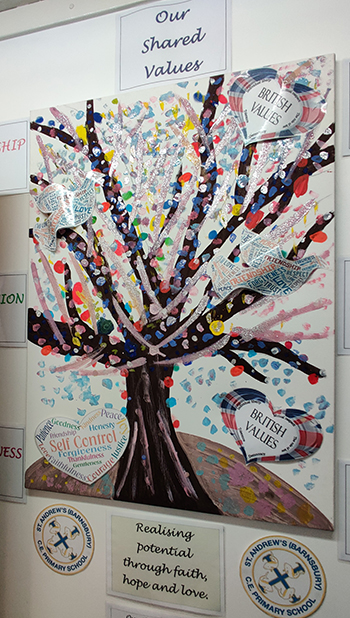
First published on November 27, 2014, by the UK’s Department of Education under the 2010 to 2015 Conservative and Liberal Democrat coalition government, the guidance “aims to help both independent and state-maintained schools understand their responsibilities in this area. All have a duty to ‘actively promote’ the fundamental British values of democracy, the rule of law, individual liberty, and mutual respect and tolerance of those with different faiths and beliefs” and to ensure young people leave school prepared for life in modern Britain (GOV.UK).

British values poster
A big poster display with a highlight on British values in St. Andrew’s (Barnsbury) CofE Primary School in London. (Photo credit: Casey Lum)

Indeed, a great deal of what we witnessed during our co-curricular field study visits of four state-funded primary and secondary schools in London attested to the schools’ curricular efforts for nurturing multicultural sensibilities among their students. However, the notion and the government-mandated promotion of “British values” has not gone without attracting diverging interpretations or reactions since the guidance’s initial announcement and implementation (see for example “The problem with teaching ‘British values’ in school“).

During a semi-formal interview, a high-ranking administrator at St. Andrew’s (Barnsbury) CofE [Church of England] Primary School (himself a veteran teacher) observed that many of his contemporaries were unsure what the concept really was when it was introduced; many others continue to be weary about it today. Given the country’s colonial history, for example, questions have been raised about whether these values were nationalistic in nature or not. But over the years, our host added, many educators in the UK have come to appreciate what those values entail and can do in promoting what we would call intercultural competence among the young. In fact, Mayflower Primary School in Towers Hamlets, another of the schools we visited, maintains a dedicated web page to showcase the school’s interpretation of and approach to promoting British values.

Casey Man Kong Lum, Associate Director
Center for Intercultural Dialogue

Social Service, Daily Routine, and Intercultural Adaptation

“Associate

In addition to state (or public) primary and secondary schools, with students in my study abroad program, which ended on July 18, 2022, I visited two NGOs during our second week of study, the London Chinese Community Centre (CCC) in London’s Chinatown and the Islington Centre for Migrants and Refugees in the Islington district just north of the City of London. Our goal was to have direct exposure to how community-based organizations help newcomers in their intercultural adaptation in the U.K., as well as some of their challenges and successes in this regard.

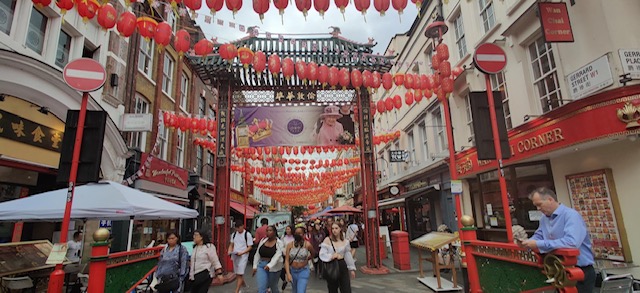
London’s Chinatown, a communal center for generations of immigrants of Chinese heritage in the U.K. (Photo credit: Casey Lum)

During the initial stage of adaptation, one of the most immediate needs of new migrants is the acquisition of services in helping them settle into their new daily routines. Such can prove to be a difficult task, especially for those who do not have a sufficient level of social or functional English. As such, community-based NGOs like the two we visited last week can play a vital role. For example, CCC routinely assists their immigrant members with legal aid for securing social services from the local government or otherwise offering a place for them to build a new social network with their compatriots.

On the other hand, the Islington Centre also regularly helps their clients, many of whom are refugees from conflict regions, with various kinds of legal aids referral services to help them address issues such as political asylum status application, as well as various other everyday life matters related to poverty or job seeking, health maintenance (some of their clients do not know how to fill their medical prescriptions), housing or homelessness, learning about their rights like all other citizens, learning their way around the city, and so on.

One of the challenges facing the staff at these organizations has to do with how, and the extent to which, they can maintain a balance between their professional obligation to their clients and their own personal emotional well-being. On the one hand, one needs to be compassionate about the lives of the newcomers – especially since many of the refugees come from conflict or war-torn regions or escape from political persecution – and many of these people are going through an extremely traumatic stage of their lives. One legal aid staff member of the Centre confided that their day rarely concludes at the end of the workday as their clients’ (at times desperate) needs do not end then.

But there also are moments of joy and great satisfaction. Many members at the Chinese Community Centre enjoy taking part in the various Chinese arts and culture events and workshops, as well as English-language classes. This has been a source of encouragement for the center’s staff and volunteers to continue with their work. An executive at the Islington Centre told us that at times they organize field trips for their clients, to visit museums or attend cultural events across London. During these field trip events and various other such social activities, they sense noticeable joy among their clients. As their clients see or learn something new, their cultural experiences allow them to begin to regain some sense of normalcy in their intercultural adaptation to an otherwise unfamiliar social landscape.

Casey Man Kong Lum, Associate Director
Center for Intercultural Dialogue

Bilingual Education and Storytelling in Intercultural Education

“Associate

The important role of bilingual education and storytelling in the social development of young students have been two recurring themes running throughout the first week of my summer study abroad program on United Kingdom: Intercultural Perspectives in Teaching and Learning at NYU London (July 4-18, 2022).

NYC London students visiting classroom
Summer study abroad students from NYU observing a class in session at Mayflower Primary School in London. (Photo credit: Casey Lum)

In her guest lecture to my students on “Rethinking Teaching Languages in European Schools (with a Focus on England): A Healthy Linguistic Diet Approach,” Dina Mehmedbegovic-Smith (July 5) emphasized the importance of bilingual education among the young in the United Kingdom nowadays. This topic was shared by Nicky Busch (July 6) in her special presentation on “The Intersectional Dynamics of Immigration, Intercultural Education, and Intergroup Relations in the United Kingdom,” in which she similarly acknowledged how acquiring English as a second or additional language can help immigrant students gain a voice of their own in their intercultural adaptation to life in the UK.

Our understanding of the above ideas – and many more others that this brief post simply cannot include – has been greatly enhanced by what my students and I witnessed “on the ground level” during our field visit at the Mayflower Primary School, a public school located in the eastern borough of Tower Hamlets in London. While the 2011 census in the UK reported that about one-third of the borough’s population came from Bangladesh, about 90% of the students at Mayflower Primary today are Bangladeshi. Many come from low-income families with a relatively low level of literacy, with parents who are not fluent in spoken English. These are some of the reasons why the school has adopted an approach that emphasizes developing their students’ competence in reading and storytelling in English. At the same time, the teachers encourage their students’ families to speak in their home language, in part to help promote bilingual fluency among the students.

From one practical (or pragmatic) perspective, the emphasis on reading is meant to help the students become savvy information seekers and users for personal and professional development purposes. On the other hand, it is believed that a high level of oracy – with a high degree of competence in taking in one’s experience of the world around them and then in being able to articulate or tell “stories” about their experience orally – can help the young build a solid foundation for acquiring writing skills.

But the above teaching and learning strategies do not and most likely will not automatically or by default lead to the development of students’ competency in intercultural communication, adaptation, or dialogue. For example, Heba Al-Jayoosi, the Assistant Head (Inclusion) at Mayflower Primary School, suggests that many of the parents have never been to London Bridge, which is not far from home. Hence, the school has embarked on a project to take the students and their families on a field trip to London Bridge. Such co-curricular activities are meant to help them gain more exposure to the larger social and cultural environment and help them better adapt. These field trips (similar to my current study abroad program in London) set the stage for follow-up discussion or storytelling among the participants afterward.

Casey Man Kong Lum, Associate Director
Center for Intercultural Dialogue

Intercultural Teaching and Learning in the UK

“Associate

I will be directing and teaching a short-term summer study abroad program for New York University’s Steinhardt School of Education, Culture, and Human Development. Entitled “United Kingdom: Intercultural Perspectives in Teaching and Learning,” the program will be based at NYU London (July 4-18, 2022).

I have invited four distinguished colleagues to share their insights with students from NYU’s main campus on Washington Square in New York City. They include Nicky Busch (NYU London) on The Intersectional Dynamics of Immigration, Intercultural Education, and Intergroup Relations in the UK; Myria Georgiou (London School of Economics and Political Science) on Remote Teaching and Learning during the COVID-19: Challenges and Opportunities; Dina Mehmedbegovic-Smith (University College London) on Language Education in the UK; and Maria Tsouroufli (Brunel University London) on Gender Inequality in Education in the UK.

In addition, a number of co-curricular activities such as guided field visits to various schools and community-based NGOs have also been arranged. These venues include London Chinese Community Centre, Mayflower Primary School, Islington Centre for Migrants and Refugees, Parliament Hill School, St. Andrew’s (Barnsbury) CofE Primary School, William Ellis School, etc. Our activities will center around learning about how these academic and community stakeholders in London address issues related to the role of (English and foreign) language education and multicultural program offerings in their constituencies’ intercultural education.

I will report in a number of forthcoming posts some of my intercultural teaching and learning experiences on this trip.

Casey Man Kong Lum, Associate Director
Center for Intercultural Dialogue