ViSA as metacommunication

A publication resulting from collaboration with a group of colleagues in Lyon, France, has just appeared:

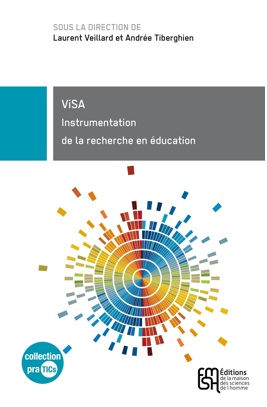
Leeds-Hurwitz, W. (2013). ViSA: La construction d’un objet-frontière et d’une forme de métacommunication. In L. Veillard et A. Tiberghien (Eds.), Instrumentation de la recherche en education. Paris: Éditions de la Maison des Sciences de l’Homme.

ViSAcoverThe electronic copy of the chapter in French is available for free from Open Edition Books. The paperback version of the book is available from the publisher, Les Éditions de la Maison des Sciences de l’Homme. The English version is available here. The title in English is “ViSA as a Deliberately Constructed Boundary Object and as a Form of Metacommunication.”

The topic is not intercultural dialogue. Rather this was a result of intercultural dialogue with international peers. ViSA (Vidéos de situations d’enseignement et d’apprentissage) is a group made up of scholars interested in pedagogy, who have jointly contributed videotapes of actual classroom interaction, so that all group members might have access to a larger database when analyzing classroom interaction. My chapter defines metacommunication and explains what boundary objects are, then includes discussion of metacommunication as a strategy in interdisciplinary research, boundary objects as tools for interdisciplinary research, and ways in which the ViSA database serves as a boundary object.

My thanks to Laurent Veillard for the translation into French. And to Andrée Tiberghien for inviting me to join ViSA. I have very much enjoyed working with you both, as well as with the other members of the group.

Tallinn University

On April 30, 2013, I met with several faculty members at the new Institute of Communication at Tallinn University in Tallinn, Estonia: Kaja Tampere, Professor and Founding Director of the Institute, and Josep Soler-Carbonell, Associate Professor of Intercultural Communication.

Tallinn University is in much the same situation as the University of Macau, interested in gaining an international reputation, and attracting international students. A new Communication Management master’s program started in the autumn of 2012, as well as a minor in International Journalism studies, both of which offer courses in English.

While in Tallinn, I also connected with Hando Sinisalu, Founder and CEO of Best Marketing International. He organizes international conferences on such topics as digital marketing. For those interested in using social media for marketing, his website provides wonderful case studies of best practices.

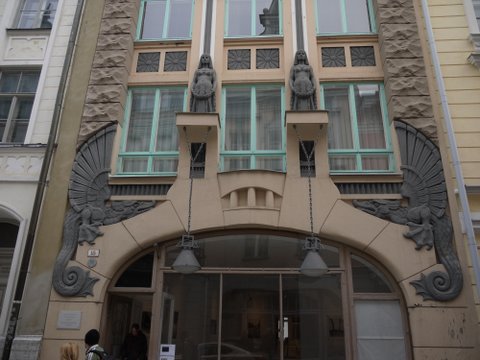
The old city of Tallinn is a UNESCO world heritage site, with buildings dated as early as the 1200s. But it also has a noticeable Art Nouveau influence, as can be seen in the Dragon Gallery.

P1570511

Wendy Leeds-Hurwitz, Director
Center for Intercultural Dialogue

U of Helsinki and Aalto U

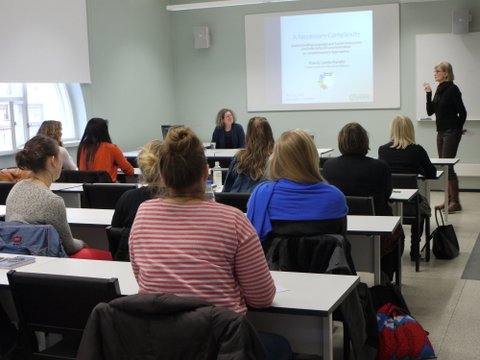
On April 23, 2013, I gave a talk entitled “A Necessary Complexity: Understanding Language and Social Interaction and Intercultural Communication as Complementary Approaches” at the University of Helsinki in Finland.

P1560173

My thanks to both Dr. Saila Poutiainen (at the University of Helsinki) and Dr. Leena Louhiala-Salminen (at Aalto University, and on the advisory board of this Center for Intercultural Dialogue) for serving as co-hosts, and to the Department of Communication at Aalto University for sponsoring the excellent dinner afterwards.

On April 25, I was able to join the Corporate Communication Evening Seminar at Aalto University, co-sponsored by the Department of Communication and Aalto BIZ Corporate Relations, entitled “Multilingual and intercultural issues in Corporate Communication.” The presenters were Dr. Ulla Connor (Indiana University-Purdue University-Indianapolis) and Pia Friberg (Senior Manager, Wärtsilä Corporation). The former talked about intercultural rhetoric, and the latter described her own experiences with intercultural issues in a multinational corporation. I look forward to continued discussions with all these scholars.

Wendy Leeds-Hurwitz, Director
Center for Intercultural Dialogue

University of Macau

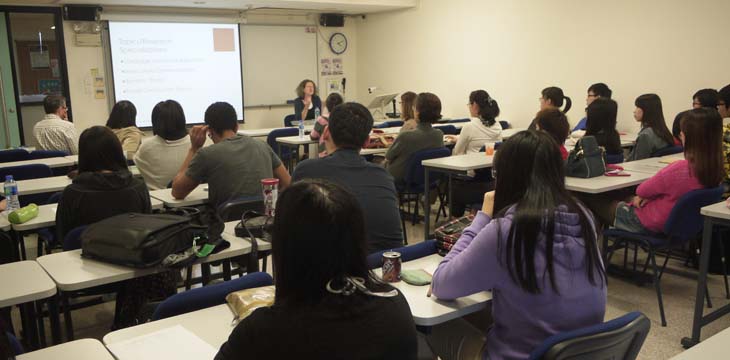
On April 15, 2013 I gave a talk entitled: “Asking cultural questions: Using ethnography to answer questions about cultural identity” for the Department of Communication at the University of Macau. The topic and case studies provided were related to my research.

UMacau-class

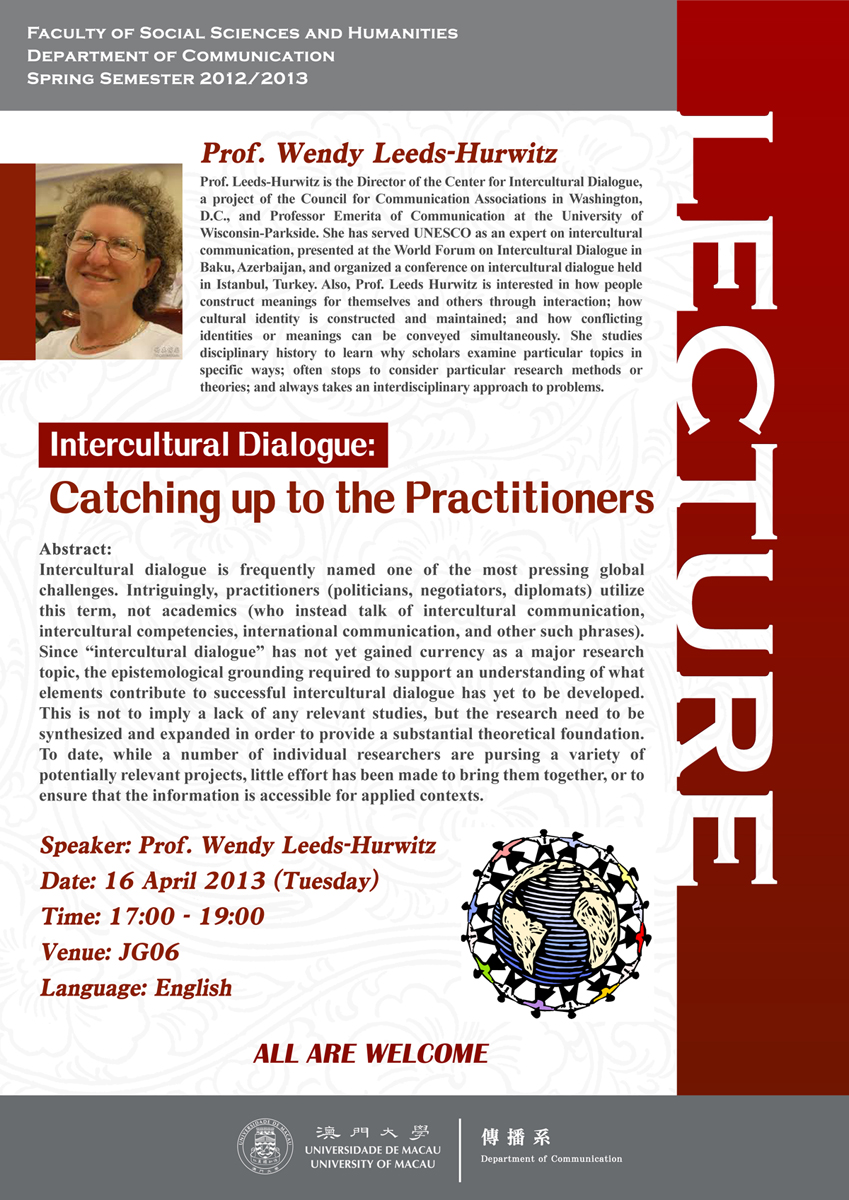
On April 16, 2013, I gave another talk in the Department, entitled “Intercultural dialogue: Catching up to the practitioners.” This talk was related to the Center for Intercultural Dialogue.

small-416 poster

My thanks to Dr. Todd Sandel for organizing these events, and for all the time spent showing me around Macau, and to his students and colleagues for providing such a good audience, and asking provocative questions.

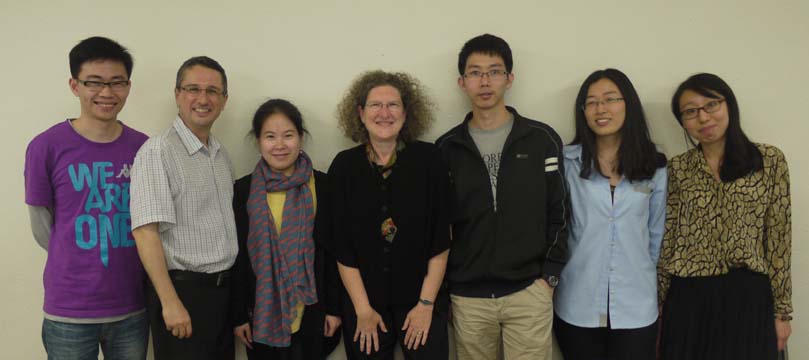
Sandel and graduate students with Leeds-Hurwitz

While at the University of Macau, I had the opportunity to connect with Dr. Martin Montgomery (Chair Professor and Head of Department), Dr. Timothy Simpson (Associate Dean, Faculty of Social Sciences and Humanities), Dr. TAN See Kam, Dr. Annie YANG, Dr. Ozge GIRIT, Dr. Mike Chinoy, and Dr. Andrew Moody. As Dr. Ingrid Piller (at Macquarie University in Australia) also happened to be present to give a talk of her own, I also was able to meet her. I am looking forward to continuing the conversations started on this trip.

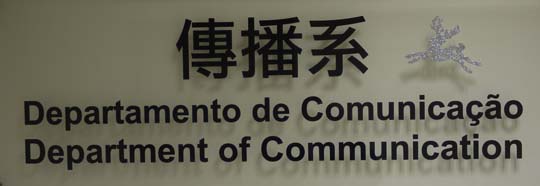
Being in Macau was particularly interesting given the combination of Chinese and Portuguese influences on the city. Whether on campus or elsewhere, most signs provide information in Chinese and Portuguese, and often English as well, as documented below.

UMacaulogo

Wendy Leeds-Hurwitz, Director
Center for Intercultural Dialogue

Chinese U of Hong Kong

WLH at CUHK

On April 10, 2013, I gave a talk entitled “Ambiguity as a Solution to the ‘Problem’ of Intercultural Weddings” at Chinese University of Hong Kong. My thanks to Dr. Yves Winkin, currently visiting professor at CUHK, for the invitation, and to his graduate students, who were an excellent audience, asking quite interesting questions relating to intercultural communication.

YW_WLH_CUHK
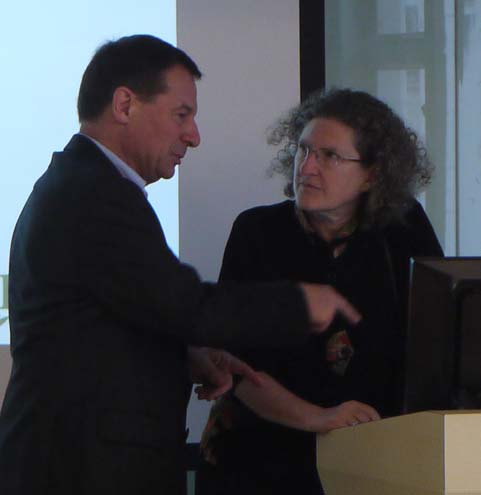
Winkin, Leeds-Hurwitz

While at CUHK I had the opportunity to meet with several faculty members at the School of Journalism and Communication, including Yuen Chan, Dr. Jack Linchuan Qiu, and Dr. Anthony Fung (Director of the School). Dr. Casey Man Kong Lum happened to be in Hong Kong while I was there, so I also was able to spend some time with him. I am looking forward to seeing several of the same scholars at the International Communication Association‘s convention in London in May 2013.

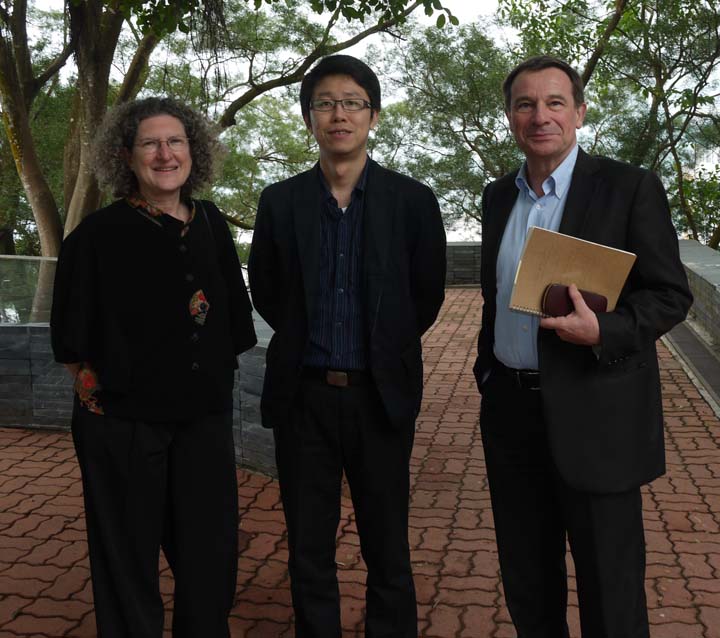
Leeds-Hurwitz, Qiu, Winkin

Thanks to Dr. Sidney Cheung (Chair of the Anthropology Department at CUHK) I had the opportunity to join him at dinner one night with a large group of others: from CUHK (including Dr. Joseph Bosco, and Tim Grunewald) media practitioners from Radio Television Hong Kong (the person I had a chance to talk with was Ng Wai In) as well as Natalie Siu, a CUHK alum now in public relations.

Wendy Leeds-Hurwitz, Director
Center for Intercultural Dialogue

Intercultural Competences – UNESCO

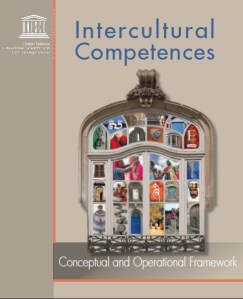
“UNESCO”UNESCO has just published “Intercultural competences: A conceptual and operational framework.” (Paris, France: UNESCO, 2013).

interculturalcomp_cover

This document is a synthesis of, and expansion upon, the numerous documents prepared for, and especially the discussion held during, the UNESCO Experts Meeting on Intercultural Competences, October 21-22, 2011, in Paris, France, organized by the Intersectoral Platform for a Culture of Peace and Non-Violence under the coordination of Katérina Stenou (who also serves as a member of this Center’s Advisory Board). The report benefited particularly from the following sources: a) five regional reports prepared by Milena Dragićević Šešić & Sanjin Dragojević, Alejandro Grimson, Prue Holmes, Melissa Steyn, and Magdi Youssef; b) a synthesis thereof by Darla Deardoff; and c) the stimulating discussions at the experts’ meeting, which included not only all of the regional report authors except Dragojević and Steyn, but also Eric Cattelain, Yolanda Onghena, Hanna Schissler, and Yves Winkin. In addition, many of UNESCO’s Chairs on Interreligious Dialogue for Intercultural Understanding joined the discussion on October 22, 2011. I drafted this report on behalf of the group, and with considerable input from the others, as well as from UNESCO staff. My thanks to Katérina Stenou for involving me in this project, and to the amazing set of international colleagues I met during the process.

This was the first time I was asked to participate in the design of a publication as well as the content, so I also thank the designers involved in the process for teaching me so much. The images of people or writing included in the report were provided by UNESCO; all of the other photographs were taken either by me or my husband on our international travels over the past several years. The cover uses a photograph of a hotel window in downtown Coimbra, Portugal, taken while I was there as a Fulbright Senior Scholar – the ultimate result of a connection made by Eric Cattelain at the experts meeting, and a good example of just the sort of expanding international network that this Center is designed to facilitate.

Wendy Leeds-Hurwitz
Director, Center for Intercultural Dialogue

(See this discussion of the document by AFS.)

Update: Now available also in Arabic, FrenchSpanish and Russian.

Who needs Intercultural Dialogues?

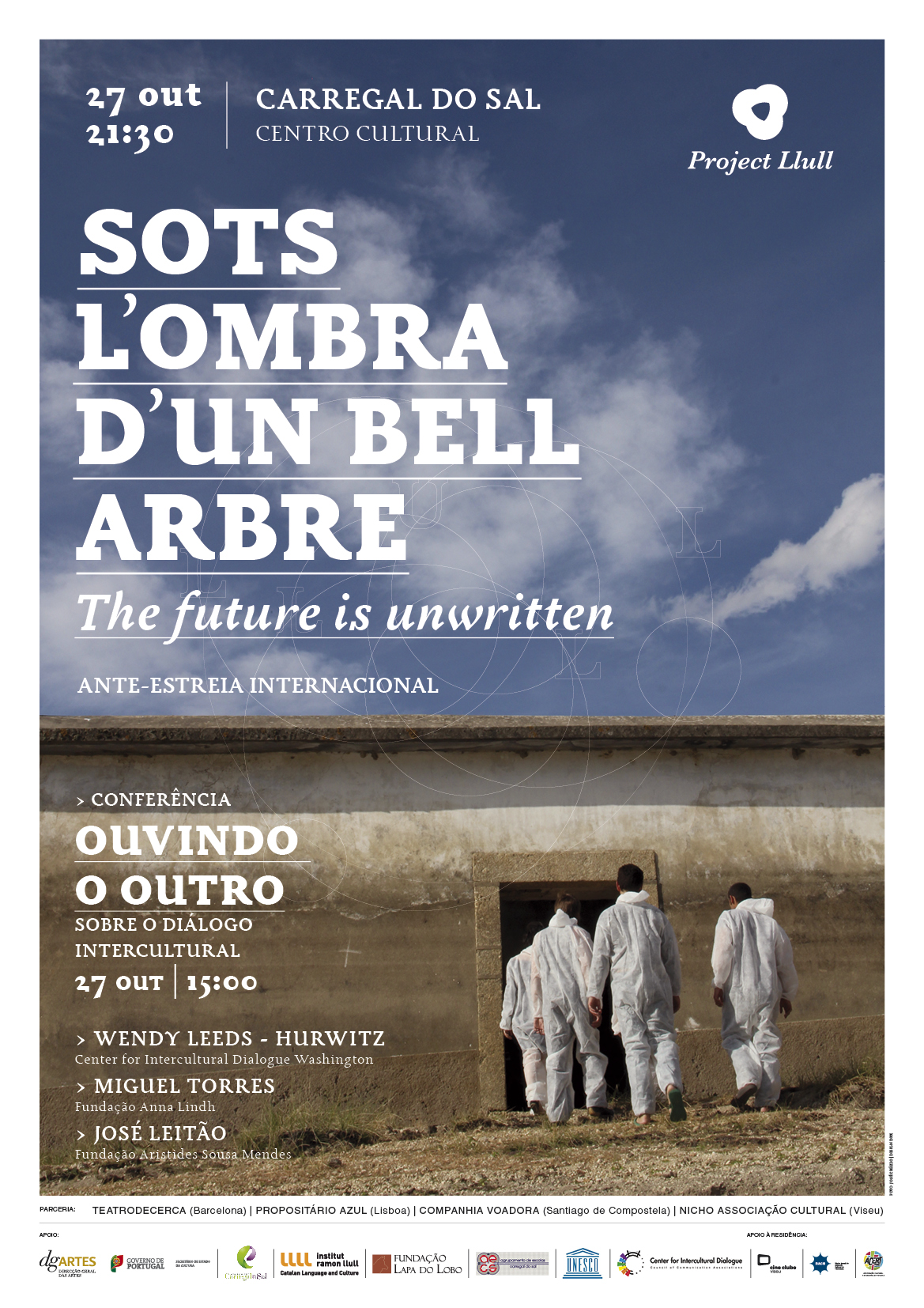
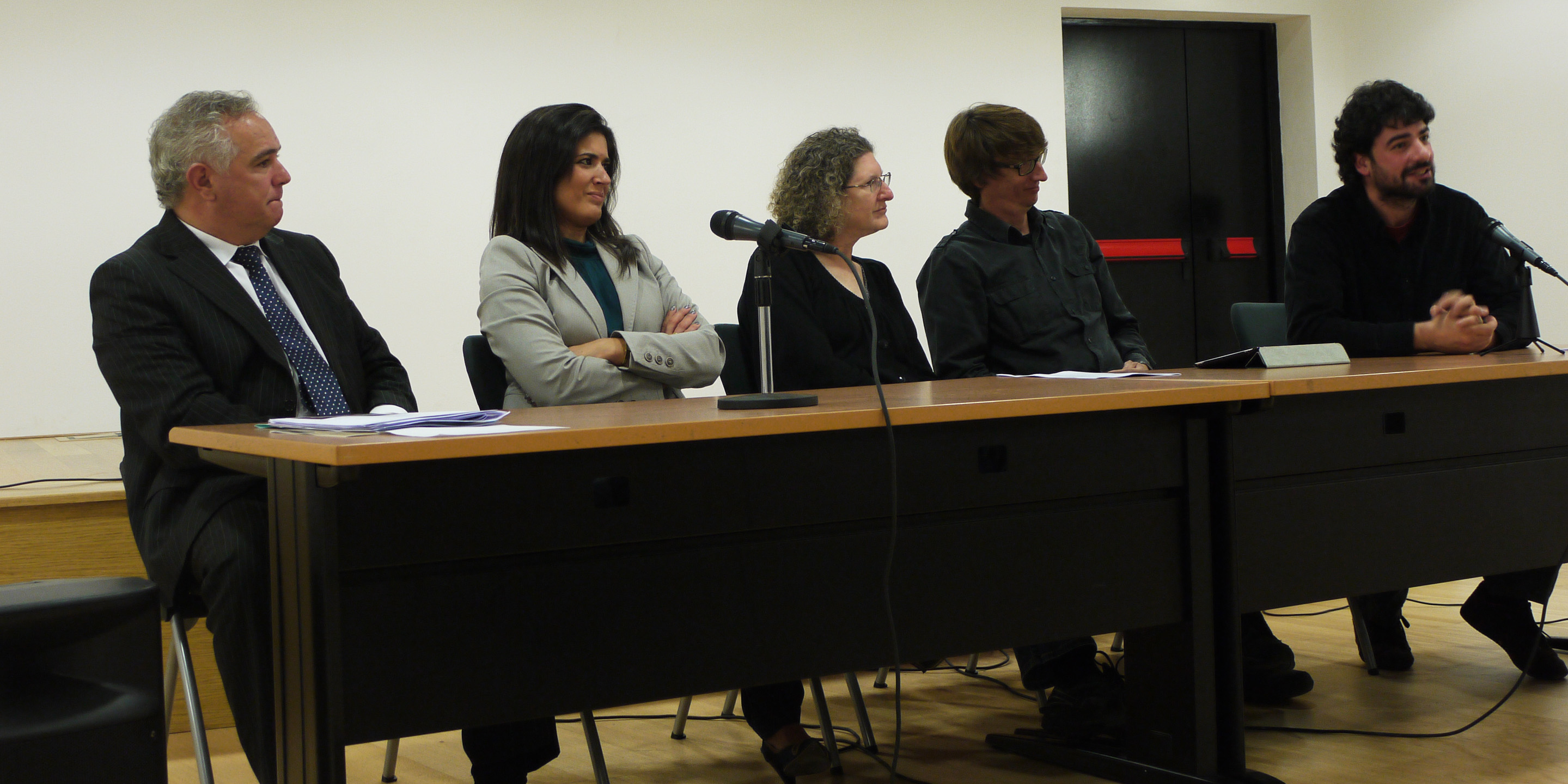
On October 27, 2012, I gave a talk entitled “Who needs intercultural dialogues?” as part of the Conferência Ouvindo o Outro: sobre o diálogo entre culturas [Conference on Listening to the Other: About Dialogue between Cultures], held prior to the avant premiere of the play Sots l’Ombra d’un Bell Arbre [Under the Shadow of a Leafy Tree]: The future is unwritten at the Centro Cultural Carregal do Sal, Portugal. This is a reinterpretation of Ramón Llull‘s play from the 13th century, The Book of the Gentile and the Three Wise Men staged by Project Llull.

Project Llull poster

This was a co-production of Teatro de Cerca (Barcelona), Propositário Azul (Lisbon), Companhia Voadora (Santiago de Compostela), and Nicho Associação Cultural (Viseu, Portugal). Helena Tornero is the Spanish playwright who wrote the theatrical adaptation, Graeme Pulleyn is the British director, and Cristóvão Cunha is the Portuguese executive producer and international coordinator who invited me to participate in this wonderful collaboration.

Project Llull conference

Wendy Leeds-Hurwitz, Director
Center for Intercultural Dialogue

Best Practices in Higher Education

On October 25, 2012, I presented a talk entitled “Best practices: How the Scholarship of Teaching and Learning solves the problems offered by today’s students” as part of Colloque “Le métier d’enseignant aujourd’hui et demain” [Colloquium on the Teaching Profession Today and Tomorrow]. The Colloquium was organized by the Institut Français de l’Éducation, part of the Ecole Normale Supérieure de Lyon, France, in collaboration with CDIUFM.

This was a summary of some of the content in my book that had been published a few days before, Learning Matters: The Transformation of US Higher Education, co-authored with Peter Hoff. The goal was to present information about what the US does so that French teachers might consider doing some of the same things with their own students.

My thanks to Luc Trouche, Sophie Fermigier, and Anne-Claire Husser, for inviting me to to participate in the colloquium for facilitating my talk. This was my third and last talk in France while in residence at the ENS de Lyon this fall. My other activities are summarized here.

Wendy Leeds-Hurwitz, Director
Center for Intercultural Dialogue

Save

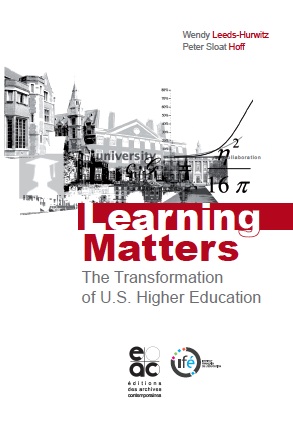
Learning Matters

A book that I was writing while at the Institute Français de l’Education in Lyon last fall has just been published by Editions des Archives Contemporaines, based in Paris. The title is Learning Matters: The Transformation of US Higher Education. It’s co-authored with a former University of Wisconsin-Parkside colleague, Peter Hoff, who went on to become President of the University of Maine. My thanks to Yves Winkin for asking the questions about higher education in the US that led to the writing of this book.
Here is a summary of the book’s content:

Higher education in the United States of America, considered by many to set a worldwide standard for broad access and high levels of excellence, has for many decades seen massive changes in its approaches to teaching and learning. Redesigning and transforming the way colleges and universities teach their students has been likened to reconstructing an airplane while it remains aloft. More than 4,000 US colleges and universities have met the challenge by analyzing major changes in student populations and introducing new instructional techniques that recognize the primacy of learning over teaching. This seemingly innocent but powerful transformation, acknowledging that teaching only matters as a means to the real end – learning – is powering a pedagogical revolution. The Learning Revolution in US higher education began when World War II veterans flooded university classrooms, soon to be followed by their children, the American “Baby Boom.” Overwhelming numbers of new students from new kinds of backgrounds flooded colleges and universities, forcing professors to rethink how they went about teaching these new generations. To handle the numbers, many new universities were created, and many established centers for teaching excellence to help professors adapt to new populations with new techniques. In the 1990s, higher education further professionalized the teaching craft via the Scholarship of Teaching and Learning. Research into how students learn and how to help them learn took its place alongside traditional academic research. Aided by a wave of new technologies, teaching centers and the scholarship of teaching and learning are transforming the university classroom as well as many new venues outside the classroom where learning now takes place. The resulting new pedagogical architecture now embraces every dimension of US higher education.

Copies of the book are available directly from the publisher: Editions des Archives Contemporaines or, for those based outside of France, from Amazon in the US. (For those outside those two countries, the book is also available from Amazon in Germany, Spain, and the UK.)

The section of the book most directly linked to my work with the Center for Intercultural Dialogue concerns internationalization as an issue for US higher education. Here are a few relevant quotes:

  • “the rest of the world increasingly speaks English, but few Americans actively travel in international circles, so globalization may become oddly limited to the English language, passing over many native speakers” (p. 92)
  • “It would be difficult to argue that U.S. universities have been doing an adequate job of preparing students to live and work in the global village. Historically, what little was done has been deemed adequate, so few people see a need for substantial change” (pp. 97-98)
  • “The world has become smaller, and so students need to understand more of what occurs in other countries than their own. At the lowest level of application, this implies integrating international examples; at the highest level, new technologies permit international collaborative research projects.” (p. 218)

For those interested in discussing issues related to teaching and learning, and expanding on what we included in the book, my co-author, Peter Hoff, created a Facebook page: https://www.facebook.com/CollegeLearningMatters

If you read Portuguese instead of English, a monograph version, Arquitectura pedagógica para a mudança no ensino superior [Pedagogical architecture changes for higher education], prepared when I was a Fulbright Senior Specialist at the Instituto Politécnico de Coimbra during the spring, is also now published.

La Main à la Pâte

On October 15, 2012, I presented a talk at Fondation la Main à la Pâte in Paris, France entitled “College for Kids = Hands-on activities for students, professional development for teachers.”

Fondation la Main à la Pâte [Foundation for Collaborative Hands-on Work] is a research foundation established by a consortium of organizations: l’Académie des Sciences, l’École Normale Supérieure (in Paris) and l’École Normale Supérieure de Lyon (where I am based at present). Researchers there focus on the improving the teaching of science to K-12 students, especially using hands-on techniques. They invited me to talk about my current project documenting College for Kids in the US, which often has a focus on teaching science and on hands-on techniques, as well as sometimes having a dual track, where teachers are trained at the same time that students are educated.

My thanks to David Jasmin, Director of the Foundation for the warm welcome (and excellent Japanese lunch!). My thanks to Clotilde Marin-Micewicz for meeting with me in Lyon and introducing me to the Foundation.

Wendy Leeds-Hurwitz, Director
Center for Intercultural Dialogue

Save