Marieke de Mooij Profile

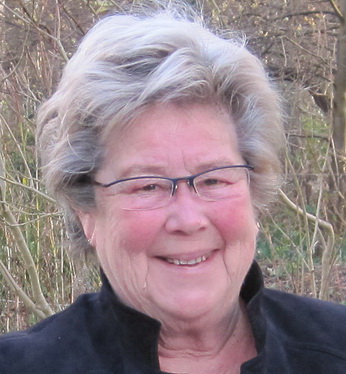
ProfilesMarieke de Mooij, Ph.D. (Netherlands), Doctor in Communications, is a retired profesora asociada at the University of Navarre (Spain), worked as a consultant in cross cultural communications, and has been visiting professor at various universities around the world.
Marieke de Mooij

Her research has been focused on the influence of culture on communication, media, advertising and consumer behavior in a broadest sense. Since the 1990s she has analyzed an enormous amount of data on communication and media behavior, including the new media. One of her main conclusions is that globalization does not lead to converging communication behavior. Instead, communication behavior across cultures is diverging instead of converging.

She is the author of several publications on the influence of culture on marketing and advertising and communications. Her books Global Marketing and Advertising, Understanding Cultural Paradoxes (fourth edition, 2014), Consumer Behavior and Culture. Consequences for Global Marketing and Advertising (second edition, 2011), both by Sage Publications (USA and UK) are used at universities worldwide.

A new book on communication theory around the world is published by Springer International (2014): Human and Mediated Communication around the World: A Comprehensive Review and Analysis. This book offers a comprehensive review and analysis of human communication and mediated communication around the world. It challenges the assumption that Western theories of human communication and mass communication have universal applicability. The book covers the influence of culture on interpersonal communication, all sorts of mediated communication and mass communication. It presents communication theories from around the world, incorporating a vast body of literature from north America, Europe, Asia, Africa and Latin America. It also offers an integrated approach to understanding the working of electronic means of communication that are hybrid media combining human and mediated communication.

For more information, and access to publications, see her website.

Igor Klyukanov Profile

ProfilesIgor E. Klyukanov is Professor of Communication in the Department of Communication Studies at Eastern Washington University.


Igor Klyukanov

He defended his doctoral dissertation, Dynamics of Intercultural Communication: Towards a New Conceptual Framework, at Saratov State University (Russia). He has served as Chair of the NCA Taskforce on Enhancing the Internationalization of Communication, Chair of the NCA Philosophy of Communication division, and as a member of the Russian Communication Association Steering Committee. He served as an Associate Editor of The American Journal of Semiotics and is the Founding Editor of the Russian Journal of Communication (Taylor & Francis). He organized the First International Communicology Institute Colloquium at Eastern Washington University in May 2014.

He is interested in intercultural and global communication issues as well as communication theory, philosophy of communication, semiotics, general linguistics, and translation studies. His works have been published in U.S., Russia, England, Spain, Costa Rica, Serbia, Bulgaria, India, and Morocco.

Klyukanov, I. (2017). Semiotics of cultural communication. The international encyclopedia of intercultural communication. Wiley Blackwell.

Klyukanov, I. (2017). Intercultural communication study in Russia. The international encyclopedia of intercultural communication. Wiley Blackwell.

Klyukanov, I., & Leontovich, O. (2017). Russian perspectives on communication. In D. Carbaugh (Ed.), The handbook of communication in cross-cultural perspective (pp. 29-41). New York : Routledge.

Klyukanov, I., & Sinekopova, G. V. (2016). Beyond the binary: Toward the paraconsistencies of Russian communication codes. International Journal of Communication 10, 2258–2274.

Klyukanov, I. (2010). A communication universe: Manifestations of meaning, stagings of significance. Lanham, MA: Lexington Books.

Klyukanov, I. (2005). Principles of intercultural communication. Boston: Pearson Education.

Gonen Dori-Hacohen Profile

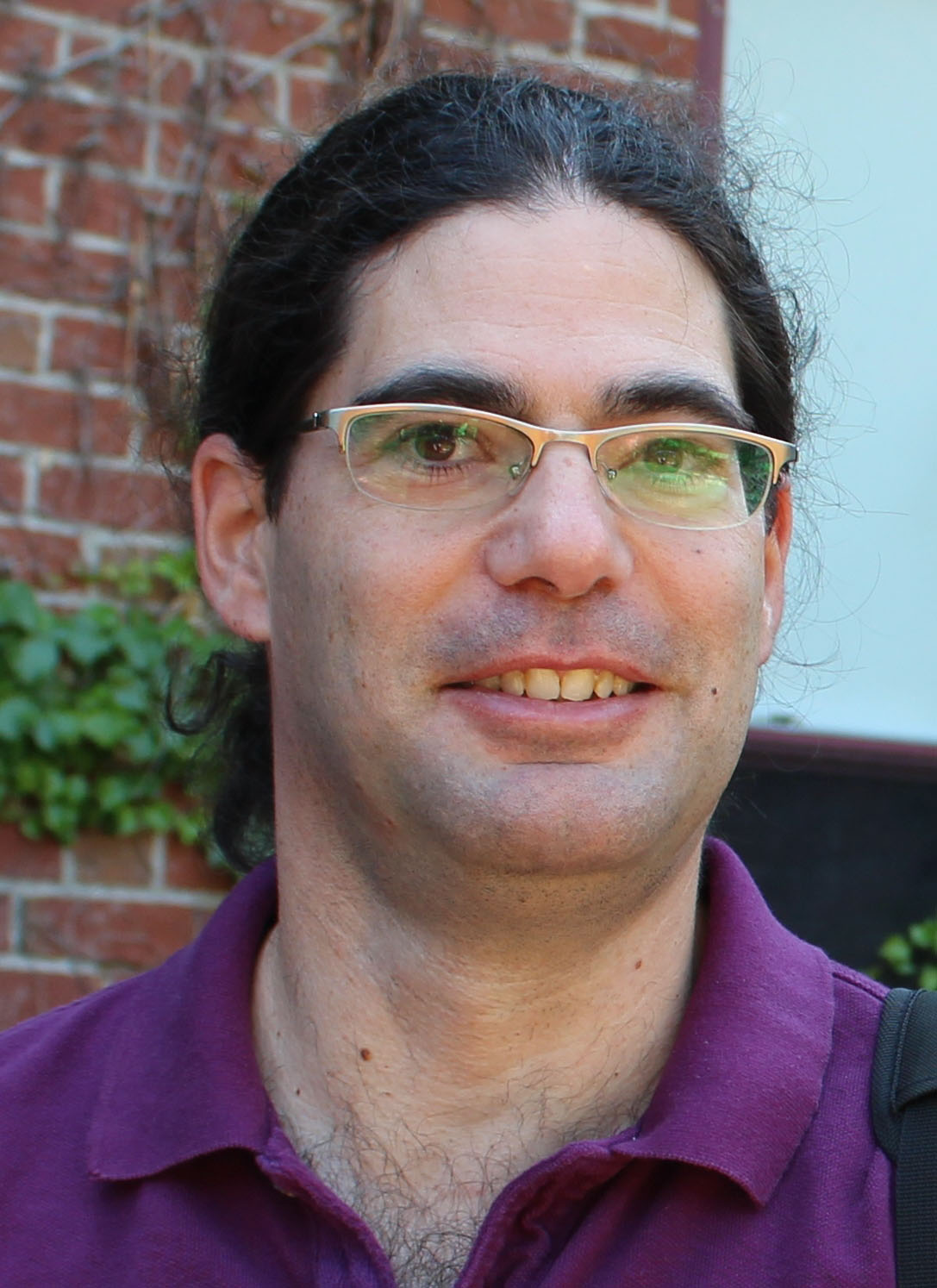
ProfilesGonen Dori-Hacohen is a discourse analyst and a communication scholar at the University of Massachusetts Amherst, studying both interactions in the media and in mundane situations, focusing on the intersection of culture, politics, and the media.

Gonen Dori-Hacohen

Currently he studies civic participation in Israeli radio phone-ins, American Political Radio Talk, and other arenas of public participation, such as online comments.  In one current project, he compares American talk radio and Israeli Radio talk, and will be happy to widen this comparison to include other countries and cultures. Additionally, he works on online comments in Israel, and will be happy to compare this phenomenon to similar phenomenon in other countries.

Selected publications:

Van Over, B., Dori-Hacohen, G. & Winchatz, M. R. (2019). Policing the boundaries of the sayable: The public negotiation of profane, prohibited and proscribed speech. In M. Scollo & T. Milburn (Eds.), Engaging and transforming global communication through cultural discourse analysis: A tribute to Donal Carbaugh (pp. 195-217). Fairleigh Dickinson University Press.

Livnat, Z., Dori-Hacohen, G., (2018). Indexing membership via responses to irony: Communication competence in Israeli radio call-in shows, Language & Communication, 58, 62-79.

Assouline, Dalit, & Dori-Hacohen, G. (2017). Yiddish across borders: Interviews in the Yiddish ultra-Orthodox Jewish audio mass medium.Language and Communication, 56, 68-81.

Weizman, E. & Dori-Hacohen, D. (2017). Commenting on opinion editorials in on-line journals: A cross-cultural examination of face work in The Washington Post (USA) and Nrg (Israel). Discourse, Context, Media, 19, 39-48.

Dori-Hacohen, G. (2016). HaTokbek Kemilat Mafteakh: hapotentzial ledemotratya karnavalit hademokrati  vehamtziut hademokratithamugbelet. [The tokbek as an Israeli term for talk: The potential for democratic carnival and the defective democratic reality]. Israel Studies in Language and Society, 9(1-2), 164-183. [Hebrew]

Dori-Hacohen, G. (2016). Tokbek, Israeli speech economy, and other non-deliberative terms for political talk.  In D. Carbaugh (Ed.), Communication in cross-cultural perspective (pp. 299-311). New York: Routledge.

Maschler, Y., & Dori-Hacohen, G. (2016). Hebrew nu: Grammaticization of a borrowed particle. In P. Auer & Y. Maschler (Eds.), NU and NÅ:  Family of discourse markers across the languages of Europe and beyond (pp. 162-212).  Berlin:  Walter de Gruyter.

Dori-Hacohen, G. (2014). Establishing social groups in Hebrew: ‘We’ in political radio phone-in programs. In T.-S. Pavlidou (Ed.), Constructing collectivity: ‘We’ across languages and contexts (pp. 187-206). Amsterdam: John Benjamins.

Dori-Hacohen, G. (2014). Spontaneous or controlled: Overall structural organization of phone-ins in two countries and their relations to societal norms. Journal of Pragmatics, 70, 1-15.

Dori-Hacohen, G., & White, T. T. (2013). “Booyah Jim”: The construction of hegemonic masculinity in CNBC Mad Money phone-in interactions. Discourse, Context and Media, 2,175-183.

Dori-Hacohen, G. (2012). The commercial and the public “public spheres”: Two types of political talk-radio and their constructed publics. Journal of Radio and Audio Media, 19(2), 134-51.

Dori-Hacohen, G. (2012). Types of interaction on Israeli radio phone-in programs and the public sphere. Javnost-The public, 19(3), 21-40.

Thompson, G., & Dori-Hacohen, G. (2012). Framing selves in interactional practice. Electronic Journal of Communication, 22(3-4).

Dori-Hacohen, G. (2011). Integrating and divisive discourses: The discourse in interactions with non-Jewish callers on Israeli radio phone-in programs. Israel Studies in Language and Society, 3(2), 146-165 [Hebrew]


Work for CID:
Gonen Dori-Hacohen has reviewed translations into Hebrew.

Alex Frame Profile

Profiles
Alex Frame
is currently Associate Professor in Communication at the University of Burgundy (Dijon, France).

Alex Frame

After a degree in Modern Languages from St Catherine’s College, Oxford, he permanently moved to France at postgraduate level and has been lecturing at university (in Business English, Intercultural Communication, New Media and Political Communication, among others) since the year 2000. He is a member of the “Text – Image – Language” Research Group (EA 4182). In his PhD (2008), he developed a symbolic interactionist approach to intercultural dialogue, taking into account the possible mobilisation of various cultures and identities in face-to-face interactions. He insists on the importance of the situation, the immediate context, existing relationships and underlying tensions in understanding the way people negotiate meanings and go about seeking to make sense of and for one another, despite cultural differences.

Alex’s current research interests stem from critical approaches to interculturality, factoring in questions of identities, othering and power relations to look at the ways in which cultural dynamics underpin and are referred to by individuals in their interactions. His main focus is on the cultural dynamics of communication processes both locally and globally, as they manifest themselves in intercultural dialogue, in mediated/mediatized communication and as part of the globalization process. In 2015, he set up an English-taught MA course in (critical approaches to) Intercultural Management at the University of Burgundy.

Key publications (in French or English) include:

Frame, A. (2018). Repenser l’intégration républicaine à l’aune de l’interculturalité. Communiquer: Revue de Communication Sociale et Publique, 24 (1), 59-79.

Frame, A., & Ihlen, Ø. (2018). Beyond the cultural turn: A critical perspective on culture-discourse within public relations. In S. Bowman, A. Crookes, S. Romenti, & Ø. Ihlen (Éd.), Public relations and the power of creativity: Strategic opportunities (Vol. 3, pp. 151-162). New York: Emerald Publishing.

Frame, A. (2017). What future for the concept of culture in the social sciences? Epistémè, 17, 151–172.

Frame, A. (2016). Intersectional identities in interpersonal communication. In K. Ciepiela (Ed.), Studying identity in communicative contexts (pp. 21-38).Warsaw: Peter Lang.

Frame, A. (2015). Quelle place pour l’interculturel au sein des SIC ? Cahiers de la SFSIC, 11, 85–91.

Frame, A. (2015). Étranges interactions : Cadrer la communication interculturelle à l’aide de Goffman ? In P. Lardellier (Ed.), Actualité d’Erving Goffman, de l’interaction à l’institutionParis: L’Harmattan.

Frame, A. (2014). Reflexivity and self-presentation in multicultural encounters: Making sense of self and Other. In J. Byrd Clark & F. Dervin (Eds.), Reflexivity and multimodality in language education: Rethinking multilingualism and interculturality in accelerating, complex and transnational spaces (pp. 81-99). London : Routledge.

Frame, A. (2014). On cultures and interactions: Theorising the complexity of intercultural encounters. In S. Poutiainen (Ed.), Theoretical turbulence in intercultural communication studies (pp. 29-44). Newcastle-upon-Tyne: Cambridge Scholars.

Frame, A. (2013). Communication et interculturalité: Cultures et interactions interpersonnelles. Paris : Hermès Lavoisier.

Carayol, V., & Frame A. (Eds.). (2012). Communication and PR from a cross-cultural standpoint: Practical and methodological issues. Brussels, Belgium: Peter Lang.

A full list of Alex’s publications.

Chase Mitchell Profile

Profiles

Chase Mitchell is Assistant Professor in the Department of Media and Communication at East Tennessee State University.

Chase MitchellHe teaches courses in multimedia production, media management, branding, and public relations. He also coordinates the department’s Adobe Certified Associate program. Chase has 10+ years of experience in strategic communication and higher education, and has lived and worked in the U.K., Southeast Asia, and the United States. He holds a Ph.D. in Technical Communication & Rhetoric from Texas Tech University, where his dissertation explored the International Coffee Organization’s rhetoric of economic sustainability. Chase’s research interests include brand and media strategy, technical communication, and metaphor.

Zrinjka Peruško Profile

ProfilesZrinjka Peruško is professor of sociology and teaches communication and media studies at the Faculty of Political Science, University of Zagreb, Croatia.

Zrinjka Peruško

Peruško is founder and Chair of its Centre for Media and Communication Research. She holds a PhD (in sociology) from the Faculty of Philosophy at the University of Zagreb. Her research expertise covers media systems democratization dynamics and media cultures in Central and Eastern Europe. She has received research funding from the Croatian Ministry of Education, Science and Sport, the Council of Europe, Open Society Institute (Budapest), Friedrich Ebert Stiftung (Croatia), UNESCO (Paris), the Croatian Foundation for the Development of Civil Society (Zagreb), and was involved in major international research networks funded by the EU COST initiative and UNESCO.

Her publications include Assessment of Media Development in Croatia, based on UNESCO Media Development Indicators (UNESCO, Paris, 2011) and Croatian Media System (according to the UNESCO Media Development Indicators) (in Croatian, Zagreb: FPZ, 2011), as well as earlier books (all in Croatian) on Democracy and the Media (Zagreb: Barbat, 1999), Media and Civil Society (Zagreb: Jesenski Turk, 2008), Introduction to Media (Zagreb: Jesenski Turk, 2011). Several articles on CEE & SEE media systems will be published in 2013 (Comparing Post-Socialist Media Systems (in Croatian), Politička misao, Vol. 50, No. 2, 2013; Media Pluralism Policy in a Post-socialist Mediterranean Media System: The Case of Croatia. Central European Journal of Communication, Vol. 6, no. 2.; Rediscovering the Mediterranean Characteristics of the Croatian Media System. East European Politics and Societies and Culture, 2013). She has also published book chapters and journal articles on media policy, television and the public interest, media concentration and pluralism, and media bias. Her current research focuses on comparative understanding of the southeast European media systems development. Her new research interest is in the relationship between popular television and politics.

Peruško was member of the Advisory Panel on Media Diversity (2000-2004), the Group of Specialists on Media Diversity of the Council of Europe (2005-2008) which she chaired in 2006 and 2007, Croatian representative to the UNESCO International Program for Development of Communication (IPDC) (2000-2003, 2005-2008), 2011-2015), Croatian National Commission for UNESCO (2004-2010). She is expert member of the Committee on Information, Informatization and the Media of the Croatian Parliament (2004-2007, 2013-2015), and serves as expert for the Media division of the Council of Europe. She is member of ICA, ECREA, Croatian Sociological Association, Croatian Political Science Association, Centre for Law and Democracy Miko Tripalo, and associate member of ORBICOM.

Susana Martínez Guillem Profile

ProfilesSusana Martínez Guillem (Ph.D., University of Colorado-Boulder) is an Associate Professor in the Department of Communication and Journalism at the University of New Mexico, USA. She is also affiliate faculty at the Latin American and Iberian Institute, and the European Studies Program at UNM.

She is originally from Spain, and came to the United States to start her graduate studies in 2000. Before moving to New Mexico, she spent her time between Europe and the U.S., living in Iowa, Italy, Spain and Colorado.

Dr. Martínez Guillem is convinced that the best scholarship comes out of grappling with productive tensions among different methods, theories and disciplines. In her research, she draw from the Discourse Studies as well as the Cultural Studies traditions, together with scholarship on race, ethnicity and whiteness across the humanities and the social sciences. She finds these theoretical and practical intersections necessary as she tries to develop a research agenda that aims at approaching complex phenomena in a holistic way.

Her current projects include examining the ideological dimensions of institutional, mediated, and everyday practices in relation to immigration, place, space, social movements (anti)racism, bilingualism, and their connection to material conditions.

Selected publications:

Martínez Guillem, S. & Toula T.M. (2018) Critical Discourse Studies and/in communication: theories, methodologies, and pedagogies at the intersections. Review of Communication, 18(3), 140-157.

Martínez Guillem, S. & Barnes, C. C. (2018). Am I a good [white] mother? Mad Men, Bad Mothers, and post(racial)feminism. Critical Studies in Media Communication, 35, 3, 286-299.

Martínez Guillem, S. & Cvetkovic, I. (2018). Analysis of discourses and rhetoric in European migration politics. In A. Weinar (Ed.), Handbook on the politics of migration in Europe. London: Routledge.

Martínez Guillem, S. (2017). Precarious privilege: Indignad@s, daily disidentifications, and cultural (re)production. Communication & Critical/Cultural Studies, 14(3), 238-253.

Martínez Guillem, S. (2017). Critical discourse studies; Race/ethnicity.  In J. Flowerdew & J. E. Richardson (Eds.), Routledge Handbook of Critical Discourse Studies. New York: Routledge.

García Agustín, O., Martín Rojo, L., Pujolar Cos, J., Pérez Milans, M., Moustaoui Srhir, A., Hidalgo McCabe, E. A., Cárdenas Neira, C. & Martínez Guillem, S. (2016). Reflexiones sobre ‘Occupy. The spatial dynamics of discourse in global protest movements’ de Luisa Martin Rojo. Discurso y Sociedad, 10(4) 640-684.

Briziarelli, M., & Martínez Guillem, S. (2016). Reviving Gramsci: Crisis, communication, and change. New York: Routledge.

Martínez Guillem, S.,  & Flores, L. A. (2015). Maternal transgressions, feminist regressions: How Whiteness mediates the (worst) White moms. In H. L. Hundley & S. E. Hayden (Eds.), Mediated moms: Contemporary challenges to the motherhood myth. New York: Peter Lang.

Martínez Guillem, S. (2015). Exclusive inclusion: EU integration discourse as regulating practice. Critical Discourse Studies, 12(4), 426-444.

Martínez Guillem, S. (2014) Going global, (re)locating privilege: A journey into the borders of Whiteness, foreignness, and performativity. Journal of Multicultural Discourses, 9(3), 212-226.

Richard Buttny Profile

ProfilesRichard Buttny is a professor of communication and rhetorical studies at Syracuse University.

His research interests include discursive analysis, ethnopolitical discourse, and environmental conflicts.

Sample publications:

Sandel, T.L., Buttny, R. & Varghese, M. (2019). Online exchange across three  contexts: An analysis of culture and technological affordances.  Journal of Intercultural Communication Research, 48, 52-71.

Buttny, R. (2018). Commentary on accounts for breaking the silence: An Israeli discourse of dissent. Journal of Multicultural Discourses, 13, 17-22.

Buttny, R., & Hashim, A. (2015). Dialogue on ‘1 Malaysia’: The uses of metadiscourse in ethnopolitical accounting. Discourse & Society26(2), 147-164.

Buttny, R., Hashim, A., & Kaur, K. (2013). Ethnopolitical discourse among ordinary Malaysians: Diverging accounts of “the good-old days” in discussing multiculturalism. Text & Talk33(3), 289-309.

Buttny, R. (2003). Multiple voices in talking race: Pakeha reported speech. in the discursive construction of the racial other. In H. van den Berg, M. Wetherell & H. Houtkoop-Steenstra (Eds.), Analyzing race talk: Multidisciplinary perspectives on the research interview (pp. 103-118). Cambridge University Press.

See his web page for more specifics. See description of his Fulbright in Malaysia, already published elsewhere on this site.


Work for CID:

Richard Buttny wrote KC20: Metadiscourse, and described his Fulbright experience. He was one of the participants in the Roundtable on Intercultural Dialogue in Asia, co-sponsored by CID.

Andreas Pöllmann Profile

ProfilesAndreas Pöllmann (Ph.D., 2008, M.A., 2004, Department of Sociology, University of Essex, UK) is a full time researcher and lecturer in intercultural education at Paderborn University in Germany.

Andreas PöllmannHe is a member of the International Sociology Association (i.e., Racism, Nationalism and Ethnic Relations, Sociology of Education, and Sociology of Migration Research Committees). His works have appeared in Compare: A Journal of Comparative and International Education, Educational Studies, European Societies, and SAGE Open – focusing on feelings of national and supranational attachment, inclusive forms of national identity, intercultural education, and the notion of intercultural capital. He is currently conducting conceptual and empirical research on sociocultural inequalities in the realization of intercultural capital, with a particular interest in the (unfulfilled) potential of schooling and school management. Further regularly updated information will be available on academia.edu

Selected publications:

Pöllmann, A. (2017). Intercultural education and the realization of intercultural capital in Mexico. iMex Revista: México Interdisciplinario, 6(12), 80-93.

Pöllmann, A. (2016). Habitus, reflexivity and the realization of intercultural capital: The (unfulfilled) potential of intercultural education. Cogent Social Sciences, 2(1), 1-12. DOI: 10.1080/23311886.2016.1149915.

Pöllmann, A. (2013). Intercultural capital: Toward the conceptualization, operationalization, and empirical investigation of a rising marker of socio-cultural distinctionSAGE Open, 3(2), 1-7. DOI: 10.1177/2158244013486117.


Work for CID:

Andreas Pöllmann wrote KC6: Intercultural Capital and translated it into German and Spanish. He has also reviewed translations into Spanish and French.

Josep Soler Profile

ProfilesJosep Soler is Docent and Associate Professor at the Department of English of Stockholm University. He graduated in English Studies (2002) and General Linguistics (2004) from the University of Barcelona, where he also obtained his Ph.D. in Linguistics and Communication (2010). His main research interests cut across the broadly-defined areas of sociolinguistics, language ideologies, language policy and language planning, and intercultural communication from a discourse approach.

His dissertation was based on language ethnographic fieldwork conducted in Tallinn and Barcelona. It investigated speakers’ language ideologies and their impact in the co-construction of the sociolinguistic environments under study. During his doctoral studies, Josep was a Visiting Scholar at the Department of Anthropology, University of California San Diego, sponsored by the ‘La Caixa’ postgraduate fellowships’ program.

In his postdoctoral project at the University of Tartu, he investigated the role of English as a global language and its influence on the language ecology of higher education. More specifically, the study examined how Academic English is constructed both at the ‘macro’ and the ‘micro’ levels, i.e. in language policy and individual interaction. This project was financially supported by the Estonian Research Council. Josep has extensive teaching experience at university level. Over the past few years, he has taught courses in language and culture and intercultural communication at Barcelona, Oxford, Tallinn and Tartu universities. He has been actively involved in several research projects and networks across Europe, including the COST-ISCH Action IS1306 “New Speakers in a Multilingual Europe: Opportunities and Challenges.”

For more details about Josep’s work, projects, and publications, visit his website.


Work for CID:
Josep Soler wrote KC17: Multilingualism, and has served as a reviewer for Spanish translations.