
Raúl A. Mora Profile

ProfilesDr. Raúl Alberto Mora is at present an Assistant Professor in the School Education and Pedagogy Graduate Program at Universidad Pontificia Bolivariana (UPB), in Medellín, Colombia, where he also coordinates the MA in Learning and Teaching Processes in Second Languages (ML2).

Raul Alberto Mora Velez

He is also a faculty affiliate at the PhD in Social Sciences at UPB and the PhD in Education at Universidad Distrital in Bogotá. Dr. Mora’s current teaching duties include preservice language courses and graduate-level seminars on research and literacies in second language contexts. He holds a PhD in Language and Literacy and an MA in Teacher Education, both from the University of Illinois at Urbana-Champaign. He was a Fulbright Scholar and belongs to the Honor Society of Phi Kappa Phi.

He has written peer-reviewed articles and book chapters on issues of language teaching, literacy, and qualitative research. He has presented conference papers (both on site and virtually) and has participated as plenary speaker in Colombia, Argentina, Spain, India, Vietnam, the United States, and Russia. In addition, he has been a guest lecturer at different universities in Colombia and Spain. He is at present an Editorial Board member for the Journal of Adolescent & Adult Literacy, where he also serves as Editor for the Advocacy/Policy Department section. Other editorial duties include the International Review Board for the HETL Review and the Editorial Boards for PROFILE and HOW Journals in Colombia. Dr. Mora also sits on the Advisory Committee for the Colombian Fulbright Commission and has been an educational adviser for the Colombian Ministry of Education.

His research work features membership in the Language and Culture Research Group at UPB and the Teacher Education Research Group at Universidad Distrital. He also chairs the Student Research Group on Second Language (SRG-L2) at UPB. A qualitative researcher by choice and training, he has specialized in the education of novice researchers at the undergraduate and graduate levels. Most of his research includes ethnographic approaches and action research, interspersed with elements of case study research, narrative inquiry, and discourse analysis.

His current research agenda covers the fields of alternative literacies, critical discourse analysis, world languages, socio-cultural theory, and issues of bilingualism and multiculturalism. His research on literacies include the analysis of English literacies in urban spaces of Medellín, Colombia, the description of English literacies in virtual gaming communities in the city, and the development of frameworks to discuss the evolution of the notion of literacy in languages other than English. His work on world languages includes the development of conceptual frameworks that defy the traditional binary of second/foreign language and respond to the language ecologies present in today’s world. Recent studies on critical discourse have analyzed the social imaginaries of teachers in advertisements for online courses and the idea of the trickster in Colombian comedy. His most recent work on Socio-cultural theory has analyzed media and the situation of teacher education in Colombia through the use of Pierre Bourdieu’s social frameworks. Finally, his work on bilingualism and multiculturalism (most of it in tandem with his wife, Dr. Polina Golovátina-Mora) intends to look at the multiple dimensions of bilingualism to give it a stronger social dimension.

You can check Dr. Mora’s website for more details about his academic interests, teaching, and research endeavors, as well as his Academia.edu profile.


Work for CID:

Raúl Alberto Mora wrote KC13: Language EcologyKC21: Reflexivity, KC36: Counter-Narrative, KC42: Conscientização, KC45: Testimonio, and co-authored KC19: Multiculturalism. He has also reviewed translations into Spanish.
Casey Man Kong Lum Profile

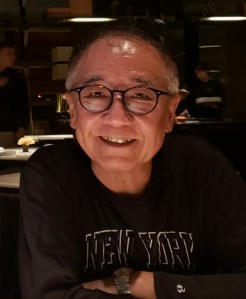
ProfilesCasey Man Kong Lum (Ph.D., NYU) is Professor Emeritus at William Paterson University (New Jersey, USA), where he was the Founding Director of the M.A. in Professional Communication Program (2007-2012).

Casey Man Kong LumCasey is also an Adjunct Professor in the Department of Teaching and Learning, Steinhardt School of Culture, Education, and Human Development, and in the Division of Applied Undergraduate Studies, School of Professional Studies, New York University.

His research intersects among media ecology, food studies, urban foodways as intangible cultural heritage, urban communication, transnational communication in the diaspora, global media, the Chinese American experience, intercultural education and communication, multilingual education, the intellectual history of communication scholarship, etc. Casey has had extensive experience in intercultural consultancy and study abroad programs (e.g., global food cultures; media and globalization; intercultural communication and education).

Sample publications:

Books:

林文刚编:《媒介环境学:思想沿革与多维视野》, 第二版,何道宽译,北京:中国大百科全书出版社,2019 年。[The is the second simplified Chinese translation edition of Lum (2006) by the Encyclopedia of China Publishing House, Beijing.]

Lum, C. M. K., & de Ferrière le Vayer, M. (Eds.). (2016). Urban foodways and communication: Ethnographic studies in intangible cultural food heritages around the world. Lanham, MD: Rowman & Littlefield.

Lum, C. M. K. (2006). (Ed.). Perspectives on culture, technology, and communication: The media ecology tradition. Cresskill, NJ: Hampton Press. [Winner, Lewis Mumford Award for Outstanding Scholarship in the Ecology of Technics, The Media Ecology Association, 2006]. This book has been translated and published in simplified Chinese by Peking University Press in Beijing, China (2007); in Korean by Hannarae Publishing Company in Seoul, South Korea (2008); in traditional Chinese by Chu Liu Publishing Company in Taipei, Taiwan (2010).

Lum, C. M. K. (1996). In search of a voice: Karaoke and the construction of identity in Chinese America. Foreword by N. Postman. London: Routledge.

Articles and Book Chapters:

Lum, C. M. K. (2024, May 27). What can and should we learn from these dark and tragic histories? Associate Director’s Activities. Center for Intercultural Dialogue.

Lum, C. M. K. (2023, Sep 11). Culturally responsive teaching and intercultural dialogue. Associate Director’s Activities, Center for Intercultural Dialogue.

Li, M. W., & Lum, C. M. K. (2022). The vector of media and the media turn of communication theory research: Comments on the Media Ecology Translation Book Series (in Chinese). Chinese Journal of Journalism & Communication, 44(12), 156-169. [Original in Chinese] 李明伟 林文刚, 媒介矢量与传播学理论研究的媒介转向——兼评 “媒介环境学译丛”, 《国际新闻界》, 2022年 (44卷12期): 156-169。

Lum, C.  M. K. (2019). Media ecology and media education: Reflections on media literacy in a globalized communication ecology [in Chinese]. Chinese Journal of Journalism and Communication, 41(4), 89-108. 林文刚: 媒介环境学和媒体教育: 反思全球化传播生态中的媒体素养, 《国际新闻界》, 2019年4月 (41卷 4期): 89-108.

Lum, C. M. K. (2018). Developing intercultural competence in the language classroom. In J. Liontas (Ed.) (Vol Ed.: S. Nero). The TESOL Encyclopedia of English Language Teaching, Vol. VI (pp. 3545-3550). Oxford, UK: Wiley. DOI: 10.1002/9781118784235.eelt0282

Lum, C. M. K. (2015). Regionalism and communication: Voices from the Chinese diaspora. In A. Gonzalez & Y.-W. Chen (Eds.), Our voices: Essays in culture, ethnicity, and communication (pp. 327-334, 6th ed.). New York: Oxford University Press.

Lum, C. M. K. (2014). Media ecology: Contexts, concepts, and currents. In R. Fortner & M. Fackler (Eds.), The handbook in media and mass communication theory (pp. 137-153, Vol. 1). Hoboken, NJ: Wiley-Blackwell. (Winner: The 2016 Walter Benjamin Award for Outstanding Article in the Field of Media Ecology.)

Lum, C. M. K. (2013). Understanding urban foodways and communicative cities: A taste of Hong Kong’s yumcha culture as urban communication. In S. Drucker, V. Gallenger, & M. Matsaganis (Eds.), The urban communication reader III: Communicative cities and urban communication in the 21st century (pp. 53-76). New York: Peter Lang.

Lum, C. M. K. (2006). Communicating Chinese heritage in America: A study of bicultural education across generations. In W. Leeds-Hurwitz (Ed.), From generation to generation: Maintaining cultural identity over rime (pp. 75-98). Cresskill, NJ: Hampton Press.

Lum, C. M. K., & Haratonik, P. L. (2011). A comparative study of Xintiandi in Shanghai and South Street Seaport in New York City [in Chinese]. In F. Sun & J. Yang (Eds.), Tales of two cities: Urban culture in Shanghai and New York City (pp. 44-57). Shanghai, China: Truth & Wisdom Press and Shanghai People’s Publishing.

Currently on the Board of Directors of the Urban Communication Foundation, Casey has been actively serving the profession in various leadership capacities, such as:

Casey serves as a reviewer and on the editorial board of a number of refereed journals. He is a long-time resident of New York City.


Work for CID:

Casey Lum wrote KC35: Media Ecology. He currently serves as CID Associate Director. In that capacity, he began and currently edits the series Voices from the Field. See Associate Director’s activities posts for descriptions of stops in various cities and conversations with individual scholars.

Ling Chen Profile

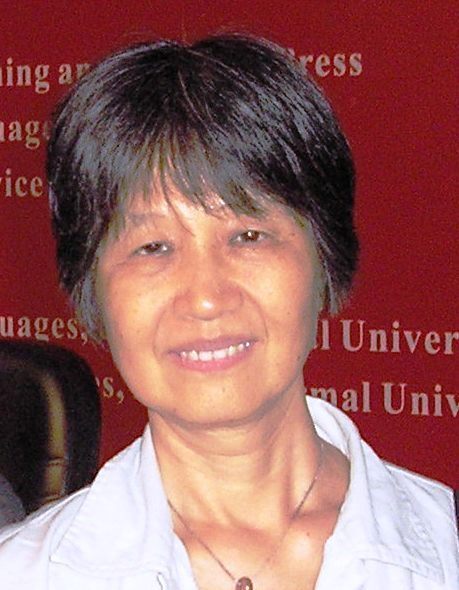
ProfilesLing Chen (PhD, Ohio State Univ.) was Professor Emeritus in the School of Communication, Hong Kong Baptist University since her retirement in 2020.

Ling Chen

Her areas of interest include Chinese Communication, Communication Competence, Intercultural Communication, Language and Social Interaction, and Organizational Communication. Her interest in the role of culture in communication in different social contexts at various level of interaction and in intercultural encounters has been a center of her research and scholarship. So far she has published 3 books and more than 70 articles in books or journals such as Communication Monographs, Communication Research, Human Communication Research, International Journal of Intercultural Relations, Management Communication Quarterly, Research on Language and Social Interaction, etc. and conducted research on such topics as verbal adaptive strategies in native-nonnative speaker interaction, managerial communication in Chinese business organizations, friendship dialectics among Chinese in Hong Kong, cultural learning of sojourners, cultural identity as a production in process, Chinese traditional value orientations, argumentative tendency of Chinese and Japanese. Her most recent works are on host community acculturation orientations and ethnic minority communication.

Chen has been active in professional associations and served in a variety of capacities, e.g., as Intercultural Communication Division Chair of the International Communication Association, President of the Association for Chinese Communication Studies and Vice-President of China’s Association for Intercultural Communication Studies. Chen was Editor of Management Communication Quarterly, Associate Editor of Communication Theory until 2016, has also served and is serving on the editorial board of a number of international journals, in communication and related disciplines, e.g., Chinese Journal of Communication, Communication Studies, Discourse and Communication, Howard Journal of Communications, Human Communication Research, Human Technology: An Interdisciplinary Journal on Humans in ICT Environments, Journal of Applied Communication Research, Journal of Communication, Journal of Intercultural Communication Research, Journal of International and Intercultural Communication, and Management Communication Quarterly.


Work for CID:

Ling Chen was one of the participants in the Roundtable on Intercultural Dialogue in Asia, co-sponsored by CID.

Yves Winkin Profile

ProfilesYves Winkin was Director of Scientific and Technical Culture at the Conservatoire National des Arts et Métiers [National Conservatory of Arts and Crafts] in Paris, and of the Musée des Arts et Métiers [Museum of Arts and Crafts], part of CNAM, from 2015 to 2019.

Yves Winkin

He is a member of the Kuratorium of the Deutsches Museum and a curatorial advisor to several museums in Europe. He is commissioning editor for the French publishing house Editions des Archives Contemporaines. In 2013, he served as liaison between the Ecole Normale Supérieure de Lyon (ENSL) and the new Musée des Confluences of Lyon, in charge of interdisciplinary projects. Across 2011 and 2012, he was Director of the Institut Français de l’Éducation [French Institute of Education], a national agency embedded in the ENSL. From 2006 to 2010, he was Deputy Director for Research and International Relations of ENSL; previously he was Professor of Anthropology and Communication at ENSL.

Winkin established the contours in France of an anthropological approach to face-to-face communication; the discipline he helped to define is the anthropology of communication. He offered an appropriate theoretical framework; he made explicit the ethnographic methodology, and suggested areas of investigation. His own research focuses on interactions in urban settings, especially interactions between pedestrians and other urban dwellers.

While mostly based in either France or Belgium, he has substantial international experience, including being a “Fulbright Scholar in Residence” at the University of Wisconsin-Parkside, in the fall of 1983; the University of Quebec in Montreal, in January 1984; invited to serve as associate director of studies by Pierre Bourdieu at the École des hautes études en sciences sociales in April 1984, October 1986, May 1992 and October 1998; a stint as Visiting Associate Professor at the University of California, Berkeley, in the spring of 1987; with additional stops at: Massey University in New Zealand in the summer of 1989; the University of Geneva, from 1992 to 2006 (as a substitute professor); the Universidade Federal do Rio de Janeiro in Brazil in April-May 1995; a return to the University of Pennsylvania, where he had earned his MA, 1997-98; a return to Brazil in August-September 1998, this time at the Universidade Estadual de Campinas in Brazil; and El Colegio de Michoacán in Samora, Mexico, in March 2006. Through international agreements between universities, he has presented courses at Université de la Réunion on Reunion Island, the University of Ouagadougou in Burkina Faso, and East China Normal University in Shanghai. During fall 2012, he was Harron Family Endowed Chair in Communication at Villanova University, in Philadelphia, PA; and  in spring 2013, he served as Visiting Professor of Communication at the Chinese University of Hong Kong.

Authored Books

D’Erving à Goffman: Une oeuvre performée? Paris, France: Editions MkF, 2023.

Réinventer les musées ? Paris, France: Editions MkF, 2020.

Erving Goffman. A Critical Introduction to Media and Communication Theory (with W. Leeds-Hurwitz). New York: Peter Lang, 2013.

Vers une marche plaisir en ville: boîte à outils pour augmenter le bonheur de marcher (with S. Lavadinho). Lyon,  France: Editions du CERTU (Centre d’Etudes sur les Réseaux, les Transports et l’Urbanisme), 2012.

Comment l’informatique vient aux enfants. Pour une approche anthropologique des usages de l’ordinateur à l‘école (with E. Barchechath & R. Magli). Paris, France: Editions des Archives Contemporaines, 2006 .

La communication n’est pas une marchandise. Résister à l’agenda de Bologne. Bruxelles, Belgium: Editions Labor/Editions Espace de Libertés, 2003.

Marché éditorial et démarches d’écrivains. Un état des lieux et des forces de l’édition littéraire en Communauté française de Belgique (with P. Durand). Bruxelles, Belgium: Éditions du Ministère de la Culture, 1996.

Anthropologie de la communication: de la théorie au terrain. Bruxelles, Belgium: Éditions De Boeck Université, 1996.

Erving Goffman: les moments et leurs hommes. Paris, France: Éditions du Seuil et Éditions de Minuit, 1988.

La Nouvelle Communication. Paris, France: Éditions du Seuil, 1981.

Edited Collections

Le Symbolique et le Social. La réception internationale de Pierre Bourdieu. Actes du colloque de Cerisy (with J. Dubois and P. Durand). Liège, Belgium: Editions de l’Université de Liège, 2005.

Rhétoriques du Corps (with P. Dubois). Bruxelles, Belgium: De Boeck, 1988.

Gregory Bateson: premier état d’un héritage. Paris, France: Éditions du Seuil, 1988.

Pragmatique et discours: actes du colloque “Langage et Ex-Communication” (with P. Dubois). Louvain, Belgium: Cabay, 1982.


Work for CID:

Yves Winkin was a member of the Organizing Committee for the National Communication Association‘s Summer Conference on Intercultural Dialogue in Istanbul, Turkey, which led to the creation of CID. He translated KC35: Media Ecology into French; he wrote a meditation on World Day for Cultural Diversity for Dialogue and Development 2023; and he has served as a reviewer for French translations.

Huang Kuo Profile

Profiles

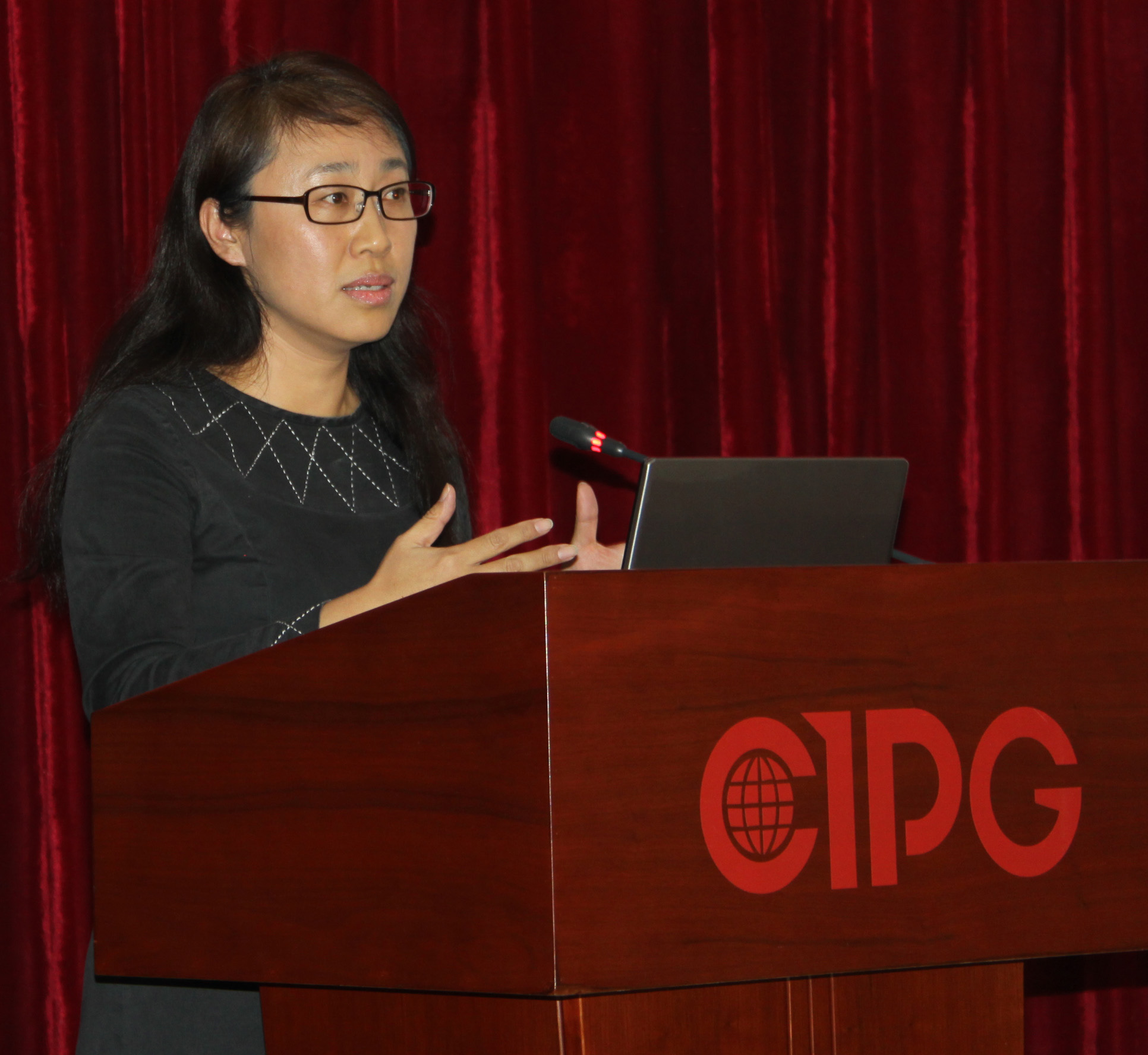
Dr. Huang Kuo is an Associate Professor at English Service of China Radio International (Beijing).

Huang Kuo

Before joining CRI, Dr. Huang worked as Associate Professor at the Center for International Communication Studies, China International Publishing Group (Beijing), Associate Professor at Heilongjiang University (China), Lecturer and Tutor in Macquarie University (Australia), and Lecturer in Beijing Normal University, Zhuhai campus (China).

She has a PhD in Music, Media, Culture and Communication Studies from Macquarie University, Australia, and MA in Communication from Westminster University, UK. Her research interests include international communications, audience studies, and new media. She has published many papers for journals and book chapters, and authored the books Chinese Boxes: Reality TV and Audience Participation (2014) and Multimedia Technology: How It Changes Classroom and Communication (2008).

Representative publications:

Huang, K. (2014). Chinese Boxes: Reality TV and Audience Participation. Lambert Academic Publishing.

Huang, K. (2014). Renewal of International Communication in the Context of Big Data Processing [大数据背景下国际传播的战略思考] in Zhengrong Hu et al (Eds.) Blue Book of International Communication: Annual Report on the Development of China’s International Communication (2014) (pp. 254-260). Beijing: Social Sciences Academic Press.

Huang, K. (2013). Participative Chinese audiences: A Case Study of the Reality Show Switching Spaces. Studies in Communication Sciences, 13(2), 117–128.

Jiang, F., & Huang, K. (2013). Community Media in China: Communication, Digitalization, and Relocation. Journal of International Communication 19(1), 59-68.

Huang, K. (2013). A Functional Approach towards Political Communication in Social Media—A Case Study of 2012 US Election [社交媒体的政治传播功能研究——以2012年美国大选的社交媒体战略为例]. International Communications [对外传播].1, pp.48-50.

Huang, K. (2012). How Family Factors Influence Teenagers in Internet Adoption [家庭因素对青少年互联网使用的影响] in Wenge LI et al (Eds.) Annual Report on the New Media Use by Minors in China 2011-2012, Blue Book of Teenagers [青少年蓝皮书:中国未成年人新媒体运用报2011-2012] (pp. 50-71). Beijing: Social Sciences Academic Press.

Huang, K. (2012). On Strategy Transformation of Western Media in International Communication [西方媒体国际传播战略转型的趋势及启示]. International Communications [对外传播], 7, 35-37.

Huang, K., & Jiang, F. (2012). How New Media Subvert and Reconstruct Chinese ‘Quan-Shi’ Culture [新媒体对中国“权势”文化的颠覆与重构], Exploration and Free Views [探索与争鸣], 7.

Huang, K., & Jiang, F. (2011). Transnational Media Corporations and National Culture as a Security Concern in China. In V. Bajc & W. de Lint (Eds.), Security and Everyday Life (pp. 212-235). New York: Routledge.

Huang, K. (2009). Multimedia Technology: How It Changes Classroom and Communication. VDM Verlag Dr. Müller Aktiengesellschaft & Co. KG.

Huang, K., & Chitty, N. (2009). Selling Participation to Audiences in China. Global Media Journal—Canadian Edition, 2(1), 123-147.

Huang, K., & Jiang, F. (2009). Understanding Diaspora Cultures in the Context of Globalization. International Journal of the Humanities, 7 (10), 115-130.


Work for CID:

Huang Kuo was one of the participants in the Roundtable on Intercultural Dialogue in Asia, co-sponsored by CID.

Jiang Fei Profile

ProfilesDr. Jiang Fei is Dean of the School of International Journalism and Communication at the Beijing Foreign Studies University. He has a Ph.D. from the Department of Literature, Media & Communication studies from Sichuan University (Chengdu, China).

Jiang Fei

Previously he was Professor at the Institute of Journalism and Communication, Chinese Academy of Social Sciences, where he also served as  Director of the Department of Communication Studies, and Director of the Global Media and Communication Research Center. He is also the Secretary General of the Communication Association of China (CAC), and associate editor for the Journal of China Media Report Overseas.

Prof. Jiang has taught at several universities in China and has given invited lectures at the Chinese University of Hong Kong, Taiwan National Chengchi University, and Lugano University (Switzerland). He was visiting scholar at Stockholm University (Sweden), Toronto University (Canada), University of British Columbia (Canada), Royal Roads University (Canada), Macquarie University (Australia) and the Annenberg School for Communications, University of Pennsylvania (USA). His research interests include communication theory, new media and intercultural communication studies, cultural studies, and post-colonial theory. He has published many papers for journals and book chapters, and authored three books on intercultural communication.

Books

Jiang, F. (2011). Communication and Culture [传播与文化]. Beijing: Chinese Communication University Press.

Jiang, F. (2005). Intercultural Communication in the Post-colonial Context [跨文化传播的后殖民语境]. Beijing: China Renmin University Press.

Jiang, F. (Ed.). (2005). Transnational Media in China [海外传媒在中国]. Beijing: CFLACPC (China Federation of Literary and Art Circles Publishing Corporation).

Representative Book Chapters and Journal Articles

Jiang, F. (2013). On the three waves of China’s communication studies: A commemoration of the 30th anniversary of Schramm’s visit to China & China’s communication studies in post-Schramm times. Studies in Communication Sciences, 13(2), 107–116.

Jiang, F. (2013, coauthored), Strategic Studies on International Media Development and the Enlightenment to China [国际主流媒体发展战略研究及其对中国国际传播的启示], Modern Communication [现代传播]. Issue 2.

Jiang, F. (2012). An Intercultural Communication Study from China’s Perspective [跨文化传播研究的中国视角]. In A. Fung (Ed.), The Imagination of Chinese Communication [华人传播想像](pp.137-194). Hong Kong: The Chinese University of Hong Kong Press.

Jiang, F. (2012, coauthored). Reviewing Chinese Communication Studies 2011 [2011年传播学研究综述]. In Tang Xujun (Ed.), China Journalism and Communication Annual [中国新闻与传播年鉴]. Beijing: Social Science Academic Press.

Jiang, F. (2011, coauthored). Transnational Media Corporations and National Culture as a Security Concern in China. In V. Bajc & W. de Lint (Ed.), Security and Everyday Life (pp. 212-235). New York: Routledge.

Jiang, F. (2009, coauthored). Understanding Diaspora Cultures in the Context of Globalization. International Journal of the Humanities, 7(10), 115-130.


Work for CID:

Jiang Fei was one of the participants in the Roundtable on Intercultural Dialogue in Asia, co-sponsored by CID.

Qin Zhang Profile

ProfilesQin Zhang (Ph.D., University of New Mexico, 2005) is an associate professor in the Department of Communication at Fairfield University, USA.

Qin Zhang

Her research interests span across intercultural, instructional, and interpersonal communication. She has published over 40 peer-reviewed articles in journals such as Journal of International and Intercultural Communication, Communication Education, Communication Quarterly, Western Journal of Communication, Communication Research Reports, Journal of Intercultural Communication Research, Business Communication Quarterly, International Journal of Intercultural Relations, China Media Research, Ohio Communication Journal, Journal of International Communication, Pennsylvania Communication Annual, Texas Speech Communication Journal, and Human Communication. She also has articles in press in Human Communication Research and International Journal of Communication. She has won the Outstanding Article of the Year (2009) Award in Business Communication Quarterly, as well as several top paper awards or top-four paper awards in intercultural communication, instructional communication, and organizational communication at ECA or NCA. She serves on the editorial board of Communication Education, Journal of Intercultural Communication Research, and Communication Teacher. She was the 2012-2013 President of the Association for Chinese Communication Scholars (ACCS) affiliated with the NCA.

Selected Publications

Zhang, Q., Ting-Toomey, S., & Oetzel, J. G. (in press). Linking emotion to the conflict face-negotiation theory: A U.S.-China investigation of the mediating effects of anger, compassion, and guilt in interpersonal conflict. Human Communication Research.

Zhang, Q., Andreychik, M., Sapp, D. A., & Arendt, C. (in press). The dynamic interplay of interaction goals, emotion, and conflict styles: Testing a model of intrapersonal and interpersonal effects on conflict styles. International Journal of Communication.

Zhang, Q. (in press). A U.S.-China investigation of the effects of perceived partner conflict styles on outcome satisfaction: The mediating role of perceived partner conflict competence. Communication Quarterly.

Zhang, Q. (in press). Emotion matters in serial arguments: The effects of anger and compassion on perceived resolvability and relationship confidence. Communication Research Reports.

Zhang, Q. (2014). Assessing the effects of instructor enthusiasm on classroom engagement, learning goal orientation, and academic self-efficacy. Communication Teacher, 28, 44-56.

Zhang, Q., & Zhang, J. (2013). Instructors’ positive emotions: Effects on student engagement and critical thinking in U.S. and Chinese classrooms. Communication Education, 62, 395-411.

Zhang, Q. (2010). Asian Americans beyond the model minority stereotype: The nerdy and the left out. Journal of International and Intercultural Communication, 3, 20-37.

Zhang, Q. (2009). Perceived teacher credibility and student learning: Development of a multi-cultural model. Western Journal of Communication, 73, 326-347.

Zhang, Q. (2007). Teacher misbehaviors as learning demotivators in college classrooms: A cross-cultural investigation in China, Germany, Japan, and the United States. Communication Education, 56, 209-227.

Qi Wang Schlupp Profile

ProfilesQi Wang Schlupp earned her bachelor’s degree in English at Beijing University (1997). Her master’s (Kent State University, 2001) and doctoral degrees (University of Maryland, 2006) were both in communication. She is currently Professor of Communication at Villanova University and Area Coordinator in the Interpersonal Communication specialization.

Qi Wang

Her teaching and research interests include intercultural and interpersonal communication, with a focus on conflict management. Recently, she has also conducted and published studies in social media use and its influences on interpersonal communication. She has published research in various key communication journals and books (e.g., The SAGE Handbook of Conflict Communication, Human Communication Research, Journal of Public Relations Research, Communication Quarterly, China Media Research, etc.), and presented conference papers annually at the major scholarly communication organizations such as National Communication Association (NCA) and International Communication Associations (ICA). Her papers have won several Top Paper Awards at NCA. Her doctoral dissertation that theorized conflict avoidance strategies won the 2007 Outstanding Dissertation Award at the International Association for Conflict Management at Budapest, Hungary. She has conducted several funded research projects. Her most recent research that investigates the multinational mining industry in Peru has won the scholarship from the Arthur Page Legacy Center at PSU. She has been named as the 2013-2014 Page Legacy Scholar.

She was the 2013-2014 President of the Association for Chinese Communication Scholars (ACCS) affiliated with NCA. She also served as the Student Board Member at ICA in 2005-2006. She has launched the internship program in Shanghai for the Department of Communication at Villanova University in 2014, and also serves as the vice director of the Center for the Cross-Cultural Education and Communication for the Shanghai Academy of Social Sciences. And she served as Editor-in-Chief of the journal Negotiation and Conflict Management Research from 2019 to 2022.

Key publications

Books

Ni, L., Schlupp, Q. W., & Sha, B.-L. (Eds.). (2022). Intercultural public relations: Realities and reflections in practical contexts. Routledge.
Ni, L., Wang, Q., & Sha, B.-L. (2018). Intercultural public relations: Theories for managing relationships and conflicts with strategic publics. Routledge.

Refereed Journal Articles and Book Chapters

Ni, L., De la Flor, M., Wang, Q., & Romero, V. (2021). Engagement in context: Making meaning of the Latino community health engagement process. Public Relations Review, 47(2).

Wang, Q. (2020). Soong Ching-ling and Soong Mei-ling: For the love of one motherland. In C. C. Chao & L. Ha (Eds.), Asian women entrepreneurship (pp. 93-106). Routledge.

Ni, L., Xiao, Z., Liu, W., & Wang, Q. (2019). Relationship management as antecedents to public communication behaviors: Examining empowerment and public health among Asian Americans. Public Relations Review, 45(5).

Ni, L., Wang, Q., & Gogate, A. (2018). Understanding immigrant internal publics of organizations: Immigrant professionals’ adaptation and identity development. Journal of Public Relations Research, 30(4), 146-163.

Ni, L., Wang, Q., De la Flor, M., & Peñaflor, R. (2015). Ethical community stakeholder engagement in the global environment: Strategies and assessment. Public Relations Journal, 9(1), 1-22.

Ni L., Wang, Q., & De la Flor, M. (2015). Intercultural communication competence and preferred public relations practices. Journal of Communication Management, 19(2), 167-183.

Wang, Q., Fink, E. L., & Cai, D. A. (2015, February). Parasocial Interaction. Comm365: Celebrating 100 years of research. NCA Centennial Special Edition.

Wang, Q., & Bowen, S. P. (2014). The limits of beauty: The impact of physician sex and attractiveness on patient communication perceptions. Communication Research Reports, 31(1), 72-81.

Wang, Q., Ni, L., & De la Flor, M. (2014). An intercultural competence model of strategic public relations management in the Peru mining industry context. Journal of Public Relations Research, 26(1), 1-22.

Wang, Q., & Bowen, S. P. (2014). The limits of beauty: The impact of physician sex and attractiveness on patient communication perceptions. Communication Research Reports, 31(1), 72-81.

Wang, Q., Ni, L., & De la Flor, M. (2013). An intercultural competence model of strategic public relations management in the Peru mining industry context. Journal of Public Relations Research, 0, 1-22. doi: 10.1080/1062726X.2013.795864

Fink, E. L., & Cai, D. A., with Wang, Q. (2013). Quantitative methods for conflict communication research. In J. Oetzel & S. Ting-Toomey. (Eds.), The SAGE handbook of conflict communication: Integrating theory, research, and practice (2nd ed., pp. 41-66). Thousands Oak, CA: Sage.

Wang, Q., Fink, E. L., & Cai, D. A. (2012). The effect of conflict goals on avoidance strategies: What does not communicating communicate? Human Communication Research, 38, 222-252. doi: 10.1111/j.1468-2958.2011.01421.x

Ni, L., & Wang, Q. (2011). Anxiety and uncertainty management in an intercultural setting: The impact on organization-public relationships. Journal of Public Relations Research, 23, 269-301. doi: 10.1080/ 1062726X.2011.582205

Cai, D. A., Fink, E. L., & Wang, Q. (2010). Methods for conflict communication research, with special reference to culture. In D. A. Cai (Ed.) Intercultural communication: Sage benchmarks in communication (Vol. 2, pp. 99-120). Thousand Oaks, CA: Sage [Reprint from 2006].

Feeny, K., & Wang, Q. (2010). Comparing the perceptions of success, attributions, and motivations between the Chinese and the U.S. cultures. China Media Research, 6, 56-66.

Wang, Q. (2010). Cultural individualism-collectivism, self-construal, and multiple goal concerns in interpersonal influence situations: A cross-cultural investigation. In Y. Sun (Ed.), Intercultural studies: New frontiers (pp. 197-217). Beijing, China: Foreign Language Teaching and Research Press.

Wang, Q., Fink, E. L., & Cai, D. A. (2008). Loneliness, gender, and parasocial interaction: A uses and gratifications approach. Communication Quarterly, 56, 87-109. doi: 10.1080/01463370701839057

Cai, D. A., Fink, E. L., & Wang, Q. (2006). Quantitative methods for conflict communication research, with special reference to culture. In J. G. Oetzel & S. Ting-Toomey (Eds.), The SAGE handbook of conflict communication: Integrating theory, research, and practice (pp. 33-64). Thousand Oak, CA: Sage.


Work for CID:

Qi Wang wrote KC53: Conflict Management and then translated it into Simplified Chinese. She also has served as a reviewer for Chinese.

Lily A. Arasaratnam-Smith Profile

ProfilesLily A. Arasaratnam-Smith, PhD,  is Professor and Deputy Vice President Faculty at Alphacrucis College, Sydney, Australia. Her primary area of expertise is in intercultural communication competence, along with interests in multiculturalism, the role of social cognition in intercultural communication, and the relationship between sensation seeking and intercultural contact-seeking behavior.

Lily ArasaratnamIn addition to experience in teaching/training in a variety of institutions, such as Macquarie University (Australia), Alphacrucis College (Australia/New Zealand), Oregon State University (USA), Rutgers University (USA) and the Summer Institute for Intercultural Communication (USA), Lily also has personal experience living in different countries such as Sri Lanka, Maldives, the United States, and Australia.

A few of Lily’s publications are provided below for those who are interested:

Arasaratnam, L. A. (2011). Perception and Communication in Intercultural Spaces. Lanham, MD: University Press of America.

Arasaratnam, L. A. (2013). A review of articles on multiculturalism in 35 years of IJIR.  International Journal of Intercultural Relations, 676-685.

Arasaratnam, L. A. (2012). Intercultural Spaces and Communication within: An Explication. Australian Journal of Communication, 39(3), 135-141.

Arasaratnam, L. A., & Banerjee, S. C. (2011). Sensation seeking and intercultural communication competence: A model test. International Journal of Intercultural Relations, 35, 226-233.

Arasaratnam, L. A., Banerjee, S. C., & Dembek, K. (2010). The integrated model of intercultural communication competence (IMICC): Model test. Australian Journal of Communication, 37(3), 103-116.

Arasaratnam, L. A. (2006). Further testing of a new model of intercultural communication competence. Communication Research Reports, 23, 93 – 99.

Arasaratnam, L. A., & Doerfel, M. L. (2005). Intercultural communication competence: Identifying key components from multicultural perspectives. International Journal of Intercultural Relations, 29, 137-163.


Work for CID:
Lily Arasaratnam-Smith wrote KC3: Intercultural Competence.

Wenshan Jia Profile

ProfilesWenshan Jia is Ph.D. and Professor of Communication and China Studies, Department of Communication Studies, Chapman University, Orange County, California.  He is also Distinguished Adjunct Professor, School of Journalism & Communication, Research Associate, the National Academy of Development & Strategy, Renmin University, China.

Wenshan Jia

His areas of research are intercultural/global communication, ethnic relations in China and Chinese media. He has published “Ethnic conflicts in China” in Handbook of Ethnic Conflict: International Perspectives,  winner of the Gudykunst Award among others.   A winner of IAIR Early-Career Award, Wang-Fradkin Professorship award, and author of Choice “Outstanding Book” titles such as The Remaking of Chinese Character and Identity in the 21st Century: The Chinese Face Practices, he is editorial board member of International Journal for Intercultural Relations and Asian Journal of Communication and served as a content expert at the 4th World Cyberspace Cooperation Summit and a guest speaker of the Pacific Council on International Policy.

Selected Publications:

Jia, W. (Ed.). (2018). Intercultural communication: Adapting to emerging global realities (2nd ed.). San Diego, CA: Cognella.

Jia, W., Jiang H., & Zhao, L. (2017). Intercultural communication and dialogic civilization for the creation of a global community. Journal of Renmin University of China, 31(5), 100-111.

Jia, W. (June 6, 2017). Now, globalization with Chinese characteristics. YaleGlobal Online.

Jia, W., & Tian, D. (2016). Chinese conceptualizations of communication: Chinese terms for talk and practice. In D. Carbaugh (Ed.), The handbook of communication in cross-cultural perspective (pp. 244-253). New York: Routledge.

Jia, W., H. Liu, R. Wang, & X. Liu (2014). Contemporary Chinese communication scholarship: An alternative emerging paradigm. In R. Fortner & P. M. Fackler (Eds.), Handbook of media and mass communication theory. Malden, MA: Wiley.

Jia, Wenshan, Y. Lee, H. Zhang (2012). Ethnic conflicts in China. In D. Landis & R. A. Roberts (Eds.) Handbook of ethnic conflict: International perspectives (pp. 177-198). Springer.

Jia, W. (2011). On the discourse of cultural China. Journal of Asia Pacific Communication, 21(2), 165-176.

Jia, W., Tian, D. & Jia, X. (2010). Chimerica: US-China communication in the 21st century. In Larry. A. Samovar, Richard E. Porter, & Edward R. McDaniel (Eds.), Intercultural Communication: A Reader (13th ed., pp. 161-170). Belmont, CA: Wadsworth.

Jia, W. (2009). An intercultural communication model of international relations: The case of China. In Y. Hao & G. Wei (Eds.), Challenges to Chinese foreign policy: Diplomacy, globalization and the next world power (pp. 319-333). Louisville, KT: University Press of Kentucky.

Jia, W., et al. (2002). Chinese communication theory and research: Reflections, new frontiers, new directions.  CT:  Greenwood.

Jia, W. (2001). The Remaking of the Chinese character and identity in the 21st century: The Chinese face practices.  CT:  Greenwood.


Work for CID:
Wenshan Jia wrote the guest post, Intercultural Neologisms for a New Revolution.