
 Online course on Global Citizenship Education and Intercultural/Interfaith Dialogue, 7 October-3 November 2024. Deadline: 22 September 2024.
Part of the iLEGEND III project, the training course aims at providing participants with new skills and competences on Global Education, Intercultural/Interfaith Dialogue and Human Rights. It targets education practitioners in the formal and non-formal sector, media professionals and members of Civil Society Organisations and Faith-Based Organisations to:
-
reflect on Global Education, its concept, principles, and methodology;
-
analyse relevant notions related to Intercultural/Interfaith Dialogue, such as culture, discrimination, racism, majority/minority, inclusion/exclusion, etc;
-
develop specific competences focused on defusing and recognising potential conflicts, and actively promoting a culture of peace and non-violence;
-
promote networking among participants involved in global awareness-raising or educational actions.
The conceptual and methodological framework of the course is based on the Global Education Guidelines, systematised by the North-South Centre. Through a non-formal learning approach, collaborative and interactive activities and exercises allow participants to contribute to their own learning process.
The training course is fully online, hosted on HELP CoE e-learning platform. Two tutors will accompany participants during the 4-week activity. The expected workload is approximately 25 hours in total. The activity programme is structured in 4 modules (one module per week). The training course will be mainly asynchronous: this means that each participant will learn on their own schedule and pace, completing activities and exercises. At the end of the training, participants will obtain a certificate of participation.
40 participants will be selected for this activity, preferably between 18 and 30 years old, and coming from one of the North-South Centre member state, a Southern neighborhood or Sub-Saharan Africa country or a Council of Europe member state. However, a quota is available for citizens from other countries. The course will take place in English.

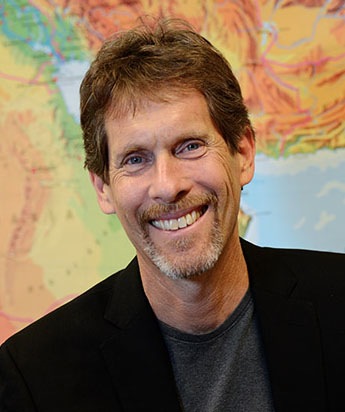 He specializes in the history of the medieval Mediterranean, with particular interest in two areas: Christian sanctity and early Christian views of Islam. Among his publications are: Christian Martyrs in Muslim Spain (Cambridge, 1988); Making History: The Normans and their Historians in Eleventh-century Italy (Pennsylvania, 1995); and The Poverty of Riches: St. Francis Reconsidered (Oxford, 2003). He has also produced four book-length translations (from Latin): Conquerors and Chroniclers of Early Medieval Spain (Liverpool University Press, 1990; rev. 1999); The Deeds of Count Roger of Calabria and Sicily and of His Brother Duke Robert Guiscard (University of Michigan Press, 2005); The Life and Afterlife of St. Elizabeth of Hungary: Testimony from her Canonization Hearings (Oxford University Press, 2011); and The Eulogius Corpus (Liverpool University Press, 2019).
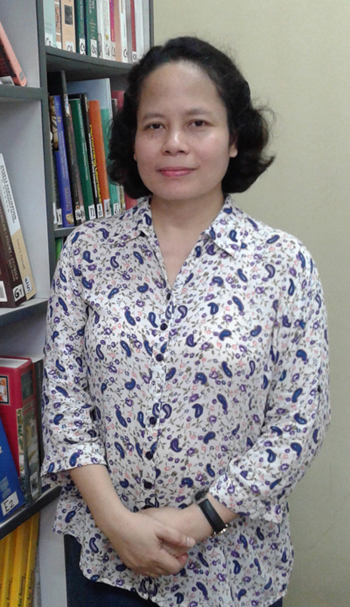 She has published research articles in local and international communication and literary journals on transnational audience reception of Korean television dramas; communication, civil society groups, the public sphere, and governance; intercultural communication between Christians and Muslims in the Philippines; Islamophobia and negative media portrayal of Islam; and literary critical essays. She has also written essays on the ideology of peace; reviews of the books of Maulana Wahiddudin Khan, an Islamic teacher advocating for peace; and her reflections on life, society, and spirituality published in
 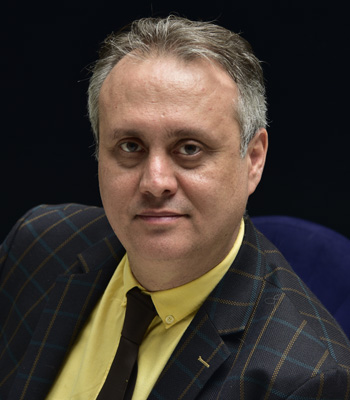 His main area of research is on Mughal miniature painting, with a secondary emphasis on interfaith dialogue during the Mughal Empire of India. His MA was on peace painting, resulting in the following article:
 Center for Intercultural Dialogue