ViSA as metacommunication

A publication resulting from collaboration with a group of colleagues in Lyon, France, has just appeared:

Leeds-Hurwitz, W. (2013). ViSA: La construction d’un objet-frontière et d’une forme de métacommunication. In L. Veillard et A. Tiberghien (Eds.), Instrumentation de la recherche en education. Paris: Éditions de la Maison des Sciences de l’Homme.

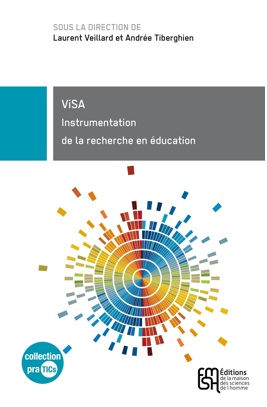
ViSAcoverThe electronic copy of the chapter in French is available for free from Open Edition Books. The paperback version of the book is available from the publisher, Les Éditions de la Maison des Sciences de l’Homme. The English version is available here. The title in English is “ViSA as a Deliberately Constructed Boundary Object and as a Form of Metacommunication.”

The topic is not intercultural dialogue. Rather this was a result of intercultural dialogue with international peers. ViSA (Vidéos de situations d’enseignement et d’apprentissage) is a group made up of scholars interested in pedagogy, who have jointly contributed videotapes of actual classroom interaction, so that all group members might have access to a larger database when analyzing classroom interaction. My chapter defines metacommunication and explains what boundary objects are, then includes discussion of metacommunication as a strategy in interdisciplinary research, boundary objects as tools for interdisciplinary research, and ways in which the ViSA database serves as a boundary object.

My thanks to Laurent Veillard for the translation into French. And to Andrée Tiberghien for inviting me to join ViSA. I have very much enjoyed working with you both, as well as with the other members of the group.

Social travel-Peeta Planet

Two brothers from the United Arab Emirates, Mohammed and Peyman Parham Al Awadhi, are exploring the globe in a new social TV show, Peeta Planet. Their unscripted travels are spurred by online conversations and their twitter followers, and then broadcast on Dubai One. The first show started in April 2013, and they go somewhere new every week; at this writing, they have been to Singapore, Istanbul, Dublin, Seoul, and Tokyo. They are reinventing both travel and television for the social media generation, and in the process demonstrating a new way to begin intercultural dialogues.

Originally, they made schwarma, then that turned into a restaurant named Wild Peeta – with input from many on social media who made suggestions about everything from menu choices to decor. When they needed a vacation, they asked their social media followers for ideas. That went so well, they ended up with a television show of further travels. They connect with fans through Google Plus, YouTube, Facebook, Instagram, Tumblr, and Twitter. Everything they do in each episode, from where they travel to the food they eat and the people they meet, is based on suggestions from their followers. They’re calling their new idea “social travel.” Not only do they get to meet people they’ve only corresponded with, but they also then help their connections meet one another, as when they introduced an app developer in Turkey to a programmer in Ireland. They help break down stereotypes with every trip they take.

Save

CFP IALIC 2013

Call for Papers: 12th Annual Conference of the International Association for Languages and Intercultural Communication
Language and Intercultural Communication in the Workplace: Critical Approaches to Theory and Practice
29 November – 1 December 2013
Lam Woo International Conference Centre
Hong Kong Baptist University

Conference overview:
From language classrooms to outdoor markets, the workplace is fundamental to socialisation. The workplace is not only a site of employment where, for example, money is made and institutional roles are enacted through various forms of discourse; it is also a location where interactants engage in social actions and practices, from befriending or bullying a colleague to complimenting or gossiping about the boss. In other words, the workplace possesses cultural and linguistic norms and conventions for engaging in work and non-work related activities.

Recently, the workplace has begun to attract the attention of scholars because of advances in communication technology, cheaper and greater options for travel, and global migration and immigration. Work is no longer confined to a single space. It now requires people to travel over great geographical distances, communicate with cultural ‘others’ located in different time zones, relocate to different regions or countries, and conduct business in online settings. The workplace is thus changing and evolving, creating new and emerging communicative contexts. Intercultural communication researchers have a long tradition of investigating the language and communication of such activities.

The aim of the conference is to promote greater understanding of workplace cultures, particularly the ways in which working in highly interconnected and multicultural societies shape language and intercultural communication. The conference aims to encourage greater dialogue between researchers studying workplace issues with different theoretical and methodological frameworks, and between researchers and practitioners. Abstracts are welcome in any area related to the workplace, including pedagogical settings. The conference focuses on critical approaches to theory and practice, and we are particularly interested in studies that use practice to shape theory, and studies that question the validity and universality of existing models. Many Asian scholars, for example, have criticised some of the predominant models in intercultural communication for being Eurocentric/Anglocentric, and the conference welcomes papers proposing alternative frameworks for analysing intercultural communication in the workplace.

Please submit your abstract (250-300 words) with a short bio to ialic2013 AT hkbu.edu.hk
Deadline for submission of abstracts: 15 June 2013
Notification of acceptance: 15 July 2013

Hans Ladegaard (Hong Kong Baptist University)
Christopher Jenks (City University of Hong Kong)
Co-Conveners of IALIC2013

Save

Voice global magazine

VOICE is a global bi-monthly magazine of the youth, for the youth and by the youth. It is an unbiased untainted perspective of the youth across the world. With 1.2 billion young faces comprising the global “youth bulge”, a platform to give voice to their thoughts and concerns is more than what is needed. VOICE aims to create awareness and engage young people in exploring global issues leading to a search for possible solutions. Through VOICE, the youth can discuss issues and express ideas for a better and promising future.”

Founding partners: Global Dialogue Foundation and Sage Foundation.

Save

CFP Int’l Conf Intercultural Comm Wuhan

Call for Papers:
7th International Conference of Intercultural Communication
15th–17th November, 2013 at Wuhan University, China

The 7th International Conference of Intercultural Communication (2013 ICIC) will address a range of issues on the theme “Cultural Conflict and Intercultural Communication.” With the advance of globalization, more and people are either brought in the context of dialogue and communication or assimilated into a dominant culture, which facilitates individuals’ cultural competence and enables them to witness cultural changes and manage the cultural diversity more effectively. At the same time, globalization is also splitting the world apart with globalization is also splitting world apart with diversity more effectively. At the same time, globalization is also splitting world apart with capital power, political power and cultural power, and the diversity of cultures prevents people recognizing the common humanity, thus, cultural conflict is all around the world. For example, the French policies of ban on veil Muslim women and repatriation of Roma have brought great trouble. The event of burning Koran by the US pastor Terry Jones and the rally of white supremacist groups have caused unquenchable violence. All these events exposed another horrible scene of globalization: more people tend to emphasize the absolute differences to express themselves, and more people are approaching violence under the oppression of power.

In 2010, the annual United Nations World Culture Report focused on diversity of cultures and intercultural dialogues, striving for the New Humanism in the era of globalization. The core proposition of the report was the inclusiveness and interaction in diversity, which presented an idealistic thinking. However, faced with the cultural conflict and helplessness of communication in reality, it’s not enough to reveal the idealistic flag. We have face the conflicts and predicaments in intercultural communication, and seek the social psychological reasons of cultural adaption so as to innovate the way of communication and construct the possibilities of communication.

The theme of this conference is “Cultural Conflict and Intercultural Communication”, which can be divided into 8 main topics:
1. The fundamental communication theories of cultural diversity and conflict
2. The intercultural case studies on the news report of cultural conflict and its public opinions
3. Cultural adaption and survival of immigrants, marginal groups, minorities sub-cultural groups
4. Integration and differentiation of intercultural communication space in arts (intercultural dramas, movies, paintings, music, clothing, etc.)
5. Intercultural Analysis of cultural creative products (movies, comics, ads, art designs, etc.) that triggered cultural conflicts
6. New intercultural communication problems presented in new-media on cultural conflicts
7. The new tendency of intercultural conflicts and management tactics in multinational firms
8. The innovative theories of new humanism and intercultural communication in the era of globalization

The conference is held by School of Journalism and Communication of Wuhan University and Media Development Research Center of Wuhan University, the co-organizer institutions will include: French Consulate, U.S. Intercultural Communication Research Center, Hubei Daily Media Group, School of Journalism and Communication of Xinjiang University, Xinjiang Normal University, Wuhan Textile University, etc.

The abstract of the paper is expected to be submitted by 30th July, 2013 which may contain the abstract and basic information about the author, with less than 500 words in Chinese or 250 words in English. Full submissions are expected by 30th September, 2013.
Please e-mail to: media.whu AT gmail.com
Languages of Conference: Chinese & English

Convener of 2013 ICIC:
SHAN Bo, Ph.D.
Professor, Vice Dean
School of Journalism and Communication
Wuhan University
shanbo AT whu.edu.cn
http://www.icchina.org/

postdoc Media Arts London

5 year Postdoctoral Research Assistant in Media Arts
Royal Holloway University of London

ADAPT Project (The Adoption of new Technological Arrays in the Production of Broadcast Television) Full time, fixed term (5 years) Salary is in the range £32,558 to £38,432 per annum inclusive of London Allowance.

Applications are invited for the post of Postdoctoral Research Assistant (ADAPT Project) in the Media Arts Department.

RHUL

We are seeking a post-doctoral researcher specialising in the history of technology for the ADAPT project led by Professor John Ellis. This five-year project will research the history of the technological arrays involved in television programme production, concentrating on the users and the role played by technologies in shaping programmes. The researcher will pay a key role in managing and shaping ADAPT (The Adoption of new Technological Arrays in the Production of Broadcast Television) which is funded by the European Research Council with a budget of €1.6 million.

The researcher will take responsibility for producing an account, mainly from written sources, of innovations in film and video technologies (mainly in the UK) from 1960 to the present. The researcher will also co-ordinate the interviewing of TV professionals and the filming of extensive reconstructions of working practices.

The successful candidate should hold a PhD in the areas of either television or the history of technology.  They should also have experience and skills in written archive.

This is a full time post, available from 1st August 2013 or as soon as possible thereafter for a fixed term period of five years. The post is subject to a signed contract from funder. This post is based in Egham, Surrey where the College is situated in a beautiful, leafy campus near to Windsor Great Park and within commuting distance from London.

For an informal discussion about the post, please contact Professor John Ellis on john.ellis AT rhul.ac.uk.

Please quote the reference: X0513/7038

Closing Date:  Midnight, Monday 10th June 2013

Interview Date: Wednesday 26th June 2013

2014 EURIAS fellowships

The European Institutes for Advanced Study (EURIAS) Fellowship Programme is an international researcher mobility programme offering 10-month residencies in one of the 16 participating Institutes: Berlin, Bologna, Brussels, Budapest, Cambridge, Delmenhorst, Freiburg, Helsinki, Jerusalem, Lyon, Marseille, Paris, Uppsala, Vienna, Wassenaar, Zürich. The Institutes for Advanced Study support the focused, self-directed work of outstanding researchers. The fellows benefit from the finest intellectual and research conditions and from the stimulating environment of a multi-disciplinary and international community of first-rate scholars.

EURIAS Fellowships are mainly offered in the fields of the humanities and social sciences but may also be granted to scholars in life and exact sciences, provided that their proposed research project does not require laboratory facilities and that it interfaces with humanities and social sciences. The diversity of the 16 participating IAS offers a wide range of possible research contexts in Europe for worldwide scholars. Applicants may select up to three IAS outside their country of nationality or residence as possible host institutions.

The Programme welcomes applications worldwide from promising young scholars as well as from leading senior researchers. The EURIAS selection process has proven to be highly competitive. To match the Programme standards, applicants have to submit a solid and innovative research proposal, to demonstrate the ability to forge beyond disciplinary specialisation, to show an international commitment as well as quality publications in high-impact venues.

For the 2014-2015 academic year, EURIAS offers 39 fellowships (20 junior and 19 senior positions).

All IAS have agreed on common standards, including the provision of a living allowance (in the range of € 26,000 for a junior fellow and € 38,000 for a senior fellow), accommodation (or a mobility allowance), a research budget, plus coverage of travel expenses.

APPLICATION
– Applications are submitted online (www.eurias-fp.eu), where you will find detailed information regarding the content of the application, eligibility criteria, selection procedure.
The deadline for applications is July 5th, 2013. Late applications will not be considered.

SELECTION PROCEDURE

– Scientific assessment by two international referees
– Pre-selection by the EURIAS international Scientific Committee
– Final selection by the IAS Academic Boards
– Publication of results: January 2014

For further information on the Programme, please consult our website.
For further information on the IAS and their specific working conditions, see here.

Save

ICA regional conf in China

Extended Deadline for the First Co-Sponsored ICA Regional Conference in the People’s Republic of China

The deadline for submitting papers to ICA’s first Co-Sponsored Regional Conference in the People’s Republic of China [PRC] has been extended to June 1, 2013! Co-hosted by 18 Chinese associations and institutions, the theme of “Communication and Social Transformation” crosses communication contexts and offers specific opportunities for networking and institutional collaborations. This regional conference will be hosted in Shanghai on November 8-10, 2013. Full details about the conference–including free wifi at and the convenient location of the conference hotel to cultural sites, as well as information about submissions and presentations in Chinese or English–are listed here.

The conference hotel, the Pullman Shanghai Skyway hotel, is easily accessible from the Pudong International Airport by Metro or taxi. For first-time visitors to Shanghai who would like to be greeted at the airport, the website offers details about making these arrangements with our hosts.

As noted in the May 2013 ICA Newsletter, officials from our host universities/ associations in China and ICA President Cynthia Stohl will welcome conference participants. Of special interest is the plenary address by the top official of Sina.Com. Seven Chinese scholars from top universities have been invited to present keynote addresses-we are awaiting their responses to our invitations. Keynote speakers who already have accepted include: Bill Dutton (Professor and founding Director of the Oxford Internet Institute, Professorial Fellow of Balliol College), Jan Servaes (UNESCO Chair in Communication for Sustainable Social Change, University of Massachusetts Amherst), Stephen Reese (Jesse H. Jones Professor of Journalism at the University of Texas at Austin), and Maureen Taylor (Gaylord Family Chair of Strategic Communication, Oklahoma University). ICA Communication Director John Paul (JP) Gutierrez will discuss impact factors and keys to media exposure.

In discussion sessions, leading faculty from around the globe will talk about the changing nature of (future) communication scholarship and engagement, entrepreneurship education, and the city, among other topics. Conversations will continue during an (optional) tour of an ancient Chinese water village close to Shanghai on the day following the official close of the ICA Regional Conference.

For further information, please contact Qian WANG, assistant professor in The School of Media and Design at Shanghai Jiao Tong University (icashanghai2013 AT gmail.com) or Patrice M. Buzzanell (buzzanel AT purdue.edu), Professor in the Brian Lamb School of Communication at Purdue University, SJTU Advisory Board member, and ICA Liaison for this regional conference in China.  The Call for Papers is posted on the ICA website for details.

Send papers to: icashanghai2013 AT gmail.com

Save

Strengthen Civil Society webinar

Strengthening The Voice Of Civil Society – Do One Thing for Diversity and Inclusion
World Dialogue Foundation is offering a webinar on May 21, 2013 at 10:00 PM AEST.

Next Tuesday, 21st May is World Day for Cultural Diversity, for Dialogue & Development.

Without doubt, the mission to increase understanding between people from different cultural and religious backgrounds is one of the most promising movements in the world today.

As part of the “Do One Thing For Diversity and Inclusion” campaign spearheaded by the United Nations Alliance of Civilizations, in partnership with UNESCO and many organisations around the world, GDF is running a free online workshop for civil society organisations who would like to strengthen their role and play a bigger game.

Why does civil society matter so much? Building inclusive society has become a major challenge in most countries around the world. Over the past twenty years, globalization, technology, the resurgence of religions and tremendous migration flows have indeed radically changed the fabric of most societies that are increasingly diversified and fragmented. This creates tensions, radicalization and sometimes, the risk of conflict.

The role of leaders, being policy makers, corporate sector, media…is crucial in raising public awareness and encouraging dialogue and understanding among people and communities beyond the cultural divide. But, to achieve this goal, a vibrant and active civil society movement holding leaders responsible is indispensable.

This 60-minute session will give you the opportunity to explore possibilities around becoming a partner in the United Nations Alliance of Civilizations Civil Society Country Chapter program. You will have the opportunity to share your successes, ask questions, and inspire others.

Register now!

Save

Do one thing for diversity 2013

2013: Do One Thing for Diversity and Inclusion

do one thing for diversity logo

In 2001, UNESCO adopted the Universal Declaration on Cultural Diversity and in December 2002, the UN General Assembly, in its resolution 57/249, declared May 21 to be the World Day for Cultural Diversity for Dialogue and Development.

The day provides us with an opportunity to deepen our understanding of the values of cultural diversity and to learn to live together better.

In 2011, a grassroots campaign ‘Do One Thing For Diversity and Inclusion’, celebrating the annual World Day for Cultural Diversity was launched by UNESCO and the UN Alliance of Civilizations.

The 2013 campaign, by encouraging people and organizations from around the world to take concrete action to support diversity, aims:

*To raise awareness worldwide about the importance of intercultural dialogue, diversity and inclusion.
*To build a world community of individuals committed to support diversity with real and every day-life gestures.
*To combat polarization and stereotypes to improve understanding and cooperation among people from different cultures.

The campaign works through a dedicated Facebook page, serving as a platform for people around the world to share their experiences through posts and videos.

Ten simple things YOU can do to celebrate the World Day for Cultural Diversity for Dialogue and Development:

1. Visit an art exhibit or a museum dedicated to other cultures.
2. Invite a family or people in the neighborhood from another culture or religion to share a meal with you and exchange views on life.
3. Rent a movie or read a book from another country or religion than your own.
4. Invite people from a different culture to share your customs.
5. Read about the great thinkers of other cultures than yours (e.g. Confucius, Socrates, Avicenna, Ibn Khaldun, Aristotle, Ganesh, Rumi).
6. Go next week-end to visit a place of worship different than yours and participate in the celebration.
7. Play the “stereotypes game.” Stick a post-it on your forehead with the name of a country. Ask people to tell you stereotypes associated with people from that country. You win if you find out where you are from.
8. Learn about traditional celebrations from other cultures; learn more about Hanukkah or Ramadan or about amazing celebrations of New Year’s Eve in Spain or Qingming festival in China.
9. Spread your own culture around the world through our Facebook page and learn about other cultures.
10. Explore music of a different culture.

There are thousands of things that you can do, are you taking part in it?