Arizona State U: Health at the Borders (USA)

“Job

Associate Professor of Health at the Borders, Arizona State University, Tempe, AZ, USA. Deadline: open until filled (posted 18 October 2024).

The Hugh Downs School of Human Communication (HDSHC) and the School of Transborder Studies (STS) in the College of Liberal Arts and Sciences on the Tempe Campus of Arizona State University invite applications for a full-time, tenured position as Associate Professor holding a joint appointment in the HDSHC and STS. Applicants’ scholarship and teaching should focus on health communication and southwest border issues. Salary will be competitive based on qualifications. They encourage applications from scholars who work at the intersection of health communication as it relates to migration, border-crossing, health disparities, patient-provider relationships, medical technologies, mental/behavioral wellbeing, resilience and quality of life, health campaigns, using AI to solve medical problems, and disrupting mis/disinformation that impacts health.

CIEE: Study Abroad London (UK)

“Job

Associate Director, CIEE London, UK. Deadline: 14 December 2024.

CIEE is a nonprofit study abroad and intercultural exchange organization that transforms lives and builds bridges between individuals and nations through study abroad and international exchange experiences that help people develop skills for living in a globally interdependent and culturally diverse world.

The Associate Director oversees the planning and delivery of all CIEE programs in collaboration with the Centre Director. This includes coordinating tasks among team members, implementing guidelines and policies, monitoring logistics and operations, and supporting the finance and admin team. The position is also responsible for managing financial, accounting, and banking needs, ensuring compliance with administrative policies, and working with the Portland Financial Department to maintain financial controls and standards. Additionally, S/he supports the Center Director in managing CIEE’s UK-wide identity and is also responsible for HR, payroll, contracts, legal processes, and overhead budget and expenses of the Center.

Other positions with CIEE London are described here. These include Center Director for CIEE Melbourne and Center Director for CIEE Tokyo.

Cardiff U: Studentship in Politics, International Relations and Area Studies (UK)

“Studentships“Ph.D. Studentship: Politics, International Relations and Area Studies, Cardiff University,  Cardiff, Wales, UK. Deadline: 11 December 2024.

The School of Modern Languages (MLANG) at Cardiff University is delighted to offer a fully funded Welsh Graduate School for the Social Sciences (WGSSS) (ESRC DTP) studentship in the Global Language-Based Area Studies Pathway starting in October 2025.   Language-based area studies draws upon foreign language skills to explore the society, politics or culture of a particular country or region. Students may do research on Britain, Europe and its member states; African studies; China or Japan, nationalism and identity politics; justice and incarceration; multilingualism and social linguistics; international relations, security and comparative politics.

Applications on topics which require knowledge of, or a readiness to undertake study of one of the major European languages, Chinese or Japanese, are particularly welcome. Other languages may also be available via the University’s Languages for All programme or via hard language training.

KC19 Multiculturalism Translated into Simplified Chinese

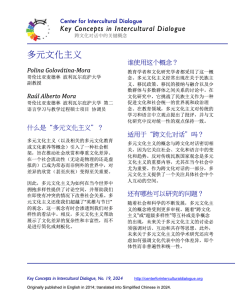
Key Concepts in ICDContinuing translations of Key Concepts in Intercultural Dialogue, today I am posting KC19: Multiculturalism, which Polina Golovátina-Mora and Raúl Alberto Mora wrote for publication in English in 2014, and which Yan Qiu has now translated into Simplified Chinese.

As always, all Key Concepts are available as free PDFs; just click on the thumbnail to download. Lists of Key Concepts organized chronologically by publication date and number, alphabetically by concept, and by languages into which they have been translated, are available, as is a page of acknowledgments with the names of all authors, translators, and reviewers.

KC19 Multiculturalism translated into Simplified ChineseGolovátina-Mora, P., & Mora, R. A. (2024). Multiculturalism [Simplified Chinese] (Y. Qiu, Trans.). Key Concepts in Intercultural Dialogue, 19. Retrieved from:
https://centerforinterculturaldialogue.org/wp-content/uploads/2024/10/kc19-multiculturalism_sim-chinese.pdf

If you are interested in translating one of the Key Concepts, please contact me for approval first because dozens are currently in process. As always, if there is a concept you think should be written up as one of the Key Concepts, whether in English or any other language, propose it. If you are new to CID, please provide a brief resume. This opportunity is open to masters students and above, on the assumption that some familiarity with academic conventions generally, and discussion of intercultural dialogue specifically, are useful.

Wendy Leeds-Hurwitz, Director
Center for Intercultural Dialogue


Creative Commons License
This work is licensed under a Creative Commons Attribution-NonCommercial-NoDerivatives 4.0 International License.

CrossCulture Programme Fellowships (Germany)

FellowshipsCrossCulture Programme Fellowships, Institut für Auslandsbeziehungen (IFA), Germany. Deadline: 5 December 2024.

Each year around 55 Fellowship recipients from host organisations in Germany or in one of the over 40 partner countries gain experience in intercultural networks. Through occupational stays abroad, the programme enables and promotes actors from the cultural, educational, human rights, sustainability, scientific, and media sector to work together. The goal of the CrossCulture Programme is to strengthen lasting civil society networks between Germany and countries across the globe. The programme was launched in 2005 and now counts more than 1.100 alumni to its ever-growing network.

With the CCP Fellowships, the CrossCulture Programme (CCP) funds professionals and committed volunteers from more than 40 countries each year. During two to three months of work-related stays in host organisations in Germany or CCP partner countries, participants deepen their expertise, establish new contacts and acquire intercultural skills. In turn, the host organisations benefit from the expertise, regional knowledge and networks of the CCP Fellows. Participants can also attend transcultural workshops, networking and professional events hosted by the CCP. After returning to their daily working lives, participants then bring the experience they have gained into their home organisation.

CFP Meth@Mig: Between Data and Dialogue: Focusing on Participants in Migration Research (Germany)

ConferencesCall for submissions: 4th Annual Meth@Mig Workshop: Between Data and Dialogue: Focusing on Participants in Migration Research, Chemnitz University of Technology, Chemnitz, Germany, 3-4 April 2025. Deadline: 8 December 2024.

In migration research, as in social research more generally, the role of participants is critical in shaping both the data collected and the knowledge generated from it. Depending on the methodological approach and research question, participants may be seen as mere providers of information, or be involved as more active contributors and co-creators of knowledge. How researchers engage with participants profoundly influences the results, ethical considerations, and validity of studies. This also holds true with respect to long-established qualitative, quantitative, and mixed-mode approaches, but also considering methods building on artificial intelligence (AI), machine learning, and digital behavioral data, where the continuum may run from the collection of digital traces of individuals that are not even aware of being studied to their voluntary, informed data donations.

Therefore, this workshop will focus on the role that participants may play in any stage of the research cycle, spanning from a project’s design phase to the dissemination of its results. This workshop aims to facilitate a discussion on how different methodologies influence the role of participants and gain insight into the ethical challenges that arise when involving or excluding them at different stages.

Possible topics that might be addressed include (without being limited to them):

  • Scientific Quality: How does the role of participants in research have an impact on overall scientific quality, including validity and reliability of the data and research results, and the rigor of data collection, analysis, or interpretation?

  • Ethical Considerations: What kind of complex ethical responsibilities (e.g., who is responsible for protecting participants and avoiding potential harm) and complex power relations (e.g., persistence of the power dynamics even though participants are actively involved in research) arise depending on the role of participants in research?

  • Practical Issues: What practical issues arise if participants have varying levels of engagement in the research process, including questions of dataset ownership, data management and protection, and entitlement to authorship of research outputs?

  • Impact of Methodological Innovation: What new complexities arise with the use of emerging methodologies and data sources?

Organizers welcome contributions from any methodological school or angle (e.g., qualitative, survey-based, mixed, relying on digital trace data) that critically explore the role of participants in research, examining the ethical and methodological implications of treating participants as data providers versus involving participants as active collaborators in the research process. A clear methodological focus is required for all contributions.

CID Poster 5: Communication as Culture Definition Translated into French

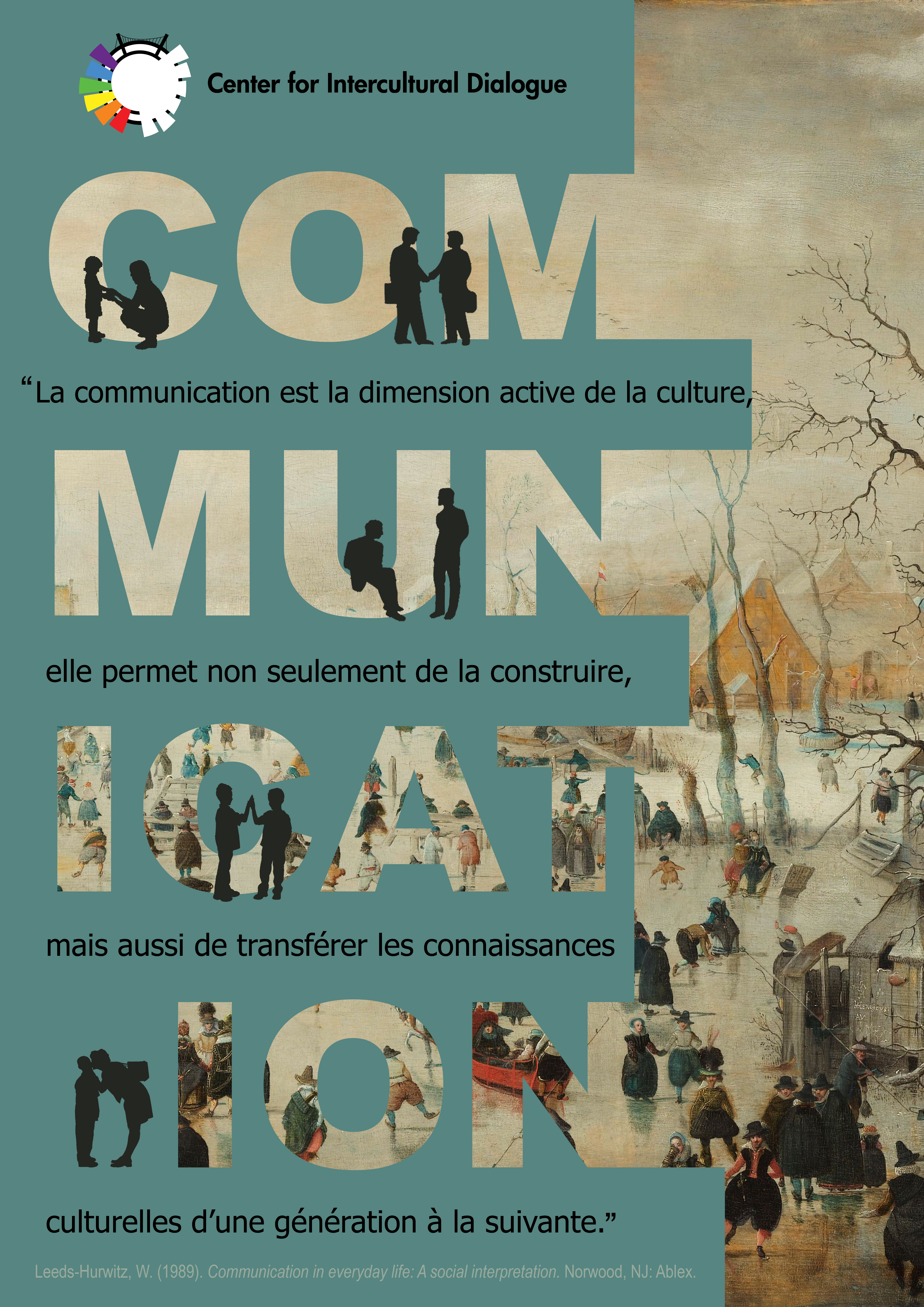
CID PostersFor this poster, Linda J. de Wit used the painting Winter Landscape with Ice Skaters, by Dutch painter Hendrick Avercamp, painted around 1608. It is on display in the Dutch national museum Rijksmuseum in Amsterdam, which has made many of its collection available online in high resolution and copyright free. The painting illustrates the quote not only because it shows social interaction, but also because ice skating is considered a typical example of Dutch culture (and recently has officially been named part of Dutch cultural heritage). The silhouettes are designs from vecteezy.com. The quote comes from the following book:

Leeds-Hurwitz, W. (1989). Communication in everyday life: A social interpretation. Norwood, NJ: Ablex.

The French translation was provided by Léonie Potvin, and the graphic design work necessary to revise was by Yan Qiu. Here then is CID Poster 5: Définition de la communication comme culture.

CID Poster 5: Communication as culture definition translated into French

Just in case anyone wants to cite this poster, the following would be the recommended format:

Center for Intercultural Dialogue. (2024). Définition de la communication comme culture [L. Potvin, trans.]. CID Posters, 5. Available from: https://centerforinterculturaldialogue.org/wp-content/uploads/2024/10/cid-poster-5-communication-french.png

As with other series, CID Posters are available for free on the site; just click on the thumbnail to download a printable PNG. They may be downloaded, printed, and shared as is, without changes, without cost, so long as there is acknowledgment of the source.

As with other CID Publications, if you wish to contribute an original contribution, please send an email before starting any work to receive approval, to minimize inadvertent duplication, and to learn about technical requirements. As is the case any series, posters should be created initially in English. If you want to volunteer to translate a poster into a language in which you are fluent, send in a note before starting, to receive approval and to confirm no one else is working on the same one.

Wendy Leeds-Hurwitz
Director, Center for Intercultural Dialogue
intercult.dialogue AT gmail.com


Creative Commons License
This work is licensed under a Creative Commons Attribution-NonCommercial-NoDerivatives 4.0 International License.

Gonzaga U: Study Abroad Advisor (USA)

“Job

Study Abroad Advisor, Center for Global Engagement, Gonzaga University, Spokane, WA, USA Deadline: 14 November 2024.

The Study Abroad Advisor works closely with the Study Abroad (SA) team to provide quality service to students interested in studying abroad and supports a streamlined experience for all stakeholders. This position primarily focuses on managing and monitoring enrollment in the Gonzaga in Florence (GIF) Study Abroad Programs and serves as the primary liaison between the student-facing staff in Florence and the SA Office. The advisor ensures the success and safety of the programs while also handling general advising duties.

CIEE: Associate Director, CIEE London (UK)

“Job

Associate Director, CIEE Study Abroad London, CIEE, London, UK. Deadline: 14 December 2024.

CIEE is a nonprofit study abroad and intercultural exchange organization that transforms lives and builds bridges between individuals and nations through study abroad and international exchange experiences that help people develop skills for living in a globally interdependent and culturally diverse world.

The Associate Director oversees, in collaboration with and under the supervision of the Centre Director, the planning and delivery of all CIEE programs. This comprises coordinating tasks among various team members; overseeing the implementation of guidelines and policies; monitoring logistics and operations; and supporting staff in charge of finance and admin team.

This position oversees, in collaboration with the Center Director and the Admin team, the financial, accounting and banking needs of the CIEE London programs, as defined below and in accordance with CIEE administrative policies. S/he works with Portland Financial Department to ensure the correct financial and accounting system controls and standards, and to ensure timely financial and accounting reports for management. This position also supports the Center Director in managing CIEE’s UK-wide identity including the UKVI sponsor license, the UKQAA and Companies House. S/he will also manage HR, payroll, contracts and legal processes, and s/he is equally responsible for the overhead budget and expenses at the Study Center.

CFP GURT 2025: Language & Food (USA)

ConferencesCall for Papers: Georgetown University Round Table 2025: Language and Food, 28 February – 2 March 2025, Georgetown University, Washington D.C. Deadline: 18 November 2024.

Food and language are omnipresent and intertwined in everyday life. We use language to talk about food, and food terms have rich cultural histories and associations. Menus and food packaging labels not only provide windows on an item’s nature and quality, but also often signal association with identities such as ethnicity, region, or class. Mealtime has long been a privileged site for the study of language in use, as people talk while they eat, and while they cook. Parents use language to socialize their children into food preferences and practices; even among adults, the taste of food is collaboratively negotiated in interaction: think wine tasting, or dinner conversation. Children in school cafeterias and co-workers in workplace break rooms talk about food. People participate in online forums on topics such as gourmet cooking, veganism, and weight loss; they use language about food to portray themselves as certain kinds of people (gourmand, disciplined eater, environmentalist, picky eater, athlete). People post photos of food on Instagram, recipe videos on TikTok and Facebook, and restaurant reviews on Yelp. Food is a necessity and a luxury; it is intertwined with identities (e.g., cultural, gendered, socioeconomic, political, religious), relationships (e.g., parent-child, friend-friend, host-guest), and values (e.g., healthful eating, ethical eating), all of which are negotiated through language.

GURT 2025 will bring together diverse scholars whose work explores intersections between language and food. The conference will be inclusive of multiple approaches, including (but not limited to) interactional sociolinguistics, conversation analysis, critical discourse analysis, multimodal discourse analysis, ethnography of communication, cultural discourse analysis, narrative analysis, variation analysis, semiotics, systemic functional linguistics, historical linguistics, comparative linguistics, computational/corpus linguistics, and cognitive linguistics. We invite submissions that consider any aspect of food and language, including (but not limited to) menus, recipes, mealtime conversations, food-related online discussions, social media posts about food, food-related podcasts, food advertisements, and documentary and reality TV shows about food.