National University of Singapore job ad

The Centre for English Language Communication (CELC), National University of Singapore invites applications for full-time non-tenure track teaching position as Lecturer.

Applicants for the position of Lecturer should possess:
– a Master’s degree or PhD in Applied Linguistics, TESOL or a related field (content area specialists with a strong interest in teaching writing are also welcome to apply)
– a sound record of and strong commitment to teaching, with a minimum of three years of full-time teaching experience at the tertiary level
– evidence of leadership in curriculum planning and materials development
– evidence of scholarly output in pedagogical research at the higher education level would be advantageous

Successful applicants are expected to:
– work in teams to develop and/or teach various courses at the undergraduate and/or graduate level(s)
– contribute expertise through involvement in ELT-related projects and activities
– engage in pedagogical research which supports English language teaching and learning at the higher education level

How to Apply
Applicants should submit a cover letter which addresses their suitability for the position for which they are applying. The letter should be sent via email to celcrecruit@nus.edu.sg with the following necessary documents:
– a detailed curriculum vitae, with names and addresses (including email) of three referees and a statement of current and expected remuneration
– copies of degree scrolls
– student/staff evaluations of courses taught in the last two years
– a statement of teaching philosophy and methodology (max. 1,000 words)
Shortlisted applicants may be asked to provide additional documents to support their application.

The starting salary is competitive and will depend on the applicant’s qualifications and experience. Successful applicants are expected to commence work in December 2015. Only shortlisted applicants will be contacted.

Closing date:  22 May 2015

University of Colorado Denver in Beijing job ad

Communication Instructor
International College at Beijing
University of Colorado Denver

The University of Colorado Denver (CU Denver) Department of Communication invites applications for a non-tenure-track Instructor position at the International College at Beijing (ICB). The job will commence in September, 2015. Depending on the performance of the individual hired, multi-year renewals are possible.

Located in the Haidian District of Beijing (China’s silicon valley), ICB is an international partnership between the China Agricultural University and the University of Colorado Denver that offers complete undergraduate programs in Economics and Communication. All courses are administered and taught by CU Denver faculty in English, and the degree earned is awarded by CU Denver. The ICB program offers a thriving and collegial environment that embodies the best promises of international education, and features classes on diversity, globalization, new media (analysis and production), environmentalism, and more.

The teaching load is 4 courses each semester. The instructor will be responsible for teaching a range of communication courses. The salary is competitive and commensurate with peer institutions. Instructors also receive two round-trip airline tickets between Beijing and the US, international health insurance, and free on-campus housing. Semesters are 14 weeks long; the fall semester begins in mid-September, and the spring semester begins in mid-February.

The successful applicant will possess an M.A. in communication; a Ph.D. is preferred. Preference is for an individual who has experience teaching in an international setting and a personal and scholarly interest in diverse cultures. Fluency in or the desire to learn Mandarin is valued, as is an active research agenda.  The successful applicant must be able to obtain a work visa in China (type Z).

Interested applicants must apply online. Submit a vita, a cover letter, a sample syllabus, and a list of at least three references. Deadline to apply is May 20, 2015. Finalists for the position will be interviewed between May 22 and May 31, 2015.

The University of Colorado offers a full benefits package. Information on University benefits programs, including eligibility, is available online. CU Denver is dedicated to ensuring a safe and secure environment for our faculty, staff, students and visitors; to achieve that goal, we conduct background investigations for all prospective employees. The University of Colorado is committed to diversity and equality in education and employment, while the Department of Communication is committed to promoting civic engagement and the use of communication to foster a more equitable and humane world.

For more information, please contact Dr. Sonja Foss.

Iván Fernández Anaya as an Example of Applied Intercultural Dialogue

http://www.ivan-fernandez.com/

An interaction between Spanish and Kenyan athletes in December 2012 made a major splash in the news a month later (reaching the English language press only after it was widely reported in the Spanish language press). The story is still circulating on social media today. While not typically presented as an example of intercultural dialogue, it is an interesting model for what can happen when members of different cultural groups meet. The story is included here for those who have not yet heard about it. For those who have, it would be interesting to hear similar examples from other contexts – feel free to either reply with a comment, or send an email suggesting a related story to post.

“. . .on December 2 [2012], Spanish athlete Iván Fernández Anaya was competing in a cross-country race in Burlada, Navarre. He was running second, some distance behind race leader Abel Mutai – bronze medalist in the 3,000-meter steeplechase at the London Olympics. As they entered the finishing straight, he saw the Kenyan runner – the certain winner of the race – mistakenly pull up about 10 meters before the finish, thinking he had already crossed the line. Fernández Anaya quickly caught up with him, but instead of exploiting Mutai’s mistake to speed past and claim an unlikely victory, he stayed behind and, using gestures, guided the Kenyan to the line and let him cross first.”
    Source: Arribas, Carlos. (19 December 2012). Honesty of the long-distance runner. [Madrid].

“In the weeks that followed, Fernandez saw his story gain momentum outside the Spanish media. He gained thousands of Facebook friends and Twitter followers, and once again saw an opportunity to do something kind. The athlete put the green shirt and red shorts he wore for the race up for auction on eBay with the intention of donating all proceeds to the Red Cross, an organization he described as “one of the hardest working worldwide.”
His website lauded the organization’s dedication to promoting peace and international cooperation, as well as mutual respect and understanding among all the world’s people. . . The winning bid was €560.”
    Source: Internet swoons for Spanish runner who helped competitor win. (January 2013). CBC News [Canada].

Additional coverage:
Huffington Post
USA Today
Vancouver Sun

CFP 8th International Conference on Intercultural Communication (Wuhan, China)

Call for papers
8th International Conference on Intercultural Communication
November 20-22 (Friday-Sunday), 2015, Wuhan University, China

Conference Goals
In the construction of cultural soft power at the age of globalization, the “national image” has become the focus of attention. The stand points of the thinking are roughly the following four:Information Capital (the result produced by a range of information input and output between countries), Psychological Perception (cognitive and emotional interaction between in-group and out-group), Brand Marketing (brand equity at the national level) and International Communication(image mutual-construction at media level). Those four points further demonstrate the technical tendency of “national image” study, including commercial brand strategy, one-dimensional public-opinion management, and dominant image perception. However, from the actual situation, the technical definition cannot deal with real problems in national image construction. That is to say,while technicism was pursuing perfect performance of national image, it ignored the pluralistic,open and interactive context, and simply treated the positive and negative, deviation and misread,making both in-group and out-group feel tired and resisted with national image. From the angle of intercultural communication, the definition of “national image” needs to break through single technicism route and turns to inter-subjectivity and interculturality, trying to create a national imagefull of self-renewing vitality in a multiple interactive environment. In the era of media convergence,cultural integration has become a development trend. Inter-subjectivity plays a groundbreaking role in the construction and dissemination process of national image. The communication between ethnic groups breaks the single utterance of national image and injects diverse contents into it. Those diverse contents, in turn, are able to introspect the meanings and problems of ethnic group communication. Therefore, we are eager to discuss “ethnic communication, national image and intercultural communication” in the era of globalization, rethinking the manifestations of cultural centrism,unilateralism, and cultural hegemony as cultural soft power, and looking for reciprocal, creative cultural force to deliver us from the plight of soft power with the intercultural, inter-subjectivity and equal rights as the foundation of ethnic group communication and national image construction.

Conference Topics: Ethnic communication, National Image and Intercultural Communication

Topics include, but are not limited to:
1) Intercultural Communication Foundation of Ethnic Communication and National Image Construction
2) Possibility of Ethnic Communication and Reciprocal Understanding
3) National Image Construction Deviation under the Context of Soft Power
4) Mutual Construction of Traditional Media and National Image
5) Mutual Construction of Social Media and National Image
6) Brand Marketing and National Image Construction
7) Cultural Psychological Problems in National Image Construction
8) Cultural Communication and National Image Construction
9) Comparison between Tourism Promotional Video and National Image Construction

Conference Venue + Cooperating Organizations
Conference Venue: School of Journalism and Communication, Wuhan University, China
Center for Studies of Media Development, WHU, China
Cooperating Organizations: The Chinese Association for History of Journalism and Communication, China
China Association for Intercultural Communication, China
National Image Research Center, Tsinghua University, China

Abstract: 500 words in Chinese or 150 – 250 words in English, including positions, affiliations, email addresses, mailing addresses and the general introduction of your paper. Please submit abstracts by June, 30, 2015 via email.

Full paper: The accepted authors will receive a formal invitation letter by the organizing
committee before July, 10, 2015, and the deadline for full paper is Oct. 10, 2015.

Conference languages:
Bilingual: Chinese and English
Simultaneous interpretation will be provided.

Convener:
SHAN Bo
Ph.D., Professor

Key Concept #62: Diaspora by Jolanta A. Drzewiecka

Key Concepts in ICDThe next issue of Key Concepts in intercultural Dialogue is now available. This is KC62: Diaspora by Jolanta A. Drzewiecka. As always, all Key Concepts are available as free PDFs; just click on the thumbnail to download. Lists organized  chronologically by publication date and numberalphabetically by concept in English, and by languages into which they have been translated, are available, as is a page of acknowledgments with the names of all authors, translators, and reviewers.

Key Concept #62: Diaspora by Jolanta DrzewieckaDrzewiecka, J. A. (2015). Diaspora. Key Concepts in Intercultural Dialogue, 62. Available from: https://centerforinterculturaldialogue.org/wp-content/uploads/2015/05/key-concept-diaspora.pdf

The Center for Intercultural Dialogue publishes a series of short briefs describing Key Concepts in Intercultural Dialogue. Different people, working in different countries and disciplines, use different vocabulary to describe their interests, yet these terms overlap. Our goal is to provide some of the assumptions and history attached to each concept for those unfamiliar with it. As there are other concepts you would like to see included, send an email to the series editor, Wendy Leeds-Hurwitz. If there are concepts you would like to prepare, provide a brief explanation of why you think the concept is central to the study of intercultural dialogue, and why you are the obvious person to write up that concept.


Creative Commons License
This work is licensed under a Creative Commons Attribution-NonCommercial-NoDerivatives 4.0 International License.

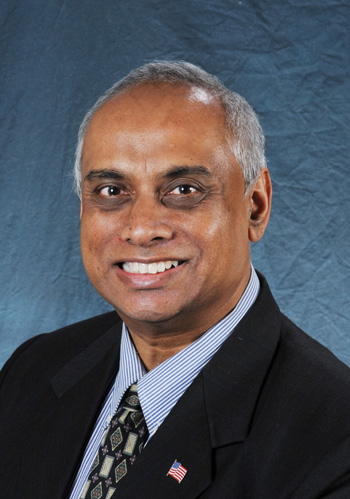
Monika Kirloskar-Steinbach Profile

Profiles

Monika Kirloskar-Steinbach is professor of philosophy at University of Konstanz, Germany.

She engages with normative issues which are crucial to modern, pluralistic societies in her work on immigration ethics, cultural pluralism, structural injustice, etc. She seeks to relate her work in this field with her research on the new, burgeoning field of intercultural and comparative philosophy. Here, her main focus lies on how the plurality of standpoints driving this discipline of philosophy can be buttressed. In this regard, she also examines the role of intercultural and comparative philosophy in developing (societal) narratives which facilitate cross-cultural understanding.

Kirloskar-Steinbach initiated the bi-annual, peer-reviewed journal Confluence: Online Journal of World Philosophies (Karl Alber Verlag, Munich/Freiburg), which she currently co-edits with Jim Maffie (University of Maryland). She is currently the Vice-President of the Society of Intercultural Philosophy, Germany.

Kirloskar-Steinbach was born and grew up in India.

Some of her publications in English are:

Kirloskar-Steinbach, M., Ramana, G., & Maffie, J. (2014). Introducing Confluence: A thematic essay. Confluence, 1, 7-63.

Kirloskar-Steinbach, M. (2011). Humanistic values in Indian and Chinese traditions. In C. Dierksmeier et al. (Eds.), Humanistic ethics in the age of globality: Normative foundations for business in society (pp. 225-245). Basingstoke: Palgrave Macmillian.

Kirloskar-Steinbach, M. (2002). Toleration in modern liberal discourse with special reference to Radhakrishnan’s Tolerant Hinduism. Journal of Indian Philosophy, 30, 389-402.

Dharampal-Frick, G., Kirloskar-Steinbach, M., Dwyer, R., &  Phalkey J. (Eds.). (In press). Key concepts in modern Indian Studies. New York: Oxford University Press.

Some of her publications in German are:

Kirloskar-Steinbach, M. (In press). Wie lassen sich liberale Ideale auch auf Immigrierte ausweiten? Eine erste Skizze. Zeitschrift für philosophische Forschung.

Kirloskar-Steinbach, M. (2010). Interkulturalität und Menschenrechtsbegründungen. Eine indische Perspektive. In J. Werkner et al (Eds.), Religion, Menschenrechte und Menschenrechtspolitik, Beiträge zu Genese, Geltung und Wirkung eines aktuellen politischen Spannungsfeldes (pp. 219-235). Wiesbaden: Verlag für Sozialwissenschaften.

Kirloskar-Steinbach, M. (2007). Nationale Identität und kultureller Pluralismus. In Zurbuchen, S. (Ed.), Bürgerschaft und Migration. Einwanderung und Einbürgerung aus ethisch-politischer Perspektive (pp. 255-287). Muenster: LIT-Verlag.

Kirloskar-Steinbach, M., Dharampal-Frick, G., & Friele, M. (Eds.). (2012). Die Interkulturalitätsdebatte – Leit-und Streitbegriffe/Intercultural Discourse – Key and Contested Concepts. Freiburg: Verlag Karl Alber.


Work for CID:
Monika Kirloskar-Steinbach wrote KC63: Interkulturelle Philosophie.

CFP Confluence: Online Journal of World Philosophies

Confluence: Online Journal of World Philosophies (Karl Alber Verlag, Freiburg/Munich, Germany) is a bi-annual, peer-reviewed, international journal dedicated to comparative thought. It seeks to explore common spaces and differences between philosophical traditions in a global context. Without postulating cultures as monolithic, homogenous, or segregated wholes, it aspires to address key philosophical issues which bear on specific methodological, epistemological, hermeneutic, ethical, social, and political questions in comparative thought. Confluence aims to develop the contours of a philosophical understanding not subservient to dominant paradigms and provide a platform for diverse philosophical voices, including those long silenced by dominant academic discourses and institutions. Confluence also endeavors to serve as a juncture where specific philosophical issues of global interest may be explored in an imaginative, thought-provoking, and pioneering way.

The journal seeks submissions on all relevant aspects of comparative philosophy. The editors welcome innovative and persuasive ways of conceptualizing, articulating, and representing intercultural encounters. Contributions (articles, book-reviews, survey articles, critical notes) should be able to facilitate the development of new perspectives on current global thought-processes and sketch the outlines of salient future developments.

Papers should not exceed a word-count of 6250 words. They can be submitted via email.

CFP Humanities in the Public Square Grants

The National Endowment for the Humanities (NEH) has announced a new grant opportunity, called “Humanities in the Public Square,” that will put humanities scholars in direct dialogue with the public on some of the most pressing issues of today– through public forums, community programs, and the development of educational resources.

This new grant opportunity is part of the National Endowment for the Humanities’ agency-wide initiative The Common Good: The Humanities in the Public Square, which seeks to demonstrate and enhance the role and significance of the humanities and humanities scholarship in public life.

The NEH Humanities in the Public Square program will award grants of up to $300,000 to institutions for projects that incorporate:
– a public forum, to be held in May 2016, that engages humanities practitioners in discussion with a public audience about a theme of contemporary significance;
– public programs, commencing in spring of 2016, that would use creative formats, such as book or film discussion programs, local history projects, scholarly talks or courses for lifelong learners, to engage the public or specific audiences in sustained conversations on a chosen theme;
– the creation and dissemination of educational resources that will extend the reach of the content developed for the public forum and public programs through digital resources or curricular materials for use by use by teachers, students and lifelong learners.

Application guidelines and a list of FAQs for the Humanities in the Public Square program are available online. The application deadline for the initial cycle of Humanities in the Public Square grants is June 24, 2015.

Mediating Violent Conflict Course

Mediating Violent Conflict
May 11-15, 2015

Participants will:
*Understand the role of international mediation in the larger peacebuilding context
*Build competence and confidence for practicing mediation
*Learn skills to facilitate the practice and promotion of third-party engagement in peacemaking in interstate and intrastate conflicts

About the Course: Working in a conflict situation often demands mediation skills, whether you are working at a grassroots level or in state capitals. Mediation is both an art and science, and requires skilled analysis, careful planning, and effective communication. Designed for practitioners working in or on conflict zones, this course will improve participants’ ability to understand the motivations and objectives of the various parties, promote ripeness, develop effective relationships, increase leverage, and strengthen mediation capacity. Participants will practice their skills through simulations, role-play, and case studies.

Instructor: Pamela Aall, Senior Advisor, USIP
Guest speakers: Chester Crocker, William Taylor, George Lopez, Alison Milofsky and Anthony Wanis–St. John.

Working in a conflict situation often demands mediation skills, whether you are working at a grassroots level or in state capitals. Mediation is both an art and science, and requires skilled analysis, careful planning, and effective communication. Designed for practitioners working in or on conflict zones, this course will improve participants’ ability to understand the motivations and objectives of the various parties, promote ripeness, develop effective relationships, increase leverage, and strengthen mediation capacity. Participants will practice their skills through simulations, role-play, and case studies.

To Apply: Please email your resume/CV and a short statement explaining your interest in the course, to the Academy registrar.

Location:
U.S. Institute of Peace
2301 Constitution Ave., NW
Washington, DC 20037