CFP Articulations of International Media and English

CFP: Special Issue of Journal of Communication Inquiry on “Articulations of International Media and English”

The Journal of Communication Inquiry invites submissions for the 2017 theme issue, “Articulations of International Media and English.” This issue will be devoted to the connections the global spread of English makes with media production and consumption in places where English is not the mother tongue. This includes, but is not limited to, countries where English was introduced via colonization or is treated as a foreign language. English and its global dissemination have been analyzed in terms that range from linguistic imperialism, to neoliberal hegemony, to audience uses of English to create new definitions of the local, national, and global. When approaching the spread of English from a media studies perspective, popular television shows in English, movies in English, and locally-produced English-language news and entertainment content all become objects of analysis. These contexts can include diasporic and indigenous media. JCI is seeking input from scholars in a variety of disciplines who can find ways to wed theory from the fields of media and linguistics to examine the intersections of English and media production and consumption. We strongly encourage submissions from international scholars who can provide insiders’ perspectives on the relationships between English language media and indigenous language media in places around the world.

The deadline for submitting manuscripts is 11:59 p.m. CST on February 17, 2017. All submissions will undergo peer review. Please contact JCI Managing Editor John C. Carpenter (john-c-carpenter AT uiowa.edu) with questions. Possible topics of inquiry include but are not limited to:

• How people around the world use English language media to form local, national, and global identities

• Critical examinations of the ways English media content is informed by and contributes to discourses of neoliberalism and globalization

• Is media content in English a legitimate object of study for English-speaking scholars who want to explore media environments in places where English is not the main language?

• Textual analyses that take the discourses surrounding English in both English and nonEnglish media as objects of analysis

• The ways choosing English as a language of news in countries where English is not the first language affects how journalists conceptualize and practice journalism, including in terms of imagined audience, public service, content choices, etc.

• How news organizations respond to linguistic diversity as the movement of people and languages over the world creates mobile, multilingual identities

• How power informs the relationships between English language media and non-English language media in places around the world

• How the rising use of English in different parts of the world affects Western-based news outlets that have always published in English

• How the rising use of English affects the English language press (formerly known as the expatriate press) in countries where English is not a first language

• Given that English becomes politicized in a country in proportion to the country’s level of global engagement, how a country’s language politics affect English language media production and consumption

CFP Affirming (Global) Life

Kaleidoscope: A Graduate Journal of Qualitative Communication Research welcomes submissions for our upcoming issue. Submission deadline extended to March 15, 2017

*Special Call*
Affirming (Global) Life: Overcoming Divisive Discourses, Remembering What’s at Stake, and Doing Something Now

In addition to regular submissions, this year’s issue will feature a special section devoted to scholarly discussions of discourses charged with promoting inequality and xenophobia. 2016 has been a violently tumultuous year of global upheaval that has deeply affected public dialogue about diversity. Black Lives Matter, for example, rose to prominence with protests against the killing of unarmed Black citizens in ways that prompted even the religious blog Patheos to use the word “execution” to describe one example, the shooting of Terrence Crutcher by Officer Betty Shelby (Stone). The Orlando massacre of members of the LGBTQ community at Pulse nightclub gave rise to a rhetorical struggle to contain, clarify, and expand upon arguments about the shooter’s motivations and the implications of calls for policy reactions that struck many as Islamophobic (Green) and/or perpetuating an erasure of the intersectional LGBTQ and Latinx identities of those killed (Brammer). Other examples of such discourses this year included North Carolina’s unconstitutional bathroom laws persecuting trans people; the gender wage gap and overwhelming income disparity systemically oppressing the poor and rewarding the rich; ISIS’s fundamentalist terrorism; the desperate plight of millions of refugees fleeing their war-torn countries in search of life; and the xenophobic, racist, and misogynistic rally speeches by Donald Trump, which caused spikes in violence in the nation’s schools (Costello). 2016 has shaken many of us from any complacent perch that “things are fine the way they are,” and discourse communities from academia to the Internet debate the best ways to respond. For some, this uncertainty about the best way to respond mixes with anger and one longs for a different time “before” now – for the nostalgic comfort of a bygone world that likely never existed. At other times, such concerns stimulate pragmatic hope for different circumstances, prompting proactive efforts to foster transformational changes.
People in the U.S. and around the world are becoming collectively concerned about the future we face. The forces of terrorism, racism, xenophobia, sexism, and unmindful privilege compel many persons to close themselves off from others they perceive as overwhelmingly different in one way or another. These tactics exploit one trait or practice as determining that an entire person or demographic is dangerous and expendable. In U.S. culture especially, fundamental individualism has always been less concerned with an ethics of community than with capitalism and profiteering. But people are not inherently greedy or solipsistic. We are social creatures, vulnerable and interdependent, and we’re all stuck here together. In this (extra)ordinary way, as Levinas tells us, we are always responsible for the other before our sense of self.

This special section, then, invites essays that ask how communication theory and practice can assist in transcending discourses that demonize and scapegoat difference. How can communication studies guide this transcendence and encourage the commitment, in de Beauvoir’s words to embrace our “fundamental ambiguity” as a shared condition? How can communication studies assist those who seek to deconstruct and untangle themselves from the ethnocentrism poisoning their perceptions of others? How can communication studies undo the scripts that encourage the automatic association of Muslims with terrorism, African Americans with criminality, trans* persons with pedophilia, and women with sex objects? How can communication studies foster a communication ethics that might begin with the notion that none of us are exempt from considering our participation in some of these discourses? It is time for us to begin making decisions, as Sartre said, as if each choice mattered for the whole of humanity. And our choices do matter, because as Sartre also warned, humans are a most curious animal, and the only of its kind that has the power to destroy itself.

This special editor’s call invites authors to move beyond mere critiques of communication practices by imagining concrete pragmatic actions and building connections across difference. Additional questions to consider include: How can qualitative research disrupt the forces of de facto xenophobia, racism, sexism, classism, and other systems of marginalization? For performance scholars, how can performance art be deployed to inspire postmodern global ethics of interconnection – to remind us of our enfleshed similarities and vulnerabilities, the worthiness of well-lived lives, and the possibility of crafting joint hopes for the future? From an activist perspective, what are we doing and what can we do right now in our communities to counteract the public’s growing contempt and suspicion of foreign-others? For rhetoricians, how can we dissect, dismantle, and transform pervasively xenophobic rhetoric of hate, deficiency, and fear? What would a communication-studies-informed ethics of postmodern pragmatism entail? What might this existential calling realize?

Authors should clearly mark in their cover letter that their submission is for this special call. Submissions should be no longer than 2,000 words (excluding references) and be prepared using the same citation conventions as regular submissions.

To submit a manuscript, please visit opensiuc.lib.siu.edu/kaleidoscope
Inquiries should be emailed to kalscopejrnl@gmail.com.

Kaleidoscope is a refereed, annually published print and electronic journal devoted to graduate students who develop philosophical, theoretical, and/or practical applications of qualitative, interpretive, and critical/cultural communication research. We welcome scholarship from current graduate students in Communication Studies and related cognate areas/disciplines. We especially encourage contributions that rigorously expand scholars’ understanding of a diverse range of communication phenomena.

In addition to our ongoing commitment to written scholarship, we are interested in ways scholars are exploring the possibilities of new technologies and media to present their research. Kaleidoscope welcomes scholarship forms such as video/audio/photos of staged performance, experimental performance art, or web-based artistic representations of scholarly research. Web-based scholarship should be accompanied by a word-processed artist’s statement of no more than five pages. We invite web-based content that is supplemental to manuscript-based scholarship (e.g., a manuscript discussing a staged performance could be supplemented by video footage from said performance).

Regardless of form, all submissions should represent a strong commitment to academic rigor and should advance salient scholarly discussions. Each submission deemed by the editor to be appropriate to the style and content of Kaleidoscope will receive, at minimum, anonymous assessments by two outside reviewers: (1) a faculty member and (2) an advanced Ph.D. student. For works presented in video/audio/photo form, we may not be able to guarantee author anonymity. The editor of Kaleidoscope will take reasonable action to ensure all authors receive an unbiased review. Reviewers have the option of remaining anonymous or disclosing their identities to the author via the editor.
Submissions must not be under review elsewhere or have appeared in any other published form. Manuscripts should be no longer than 25 pages (double-spaced) or 7,000 words (including notes and references) and can be prepared following MLA, APA, or Chicago style. All submissions should include an abstract of no more than 150 words and have a detached title page listing the author’s/authors’ name(s), institutional affiliation, and contact information. Authors should remove all identifying references from the manuscript. To be hosted on the Kaleidoscope website, media files should not exceed 220 MB in size. Larger files can be streamed within the Kaleidoscope website but must be hosted externally. Authors must hold rights to any content published in Kaleidoscope, and permission must be granted and documented from all participants in any performance or presentation.

Works Cited:
Brammer, John Paul. “Why it Matters that it was Latin Night at Pulse.” Slate, 14 June
2016,http://www.slate.com/blogs/outward/2016/06/14/it_was_latin_night_at_the_pulse_orlando_gay_bar_here_s_why_that_matters.html. Accessed 18 Nov. 2016.
Costello, Maureen B. Southern Poverty Law Center. “The Trump Effect: The Impact of thePresidential Campaign on our Nation’s Schools.”  https://www.splcenter.org/sites/ default/files /splc_the_trump_effect.pdf. Accessed 18 Nov. 2016.
de Beauvoir, Simone. The Ethics of Ambiguity. 1948. Open Road, 2015.
Green, Emma. “The Politics of Mass Murder.” The Atlantic, 13 June 2016, http://www.theatlantic.com/politics/archive/2016/06/orlando-political-reactions-homophobia-gun-rights-extremism/486752/. Accessed 18 Nov. 2016.
Levinas, Emmanuel. Otherwise Than Being. 1974. Duquesne University Press, 1998.
Sartre, Jean-Paul. Existentialism is a Humanism. 1946. Yale University Press, 2007.
Stone, Michael. “Tulsa Police Execute Unarmed Black Man.” Patheos, 19 Sept. 2016, http://www.patheos.com/blogs/progressivesecularhumanist/2016/09/tulsa-police-execute-unarmed-black-man/. Accessed 18 Nov. 2016.

For an agricultural and ecological exception…

As a founding member of the Michel Serres Institute for Resources and Public Goods, I received a link to this manifesto and a request to sign. I am posting it here because food is at least as important as other cultural goods, if not more so, since it is essential to survival. Read if you have a few minutes, and sign if you are so moved.
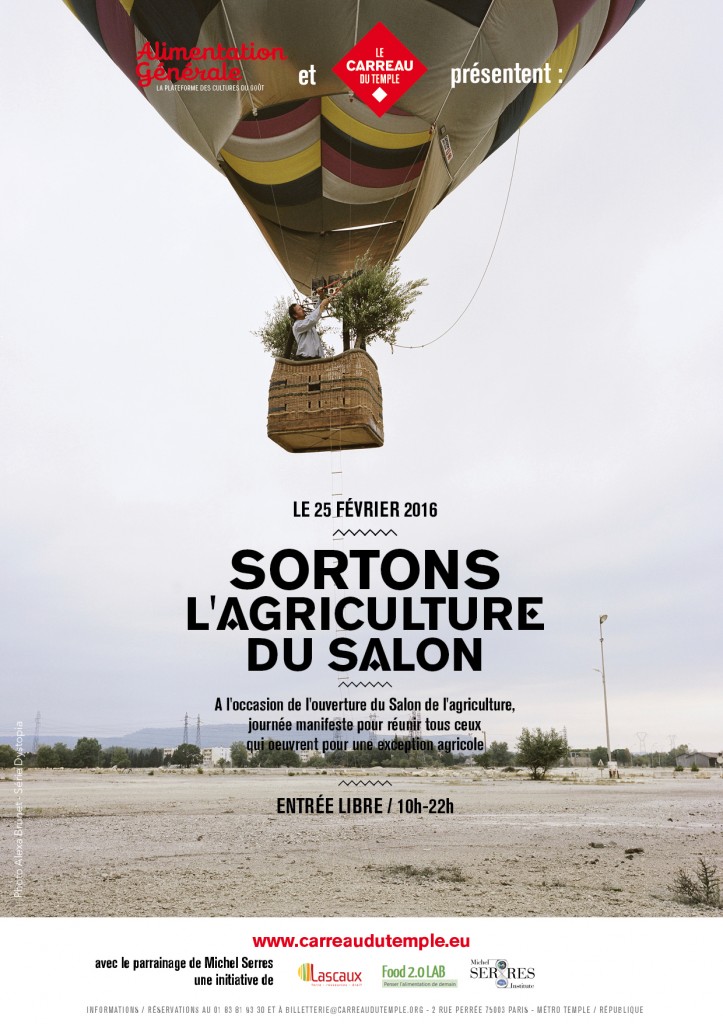
Food ExceptionFor an agricultural and ecological exception

It is widely accepted that certain cultural goods, instead of being considered merely as merchandise, should be kept separate from trade on the free market, with the aim of protecting the traditions and the vitality of all cultures and, ultimately, of protecting our shared humanity. Should this not also be the case for food – that is, for the very goods and services which provide for the basic human need to eat? Because eating is an inherently human, vital and social act, it is important for all of mind, body and spirit. Wherever we might be, whilst living or eating or farming, we may often think along the lines of the philosopher Heraclitus who, questioned as to why he was fascinated by a simple bread oven, replied: ‘Because even here the gods are present’. The General Agreement on Tariffs and Trade (GATT) was drawn up following the end of the Second World War. The GATT is considered a prelude to both the formation of the World Trade Organisation and of globalisation along the lines of free trade, and allowed for the exclusion of certain cultural products, including films and important national monuments. It was originally intended that natural resources – the products of farming, forestry and fishing – should also be excluded, but the Havana Charter of 1948 which would have established this was in fact never ratified. The result is that the recognition of a ‘cultural exception’ (exception culturelle in French) does not extend to that of an ‘agricultural exception’. This “agricultural and ecological exception” could be achieved with a new charter, agreement or deal following the Convention on the Protection and Promotion of the Diversity of Cultural Expressions which was adopted by UNESCO on 20 October 2005.

Such an agreement should have three aims, dovetailing with the definition of food security drawn up by the UN Food and Agriculture Organisation (FAO), i.e. permitting access to sufficient and nutritious food, access to food which is safe, and access to the kind of food that people want. Just as with access to culture, it would not be sufficient to simply have a uniform range of food made available to all through the globalised economy. Many have picked up on the fact that in March 2012 Olivier de Schutter, the UN Special Rapporteur on the Right to Food, commented that today’s systems of food production are ‘making us sick’. Beyond matters of hygiene and overconsumption which can lead to obesity and diabetes, this sickness is moral (e.g. mistrust of industry and loss of diversity); social (indebtedness and decline in the quality of life of farmers); environmental (reduction of bio-cultural and genetic diversity); political (disengagement of the public sector); and economic (the apparent omnipotence of multinational companies and the system of free trade). In this context, it is easy to see how people do not have access to food that is culturally appropriate; and that corresponds to the global diversity of gastronomy, farming systems, traditions and religious considerations. Just as, for example, it is hard to imagine how everyone’s right to culture would be served by only having access to the same few TV series. We believe that just as the diversity of cultural expression needs to be protected, so does that of agricultural (bio)diversity. And this is why we, the undersigned, make the following calls:

1. To emphasize food democracy Big issues in food production should not be the exclusive realm of large firms, lobbyists, unions, technicians and engineers. They are also social and political matters that deserve more than ever to be treated as part of a democratic process. Within the democratised food system that we are calling for, each citizen would be a consequential actor who can judge, taste, evaluate and choose, with the result that public opinion would no longer just be something consulted at the end of the production chain. We, as members of a food democracy, would be on the side of farmers, and would support the principle of food sovereignty. Indeed we would be co-producers, in the sense that we would become more aware of the origin of food, the work of farmers, the conditions livestock are kept in, the way products are made, environmental constraints, commercial considerations, hygiene regulations, matters of nutrition, and ultimately more aware of the sum of cultural and chemosensory properties of food which are as essential to basic human nutritional needs as they are to our shared humanity.

2. To change the current agricultural order To mitigate the worsening conditions experienced by farmers, a top to bottom review of the models of innovation and organisation of farming practices will be necessary. Before the Green Revolution, farmers had to rely on their own experience, expertise and judgments in their farming practice. Now, the food and farming industries, through their R & D departments and laboratories, promote and even dictate innovations. These are then standardised as intellectual property – intellectual property that can even extend to living things – at the same time as farmers become increasingly dependent on innovations which are prejudicial to their own expertise. We want therefore to raise awareness of the bottom-up innovations that come from farmers; innovations which address day-to-day environmental, economic and cultural challenges. It is the mission of alternative agricultural movements and salons to raise awareness of and to help promote the kind of expertise that could change the current agricultural order.

3. An ecological transition in farming There has never been a better time to institute root and branch reforms of the agricultural sector. Social networks will allow farmers and citizens to widely and freely share expertise on the production of food. And, to take only a few examples, we can point to the ever-growing number of ecologically-conscious farming initiatives which are taking place today, such as organics, conservation grade farming, agroecology, agroforestry, permaculture, polyculture, diversification, and so on.

4. To rethink the question of price Contrary to what we might hear from certain quarters at the Salon de l’Agriculture, consumers of food and drink have motivations beyond the bottom line; and their interest in things other than price has been well served through alternative channels of food supply (cooperatives, box schemes, and local food associations, for example). A large-scale rethinking of the question of price would entail a bold new policy of supporting local food networks and investing in rural areas, as well as taking into account the geographic diversity of food crops, the varied cultural importance of different flavours, and gastronomic customs. It would follow therefrom that the exchange value of goods and services could build on their use value; better calibrating the supply of local resources and the demand they can meet. Proponents of free trade argue that the low cost of food supports the growth of democracy, but in fact the opposite is true! The low cost argument – illustrated, for example, by the recent news coverage of the problems relating to the intensive production of cheap pork in Brittany – implies that food has a negligible, almost null value; something shown in how its price, whilst potentially highly volatile, can always be driven lower.

5. To reposition small producers and farmers at the forefront of agricultural innovation Instead of just resisting, saying ‘no’, or imagining a retreat to traditional methods that have lost some of their relevance, we need to valorise and invent new methods of farming, growing, rearing animals, manufacturing food and selling it; activities which draw on experience and expertise but which are also open to experimentation, and which would be central parts of food democracy in the future. What weight does food democracy carry at the moment? Is it an embryonic idea, a minority pursuit, something rather insignificant in comparison to the vast power of the market? Well, if so, history shows us that minorities can brilliantly cultivate new sensibilities and forge new mind-sets, eventually allowing for revolution and great innovation.

6. To respond to health challenges We need to think of the agricultural exception as being in the public interest, a response to global health challenges; the health of citizens, societies and ecosystems. A co-evolution between society and nature is needed, and this would be the primary and immediate condition of a renewed model of civilization. We still need to imagine and put into practice what the agricultural exception could contribute along these lines. We see that there are obvious parallels between the right of access to food and the right of access to culture; this justifies our comparison of an agricultural exception with a cultural one. We hope this initiative by our collective will make it possible to establish an international convention on food democracy along the lines of the convention on culture.

It is with this object in mind that we are calling for an “agricultural exception” and with it, a New Deal for food and farmers.

Sign the manifesto.


Text by Olivier Assouly , Philosopher, specialist of the food François Collart Dutilleul, law professor at the University of Nantes Gilles Fumey, géographe, Professor (teaching and research), Sorbonne-university and ISCC-CNRS Ioan Negrutiu, biologiste, Director of the Institute Michel Serres at the ENS of Lyon Pierre Hivernat, Chief editor of Alimentation Générale Elisabeth Martin, Director of the Alimentation Générale’s events With the mentoring of Michel Serres from the Académie Française


Download the manifesto In french In english In romanian In Deutsch In Spanish

Save

Save

Åbo Akademi University Job Ad: Minority Studies

Assistant/Associate Professor in Minority Studies (tenure track)

Åbo Akademi University, Finland, invites applications for a position as Assistant/Associate professor in Minority Studies, more specifically cultural and linguistic diversity studies with focus on multicultural and multilingual education through Tenure Track beginning August 1 st 2017 The position is placed at the Faculty of Education and Welfare Studies.

Åbo Akademi University is an internationally acknowledged research university with an extensive responsibility for providing education in Swedish in Finland. The activities cover research and education in most disciplines from humanities, pedagogics and theology to social sciences, natural sciences and technology.

The Minority Studies profile
The assistant/associate professor will together with earlier appointed assistant and associate professors within the profile form the backbone of Åbo Akademi University’s Minority Studies research profile, the recent expansion of which is based on a major grant from the Academy of Finland. The grant foresees the establishment of assistant/associate tenure track professorships which, after successful attainment of individually set goals, will lead to full professorships. At the same time, Åbo Akademi University is recruiting visiting professors who will support and further strengthen the profile.

The Minority Studies profile aims at shaping and developing current strengths within the fields of education, social sciences and humanities at Åbo Akademi University into a leading centre for minority studies and research. Linguistic, cultural, and religious differences together with issues related to in-group and out-group positions pose major challenges to societal cohesion and peace in both European and non-European societies. For instance, current global development is marked by an increasing polarisation of values associated with explicit xenophobic racist attitudes and other radicalising tendencies. This calls for consequent, long-term educational action in order to prevent violence, prejudices and negative attitudes and marginalization related to (minority) languages, cultures and religions/worldviews. There is also a strong need to identify resources for empowerment and promotion of educational and linguistic human rights. Furthermore, it is time to investigate the societal strengths and educational advantages of genuine multilingualism, as well as the potential of multilingual education in relation to the general democratic goal of (comprehensive) education.

With reference to the above Åbo Akademi University’s Minority Studies profile will focus on interdisciplinary minority research with the capacity to recognize and comprehend the complexities involved in the construction and development of minority positions and identities and related issues. This profile is directly connected to the strategic mission of Åbo Akademi University as a university for the Swedish speaking language and cultural minority in Finland. Current research on minorities includes, minorities as part of past nation building and present political mobilization, minority rights and legislation, sexual and gender minorities as well as intersections of ethnic and gender categorizations.

The research area for the assistant/associate professor in Minority Studies is cultural and linguistic diversity studies with focus on multicultural and multilingual education. This research area includes norms and identities related to minority and majority language relations, as well as teaching and learning in educational settings characterised by bi- and multilingualism, for example immersion and non-standard language varieties.

Job description
The appointed assistant/associate professor will be expected to work together with the coordination of Åbo Akademi University’s Minority Studies profile and to explore possibilities for joint interdisciplinary research projects. Administratively, the appointee will be members of Faculty of Education and Welfare Studies. In combination with other measures, the appointee is expected to position Åbo Akademi University as an internationally leading institution in interdisciplinary cutting-edge research in the area of Minority Studies. Information about the positions and the qualifications for the positions as well as information about the field of research and teaching can be found in the appointment plan.

In order to have a successful start with the work the person appointed to the position will have the support from a Supervisory Committee consisting of the Deans for he above-mentioned faculties as well as the Vice-Rector for Research. The appointed person will receive a starting grant of 40 000 euro to be used for the employment of a doctoral student or to otherwise support their research.

International applicants are especially encouraged to apply. Åbo Akademi University will provide support for non-Finnish candidates in being able to teach in Swedish within some years after commencing their appointments. A relocation package can be offered to the recruited persons, the terms will be negotiated separately with the recruited persons.

Applications
Instructions for the written application can be found in the appointment plan. Applications in English or Swedish should be sent electronically, with enclosures (in English), to the following address: registrator@abo.fi. Please indicate in the subject line “Application / Minority Studies, Faculty of Education and Welfare Studies”. The closing date for applications is January 20th 2017 at 15.00 Finnish time.

Additional information
For questions, please, contact the Vice-Rector for Research Affairs, Niklas Sandler niklas.sandler AT abo.fi, or Dean Petri Salo (Education and Welfare Studies) petri.salo AT abo.fi, or HR Specialist Solveig Vaherkylä solveig.vaherkyla AT abo.fi.


Åbo Akademi University is working for equal gender distribution and diversity in all staff categories.

Agata Szkiela Profile

ProfilesAgata Szkiela is the Executive Director and founder of Translating Cultures©, a coaching and training company operating globally since 2005, which she created with her Canadian husband.
Agata Szkiela

She has been a Senior Lecturer at the European Academy of Diplomacy for almost 12 years, focusing mainly on cross-cultural communication, intercultural business etiquette, indigenous and aboriginal people, cultural shock, dimensions of culture and intercultural competence, intercultural dimension of diplomacy and cultural differences in business environment. She has over 15 years of professional experience in a multicultural diplomatic environment and UN structures.

Apart from her role as an intercultural educator, she is also a Global Mindset and Cultural Transition Coach, as well as Intercultural Business Communication and Relocation Trainer, working with such global companies as Communicaid, CultureWaves, Brookfield Global Relocation Services or ICUnet.AG. Her main interests and research concentrate around intercultural coaching, cross-cultural leadership and multinational team management as well as cultural identity and cultural shock. She is an active member of the SIETAR Poland training group and does pro bono intercultural education classes for kindergarten kids.

For more, see https://about.me/agataszkiela


Work for CID:

Agata Szkiela has served as a reviewer for translations into Polish.

CFP State of the Art in Creative Tourism (Portugal)

The State of the Art in Creative Tourism
Leading Research | Advanced Practices | Future Trajectories
1-2 June 2017
Coimbra, Portugal

Call for Proposals
Deadline: February 14, 2017

Objectives
This conference has two aims:
First, to bring together leading creative tourism researchers with creative tourism networks and practitioners to outline “the state of the art” – the main lines of research and key issues in both the research and practice of creative tourism. What is the state of the art within creative tourism research and practice? What are the leading trends and contextualizing influences today? What are the key questions and issues to be addressed going forward?

Second, to inform the development of a creative tourism network – CREATOUR – focusing on small cities and rural areas within the Norte, Centro, Alentejo and Algarve regions of Portugal. We are eager to learn from creative tourism efforts internationally that can advise the network’s development and the array of creative tourism practices to be conducted by the pilot initiatives within CREATOUR.

What is creative tourism?
Creative tourism offers visitors the opportunity to develop their creative potential through active participation in workshops, courses and other learning experiences that are characteristic of the destination where they are taken. Creative tourism allows visitors to deepen contact with the local culture by directly participating in cultural/creative activities and being involved in the creative life of the destination (rather than just displaying creative products, for example). The creative tourism approach allows the destination communities and regions to benefit from significant advantages, and enables artistic and other creative activities to play a driving role in broader socio-economic development.

Background
In the early 2000s, creative tourism emerged as a reaction against “mass cultural tourism” approaches as consumers sought more authentic and engaging experiences and desired to cultivate their own creativity through tourism. Originally, creative tourism referred mainly to active learning experiences, often linked to tangible cultural elements such as crafts, and this stream continues to be vibrant in creative tourism. Added to this, a shift towards a more extensive relationship between tourism and the creative industries is also observed, moving from a focus on specific forms of culture to creative content more generally and the platforms that make the distribution of this content possible. This new wave of creative tourism embodies an approach centred on “contemporary creativity, innovation and intangible content” (OECD 2014: 7), although it may use traditional culture as a source of inspiration. Becoming more than just a new tourism niche, this represents a source of innovation and an expansion of tourism as a whole.

Creative tourism experiences combine different creative content elements and engage with creative lifestyles. Visitors or consumers want to be actively involved in creative experiences and activities. Creative tourism consumers desire to “go where the creativity is” and to directly participate in creation and co-creation activities. They are increasingly playing a co-creation role in the development of creative experiences, sharing knowledge, and contributing skills to the creative experiences. Creative tourism experiences are not only economically valuable, but may stimulate the development of new ideas, products, and services through the interactions, conversations, and co-creation experiences that occur.

Furthermore, creative experiences must be embedded in the destination so that “people have a reason to be creative in a particular place. Destinations have to identify characteristic creative content and activities that connect with the needs of visitors and residents” (OECD 2014: 54). Creative tourism involves collaboration with a wide range of actors to develop “dispersed value networks” (p. 7).

The highest-profile creative tourism platforms are in cities well known as creative centres (e.g., Paris, Barcelona, Santa Fe) or linked with popular films and music (e.g., Lord of the Rings and Wellington, New Zealand; Korean new wave cinema and music, with various sites). However, other initiatives, for example, in Canada and Japan, have been developed from regional or small-town contexts.

Who is organizing?
The conference is organized within the project CREATOUR: Creative Tourism Destination Development in Small Cities and Rural Areas (Desenvolver Destinos de Turismo Criativo em Cidades de Pequena Dimensão e em Áreas Rurais). The overall objective of CREATOUR is to develop and pilot an integrated approach and research agenda for creative tourism in small cities and rural areas in Portugal, developing strong links within and amongst regions. CREATOUR is a national three-year project (2016-2019) funded under the Joint Activities Programme of PORTUGAL 2020, by COMPETE2020, POR Lisboa, POR Algarve and Fundação para a Ciência e Tecnologia.

About CREATOUR: www.ces.uc.pt/creatour

CFP Engaging Together Globally: EU and Central Asia Grants

CALL: ENGAGING TOGETHER GLOBALLY: The European Union and Central Asia
European Commission Grant Opp ID: 164216 | Collaboration or Cooperative Agreement Program or Curriculum Development or Provision
Deadline: 02 February 2017 17:00:00

Amount
€1.5 million has been budgeted for this topic for 2017. The budget amounts for the 2017 budget are indicative and will be subject to a separate financing decision to cover the amounts to be allocated for 2017. The Commission considers that proposals requesting a contribution from the EU in the order of EUR 1.5 million would allow this specific challenge to be addressed appropriately. This does not preclude submission and selection of proposals requesting other amounts. Coordination and support action: Funding rate: 100%. Participants may ask for a lower rate.

Specific Challenge:
In-spite of its undisputable importance as a region located at a strategic crossroad to the Far East, as a rich reservoir of natural resources and as an area of traditional trade relations with Europe, Central Asia has been rather neglected by the major global players in the post-Soviet era. Only in more recent years, the political and economic developments in the five countries of the region – Kazakhstan, Kyrgyzstan, Tajikistan, Turkmenistan and Uzbekistan – have received more attention. Challenges related to weak governments, abuse of power and corruption, divided societies, border disputes and ethnic tensions have led to increasing political and religious militancy and the creation of extremist groups which potentially represent non-negligible suppliers of forces to the radical political and religious movements in the neighbouring countries. Today’s relevance of Central Asia in general and to the trade, security and development strategies of the European Union[1] and other world powers in particular is, however, not reflected in the level of attention which the region is given from a scientific, social sciences and humanities point of view. Not only are Central Asian Studies less of a priority for European research centres, but European researchers in this field are also not sufficiently coordinated and their work is not adequately linked to policymaking.

Scope:
Taking into account the need for a more intensive and properly coordinated research in the field of Central Asian Studies and the need for closer links to EU policy making, a network of European researchers will be created which, in cooperation with researchers from Central Asian countries, will:
• through mapping the current state of affairs in the field of Central Asian Studies in Europe and European Studies in Central Asia, recommend relevant new forms and priorities for future EU scientific cooperation in social sciences and the humanities with the region;
• through mapping the current state of political, economic, trade, cultural and any other relations between the EU and its Member States with Central Asian countries as well as between Central Asian countries and countries in the rest of Asia, and analysing results of the existing measures and tools supporting them, recommend future priorities for European policy making. These recommendations should be prepared in close cooperation with any other relevant European and Central Asian stakeholders (e.g. local, regional and state authorities, not-for-profit sectors, representatives of businesses, etc.);
• prepare an awareness-raising dissemination and communication strategy for the promotion of Central Asia and its role for Europe, which could be used by a variety of stakeholders (e.g. education, media, EU public sphere in general).

Any consortium submitting a proposal to this call should ensure a balanced representation of partners from countries in Central Asia.

The Commission considers that proposals requesting a contribution from the EU in the order of EUR 1.5 million would allow this specific challenge to be addressed appropriately. This does not preclude submission and selection of proposals requesting other amounts.

CFP Intercultural Horizons (Croatia)

Intercultural Horizons Conference
May 18-19th, 2017
Rijeka, Croatia

The conference committee will be accepting proposals through January 15th 2017!

This edition will be hosted by the University of Rijeka – Faculty of Humanities and Social Sciences thanks to a long-standing relationship with faculty there. The event is organized by Siena Italian Studies and the Foundation for Intercultural Exchange (formerly known as the International Center for Intercultural Exchange).

The theme for this edition is Innovative Approaches to Education for Democratic Culture and Inclusive Societies.  We look forward to welcoming back Martyn Barrett (University of Surrey, UK) and Robert Bringle (Indiana University – Purdue University Indianapolis, USA) and are thrilled to welcome for the first time Michael Byram (University of Durham, UK) and Petra Rauschert (University of Munich) as Keynote Speakers.

For more information on the event, the keynote speakers and the call for proposals please visit the conference website.

CFP Postcolonial Mediations (Amsterdam)

Call for proposals:
Fourth Annual ACGS Conference: Postcolonial Mediations: Globalisation and Displacement conference
Amsterdam, 26-27 October2017

*Keynote speakers:*
Victoria Bernal (Professor of Anthropology, University of California, Irvine, US) Paula Chakravartty (Associate Professor Media, Culture and Communication, New York University, New York, US) Iain Chambers (Professor of Cultural and Postcolonial Studies, Oriental University, Naples, Italy)

Postcolonial thinking has challenged the stability of discourses on culture, globalisation, economics, human rights and politics. Postcolonial thinking, as a form of mediation and displacement of worldviews, triggered a re-evaluation of the complex connections between culture, class, economy, gender and sexuality. This conference aims to engage with such postcolonial displacements.

Displacement can be seen under the rubric of mobility and its many forms today, most tellingly discernible in the forced movements of peoples in the wake of wars, and the concomitant crises this provokes around issues of “culture and civilization”, and its gendered, religious and raced dimensions. The refugee crisis in Europe is an important case in point.

Cultural productions from the non-West continue to displace received understandings of other cultures and societies (Chow, 2002, Narayan, 1997) while contemporary political movements draw inspiration from postcolonial struggles as they deploy new media forms, as Howard Caygill (2013) has recently shown in his analyses of the Gandhian non-violence movement, the continuing Maoist rebellions and their relation to the Zapatistas and the /Indignados. /The shifting contours of gender and sexual politics, and the critique of stable identities provoked by queer politics and theory, are also producing displacements, in the discourse and practice of the politics of rights. Local, regional and national politics often challenge universal rights claims. e.g. the controversies around the relevance of “Global Queer” (Altman, 1996).

The postcolonial is understood here simultaneously as a mediating and a displacing series of interventions, which demands engagement with contemporary understandings of globalisation.

We invite papers that explore the complexity of postcolonial mediations in their interaction with the displacements of globalisation through theoretical and empirical analyses.

*Possible topics* include:

1. How can a postcolonial perspective inform newer understandings of contemporary forms of cultural, political and economic globalisation? For example, what does the “neo-colonial” turn (Mignolo) imply for thinking globalisation’s many dimensions today? What purchase might postcolonial perspectives (including postcolonial self-critique) have in the context of “planetary” (Spivak) developments, discussions of “Empire” and “Multitude” (Hardt/Negri) and articulations of “singular” (Jameson) and alternative modernities?

2. Migration in its many forms has centralized displacement as a crucial feature of globalisation. How might a postcolonial perspective further a contemporary engagement with the displacements of peoples in the wake of economic globalisation, political crises, human rights crises, and the ongoing militarization of the globe? How can the figures of the “migrant”, the “refugee” and the “asylum-seeker”, for example, be rethought given their contemporary reformulations by nation-states and transnational entities such as the EU and other multilateral deportation/resettling schemes in Asia?

3. Queer theory has long argued that gender and sexuality are not external dimensions to be “added” onto considerations of subjectivity but intrinsic to how “human” subjectivities are lived, transformed and theorized. How do contemporary forms of displacement register at the level of gender and sexual politics? And how might queer forms of thinking intervene, mediate, displace or consolidate racist, sexist, transphobic, and hetero-normative discourses in the wake of globalisation, often under the rubric of culture and civilization?

4. Contemporary forms of globalisation are not only represented but also actively constructed through forms of media engagement, from political mobilization through social media to filmic and televisual cultural practices. These mediated forms of global politics demand different forms of analysis while also provoking transformations in how we theorize media themselves. How can “mediation” be confronted and theorized given the postcolonial dimensions of contemporary globalisation?

5. The contours of globalisation in terms of borders, the nation-states and transnational communities are being displaced and redrawn in the content of contemporary economic, political and military crises. How might postcolonial perspectives furnish cognitive and affective mappings of the overlaps and disjunctions of political and cultural cartographies?

6. Given that a “postcolonial perspective” unites competing perspectives (e.g. the literary, the politico-economic, the Marxist, the postmodernist) rather than a unified and homogeneous body of arguments, what are the contemporary forms of internal displacement within the field?

Contributions from fields from across the social sciences or humanities are invited.

*Please submit an abstract (200-300 words) and short bio (max. 100 words) by 1 February 2017 to AGCS.

Notice of acceptance will be given by 1 May 2017.
Conference fee: 50 Euros (25 Euros for PhD students).
Conference dinner: 25 Euros.

Organisers:
Sudeep Dasgupta (University of Amsterdam), John Nguyet Erni (Hong Kong Baptist University), Aniko Imre (University of Southern California), Jeroen de Kloet (University of Amsterdam), Sandra Ponzanesi (Utrecht University), Raka Shome (National University of Singapore)

CFP Transnational Journalism History (Ireland)

CALL FOR PAPERS
Transnational Journalism History
Deadline: February 1, 2017

The second annual conference on Transnational Journalism History is seeking papers that deal with any aspect of the history of journalism and mass communications that transcends national borders.

This year’s conference will be June 9-10 in Dublin, Ireland. Keynote speaker will be Marcel Broersma of the University of Groningen.

The conference is sponsored jointly by the journalism and mass communication programs at Dublin City University and Augusta University.

Conference planners anticipate at least one book to result from the 2016 inaugural conference and the 2017 conference. Abstracts of 250 words (for research-in-progress) or full papers (for completed projects) should be submitted to by February 1, 2017. Submissions will be blind reviewed.

Any questions may be addressed to Debbie van Tuyll or Mark O’Brien.