Central College Job Ad: Conflict Resolution, Negotiation, Peace Communication

Assistant Professor of Communication Studies (Conflict Resolution, Negotiation, and/or Peace Communication)
Central College (Iowa)

TERMS OF EMPLOYMENT: Full-time, tenure-line appointment beginning August 2017.

QUALIFICATIONS:  Candidates should have a PhD (ABD may apply) in Communication Studies or relevant field and some evidence of scholarly productivity.

POSITION:  Candidates should be committed to undergraduate teaching and have an understanding of and appreciation for the liberal arts environment.  Responsibilities for this position include teaching introduction to communication theory and a presentation course in addition to developing and teaching upper level courses in conflict resolution, negotiation and/or peace studies.  Applicants should be able to teach in these areas of communication as they apply to at least two of the following: interpersonal, intergroup, intercultural, organizational, community, national, and/or international contexts.  Specific foci may include, but are not limited to, negotiation, mediation, peace communication, conflict/dispute resolution, and/or multicultural or international dialogue.  The successful candidate will be expected to participate in curriculum development and be able to teach the College’s first-year or senior-year interdisciplinary seminar. In addition to teaching, all faculty at Central College are expected to participate in the life of the college and to demonstrate an ongoing commitment to professional development.

The Communication Studies Department provides students with a broad-based exposure to the process of creating messages, meaning and relationships in a broad array of contexts. In an effort to cultivate critical thinking, clear writing, articulate speaking and proficiency with technology, our students study communication within a variety of contexts, particularly those related to media citizenship, civic responsibility, professional engagement, and personal relationships. Through a combination of theoretical grounding and applied experience, we prepare our majors for a range of careers, enable them to participate productively in a democratic culture, and instill in them a desire for life-long learning.  This position represents a new area of emphasis for the department and one which affirms Central’s commitment to this interdisciplinary focus area.  The faculty in the department and across the Central campus interact in an academically stimulating and congenial environment with a focus on student success.   100% of communication studies majors complete at least one internship and 66% participate in one of Central’s off-campus domestic or international semester programs.

Founded in 1853, Central College of Pella, Iowa, is a private, residential four-year liberal arts college known for its academic rigor and strength in global experiential learning, STEM (science, technology, engineering and math), sustainability education, athletics success and tradition, and leadership and service. Central continues to value its long-standing relationship with the Reformed Church in America. The college participates in NCAA Division III athletics and is a member of the Iowa Conference. Central is an active part of the Greater Des Moines region and just two minutes from Lake Red Rock, Iowa’s largest lake.

APPLICATION PROCEDURE:
To apply for this position please visit www.central.edu/jobseekers/.  Review of applications will commence January 30, 2017 and will continue until the position is filled.  Candidates recommended for employment are subject to a background investigation.  Please submit the following materials online:
1.a letter of application relating your qualifications to the position.  Please discuss your interest in developing as a teacher and scholar in an undergraduate, liberal arts college
2.a curriculum vita
3.copies of undergraduate and graduate transcripts
4.a one-page statement of teaching philosophy
Three confidential letters of reference addressing the candidate’s qualifications and official transcripts can be sent electronically to centraldean@central.edu or mailed to:  Vice President for Academic Affairs & Dean of the Faculty, Central College, 812 University, Pella, Iowa 50219.
Central College is an equal opportunity employer dedicated to creating a diverse community. Individuals from underrepresented groups are encouraged to apply. Central College is a drug/tobacco free workplace.  Academic positions at Central College use E-verify.

EIUC Training for International Electoral Observers (Italy)

Training seminar for International Electoral Observers

Admissions to the two, three-day, modules (20-22 March 2017 and 23-25 March 2017) of the Training seminar for International Electoral Observers are open until 12 February 2017, early bird 22 January 2017.
Location: Monastery of San Nicolò, Venice Lido (Italy)

Open and legitimate elections are the indispensable foundation for sustainable development and an effective democracy. Actions supporting the right to participate in genuine elections can play a major role in sustaining peace, security and conflict prevention. Support takes the form of electoral assistance projects and election observation missions. This requires skilled and trained observers.
Target: The two modules are devoted to those applicants with no experience in election observation or to those observers who have participated to a maximum of two missions as short term observers.

Eligibility: Lectures are conceived for an audience of graduates mainly in Law, Political Sciences, Economics, Sociology, Philosophy, Anthropology or similar who want to address international election observation from a multi-disciplinary approach that will be useful in further engagements on the field.

Training language: all courses will be held in English. It is, therefore, essential that all participants understand and speak English fluently.

Enroll by 22 January 2017 to receive a 10% discount

CFP Community College of Qatar Humanities Conference

Call for Papers
4th Community College of Qatar (CCQ) Humanities Conference
March 29th through Thursday, March 30th 2017
Conference theme: “A Nation in Transition”

Transition is fundamentally about change. William Bridges (Transition: Making Sense of Life’s Changes, 2004), asserts that transition is a process that involves three stages: an ending, a neutral zone and in time, a new beginning. While the latter stage is ideal, most agree that transition is an unquestionable and undeniable force of such magnitude that it is capable of building or shattering nations. From the prolific changes in Post-Communist Europe to the Arab Spring to the ambitious pursuits of Qatar’s 2030 National Vision of Human, Social, Environmental and Economic Development, our world exists in a perpetual state of transition. We yearn for transition because it moves us forward. It fosters development, growth, harmony, awareness and acceptance. And, at its best, it can produce profound transformations politically, economically and socially.

The purpose of this conference is to explore and examine the various challenges and successes of transition that countries have encountered and continue to encounter through topics such as, but not limited to, human capital, education, family, gender roles, tradition, religion, the media, government, globalization, the economy, the environment, differently-abled and disenfranchised persons. Even more importantly, this conference will examine lessons learned from past failures, identify strategies for successful transition, and help us recognize and acknowledge our roles and responsibilities to move all nations forward to a brighter future.

We invite and welcome scholarly interdisciplinary submissions (abstracts) rooted in the field of humanities from professionals and graduate students that pertain to issues relative to nations in transition. The abstracts should be between 250 to 500 words.

All submissions are due by January 30, 2017. Early submissions are recommended. Please send your proposals to: CCQHC2017@ccq.edu.qa. Further conference details and information will be posted on the conference website soon.

CFP Human Rights Memory

Call for Papers: Extended Deadline (January 25, 2017)
Special Issue on Human Rights Memory
Guest Edited by Susana Kaiser, University of San Francisco
Popular Communication: The International Journal of Media and Culture

The aftermath of dictatorships, genocide, wars, massacres, forced migrations, environmental destruction, as well as the legacy of discrimination based on class, race, ethnicity, gender, and sexual orientation are problems of pressing concern to scholars working in critical traditions. The duty to remember human rights abuses and the need to re-focus on memory at the service of justice occupy central stage of this special issue.

Communication and media are interlinked with human rights conflicts and engaged with memory processes. These processes are evinced in strategies geared toward keeping records of abuses, encouraging intervention to stop them, and using memories as tools to search for truth and justice. This special issue aims to contribute to the body of literature in what we label “human rights memory” and to narrow the gap in research about audiences/publics and media production processes. We are interested in research articles in an array of cultural productions, ranging from television series to artworks. We welcome submissions which highlight the processes by which people interact with, interpret, appropriate, consume, and use these productions, as well as those which elucidate how creative memory-writing-such as the activities of camera persons and museum guides-can work in practice. We seek to complement research centering on textual analysis, authorial intent, and expectations about the potential effect on audiences/publics and will look for empirical support in studies that show the concrete impact of these initiatives while also illustrating their producers’ creativity and commitment to achieve specific goals.

The focus is global and multi-disciplinary. We are interested in innovative methodological approaches and theoretical frameworks that can contribute to the development of empirically grounded theory. We welcome submissions analyzing the richness of popular communication in matters of memory and human rights (civil, political, economic, social, and cultural). We invite contributions focusing on grassroots and mainstream popular communication, including traditional formats (theater, film, print, television, radio), new media (social, digital, screen media, video games, mobile phones), the arts (photography, exhibits, museums, memorials, public shrines, music, concerts, performances, fashion, graphic/comic books, cartoons), sports tournaments, and demonstrations. Topics may also include, but are not limited to:
– Theoretical and methodological approaches useful for researching human rights memory audiences/publics and production processes, and especially, approaches highlighting conflicts between dominant/ hegemonic memories and those contesting them.
– Audiences/publics’ decoding and use of productions promoting official memories and/or advancing counter-memory(ies).
– Communication strategies developed by activists that have been effective tools for educating, broadening the human rights memory public sphere, generating action, and opening dialogical spaces (local, global, diasporic).
– Tactics for accessing and impacting heterogeneous publics/audiences, and for securing resources for production, distribution, and exhibition (e.g., funding, technology, know-how).
– Production processes documenting and writing memories of ongoing human rights violations (e.g. digital witnessing of major current crises). Production teams’ participation in human rights memory processes, including the role played by artists, writers, actors, technicians-the “above” and “below-the-line” crews. Profiles of producers (e.g., filmmakers, musicians, bloggers, Wikipedians)

New submission option: Short pieces
– With the aim of broadening the circulation of relevant knowledge about human rights memory, we also encourage submissions of shorter pieces (1,000-2,000 words). These can be personally reflective and discursive, and may include, without limitation: commentary; book reviews; film reviews; music & concert reviews; interviews; descriptions of art installations; analyses of syllabi and/or discussion of epistemologies, and theories and methodologies to teach these issues.

The new deadline for submissions is January 25, 2017

Papers should be no longer than 7,000 words (all inclusive)

Papers should be submitted using ScholarOne.

Full instructions for authors, including APA 6th Edition style guidelines, can be found at the same page.

Correspondence and questions about this call for papers can be directed to Susana Kaiser.

CFP Conflict Conference (Texas)

Call for Papers
4th Annual Conflict Conference
Moody College of Communication
University of Texas, Austin
April 7-9, 2017

TCC is a multidisciplinary annual conference promoting the study of conflict and conflict resolution or management. We invite papers, panel proposals, and posters on any relevant topic such as apologies, advocacy, collaboration and cooperation, conflict management, conflict talk, dialogue and deliberation, dispute resolution, environmental disputes, forgiveness, mediation, negotiation, peace, political divisiveness, reconciliation, restorative justice, technologically mediated conflicts, and ethics. With a broad focus on conflict and peace studies in a variety of contexts, TCC encourages participants across disciplinary fields to submit work ranging from localized social and interpersonal conflicts in interaction to large-scale policy issues. With several options for participation, TCC offers a breadth of perspectives that engenders productive dialogues for scholars and community members.

Submission Information and Guidelines:
The deadline for submissions is February 6,  2017. Notices of acceptance will be sent in late January or early February.

The Conflict Conference welcomes several submission types:
Paper Proposals: 600-word abstract
Panel Proposals: 300-word abstracts for each panelist
Poster Sessions: 150-word abstract

Submission documents should be sent to TCC at TheConflictConference@gmail.com.

KC79: Social Cohesion by Narine Nora Kerelian & Gizem Arat

Key Concepts in ICDThe next issue of Key Concepts in intercultural Dialogue is now available. This is KC79: Social Cohesion by Narine Nora Kerelian and Gizem Arat. Click on the thumbnail to download the PDF. Lists organized chronologically by publication date and numberalphabetically by concept in English, and by languages into which they have been translated, are available, as is a page of acknowledgments with the names of all authors, translators, and reviewers.

KC79 Social CohesionKerelian, N. N., & Arat, G. (2016). Social cohesion. Key Concepts in Intercultural Dialogue, 79. Available from:
https://centerforinterculturaldialogue.org/wp-content/uploads/2016/12/kc79-social-cohesion.pdf

The Center for Intercultural Dialogue publishes a series of short briefs describing Key Concepts in Intercultural Dialogue. Different people, working in different countries and disciplines, use different vocabulary to describe their interests, yet these terms overlap. Our goal is to provide some of the assumptions and history attached to each concept for those unfamiliar with it. As there are other concepts you would like to see included, send an email to the series editor, Wendy Leeds-Hurwitz. If there are concepts you would like to prepare, provide a brief explanation of why you think the concept is central to the study of intercultural dialogue, and why you are the obvious person to write up that concept.


Creative Commons License
This work is licensed under a Creative Commons Attribution-NonCommercial-NoDerivatives 4.0 International License.

U Aarhus job ad: Global Englishes & Intercultural Communication (Denmark)

Associate Professor in Global Englishes and Intercultural Communication
Aarhus University, Denmark
Closes: 2nd January 2017

Applications are invited for the position of associate professor (lektor) in global Englishes and intercultural communication at the School of Communication and Culture.

The appointment is tenured, and begins on 1 April 2017 or as soon as possible thereafter.

The position
The position is at the Department of English, which is part of the School of Communication and Culture, and involves research, teaching and supervision duties related to global Englishes and intercultural communication.

We are looking for a dedicated candidate who 1) has contributed to research in contemporary global Englishes in the marketplace, especially domains such as media, journalism, translation studies, science and technology sectors as well as intercultural communication related, but not limited, to organisational communication and intercultural project management; and 2) is qualified to teach core courses both in global Englishes and in intercultural communication at BA and MA levels, as well as elective seminars in subjects related to his or her area of research within the field of global Englishes and intercultural communication.

A position as associate professor includes tasks and responsibilities in all of Aarhus University’s core activities in the areas of research, teaching, talent development and knowledge exchange. Participation in the daily life of the department is a high priority, and we emphasise the importance of good working relationships, both among colleagues and with our students.

All teaching at the Department of English is in English, so the candidate must have native or near-native command of English. Furthermore, an applicant appointed who is not a speaker of Danish is required, within two years of commencing the appointment, to acquire sufficient Danish to participate fully in the activities of the School of Communication and Culture.

Cardiff U Job Ad: Communication (UK)

Lecturer in Communication
Cardiff University
Closes: 3rd January 2017

You will deliver high-quality and research-led teaching at both undergraduate and postgraduate level and contribute to the research record of the School through commitment to carrying out research leading to high-quality publications. You will pursue excellence in research, teaching and enterprise and to inspire others to do the same.

This is a full-time, open-ended post

Please be aware that Cardiff University reserves the right to close this vacancy early should sufficient applications be received

Cardiff University is committed to supporting and promoting equality and diversity.  Our inclusive environment welcomes applications from talented people from diverse backgrounds.

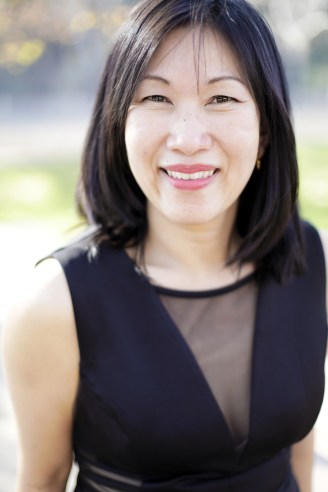
Sunny Lie Profile

ProfilesSunny Lie (Ph.D., University of Massachusetts at Amherst) is Assistant Professor of Communication at California State Polytechnic University, Pomona (Calpoly Pomona).

Sunny Lie

Her research interests include religious communication, Asian American and Chinese diaspora identity.

She received her B.A. (Communication and East Asian Languages and Cultures) from the University of Southern California. She received her M.A. (Global Communications) from the University of Southern California and the London School of Economics and Political Science.


Recent publications:

Lie, S., & Shrikant, N. (2019). Editors’ statement for special issue: Stretching the boundaries of international and intercultural communication studies. Journal of International and Intercultural Communication, 12(2), 105-110.

Lie, S.(2018).  How best to evangelize to nonbelievers: Cultural persuasion in American and Chinese Indonesian evangelical Christian discourse on relational evangelism. Journal of International and Intercultural Communication, 11(1), 42-57.

Lie, S., & Bailey, B. (2017). The power of names in a Chinese Indonesian family’s negotiations of politics, culture, and identities. Journal of International and Intercultural Communication. DOI: http://www.tandfonline.com/doi/full/10.1080/17513057.2016.121657

Lie, S. (2016). Effective evangelism: Discourse surrounding best evangelical practices in a Chinese Indonesian Reformed Evangelical (CIREC) community in Boston, MA. In D. Carbaugh (Ed.), Handbook of communication in cross-cultural perspective. New York: Taylor and Francis.

Lie, S. (2015). Messengers of the good news: Cultural discourse of Chinese Indonesian Evangelical Christian (CIEC) identity. China Media Research, 11(1), 87-98.

Bailey, B., & Lie, S. (2013). The politics of names among Chinese Indonesians in Java. Journal of Linguistic Anthropology, 23(1), 21-40.


Work for CID:

Sunny Lie wrote KC80: Cultural Discourse Analysis.