Lancaster U Job Ad: Intercultural Communication

Lecturer in Intercultural Communication
Lancaster University Linguistics & English Language
Closing Date:   Sunday 27 November 2016
Reference:  A1694

The Department seeks to appoint a Lecturer in Intercultural Communication. You will have a PhD (or award within 12 months) and relevant research and teaching experience in Intercultural Communication.

You will join a large group of internationally renowned linguists that includes specialists in: English Language study, Corpus Linguistics, Discourse Studies, Forensic Linguistics, Sociolinguistics, Cognitive Linguistics, Psycholinguistics, Literacy Research and Second Language Teaching, Learning and Assessment.

You will pursue research and publications at a level appropriate for a strong submission to the next Research Excellence Framework and will be expected to supervise undergraduate and postgraduate students.  You will develop new modules and programmes in Intercultural Communication, particularly at postgraduate level.

This is an indefinite post beginning around 1 February 2017.

Informal enquiries can be made to Professor Elena Semino, Head of Department: e.semino[at]lancaster.ac.uk

Durham U Job Ad: Intercultural Education

Senior Lecturer, Durham University – School of Education
Closes: 20th November 2016

The School of Education seeks to appoint an outstanding candidate at Senior Lecturer (Associate Professor) level. We welcome applications from exceptional scholars with research and teaching interests in the broad field of Education; experience of research and teaching in Intercultural Education would be advantageous.

This post offers an exciting opportunity to make a major contribution to the development of the School of Education’s research and teaching and the successful candidate will contribute to the teaching of our undergraduate and/or postgraduate programmes. The successful candidate must also be able to contribute to research activity in a School that is recognised internationally for its research excellence.

CFP Journal of Hate Studies

Call for Guest Editing Proposals – Journal of Hate Studies

The Journal of Hate Studies, published by Gonzaga University’s Institute for Hate Studies, is currently seeking proposals for a guest-edited, themed issue to be published in Fall 2017.

The Institute for Hate Studies’ mission, in alignment with Gonzaga University’s Jesuit identity, involves undertaking activities aimed at promoting reconciliation and overcoming hate. The Journal is peer-reviewed and publishes interdisciplinary work that scrutinizes the roots and prevalence of hate in the contemporary world. First established in the year 2001 and credited with publishing foundational work within the field of Hate Studies, the Journal has international distribution and welcomes contributions from various disciplines. Articles published in the journal examine hate in any of its manifestations (e.g. racism, misogyny, antisemitism, homophobia, religious intolerance, ethnic violence, anti-immigrant animus); consider how hate is institutionalized, maintained, or perpetrated through culture, organizations, policies, politics, media, discourses, and epistemologies; and develop, adapt, or refine the methods used for understanding or overcoming hate.

For its 2017 issue, the Journal seeks proposals that address a particular theme, which may be approached using different theoretical frameworks or methodologies. Possible themes include, but are not limited to:
– Hate and politics.
– Race and violence.
– Immigration and hostility.
– Digital technologies and hate.
– Bullying and anti-bullying campaigns.
– Hate speech.
– Hate and international conflicts.
– Intercultural violence and hate.
– Hate and trauma.
– Covert and subtle forms of hate.
– Campaigns and strategies to confront hate.
– Hate in global and transnational contexts.
– Hate, civil society, and social movements.
– Hate and the media.
– Hate in historical contexts.

To submit a proposal, please send a 1,500-word rationale explaining the theme and outlining the scope of the guest-edited issue, listing possible subtopics to be addressed, and indicating possible peer-reviewers. Please attach a short bio listing relevant publications and editing experience. The deadline for submissions is November 14, 2016.

The guest editor will be appointed by the Journal’s Editorial Board and will be expected to oversee the preparation of the 2017 issue of the Journal, recommending articles, working with contributors and peer-reviewers, and communicating with the Editorial Board.

For inquiries, please contact Dr. Kristine Hoover, Director of the Institute for Hate Studies (e-mail: hoover[at]gonzaga.edu) or Dr. Claudia Bucciferro, Chair of the Editorial Board (e-mail: bucciferro[at]gonzaga.edu). Please submit your proposal through the Journal’s website or send it directly to bucciferro[at]gonzaga.edu.

CFP Journal of Language & Discrimination

The new Journal of Language and Discrimination will be launched in 2017 with Equinox.

Discrimination is an important research topic in a large number of diverse but related fields, including linguistics, law, anthropology, sociology and psychology. This complex, multidisciplinary research topic often has a strong focus and concern with language. The new Journal of Language and Discrimination aims to bring together a multidisciplinary synergy of approaches on discrimination as a complex linguistic and non-linguistic phenomenon. In bringing together different research strands that focus on discrimination, the journal hopes to serve as a catalyst for innovation and play a pivotal role in establishing interdisciplinary language and discrimination research worldwide.

Discrimination is often intimately linked to language. Verbal exchanges may be seen to embody discriminatory uses of language, and linguistic features often play an important role in reproducing, maintaining or subverting systems of discrimination. An alleged discriminatory event may, for instance, be played out discursively in legal rulings, print and broadcast media and social media, creating a complex picture of linguistic patterns and discourse strategies.

Analysing the linguistic strategies of such an event allows for a more comprehensive understanding of discrimination and the actors involved, and goes some way towards understanding the impact of discriminatory incidents in context and in society more generally. There is a struggle over language about whose meaning of a term is accepted or who gets to name someone in a particular way, whose perspective is authorised, and it is this struggle over language which will be investigated: the process of naming an event as discriminatory and having that naming authorised, or challenged; the effects of discrimination on individuals and groups; resistance to discrimination.

The journal focuses on the shaping effect of language in situations of discrimination, but will also comprise research on language ideology and language-focused discrimination; i.e. discrimination towards a language, or towards users of a particular language variety. The Journal of Language and Discrimination will be able to provide a unique platform to broadcast the diversity and interdisciplinarity of research on language and discrimination, whilst maintaining a unifying focus. As such, it will allow for the development of new understandings and new approaches to the study of language and discrimination.

The editors of JLAD invite papers that reflect the diversity of possible approaches in relation to language and discrimination. The aim is to include work with a wide array of approaches that reflect the diversity and recent developments of research on language and discrimination.

Topics may include but are not limited to:
– Reflections on the research that has been done on discrimination in your field, and the direction in which research could or should develop
– Discussions on broadening the field versus constraining academic subject areas
– Consideration of definitions of discrimination, and the benefit, and disadvantages of using this term for our research
– Theoretical and methodological considerations in interdisciplinary research
– Case studies from different fields that relate to language and discrimination
– Qualitative analyses on language and discrimination

Editors:
Isabelle van der Bom, Sheffield Hallam University
Sara Mills, Sheffield Hallam University
Laura Paterson, Lancaster University

Submission procedure:
Please see the website for all the details on how to publish in the Journal of Language and Discrimination and don’t hesitate to contact one of the editors for more information on the Journal.

Publication and Frequency
Two issues per volume year, May and November (from 2017)

American U Beirut Job Ad: World Literature, Global Film & Visual Culture

Assistant Professor in World Literature and Global Film and Visual Culture
American University of Beirut – The Department of English
Closes: 1st November 2016

The Department of English at the American University of Beirut is seeking to fill a faculty position in world literature and global film and visual culture to begin August 15, 2017.

Candidates with research interests in cross-cultural dialogues and digital practices are encouraged to apply. We particularly invite applicants with research expertise in non-Western literary and visual traditions related to South and/or East Asia, South America, Africa, and/or the MENA region. Candidates will contribute to the BA and MA degrees in literature and the minor in film and visual culture.

AUB faculty engage in research, teaching, and service. The new hire is expected to teach at the undergraduate and graduate levels and to participate in the collegial governance of the Department and University.

The position is at the assistant professor level. The appointment is for an initial period of four years with opportunities for renewal and advancement. The usual teaching load is not more than 5 courses a year. Applicants must have completed their PhD by August 2017. The language of instruction is English.

To apply, send a cover letter, a CV, a writing sample, a sample syllabus, and arrange for three letters of reference to be sent directly to:
Nadia Maria El Cheikh, Dean
Faculty of Arts and Sciences
American University of Beirut
c/o 3 Dag Hammarskjold Plaza, 8th Floor
New York, NY 10017-2303, USA

Or
Nadia Maria El Cheikh, Dean
Faculty of Arts and Sciences
American University of Beirut
P.O. Box 11-0236, Riad El-Solh
Beirut 1107 2020, Lebanon

Electronic submissions are highly encouraged and may be sent to as_dean[at]aub.edu.lb

For full consideration, all application documents should arrive by November 1, 2016.

The American University of Beirut is an Equal Opportunity Employer.

South Asian Film Festival (Montreal)

An eclectic mix of award-winning films from the Indian subcontinent and its diaspora
Kabir Centre for Arts & Culture
The South Asian Film Festival of Montréal, 6th edition
Friday, November 4 – Sunday, November 6
Click HERE for all film descriptions and trailers

Kabir Centre for Arts & Culture is pleased to announce the 6th edition of the South Asian Film Festival of Montréal (SAFFMontréal), organized in collaboration with the Mel Hoppenheim School of Cinema of Concordia University, on November 4, 5 and 6. This innovative festival presents an eclectic choice of inspiring and thought-provoking films made in the countries of the Indian subcontinent (India, Pakistan, Bangladesh, Nepal, Sri Lanka, Afghanistan and Maldives) and its diaspora. These engaging and entertaining films have their focus on South Asia; while at the same time compel audiences to realize how much there is in common among cultures throughout the world, identifying both shared life-struggles and joys. Admission is free, with donations gratefully appreciated. Discussions are held after each screening.

The South Asian Film Festival will be presenting 17 films this year; short and long, documentaries and feature films, including comedy, drama and music. All films are subtitled in English and explained in French, with various original languages such as Urdu, Hindi, Tamil, Marathi, Malayalam, Bengali and English, as well as silent films, making them accessible to as many people as possible. The films have been carefully chosen from more than 1000 entries and all screenings will be followed by a talkback between spectators and a panel of experts. Directors for some of the films will be present, other times the directors will interact with the audience via Skype. Most of the films are recent and have won awards at international festivals. As in previous years, the films are drawn from different parts of the Indian subcontinent; recognized as the largest producers of films on the planet.

Dominican University Job Ad: Intercultural Communication

Assistant Professor, Corporate Communication at Dominican University

The Dominican University Communication Arts and Sciences Department is seeking a tenure-track assistant professor of Corporate Communication to begin fall 2017. The successful applicant will supervise the undergraduate discipline, work with long-time adjuncts, and build on links forged with Dominican’s Brennan School of Business, ELS language service and other stakeholders. We desire a specialist in communication between and among individuals and groups within organizations and external publics.

Classes would include:
*Organizational communication,
*Intercultural communication and
*Interpersonal communication.

The successful applicant could supplement these core skills with strengths in strategic communication, leadership and communication technology in organizations.

As a member of the CAS department, the successful applicant would also advise students and contribute to the department’s basic courses, such as Introduction to Communication Theory and Practice, Public Speaking, and the Departmental Capstone. The course load is three courses per semester.

The successful application would have the opportunity to revise the discipline to meet current and future demands of the fast-changing corporate world. We welcome candidates whose experience in teaching, research, or community service has prepared them to contribute to our commitment to diversity and excellence. Ph.D. in hand preferred.

Dominican University is a Catholic, comprehensive teaching university located in River Forest, a suburb of Chicago, with an enrollment of about 3,600 students.

To Apply:
Applicants must submit online. Please provide the following application materials:
~cover letter that outlines qualifications for the position.
~curriculum vitae
~teaching philosophy statement
~recent teaching evaluations (please submit as “other”)
~recent writing sample

Official transcripts and letters of recommendation will be required of finalists; submission instructions will be provided to applicants as necessary.

For consideration for interviews at the National Communication Association convention applications must be received by Nov. 1. Other applications must be received by Dec. 1

Dominican University is an equal opportunity employer. The University is dedicated to the goal of building a diverse faculty and staff committed to teaching and working in a multicultural environment.  We look forward to a diverse pool of applicants who bring varied experiences, perspectives and backgrounds.  Upon request, reasonable accommodations in the application process will be provided to individuals with disabilities.


Neslihan Demirkol Profile

ProfilesNeslihan Demirkol is a research associate of the Corpus Musicae Ottomanicae (CMO) project, based within the University of Münster, Germany.

Neslihan Demirkol

She holds an M.A and PhD from Bilkent University. She worked as a lecturer between 2014-2016, and as an assistant professor between 2016-2019 in the Department of Turkish Language and Literature at the Social Sciences University of Ankara, Turkey. She spent one year in the Islamic Studies Department within the Institute for Asian and Oriental Studies at the University of Zurich, for her postdoctoral studies as a Swiss Government Excellence Scholarship holder for the 2018-2019 academic year.


Her research and teaching interests are modern Turkish literature, literary theories, literary history, translation studies, adaptations and translations of One Thousand and One Nights in Turkish and their influences in Turkish literature. Her MA thesis focuses on the definition of loyalty in literary translations from a cultural perspective. Her Ph.D dissertation criticizes the mainstream discourse of Turkish literary modernization and provides a new perspective to the literary history with emphasize on the literary translations using Pierre Bourdieu’s sociological approach to the dynamics of cultural production. She has experience in teaching academic writing in Turkish and Ottoman language classes.

Demirkol was a member of the Expert Committee for Intercultural Dialogue of the Turkish National Commission for UNESCO between 2008 and 2013. She has been a member of ÇEVBİR (Professional Association of Translators) since 2006. She has been on the editorial board of Kebikeç, a peer-reviewed academic journal in the field of humanities and social sciences, since 2011; and fe journal, an international peer-reviewed academic journal in the field of feminist critique and gender studies, since 2018.

Selected Publications:

Demirkol, N. (2016). “Lutf ile, ta’bîr eyle “: Kaya Sultan and Melek Ahmed Paşa anlatısında rüyaların işlevi. In  H. Çolak, Z. Kocabıyıkoğlu-Çeçen & N. I. Demirakın (Eds.), Ayşegül Keskin Çolak’a armağan tarih ve edebiyat yazıları (pp. 39-51). Ankara: Kebikeç Yayınları.

Demirkol, N., & M. Kalpaklı. (2014). Eternal narratives of the silk road: The Thousand and One Nights from Samarkand to Istanbul. Bulletin of IICAS, 19, 81-97.

Demirkol, N. (2013). Gathering around a table: Meals and cuisine as a means of interculturality. In E. Ölçer-Özünel & N. Tunsu (Eds.), Sharing the same taste: The Turkish and Romanian Common Traditional Cuisine Workshop Proceedings (pp. 23-30). Ankara: UNESCO.

Demirkol, N. (2011). Çeviride sadakatin yeni tanımları: Shakespeare’in A Midsummer Night’s Dream’i için Can Yücel’in Bahar Noktası bir ihtimal midir? Kebikeç, 32,  187-237.

Demirkol, N. (2011). Hüsn ü Aşk’ta Hüsn’ün âşık rolünün imkânsızlığı üzerine. Journal of Turkish Studies, 35, 193-204.

Demirkol, N. (2010). The role of women in the interaction and transfer between the Turkish and Macedonian cuisine culture. In M. Kalpaklı, N. Demirkol et. al. (Eds.), Sharing the same taste: The Turkish and Macedonian Common Traditional Cuisine Workshop Proceedings (pp. 74-78). Ankara: UNESCO.

Demirkol, N. (2010). The role of gender in the performances of traditional music. In M. Ö. Oğuz, M. Kalpaklı, et al. (Eds.), The Existing Musical Forms and Traditional Cultures of the Peoples of the Border Regions of Turkey and Bulgaria Workshop Proceedings (pp. 43-49). Ankara: UNESCO.

Demirkol, N., & M. Kalpaklı (Eds.). (2010). Binbir Gece’ye bakışlar. İstanbul: Turkuaz Yayınları.

Demirkol, N., & M. Kalpaklı, et. al. (Eds.). (2010). Sharing the same taste: The Turkish and Macedonian Common Traditional Cuisine Workshop Proceedings. Ankara: UNESCO.


Work for CID:

Neslihan Demirkol translated KC3: Intercultural Competence and KC5: Intercultural Communication into Turkish.

Key Concept #3: Intercultural Competence Translated into Persian

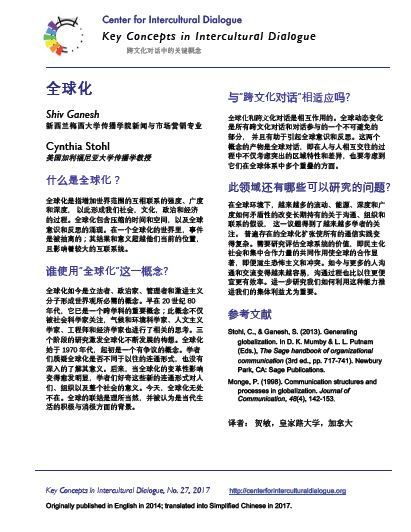
Key Concepts in ICDContinuing translations of Key Concepts in Intercultural Dialogue, today I am posting KC3: Intercultural Competence, written by Lily A. Arasaratnam and first published in English in 2014, which Ramin Hajianfard has now translated into Persian.

As always, all Key Concepts are available as free PDFs; just click on the thumbnail to download. Lists of Key Concepts organized chronologically by publication date and number, alphabetically by concept, and by languages into which they have been translated, are available, as is a page of acknowledgments with the names of all authors, translators, and reviewers.

KC3 Intercultural Competence_PersianArasaratnam, L. (2016). Intercultural competence [Persian]. (R. Hajianfard, Trans). Key Concepts in Intercultural Dialogue, 3. Available from:
https://centerforinterculturaldialogue.org/wp-content/uploads/2018/08/kc3-intercultural-competence_persian-revised.pdf

If you are interested in translating one of the Key Concepts, please contact me for approval first because dozens are currently in process. As always, if there is a concept you think should be written up as one of the Key Concepts, whether in English or any other language, propose it. If you are new to CID, please provide a brief resume. This opportunity is open to masters students and above, on the assumption that some familiarity with academic conventions generally, and discussion of intercultural dialogue specifically, are useful.

Wendy Leeds-Hurwitz, Director
Center for Intercultural Dialogue


Creative Commons License
This work is licensed under a Creative Commons Attribution-NonCommercial-NoDerivatives 4.0 International License.