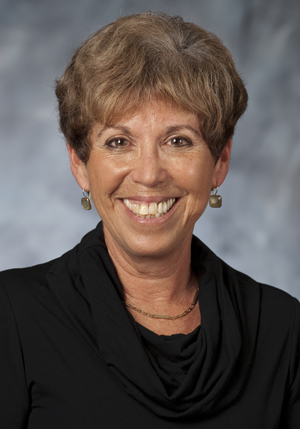
Hui-Ching Chang Profile

ProfilesAs Dean of the Honors College and Professor of Communication at the University at Albany, Dr. Hui-Ching Chang sees knowledge as intimately connected with everyday practices. After completing her law degree from National Taiwan University, she pursued advanced degrees in speech communication from the University of Illinois at Urbana-Champaign.

Hui-Ching Chang

Dr. Chang has studied Chinese language patterns, specifically Taiwanese national identity as constituted through discursive practices. Her book, Clever, Creative, Modest: The Chinese Language Practice (2010), examines Chinese language behavior from three distinctive yet overlapping dimensions: the manipulative speaker, the artistic speaker, and the humble speaker. Her most recent book, Language, Politics and Identity in Taiwan: Naming China (2015), explores how Taiwanese fashion their identities in the shifting and intertwined paths of five names Taiwan used to name China: “Communist bandits”; “Chinese Communists”; “mainland”; “opposite shore”; and the “People’s Republic of China.”

Prof. Chang has received many grants and top paper awards for her research and has been an invited keynote speaker at numerous international conferences. Her publications have appeared in Journal of Language and Politics; Discourse Studies; Research on Language and Social Interaction; Journal of Language and Social Psychology; Nationalism and Ethnic Studies; and Journal of Asian Pacific Communication, among others. Very recently she was principal editor of the special issue, “Explored but not Assumed: Revisiting Commonalities in Asian Pacific Communication” (2015), in the Journal of Asian Pacific Communication.

Prof. Chang enjoys putting theories into practice: “I firmly believe that it is adventure and personal engagement that brings intercultural communication to life, an inspiring perspective I learned while on ‘Semester at Sea’.” She was a Fulbright Scholar, Ukraine (2010-2011, 2012); Chair Professor of the College of Journalism at Xiamen University, China (2009-2012); Visiting Scholar to Hong Kong Baptist University (2007) and Visiting Scholar to National Taiwan University (2003-2004).

Prior to coming to UAlbany, Prof. Chang was Associate Dean for Academic Affairs of the Honors College, the University of Illinois at Chicago, and Faculty-in-Residence, where she pioneered innovative programs like “Cutie’s Office Hours” to promote a vibrant living-learning community. She served as Director of Undergraduate Studies and Director of Graduate Studies in her department, and was also a trained mediator for UIC’s Dispute Resolution Service. For her, being an Honors College administrator requires the same curiosity and urge to learn as it does for research and teaching—it is exciting, energizing, and fulfilling.


Work for CID:

Hui-Ching Chang wrote KC41: Yuan, and translated it into Chinese (both Simplified and Traditional).

Beyza Björkman Profile

ProfilesBeyza Björkman is Associate Senior Lecturer at Stockholm University, Department of English, Centre for Academic English.


Beyza BjorkmanSince 2005, she has been doing research on the use of English as the medium of instruction in Swedish higher education. Her general research interests include the use of English as a lingua franca (ELF) for academic purposes, spoken academic discourse in general, academic literacy, linguistic equality, language change and language policy.

Her most current research on ELF focused on the pragmatic aspects of English as a lingua franca as the medium of instruction, focusing on polyadic lingua franca speech in student-student interaction. More recently, she has published on language policy work at Swedish universities, focusing on actual language practices vs language management issues, as well as attitudes towards the use of English in Swedish higher education. She is currently doing research on the spoken genre of PhD supervisor-PhD student interactions in supervision meetings.

For more information on Beyza’s research and publications, visit her website.


Work for CID:
Beyza Björkman wrote KC40: English as a Lingua Franca.

Katie Warfield Profile

Profiles

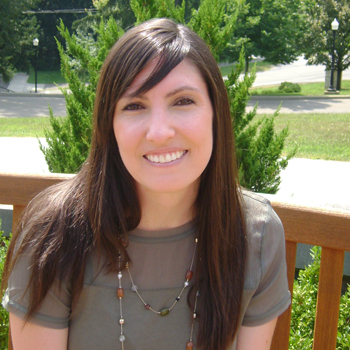
Katie Warfield is faculty in the Department of Journalism and Communication at Kwantlen Polytechnic University, Surrey BC, Canada.

Katie Warfield

She is director of the Visual Media workshop and lead researcher for the Making Selfies/Marking Self Research Project, which explores the production and curation of selfies by young Canadian women.  She teaches classes in communication theory, popular culture, and media and diversity.  Her interests in interdisciplinary design and visual culture emerge from academic training and processional experience with cultural policy, cultural studies, architecture, urban design, and fashion design.  She proudly integrates visual, post structural, phenomenological, and feminist theory and methods  into just about everything she’s teaching and writing right now.

Fred Dervin Profile

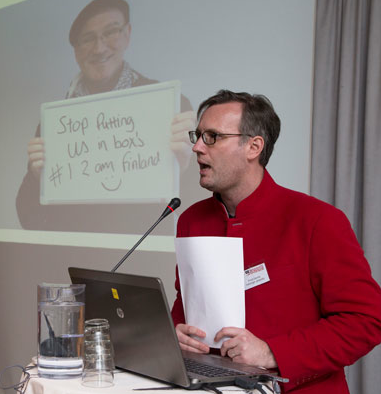
ProfilesFred Dervin is Professor of Multicultural Education at the University of Helsinki (Finland). Dervin also holds several professorships in Canada, Luxembourg and Malaysia. In May 2014 he was appointed Distinguished Professor at Baoji University of Arts and Sciences (China). Dervin has been visiting professor in Australia, Canada, China, Estonia, France, Hong Kong, and Portugal.

Fred Dervin

Dervin specializes in intercultural education, the sociology of multiculturalism and student and academic mobility. He defines his work as transdisciplinary, critical and reflexive. Inspired by E. Said (1993), he believes that “(…) giving up to specialization is, I have always felt, laziness, so you end up doing what others tell you, because that is your speciality after all.” His current definition of his approach to the ‘intercultural’ reads as follows: it is about giving the power to the powerless – ourselves included – to become aware of, recognize, push through and present/defend one’s diverse diversities, and those of our interlocutors”.

Dervin has widely published in international journals on identity, the ‘intercultural’ and mobility/migration in English, Finnish and French. He has published over 20 books: Politics of Interculturality (co-edited with Anne Lavanchy and Anahy Gajardo, Newcastle: CSP, 2011), Impostures Interculturelles (Paris: L’Harmattan, 2012) and Linguistics for Intercultural Education (co-edited with Tony Liddicoat, New York: Benjamins, 2013). The following volumes are forthcoming: Researching Identity and Interculturality (with Karen Risager, Routledge, 2014), Chinese Students and Scholars in the Global Community: Challenges of Integration (special issue of Frontiers in Education, 2014), Cultural Essentialism in intercultural Relations (with Regis Machart, Palgrave, 2014). Fred Dervin is the series editor of Education beyond borders (Peter Lang)Nordic Studies on Diversity in Education (with Kulbrandstad and Ragnarsdóttir; CSP), Post-intercultural communication and education (CSP) and Palgrave Studies on Chinese Education in a Global Perspective (Palgrave with Xiangyun Du). He is the Editor-in-Chief of The International Journal of Education For Diversities. His website: http://blogs.helsinki.fi/dervin

Larry E. Smith Profile

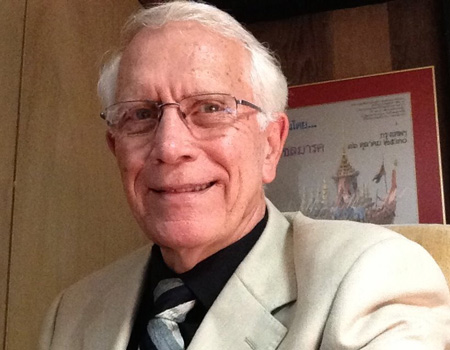
ProfilesLarry E. Smith is President of Christopher, Smith & Associates, LLC, (CSA) a leadership institute of Hawaii. Before joining CSA, he was Dean and Director of Education and Training at the East-West Center in Honolulu.

Larry E. Smith

He is the co-founder (with Braj B. Kachru) of the professional journal, World Englishes: Journal of English as an International and Intranational Language. He was the first President, the first Executive Director and presently the Chief Financial Officer of the International Association for World Englishes (IAWE), Inc. His research interests include the intelligibility, comprehensibility, and interpretability of world Englishes across cultures as well as the consequences of the spread of English world-wide. He currently leads a program for university students called “Living World Englishes.” His most recent publications can be found in the second edition of The Handbook of World Englishes, published by Wiley/Blackwell.


NOTE: Larry Smith, co-founder of the International Association for World Englishes and also of the journal World Englishes, passed away December 13, 2014. He authored KC34: World Englishes. An obituary is available here.
-Wendy Leeds-Hurwitz

Ronald L. Jackson II Profile

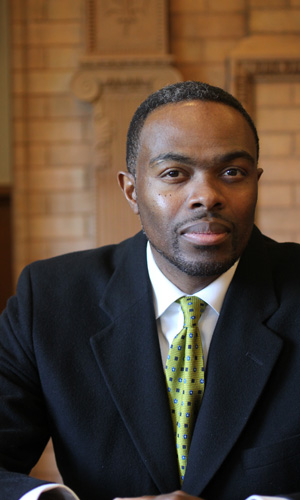
ProfilesRonald L. Jackson II (Ph.D., Howard University) was born and raised in Cincinnati, Ohio. He grew up in a very proud working class family.

Ronald L. Jackson II

His mother worked during the day in the financial aid office at the University of Cincinnati, and then went to her second job as a courier for UPS. On the weekends she worked as a non-commissioned officer in the U.S. Army where she retired as a Sergeant First Class.  His father is an ordained minister who worked as a salesman and, much later after earning his doctorate degree, as owner of a tutoring business.

In articles like “Mommy there’s a N***** at the Door” published in the Journal of Counseling and Development Ron recalls countless stories of how he was mistreated as a child and young adult in Cincinnati because of the mere color of his skin.  This compelled him to write about racism and White privilege.  It also led him to explore the social construction of identity. After dabbling a bit in theories of identity Jackson decided he would create a couple of his own.  Because he was so enamored with Stella Ting Toomey’s work around identity negotiation he developed a theory that would try to make sense of what people are actually negotiating when they say they are negotiating cultural identity.  With feedback from two of his mentors, Bill Starosta and Molefi Asante, he coined “Cultural Contracts Theory.”  He reasoned that it is actually one’s worldview that is at stake in these daily and instantaneous identity negotiations. As he began to unravel the publicly assigned meanings inherent in his own identity as an African American male, he wrote extensively about Black masculinities, beginning with an essay called “Black manhood as xenophobe” published in the Journal of Black Studies.  The logical next step was to conceptualize this, so he along with one of his Penn State students Celnisha Dangerfield created the Black Masculine Identity Theory.

Currently, Ron Jackson is professor of communication at University of Cincinnati, and author of 14 books.  He has previously served on the faculty in the departments of communication at Xavier University, Shippensburg University, Penn State University, and University of Illinois.  He is also developing digital education materials for popular consumption.  His most recent books include Interpreting Tyler Perry, Black Comics: Politics of Race and Representation (which just won a Will Eisner Award for Best Academic/Scholarly Book in the Comics Industry), and Communicating Marginalized Masculinities.  Ron is also a candidate for NCA 2nd Vice President.  You can read more about his work at www.jacksonfornca.com.


Work for CID:
Ron Jackson wrote KC47: Cultural Contracts Theory.

Kristen Cole Profile

ProfilesKristen Cole (PhD, University of New Mexico) is Assistant Professor of Critical Health Communication at San Jose State University in California.

Kristen Cole

Dr. Cole’s research and teaching span Rhetoric, Media and Cultural Studies. Her interests include constructions of gender and sexuality, race and ethnicity, citizenship and immigration, conflict and community, and science and technology. She investigates formations of identity and enactments of agency within marginalized communities and how these are represented in publicly mediated spaces. She utilizes rhetorical, critical/cultural, feminist, and queer approaches to media texts in order to understand the ways power is exerted and negotiated and the ways change is enacted. Her research and teaching focus on how communication at interpersonal, social, and cultural levels restricts and promotes a multiplicity of lived experiences. Her recent publications can be found in the Sage Handbook of Conflict Communication, Review of Communication and Rhetoric of Health and Medicine.


Work for CID:
Kristen Cole wrote KC33: Moral Conflict.

S. Lily Mendoza Profile

ProfilesS. Lily Mendoza (Ph.D., Arizona State University) is a native of San Fernando, Pampanga in Central Luzon, Philippines. Lily Mendoza

She grew up in the small barrio of Teopaco next door to calesa drivers with their handsome horses and their backyard stables. She shared with her five siblings duties feeding pigs and raising chickens and collecting horse manure for fertilizing the small family garden. Although she grew up colonized (tutored by American missionaries and Peace Corps Volunteers and Filipino teachers who taught strictly in English), she retains memories of sitting at her Lola’s feet listening to stories, making sampaguita leis, and watching her Apu Sinang prepare her betel nut chew with much fascination. Currently, she is a fourth year student at Martin Prechtel’s Bolad’s Kitchen School dedicated to “teaching forgotten things, endangered excellent knowledges, but above all a grand overview of human history…in the search for a comprehension regarding the survival of unique and unsuspected manifestations of the indigenous soul.”

Besides learning how to grow a small vegetable garden with her indigenous theologian hubby in the heart of Motown (Detroit), she is also a scholar and associate professor of Culture and Communication at Oakland University in Rochester, Michigan, with research interests in critical intercultural communication; indigenous studies; communication and ecology, cultural studies; colonial and postcolonial discourse and theory; theories of identity and subjectivity; cultural politics in national, post- and trans- national contexts; race and ethnicity; and the politics of cross-cultural theorizing.

Lily is especially known in the Philippines and beyond for her pathbreaking work on indigenization and indigenous studies. Her first book publication, Between the Homeland and the Diaspora: Theorizing Filipino and Filipino American Identities (Routledge, 2002; Philippine revised edition by UST Publishing, 2006) is the first comprehensive articulation of the movement for indigenization in the Philippine academy and is referenced widely in the fields of history, Philippine Studies, Asian American Studies, Southeast Asian Studies, and postcolonial and cultural studies.   She is the recipient of several distinguished scholarship and top paper awards in intercultural communication and was elected Vice Chair (2011-2012), and consequently, Chair (2012-2013) of the International and Intercultural Communication Division, a division of the National Communication Association in the United States.

Prior to her current position as Professor at Oakland University, Lily served as Associate Professor and Graduate Director at the University of Denver where she headed the doctoral program in Culture and Communication for many years. Currently, she is part of the Core Group of the Center for Babaylan Studies (CfBS) headquartered in Sonoma County, California (the term “babaylan” referring to an indigenous healing tradition in many parts of the Philippines). CfBS is a Filipino and Filipino American movement dedicated to keeping alive the indigenous wisdom and healing traditions of the ancestors. Her current (co-edited) book publication, Back from the Crocodile’s Belly: Philippine Babaylan Studies and the Struggle for Indigenous Memory (2013) is especially dedicated to this work.

To access some of her writings, check her out on Academia.edu


Work for CID:

Lily Mendoza wrote KC31: Indigenous, and translated it into Kapampangan and Tagalog.

Francesca Gobbo Profile

ProfilesFrancesca Gobbo has been Professor of Intercultural Education at the University of Turin (Italy), where she also taught Anthropology of Education until retiring in 2014.
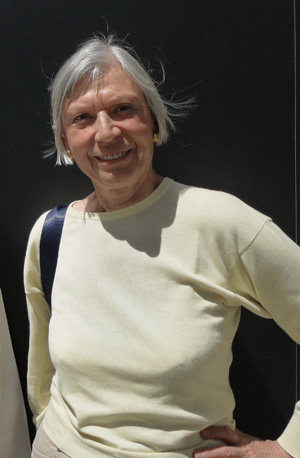
Francesca Gobbo

She was Fulbright grantee (1969), Research Assistant at UC Berkeley (1973-74), Research Assistant with the Carnegie Foundation at Yale University (1974), Visiting Scholar at UC Berkeley (1995) and Harvard University (2001). She has lectured at the University of Reading (UK), Charles in Prague (CZ) and Amsterdam (NL).

She studies and teaches contemporary educational issues from a comparative and interdisciplinary perspective that combines educational theory with methodological and theoretical approaches from the fields of cultural anthropology and anthropology of education. She coordinates research on Italian schools attended by immigrant pupils. Her own ethnographic research has been carried out among Italy’s “internal minorities” such as the Albanian speaking minority of Calabria, the Waldensian religious minority in Piedmont and the occupational minority of travelling fairground and circus people. Her contribution to the understanding of these Italian minority group’s meaning of education and schooling experience is relevant to the widening of the discourse and research on intercultural education, as it questions definitions of multiculturalism and interculture as exclusive results of the migratory flows, underlines the problem of power balance (or lack of it) as a fundamental one for an intercultural perspective and singles out the political as well as educational strategies that foster the idea of a homogeneous national culture while continuing to produce minority culture’s persistence.

Her long standing professional interests in the cultural and social changes obtaining in complex societies (particularly in the North America and in European countries) and in their schools developed first from her studies and research in anthropology of education at UC Berkeley, and it continued with her participation into associations such as the “International Association for Intercultural Education” (IAIE) and the “European Education Research Association” (EERA). She was elected Board member of IAIE in 2005 and 2010. In EERA she was linkperson for the network “Social Justice and Intercultural Education” from 2003 to 2007, and was one of the founding members of the network “Ethnography”.

She was Associate Editor in Chief of Intercultural Education from 2005 to 2007, and again in 2014. She is on the editorial boards of the following journals: Intercultural Education, European Educational Research Journal, Ethnography and Education, and International Journal of Pedagogies and Learning.

Her involvement into educational research at the international level is indicated by her participation into the following Comenius projects:
2007/2009 – DG Education and Culture proposal “Strategies for supporting schools and teachers to foster social inclusion”
2007/2009 – Comenius P7 Multilateral proposal “Teacher In-Service Training for Roma Inclusion” (INSETRom)(134215-2007-IT-COMENIUS-CMP)
2004/2006 – Comenius 2.1 Project entitled Effective teaching and learning for minority-language children in pre-school.
1997/1999 – Comenius 3 Project entitled Cooperative Learning in Intercultural Education in Europe (“CLIP”).

In the field of intercultural education and anthropology of education, she has published Radici e frontiere (Padova, 1992), Pedagogia interculturale (Roma, 2000) and A proposito di intercultura (Padova, 2011). She edited Antropologia dell’educazione (Milano, 1996), Cultura Intercultura (Padova, 1997), La quotidiana diversità (Padova, 1998, with M. Tommaseo Ponzetta), Multiculturalismo e intercultura (Padova, 2003), Etnografia dell’educazione in Europa (Milano, 2003), Etnografia nei contesti educative (Roma, 2003, with A. M. Gomes), Processi educativi nelle società multiculturali (Roma, 2007), La ricerca per una scuola che cambia (Padova, 2007), L’educazione al tempo dell’intercultura (Roma, 2008), Il Cooperative Learning nelle società multiculturali (Milano, 2010), Antropologia e educazione in America Latina (Roma, 2010, with C. Tallé).

In English she edited Social Justice and Intercultural Education (Stoke on Trent, 2007, with Bhatti, Gaine and Leeman). She contributed chapters to the Encyclopedia of Diversity in Education Interculturalism (J. Banks ed., Sage, 2012) , Education and Dialogue (T. Besley & M. Peters eds., Peter Lang, 2012), Anthropologies of education (K. Anderson Levitt ed., Berghahn Books, 2011), Travellers, Nomadic and Migrant Education (P. Danaher, M. Kenny and Leder eds., Routledge 2009), International Handbook on Urban Education (Pink and Noblit eds., Springer, 2007), Transmission of Knowledge as a Problem of Culture and Identity (Kučera, Rochex, Štech eds., The Karolinum Press 2001), Educational Research in Europe, Yearbook 2000 (Day, van Veen eds., Garant 2000), and (with R. Ricucci) to International perspectives on countering school segregation (Bakker, Denessen, Peters, Walraven eds., Garant 2011). She is Section Editor (with Kathryn Anderson-Levitt) for the Smeyers P., Bridges D., Burbules N. C., Griffiths M. Eds., International Handbook of Interpretation in Educational Research Methods, Springer, Dordrecht, 2015 forthcoming, to which she also contributed a chapter (“People ‘of passage’: an intercultural educator’s interpretation of diversity and cultural identity”). She will contribute a chapter to a forthcoming anthology by W. Pink & G. Noblit Eds, Education, Equity and Economy: Studies Toward the Future of Socially Just Education, Springer, forthcoming, and act as Section Editor for Western Europe of the second edition of the W. Pink & G. Noblit Eds., International Handbook on Urban Education, Springer, forthcoming. She has published many articles in international journals.


Cynthia Stohl Profile

ProfilesCynthia Stohl is a Professor of Communication and an affiliate faculty member in the Center for Information Technology and Society at the University of California, Santa Barbara.

Cynthia Stohl

She received her Ph.D. from Purdue University in 1982. Prior to joining the UCSB faculty in 2002, Professor Stohl was the Margaret Church Distinguished Professor and Head of the Department of Communication at her alma mater. A Fellow of the International Communication Association, a Distinguished Scholar of the National Communication Association and Past President of the International Communication Association, Professor Stohl is recognized as a leading scholar and teacher in the area of globalization and organizational communication.

The author of two award winning books and more than one hundred articles and book chapters, Professor Stohl’s research focuses on global organizing and “connectedness in action.” Her studies are grounded in questions of social responsibility and empirically explore the ways in which organizations and their members constitute models of citizenship and develop stakeholder networks in the new media environment. Her most recent book Collective Action in Organizations: Interaction and Engagement in an Era of Technological Change published by Cambridge University Press (2012) was co-authored with UCSB Professors Bruce Bimber and Andrew Flanagin.

In 2007 Professor Stohl was a recipient of the UCSB Distinguished Teaching Award and in 2011 she received the New Zealand Federation of Graduate Women Scholar Award. She has been a visiting professor in Denmark and New Zealand and a featured speaker at conferences and universities throughout the world.


Work for CID:
Cynthia Stohl co-authored KC27: Globalization.