Dominic Busch Profile

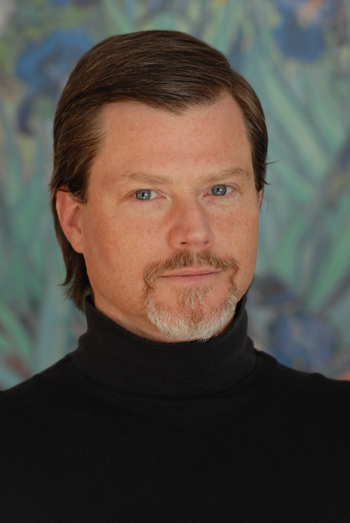
ProfilesDominic Busch is a Professor of Intercultural Communication and Conflict Research at Universität der Bundeswehr München, Germany. He received his doctorate in 2005 at Europa-Universität Viadrina Frankfurt (Oder), Germany. From 2006 to 2011 he was a Junior Professor in Intercultural Communication at Europa-Universität Viadrina Frankfurt (Oder).
Dominic BuschIn his research on intercultural communication, he explores the epistemological, ontological, and axiological premises of how intercultural communication is approached from an academic angle. To this end, he takes the perspective of discourse analysis. While research on intercultural communication often has strong disagreements between different paradigms, the minimum common ground is that culture and intercultural communication are talked about in both academia and in Western societies’ everyday life. Culture and intercultural communication are thus objects of discourse, and thus first and foremost discursive constructions. Several characteristics of the field of intercultural communication can be observed on the basis of this assumption:

Both everyday discourses and academic discourses around intercultural communication constitute themselves in such a way that their object never ceases to be perpetuated and never disappears – even if this might actually represent a plausible goal of dealing with it. Discourses are shaped by power structures and hegemonies, and this is how core understandings of intercultural communication emerge. Their permanent self-preservation can also be described by the phenomenon of the dispositive after Michel Foucault, as Dominic Busch shows in his 2013 book. Discourse on intercultural communication fabricates problems for which, at the same time, it always provides only partial solutions. Even the strongest paradigm shift cannot overcome this, but will always only reinforce the dispositive.

At the same time, the discourse on intercultural communication is never void of interests, and research is never strictly heuristic: the study of intercultural communication is always based on societies’ aspirations of an ideal coexistence. The perceptions of problems are impossible without visions of how things should actually be better. Visions, however, traditionally do not have a seat in social science research; they are often regarded as unscientific. However, we cannot really understand how research questions are framed and how studies in this field are arranged if authors and readers would not share ideals about how to deal with interculturality, ideals that are only subtly expressed in the texts.

In his research, Dominic Busch aims to show how research on intercultural communication seeks to deal with this dilemma. To this end, it is first necessary to uncover and identify the normative ideas on how to deal with interculturality – which can also be referred to as visions. Based on a discourse analysis of academic texts on intercultural communication over a period of 50 years, Dominic Busch shows in his article “The Changing Discourse of Intercultural Ethics” how these orientations change over time. Instead of a linear development, these re-orientations have been rather circular. Only in recent times a parallel diversification of different orientations in intercultural writings can be observed – along with a new disorientation and open search in an increasingly complex world, questioning old paradigms more and more.

A comparison with overarching social science paradigms and epistemologies, however, reveals how dominant these ethical orientations are. Social research is debating the implementation of post-qualitative research methods with the aim of avoiding exerting epistemic violence through research. This should involve authors reflecting more on their own positionality and instead of researching their partners, they should give voice to these partners themselves. In their article “New Methodologies – New Interculturalities?” Dominic Busch and Emilian Franco explore how papers in the research field of intercultural communication manage these issues by using new methods such as participatory research, autoethnography, and arts-based research. From a critical point of view, Busch and Franco find that many studies often do not really meet the standards of such methodologies. However, Busch and Franco show that, seen as parts of an ethical discourse on interculturality, these new methods serve as a basis for authors’ ethical and visionary reflections on a desirable way of dealing with interculturality.

Intercultural mediation is a powerful example of this visionary orientation in discourses on intercultural communication. A great many different disciplines share some interest in intercultural mediation: These include, for example, cultural anthropology, translation research, foreign language didactics, and political science research on international relations, in addition to research on intercultural communication and conflict management. Upon closer examination, these disciplines often conceive of intercultural mediation in very different ways. However, there is one common vision that unites them: that constructive pathways to intercultural understanding will always exist. This is reason enough from an ethical point of view to further promote and develop such fields of research. The Routledge Handbook of Intercultural Mediation by Dominic Busch provides an insight into this interdisciplinary field and its potentials.

Discourse analysis should therefore not be seen only as criticism, but always as a constructive prospect for development. Even more, the insight into the constructivist character of notions of cultures may open the opportunity (and the responsibility) to encourage forms of intercultural dialogue on a local and on a global level to discuss and to define notions of how positive (intercultural) coexistence may be designed. In these respects, Dominic Busch explores the potential of concepts like intercultural sustainability as well as contributions from cosmopolitanism to intercultural dialogue.

For more detailed information as well as a list of German language publications please visit Dominic Busch’s website.

Selected publications in English:

Busch, D. (Ed.). (2023). The Routledge handbook of intercultural mediation. New York: Routledge.

Busch, D., & Franco, E. (2022). New methodologies—New interculturalities? The visionary discourse of post-qualitative research on the intercultural. Language and Intercultural Communication, 1–13. DOI: 10.1080/14708477.2022.2133136.

Busch, D. (2021). The changing discourse of intercultural ethics: A diachronic meta-analysis. Journal of Multicultural Discourses, 16(3), 189–202. DOI: 10.1080/17447143.2020.1803887.

Busch, D. (2019). Intercultural conflict mediation. In P. Moy (Ed.), Oxford bibliographies in communication. New York: Oxford University Press.

Busch, D., & Möller-Kiero, J. (2017). Sustainability and ethnic peace discourse: In search for synergies from bringing together discourses on intercultural communication and on global sustainability. ESSACHESS: Journal for Communication Studies, 10(1), 217-237.

Busch, D. (2016). Does conflict mediation research keep track with cultural theory? A theory-based qualitative content analysis on concepts of culture in conflict management research. European Journal of Applied Linguistics, 4(2), 181-207.

Busch, D., & Möller-Kiero, J. (2016). Rethinking interculturality will require moral confessions: Analysing the debate among convivialists, interculturalists, cosmopolitanists and intercultural communication scholars. Interculture Journal, 15(26), 43-57.

Busch, D. (2015). Conflict Management in Organizations. In A. D. Smith, X. Hou, J. Stone, R. Dennis, & P. Rizova (Eds.), The Wiley Blackwell encyclopedia of race, ethnicity, and nationalism (pp. 1–5). John Wiley & Sons. DOI: 10.1002/9781118663202.wberen340.

Busch, D. (2015). Culture is leaving conversation analysis, but is it really gone? The analysis of culturalist performances in conversationJournal of Intercultural Communication, 39, 1-17.

Busch, D. (2015). Mediation. In J. M. Bennett (Ed.), The Sage encyclopedia of intercultural competence (pp. 608–611). Sage. DOI: 10.4135/9781483346267.n199.

Busch, D. (2012). Cultural theory and conflict management in organizations: How does theory shape our understanding of culture in practice? International Journal of Cross Cultural Management, 12(1), 9–24. DOI: 10.1177/1470595811413106.

Busch, D. (2010). Shopping in hospitality: Situational constructions of customer–vendor relationships among shopping tourists at a bazaar on the German–Polish border. Language and Intercultural Communication, 10(1), 72–89. DOI: 10.1080/14708470903452614.

Busch, D. (2009). What kind of intercultural competence will contribute to students’ future job employability? Intercultural Education, 20(5), 429–438. DOI: 10.1080/14675980903371290.


Work for CID:

Dominic Busch has written a guest post, Some Observations on Internal Social Discourses on the Recent Increase of Refugee Immigration into Germany, as well as KC76: Intercultural Sustainability and KC106: Intercultural Medication. He has translated KC1: Intercultural DialogueKC2: CosmopolitanismKC76: Intercultural Sustainability, and KC106: Intercultural Mediation into German. He also frequently reviews translations into German.
Debashis ‘Deb’ Aikat Profile

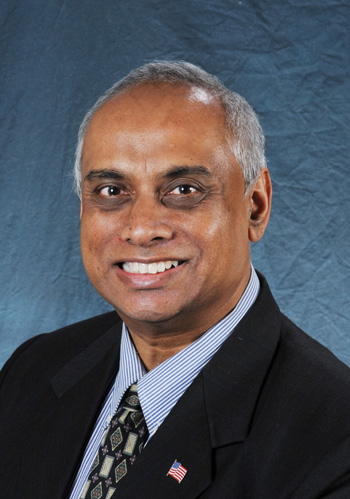
ProfilesA former journalist, Debashis “Deb” Aikat (pronounced EYE-cut) is Associate Professor, and since 1995 has been based in the School of Journalism and Mass Communication at the University of North Carolina at Chapel Hill, which is classified by the Carnegie Foundation as a leading research university.

Deb Aikat, School of Journalism, at the University of North Carolina at Chapel Hill.An award-winning researcher and teacher, Dr. Aikat theorizes the role of social media, international communication, news media and the future of communication in the digital age. Dr. Aikat’s research interests range across the media. His research has been published in book chapters and refereed journals such as First Amendment Studies, Health Communication, International Journal of Interactive Communication Systems and Technologies, Global Media and Communication, Electronic Journal of Communication, Popular Music and Society, Convergence: The Journal of Research into New Media Technologies, and publications of the Association for Computing Machinery (ACM), and Microsoft Corporation. His research has been funded by the government (e.g. the US Department of State, US Department of Education’s Title VI grants), corporate foundations (e.g. the Freedom Forum, the Scripps Howard Foundation) and the industry (e.g. IBM, Knight Ridder). He has consulted pro bono with the Town of Chapel Hill, Orange County (NC), and the Chapel Hill-Carrboro City Schools among other organizations.

The Scripps Howard Foundation recognized Dr. Aikat as the inaugural winner of the “National Journalism Teacher of the Year award” (2003) for his “distinguished service to journalism education.” The International Radio and Television Society named him the Coltrin Communications Professor of the Year (1997). Dr. Aikat served from 2007 through 2013 as an elected member of the Accrediting Council on Education in Journalism and Mass Communications (ACEJMC), which evaluates journalism and mass communications programs in universities. He chaired in 2009-10 the Association for Education in Journalism and Mass Communication (AEJMC)’s Committee on Teaching. He has served since 2011 as an elected member of the AEJMC’s Committee on Professional Freedom &
Responsibility, which is designated as the “conscience of AEJMC” for fostering freedom, ethics, diversity, and public service.

Besides teaching on-campus classes, Dr. Aikat has taught online courses since 1997. He conceptualized in 1997 UNC’s first online course in journalism and developed in 2003 a graduate level online certificate program in “Technology and Communication.” He has won fellowships from renowned research institutions such as the Institute for the Arts and Humanities (2000 & 2003) and the Journalism Leadership Institute in Diversity (2004-05) of the AEJMC and the Association of Schools of Journalism and Mass Communication (ASJMC).

His research and teaching excellence awards include a 2015 Scripps Howard Foundation Research Grant to Foster Academy-Industry Ties, AEJMC Top Research Paper Awards, a Distinguished Teaching Award for Post-Baccalaureate Instruction (2003), UNC-Chapel Hill’s highest honor for excellence in graduate studies, the David Brinkley Teaching Excellence Award (2000), AEJMC’s Baskett Mosse Award (1999), the Tanner Faculty Award for Excellence in Undergraduate Teaching (1999), the UNC-Chapel Hill Students’ Undergraduate Teaching Award (1998), and an IBM Research Fund Award (1995). Several UNC-Chapel Hill senior classes honored him with the Edward Kidder Graham-Favorite Faculty Awards (1997 through 2005). He was selected by his peers to serve on the UNC Honor Court’s Faculty Hearings Board Panel that adjudicates violations of academic honesty, personal integrity, and responsible citizenship.

Dr. Aikat earned in 1995 a Ph.D. in Mass Communication and Journalism from the Ohio University’s Scripps School of Journalism. He completed in 1990 a Certificate in American Political Culture from the New York University. He has lectured in Asia, Australia, Europe, and the Americas. He graduated with academic distinction by attaining first rank in M. A. Journalism in 1990 from the University of Calcutta, India, where he also earned a B. A. with honors in English literature in 1984. He worked as a journalist in India for the Ananda Bazar Patrika’s The Telegraph newspaper from 1984 through 1992. He also reported for the BBC World Service.

Born in India, Dr. Aikat and his wife, Dr. Jay Aikat, became U.S. citizens in 2003. Jay serves on the faculty in the Department of Computer Science at UNC-Chapel Hill. They live in Chapel Hill, North Carolina, with their two children.

Nancy Duxbury Profile

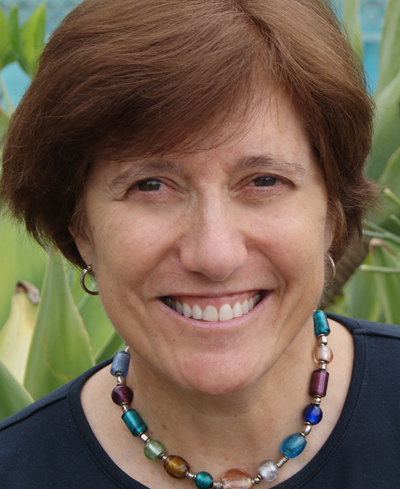
ProfilesNancy Duxbury holds a doctorate in Communication from Simon Fraser University, Canada, specializing in cultural policy. Since 2009, she has been a Senior Researcher at the Centre for Social Studies, University of Coimbra, Portugal and, since 2010, Co-coordinator of its Cities, Cultures and Architecture Research Group.

Nancy DuxburyHer research has examined the integration of culture in local sustainable development, with an emphasis on the policy and planning frameworks that enable this; culture-based development models in smaller communities; and the emerging interdisciplinary field of cultural mapping, which bridges insights from academic inquiry, community practice, and artistic approaches to understanding and articulating place. Building on these foundations, she is now the Principal Investigator for a major three-year research and demonstration project on creative tourism in Portugal, entitled “CREATOUR: Creative Tourism Destination Development in Small Cities and Rural Areas.” The project involves five Portuguese research centres and 40 pilots, and aims to link the cultural and tourism sectors within a context of inclusive and sustainable local and regional development. Her research is interdisciplinary in nature and her events and publications are designed as meeting places that bring together academic and practice-based knowledges, including artistic perspectives and approaches.

She is a member of the European Expert Network on Culture, and was Chair of the Policies working group of a European research network on “Investigating Cultural Sustainability” (2011-2015). She is also an Adjunct Professor of the School of Communication at Simon Fraser University, of the School of Urban and Regional Planning at University of Waterloo, and of the Department of Journalism, Communication, and New Media at  Thompson Rivers University, Canada. She was co-founder and Director of Research of the Creative City Network of Canada, and received a Cultural Leadership Award from the organization in 2017.

More information on her research and publications can be obtained from her academic homepage.

Selected publications

Books

Duxbury, N., Rahim, S., Silva, S., and Vinagre de Castro, T. (Eds.). (2024). Creative tourism, regenerative development, and destination resilience: Insights and reflections. Coimbra, Portugal: CREATOUR Observatory on Culture and Tourism for Local Development, Centre for Social Studies, University of Coimbra. ISBN: 978-989-8847-85-0..

Duxbury, N., & G. Richards (Eds.). (2019). A research agenda for creative tourism. Cheltenham, UK: Edward Elgar Publishing.

Duxbury, N., Garrett-Petts, W. F., & Longley, A. (Eds.). (2018). Artistic approaches to cultural mapping: Activating imaginaries and means of knowing. London: Routledge.

Kangas, A., N. Duxbury, & C. De Beukelaer (Eds.). (2018). Cultural policies for sustainable development. London: Routledge.

Duxbury, N., Garrett-Petts, W. F., & MacLennan, D. (Eds.). (2015). Cultural mapping as cultural inquiry. New York: Routledge.

Hristova, S., Dragićević Šešić, M., & Duxbury, M. (Eds.). (2015). Culture and sustainability in European cities: Imagining Europolis. London: Routledge.

Duxbury, N. (Ed.). (2013). Animation of public space through the arts: Toward more sustainable communities. Coimbra: Almedina.

Guest edited journal issues

Kangas, A., Duxbury, N., & De Beukelaer, C. (Eds.). (2017). Special issue: Cultural policies for sustainable development. International Journal of Cultural Policy, 23(1).

Duxbury, N., & Longley, A. (Eds.). (2016). Special issue: Cultural mapping: Making the intangible visible. City, Culture and Society, 7(1).

Duxbury, N., & Jeannotte, M. S. (Eds.). (2015). Special double issue: Cultural mapping in planning and development contextsCulture and Local Governance / Culture et Gouvernance Locale, 5(1-2).

Saper, C., & Duxbury, N. (Eds.). (2015). Special Issue: Mapping culture multimodally. HyperRhiz, 12.

Duxbury, N., Canto Moniz C., & Sgueo, G. (Eds.). (2013). Special Issue: Rethinking urban inclusion: Spaces, mobilisations, interventions. Cescontexto – Debates, 2.

Duxbury, N., Fortuna, C., Bandeirinha, J. A., & Peixoto, P. (Eds.). (2012). Special Issue: Em torno da cidade criativa (Beyond the creative city). Revista Crítica de Ciências Sociais, 99.

Duxbury, N., & Jeannotte, M. S. (Eds.). (2011). Special double issue: Culture and sustainable communitiesCulture and Local Governance / Culture et Gouvernance Locale, 3 (1-2).

Articles

Duxbury, N., Bakas, F. E. & Pato de Carvalho, C. (2019). Why is research–practice collaboration so challenging to achieve?: A creative tourism experiment. Tourism Geographies.

Bakas, F. E., Duxbury, N., & Vinagre de Castro, T. (2019). Creative tourism: Catalysing artisan entrepreneur networks in rural Portugal. International Journal of Entrepreneurial Behaviour and Research, 25(4), 731-752.

Bakas, F. E., & Duxbury, N. (2018). Development of rural areas and small cities through creative tourism: The CREATOUR project.Revista: Anais Brasileiros de Estudos Turísticos (ABET), 8(3) (Set./Dez.), pp. 74-84.

Kangas, A., Duxbury, N., & De Beukelaer, C. (2017). Introduction: Cultural policies for sustainable development. International Journal of Cultural Policy, 23(1).

Duxbury, N., Kangas, A., & De Beukelaer, C. (2017). Cultural policies for sustainable development: Four strategic paths. International Journal of Cultural Policy, 23(1).

Longley, A., & Duxbury, N. (2016). Introduction: Mapping cultural intangibles. City, Culture and Society, 7(1): 1-7.

Duxbury, N. (2015). Positioning cultural mapping in planning and development contexts: An introduction. Culture and Local Governance, 5(1-2): 1-7.

Jeannotte, M.S., & Duxbury, N. (2015). Advancing knowledge through grassroots experiments: Connecting culture and sustainability. Journal of Arts Management, Law and Society, 45(2), 84-99.

Duxbury, N., & Saper, C. (2015). Introduction: Mapping culture multimodally. HyperRhiz, 12.

Carvalho, C. P., & Duxbury, N. (2014). Artistic intervention projects and cultural memory: Experiences from Portugal’s centre region. Culture / Kultura: International Journal for Cultural Research, 4(8), 21-32.

Duxbury, N. (2014). Cultural governance in sustainable cities. Kult-ur: Interdisciplinary journal on the culture of the city, 1(1), 165-182. doi: http://dx.doi.org/10.6035/Kult-ur.2014.1.1.7.

Duxbury, N., & Jeannotte, M. S.. (2012). Including culture in sustainability: An assessment of Canada’s integrated community sustainability plans. International Journal of Urban Sustainable Development, 4(1), 1‑19. doi:10.1080/19463138.2012.670116

Book chapters

Duxbury, N. (2019). Thoughts on future directions: Art and culture in transformations toward greater sustainability. In V. Riccardi & V. Ferreira (Eds.), Creative responses to sustainability – Portugal green guide 2019 (pp. 9-14). Singapore: Asia-Europe Foundation (ASEF).

Duxbury, N., & Richards, G. (2019). Towards a research agenda for creative tourism: Developments, diversity, and dynamics. In N. Duxbury & G. Richards (Eds.), A research agenda for creative tourism (pp. 1–14). Cheltenham, UK: Edward Elgar Publishing.

Duxbury, N., & Richards, G. (2019). Towards a research agenda in creative tourism: A synthesis of suggested future research trajectories. In N. Duxbury & G. Richards (Eds.), A research agenda for creative tourism (pp. 182–192). Cheltenham, UK: Edward Elgar Publishing.

Duxbury, N., Garrett-Petts, W. F., & Longley, A. (2018). An introduction to the art of cultural mapping: Activating imaginaries and means of knowing. In N. Duxbury, W. F. Garrett-Petts & A. Longley (Eds.), Artistic approaches to cultural mapping: Activating imaginaries and means of knowing. London: Routledge.

Duxbury, N., Kangas, A., & De Beukelaer, C. (2018). Cultural policies for sustainable development: Four strategic paths. In A. Kangas, N. Duxbury & C. De Beukelaer (Eds.), Cultural policies for sustainable development. London: Routledge.

Kangas, A., Duxbury, N., & De Beukelaer, C. (2018). Introduction: Cultural policies for sustainable development. In A. Kangas, N. Duxbury, & C. De Beukelaer (Eds.), Cultural Policies for Sustainable Development. London: Routledge.

Ferreira, I., & Duxbury, N. (2017). Cultural projects, public participation, and small city sustainability. In K. Soini, S. Asikainen, K. Plebanzcyk, L. Rojac-Mijatovic, & C. Brites (Eds.), Perspectives for culture in sustainable futures: Theories, policies, practices. Jyväskylä, Finland: University of Jyväskylä.

Duxbury, N., Baltà, J., Hosagrahar, J., & Pascual, J. (2016). Culture in urban development policies: An agenda for local governments. In Culture: Urban future – Global report on culture for sustainable urban development (pp. 204-211). Paris: UNESCO.

Cardielos, J.P., Lobo, R., Peixoto, P., Mota, E., Duxbury, N., & Caiado, P. (2016). Mondego: o surdo murmúrio do rio. In P. Peixoto & J.P. Cardielos (Eds.), A Água como património: Experiéncias de requalificação das cidades com água e das paisagens fluviais (pp. 95-112). Coimbra: Impressa da Universidade de Coimbra (Coimbra University Press).

Duxbury, N., & Jeannotte, M. S. (2015). Making it real: Measures of culture in local sustainability planning and implementation. In L. MacDowall, M. Badham, E. Blomkamp, and K. Dunphy (Eds.), Making culture count: The politics of cultural measurement. Hampshire, UK: Palgrave Macmillan.

Duxbury, N., Garrett-Petts, W. F., & MacLennan, D. (2015). Cultural mapping as cultural inquiry: Introduction to an emerging field of practice. In N. Duxbury, W.F. Garrett-Petts & D. MacLennan (Eds.), Cultural mapping as cultural inquiry (pp. 1-42). New York: Routledge.

Duxbury, N. (2015). European cities as cultural projects: Where is culture in urban sustainability policy? In S. Hristova, M. Dragićević Šešić & N. Duxbury (Eds.), Culture and sustainability in European cities: Imagining Europolis (pp. 69-85). London: Routledge.

Duxbury, N., & Jeannotte, M. S. (2013). Global cultural governance policy. In G. Young & D. Stevenson (Eds.), The Ashgate research companion to planning and culture (pp. 361-376). London: Ashgate.

Duxbury, N., Cullen, C., & Pascual, J. (2012). Cities, culture and sustainable development. In H.K. Anheier, Y.R. Isar & M. Hoelscher (Eds.), Cities, cultural policy and governance (pp. 73-86). London: Sage.

Nelson, R., Duxbury, N., & Murray, C. (2012). Cultural and creative economy strategies for community transformation: Four approaches. In J. Parkins & M. Reed (Eds.), The social transformation of rural Canada: New insights into community, culture and citizenship (pp. 368-386). Vancouver: University of British Columbia Press.

Duxbury, N. (2011). Shifting strategies and contexts for culture in small city planning: Interlinking quality of life, economic development, downtown vitality, and community sustainability. In A. Lorentzen & B. van Heur (Eds.), Cultural political economy of small cities (pp. 161-178). London: Routledge.

Duxbury, N., & Murray, C. (2010). Creative spaces. In H.K. Anheier, Y.R. Isar & C. Waterman (Eds.), Cultural expression, creativity and innovation. London: Sage.


Work for CID:

Nancy Duxbury wrote KC69: Cultural Mapping.

Ali Karakas Profile

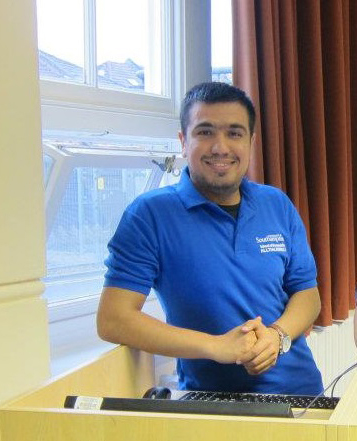
ProfilesAli Karakas has a B.A. in English Language Teaching from Uludag University, and took MA courses at Hacettepe University, Turkey. He is also a member of academic staff in the ELT department of Mehmet Akif Ersoy University, which has sponsored his current PhD project at Southampton University, UK.

Ali Karakas

Currently, he is based in Southampton and working towards completing his PhD research, entitled ‘Turkish Lecturers’ and Students’ Perceptions of English in English-Medium Universities’. He is a member of several research centers and groups, such as Centre for Global Englishes (CGE), English Language Teacher Education Research (ELTER) and English as Lingua Franca Research Network (ELF-Ren). His research interests primarily include English as a Lingua Franca, Language Policies, Language Attitudes and Ideologies, Language Teacher Education and Intercultural Communication. He has presented papers and published articles in various journals and magazines on topics of his research interests.

More information on his research and publications can be obtained from his academic homepage: http://abs.mehmetakif.edu.tr/akarakas

Selected Publications

Articles

Karakaş, A. & Karaca, G. (2011). Use And Importance Of Illustration As Materials In Foreign Language Teaching. Balıkesir University. The Journal of Social Sciences Institute, 14(26), 351-357.

Karakaş, A. & Karaca, G. (2011). Yabancı Dil Öğretiminde Resmin Materyal Olarak Kullanımı ve Önemi. Yaşadıkça Eğitim Dergisi. Sayı 110, Nisan-Mayıs-Haziran, s. 14-19.

Karakaş, A. & Sarıçoban, A. (2012). The Impact of Watching Subtitled Animated Cartoons on Incidental Vocabulary Learning of ELT Students. The Journal of Teaching English with Technology, 12(4), 3-15.

Karakaş, A. (2011). Motivational Attitudes of ELT Students towards Using Computers for Writing and Communication. The Journal of Teaching English with Technology, 11(3), 37-53.

Karakaş, A. (2012). English as a Lingua Franca: Practices of Academics in a Turkish University. Uşak Üniversitesi Sosyal Bilimler Dergisi, 5(3), 160-179.

Karakaş, A. (2012). Evaluation of the English Language Teacher Education Program in Turkey. ELT Weekly Newsletter, 4(15).

Karakaş, A. (2012). Foreign Accent Problem of Non-native Teachers of English. Humanising Language Teaching, 14(5).

Karakaş, A. (2012). How to cope with Speaking Anxiety in EFL Classrooms. ELT Weekly Newsletter, 4(28).

Karakaş, A. (2013). Intercultural Attitudes of Turkish Students Studying in a UK University. Journal of Intercultural Communication, 31.

Karakaş, A. (2013). Is Communicative Language Teaching a Panacea in ELT? – Student and Teacher Perspectives. Journal of Second and Multiple Language Acquisition, 1(1), 1-19.

Karakaş, A. (2013). The Expansion of the English Language across Turkey: Threat or Opportunity. Mediterranean Journal of Humanities, 3(2), 159-171. DOI: 10.13114/MJH/201322477

Karakaş, A. (2014). Lecturers’ Perceptions of Their English Abilities and Language Use in English-Medium Universities. International Journal on New Trends in Education and Their Implications, 5(2), 114-125.

Karakaş, A. (2015). Orientations towards English among English-medium Instruction Students. Englishes in Practice, 2(1), 1-38. DOI 10.1515/eip-2015-0001

Korumaz, M. & Karakaş, A. (2014). An Investigation of English Language Instructors’ Attitudes towards Reflective Teaching. Pegem Journal of Education & Instruction, 4(1), 27-46. DOI: 10.14527/pegegog.2014.001


Work for CID:

Ali Karakas wrote KC66: English Medium Instruction, and translated it into Turkish.

Jonathan Shailor Profile

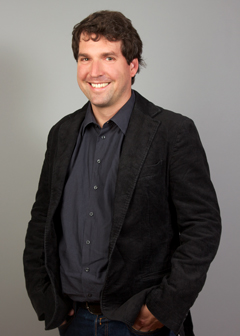
ProfilesJonathan Shailor, Ph.D., Communication, University of Massachusetts, is a Professor at the University of Wisconsin-Parkside in Kenosha, where he directs the Certificate Program in Conflict Analysis and Resolution.

Jonathan Shailor

He is founder and director of The Shakespeare Prison Project in Wisconsin, and a 2015 Fellow with the CMM Institute for Personal and Social Evolution. His teaching, research, and community service focus on the uses of storytelling, dialogue and performance as vehicles for conflict transformation.

Selected publications:

Shailor, J. (2013). Kings, warriors, magicians, and lovers: Prison theater and alternative performances of masculinity. In S. J. Hartnett, E. Novek & J. K. Wood (Eds.), Working for justice: A handbook of prison education and activism (pp. 13-38). Champaign: University of Illinois Press.

Shailor, J. (Ed.). (2011). Performing new lives: Prison theatre. London: Jessica Kingsley Publishers.

Shailor, J. (2011). Humanizing education behind bars: The theatre of empowerment and the Shakespeare project. In S. Hartnett (Ed.), Empowerment or incarceration? Reclaiming hope and justice from the prison-Industrial complex (pp. 229-251). Champaign: University of Illinois Press.

Shailor, J. (2009). Improvising a new life: Interactive theater. In K.J. Gergen, S.M. Schrader & M. Gergen (Eds.), Constructing worlds together: Interpersonal communication as relational process. New York: Pearson Education.

Shailor, J. (2008). When muddy flowers bloom: The Shakespeare Project at Racine Correctional Institution. Publications of the Modern Language Association of America, 123(3), 632-641.

Shailor, J. (2008). A professor’s perspective: The Shakespeare Project at Racine Correctional Institution. In K. Brune (Ed.), Creating behind the razor wire: Perspectives from arts in corrections in the United States (pp. 38-41). Published by Lulu.com.

Shailor, J. (1999). Desenvolvendo uma abordagem transformacional à prática da mediação: Considerações teóricas e práticas. In D. F. Schnitman & S. Littlejohn (Eds.), Novos paradigmas en mediação. Porto Alegre, Brazil: Editora Artes Médicas Sul Ltda.

Shailor, J. (1997). Context and the coordinated management of meaning. In J. L. Owen (Ed.), Context and communication behavior. Reno, NV: Context Press.

Shailor, J. (1994). Empowerment in dispute mediation: A critical analysis of communication. New York: Greenwood Press.


Work for CID:
Jonathan Shailor wrote KC65: Conflict Transformation.

Elenie Opffer Profile

ProfilesElenie Opffer, Ph.D., Communications, University of Colorado, Boulder is a faculty member at the Western Institute of Social Research in Berkeley, CA. She is also affiliate faculty at California Institute of Integral Studies in San Francisco, CA and serves as a teaching fellow at the Intercultural Communication Institute’s summer intensive program.

Elenie Opffer

Her research focuses on studies investigating the intersection of cultural, gender, and/or sexual identities and the ways in which people construct, negotiate and transform their identities and communities. She is currently involved in applied research to aid peacebuilding and gender violence reduction efforts in high conflict areas of Nigeria. She serves as a senior advisor to the Center for Sustainable Development and Research in Africa, and the National Peace Summit Group of Nigeria. While she has conducted ethnographic and discourse analysis studies, her passion is for conducting action research where the results can be immediately applied to social transformation efforts. In this endeavor, she has created conflict transformation materials and LGBTQ Safe Zone Materials used in universities and communities.

Selected publications:

Opffer, E. (2010). The rhetoric of Rocky Mountain Women: Talking, trekking, and transforming a male preserve. In L.K. Fuller (Ed.), Sexual sports rhetoric globally. New York: Peter Lang.

Opffer, E. (2005). My mother is Greek and my father is plain: Growing up Greek in America. In W. Leeds-Hurwitz (Ed.), From generation to generation: Maintaining cultural identity over time. Cresskill, N.J.: Hampton Press.

Opffer, E. (1997). A Systemic Approach to school conflict resolution programs. Theory to Practice, 36(1), 46-52.

Opffer, E. (1996). Constructively confronting intractable conflict: Lessons from the Amendment II controversy. Working Paper 96-4. Boulder: Conflict Resolution Consortium, University of Colorado.

Opffer, E. (1994). Coming out in class: Notes from the college classroom. In R.J. Ringer (Ed.), Queer words, queer images: Communication and the construction of homosexuality. New York: New York University Press.


Work for CID:
Elenie Opffer wrote KC64: Peacebuilding and KC71: Safe Space, and was interviewed on these topics.

Monika Kirloskar-Steinbach Profile

Profiles

Monika Kirloskar-Steinbach is professor of philosophy at University of Konstanz, Germany.

She engages with normative issues which are crucial to modern, pluralistic societies in her work on immigration ethics, cultural pluralism, structural injustice, etc. She seeks to relate her work in this field with her research on the new, burgeoning field of intercultural and comparative philosophy. Here, her main focus lies on how the plurality of standpoints driving this discipline of philosophy can be buttressed. In this regard, she also examines the role of intercultural and comparative philosophy in developing (societal) narratives which facilitate cross-cultural understanding.

Kirloskar-Steinbach initiated the bi-annual, peer-reviewed journal Confluence: Online Journal of World Philosophies (Karl Alber Verlag, Munich/Freiburg), which she currently co-edits with Jim Maffie (University of Maryland). She is currently the Vice-President of the Society of Intercultural Philosophy, Germany.

Kirloskar-Steinbach was born and grew up in India.

Some of her publications in English are:

Kirloskar-Steinbach, M., Ramana, G., & Maffie, J. (2014). Introducing Confluence: A thematic essay. Confluence, 1, 7-63.

Kirloskar-Steinbach, M. (2011). Humanistic values in Indian and Chinese traditions. In C. Dierksmeier et al. (Eds.), Humanistic ethics in the age of globality: Normative foundations for business in society (pp. 225-245). Basingstoke: Palgrave Macmillian.

Kirloskar-Steinbach, M. (2002). Toleration in modern liberal discourse with special reference to Radhakrishnan’s Tolerant Hinduism. Journal of Indian Philosophy, 30, 389-402.

Dharampal-Frick, G., Kirloskar-Steinbach, M., Dwyer, R., &  Phalkey J. (Eds.). (In press). Key concepts in modern Indian Studies. New York: Oxford University Press.

Some of her publications in German are:

Kirloskar-Steinbach, M. (In press). Wie lassen sich liberale Ideale auch auf Immigrierte ausweiten? Eine erste Skizze. Zeitschrift für philosophische Forschung.

Kirloskar-Steinbach, M. (2010). Interkulturalität und Menschenrechtsbegründungen. Eine indische Perspektive. In J. Werkner et al (Eds.), Religion, Menschenrechte und Menschenrechtspolitik, Beiträge zu Genese, Geltung und Wirkung eines aktuellen politischen Spannungsfeldes (pp. 219-235). Wiesbaden: Verlag für Sozialwissenschaften.

Kirloskar-Steinbach, M. (2007). Nationale Identität und kultureller Pluralismus. In Zurbuchen, S. (Ed.), Bürgerschaft und Migration. Einwanderung und Einbürgerung aus ethisch-politischer Perspektive (pp. 255-287). Muenster: LIT-Verlag.

Kirloskar-Steinbach, M., Dharampal-Frick, G., & Friele, M. (Eds.). (2012). Die Interkulturalitätsdebatte – Leit-und Streitbegriffe/Intercultural Discourse – Key and Contested Concepts. Freiburg: Verlag Karl Alber.


Work for CID:
Monika Kirloskar-Steinbach wrote KC63: Interkulturelle Philosophie.

Liubou Uladykouskaja Profile

Profiles
Liubou Uladykouskaja
is the Founder and Director General of the Institution “Intercultural Dialogue” in Minsk, Belarus.

Liubou Uladykouskaja

In spring 2015 she is also a Fulbright Scholar at the University of Florida, in Gainesville. She earned her PhD in Belarusian Studies in 1993. She is the author of 320 publications on the problems of intercultural dialogue, nation building, identity, preservation of  cultural originality, democratic transformation, globalization, and the USA, including six books: Spiritual Ideals in the Modern Belarusian Culture and Values of Globalism (2009), How to Preserve Cultural Originality (2010), Discovery of My America, Or Why do the Belarusians Need the USA? (2012), and Intercultural Dialogue: American Paradigm (2014).

She established the Center for Intercultural Dialogue (2010), the Inter-Cultural Dialogue Department of the Academy of Sciences of Belarus (2011), NG Institution “Intercultural Dialogue” (2012), the Laboratory for Intercultural Communication at Belarusian State University (2013). She also has initiated and successfully implemented multiple civic society activities (organization and running of constantly working exhibitions, libraries, art galleries, clubs, ex. the Terminological Commission at the Ministry of Education, the American Club in Minsk, the Belarusian Club of Christian Intellectuals, the Discussion Club “Disputant” at the scientific magazine Higher Education) and international projects, including 190 international conferences, seminars, round tables and presentations. She has participated in joint civic and scientific projects in Poland, Great Britain, Germany, Luxembourg, France, USA, Sweden, Norway, Italy, Lithuania, Latvia, and Ukraine. She’s worked as a Chief of the Research Laboratory for Intercultural Communication (Belarusian State University), as Department Chair, Institute of Sociology, as a Director of the Center for Multicultural Education and Deputy Director, a Chief Administrative Unit for Science (Belarusian State University), as a Director of the F. Skaryna National Scientific and Educational Center, in the Ministry of Education and Science of Belarus (supervising social science and humanities curricula at universities), as a Lecturer in Belarusian Studies. Uladykouskaja also worked as a journalist, including radio and TV performances.


Work for CID:

Liubou Uladykouskaja wrote KC61: ВЫХАВАННЕ and then translated it into Belarusian and Russian.

Leah Sprain Profile

Profiles
Leah Sprain
is an Assistant Professor of Communication at the University of Colorado Boulder.

Leah Sprain

Her research focuses on democratic engagement, studying how specific communication practices facilitate and inhibit democratic action. Her research and teaching draw on language and social interaction perspectives to explore deliberation, environmental communication, and social movement activism. Outreach and praxis are crucial to democratic engagement thus much of her research is collaborative and focused on the practice-theory interface. As an ethnographer of communication, she has conducted extended fieldwork in Nicaragua and the United States. She co-edited Social Movement to Address Climate Change: Local Steps for Global Action, and her work appears in the Journal of Applied Communication Research, Environmental Communication: A Journal of Nature and Culture, and Communication Theory. She received her BA from Pacific Lutheran University, and MA and PhD from the University of Washington.

Key Publications:

Carcasson, M. & Sprain, L. (in press). Beyond problem solving: Re-conceptualizing the work of public deliberation as deliberative inquiry. Communication Theory.

Sprain, L., Carcasson, M., & Merolla, A. (2014). Experts in public deliberation: Lessons from a deliberative design on water needs. Journal of Applied Communication Research, 42, 150-167.

Sprain, L. & Gastil, J. (2013). What does it mean to deliberate? An interpretive account of jurors’ expressed deliberative rules and premises. Communication Quarterly, 61, 151-171.

Sprain, L. & Boromisza-Habashi, D. (2013). The ethnographer of communication at the table: Building cultural competence, designing strategic action. Journal of Applied Communication Research, 41, 181-187. [Introduction to a Special Forum on Ethnography of Communication in Applied Communication Research]

Witteborn, S. & Sprain, L. (2010). Grouping processes in a public meeting from an ethnography of communication and cultural discourse analysis perspective. International Journal of Public Participation, 3, 14-35.

Endres, D., Sprain, L., & Peterson, T. R. (Eds.) (2009). Social movement to address climate change: Local steps for global action. Amherst, NY: Cambria Press.


Work for CID:
Leah Sprain wrote KC60: Deliberation.

Cynthia Gordon Profile

Profiles

Cynthia Gordon is Associate Professor in the Department of Linguistics at Georgetown University.

Cynthia Gordon

She uses theories and methods of discourse analysis to examine everyday social interaction across a range of contexts. She is particularly interested in interactional sociolinguistics, theories of framing and intertextuality, and the linguistic construction of relationships and identities. Her experience includes collaborative research projects on family, medical, educational, and online and mobile phone communication. She is author of Making Meanings, Creating Family: Intertextuality and Framing in Family Interaction (Oxford University Press, 2009) and co-editor (with Deborah Tannen and Shari Kendall) of Family Talk: Discourse and Identity in Four American Families (Oxford University Press, 2007). She is author or co-author of articles published in Language in Society, Qualitative Research, Linguistics and Education, Communication and Medicine, Research on Language and Social Interaction, Journal of Pragmatics, and Intercultural Management Quarterly.


Work for CID:
Cynthia Gordon wrote KC57: Contextualization Cues.