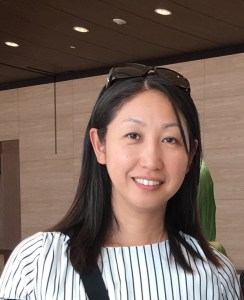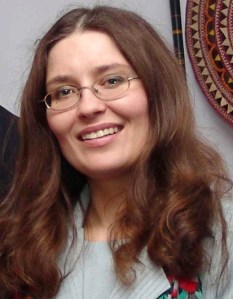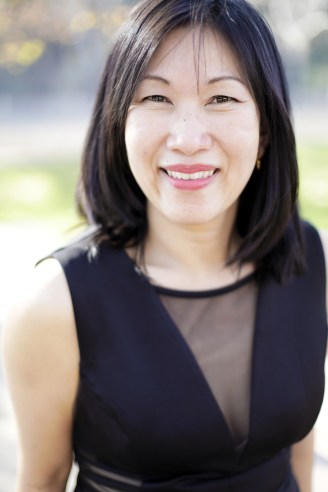
Emin Yiğit Koyuncuoğlu Profile

ProfilesEmin Yiğit Koyuncuoğlu is part of the European Solidarity Corps for Fundacja EkoRozwoju, an environmental organization in Wraclaw, Poland.

He has a BA in Communication Design and Management from the University of Anadolu (Turkey), including a year of studying Tourism Management at the University of Primorska (Slovenia). After graduation, he spent a year as Communications Assistant to Darüşşafaka Society, the oldest educational NGO in Turkey, providing high quality primary and high school education to students whose parent(s) are deceased.

While a student, he completed a Marketing internship in Tallinn (Estonia), and worked as a tour guide and as a staff member with Tourcon Turizm ve Kongre Hizmetleri in Antalya (Turkey), helping that organization prepare for national and international conferences. As a travel enthusiast and hitchhiker, he manages a Facebook page about his experiences, improving social media and video editing skills. He considers himself a linguaphile currently learning the art of translation.


Work for CID:

Emin Yiğit Koyuncuoğlu translated KC78: Language and Intercultural Communication, and KC94: Cross-Cultural Kids into Turkish.

Amparo Huertas Bailén Profile

ProfilesAmparo Huertas Bailén (Ph.D., UAB, Spain) is professor in the Department of Audiovisual Communication and Advertising at Autonomous University of Barcelona (UAB) and director of the Institute of Communication at UAB (InCom-UAB).

Amparo Huertas

She is also a member of the Table for the Diversity in Broadcasting (Audiovisual Council in Catalonia-Spain). Her research is focused on the relationship between culture and communication from the perspective of social minorities. The objective of most of her projects is to understand the cultural consumption of migrant population and its influence on their adaptation process in a new country with gender perspective.

Selected publications:

Huertas, A. (2020). Interreligious dialogue in public service broadcasting. A case study in Catalonia (Spain). Religions, 11(9), 441.

Huertas, A., & Peres, L. (2020). Migrantes que se autoproclaman autoridades discursives: “¿Qué pasa con Venezuela?” Revista CIDOB d’Afers Internacionals, 124, 147-169.

Huertas, A. (2019). Migrantes en el entorno digital: Espacios y conexiones. In V. Rocco Lozano (Ed.), Éxodos y geopolíticas (pp. 119-137). Madrid, Spain: Editorial Dykinson.

Huertas, A. (2016). Culturas que conviven, ¿pero se interrelacionan? In G. Lobillo, A. Castro-Higueras, A. Sedeño, & M. Aguilera (Eds.). Prácticas culturales y movimientos sociales en el Mediterráneo: ¿Un cambio de época?  (pp. 13-22). Málaga, Spain: Universidad de Málaga.

Huertas, A., & Martínez, Y. (2016). La adaptación de la población migrante desde sus consumos culturales. In F. Gervasi (Ed.), Diversidades: Perspectivas multidisciplinarias para el estudio de la interculturalidad y el desarrollo social (pp. 185-210). Coahuila, México: Universidad Autónoma de Coahuila; Ediciones de Laurel.

Huertas, A., & Martínez, Y. (2013). La educación mediática como herramienta de integración social en contextos migratorios: estudio de casos a partir de mapeados de proyectos. In D. Aranda, F. Sánchez & S. Creus (Eds.), Educación, medios y cultura de la participación. (pp. 263-278). Barcelona, Spain: Editorial UOC .

Huertas, A., & Martínez, Y. (2013). Maghrebi women in Spain: Family roles and media consumption. Observatorio (OBS*), Special Issue , 111-127.

Cogo, D., Elhajji, M., & Huertas, A. (Eds.) (2012). Diásporas, migraciones, tecnologías de la comunicación e identidades transnacionales. Bellaterra, Spain: Institut de la Comunicació, Universitat Autònoma de Barcelona.

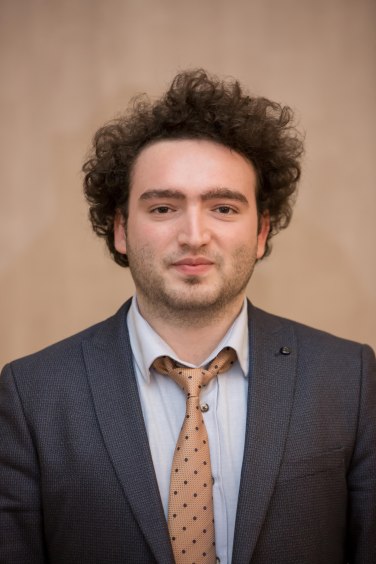
Leila Monaghan Profile

Profiles

Leila Monaghan (Ph.D., UCLA) teaches linguistic and cultural anthropology at Northern Arizona University. Leila Monaghan

Her research interests are broad and include the history of Deaf communities, the impact of HIV/AIDS, the narrative construction of disability, and the role of Native women in the Plains Indian Wars. Co-edited books include Many Ways to be Deaf, and Barriers and Belonging: Personal Narratives of Disability. She is also editor of the new journal Language, Culture and History.

Selected publications:

Jarman, M., Monaghan, L., & Harkin, A. Q. (Eds.). (2017). Barriers and belonging: Personal narratives of disability. Philadelphia: Temple University Press.

Monaghan, L. (2012) Perspectives on intercultural communication and discourse. In C.B. Paulston, S. Kiesling & E. Rangel (Eds.), Handbook of intercultural discourse and communication (pp. 19-36). Malden, MA: Wiley-Blackwell.

Monaghan, L. F., Schmaling, C., Nakamura, K., & Turner, G. H. (Eds.). (2003). Many ways to be deaf: International variation in Deaf communities. Washington, DC: Gallaudet University Press.

Monaghan, L., Goodman, J., & Robinson, J.M. (Eds.). (2012). A cultural approach to interpersonal communication: Essential readings. Malden, MA: Wiley/Blackwell.

Senghas, R.J., &  Monaghan, L. (2002) Signs of their times: Deaf communities and the culture of language. Annual Review of Anthropology, 31(1), 69-97.


Work for CID:

Leila Monaghan wrote KC11: Intercultural Discourse and Communication, and Constructing Intercultural Dialogues #5: Intercultural Dialogue and Deaf HIV/AIDS, as well as a guest post on Intercultural Challenges of the Deaf HIV/AIDS Epidemic.


NOTE: Leila Monaghan passed away in February 2022. She was one of the first to mention the Istanbul conference on intercultural dialogue in 2009 in print, a delight to correspond with, and she will be sorely missed.
– Wendy Leeds-Hurwitz

Elizabeth S. Parks Profile

ProfilesElizabeth S. Parks (Ph.D., University of Washington) is an Assistant Professor of Communication Studies at Colorado State University.Elizabeth Parks

She has degrees in Communication (M.A., University of Washington), Deaf Studies: Cultural Studies (M.A., Gallaudet University), Communication Studies (B.A., Creighton University), Sign Language Interpreting (Iowa Western Community College), and a graduate certificate in Values in Society (University of Washington). She uses her many years of international fieldwork experience with diverse cultural communities to ground her scholarship in listening and dialogue, communication ethics, cultural studies, and disability studies.

Embracing a mixed method approach that draws from both social sciences and humanities, her current research focuses on the ways in which cultural diversity and embodied difference impacts perceptions and practices of “good listening” that ultimately promote ethical dialogue across difference. Fluent in American Sign Language, she pays particular attention to the ways that diverse sensory and linguistic experiences impact the ways that we conceptualize and experience listening in our relationships. She works actively with the Center for Public Deliberation at Colorado State University to expand the ways that everyday dialogue and deliberation are practiced in everyday democracy. Her first book, The Ethics of Listening: Creating Space for Sustainable Dialogue, was published in 2019 and she is the recipient of a 2019-2020 J. William Fulbright Foreign Scholarship Award. She has twice served as a guest editor for Listening: Journal of Communication Ethics, Religion, and Culture and her research has been published in journals such as the Journal of International and Intercultural CommunicationInternational Journal of Listening, Ethics & Behavior, Journal of Research in Gender Studies, Critical Issues in Language Studies, Journal of International Communication, MultilinguaJournal of Cross-Cultural and Interlanguage Communication, and Organizational Development Journal.

Her personal website can be found at www.elizabethsparks.org.


Work for CID:

Elizabeth Parks wrote Constructing Intercultural Dialogues #6: The Privilege of Listening First. She also served as a judge for the 2020 CID Video Competition.

Michael Steppat Profile

ProfilesMichael Steppat has been Chair of Literature in English at the University of Bayreuth, Germany, where he also served as Academic Dean of the Faculty of Linguistics and Literary Studies for many years until he achieved Emeritus status in 2015.

Michael Steppat

He also holds a Professorial position of honor in Moscow from the Russian Federation’s Ministry of Higher Education and Science, having been coordinator of a cooperation network of five universities and becoming moderator of a research seminar at Moscow City University. In recent years he has been appointed regular visiting professor and external advising faculty member at Shanghai International Studies University, as well as visiting professor at Fu Jen Catholic University, Taipei (Taiwan); in earlier years he was invited as visiting professor at institutions in the UK and the USA. After receiving his Ph.D. from the University of Münster (Germany) and later his ‘Habilitation’ both from there and from the Free University of Berlin, he was a Fulbright scholar at the University of Texas at Austin, then research professor at Arizona State University. He has repeatedly been awarded the Myra and Charlton Hinman Fellowship of Amherst College and the Folger Shakespeare Library, Washington DC. To move in a new direction, he developed an internationally cooperative graduate program of Intercultural Anglophone Studies.

His book publications include Americanisms: Discourses of Exception, Exclusion, Exchange (2009); editions of several Renaissance Latin dramas (1991); Chances of Mischief: Variations of Fortune in Spenser (1990); co-editorship of the New Variorum edition of Shakespeare’s Antony and Cleopatra (1990); The Critical Reception of Shakespeare’s Antony and Cleopatra (1980); and a monograph on the early work of St. Augustine of Hippo (1980). Thus one research interest has been in the constructions of Orientalism in early modern literature. A collaborative volume on Writing Identity: The Construction of National Identity in American Literature (Moscow Region University Press, 2016) extends the research focus to identity discourses in American culture. As appointed member of the Modern Language Association of America’s editorial team for the International New Variorum Shakespeare, he continues to edit assigned plays. Spurred by an invitation from the London School of Economics and Social Science in 2011 to organize a workshop, based on the cooperative graduate program, Steppat has increasingly devoted attention to intercultural studies in connection with literature. The chief research interest in this regard is extending intercultural scrutiny of literature as well as film beyond historical comparison, and toward a processual or interactive notion of culture as practice and meeting ground. Imaginative representation of migrant situations and cultural minorities is especially pertinent in exploring the fertile terrain where literary and intercultural study discover each other.

In 2012 Steppat became Primary Investigator in a Bavarian government-sponsored Sino-German cooperative program on “Identity and Intercultural Communication: Perspectives on America”, which has enabled a symposium, the delivering of papers, and the conducting of workshops on intercultural literary study at various international institutions and conferences. The program has widened to considering Intercultural Communication as a resource for literary research. Connections between the range of research interests keep emerging, sometimes in unanticipated ways. Steppat has produced three volumes on Literature and Interculturality in the Intercultural Research book series, of which he is a co-editor (Shanghai Foreign Language Education Press, 2019). He has been appointed a member of the national Cluster of Excellence “Africa Multiple”. Apart from theoretical and conceptual orientations, major focal areas in this context are diasporic discourses, representations of cross-cultural identities, as well as variations of cross-cultural transfer. A key concern is to understand difficult meanings in the artifacts we study not as a mental act but rather as a social practice and a communicative achievement.


Work for CID:

Michael Steppat wrote the guest post, Literature for Intercultural Awareness: A “Key to Perception”? He has also served as a reviewer for translations into German.

Sachiyo M. Shearman Profile

ProfilesSachiyo M. Shearman (Ph. D., Michigan State University) is an associate professor in the School of Communication at East Carolina University.

Sachiyo M. Shearman

She teaches courses such as Cross-Cultural Communication, Conflict and Communication, and Research Methods both at the undergraduate and the graduate level.  Her research interests include cross-cultural comparative studies in communication styles and preferences, individual differences (such as dogmatism) and cognitive information processing in conflict resolution and intercultural communication in various contexts such as work and family.  Her research has been published in journals such as Communication Quarterly, Communication Research Reports, Human Communication Research, Journal of Intercultural Communication Research, Journal of Family Communication, The International Journal of Human Resources Management, and Asian Journal of Social Psychology.

Suzanne Majhanovich Profile

ProfilesSuzanne Majhanovich is Professor Emerita/Adjunct Research Professor at the Faculty of Education, Western University in London, Ontario, Canada.

Suzanne Majhanovich

She is the past Chair of the WCCES Standing Committee for Publications and the former editor of the journal Canadian and International Education. With Allan Pitman, she is the co-editor of the Series A Diversity of Voices published by Sense. She has served as guest editor of four special issues of the International Review of Education related to presentations from the World Congresses of Education held in Havana, Cuba; Sarajevo, Bosnia; Istanbul, Turkey and Buenos Aires, Argentina. Her research interests include first and second language acquisition, the teaching of English as a Foreign Language in international contexts, globalization, education restructuring, decentralization and privatization of education.

Selected publications:

Cristaldi, M., Majhanovich, S., & Pampanini, G. (Eds.). (2017). The orbital classroom. Global teachers committed to global democracy. Tehran, Iran: Nahj Al-Bakaghah International Research Institute.

Geo-JaJa, M. A., & Majhanovich, S. (2017). The promise and pitfalls of development aid: The elusive goal of aid that helps people help themselves. World Studies in Education18(1), 37-59.

Majhanovich, S., & Deyrich, M.-C. (Eds.). (2017).  Special issue: Language learning to support active social inclusion: Issues and challenges for lifelong learning. International Review of Education: Journal of Lifelong Learning, 63(3-4).

Geo-JaJa, M. A., & Majhanovich, S. (Eds.). (2016). Effects of Globalization on Education Systems and Development: Debates and Issues. Springer.

Gonçalves, S., & Majhanovich, S. (Eds.). (2016). Art and intercultural dialogue. Sense.

Majhanovich, S., & Malet, R. (Eds.). (2015). Building democracy through education on diversity.  Sense.

Susana Gonçalves Profile

Profiles

Susana Gonçalves, PhD in Psychology, is Professor at the Polytechnic of Coimbra, in Coimbra, Portugal.


Susana Gonçalves

She is a researcher at NIEFI, the Research Unit for Education, Training and Intervention (Escola Superior de Educação de Coimbra) and she teaches Psychology and Intercultural Education and a range of topics in the field of cultural studies. She is a member of Children’s Identity and Citizenship in Europe Association, where she served as Secretary General from September 2007 to September 2019. She was Director of the Centre for the Study and Advancement of Pedagogy in Higher Education (CINEP) from 2011 until 2021. Her main research interests are higher education, multimedia pedagogical resources, citizenship, and art in education. Some of her edited books are Pandemic, Disruption and Adjustment in Higher Education (forthcoming, Brill), Pandemic and Remote Teaching in Higher Education (2021, CINEP), Art in Diverse Social Settings (Emerald, 2021), Art and intercultural Dialogue (Sense, 2016), The Challenges of Diversity and Intercultural Encounters (2013, Routledge) and Intercultural Policies and Education (2011, Peter Lang). She is also a visual artist and a photographer.

ORCID: Susana Gonçalves https://orcid.org/0000-0001-6810-0735
Ciência ID 171B-C3AA-9C66


Work for CID:

Susana Gonçalves translated KC18: Intractable Conflict, KC54: Critical MomentsKC71: Safe Space and KC77: Negotiation into Portuguese. She also has served as a reviewer for Portuguese.

Agata Szkiela Profile

ProfilesAgata Szkiela is the Executive Director and founder of Translating Cultures©, a coaching and training company operating globally since 2005, which she created with her Canadian husband.
Agata Szkiela

She has been a Senior Lecturer at the European Academy of Diplomacy for almost 12 years, focusing mainly on cross-cultural communication, intercultural business etiquette, indigenous and aboriginal people, cultural shock, dimensions of culture and intercultural competence, intercultural dimension of diplomacy and cultural differences in business environment. She has over 15 years of professional experience in a multicultural diplomatic environment and UN structures.

Apart from her role as an intercultural educator, she is also a Global Mindset and Cultural Transition Coach, as well as Intercultural Business Communication and Relocation Trainer, working with such global companies as Communicaid, CultureWaves, Brookfield Global Relocation Services or ICUnet.AG. Her main interests and research concentrate around intercultural coaching, cross-cultural leadership and multinational team management as well as cultural identity and cultural shock. She is an active member of the SIETAR Poland training group and does pro bono intercultural education classes for kindergarten kids.

For more, see https://about.me/agataszkiela


Work for CID:

Agata Szkiela has served as a reviewer for translations into Polish.

Sunny Lie Profile

ProfilesSunny Lie (Ph.D., University of Massachusetts at Amherst) is Assistant Professor of Communication at California State Polytechnic University, Pomona (Calpoly Pomona).

Sunny Lie

Her research interests include religious communication, Asian American and Chinese diaspora identity.

She received her B.A. (Communication and East Asian Languages and Cultures) from the University of Southern California. She received her M.A. (Global Communications) from the University of Southern California and the London School of Economics and Political Science.


Recent publications:

Lie, S., & Shrikant, N. (2019). Editors’ statement for special issue: Stretching the boundaries of international and intercultural communication studies. Journal of International and Intercultural Communication, 12(2), 105-110.

Lie, S.(2018).  How best to evangelize to nonbelievers: Cultural persuasion in American and Chinese Indonesian evangelical Christian discourse on relational evangelism. Journal of International and Intercultural Communication, 11(1), 42-57.

Lie, S., & Bailey, B. (2017). The power of names in a Chinese Indonesian family’s negotiations of politics, culture, and identities. Journal of International and Intercultural Communication. DOI: http://www.tandfonline.com/doi/full/10.1080/17513057.2016.121657

Lie, S. (2016). Effective evangelism: Discourse surrounding best evangelical practices in a Chinese Indonesian Reformed Evangelical (CIREC) community in Boston, MA. In D. Carbaugh (Ed.), Handbook of communication in cross-cultural perspective. New York: Taylor and Francis.

Lie, S. (2015). Messengers of the good news: Cultural discourse of Chinese Indonesian Evangelical Christian (CIEC) identity. China Media Research, 11(1), 87-98.

Bailey, B., & Lie, S. (2013). The politics of names among Chinese Indonesians in Java. Journal of Linguistic Anthropology, 23(1), 21-40.


Work for CID:

Sunny Lie wrote KC80: Cultural Discourse Analysis.