These fictions we call disciplines

An article growing out of research started as a Fellow at the Collegium de Lyon in 2009 has just been published:

Leeds-Hurwitz, W. (2012). These fictions we call disciplines. Electronic Journal of Communication/La Revue Electronique de Communication, 22(3-4). Available from: http://www.cios.org/www/ejcmain.htm

Abstract: Accepting that disciplines are social constructions implies expanding current practice in four directions: incorporating disciplinary history, cognate disciplines, international variations, and rival subdisciplines. Intercultural Communication serves as a concrete case study for how these implications play out. Consideration of the broader impact of these issues on the future of social construction research leads to concluding discussion of the characteristics required of more adequately prepared scholars.

Here’s a quote relevant to my work with the Center for Intercultural Dialogue:

“There can be no more literal form of alien knowledge than that produced by foreign scholars. Their research agendas have different histories, so they have developed different traditions of investigation, whether methods, theories, or topics. One result is that foreign research can be difficult to understand, requiring time and effort spent developing familiarity with the vocabulary used and assumptions made. Yet the result repays the time and effort: just as looking at the past reveals paths not taken, so does looking at research conducted in other countries.”

Wendy Leeds-Hurwitz, Director
Center for Intercultural Dialogue

Save

Do You See Ads on the Center’s Site?

About CIDToday I was notified that someone looking at this website is seeing ads on many pages. I see none, and had thought there were none appearing for others as well. After some checking on the WordPress help and users sites, it seems the more traffic generated, the more ads appear. Officially, the count is supposed to be very few, and only on a few pages. And those who have their own WordPress site don’t see any if they are logged in.

I need to know how much of an issue this is, and for how many of the people who come to this site. There is a way to pay to ensure no ads appear for anyone, it’s just a matter of money. So, if you see ads on this site, please let me know by posting a comment below. And let me know if you see them on just one page, or on lots of pages. It was the Fulbright scholar pages (see the category list in the right column) that were a problem, but there may be an issue for other pages as well.

Thanks for your help!
Wendy Leeds-Hurwitz, Director
Center for Intercultural Dialogue
UPDATE: Since it turned out that some people do see ads, the Center now pays WordPress to eliminate all ads for everyone. Thanks for your input!

Institute Français de l’Education 2

I returned to the Institute Français de l’Education for September and October of 2012. IFE is one part of the Ecole Normale Supérieure de Lyon. My primary project here is to document College for Kids, a program found across the United States, for the French. I have several other projects as a result of prior connections with scholars here, and will add notes about my progress over the next few months to this page…

… I’ve been so busy I haven’t had time to add much in the way of notes about what I’m doing. Most of my time the first month was spent reviewing book proofs for the book I was working on while at IFE last year, Learning Matters: The Transformation of US Higher Education. It’s co-authored with a former UW-Parkside colleague, Peter Hoff, who went on to become President of the University of Maine… It was published at the end of October, with a description, quotes, and further details provided here.

September 24, 2012: I participated in a meeting of the Comité Scientifique, La pédagogie universitaire à l’heure du numérique: Questionnement et éclairages et recherche  [Scientific Committee, University pedagogy in the digital age: Questions and research clarifications], at IFE.

September 27, 2012: I participated in the colloquium launching the new Michel Serres Institute for Resources and Public Goods. I’m one of the Founding members by virtue of sporadically helping them think about how to manage interdisciplinary, international and intercultural conversations.

October 2, 2012: I gave a talk about my project at IFE this year, entitled “Iterations: An Examination of Learning within a College for Kids course,” to the ICAR lab here, which stands for Interactions, Corpus, Apprentissages, Représentations. Very receptive group with lots of good questions after.

October 15, 2012: I gave a talk entitled “College for Kids = Hands-on Activities for Students, Professional Development for Teachers” for the Fondation La main à la pâte, in Paris, France, described in further detail here.

October 17-19, 2012: I participated in Journées ViSA [Vidéos des situations d’enseignement et d’apprentissage, or Videotapes of teaching and learning contexts], as a member of the Conseil Scientifique [Scientific Council], which was held at the Université Bordeaux Segalen, in Bordeaux, France. This is a research team I’ve been connected to for the past 4 years, and this was my 5th (and last) meeting with them. It has been a pleasure working with all of you!

October 25, 2012: I presented “Best practices: How the Scholarship of Teaching and Learning solves the problems offered by today’s students” as part of the Colloque “Le métier d’enseignant aujourd’hui et demain” [Colloquium on the Teaching Profession Today and Tomorrow] at the Ecole Normale Supérieure de Lyon.

IFE logo

Wendy Leeds-Hurwitz
Director, Center for Intercultural Dialogue

Fulbright update-Leeds-Hurwitz

A publication resulting from my Fulbright in Portugal this spring has just appeared: Arquitectura pedagógica para a mudança no ensino superior [Pedagogical architecture changes for higher education]. For anyone who reads Portuguese, it’s available as a PDF (there is also a hard copy version). For those who only read English, the longer book version came out in the fall, under the title Learning matters: The transformation of US higher education, published by Editions des Archives Contemporaines in Paris. Both the book and the monograph are co-authored with Peter Sloat Hoff.

Arquitectura pedagógica cover

My thanks to Susan Gonçalves for accepting the manuscript and then seeing it through to publication with a series through the Centro de Inovação e Estudo da Pedagogia no Ensino Superior, which she directs and the host for my stay in Coimbra. Thanks also to all those who worked on various stages of the translation: Steven Pessoa, John Baldwin, Sofia Silva, Dina Soeiro and Susana herself.

Ethnography of Comm conference 2012

The “Ethnography of Communication: Ways Forward” conference was held June 10-14, 2012, at Creighton University, in Omaha, Nebraska. Dr. Jay Leighter was the conference organizer, together with Dr. Donal Carbaugh; the National Communication Association sponsored the event as one of its summer conferences (along with funding from several parts of Creighton University).

I presented a paper co-authored with Dr. Patricia Lambert, of the Institut Français de l’Éducation in Lyon, entitled “A Prophet Abroad? The Impact of Hymes’ Notion of Communicative Competence in France and French-speaking Switzerland.” In addition, I was invited to participate in two roundtable discussions, one on “Ethnography of Communication Theory and Methodology: Taking Stock and Ways Forward” and the other “Ways Forward: Institutes, Centers, and Affiliations.” In the latter, I was invited to present a description of this Center, which resulted in many new “likes” to the Center’s facebook page.

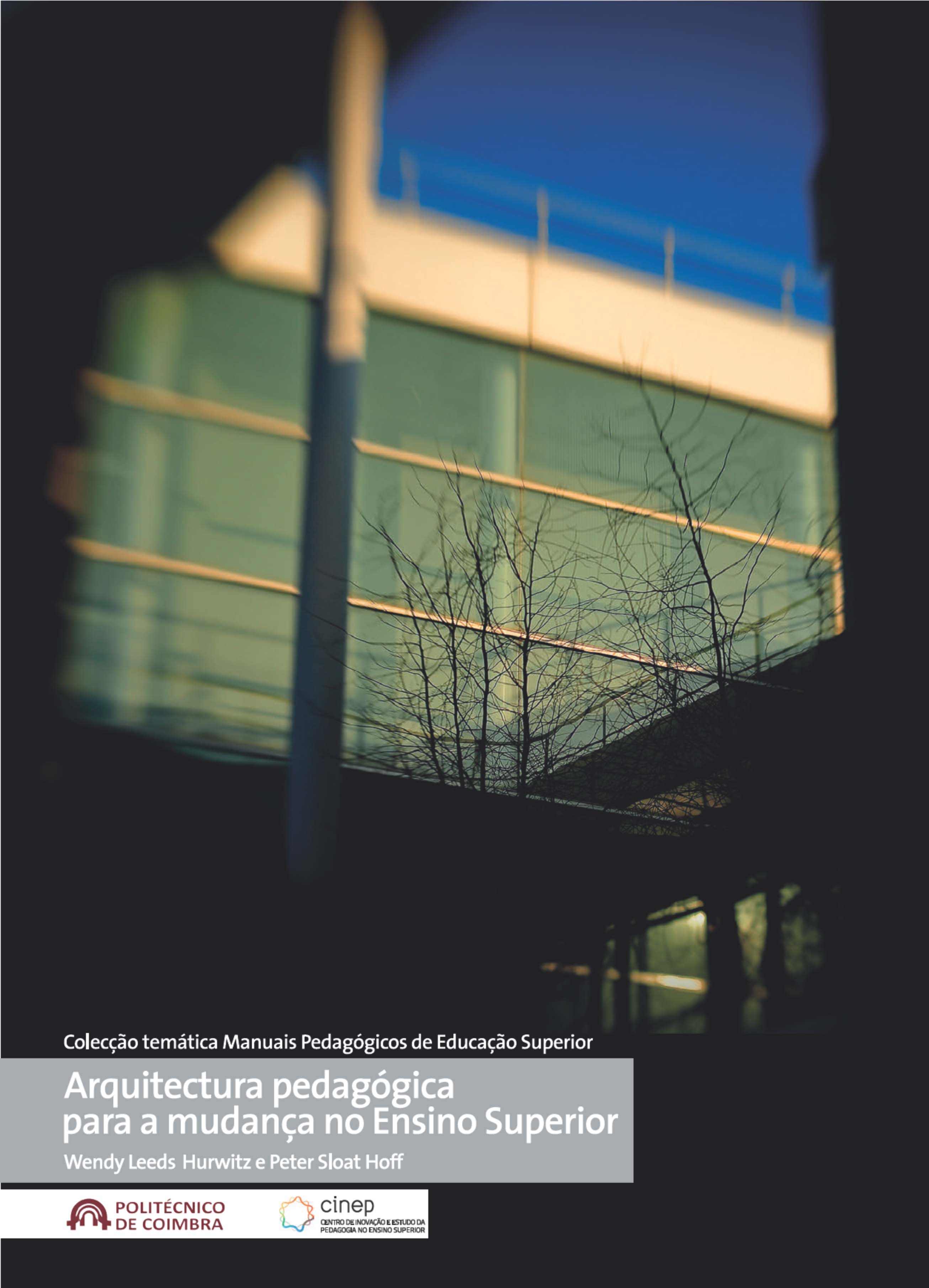
Many of those participating in the conference are included in the following photo (though certainly several critical people are missing, including Dr. Gerry Philipsen and Dr. Donal Carbaugh).

One of the pleasures of the conference for me was the presence of so many of those involved in the NCA Summer Conference on Intercultural Dialogue, held in Istanbul in 2009, which led to the creation of this Center. This included several from the organizing committee (Drs. Tamar Katriel, Donal Carbaugh, Kristine Fitch Muñoz, and Saskia Witteborn), one of the guest speakers (Lisa Rudnick) and several of the participants (Drs. Todd Sandel, Chuck Braithwaite, Evelyn Ho, Eric Morgan, and Tabitha Hart). Another was catching up with Dr. Susan Poulsen, who organized “Ways of Speaking, Ways of Knowing: Ethnography of Communication” in Portland in 1992, the predecessor conference to this one in terms of topic. Other joys of the week included having time to connect with people I had not seen in a long time, previously only had met through correspondence, or students of my colleagues who I did not know at all.

Wendy Leeds-Hurwitz, Director
Center for Intercultural Dialogue
ICA 2012

The International Communication Association convention was held from May 23-28, 2012, in Phoenix, AZ. I presented a paper co-authored with Yves Winkin, of the École Normale Supérieure de Lyon entitled “Walk Like a Local: Pedestrian Behavior in the US, France, and China” to the Urban Communication Foundation Preconference.

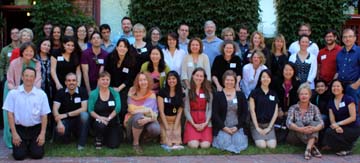
(Thanks to Casey Lum for both organizing the event, and for the photo of me at the Seminar.) I also served as respondent to a panel entitled “Narrative and Community in Intractable Conflicts.” In addition, the Language and Social Interaction Division honored me with a panel entitled ” Constructing Communities of Scholars: Celebrating the Work of Wendy Leeds-Hurwitz” (thanks to Theresa Castor for organizing the event, and to Liliana Castañeda Rossmann, Teri Harrison, Beth Haslett and Saskia Witteborn for participating).

We continued the tradition of holding a mini-meeting of those members of the Advisory Board of the Center for Intercultural Dialogue who were present at a conference (this time it was Donal Carbaugh and Michael Haley) along with the past and current Presidents of our parent organization, the Council of Communication Associations (Patrice Buzzanell and Linda Steiner).

While at ICA I connected with many international scholars, including some of those I had met or visited during the last year or two of travels: Simon Harrison (met in France, now based in Germany), Ifat Maoz (Israel), Saskia Witteborn (Hong Kong), Vivian Chen (Singapore), and Carla Ganito (Portugal).

Wendy Leeds-Hurwitz, Director
Center for Intercultural Dialogue
University of Coimbra

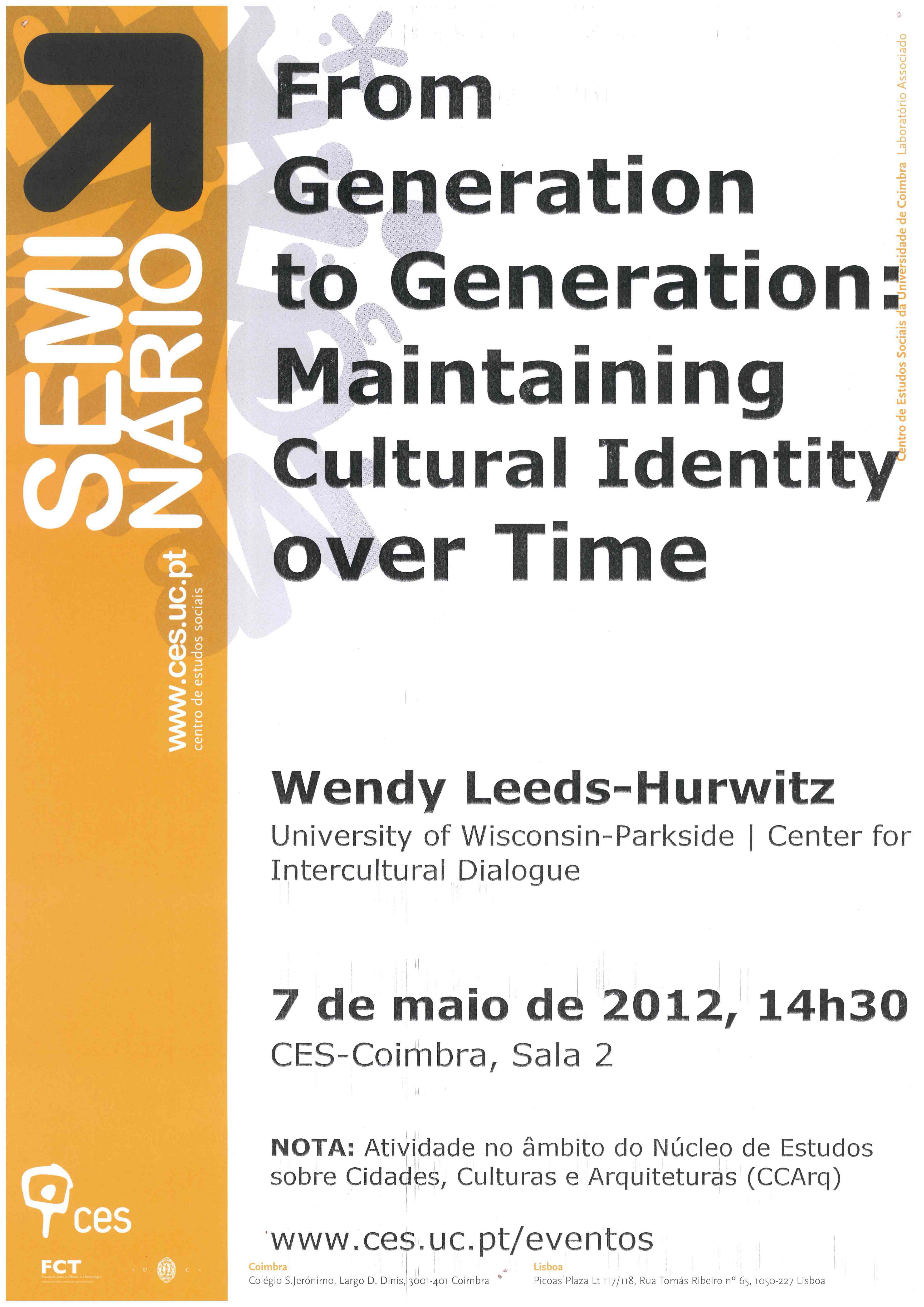
On May 7, 2012 I presented a talk entitled “From Generation to Generation: Maintaining Cultural Identity Over Time” to Centro de Estudos Sociais (CES) da Universidade de Coimbra, in Coimbra, Portugal. One of the uncommon aspects of CES is the way it combines multiple disciplines, including sociology, economics, law, anthropology, history, literature, international relations, geography, architecture, geographers, engineering, biology and medicine. Of course not all of these were represented in my audience, but I was delighted to discover two architects in the group.

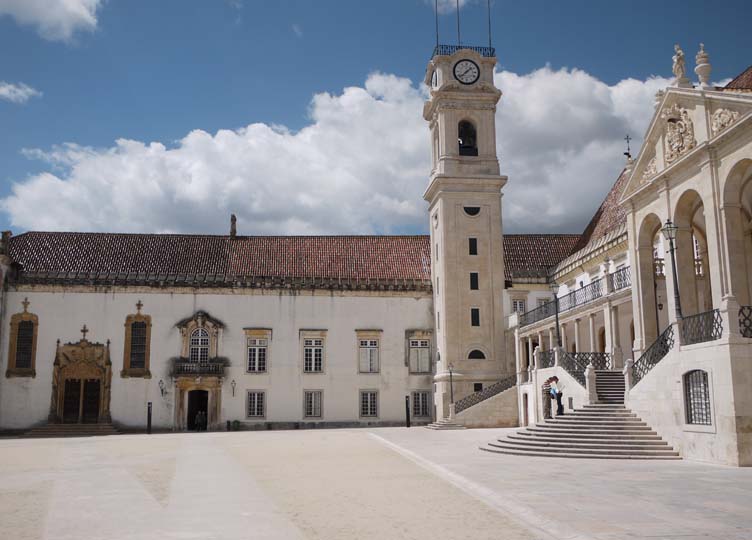
The University of Coimbra is one of the oldest universities in the world. Visitors are not allowed to take photographs in the library, but it alone is worth the trip. Here is the main square, and the tower, visible from nearly anywhere in the city.

My thanks to Dr. Nancy Duxbury, a Canadian scholar currently based at CES, for the invitation, and for organizing the talk as well as dinner afterwards. I met Nancy several years ago at a UNESCO meeting in Paris, and it was a pleasure to connect again. Nancy’s recent research has focused on cultural sustainability and approaches to linking culture and sustainability in community planning initiatives.

Wendy Leeds-Hurwitz, Director
Center for Intercultural Dialogue
University of Lisbon

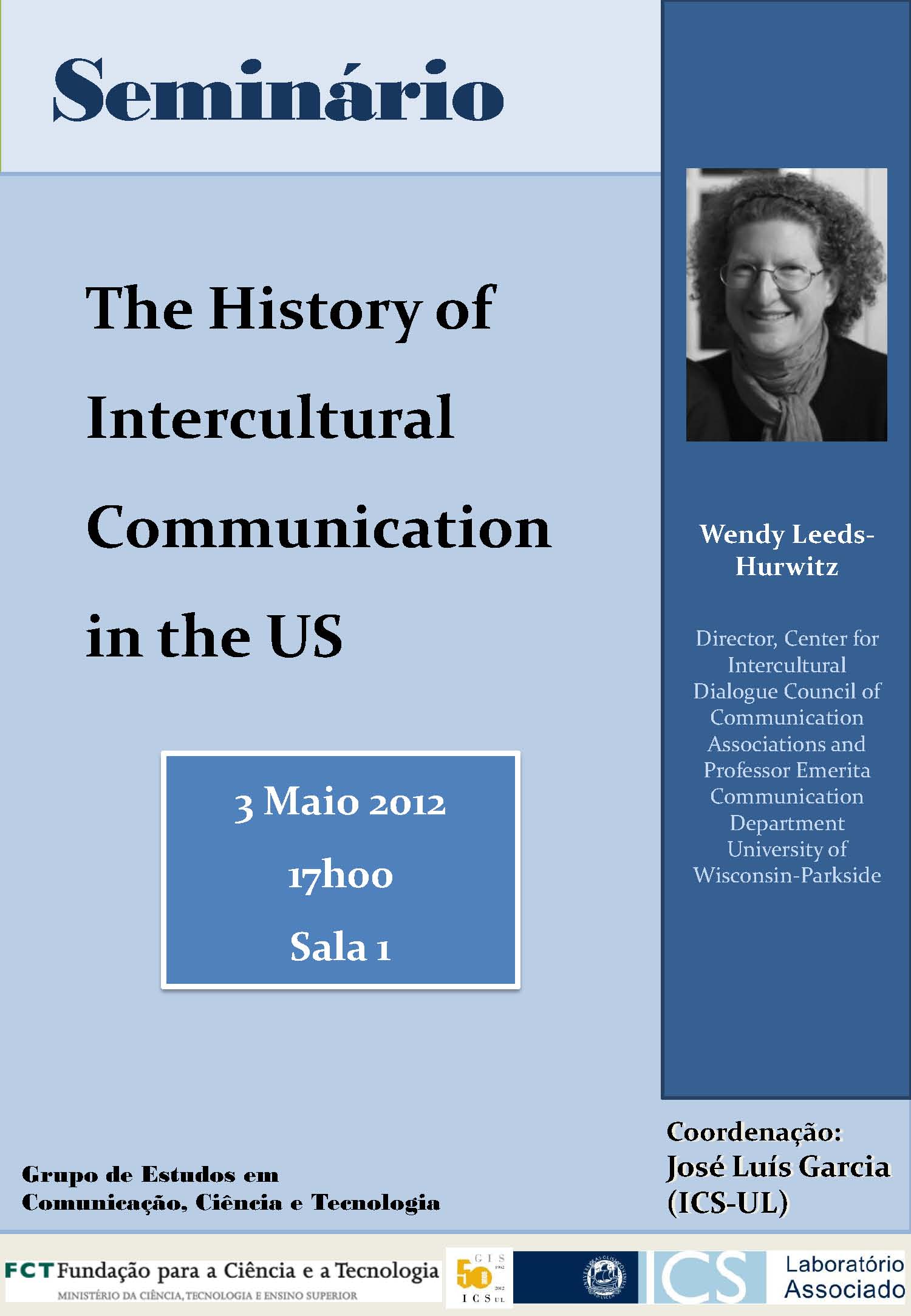
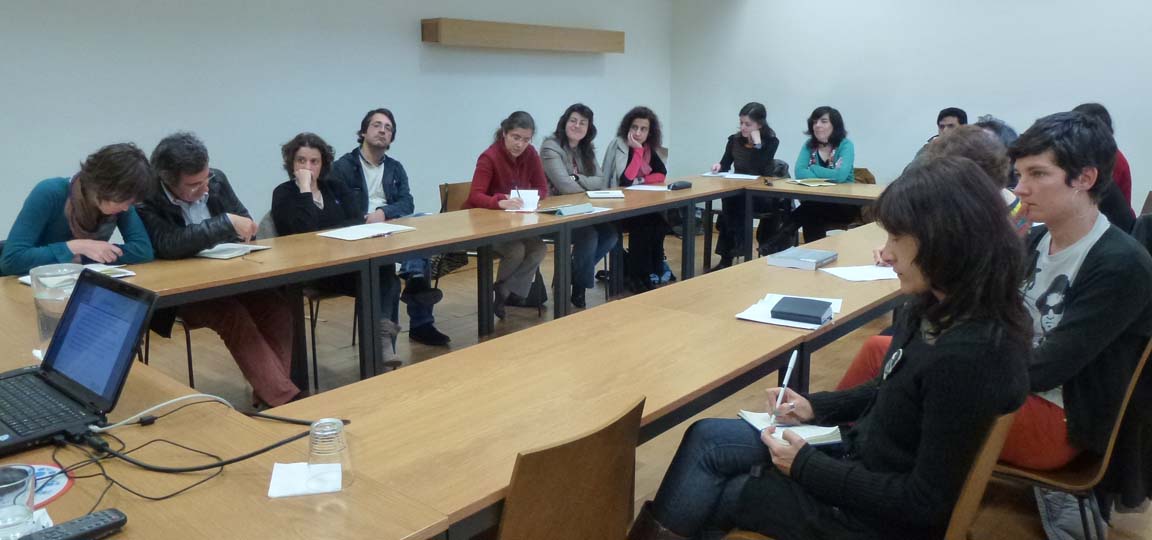
On May 3, 2012, I gave a talk entitled “The history of intercultural communication in the United States” to the Grupo de Estudos em Comunicação, Ciência e Tecnologia, which is part of the Instituto Ciências Sociais da Universidade de Lisboa, in Lisbon, Portugal.

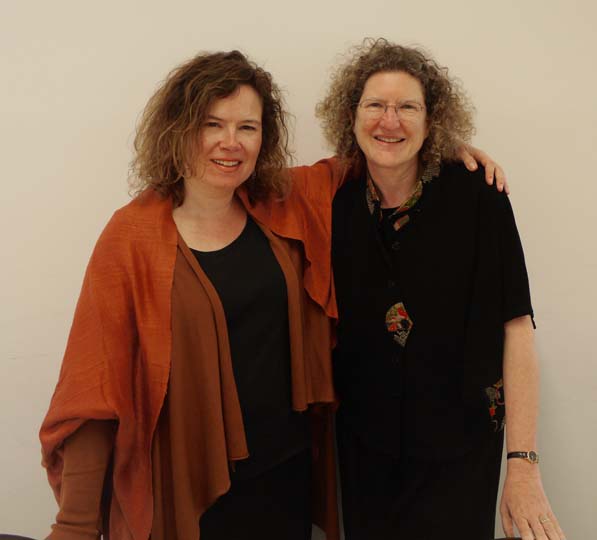
Prof. José Luis Garcia directs this group, and so was my official host, although I owe thanks to Dr. Filipa Gonçalves Subtil for organizing the event as well as an excellent dinner afterwards. As a result of the seminar, I had the chance to talk with other scholars there, including Dr. Alexandra Dias Santos (also affiliated with the University of Lisbon), Dr. Carla Ganito (of the Catholic University of Lisbon), and Dr. Rosário Durão, the editor of Connexions: International Professional Communications Journal.

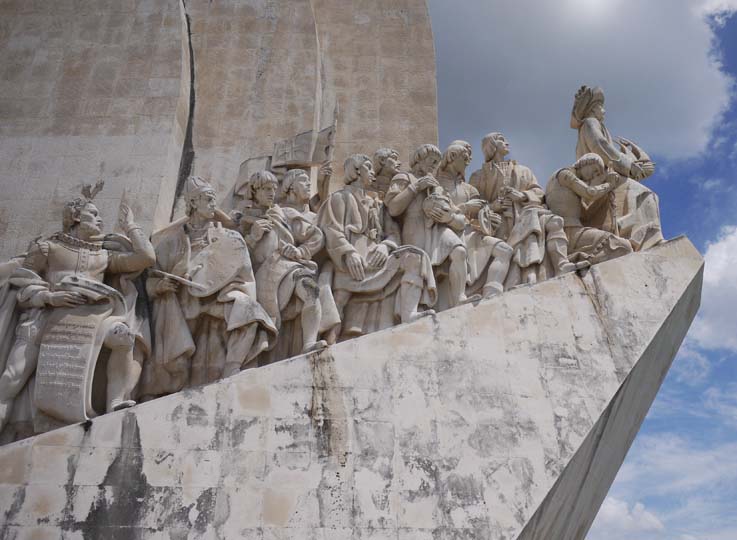
And since we spent the weekend in Lisbon, there was also time to do some sightseeing, including the Discoveries Monument shown below, documenting the 500th anniversary of Prince Henry the Navigator.

Wendy Leeds-Hurwitz, Director
Center for Intercultural Dialogue
Wendy Leeds-Hurwitz Fulbright

Wendy Leeds-Hurwitz
University of Wisconsin-Parkside

Fulbright Senior Specialist to Portugal

One thing leads to another. This is the story of how I became a Fulbright Specialist in Portugal.

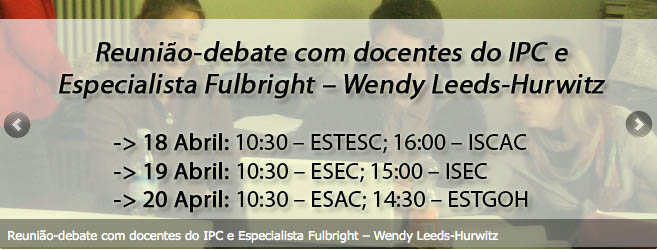
In May 2010 I retired from the University of Wisconsin-Parkside. In fall 2010 I applied to the Fulbright Specialist Program, and was approved in spring 2011. This program funds 2 to 6 week visits in 2 countries during a period of 5 years, including airfare and a daily stipend (host institutions cover room and board and in-country travel if it is necessary). In September 2011, while at a conference in Paris, a colleague found out I would be traveling to Portugal for pleasure. He provided an email  introduction to a scholar there with overlapping interests, with the result that I was asked to give two talks at the Instituto Politécnico de Coimbra in November. There was a good fit between my project in France at that time (describing US higher education pedagogy) and the needs of a new teaching center at IPC, so I was asked to return for a longer visit. My host, Dr. Susana Gonçalves, is the director of the new center, Centro de Inovação e Estudo da Pedagogia no Ensino Superior (CINEP). She completed the necessary paperwork, and in spring 2012 the request was approved by both Portugal and the US State Department.

I spent 6 weeks at IPC across April and May 2012, working with the director and staff to determine what information is most relevant to their needs, presenting multiple workshops at the difference schools making up the university, and meeting individually and in small groups with faculty on a variety of pedagogical matters. Workshops included: “The transformation of higher education: Lessons from the US and implications for Portugal,” “Best practices in blended delivery,” “Active learning: Hands-on practice,” “The impact of student-centered learning for curricular design,” and “How to write exams so students need to come to class.”

Groups included one from the Engineering school interested in math pedagogy, and one from the Education school interested in reflective practice for preschool teachers. Individual consultations ranged even more widely, from very specific questions on a particular pedagogical technique, to more general questions about common academic concerns, including student motivation and integration of technology into courses. I was also invited to speak to students enrolled in a Master’s level course on marketing.

While in Coimbra, I was invited to present several talks on my research at the University of Coimbra and the University of Lisbon. I also met with the company members of Project Llull, which uses theatre to start intercultural dialogues.

In addition, I was able to connect some of the people I met through these various contexts with colleagues in the US or elsewhere having similar research, teaching, or administrative interests.

***Update: Publication resulting from this Fulbright

Fulbright Program

FulbrightsThe Fulbright International Exchange Program, under the auspices of the US State Department, offers grants to study, teach and conduct research for U.S. citizens to go abroad and non-U.S. citizens to come to the United States. Different programs are available for faculty members, graduate students, and undergraduates. Although most of the programs are for full years, the Fulbright Specialist Program offers stays of 2-6 weeks. Fulbrights are one of the easiest ways for US academics to connect internationally.

By 2014 Fulbright circulated the following information: “As of last year, lifetime limits on Fulbright Scholar Program grants have been lifted, as have waiting periods between grants. This means more flexibility and opportunity to partake in Fulbright experiences throughout your career; you can participate on a semester-long award and not jeopardize your ability to get back on the Roster or your other future participation.” So for those who have already had one Fulbright, consider requesting another!

A few examples of Communication scholars who have been awarded Fulbrights are listed below. If you have completed any of the varieties of Fulbright awards, and wish to have your description added, send an email with details, or post a comment below.

Mara Adelman – Ethiopia
David L. Altheide – Germany and Portugal
Richard Buttny – Malaysia and India
Kevin Barnhurst – Peru and Italy
Donal Carbaugh – Finland
Kristen Cvancara – Finland
Steven Darian – Uzbekistan
Don Ellis – Israel
Glenn Geiser-Getz (Russia & Ghana)
Phillip Glenn – Moldava
Wendy Leeds-Hurwitz – Portugal
Sheila McNamee – Colombia
Tema Milstein – New Zealand

Jon Nussbaum – Wales
Susan Opt – Czech Republic
Todd Sandel – Taiwan
James Schnell – Cambodia
Stacey K. Sowards – Indonesia
John Parrish-Sprowl – Macedonia and Belarus

Ayseli Usluata – USA (from Turkey)
Paul Voakes – Uganda
Joseph Zompetti – Sri Lanka and Brazil

Stories from many of these Fulbrighters (and others) are included in chapter The value of a Fulbright: Internationalizing education one person at a time, published in Internationalizing the communication curriculum in an age of globalization.