Intercultural Communication or Post-Cultural Communication?

Guest PostsGuest Post by Paola GiorgisIntercultural communication or post-cultural communication? Reflecting on mistakes in intercultural encounters.

Some years ago, I worked with a total of about 350 refugees who, with the help of some radical activists, had become squatters, taking over an empty building which occupied almost an entire block. Most were from Somalia, Eritrea and Sudan; the majority were young men, a few women with children, and there were one or two couples with babies. A group of associations had gathered to offer help and, as an activist and volunteer in an association for human rights, I decided to participate. With the on-and-off support of the local Institutions (mainly town council and prefecture), the group of associations developed a project which had the goal of meeting basic needs – food, shelter, health care – and then organizing the integration of the refugees into the region through accommodation, language classes and vocational training courses. What I liked about this project was that its goal was not assistance, but rather creating a path to autonomy and independence. The first to be integrated were the women with their children, then the vulnerable males (young men with diseases or handicaps), and then all the rest. The project lasted for about one year, and at the end of that time, all the refugees were, more or less successfully, integrated and settled in the region.

Read the full essay.

Key Concept #39: Otherness Translated into Italian

Key Concepts in ICDContinuing translations of Key Concepts in Intercultural Dialogue, today I am posting KC#39: Otherness and The Other(s), originally written by Peter Praxmarer for publication in English in 2014, now translated with the help of Paola Giorgis into Italian. While translating, he has taken the opportunity to slightly revise and update the original English version as well.

As always, all Key Concepts are available as free PDFs; just click on the thumbnail to download. Lists of Key Concepts organized chronologically by publication date and number, alphabetically by concept, and by languages into which they have been translated, are available, as is a page of acknowledgments with the names of all authors, translators, and reviewers.

KC39 Otherness_ItalianPraxmarer, P. (2016). L’Alterità e gli Altri. Key Concepts in Intercultural Dialogue, 39. (P. Praxmarer & P. Giorgis, Trans.). Available from:
https://centerforinterculturaldialogue.org/wp-content/uploads/2016/08/kc39-otherness-italian1.pdf

If you are interested in translating one of the Key Concepts, please contact me for approval first because dozens are currently in process. As always, if there is a concept you think should be written up as one of the Key Concepts, whether in English or any other language, propose it. If you are new to CID, please provide a brief resume. This opportunity is open to masters students and above, on the assumption that some familiarity with academic conventions generally, and discussion of intercultural dialogue specifically, are useful.

Wendy Leeds-Hurwitz, Director
Center for Intercultural Dialogue
intercult.dialogue[at]gmail.com


Creative Commons License
This work is licensed under a Creative Commons Attribution-NonCommercial-NoDerivatives 4.0 International License.

On Translation as an Intercultural Practice

Guest Posts

Guest Post by Paola Giorgis
On Translation as an Intercultural Practice

It is an encounter with diversity which favors a critical reflexivity on what we take-for-granted of both emic and etic worldviews. It is practice that involves the constant exercise of moving in a space in-between. It represents the opportunity to engage in a double perspective. It is an experience which make us observe, challenge, redefine and move through borders. It is an occasion to look at our knowledge, assumptions and representations from a different point of view.  Well, no, it is not Intercultural Dialogue. It is Translation.

Read the full essay.

Key Concept #51 Critical Discourse Analysis Translated into Italian

Key Concepts in ICDContinuing translations of Key Concepts in Intercultural Dialogue, today I am posting KC51: Critical Discourse Analysis, written by Paola Giorgis in English in 2015, and now translated by her into Italian.

As always, all Key Concepts are available as free PDFs; just click on the thumbnail of the translation to read it. Lists organized chronologically by publication date and numberalphabetically by concept in English, and by languages into which they have been translated, are available, as is a page of acknowledgments with the names of all authors, translators, and reviewers.

KC 51 CDA ItalianGiorgis, P. (2016). Analisi critica del discorso. Key Concepts in Intercultural Dialogue, 51. Available from: https://centerforinterculturaldialogue.org/wp-content/uploads/2016/07/kc51-cda_italian.pdf

The goal of the translation project is to expand the concepts available to discussions of intercultural dialogue beyond those who are fluent in English. What began with a request to translate a few concepts into 2 languages has now developed into a serious effort to translate most of them. Choice of languages is being left up to those who are doing the work, which has prompted much interesting discussion about whether to be organized about this (translating all of them into a single language, then moving on to the next). Obviously the decision was  not to take that route. Instead, authors are being given the opportunity to translate their own into whatever languages they know best; once they respond, their concepts are put on a list of those available to requests from others. If you are interested in translating one of the Key Concepts, please contact me for approval first because dozens are currently in process. As always, if there is a concept you think should be written up as one of the Key Concepts, whether in English or any other language, propose it. If you are new to CID, please provide a brief resume. This opportunity is open to masters students and above, on the assumption that some familiarity with academic conventions generally, and discussion of intercultural dialogue specifically, are useful.

Wendy Leeds-Hurwitz, Director
Center for Intercultural Dialogue


Creative Commons License
This work is licensed under a Creative Commons Attribution-NonCommercial-NoDerivatives 4.0 International License.

Teaching EFL with a Hidden Agenda: Introducing Intercultural Awareness through a Grammar Lesson

Guest PostsGuest post by Dr. Paola GiorgisTeaching EFL with a Hidden Agenda: Introducing Intercultural Awareness through a Grammar Lesson.

Is there anything more standardized than grammar? How can it then work to dismantle the standard, favoring non-standardized and non-stereotypical readings and representations of individual and collective cultural identities, and promoting intercultural understanding?

Here’s a brief example of an actual unit of two lessons, which I conducted some years ago, on simple past during a course on English as a Foreign Language.

The context

  • a vocational high school with an art curricula in Turin, a city in the northwest of Italy
  • a class of 25 students, the majority of Italian origins, a couple of students from Morocco, another three from Romania, and two from Peru. Most of the students of Italian origin came from families who had experienced migration, belonging to the third generation of what is known in Italy as the “internal immigration”, a phenomena which, from approximately the Fifties to the Seventies, moved families and work force from the south of Italy to the industries of the north.

Read the full essay.

Key Concept #51: Critical Discourse Analysis by Paola Giorgis

Key Concepts in ICDThe next issue of Key Concepts in intercultural Dialogue is now available. This is KC51: Critical Discourse Analysis by Paola Giorgis. As always, all Key Concepts are available as free PDFs; just click on the thumbnail to download. Lists organized  chronologically by publication date and numberalphabetically by concept in English, and by languages into which they have been translated, are available, as is a page of acknowledgments with the names of all authors, translators, and reviewers.

Key Concept #51: Critical discourse analysis by Paola Giorgis

Giorgis, P. (2015). Critical discourse analysis. Key Concepts in Intercultural Dialogue, 51. Available from: https://centerforinterculturaldialogue.org/wp-content/uploads/2015/02/key-concept-cda.pdf

The Center for Intercultural Dialogue publishes a series of short briefs describing Key Concepts in Intercultural Dialogue. Different people, working in different countries and disciplines, use different vocabulary to describe their interests, yet these terms overlap. Our goal is to provide some of the assumptions and history attached to each concept for those unfamiliar with it. As there are other concepts you would like to see included, send an email to the series editor, Wendy Leeds-Hurwitz. If there are concepts you would like to prepare, provide a brief explanation of why you think the concept is central to the study of intercultural dialogue, and why you are the obvious person to write up that concept.


Creative Commons License
This work is licensed under a Creative Commons Attribution-NonCommercial-NoDerivatives 4.0 International License.

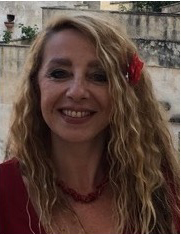
Paola Giorgis Profile

ProfilesPaola Giorgis teaches English Language, Literature and Visual Arts in Italian high schools and holds a PhD in Anthropology of Education and Intercultural Education.
Paola Giorgis

She is co-founder and member of wom.an.ed – women’s studies in anthropology and education. Her main interest interest regards a critical and intercultural approach to Foreign Language Education, that is, how Foreign Language Education can be used to develop an awareness of different languages, representations and cultural conceptualizations able to favor intercultural communication. All through her teaching years, she has observed many episodes which confirm the capability of (foreign) language(s) to foreground many aspects connected both to personal and collective identities, dynamics and representations, displaying how learning and using a non-mother tongue can question, challenge and problematize meanings, assumptions and representations taken-for-granted, thus remoduling the perception and the representation of the self and others. Therefore, she believes that Foreign Language Education should undergo further several radical shifts, definitively abandoning an essentialist view of the target language/culture to foster a more nuanced, and critical, view of the relation between language and culture.

In her PhD research, she investigated cross-linguistic interactions among adolescents in multicultural and plurilinguistic contexts from the perspective of Linguistic Anthropology, Intercultural Education, and Critical Linguistics and Pedagogies. Her findings show that cross-linguistic interactions reshape personal and collective identities, constantly moving and recombining the (narrated) borders of language, identity and ethnicity: bottom-up language practices can facilitate intercultural encounters and create spaces in-between for trans-cultural affiliations, and are also able to reveal aspects linked to language creativity and to the personal agency of speakers as social agents.

She also focuses on the issue of power connected to languages, and on how Critical Pedagogies can address them, examining in particular the challenges and the opportunities advanced by the English language(s). At the intersection of global phenomena and local appropriations, of norms and variations, of homogenization and subversion, English has triggered fierce debates on the linguistic, sociocultural, political, ideological and pedagogical implications of its widespread, but also on the potentially creative and critical appropriations from below that it can elicit. She assumes that, precisely for its multifaceted quality and the controversies it arises, English language(s) can represent the ideal site to observe how individual and collective representations of culture and identity move through language affiliations and appropriations. She is also interested in what could be called ‘Applied Literary Criticism in L2’, as she examines the experience of the literary text in L2, and in particular of Poetry in L2, as an open space for a renewed imagination able to disclose one’s emotions and empathize with others’, in a way less conditioned by memories and (self-appointed or given) roles connected to one’s linguacultural background.

She is affiliated with ALTE (Association of Language Testers in Europe), ESTIDIA (European Society for Transcultural and Interdisciplinary Dialogue), IAIE (International Association for Intercultural Education), I-LanD (Identity, Language and Diversity), lend (linguistica e nuova didattica), Researching Multilingually at the Border, and VAC (Visual Arts Circle). She is referee for Rhetoric and Communications E-Journal, an online journal on Applied Linguistics, and a referee and book reviewer for Intercultural Education, a journal published by Routledge, Taylor & Francis

She has published the monograph Diversi da sé, simili agli altri. L2, letteratura e immaginazione come pratiche di pedagogia interculturale (Different from One’s Self, Similar to Others: L2, Literature & Imagination as Practices of Intercultural Education), Roma: CISU (2013), as well as chapters in collective volumes, articles in international journals, and participated at several international conferences. She has published a book as well:

Giorgis, P. (2018). Meeting foreignness: Foreign languages and foreign language education as critical and intercultural experiences. Lanham, MD: Rowman & Littlefield.

More recent publications:

Giorgis, P. (2025). Otherness/Othering. In • P. Moy (Ed.), Oxford bibliographies in communication. New York, NY: Oxford University Press.

Giorgis, P. (2023). Critical Cultural Linguistics (CCL): Challenging the cultural (re)production of Otherness. In F. Polzehagen & M. Reif (Eds.), Cultural linguistics, ideologies and Critical Discourse Studies. Amsterdam: John Benjamins.

Giorgis, P., & Valente, A. C. (2023). Intercultural Education, Otherness, and Collaborative Literacy. In Other Words Dictionary: A Case Study. In N. Palaiologou (Ed.), Rethinking intercultural education in times of migration and displacement. Newcastle-upon-Tyne: Cambridge Scholars Publishing.

and she co-edited a special issue on Rhetoric of Otherness for Rhetoric and Communications Journal, 50 (2022).

Paola Giorgis may be contacted via email.


Work for CID:

Paola Giorgis is author of KC51: Critical Discourse Analysis, and KC88: Critical Cultural Linguistics, and translator of KC1: Intercultural Dialogue, and KC51: Critical Discourse Analysis into Italian, as well as co-translator for KC14: Dialogue, KC37: Dialogue Listening, KC39: Otherness and The Other(s), and KC81: Dialogue as a Space of Relationship. She also serves as a frequent reviewer for Italian translations.

She has written 3 guest posts: On translation as an intercultural practiceIntercultural communication or post-cultural communication? Reflecting on mistakes in intercultural encounters; and Teaching EFL with a hidden agenda: Introducing intercultural awareness through a grammar lesson.

She was interviewed about critical discourse analysis, translation as an intercultural practice, and intercultural dialogue.

Her students won 2nd place in the 2018 CID Video Competition, and prepared a video about the process, “The Making of…”: A Path between Cultures to help competitors in the 2019 competition. In 2020, a different cohort of students prepared the video We Rise, in response to COVID-19.

University of Turin 2014

WLH_GobboFrom May 14-17, 2014, I stopped in Turin, Italy to meet Professor Francesca Gobbo, recently retired from the University of Turin. In addition to talking about common interests in intercultural dialogue and classroom ethnography, I was able to connect with a number of her doctoral students. In fact, one of them, Federica Setti had just been awarded her PhD, and was gracious enough to include me and my husband in her celebration party (thanks again, Federica!). Another, Paola Giorgis, was in the process of preparing a post-doctoral fellowship application to EURIAS, and I was able to provide some advice, having served as one of their reviewers in the past. Rebecca Sansoé and Giorgia Peano were also in attendance that evening. Prof. Gobbo was particularly generous with her time, and we were able to fit in quite a bit of sightseeing around Turin during my visit, including their famous Egyptian museum.

Over the next few weeks, I will be posting researcher profiles as Prof. Gobbo and her doctoral students have time to send me information.

Wendy Leeds-Hurwitz, Director
Center for Intercultural Dialogue