Fulbrights 2014-15

The 2014-2015 Fulbright U.S. Scholar Program core competition is now open.

The Fulbright Scholar Program offers teaching, research or combination teaching/research awards in over 125 countries for the 2014-2015 academic year. Opportunities are available for college and university faculty and administrators as well as for professionals, artists, journalists, scientists, lawyers, independent scholars and many others.

This year, there are over 100 awards available to those studying the fields of Communications and/or Journalism.  Moreover, All Discipline awards offered in all regions of the world welcome teaching and/or research proposals in any area of study, including interdisciplinary projects.

In order to meet the changing needs of academia and develop new options to better accommodate the interests and commitments of today’s scholars, the program has introduced several innovations to the 2014-2015 program, including: Fulbright Flex Awards, Fulbright Postdoctoral/Early Career Awards, Salary Stipend Supplements, and Teaching English as a Foreign Language Awards.

Interested faculty and professionals are encouraged to learn more about these opportunities, and hundreds of others, by visiting the Catalog of Awards.

The application deadline for most awards is August 1, 2013.  U.S. citizenship is required.

Missouri State job ad

The Department of Communication at Missouri State University, in Springfield, Missouri, seeks applications and nominations for an Assistant Professor of Communication, tenure eligible, beginning August 2013.

Required Qualifications: Ph.D.in Communication; ABD considered with completion of degree by December 31, 2013; evidence of potential for significant scholarship and teaching effectiveness; ability to participate in graduate teaching, advising, and online/blended instruction. Applicants should have demonstrated teaching expertise with the ability to teach undergraduate and graduate communication courses in one or more of the following areas: health communication, conflict-dispute resolution, quantitative research methods.

Duties: Teaching, scholarship, and service (including student advisement) to the university in relation to one’s field of expertise.

Missouri State University is an equal opportunity/affirmative action employer. We encourage applications from women, minorities, and all interested and qualified people. Missouri State University is committed to building a culturally diverse educational environment. Applicants are requested to include in their cover letter information about how they will further this goal.

Consideration of applications begins April 22, 2013 and continues until position is filled.
Employment will require a criminal background check at the University’s Expense. Please apply online.

Upload a letter of application, vitae, copies of transcripts, three letters of reference, and supporting materials (e.g., samples of scholarship, evidence of teaching excellence). Direct all inquiries to Dr. Shawn Wahl, Department Head, Department of Communication, Missouri State University. Email: shawnwahl AT missouristate.edu.The Department of Communication at Missouri State University is one of seven departments in the College of Arts and Letters, and one of two departments in the School of Communication Studies.  It includes 19 full-time faculty members and offers majors and options in communication studies, organizational, interpersonal, intercultural, health, rhetoric, public relations,  socio-political communication, and speech and theatre education, an undergraduate and graduate certificate in conflict and dispute resolution, a master’s program in communication, and an Applied Communication in Master of Science in Administrative Studies.  The department serves approximately 350 undergraduates and 100 graduate students in the various programs.  The nationally recognized Holt V. Spicer Debate Forum and the Center for Dispute Resolution operate under the auspices of the department.


Save

Bridging cultures grant

The National Endowment for the Humanities (NEH) invites proposals for projects that advance the role of the humanities at a community college through curriculum and faculty development on the theme of Bridging Cultures.

NEH expects to award seven to nine grants of up to $120,000 each.

NEH Bridging Cultures at Community Colleges projects create opportunities for community college faculty members to study together while improving their capacity to teach the humanities; enhance or develop areas of need in an institution’s humanities programs; and give community college faculty access to humanities resources through partnerships with other educational or cultural institutions.

Funded projects will:
*draw on sound humanities scholarship related to the theme of Bridging Cultures,
*engage participating faculty in shared readings of important humanities texts,
*involve humanities scholars with appropriate expertise,
*result in improvements in the quality of humanities instruction at a community college or community college system, and
*disseminate widely the results of their work.

Projects must involve a partnership in the planning and implementation of the project between a community college or system and another educational or cultural institution, such as a college or university, museum, research library, or professional association.

Bridging Cultures is an agency-wide initiative that encourages exploration of the ways in which cultures from around the globe, as well as the myriad subcultures within America’s borders, have influenced American society. With the aim of revitalizing intellectual and civic life through the humanities, NEH welcomes proposals that enhance understanding of diverse countries, peoples, and cultural and intellectual traditions worldwide. Applications might also investigate how Americans have approached and attempted to surmount seemingly unbridgeable cultural divides, or examine the ideals of civility and civic discourse that have informed this quest. In connection with a focus on civic discourse, projects might explore the role of women in America’s civic life as well as the civic role of women in other cultures and regions of the world.

We strongly encourage interested applicants to contact us at (202) 606-8380 or bccc AT neh.gov to consult with a program officer about their proposals.

Guidelines will be available at www.neh.gov/grants/education/bridging-cultures-community-colleges in early May. The application deadline is August 27, 2013.

For information about previously funded proposals in this program, please visit www.neh.gov/divisions/education/bridging-cultures-programs.

Save

Atlantic International School

Senegal is one of the favorite destinations of west Africa, particularly Ngor, a traditional village close to the isle of Cap Vert,  only 10 Km away from the capital. This has become an important pole  due to the fact that tourist from all over the world prefer this location to others in Dakar, for its geographical location  and also for its many cultural and natural advantages. This is why, having all this advantages, we decided to set up here our project, the Atlantic International School.

Our aim is also to
–         Promote social cohesion and encourage the pluralism and the dialogue of cultures.
–         To live in a mixed environment of foreigners and locals despite the social, religious differences where they will have the chance to realize their potential in a positive and durable way.

The service we wish to give will allow to students and locals to take advantage of the stay based on a cultural exchange through the language courses (French or Wolof), religious debates, guided visits etc., but also to create a rich contact with the local population with a particular friendship and human exchange.

The student who wish to make this experience with us will be welcomed directly at the airport and accompanied to his host family. He will join life with his family during all his stay, having the chance to eat with them for all the meals (breakfast, lunch and dinner). During his stay he will attend the course in the language he has chosen to learn in our school located in Ngor village. Having the possibility to be close to the school, to enjoy a friendly and safe environment.

Through life in a Senegalese family, the student will naturally explore the lifestyle, cooking, music, rhythm of life and the beautiful resources of landscape and people. Our courses are designed to provide a full intercultural perspective, though local debates, songs, guided trips to places of interest and local traditional shops.

The language will be taught with an intercultural perspective. It will be learned by the students developing the four main activities required in a language. The passive ones: listening and reading and the active ones: speaking and writing.

To enable our students to have these abilities we will use the heritage of culture itself, learning songs, poems, traditions, articles, stereotypes, etc. in an interactive way.

Irene Manos
Atlantic International School

Save

Questioning geocultural boundaries

CALL FOR PAPERS

Communication Theory special issue on “Questioning geocultural boundaries of communication theories: De-Westernization, cosmopolitalism and globalization”

Guest editors: Silvio Waisbord and Claudia Mellado
Submission deadline: April 1, 2013

Although Western perspectives have been dominant in the study of communication, scholars have called for the emancipation of non-Western theories and new conceptual and theoretical perspectives. Researchers have shown the importance and vitality of communication theories grounded in various philosophical conceptions in Africa, Asia and Latin America. This call should not be understood as an effort to “de-Westernize” communication studies. On the contrary, the task is to explore whether non-Western perspectives expand the analysis and challenge central assumptions and arguments.

Communication Theory therefore invites authors to submit papers for a future special issue on “Questioning geocultural boundaries of communication theories: De-Westernization, cosmopolitalism and globalization.” Contributions could analyze current theoretical developments in communication studies across the world, revisit epistemological and historical foundations, examine the integration of Western and non-Western perspectives in communication studies, the uses of theories of global comparative research, discuss the relevance of non-Western theories and models, and successful and failed efforts at theoretical cross-pollination. Submissions may address but should not be limited to the following
questions:

– Amidst the globalization, indigenization, and hybridization of communication and cultures, what do we mean by non-Western and Western theories?
– What are non-Western communication theories? Are they primarily based on non-individualistic, communitarian notions of self and universalistic premises?
– What are the commonalities and differences among non-Western theories? What contributions and differences do they offer?
– How do non-Western theories reframe questions and arguments grounded in Western theories?
– Is it valid to denominate theories on the basis of geo-cultural origin? How are essentialist positions reaffirmed? How and by whom or what are they challenged?

Manuscripts must be submitted by April 1, 2013, through the online submission system of Communication Theory. Authors should indicate that they wish to have their manuscript considered for the special issue. Inquiries can be sent to Silvio Waisbord (waisbord AT gwu.edu) and Claudia Mellado (claudia.mellado AT usach.cl).

U Queensland postdoc

The Centre for Critical and Cultural Studies (CCCS) at the University of Queensland (Brisbane, Australia) is seeking expressions of interest for applications for 3 year UQ Postdoctoral Research Fellowships for 2014-2016. The UQ postdoctoral scheme seeks to attract talented early career researchers with well-developed research programs and strong track records. The fellowships support full time research, although it is possible to organise some teaching experience if desired.

If successful the applicant will be based in the CCCS, a leading Australian research centre in the humanities that supports broad-ranging research in cultural and media studies. Current research emphases include the environmental humanities, surveillance studies, television studies, Australian cultural history, cinema studies, new materialities, celebrity, and media anthropology. The Centre provides a rigorous, supportive and collaborative research environment and has assisted many outstanding early career researchers to develop their research capacities and careers. It has also helped UQ earn top ERA rankings in cultural and media studies research.

Applicants for UQ Postdoctoral Fellowships must have no more than five years full time professional research experience or equivalent part time experience since the award of a Ph.D. An applicant who does not hold a doctoral degree at the time of application may be offered an appointment if evidence is subsequently provided that a doctoral thesis will be submitted by the end of 2013. Assessment criteria will include the excellence of the researcher and the quality of the research program to be undertaken. Applicants must have an outstanding track record relative to opportunity and a demonstrated capacity for undertaking original work. In addition, the selection process will consider the alignment of the proposed research with existing research strengths in the Centre. Typically, applicants have already published their work in top academic journals or have demonstrated similar research achievements.

The 2012 salary range for the award ranged from A$68,000 to $76,000 per annum based on experience. The fellowship also comes with maintenance funds (to be spent on research, travel, and equipment) totalling $20,000 over three years and relocation reimbursement. For more details about the UQ Postdoctoral Research Fellowships, including eligibility and assessment criteria, see here.

SUBMITTING EXPRESSIONS OF INTEREST
If you are interested in applying for a UQ Postdoctoral Fellowship through the CCCS, the first step is to contact Professor Gay Hawkins (Director) at admin.cccs AT uq.edu.au with an expression of interest. This should involve a copy of your CV and a one page outline of your proposed research project.

The deadline for receiving expressions of interest is 8 April. You will be notified as to the success of your EOI by 19 April.

If you are selected to proceed to the next stage and submit a formal application to the UQ Postdoctoral Research Fellowships through the CCCS you will have until the end of May to prepare your application. Final dates for submission are not yet available but this is the usual timeframe.

To learn more about the work of CCCS, potential applications are strongly advised to visit the CCCS website. A brief snapshot of current staff and their research projects are listed in the right column to give a preliminary overview.


Save

Rhode Island College job ad

The Department of Communication at Rhode Island College invites applications for a full-time, a tenure track position at the rank of Assistant Professor for Fall 2013 to teach Public and Professional courses including Interpersonal Communication, Conflict Resolutions, Research Methodologies, and Public Speaking.

The Department of Communication serves approximately 400 majors in Public and Professional Communication, Mass Media, PR/Ad, and Speech, Language, and Hearing Sciences. Join a forward-looking and collegial department in a well-regarded regional institution with great traditions and dynamic culture. The Greater Providence metropolitan area offers easy access to the East Coast cultural centers, ocean shore, parks and forests, and many options for urban or suburban life styles.  Established in 1854, Rhode Island College is a comprehensive mid-size institution of approximately 9,000 students.

Requirements include: Ph.D. in Communication (must have Ph.D. before August 15th; experience teaching above courses; extensive knowledge of contemporary communication theories and practices.

Preferred Qualifications include:  Quantitative research methods competency; evidence of effective undergraduate teaching in the above courses.

The Position is open until filled, but priority will be give to applicants who apply by April 7, 2013.

IMPORTANT: For full job description and application procedures*, see our website.


Save

Intercultural Competences – UNESCO

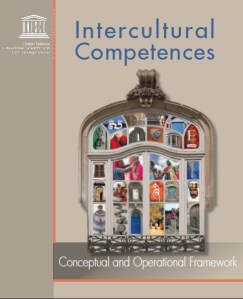
“UNESCO”UNESCO has just published “Intercultural competences: A conceptual and operational framework.” (Paris, France: UNESCO, 2013).

interculturalcomp_cover

This document is a synthesis of, and expansion upon, the numerous documents prepared for, and especially the discussion held during, the UNESCO Experts Meeting on Intercultural Competences, October 21-22, 2011, in Paris, France, organized by the Intersectoral Platform for a Culture of Peace and Non-Violence under the coordination of Katérina Stenou (who also serves as a member of this Center’s Advisory Board). The report benefited particularly from the following sources: a) five regional reports prepared by Milena Dragićević Šešić & Sanjin Dragojević, Alejandro Grimson, Prue Holmes, Melissa Steyn, and Magdi Youssef; b) a synthesis thereof by Darla Deardoff; and c) the stimulating discussions at the experts’ meeting, which included not only all of the regional report authors except Dragojević and Steyn, but also Eric Cattelain, Yolanda Onghena, Hanna Schissler, and Yves Winkin. In addition, many of UNESCO’s Chairs on Interreligious Dialogue for Intercultural Understanding joined the discussion on October 22, 2011. I drafted this report on behalf of the group, and with considerable input from the others, as well as from UNESCO staff. My thanks to Katérina Stenou for involving me in this project, and to the amazing set of international colleagues I met during the process.

This was the first time I was asked to participate in the design of a publication as well as the content, so I also thank the designers involved in the process for teaching me so much. The images of people or writing included in the report were provided by UNESCO; all of the other photographs were taken either by me or my husband on our international travels over the past several years. The cover uses a photograph of a hotel window in downtown Coimbra, Portugal, taken while I was there as a Fulbright Senior Scholar – the ultimate result of a connection made by Eric Cattelain at the experts meeting, and a good example of just the sort of expanding international network that this Center is designed to facilitate.

Wendy Leeds-Hurwitz
Director, Center for Intercultural Dialogue

(See this discussion of the document by AFS.)

Update: Now available also in Arabic, FrenchSpanish and Russian.

Venice Academy of Human Rights 2013

The Venice Academy of Human Rights will take place from 8 – 19 July 2013. The theme of this year’s academy is ‘Obligations of States.’ Online registration is open until 5 May 2013. You can view the detailed programme here.

Faculty of the Venice Academy 2013

General Course
Jeremy Waldron
University Professor, New York University School of Law

Christian Reus-Smit
Professor of International Relations at the University of Queensland

Malcolm Shaw
Senior Fellow at the Lauterpacht Centre for International Law and Research Professor (formerly Sir Robert Jennings Chair) in International Law at the University of Leicester

Brigitte Stern
Professor of International Law at the University of Paris I, Panthéon-Sorbonne

Françoise Tulkens
former Judge and Vice-President of the European Court of Human Rights

Neil Walker
Regius Professor of Public Law and the Law of Nature and Nations at the School of Law, University of Edinburgh

Key Facts
Participants: Academics, practitioners and PhD/JSD students
Type of courses: Lectures, elective seminars and optional workshops
Number of hours: 24 hours of compulsory courses (plenum), min. 16 hours of elective and optional courses (smaller groups)
Location: Monastery of San Nicolò, Venice – Lido, Italy
Fees: 600 €

The Venice Academy of Human Rights is an international programme of excellence for human rights education, research and debate. It forms part of the European Inter-University Centre for Human Rights and Democratisation (EIUC).

The Academy offers interdisciplinary thematic programmes open to academics, practitioners and doctoral students with an advanced knowledge of human rights.

A maximum of 60 participants will be selected.

Participants attend morning lectures, afternoon seminars and workshops and can exchange views, ideas and arguments with leading international scholars and experts. This includes the opportunity to present and discuss their own “work in progress” such as drafts of articles, chapters of doctoral theses or books and other projects.

At the end of the programme, participants receive a Certificate of Attendance issued by the Venice Academy of Human Rights.

Save

Intercultural Dialogue: Saudi Arabia

Guest PostsListening carefully to intercultural dialogue in Saudi Arabia
by Trudy Milburn.

Asked to travel to Riyadh, the capital of Saudi Arabia last March to conduct training sessions at a local university I felt some trepidation, but ultimately agreed to go.  Fear of terrorist activity against foreigners was my main concern.  However, since I study intercultural communication, I was excited to learn first-hand about a culture and a region that seemed to only be in the news because of oil and war.

One interaction I witnessed in a public square has remained somewhat of a mystery.

Our guide escorted my colleague and I to the old city-center that functions as an historic landmark and museum. As we arrived, we heard the call from the loud-speakers near minarets to prayer time.  Everyone began moving in the direction of the nearest mosque. Some women knelt to pray on prayer rugs in or near the shops. I asked about the difference, and was told that the women can pray anywhere, it is only men who must go to the mosque. Our guide himself was exempt for two reasons, he was still a student and because he was working.

Standing quite near us, by the entrance to this museum, were about three or four young men, perhaps in their early twenties.  Their dress identified them as Muslim, but since they did not wear head coverings, I could not tell if they were Saudi men.  We watched an elderly woman approach the group of men and speak loudly, gesturing towards the mosque.  From an American perspective, it seemed that she was berating them for not going to the mosque.  Her tone and the volume of her talk made it sound like she was really disapproving of them. She stood near to the group and continued in this manner for some time. In comparison to her, the few others remaining in the square were quiet and you could begin to hear the chanting of the prayer from the mosque’s loudspeakers. She seemed to be causing quite a scene and the men shifted their stances as she approached, backed off, and re-approached.

We asked our guide what she was saying.  From our American perspective, we imagined that she must be chastising them for not attending the prayer with everyone else. What our guide told us surprised us.  He said that she was beseeching them, as good sons, to attend.  To confirm my recollection, I asked my colleague and he recounted that we were told that she was telling the men how much she cared for them and loved them and that they should be good and pray. My colleague was holding the camera taking the video while I was speaking; we saw interaction in the background. Here’s the video, since the individuals are too far away to identify.

The rhetorical choices she made to persuade these men to go to the mosque initially suggested she was breaking the social norm whereby women typically respond to men’s lead.  However, her ability to shift the frame and take the role of a concerned parent who was merely reminding them of their duty to Allah, indicates a rhetorical sensitivity we would be wise to heed.  Perhaps some situations where dialogue seems impossible actually have spaces where, given the proper roles, one can make statements that otherwise would be considered unlikely or impossible.

Download the entire post as a PDF.