Postdoc in Global Change – U South Florida

University of South Florida Communication Postdoc in Global Change in a Dynamic World, 2014-15

The Department of Communication at the University of South Florida announces its participation in USF’s Postdoctoral Scholars program in the social sciences and humanities, with the theme “Global Change in a Dynamic World.”   Postdoctoral Scholars are expected to (a) contribute to one or more of the priority goals of USF’s strategic plan, (b) work closely with distinguished faculty, (c) participate in  interdisciplinary and programmatic seminar series, (d) teach two courses over a twelve-month period, and (e) continue to build an independent research record and engage in publishing refereed articles and creative scholarship.

Appointments will begin August 11th, 2014, contingent on available funding, and be continued for a maximum of 2 years, contingent upon satisfactory performance. The salary is $40,000 per year. Applicants must have earned a doctoral degree in communication, or an affiliated program, no earlier than 2011 and successfully defended their dissertations by May 1, 2014.  The doctoral degree must be conferred prior to the first day of employment.  (Applicants must receive their doctoral degree from an institution other than USF.)

All application materials must be sent by Friday, February 14, 2014. Additional information about the department and the university is available through our departmental website.  Address any inquiries to Mahuya Pal, Assistant Professor, Department of Communication, USF.

USF is an Equal Opportunity, Affirmative Action, and Equal Access employer. This institution offers benefits to same-sex and different sex domestic partners.

U Otago job ad tourism faculty

Senior Lecturer/Associate Professor in Tourism-1302076
DEPARTMENT OF TOURISM

We are seeking applications from research active staff at the level of Senior Lecturer/Associate Professor in Tourism. This vacancy offers applicants the opportunity to join the staff of the well-established and progressive Department of Tourism, at the University of Otago.

Applicants for the position of Senior Lecturer/Associate Professor must hold a PhD and have a demonstrated record of publication in high quality academic journals. Candidates who have the capability to teach events management and/or tourism product development will be viewed favourably. Applicants who demonstrate a capacity to work with industry are especially welcome to apply. All applicants should be able to demonstrate a clear commitment to team work and the ability to enhance the teaching, learning and research environment of the Department of Tourism. Experience in supervision of postgraduate students is also a critical component to this position.

The successful applicant will have the opportunity to continue developing their academic career in a vibrant and dynamic tourism context.  Tourism is a cornerstone of the New Zealand economy and is of great significance to New Zealand’s environment and society. The Department is located in the South Island’s southern tourism region which includes Queenstown, the Central Otago Lakes region and Fiordland which are famed for adventure and wildlife tourism products, ski fields, extensive alpine national parks, and indigenous Maori tourism enterprises, among other things. Dunedin is a harbour city of outstanding Victorian heritage set adjacent to the Otago Peninsula and its unique marine wildlife. It offers a temperate climate and an excellent quality of life.

The preferred starting date for the successful applicant will be mid 2014 to late 2014 (start date will be open to negotiation).

Specific enquiries may be directed to Associate Professor Hazel Tucker, Head of Department, contact details below.

Applications quoting reference number 1302076 will close on Friday, 31 January 2014.

Additional Information
Contact Hazel Tucker
Position details Information Statement
Guidelines for Academic Positions Guidelines
Further Information Department Website
Create or send a link to this vacancy Copy this link
Location About Dunedin

Primary Location: NZL-SI-Dunedin
Employment Status: Permanent Full-time
Salary Level and Range Senior Lecturer / Senior Research Fellow ($94,832 to $109,669) or Associate Professor / Research Associate Professor ($124,079 to $136,888)
Organisation: Tourism
Job Function: Research and Teaching

Save

CFP Mapping culture conference Coimbra 2014

INTERNATIONAL CONFERENCE
Mapping Culture: Communities, Sites and Stories
May 28-30, 2014
Coimbra, Portugal

CALL FOR PROPOSALS
The Centre for Social Studies (Centro de Estudos Sociais – CES), a State Associate Laboratory at the University of Coimbra in Portugal, is calling for the submission of papers and panel/workshop proposals from academics, researchers, public administrators, architects, planners and artists for an international conference and symposium. The CES is committed to questions of public interest, including those involving relationships between scientific knowledge and citizens’ participation.

UPDATE: January 25, 2014: The Conference Website and Proposal Submission form are now live.

Cultural Mapping – A general definition:
Cultural mapping involves a community identifying and documenting local cultural resources. Through this research cultural elements are recorded – the tangibles like galleries, craft industries, distinctive landmarks, local events and industries, as well as the intangibles like memories, personal histories, attitudes and values. After researching the elements that make a community unique, cultural mapping involves initiating a range of community activities or projects, to record, conserve and use these elements. …The most fundamental goal of cultural mapping is to help communities recognize, celebrate, and support cultural diversity for economic, social and regional development.

Clark, Sutherland and Young

An emerging interdisciplinary field
Cultural mapping reflects the spatial turn taken in many related areas of research, including cultural and artistic studies, architecture and urban design, geography, sociology, cultural policy and planning. Traditional approaches to cultural mapping emphasize the centrality of community engagement, and the process of mapping often reveals many unexpected resources and builds new cross-community connections. Internationally, cultural mapping has come to be closely associated with professional cultural planning practices, but its recent adoption within a variety of disciplinary areas means that ‘traditional’ approaches are being re-thought and expanded, with cultural mapping practices adopting new methodologies, perspectives and objectives as they evolve.

This event is intended to explore both conventional and alternative approaches to mapping cultures and communities in an international context. Presenters will discuss and illustrate innovative ways to encourage artistic intervention and public participation in cultural mapping.

They will also address the challenges posed by such artistic practices and community involvement in various phases of the research process, from gathering and interpreting data to modes of presenting ‘findings’ to interest groups from different sectors – the local public as well as specialists in the arts, research, public administration and planning.

Two key dimensions of current research with implications for artistic, architectural and planning practices are:
(a)   the participatory and community engagement aspect, especially in the context of accessible mobile digital technologies; and
(b)   mapping the intangibilities of a place (e.g., stories, histories, etc.) that provide a “sense of place” and identity to specific locales, and the ways in which those meanings and values may be grounded in embodied experiences.
These two aspects will be highlighted in the conference presentations and symposium workshops, bridging interests of both researchers and practitioners.

EVENT COMPONENTS
*Keynote lectures
*Plenary panel sessions with discussions among researchers, artists/creators, and local planners/municipal representatives
*Interactive workshop sessions (Symposium)
*Associated artistic presentations to complement event themes

KEY THEMES
*Cultural mapping as an agent of community engagement
*Cultural mapping as a tool of local policy development
*Cultural mapping processes and methodologies
*Multimedia mapping tools – recording interpretations and cultural uses of public space
*Artistic approaches to cultural mapping
*The artist-researcher in interdisciplinary inquiry
*Understanding architecture and urban space through mapping

Sub-Themes:
Particular panel sessions can be organized for sub-themes such as:
*’Making visible’ eco-cultural knowledge and practices through mapping
*Political underpinnings of cultural mapping – Lessons and corrections
*Mapping as activist art

Symposium – Linking research and practice:
Collaborative research with communities can help us better understand its role in their cultural and social development. But how to create or recreate such an experience? The Symposium elements will address how multidisciplinary research perspectives can be applied to local development practice. Workshops will be used to explore the possible contributions of cultural mapping approaches to different communities at a local level, and the role for academia.
*What type of ‘cultural map’ is required, and what methodological tools have proven to be valuable?
*How can academic knowledge be effectively applied to solving issues at the community level?
*How much of this information is more than what we see, that is, ‘cultural mapping’ for the intangible or unseen?

CALL FOR PROPOSALS
We invite proposals for individual paper/project presentations, thematic panel sessions and workshops. The primary language of the event will be English, but proposals for presentations in Portuguese are also welcome. (We will try to arrange for ‘informal’ translation support for Portuguese-language sessions, as possible.)

SUBMITTING A PROPOSAL (online at the CES website)
Required information:
*Name of primary author
*Email of primary author
*Names of other authors (if applicable)
*Position/title of primary author
*Organization/institution
*Department
*City
*Country
*Is this presentation part of a proposed panel? Y/N
*If yes, title of panel
*Title of presentation
*Abstract (250 words)
*Key theme(s) of presentation (from the list of themes above)
*Brief bio of presenter(s), including position/role of each (e.g., researcher, professor, architect, doctoral student, artist, town planner, etc.) (max. 250 words)

Panel Proposals:
If you are proposing a panel, please submit the proposed paper of each panel participant separately, using the submission form, to provide full information for each paper and participant. Be sure to enter the title of the proposed panel in the assigned field.

Abstracts will be published in the conference program in English and Portuguese.

Full Papers:
Selected papers will be compiled and posted online (in a password protected folder), and all conference registrants will receive an email with the URL and password for access prior to the conference.

We are planning to publish selected papers in a journal, following the conference.

TIMELINE
Launch – Conference website, online submission form at www.ces.uc.pt – January 15, 2014
Submission Deadline – using online submission formFebruary 14, 2014
Selection decisions communicated to authors – March 1, 2014
Early Registration closes – April 15, 2014
Completed Papers Deadline – via email – May 15, 2014
Conference Presentation in Coimbra – May 28-30, 2014

PROJECT PARTNERS and COLLABORATORS (so far):
*Centro de Estudos Sociais (CES) / Centre for Social Studies, University of Coimbra, Portugal
*Colégio das Artes, University of Coimbra
*The Social Sciences and Humanities Research Council of Canada
*Thompson Rivers University, Canada

QUESTIONS? Please contact Dr. Nancy Duxbury

REFERENCES
*Clark, Sutherland & Young (1995). Keynote speech, Cultural Mapping Symposium and Workshop, Australia.
*McLucas, Clifford (no date). There are ten things that I can say about these deep maps. Available: http://documents.stanford.edu/MichaelShanks/51.
*Scherf, Kathleen (2013), The Multiplicity of Place; or, Deep Contexts Require Deep Maps, with an Example. Paper presented at World Social Science Forum, October 13, 2013.
*Shanks, Michael; Pearson, Mike (2001), Theatre/Archaeology. New York: Routledge.
*Stewart, Sue (2007). Cultural Mapping Toolkit. Vancouver: 2010 Legacies Now and Creative City Network of Canada. Available: http://www.creativecity.ca/database/files/library/cultural_mapping_toolkit.pdf

Save

CID Agreement with Waterhouse Family Institute

About CIDAs one result of my semester at Villanova University, the Center for Intercultural Dialogue has now signed a memorandum of understanding with the Waterhouse Family Institute.

This slideshow requires JavaScript.


The Waterhouse Family Institute (WFI) is founded on the principle that the study and practice of communication is inherently connected to issues of ethics and social justice, and that properly understood, communication is central to the creation of positive social change. WFI is housed within Villanova University’s Department of Communication in the College of Liberal Arts and Sciences.

Dr. Bryan Crable is the Director of the WFI. Basically what this understanding means is that we will cooperate on, and seek joint grant funding for, several projects. More information will be posted to both websites as our discussions lead to specific activities.

Wendy Leeds-Hurwitz, Director
Center for Intercultural Dialogue

CFP Conf on knowledge, culture and change in organizations

14th Int’l Conference on Knowledge, Culture and Change in Organizations
Saïd Business School, University of Oxford
Oxford, United Kingdom
4-5 August 2014

Submit a Proposal

Conference Focus
The primary interest of the Management Conference is knowledge-based social and economic change. Driven by globalisation and advances in information and communications technologies, this change has been characterised in terms of emerging information/knowledge societies and a global knowledge-based economy.

The conference will offer a comprehensive overview of current thinking in the area broadly described as knowledge management. Its perspectives will range from big picture analyses in keynote addresses by internationally recognised experts in the field of management, to detailed case studies of management practice. It will traverse a broad terrain, from theory and analysis to practical strategies for action.

We are inviting proposals for paper presentations, workshops/interactive sessions, posters/exhibits, or colloquia (See Proposal Types). For more information about the ideas and themes underlying this community, see Our Focus. Proposal ideas that extend beyond these thematic areas will also be considered.

Virtual participation is available for those who are unable to attend the conference in person. Proposals for virtual presentations may be submitted at any time, up to the start of the conference. All conference registrants (in-person and virtual) may also submit their written papers for publication in one of the family of journals that supports this knowledge community.

Submit a Conference Proposal
To learn more about preparing and submitting your conference proposal, including guidelines, deadlines, and “how-to” information, go to Submitting Your Work: Conference Presentations.

Conference Details
To learn more about the conference, including speakers, session formats, venue, registration, and the like, stay in The Conference section of the website and use the navigation bar on the left to access desired information.

Urban comm and health disparities award

Gary Gumpert Award: The State-of-the-Field of Urban Communication

The Gary Gumpert Award is given to the applicant whose proposal shows a clear understanding of the state of the field of urban communication with respect to a particular issue or question (as specified by the Urban Communication Foundation every year the award is given), along with a clear articulation of how “state of the field” paper will be developed.

Amount of Award: $2500

For 2013-14, the area of focus for the award is Urban Communication and Health Disparities.

The successful proposal should focus on pertinent communication concepts, theories and literature, not just on the area of focus. Proposals are not limited to a particular methodology and may extend to policy areas and applications.

The final paper must clearly summarize what is known about the targeted area of urban communication, identify gaps in the existing literature, and suggest directions for future research. In doing so, this paper should feature concepts and theories that have been applied in urban communication research and discuss findings of empirical studies, case studies, as well as critical essays and analyses. In a successful proposal (and paper), the link between communication and the urban context must be made clear.

Timeline
*       A 500 word (max) description of how you would approach this topic
*       A current vita
*       And a 150 word (max) bio must be submitted by February 1, 2104
Winner will be notified by March 1, 2014
Final paper must be submitted by June 1, 2014

Send inquiries and grant proposals to Peter Haratonik, Executive Coordinator, Urban Communication Foundation.

Save

Summer internship in Shanghai

2014 Summer Internship Program in Shanghai, China
hosted by the Department of Communication, Villanova University

This program is joined with the summer Internship program at Villanova School of Business (VSB) and the Chinese language summer program (introductory, intermediate, and advanced mandarin classes are all available). So non-COM majors or the students interested in any or all three areas are welcome to apply as well.

Here are some highlights:
1.     Time: 6/21-8/2, 2014
2.     Internship location: Shanghai, China.
3.     6-credit program: 3-credit Internship and 3 credit course Intercultural Communication in China.
a.     5-week internship
b.     No language requirement; English speaking environment
c.     Student specialization-tailored internships placed by a reputable agent that has worked with Villanova for over 10 years.
d.     Full cultural immersion through weekly field trips and 10-day cultural excursion.
e.      Chinese culture-specific and context-focused course design
4.     Joint program with Villanova School of Business and Chinese language program in the Institute of Global and Interdisciplinary Studies:
a.     Mix and match courses/ internships with Business/Economics, and Chinese Language programs
b.     Three faculty members; joint group activities; more fun together!
5.     Estimated cost: $6,950 (final cost will be confirmed by late December, 2013).
Cost includes tuition, shared double room in a hotel affiliated with Shanghai Academy of Social Sciences, Chinese breakfast each morning, orientation, city tour, cultural excursions, internet, student visa, and receptions. Students are required to have a cell phone in China. Some phone companies provide international service. We will assist you if needed. Cost excludes airfare, lunch & dinner, and local transportation.
An optional (highly recommended) group flight will be available for interested students. The program director will work with students to obtain the required Chinese Student Visa.
6.     Application deadline: 3/1/2014
7.   Application form

Please contact Dr. Qi Wang, the Program Director, for any questions or requests. Contact info:
Qi Wang, Ph.D.
Associate Professor, Department of Communication Page Legacy Scholar
2013/2014 President, Association for Chinese Communication Studies
16 Garey Hall, 800 E Lancaster Ave, Villanova, PA 19085

CID Starts a YouTube Channel

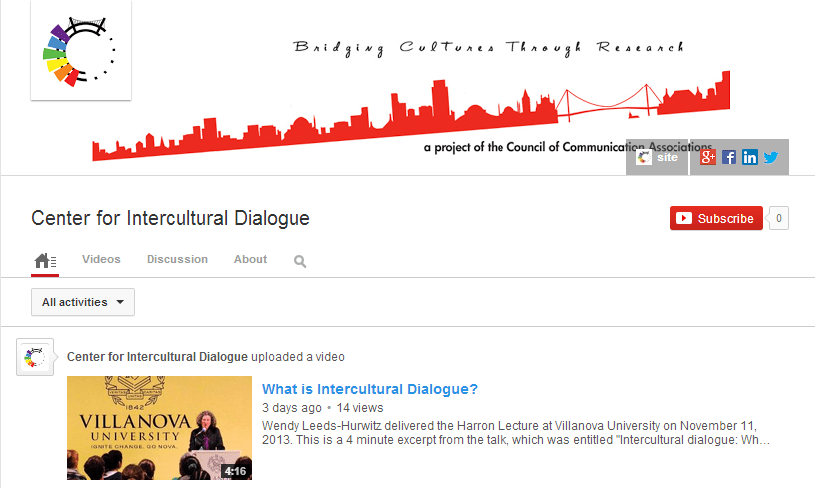
About CIDThe Center for Intercultural Dialogue has just started a YouTube channel. The channel is named after the Center. cid_youtube_channel

The first video is a clip entitled “What is Intercultural Dialogue?” This clip was extracted from the Harron Lecture at Villanova University on November 11, 2013, delivered as part of the responsibilities of the Harron Family Endowed Chair in Communication by Wendy Leeds-Hurwitz, CID Director. The talk was entitled “Intercultural Dialogue: Who Needs It? Who Promotes It? Who Studies It?”

Future videos of talks or activities will be posted as they seem relevant.

NOTE: If you have a video you would like considered, contact us. Videos specifically on intercultural dialogue will be most obviously relevant.

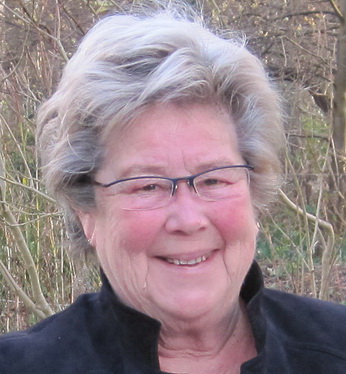
Marieke de Mooij Profile

ProfilesMarieke de Mooij, Ph.D. (Netherlands), Doctor in Communications, is a retired profesora asociada at the University of Navarre (Spain), worked as a consultant in cross cultural communications, and has been visiting professor at various universities around the world.

Marieke de Mooij

Her research has been focused on the influence of culture on communication, media, advertising and consumer behavior in a broadest sense. Since the 1990s she has analyzed an enormous amount of data on communication and media behavior, including the new media. One of her main conclusions is that globalization does not lead to converging communication behavior. Instead, communication behavior across cultures is diverging instead of converging.

She is the author of several publications on the influence of culture on marketing and advertising and communications. Her books Global Marketing and Advertising, Understanding Cultural Paradoxes (fourth edition, 2014), Consumer Behavior and Culture. Consequences for Global Marketing and Advertising (second edition, 2011), both by Sage Publications (USA and UK) are used at universities worldwide.

A new book on communication theory around the world is published by Springer International (2014): Human and Mediated Communication around the World: A Comprehensive Review and Analysis. This book offers a comprehensive review and analysis of human communication and mediated communication around the world. It challenges the assumption that Western theories of human communication and mass communication have universal applicability. The book covers the influence of culture on interpersonal communication, all sorts of mediated communication and mass communication. It presents communication theories from around the world, incorporating a vast body of literature from north America, Europe, Asia, Africa and Latin America. It also offers an integrated approach to understanding the working of electronic means of communication that are hybrid media combining human and mediated communication.

For more information, and access to publications, see her website.

CID has a New Home Page

About CIDThe Center for Intercultural Dialogue has been updating the website over the last few months, and a new home page has just been introduced, thanks to the efforts of Minh Cao, Assistant to the Director.

cid_homepage_snapshot

The photos on the home page were chosen to represent a variety of CID activities: talks, micro grants, contributions from readers. For more information about the people or locations mentioned, use the captions to help you find the relevant posts using the search bar. The gradual introduction over the past several months of visual material into the website has almost always been a result of Minh’s efforts: look for embedded videos, graphic designs,  word clouds, more photographs and logos. I am indebted to Minh for making the website user friendly.

Wendy Leeds-Hurwitz, Director
Center for Intercultural Dialogue