CFP Communication and Ethnic Conflict

Call for Chapter Proposals on Communication and Ethnic Conflict

This is a call for submissions of proposals for chapters to include in a collection about Communication approaches to Ethnic Conflict. Chapter proposal submission requires a 500-1100 word abstract by October 31, 2014. If you have interest please contact the editors or submit a proposal online.

Editors:
Steven Gibson (Northcentral University, USA)
Agnes Lucy Lando (Daystar University, Kenya)

The book, titled Impact of Communication and the Media on Ethnic Conflict will be published by IGI-Global and will present scholarly research on various approaches to how communication studies, media studies and information systems tools can model, reflect and guide understandings of national and international experiences of ethnic conflict. The included chapters will be interdisciplinary, with cultural studies and media studies as two included frameworks. Proposals may focus on a variety of aspects, including (but not limited to):
*Issues in ethnic relations
*The role of identity in conflict
*Genocide case studies and analysis
*Racial and ethnic impacts on conflict
*Conflict resolution programs
*Religious or sectarian conflict case studies
*The effect of media on international relations
*The role played in conflict by information systems
*How media reflects ethnic differences
*Simulated approaches to conflict and conflict resolution
*Communication technology’s role in ethnic relations
*Case studies in ethnic relations

Assessing Intercultural Competency – Part II – by Trudy Milburn

Guest PostsAssessing Intercultural Competency – Part II
by Trudy Milburn

Hello.
(Hi)
What’s your name?
(Response)
Where did you go to school?

If your student produced this as evidence of a cultural practice, how would it rate on this AAC&U Intercultural rubric criterion?

“Demonstrates sophisticated understanding of the complexity of elements important to members of another culture in relation to its history, values, politics, communication styles, economy, or beliefs and practices.”

At first blush, the interaction sequence might seem part of any typical introduction between two people who are meeting one another for the first time. Therefore, a student who produces this might appear to be “developing” on the low end of a graduated scale with a “target” level on the higher end. An instructor may evaluate the statement as evidence of a student’s initial awareness of an interactional pattern, but as lacking a nuanced understanding that its production may indicate a culturally significant pattern. However, perhaps there is more going on with this interactional sequence than one may initially assume.

If we heed Yep’s (2000) suggestion and consider both personal and broader social histories and how these intersect, we might re-consider the produced interaction from different subject positions. Consider these additional contextual features.

While traveling with students in Northern Ireland, we heard tour guides describe a greeting ritual that included the following parts: first asking, “What’s your name?” and then, “where did you go to school?” The guide explained that learning as much as you could about your interlocutors during introductions was very important throughout the tensest moments of the Conflict. It was considered vitally important to be able to quickly position a newcomer within an appropriate category, as Catholic or Protestant. Knowing relevant category could produce fear or solidarity. One guide described that he believed people with saint names were denied access to jobs. Therefore, upon meeting someone, if one heard (or did not hear) a saint name, the follow up question was used to ascertain if the individual attended a Catholic School or not. It was this practice that led one to know on which side of the Conflict the new person was most likely to be. It may have also led to further discriminatory practices.

Coming back to the notion of assessing intercultural competence, how, then does one evaluate a student who attempts to demonstrate intercultural competence by producing such an interactional sequence? While the rubric criterion above includes many features that are valuable to consider, including the social, historical and political contexts of various communicative practices, it leads us into the same trap that Yep (2000) warns about, creating cultural “others.” Even if one notices the interaction sequence from the vantage points of the interlocutors who enact it, where does the student stand in relation to this sequence? One suggestion is that as instructors, we can help students to reflect on how noticeable practices might illustrate a belief within the student’s own culture. It may be that this interaction sequence may be so typical within one’s own culture as to initially go unnoticed. In fact, as instructors who are conducting intercultural assessment, perhaps we should consider our own potential biases towards such practices and consider how our cultural beliefs influence both how we instruct as well as how we assess intercultural competency.

In my next post, I will consider the types of methods used for assessing intercultural competence as well as the role of assessors in this work.

Reference
Yep, G. A. (2000). Encounters with the ‘other’: Personal notes for a reconceptualization of intercultural communication competence. CATESOL Journal, 12(1), 117-144.

Download the entire post as a PDF.

UNC Charlotte multicultural postdoctoral fellowship

The University of North Carolina Charlotte invites applications for our new Multicultural Postdoctoral Fellowship program to support its commitment to diversity, inclusion, and building a strong intellectual community of scholars from different backgrounds. The purpose of the Multicultural Postdoctoral Fellowship Program is to support the early development of scholars who show promise of distinguished research careers and who are from historically underrepresented groups.

Postdoctoral fellows will be engaged full-time in research and may teach up to two courses per academic year as part of their appointment. Fellows are required to be in-residence each semester during their appointment. The postdoctoral fellow will receive extensive university and program mentoring throughout their appointment.

Applications for study in any discipline represented on campus are welcome. STEM applications are strongly encouraged. Please specify your discipline of interest when applying.

Applicants must have completed their doctoral degree within the past five years and no later than July 1st of the current year. The primary criterion for selection is evidence of scholarship potentially competitive for tenure track appointments at a research university. A critical secondary criterion is the support of prospective departments.

All applicants must be U.S. citizens or permanent residents at the time of application; The University of North Carolina at Charlotte strongly encourages applications from African American, Native American and Hispanic scholars. Selection is contingent on the availability of an appropriate mentoring environment.

Please include the following materials with your application:  curriculum vitae; a statement of research plans (1-3 pages) (this should describe your commitment to pursuing an academic career); graduate transcripts; a personal statement on why you should be selected for this program (1-3 pages); Writing samples (e.g. publications and/or dissertation chapters); three letters of recommendation. One letter should be from the applicant’s dissertation advisor or faculty mentor.

Applications are taken on-line, position #POST40.The application deadline is December 1, 2014 at 5:00 PM EST.  Please contact Dr. Shawn D. Long  if you have any questions.

UNC Charlotte is North Carolina’s urban research university and has an enrollment of approximately 26,000 undergraduate and graduate students. Located in the state’s largest metropolitan area, UNC Charlotte is among the fastest growing universities in the UNC system.

The University of North Carolina at Charlotte is an EOE/AA employer and an ADVANCE Institution that strives to create an academic climate in which the dignity of all individuals is respected and maintained. Therefore, we celebrate diversity that includes, but is not limited to ability/disability, age, culture, ethnicity, gender, language, race, religion, sexual orientation, and socio-economic status.

Applicants are subject to criminal background check.

CFP Communication and Conflict Transformation

Book chapter proposals call–communication and conflict transformation

Tom Matyok and Pete Kellett invite brief chapter proposals for our upcoming co-edited book with the working title: Communication and conflict transformation: Leading-edge thoughts, practices, & engagements. If contracted, the book will be published by Lexington Books as part of their new Peace and Conflict Studies Series. They would like to create a book that captures current leading-edge, and emerging thoughts/ideas, practices/ techniques, and engagements/ contexts/ applications around communication as it contributes to the broader (interdisciplinary) discussion of conflict transformation. The book is envisioned as a mix of shorter (3000 word) think pieces and reports on practices and techniques, as well as longer (up to 7500 word) research studies, and as representing the breadth of research paradigms and methodologies, and the novel, valuable, and provocative work currently being done in Communication/Communication Studies regarding conflict transformation and welcome proposals that speak to this goal. They envision completing the contract process by end of this calendar year and will be in touch with a writing timeline for spring at that point. Please email Pete Kellett a working title; name (s) of author (s); and a 75-100 word abstract of your proposed chapter by October 20, 2014.

U Denver job ad: Culture and Communication

The Department of Communication Studies at the University of Denver seeks to hire a tenure track Assistant Professor in Culture and Communication (Critical Intercultural Communication) for the 2015-2016 academic year. The Department of Communication Studies grants B.A., M.A., and Ph.D. degrees. The graduate program is focused on three areas of inquiry: Culture and Communication, Interpersonal and Family Communication, and Rhetoric and Communication Ethics. The area of Culture and Communication investigates the communicative constitution and intersection of difference in its various codifications as culture, race, class, religion, ethnicity, nationality, gender and sexual orientation. Its vision is to promote an ethic of inclusivity, racial and social justice, reciprocity, and mutual transformation in the encounter of difference. Courses reflect this emphasis, focusing on the social and performative construction of identity, the politics of representation, performances of affect, identity, and community and vernacular and embodied rhetorics, all informed by critical, feminist and queer perspectives on cultural communication.

The person hired will teach five courses over three quarters in critical intercultural communication at the graduate, and introductory and advanced undergraduate levels, with possibility to teach in their areas of specialization; maintain an active scholarly research/creative activities agenda related to critical intercultural communication; and perform departmental, university, or disciplinary service.

The university and department are committed to creating a diverse and inclusive educational environment. Applicants are requested to include information about how they will advance this commitment through their research, teaching, and service. Likewise, candidates should demonstrate knowledge and experience with a variety of teaching methods and/or curricular perspectives to effectively engage diverse populations and learning styles.

Required Education and Qualifications:
Ph.D. in Communication Studies required, ABD in Communication Studies considered Publications and research agenda in critical intercultural communication Excellent university level teaching experience in critical intercultural communication is expected Potential to mentor graduate students Demonstrated service to academic institutions or the discipline.

Instructions for candidates:
Candidates must apply online to be considered. Only applications submitted online will be accepted. Once within the job description online, please click New Resume/CV at the bottom of the page to begin application.

Interested persons should submit:
A letter of application that describes your pre-tenure research agenda, articulates yourself in relationship to the department, and demonstrates how your interests are complementary to existing faculty A curriculum vitae Evidence of teaching effectiveness including teaching philosophy, sample syllabi, teaching observations, and course evaluations relevant to this position A statement demonstrating how you will contribute to the department’s commitment to inclusive excellence Names of three references, letters only needed upon request
*We recommend combining documents to avoid the 5 document upload limit

Review of applications will start October 15, 2014. If you have questions regarding this position please contact: Dr. Bernadette Marie Calafell, Search Committee Chair.

The University of Denver strives to create an inclusive and welcoming community for all. We are committed to diversity and recognizing and valuing the rich views of our community members. The University is proud to offer health and wellness plans that are inclusive to all same-gender domestic partners of our benefited employees. You can read more about our rich benefit package.

The University of Denver is committed to enhancing the diversity of its faculty and staff and encourages applications from women, minorities, members of the LBGT community, people with disabilities and veterans. The University is an equal opportunity/affirmative action employer.

LSLP Micro-Papers

The LSLP Micro-Papers are a series of conceptual, one-page papers intended to introduce key elements of literacy and how they fit within our frameworks. This series, edited by CID affiliated researcher Dr. Raúl A. Mora, drew inspiration from our Key Concepts in Intercultural Dialogue series. These micro-papers are authored by student researchers and other affiliated researchers from the Literacies in Second Languages Project at Universidad Pontificia Bolivariana in Medellín, Colombia, as a space to promote their research in the field of alternative and 21st century literacies.

We invite you to check out both the LSLP Micro-Papers and the Literacies in Second Languages Project website.

U Vienna job ads: Text Analysis

UNIVERSITY OF VIENNA
Department of Methods in the Social Sciences
Text Analysis

The Department of Methods in the Social Sciences at the University of Vienna has two positions open in the area of text analysis (PhD and a Postdoc). Applicants hold relevant degrees in either the Social Sciences or in Computer-linguistics/ Media-informatics and show knowledge of computer-assisted content/text analysis methods. The positions will cooperate with the Department of Communication Science at the University of Vienna. More information can be found at:

PhD position (German and English)

Postdoc position (German and English)

The application deadline is October 14, 2014. If you have further questions about the advertisements, please contact Prof Hajo Boomgaarden.

Key Concept #35: Media Ecology by Casey Man Kong Lum

Key Concepts in ICDThe next issue of Key Concepts in intercultural Dialogue is now available. This is  KC35: Media Ecology by Casey Man Kong Lum. As always, all Key Concepts are available as free PDFs; just click on the thumbnail to download. Lists organized  chronologically by publication date and numberalphabetically by concept in English, and by languages into which they have been translated, are available, as is a page of acknowledgments with the names of all authors, translators, and reviewers.
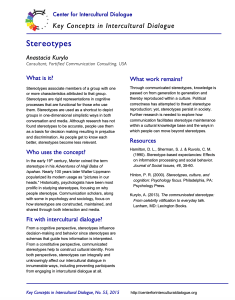
kc35-sm

Lum, C. M. K. (2019). Media ecology. Key Concepts in Intercultural Dialogue, 35. Available from: https://centerforinterculturaldialogue.org/wp-content/uploads/2019/11/kc35-media-ecology-rev.pdf

(NOTE: this was originally published in 2014, but revised in 2019 – the revised PDF is what is now available.)

The Center for Intercultural Dialogue publishes a series of short briefs describing Key Concepts in intercultural Dialogue. Different people, working in different countries and disciplines, use different vocabulary to describe their interests, yet these terms overlap. Our goal is to provide some of the assumptions and history attached to each concept for those unfamiliar with it. As there are other concepts you would like to see included, send an email to the series editor, Wendy Leeds-Hurwitz. If there are concepts you would like to prepare, provide a brief explanation of why you think the concept is central to the study of intercultural dialogue, and why you are the obvious person to write up that concept.


Creative Commons License
This work is licensed under a Creative Commons Attribution-NonCommercial-NoDerivatives 4.0 International License.

Cal State U Long Beach job ad: Race and Ethnicity

Assistant Professor Communication Studies
California State University, Long Beach

EFFECTIVE DATE: August 17, 2015 (Fall Semester)

SALARY RANGE: Commensurate with qualifications and experience

MINIMUM QUALIFICATIONS:
Ph.D. in Communication by date of application or official notification of completion of the doctoral degree by August 1, 2015; demonstrated effectiveness for teaching; demonstrated excellence in research, scholarly and creative activities, etc.; demonstrated commitment to working successfully with a diverse student population.

DESIRED/PREFERRED QUALIFICATIONS:
Research agenda dedicated to the study of communication practices of racial and/or ethnic groups, particularly Latino/Latina or Asian/Asian American communities; demonstrated excellence in teaching at the college level; ability to teach at least two of the following courses: Communication Theory, Survey of Rhetorical Theory, Communication Criticism, Measurement in Communication Research, Intercultural Communication.

DUTIES:
Teach undergraduate and graduate courses, including the following courses:  Communication Theory, Survey of Rhetorical Theory, Communication Criticism, Measurement in Communication Research, Intercultural Communication; engage in a systematic program of scholarship resulting in conference presentations and publication; advise and direct students in academic projects and scholarly activities; provide service to department, college, university, and community.

CSULB seeks to recruit faculty who enthusiastically support the University’s strong commitment to the academic success of all of our students, including students of color, students with disabilities, students who are first generation to college, veterans, students with diverse socio-economic backgrounds, and students of diverse sexual orientations and gender expressions.  CSULB seeks to recruit and retain a diverse workforce as a reflection of our commitment to serve the People of California, to maintain the excellence of the University, and to offer our students a rich variety of expertise, perspectives, and ways of knowing and learning.

REQUIRED DOCUMENTATION:
– A Student Success Statement about your teaching or other experiences, successes, and challenges in working with a diverse student population (approximately one page)
– Letter of application addressing the minimum and desired/preferred qualifications
– CV (including current email address)
– At least three current references or letters of recommendation
– Copy of transcript from institution awarding highest degree
– Finalists will also be required to submit a signed SC-1 form, at least three current letters of recommendation (if not already submitted), and an official transcript.

Application and required documentation must be submitted through the Academic Jobs Online website.

Request for information should be addressed to:
Ann Johnson, Department Chair
California State University, Long Beach
Department of Communication Studies
1250 Bellflower Boulevard
Long Beach, CA 90840-2009


APPLICATION DEADLINE:

Review of applications to begin December 1, 2014.

Position opened until filled (or recruitment canceled)

CSULB is committed to creating a community in which a diverse population can learn, live, and work in an atmosphere of tolerance, civility and respect for the rights and sensibilities of each individual, without regard to race, color, national origin, ancestry, religious creed, sex, gender identification, sexual orientation, marital status, disability, medical condition, age, political affiliation, Vietnam era veteran status, or any other veteran’s status.   CSULB is an Equal Opportunity Employer. CSULB offers benefits to registered domestic partners.

CFP Global TV after 9/11 (Edited Anthology)

Call for Proposals
Global TV After 9/11: Shifts in international television programs and practices

The anthology explores industrial, ideological, cultural, narrative, and aesthetics shifts in the production of global television after September 11.

In the U.S., animated series – and especially those targeting an adult audience – and satirical programs have become the flagship of counterhegemonic narratives of and for American television, while simultaneously being very much part of the consumer capitalist system they question and mock (through DVD sales, merchandising, and outsourcing). Similarly, although officially created before the events of 9/11, dramas like Alias, 24, The Agency and The West Wing have strongly been affected – especially in their subsequent plot development – by the attacks on the World Trace Center and the Pentagon. The response, in these cases, has generally been the construction of patriotic narratives aimed at reassuring the American public against the fear of U.S. vulnerability, while re-establishing traditional American values such as individualism and capitalism.

Considering the shifting meaning of American television after 9/11 as a starting point, the editor aims to open up a wide range of questions, selecting a variety of essays that critically explore the following issues in relation to international media industries:

How have international responses to the catastrophic events of 9/11 affected national television productions? Have genres, formats, and fiction in general, changed (examples: the Indian adaptation of 24, the production of Hatufim in Israel, the original inspiration for Homeland)?

How has TV news changed? Have official news channels lost their credibility and satirical news programs proliferated as it has happened in the U.S. with The Daily Show (like Al-Bernameg in Egypt)?

How has the production of TV documentary (specifically about surveillance) increased/changed as a result of 9/11 (examples include HBO’s Vice Series and BBC’s Meet the Stans)?

What processes of adaptation (audiovisual translation, censorship, etc.) do post-9/11 U.S. TV programs go through when exported abroad? How does a foreign country – where the consequences of 9/11 might not be as strongly and ideologically present as they are in the U.S – import a post-9/11 TV show? How can a program remain a post-9/11 text in a country lacking a post-9/11 culture?

How do post-9/11 irony and satire travel abroad?
Have consumer culture and the very practices of media consumption changed globally after 9/11? How do international audiences perceive and “consume” 9/11 narratives?

How has media production changed in the Middle East (where the consequences of 9/11 where directly felt, and yet where radically different than the U.S.)?

Have strong global media markets (such as India) included post-9/11 themes in their productions? If so, to what extent and with what objectives?

Please consider submitting a 500-word abstract by November 31, 2014, and direct all questions to Chiara Ferrari.

Timeline
Abstracts due by November 31, 2014;
Selection of abstracts by end of December, 2014;
Full essays (7500 words, including bibliography and notes) due by May 31, 2015;
Final (revised) drafts due by August 31, 2015.

About the volume and editor
The specific idea for the Global TV After 9/11 anthology was developed as I completed an essay, titled: “The Taming of the Stew(ie): Family Guy, Italian Dubbing, and Post-9/11 Television”. The article discusses the cultural and ideological changes applied to the animated series Family Guy – considered a flagship of post 9/11 American television – when it is exported and translated in countries (Italy, specifically) that lack an “official” post-9/11 culture. I have previously published two books, including an edited anthology (Beyond Monopoly, Rowman & Littlefield, 2010) and I have established preliminary contact with a respected University Press.