Fulbright Scholar Program 2016

Fulbright U.S. Scholar Awards in Communications and Journalism

The Fulbright Scholar Program offers nearly 500 teaching, research or combination teaching and research awards in over 125 countries for the 2017-2018 academic year. Opportunities are available for college and university faculty and administrators as well as for professionals, artists, journalists, scientists, lawyers, independent scholars and many others.

This year, the Fulbright Scholar Program is offering over 100 awards in the field of communications and journalism. Opportunities include:
– Malaysia: Fulbright-MCMC Award for Communications and Multimedia Studies
– Bulgaria: Communications, Journalism and Media
– Swaziland: Mass Communication and Broadcast Journalism

For additional awards in the field of communications and journalism, please visit the CIES website. There you will find award highlights and examples of successful projects in the discipline, and scholar testimonials which highlight the outcomes and benefits associated with completing a Fulbright Scholar grant.

Please check eligibility factors, detailed application guidelines, and review criteria. You may also wish to register for one of our webinars or join My Fulbright, a resource center for applicants interested in the program. Applicants must be U.S. citizens and the current competition will close on August 1, 2016.

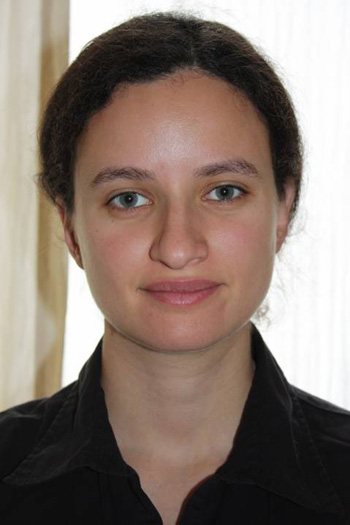
Please contact Sophia Yang with questions about any of the opportunities listed above or the Fulbright Scholar Program in general.

The Fulbright Program, sponsored by the U.S. Department of State’s Bureau of Educational and Cultural Affairs, is the U.S. government’s flagship international exchange program and is supported by the people of the United States and partner countries around the world.
World Day for Cultural Diversity for Dialogue and Development

In 2001, UNESCO adopted the Universal Declaration on Cultural Diversity and in December 2002, the UN General Assembly, in its resolution 57/249, declared May 21 to be the World Day for Cultural Diversity for Dialogue and Development.

The day provides us with an opportunity to deepen our understanding of the values of cultural diversity and to learn to live together better.

Do One Thing for Diversity and Inclusion
In 2011, a grassroots campaign ‘Do One Thing For Diversity and Inclusion’, celebrating the annual World Day for Cultural Diversity was launched by UNESCO and the UN Alliance of Civilizations. By encouraging people and organizations from around the world to take concrete action to support diversity, the campaign aims:
• To raise awareness worldwide about the importance of intercultural dialogue, diversity and inclusion.
• To build a world community of individuals committed to support diversity with real and every day-life gestures.
• To combat polarization and stereotypes to improve understanding and cooperation among people from different cultures.
The campaign works through a dedicated Facebook page, serving as a platform for people around the world to share their experiences through posts and videos.

Some concrete suggestions for specific activities, from the UNAOC, are to:
• Visit an art exhibition or a museum dedicated to other cultures
• Learn about another religion
• Run an international film show
• Listen to a musical tradition from a different culture
• Play a sport related to a different culture (Karate, Criquet, Pétanque…)
• Cook traditional food from different cultures
• Learn about traditional celebrations from other cultures
• Volunteer with an organization working for diversity and inclusion
• Learn another language
• Spread the word around you, family, friends and invite people from a different culture to share your customs.

Of course, just talking to someone from a different cultural background is the simplest, and most powerful.

You can find the brochure of the campaign in the six official languages of the UN (English, French, Spanish, Russian, Arabic and Chinese).

CFP Intercultural Dialogue (Lithuania)

Institution “Intercultural Dialogue” (Minsk, Belarus) invites proposals from those who wish to take part in the Intercultural Dialogue Section of the 6th International Congress of Belarusian Studies that will be held on 7-9 October 2016 in Kaunas (Lithuania).

Topics for discussion:
Will intercultural dialogue become an alternative model of assimilation and multiculturalism?
Can it contribute to overcoming of the European crisis (euro zone crisis, terrorist attacks, problem of refugees, war in Ukraine)?
How does it correlate with a conflict of values, adaptation and integration, concept of solidarity laid down in the Lisbon Treaty of the European Union?
Does it comply with the modern ideology of nationalism of the European and post-colonial nations?
Does it build national and European identity and what role does it play in the modern Belarusian nation-building?

Deadline: July, 15, 2016

Please send a title and 1-2 page summary of a 15-20 minute talk via email to the organizer of this session, Liubou Uladykouskaja, Director General of the Institution “Intercultural Dialogue” in Minsk.

BCFN Foundation Young Earth Solutions YES! Grant Competition

The BCFN Foundation is a private non-profit apolitical institution, with the objective to produce valuable scientific content that can be used to inform and help people to make conscious choices every day about food and nutrition, health and sustainability.

Issues such as the irresponsible use of resources, food waste, and the prevalence of malnutrition need concrete interventions along the food chain. The BCFN Foundation supports the active role of young researchers, who can contribute to healthier food system.

The 2016 edition of the Young Earth Solutions YES! contest has just been launched. The YES! Research Grant Competition is open to PhD and postdoctoral researchers under 35, from any country and background. The first prize is a 20 000 € research grant, in favour of a one-year project to promote the environmental, economic and/or social sustainability of the agri-food system. Research proposals may be submitted by July 27th, 2016.

Finalists, who can participate as individuals or as a team, will be invited to present their project in front of a panel of experts at the Seventh International Forum on Food and Nutrition in Milan, at the Bocconi University, on November 30th and December 1st. On this occasion, the winner will be selected and awarded. For details regarding registration and application please visit BCFN.

All finalists become part of BCFN Alumni, global network to share resources and experiences, and continue the dialogue on these issues.

International Metropolis Conference 2016 (Japan)

On 7 November 2014, the Steering Committee of International Metropolis in Milan made the decision that the 21st International Metropolis Conference (IMC) be held in Aichi-Nagoya on October 24-28, 2016. On 7 September 2015,  Aichi-Nagoya was confirmed as the venue of the International Metropolis Conference after Mexico City.

In the meantime, migration and integration have become one of the most crucial issues in the international society as a result of refugee crisis in Europe and Middle East. Now we really need global discussions not only at the level  of  political summit, but on a broader basis including practitioners, policy makers and researchers. Furthermore, it is necessary to involve Asia when we discuss about such global agenda.

Therefore, it is of great  significance that  the International  Metropolis Conference takes  place for the first time in Asia. This is of great significance to the International Metropolis Project too, and we hope that our discussions in Aichi-Nagoya will enlighten and enliven the migration policy discussion in Asia and contribute to the global discussion.  We hope also to strengthen the Metropolis network throughout Asia and to motivate increased collaboration between migration scholars, policy makers and practitioners in the region and their counterparts in North America, Europe, and beyond.

Creating Trust through Wisdom on Migration and Integration 

Main Themes :
・Refugee protection: Our most pressing migration dilemma
・Managing global risk: migration in situations of crisis
・Creating Trust through Wisdom: Co-development and migration in East Asia
・Migration, trade, and diaspora: Engines for  economic integration
・Asia’s demographic precipice: Migration, technology, and greater workforce participation
・Inclusive development: a new perspective on immigrant integration
・When internal and international migration meet:best practices for cities
・Comprehensive migration policy-making for a   re-vitalized Japan

Workshop submission deadline
Proposals can be submitted starting February 15, 2016 through the website.
The deadline is midnight, July 30, 2016 (Japan time).

Save

FMSH DEA Programme (France)

Associate Research Directors (DEA), France
Deadline : June 6th, 2016

Created in 1975 upon the initiative of Fernand Braudel, in collaboration with the French Secretary of State for Universities, Department for Higher Education and Research, the DEA Programme (Directeurs d’Études Associés, or Associate Research Directors) is the oldest international mobility programme at Fondation Maison des sciences de l’homme. It provides funding to invite international scientific experts from across the globe for one month to six weeks and enables them to carry out work in France (field enquiries, library work and archives).

Participation requirements
The programme is intended solely for professors and senior researchers with a PhD, or equivalent, working in institutions of higher education and research.
Applicants must be no older than 65 at the time of their stay.

Benefits
An allowance of 3 300 € is awarded for transport and stay expenses. In addition, FMSH provides support for visa applications and logistics (accommodation and access to libraries).

Applications and deadline
Applications must be submitted online the latest June 6th 2016.

Content of the application
A curriculum vitae (with date of birth)
A list of scientific publications
A research project of 4-5 pages with the dates of stay, and a bibliography
A letter of support by a French researcher is welcome

Applications should be sent via our online platform.

Once on the platform, in your online application for DEA, please select for the year of the call: 2017 and for the session of the call: Avril-Juin 2016.

For further information or if you encounter difficulties, contact us via email.

After a scientific expertise of the research projects, decisions regarding invitations are made by a commission made up of the administrator, scientific directors of the FMSH, as well as various specialists.

Results will be communicated directly to applicants by the end of October 2016.

The research stay must start no later than November 1st 2017.

CFP Education and Migration: Language Foregrounded (UK)

EDUCATION AND MIGRATION: LANGUAGE FOREGROUNDED
21-23 (Friday – Sunday) October, 2016,
School of Education, Durham University, Durham, United Kingdom

Keynote Speakers:
Alison Phipps, University of Glasgow, UK
Hilary Footitt, University of Reading, UK
Martha Bigelow, University of Minnesota, USA

Plenary panels:
The conference will include five plenary panels, within which the following invited researchers/practitioners will each lead a panel (supported by two other experts), on the themes below.

1. Languages for resilience: Languages education in the context of the Syrian crisis – Mike Solly (British Council)

2. Migration and schools: Policies for primary and secondary education in Europe – George Androulakis (University of Thessaly, Vólos)

3. Children’s multilingual identities, language brokering, opportunities for multiple literacies; issues concerning ESOL/languages and mainstreaming – Francis Giampapa (University of Bristol)

4. Multimodality: The role of the creative arts in language learning – Pam Burnard (University of Cambridge)

5. Communities and education; translanguaging in communities; community schools – Angela Creese (University of Birmingham)

Call for papers and panel proposals:
The conference invites papers and panels on research, pedagogies (multilingual, multimodal, multisensory, intercultural), policy development, and teacher practice concerning the opportunities and possibilities for multiple languages. Papers and panels may also address the following (and related) themes:
· Multilingualism in NGO education contexts
· Policy and language advocacy for multiple languages in the classroom
· Community schools and translanguaging in communities
· Teacher education in multilingual classrooms
· Languages and the intercultural citizen
· Modern foreign languages and multiple languages in schools—affordances and possibilities
· Languages in research, policy, teacher education
· Multimodal pedagogies for supporting language learning
· Critical and intercultural pedagogies
· Languages in contexts of discrimination, trauma, and exclusion: Implications for educational psychology and counselling; identity; multiple language literacies

Please see the conference website for further details, including how to submit proposals. The submission deadline is 1 June 2016.

Pre-conference doctoral workshop on researching multilingually:
There will also be a free pre-conference workshop for PhD students prior to the conference on Thursday 20th October 2016. The purpose of the workshop is to learn about and share experiences of how doctoral researchers draw on their linguistic resources (and those of others) when researching multilingually, and to explore the possibilities and complexities of such approaches. Please see the attached conference information for further details and how to register.

April in Paris

For the month of April 2016, I was visiting professor at the Musée des Arts et Métiers in Paris, France. The museum is one part of the Conservatoire National des Arts et Métiers, a unique institution that really has no comparable body in the US. The museum is essentially the equivalent of the Smithsonian Institution in Washington, DC – the repository of objects that play important roles in science, engineering, or various arts and crafts. These range from Foucault’s pendulum to scientific instruments, to vehicles, to many early communication devices (from a visual telegraph to early motion picture cameras). 

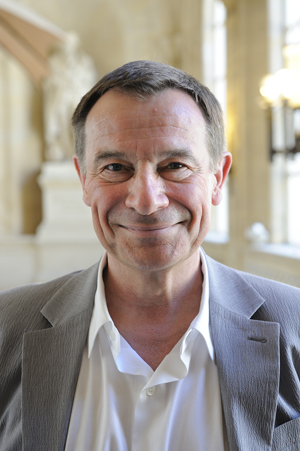
Yves Winkin

My thanks to Yves Winkin, the museum’s director, for the invitation, and the introductions to many of his staff. Specific thanks to Roubina Modely and Emmanuel Lacrois for all their help with the logistics of acquiring an apartment. Those I spent the most time with included Isabelle Taillebourg and Nirina Ramandraivonona of the Documentation Center, Nathalie Giuliani of Exhibits, and Jamila Al Khatib of the pedagogical unit.

Anne Jorro of CNAM graciously invited me to join a full-day international seminar, Arts et faire: Des gestes professionnels de transmission, diffusion, mediation on April 15. Participants came from around France, as well as Belgium and Switzerland. And I was able to meet later with one of Anne’s former doctoral students, Padma Ramsamy-Prat, currently working on a research grant at CNAM.


While in Paris, I had the chance to reconnect with Katérina Stenou, my contact since 2009 with UNESCO, and a member of the Advisory Board of the CID.

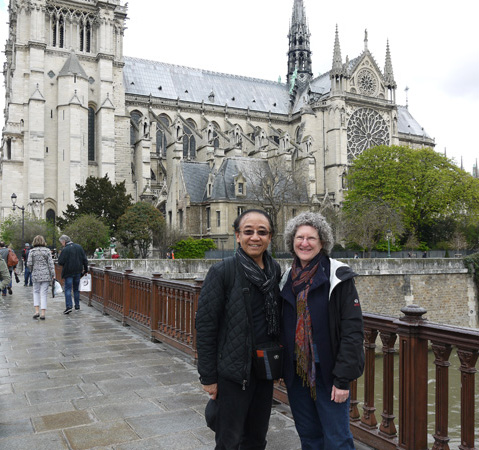
In addition, Casey Man Kong Lum stopped in Paris between a sabbatical stay in Tours and visits to Lisbon and Barcelona. He is one of the editors of a new book entitled Urban foodways and communication: Ethnographic studies in intangible culture food heritages around the world, for which I wrote the final chapter. [Update in May 2016: the book is now in print – follow the link added here to a description and table of contents.]

Casey Lum, Wendy Leeds-Hurwitz

I also had the opportunity to meet Johanna Maccioni, a Belgian psychologist and researcher who is one of the editors of a special issue of Les Politiques Sociales on intercultural competence. I was asked to write one of the articles last fall, which is currently under review, as a result of my role in preparing the UNESCO publication Intercultural competences: A conceptual and operational framework.

As long as I was back in France, Christine Develotte invited me to give a presentation on “Family Socialization to Cultural Identity: How Theory and Method Influence Research” to her doctoral seminar at the Ecole Normale Supérieure de Lyon, on April 8. Afterwards, I gave feedback to her students on questions related to their own research projects.

All in all, a busy month!
Wendy Leeds-Hurwitz, Director

Johanna Maccioni Profile

ProfilesJohanna Maccioni is a a clinical psychologist in Brussels, Belgium. After 5 years study in psychology, she obtained a D.E.S. (Diplôme d’Etude Spécialisé) in adult psychotherapy and passed the “Agregation” (which enables her to teach within universities).

Johanna Maccioni

She worked in hospitals in oncology and other units for ten years (in Belgium and in Martinique-France). For four years at Brugmann Hospital, she coordinated a project funded by the Belgian National Cancer Plan to improve migrants’ hospital care. In 2010, this project won the Gert Noel prize from the Belgian King Baudouin Foundation (the foundation supports justice, democracy and diversity in society), and this project inspired other units in other hospitals. After that, Maccioni began teaching Social Psychology, Intercultural Psychology, Group Dynamics and Clinical Systemic Therapy at the Haute Ecole Leonard de Vinci, a school specializing in paramedical training. As of September 2015, she is teaching a course on “Interculturalism in Health” (this is the second course on the subject offered in Belgium, after “Health and Culture” given by Dr. Louis Ferrand in Anvers University for doctors). She also trains doctors and paramedics who are currently working on this subject. In addition, she participates in a group project on how to improve migrants’ hospital care, organized by the Interfederal Center for Equal Opportunities (UNI-A: Centre Interfédéral pour l’Egalité des Chances, a public institution fighting discrimination).

Publications include:

Maccioni, J. (2019). Le-La patient.e étranger.ère et sa famille face au cancer: Un projet d’accompagnement multiculturel. In A. Heine & L. Licata (Eds.), La psychologie interculturelle en pratiques (pp. 189-200). Bruxelles : Mardaga.

Maccioni, J. & Heine, A. (2019). Dispositif de formation des soignant.e.s aux compétences interculturelles. In A. Heine & L. Licata (Eds.), La psychologie interculturelle en pratiques (pp. 373-384). Bruxelles : Mardaga.

Maccioni, J., & Juliens, C.  (2016). Sur les compétences interculturelles: Enjeux et pratiques. Special issue of Les Politiques Sociales, 3/4.

Maccioni, J. (2014). Vers la compétence interculturelle dans les soins. Contact, 139, 11-12.

De Pauw, S., Maccioni, J., & Efira, A. (2014). Patients drépanocytaires: Quel accompagnement médical spécifique lors de l’adolescence? Revue médicale de Bruxelles, 35, 87-95.

[Création de livret]. (2012). Entre soignants et patients croyants: 4 représentants religieux nous informent. Question Santé ASBL, 1-27.

Maccioni, J., Etienne, A., & Efira, A. (2012). Le patient étranger face au cancer : projet d’accompagnement multiculturel. Santé Conjuguée, 59, 13-17.

Maccioni, J., Etienne, A., & Efira, A. (2011). Accompagnement multiculturel de patients étrangers. Agenda Interculturel, 289, 18-20.


Work for CID:

Johanna Maccioni wrote Constructing Intercultural Dialogues #1: Lullabies, as well as a guest post, Overlanding from Brussels to Kuala Lumpur: A few comments on interactions along the way. She also has served as a reviewer for French.

E-Seminar: Linguistic Diversity & Social Justice

The Linguistic Ethnography Forum will host a free e-seminar devoted to Ingrid Piller’s new book Linguistic Diversity and Social Justice: An Introduction to Applied Sociolinguistics. Please join in this opportunity to discuss the book with the author and a group of leading international scholars.

What: An email-based presentation and discussion of Chapters 1 and 2 of Ingrid Piller, Linguistic Diversity and Social Justice (Oxford University Press, 2016)
When: May 25: Distribution of reading materials; June 01: E-Seminar opens; June 21: E-Seminar closes
Where: The Linguistic Ethnography Forum mailing list
How: Simply sign up to the Linguistic Ethnography Forum mailing list in order to participate
Who: Professor Ingrid Piller as speaker; Dr Huamei Han as discussant; Livia Gerber as moderator; and the list members, including leading international experts in Linguistic Ethnography

Linguistic Ethnography Forum
The Linguistic Ethnography Forum (LEF) brings together researchers conducting linguistic ethnography in the UK and elsewhere. It seeks to explore a range of past and current work, to identify key issues, and to engage in methodologically and theoretically well-tuned debate.

Linguistic Ethnography holds that language and social life are mutually shaping, and that close analysis of situated language use can provide both fundamental and distinctive insights into the mechanisms and dynamics of social and cultural production in everyday activity.
LEF is a Special Interest Group of the British Association of Applied Linguistics (BAAL).
LEF hosts a free annual e-seminar open to all list members.

Linguistic Diversity and Social Justice
Linguistic diversity is a universal characteristic of human language but linguistic diversity is rarely neutral; rather it is accompanied by linguistic stratification and linguistic subordination. Ingrid Piller’s new book Linguistic Diversity and Social Justice employs a case-study approach to real-world instances of linguistic injustice in liberal democracies undergoing rapid change due to high levels of migration and economic globalization. Focusing on the linguistic dimensions of economic inequality, cultural domination and imparity of political participation, this book offers a detailed examination of the connection between linguistic diversity and inequality in domains critical to social justice such as employment, education, and community participation.

The e-seminar will use Chapter 1 (“Introduction”) and Chapter 2 (“Linguistic Diversity and Stratification”) as a starting point for the discussion.

Ingrid Piller is Professor of Applied Linguistics at Macquarie University, Sydney, Australia. Her research expertise is in Intercultural Communication, the Sociolinguistics of Language Learning and Multilingualism, and Bilingual Education. She serves as editor-in-chief of the international sociolinguistics journal Multilingua and curates the sociolinguistics portal Language on the Move.