Masters in Democratic Governance (Venice)

The European Inter-University Centre for Human Rights and Democratisation (EIUC) and its partner univeristies Birzeit University (Palestine), Saint Joseph University (Lebanon), International University of Rabat (Morocco) and Ca’ Foscari University (Italy) are proud to present to you the second edition of the Master in Democratic Governance – Democracy and Human Rights in the Mena Region (DE.MA), starting in September 2016.

DE.MA is a multidisciplinary curriculum offering courses in law, political science, sociology and other fields relevant to the study of democratic governance and Human Rights. Open to professionals and graduates, it will combine a theoretical and practical approach and it will deliver a professional Master’s degree (60 ECTS) from Ca’ Foscari University, Venice. The first semester from mid/late September 2016 until January 2017 is held at the EIUC premises in Venice and the second one from February to May 2017 takes place in one of the partner universities in the Master’s Consortium. Thesis defence and graduation ceremony are in July 2017.

This is meant to play an active role in the ongoing debate about the principles underpinning the transition of political regimes to democracy. It aims at:
•Creating high-profile experts in the fields of democratic governance and the protection of human rights, allowing them to act as promoters of a process leading to the affirmation of the democratic principles;
•Fostering the creation of an élite group of people committed to the promotion of democratic institutions;
•Building a network of experts to be active in political institutions, in national and international, governmental and non-governmental organizations in the Region.

Interested? Here are the practicalities:
Deadline: 30 June 2016
Language: English, (knowledge of French and Arabic recommended)
Teaching method: Face to face teaching

TUITION FEES: 4.000.00 euro.
TUITION WAIVERS/SCHOLARSHIPS: EIUC offers financial support in the form of a partial contribution towards living expenses and/or a full or partial tuition waiver. This type of financial support is awarded to a limited number of students on the basis of academic achievement, need and geographical distribution.

Save

CFP Critical Issues in Eastern and Western Philosophy (Nepal)

Critical Issues in Eastern and Western Philosophy
19th December 2016
Nepal Academy Hall, Kathmandu, Nepal

The Department of Philosophy at the Nepal Academy, Kathmandu, Nepal, together with the Department of Philosophy at the University of Malta, Malta are collaborating by organizing a conference at the Nepal Academy on issues that are pertinent to the Eastern and Western philosophical traditions.

Philosophy, as a discipline with its own distinct territory, is undergoing a current revival of interest that is encouraging to practitioners of the subject. The questions that philosophers of both traditions are engaging with appeal, not only to academic professionals, but also to a broader public that thirsts for a greater degree of understanding of issues that are central to their lives.

To this end, a call for papers is being issued for those who are interested in presenting a 20-minute paper (3,000 words max.). Speakers are invited to discuss any theme related to:
Metaphysics
Philosophy of Ethics
Philosophy of Technology
Political Philosophy
Philosophy of Communication
Comparative Philosophy

Those interested in participating are asked to submit an abstract of a paper (c. 300 words) by email to the seminar organizing team. For Nepali contributors the abstract should be sent to Dinesh Raj, while international contributors should send their papers to Claude Mangion by Friday 14th October. Notification on acceptance of papers will be sent by Friday 28th October. The deadline for submission of papers is Friday 2nd December 2016.

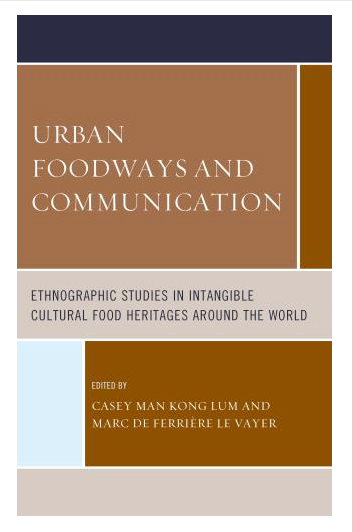
Urban Foodways & Communication

Lum, C. M. K., & de Ferrière le Vayer, M. (Eds.). (2016). Urban foodways and communication: Ethnographic studies in intangible cultural food heritages around the world. Lanham, MD: Rowman & Littlefield.

Lum coverEmbedded in the quest for ways to preserve and promote heritage of any kind and, in particular, food heritage, is an appreciation or a sense of an impending loss of a particular way of life – knowledge, skills set, traditions — deemed vital to the survival of a culture or community. Foodways places the production, procurement, preparation and sharing or consumption of food at an intersection among culture, tradition, and history. Thus, foodways is an important material and symbolic marker of identity, race and ethnicity, gender, class, ideology and social relations.

Urban Foodways and Communication seeks to enrich our understanding of unique foodways in urban settings around the world as forms of intangible cultural heritage. Each ethnographic case study focuses its analysis on how the featured foodways manifests itself symbolically through and in communication. The book helps advance our knowledge of urban food heritages in order to contribute to their appreciation, preservation, and promotion.

To apply for a 30% reduction in the price of the book prior to June 17, 2017, contact Casey Lum directly.

Table of Contents:

At the Intersection of Urban Foodways, Communication, and Intangible Cultural Heritage: An Introduction – Casey Man Kong Lum and Marc de Ferrière le Vayer

Bacalhau–A Love Story: An Ethnographic Study of Portuguese Foodways – paula arvela

Kimchi Nation: Constructing Kimjang as an Intangible Korean Heritage – Chi-Hoon Kim

The Lebanese Bigarade: A Tree at the Heart of Urban Foodways – Aïda Kanafani-Zahar

Shark Town: Kesennuma’s Taste for Shark and the Challenge of a Tsunami – Jun Akamine

The Story in My Matzah Ball Soup: Food as Memory, Identity, and Culture in Contemporary Jewish Barcelona – Catherine Simone Gallin

Gastronomic Festivals and Celebrations on the Montenegrin Coast: Promoting Multicultural Heritage through Traditional Foodways – Ivona Jovanović, Andriela Vitić-Ćetković, and Charles A. Baker-Clark

FIFA vs. As Baianas de Acarajé and the Politics of the Cultural Imaginary – Scott Alves Barton

Edible Heritage: Tradition, Health, and Ephemeral Consumption Spaces in Mexican Street Food – José Antonio Vázquez-Medina, Miriam Bertrán, and F. Xavier Medina

Botteghe Storiche: A Study of the Disappearance of Historic Food Shops and Its Role in the Transformation of Rome’s Urban Social Life – Sonia Massari, Elena T. Carbone, and Salem Paulos

Urban Melting Pot: Food Heritage in Yakutia – Isabelle Bianquis and Isabella Borissova

Epilogue: Urban Foodways as Communication and as Intangible Cultural Heritage – Wendy Leeds-Hurwitz

CFP Uprooted – Refugees/Migrants/The Displaced (US)

Call for Papers
Uprooted—Refugees/Migrants/The Displaced: An International Multidisciplinary Conference—–9th International Conference on Transatlantic Studies
October 10-12, 2016
University of Central Missouri
Warrensburg, Missouri, USA

This multi-disciplinary international conference explores the diverse social justice issues involving refugees/ immigrants/ the displaced confronting both sides of the transatlantic world. Various conflicts throughout the world have led to multiple crises as refugee and displaced persons place demands on societies that are seen as vulnerable resulting in demands for greater security despite the critical humanitarian needs.  These crises continue to strain international and domestic politics.  The crises scattered throughout the world likely involve a symmetry of experiences and responses.  Many features might be held in common, many are likely unique.

This international multidisciplinary conference seeks to explore the diverse aspects of these intertwined issues, including definitions of terms, national and private level responses, social justice issues, impacted intergovernmental and non-governmental organizations, and international relations concerns.  The event will serve as a forum to allow participants to learn by comparison and through international dialog about these crises in international social justice.

The University of Central Missouri (USA) Departments of Criminal Justice and Government, International Studies, & Languages, and Sociology, Gerontology, & Cross-Disciplinary Studies in partnership with the Instituto Franklin Universidad de Alcala (Spain) and the Consortium for Transatlantic Studies & Scholarship invite papers on issues related to any aspect of Refugees/Migrants/The Displaced.  Papers are anticipated to derive from a variety of disciplines including but not limited to: communications, criminal justice, disaster management, history, international relations, international studies, journalism & media studies, legal/justice studies, philosophy, political science, psychology, safety sciences, sociology …. Comparative or international perspectives on these issues are encouraged.

The Conference organizers see a variety of topic areas that underlie the broad themes of current social justice crises involving Refugees/Migrants/The Displaced:
–       Public health
–       Homeland security
–       Refugee resettlement
–       Immigration enforcement
–       Human trafficking
–       Juvenile migrants
–       Women’s issues (violence, family impacts, etc)
–       Terrorism
–       Challenges to law enforcement/corrections
–       International coordination/partnerships
–       Border communities (effects of, response to)
–       Drugs (smuggling, abuse, trafficking)
–       Political context (public opinion, media studies, electoral issues)
–       Migration to areas in central US (Migration to the Midwest and plains states, suburbanization of migration/immigration)
–       Historical responses to mass migration
–       Asylum
–       Conflicts that lead to these crises
–       Impact of Climate Change

To submit proposal/abstract of paper use the form provided on the website.  Proposals are due August 15, 2016.  Papers will be accepted on a rolling basis.

For further information, please email Professor Don Wallace, wallace[at]ucmo.edu

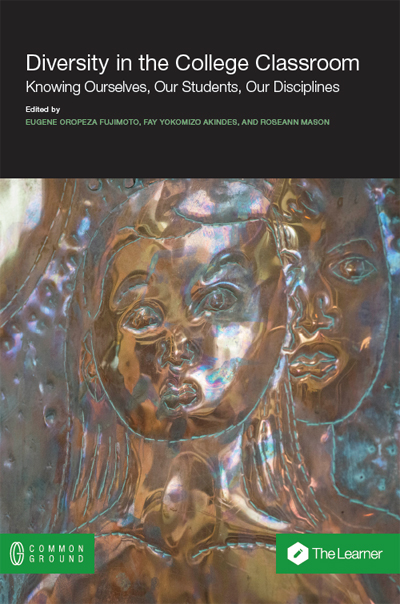
Diversity in the College Classroom

Intercultural PedagogyDiversity in the College Classroom: Knowing Ourselves, Our Students, Our Disciplines; Eugene Fujimoto, Fay Yokomizo Akindes and Roseann Mason (Eds.)

Diversity in the College Classroom coverDiversity in the College Classroom is a collection of first-person narratives by multi-disciplinary faculty at the most racially diverse campus in the University of Wisconsin System. It reveals the complex, interior lives of college professors: how their experiences inform their teaching, relationships with students, and experimentation with innovative pedagogical approaches. All of the writers completed the University of Wisconsin-Parkside’s Summer Institute: Infusing Diversity into the Curriculum.

Table of Contents:
Foreword – Christine E. Sleeter
Introduction – Eugene Oropeza Fujimoto, Fay Yokomizo Akindes, and Roseann Mason
I-Quest: Searching for the Undivided Self – Linda K. Crafton
A Sense of Not Belonging – Damian Evans
“Infinite Diversity in Infinite Combinations”: How I Finally Learned to Apply Vulcan Ideology towards Teaching and Learning – Peggy James
Opening (Again) – Maria del Carmen Martinez
The Transformative Power of Cultural Autobiographies – Dean Yohnk
Constructing Landscapes of Learning – Shi Hae Kim
The Sound of a Heartbeat: Of Students and Friendship and Life – Abey Kuruvilla
When “Education is an Exotic Land”: Using Metaphors to Construct Student Academic Identities – Wendy Leeds-Hurwitz
Building Diversity in Undergraduate Research – Mary Kay Schleiter
“This is Jeopardy”: Cultural Capital, Whiteness, and the College Classroom – Adrienne Viramontes
Hearing Color and Seeing Sound: Teaching Physics with Music – Dileep Karanth
Diversity Economics: Chipping Away at the Oxymoron – Farida C. Khan
Infusion of Diversity into the Organic Chemistry Curriculum – Vera M. Kolb
Diversity and Economics: A Tale of Two Countries – Marcelo Milan
Learning from Others: Engaging Students with People Diagnosed with Mental Illness – Helen Rosenberg
Afterword: Pushing for Greater Academic Access and Equity: Reflections on Facilitating Summer Institute – Thandeka K. Chapman

Save

U Canterbury Visiting Fellowship (New Zealand)

Media and Communication Visiting Fellowship
University of Canterbury, New Zealand

Application Deadline: June 3 2016

The University of Canterbury invites applications for a Visiting Fellowship available for our Term 4: approximately mid September to mid October 2016.  The fellow is expected to offer a number of research seminars to staff/students and meet graduate research students to provide general advice and feedback. The ideal candidate will be a senior or mid-career scholar, possibly on sabbatical over this period.

The fellowship covers the cost of a return flight to New Zealand, accommodation and a per diem that should cover additional living costs for a four to five week period. The fellow is provided with an office in the department for conducting their own research, a computer and access to the university library. They are also free to travel during this period to see the many wonders of New Zealand.

The Media and Communication department at the University of Canterbury is a research-led department with strengths in a number of areas. The University of Canterbury is committed to promoting a world-class learning environment through research and teaching excellence, and has a
vision statement of “People Prepared to Make a Difference.”  The fellow will have the opportunity to work alongside members of a diverse academic community and enrich their professional and personal
development.

To apply, please send a cover letter and CV to Ms. Maria Hellstrom by June 3rd 2016. A decision will be
made regarding the fellow by June 10th 2016.

CFP Media & Migration (Prague)

Call for Papers
Media and Migration, Prague Media Point conference 2016
Prague, 7-9 November 2016
Pre-Conference to ECREA´s sixth European Communication Conference

As an ECREA pre-conference and in cooperation with ECREA’s Diaspora, Migration and the Media section. next fall’s event will address the broad topic of media and migration, focusing on topics such as the role of the media in the so-called “refugee/migrant crisis”; media depictions of refugees, asylum seekers, immigrant and migrant communities; and the media’s influence on belonging and identity – especially in the context of transnationalism, multiculturalism/diversity, and a globalized world. We are seeking papers that will contribute to a critical examination of this topic and result in fruitful discussion panels at the event. We invite abstracts on any of the following topics.*
– The narratives used by mainstream media to cover the so-called “refugee/migrant crisis”.
– The depiction of refugees, asylum seekers and migration in the media.
– The ways that new/social media are changing our perception of refugees, asylum seekers and migrants.
– Comparisons between the approaches of public and private media.
– The role of the media in culturally diverse democracies.
– Journalist as observer or actor when covering the crisis.
– The role of immigrant/diaspora/minority media.
– Discourses of racism and anti-racism in European media

*Please note, this is not an exhaustive list of topics, and we will review any abstracts related to the media and migration/immigration/multiculturalism and related topics.

Please submit your 500-word abstracts and a short bio by 31 May, 2016. The abstracts will be subjected to a peer review process and should be submitted via email to: Kateřina Kusáková.

Prague Media Point is an annual international conference, dedicated to discussing the changing media landscape in a professional, political, economic, and social context. These events gather leading academics, journalists, media executives, and experts from around the world to exchange experiences, establish new contacts, and debate challenges facing both traditional and new media. In November 2016 Prague Media Point will be an ECREA pre-conference. It is organized by Transitions, a nonprofit organization established to strengthen the professionalism, independence, and impact of the news media in the post-communist countries of Europe and the former Soviet Union, and KEYNOTE, an organization specializing in organizing conferences and events that lead to cutting-edge international encounters, bring new ideas to life, and facilitate a unique networking experience.

The organizers have also reserved a number of spaces for non-presenting conference attendees.

Please see the conference website for information about registration and fees. You can also follow the conference on Facebook and Twitter at #PragueMediaPoint.

The conference is supported by the Heinrich-Böll-Stiftung Prague, the European Communication Research and Education Association (ECREA), the London School of Economics, Radio Free Europe/Radio Liberty, the Embassy of the Federal Republic of Germany in Prague, the Institute of Communication Studies and Journalism at Charles University, and the Comparative Interdisciplinary Studies Section (CISS) of the International Studies Association (ISA).

Youth Forum Pula: Culture of Peace: Migrant Crisis and the Youth (Croatia)

The European Center for Peace and Development  (ECPD) University for Peace (UPEACE) established by the United Nations – Regional Center for International Postgraduate Studies and Development Researches, Pula, within the ECPD International Program of Transfer of Knowledge System, in cooperation with Istria Region and the City of Pula, organizes

YOUTH FORUM PULA : CULTURE OF PEACE: MIGRANT CRISIS AND THE YOUTH
Pula, Croatia, 24 – 25 September 2016

In an effort to make culture of peace and tolerance spread throughout the world, ECPD continues, in cooperation with Istria Region and the City of Pula, its activities towards exploring the possibilities for international and interethnic reconciliation, religious tolerance and human security and organizes Youth Forum in Pula. Starting from the fact that the current migrant movements have been significantly changing the demographic map of the world and of Europe in particular, the understanding of the cultural and religious differences presents one of the biggest challenges of the today’s global development as well as the significant component of the long-lasting peace and sustainable development. In the era of globalization, when the world has been connected more than ever, it is extremely important to promote a responsible leadership in all the spheres and all the levels of society. The worldwide youth presents the significant potential and leaders of the future world system of the joint values and tolerance.

EPCD is pleased to invite you to take part in the Youth Forum which will be dedicated to the extremely current topic – Culture of Peace: Migrant Crisis and the Youth. The special focus of this year’s Youth Forum will be put on the importance of improving the existing and acquiring the new knowledge and skills for peaceful interaction with migrants, prevention of conflicts and peace building process. The main topic of the Youth Forum “Culture of Peace: Migrant Crisis and the Youth“ will be covered through two workshops and the following discussion panels :
• Migrant movements and their influence on the stability of Europe
• Social inclusion of the migrants through economic development and cooperation
• Youth – Partners today, peace leaders in the future

CERTIFICATE
Based on the participation and acquired knowledge and skills during the Youth Forum, the participants will receive an internationally valid and accredited Certifi cate of the European Center for Peace and Development (ECPD) of the University for Peace established by the United Nations.

APPLICATION FORM
Applications due July 31, 2016 as an email attachment.

ACCOMMODATION
For Youth Forum participants are provided accommodation at the Hotel “Pula” in Pula at preferential rates : 34€ on a full-board basis per day for a double and triple room, per person. In order to enjoy preferential hotel prices, please specify, when booking the accommodation, that you are a participant of the Youth Forum.

Note: The participants are free to choose another type of accommodation at their own preference. Participants who submit their application forms by the above submission deadline and confirm their attendance shall not be charged participation fee. The organizers cover local transfer costs; all other costs (transportation, accommodation, visas) shall be borne by participant.

New Grants Site: Fund┋It

What is fund┋it?

fund┋it collects and presents on a single site all research grants and fellowships (post-PhD) available for scholars in the social sciences and humanities. Want to come to France? Find a residential fellowship somewhere in the world? Or simply seek funding for your research project? fund┋it is there to support you in finding valuable information. We find it, you fund┋it!

Who is fund┋it for?

• Postdocs, senior scholars and advanced graduate students from outside France wishing to come to France

• French postdocs, senior scholars and advanced graduate students wishing to go abroad or to find funding opportunities

Nota : All international fellowships and funding opportunities listed on fund┋it are guaranteed to be open to French scholars or scholars affiliated with a French institution. However, in most cases other nationalities are also eligible.

Recent posts include:

Empowering scholars to go where they need to go – The H.F. Guggenheim Foundation research grants, tips and tricks by a former awardee

A fruitful field: Funding options in Islam, Near and Middle Eastern studies

Institute for Advanced Study in Toulouse : Understanding Human Behaviour and Culture

fund┋it is supported by the French Network of Institutes for Advanced Study (RFIEA), Fondation Maison des Sciences de l’Homme (FMSH) and the Centre national de la recherche scientifique (CNRS). Part of the Labex RFIEA+, fund┋it is supported by the Agence nationale de la recherche, Programme Investissements d’Avenir.

CFP Mediated Business: Living the Organisational Surroundings

Mediated Business: Living the Organisational Surroundings
Deadline: 1 October 2016

This special issue of Culture and Organization aims to continue a line of thought initiated by the 2004 special issue in Culture and Organization on the work of Deirdre Boden and her interest in interaction in workplace settings. In her seminal book “The business of talk” from 1994, Boden uncovers the tightly interwoven sequential structure of organisational talk. She points to the importance of the local and sequential organisation of talk in interaction for the emergence of larger organisational phenomena: “Piece by piece, moment by moment, stage by stage and level by level, decisions are discussed, debated, diffused and ultimately resolved” (Boden 1994: 178). The special issue in 2004 aimed at developing Boden’s central points on how micro and macro aspects of organisational talk are interrelated. In their paper, Oswick and Richards (2004) built upon Boden’s metaphor of laminations and developed a critical framework for understanding the relationship between local conversations and the larger organisational context. Likewise, Samra-Fredericks (2004) analysed one single instance of organisational talk and showed how a wider organisational context was shaped by and brought into being by the local organisation of talk.

With the current special issue theme “Mediated business: living the organisational surroundings”, we aim to add upon the 2004 initiated ethnomethodological/conversation analytic (EM/CA)-perspective on workplace interaction by specifically relating it to the recent multimodal turn in interaction studies (Mortensen 2012; Asmuß 2015). That way, the special issue seeks to compile recent studies on workplace interactions from an EM/CA perspective focussing on how various organisational surroundings (e.g. material, spatial and/or temporal) may impact the ways organisational activities are accomplished.

In accordance with the recent trends of studying interaction from a multimodal perspective (e.g. Richards 2004; Deppermann 2013; Hazel, et al. 2014), various workplace competences have been understood in light of the members’ ability to organise a diverse array of resources in managing their business at hand. This skillset may include the efficient arrangement and navigation of task-related artefacts in the given context (e.g. Nevile 2004; Nielsen 2012). Correspondingly, the instrumental actions of a given task can be exploited to take care of “hidden” business, for instance: strategy meeting participants negotiating their entitlement through the tactic use of computer-related actions (Asmuß & Oshima 2012) and plastic surgeons performing persuasive physical examinations by labelling patients’ bodies (Mirivel 2008). On the other hand, more “neutral” surroundings – the spatial design of a room in the activity of police interrogation (LeBaron & Streeck 1997), the material/physical environments that surround an urban street sale (Llewellyn & Burrow 2008), and the biographies and other temporal/spatial surroundings of members (Samra-Fredericks 2004), to name a few – may be brought into play by the participants, and/or may shape the form of business they engage in.

These studies have shown us roughly two phenomena. First, they have shown, not only that interactants use resources available for communicative purposes, but how their competences emerge in their artful ways of selecting and highlighting different elements of their surroundings in accomplishing certain business. Second, they indicate what used to be considered as mere practical and objective conditions are often in fact interactional resources, leaving little room for distinguishing the relevant surroundings and the made-as-relevant surroundings. The aim of this special issue is to further explore this fuzzy border of “the participants’ surroundings” and “the surroundings themselves” (Mortensen 2012) in diverse organisational contexts. By examining interactants’ selection of various features in the surroundings, we are interested in exploring how people go about living the organisational surroundings, their social meanings and relationship with the managing of business. We thus welcome EM/CA-oriented contributions offering insights into (but not limited to):
• Affordances and restrictions of organisational activities as interactional resources for negotiating various business (e.g. role, identity, morality, responsibility, strategies)
• Technical/practical activities as social resources at workplace
• Multimodal resources for building interactional a/symmetries at the workplace
• Organisational strategy as a multimodal practice
• Discursive/social/interactional accomplishments of practicality at work
• Assembling workplace through interaction
• Spatiality and temporality of workplace interaction
• The ambiguous border of informal and formal business
• Organisational value of micro-activities
• The interrelationship of micro-level interactional activities and larger organisational phenomena through talk amongst managerial elites.

Submissions
Please ensure that all submissions to the special issue are made via the ScholarOne Culture and Organization site at http://mc.manuscriptcentral.com/gsco. You will have to sign up for an account before you are able to submit a manuscript. Please ensure when you do submit that you select the relevant special issue (volume 24, issue 1) to direct your submission appropriately. If you experience any problems please contact the editors of this issue.

The deadline for manuscript submission is October 1st 2016.

Style and other instructions on manuscript preparation can be found at the journal’s website. Manuscript length should not exceed 10,000 words, including appendices and supporting materials. Please also be aware that any images used in your submission must be your own, or where they are not you must already have permission to reproduce them in an academic journal. You should make this explicit in the submitted manuscript.

Please direct informal enquiries to the special issue co-editors, Birte Asmuß and Sae Oshima (please ‘cc both co-editors).

References
Asmuß, B. (2015). Multimodal Perspectives on Meeting Interaction: Recent Trends in Conversation Analysis. In J. A. Allen, N. Lehmann-Willenbrock, & S. G. Rogelberg (Eds.), The Cambridge Handbook of Meeting Science (pp. 277-304). Chapter 13. Cambridge: Cambridge University Press.
Asmuß, B. & Oshima, S. (2012). Negotiation of entitlement in proposal sequences. Discourse Studies 14(1): 67-86.
Boden, D. (1994). The business of talk: Organizations in action. Cambridge, UK: Polity.
Deppermann, A. (2013). Multimodal interaction from a conversation analytic perspective. Journal of Pragmatics 46(1): 1-7.
Hazel, S., Mortensen, K. & Rasmussen, G. (2014). Introduction: A body of resources – CA studies of social conduct. Journal of Pragmatics 65(0): 1-9.
LeBaron, C. &, J. (1997). Built space and the interactional framing of experience during a murder interrogation. Human Studies 20(1): 1-25.
Llewellyn, N. & Burrow, R. (2008). Streetwise sales and the social order of city streets. British Journal of Sociology 59(3): 561-583.
Mirivel, J. (2008). The physical examination in cosmetic surgery: Embodied persuasion in medical interaction. Health Communication 23: 153-170.
Mortensen, K. (2012). Conversation analysis and multimodality: Conversation Analysis and Applied Linguistics. The Encyclopedia of Applied Linguistics. J. Wagner and K. Mortensen. Oxford, Wiley-Blackwell.
Nevile, M. (2004). Integrity in the airline cockpit: Embodying claims about progress for the conduct of an approach briefing. Research on Language & Social Interaction 37(4): 447-480.
Nielsen, M. F. (2012). Using artifacts in brainstorming sessions to secure participation and decouple sequentiality. Discourse Studies 14(1): 87-109.
Oswick, C. & Richards, D. (2004). Talk in organizations: Local conversations, wider perspectives. Culture and Organization 10(2): 107-123.
Richards, D. (2004). Introduction. Culture and Organization 10(2): 101-105.
Samra-Fredericks, D. (2004). Understanding the production of ‘strategy’ and ‘organization’ through talk amongst managerial elites. Culture and Organization 10(2): 125-141.

Editorial information
• Guest editor: Birte Asmuß, Aarhus University, Denmark (bas@bcom.au.dk)
• Guest editor: Sae Oshima, Aarhus University, Denmark (oshima@bcom.au.dk)