CFP Education and Migration: Language Foregrounded (UK)

EDUCATION AND MIGRATION: LANGUAGE FOREGROUNDED
21-23 (Friday – Sunday) October, 2016,
School of Education, Durham University, Durham, United Kingdom

Keynote Speakers:
Alison Phipps, University of Glasgow, UK
Hilary Footitt, University of Reading, UK
Martha Bigelow, University of Minnesota, USA

Plenary panels:
The conference will include five plenary panels, within which the following invited researchers/practitioners will each lead a panel (supported by two other experts), on the themes below.

1. Languages for resilience: Languages education in the context of the Syrian crisis – Mike Solly (British Council)

2. Migration and schools: Policies for primary and secondary education in Europe – George Androulakis (University of Thessaly, Vólos)

3. Children’s multilingual identities, language brokering, opportunities for multiple literacies; issues concerning ESOL/languages and mainstreaming – Francis Giampapa (University of Bristol)

4. Multimodality: The role of the creative arts in language learning – Pam Burnard (University of Cambridge)

5. Communities and education; translanguaging in communities; community schools – Angela Creese (University of Birmingham)

Call for papers and panel proposals:
The conference invites papers and panels on research, pedagogies (multilingual, multimodal, multisensory, intercultural), policy development, and teacher practice concerning the opportunities and possibilities for multiple languages. Papers and panels may also address the following (and related) themes:
· Multilingualism in NGO education contexts
· Policy and language advocacy for multiple languages in the classroom
· Community schools and translanguaging in communities
· Teacher education in multilingual classrooms
· Languages and the intercultural citizen
· Modern foreign languages and multiple languages in schools—affordances and possibilities
· Languages in research, policy, teacher education
· Multimodal pedagogies for supporting language learning
· Critical and intercultural pedagogies
· Languages in contexts of discrimination, trauma, and exclusion: Implications for educational psychology and counselling; identity; multiple language literacies

Please see the conference website for further details, including how to submit proposals. The submission deadline is 1 June 2016.

Pre-conference doctoral workshop on researching multilingually:
There will also be a free pre-conference workshop for PhD students prior to the conference on Thursday 20th October 2016. The purpose of the workshop is to learn about and share experiences of how doctoral researchers draw on their linguistic resources (and those of others) when researching multilingually, and to explore the possibilities and complexities of such approaches. Please see the attached conference information for further details and how to register.
April in Paris

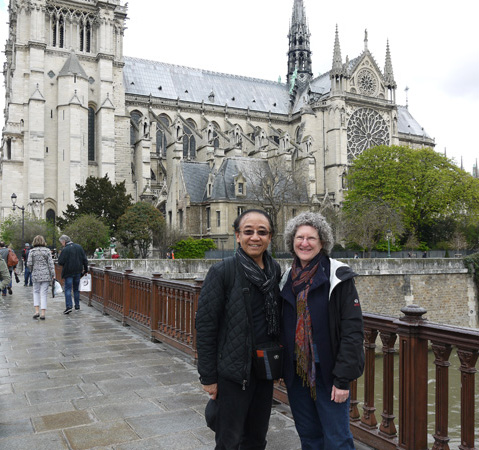
For the month of April 2016, I was visiting professor at the Musée des Arts et Métiers in Paris, France. The museum is one part of the Conservatoire National des Arts et Métiers, a unique institution that really has no comparable body in the US. The museum is essentially the equivalent of the Smithsonian Institution in Washington, DC – the repository of objects that play important roles in science, engineering, or various arts and crafts. These range from Foucault’s pendulum to scientific instruments, to vehicles, to many early communication devices (from a visual telegraph to early motion picture cameras). 

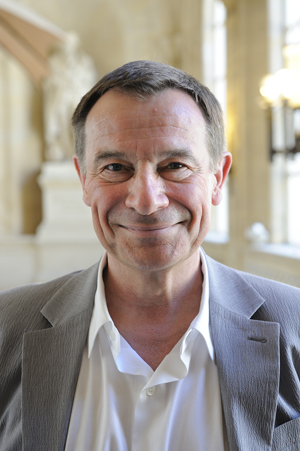
Yves Winkin

My thanks to Yves Winkin, the museum’s director, for the invitation, and the introductions to many of his staff. Specific thanks to Roubina Modely and Emmanuel Lacrois for all their help with the logistics of acquiring an apartment. Those I spent the most time with included Isabelle Taillebourg and Nirina Ramandraivonona of the Documentation Center, Nathalie Giuliani of Exhibits, and Jamila Al Khatib of the pedagogical unit.

Anne Jorro of CNAM graciously invited me to join a full-day international seminar, Arts et faire: Des gestes professionnels de transmission, diffusion, mediation on April 15. Participants came from around France, as well as Belgium and Switzerland. And I was able to meet later with one of Anne’s former doctoral students, Padma Ramsamy-Prat, currently working on a research grant at CNAM.


While in Paris, I had the chance to reconnect with Katérina Stenou, my contact since 2009 with UNESCO, and a member of the Advisory Board of the CID.

In addition, Casey Man Kong Lum stopped in Paris between a sabbatical stay in Tours and visits to Lisbon and Barcelona. He is one of the editors of a new book entitled Urban foodways and communication: Ethnographic studies in intangible culture food heritages around the world, for which I wrote the final chapter. [Update in May 2016: the book is now in print – follow the link added here to a description and table of contents.]

Casey Lum, Wendy Leeds-Hurwitz

I also had the opportunity to meet Johanna Maccioni, a Belgian psychologist and researcher who is one of the editors of a special issue of Les Politiques Sociales on intercultural competence. I was asked to write one of the articles last fall, which is currently under review, as a result of my role in preparing the UNESCO publication Intercultural competences: A conceptual and operational framework.

As long as I was back in France, Christine Develotte invited me to give a presentation on “Family Socialization to Cultural Identity: How Theory and Method Influence Research” to her doctoral seminar at the Ecole Normale Supérieure de Lyon, on April 8. Afterwards, I gave feedback to her students on questions related to their own research projects.

All in all, a busy month!
Wendy Leeds-Hurwitz, Director

Johanna Maccioni Profile

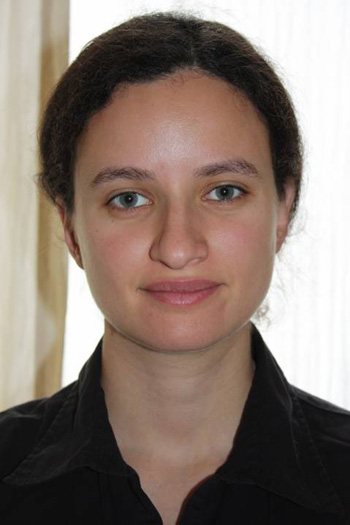
ProfilesJohanna Maccioni is a a clinical psychologist in Brussels, Belgium. After 5 years study in psychology, she obtained a D.E.S. (Diplôme d’Etude Spécialisé) in adult psychotherapy and passed the “Agregation” (which enables her to teach within universities).

Johanna Maccioni

She worked in hospitals in oncology and other units for ten years (in Belgium and in Martinique-France). For four years at Brugmann Hospital, she coordinated a project funded by the Belgian National Cancer Plan to improve migrants’ hospital care. In 2010, this project won the Gert Noel prize from the Belgian King Baudouin Foundation (the foundation supports justice, democracy and diversity in society), and this project inspired other units in other hospitals. After that, Maccioni began teaching Social Psychology, Intercultural Psychology, Group Dynamics and Clinical Systemic Therapy at the Haute Ecole Leonard de Vinci, a school specializing in paramedical training. As of September 2015, she is teaching a course on “Interculturalism in Health” (this is the second course on the subject offered in Belgium, after “Health and Culture” given by Dr. Louis Ferrand in Anvers University for doctors). She also trains doctors and paramedics who are currently working on this subject. In addition, she participates in a group project on how to improve migrants’ hospital care, organized by the Interfederal Center for Equal Opportunities (UNI-A: Centre Interfédéral pour l’Egalité des Chances, a public institution fighting discrimination).

Publications include:

Maccioni, J. (2019). Le-La patient.e étranger.ère et sa famille face au cancer: Un projet d’accompagnement multiculturel. In A. Heine & L. Licata (Eds.), La psychologie interculturelle en pratiques (pp. 189-200). Bruxelles : Mardaga.

Maccioni, J. & Heine, A. (2019). Dispositif de formation des soignant.e.s aux compétences interculturelles. In A. Heine & L. Licata (Eds.), La psychologie interculturelle en pratiques (pp. 373-384). Bruxelles : Mardaga.

Maccioni, J., & Juliens, C.  (2016). Sur les compétences interculturelles: Enjeux et pratiques. Special issue of Les Politiques Sociales, 3/4.

Maccioni, J. (2014). Vers la compétence interculturelle dans les soins. Contact, 139, 11-12.

De Pauw, S., Maccioni, J., & Efira, A. (2014). Patients drépanocytaires: Quel accompagnement médical spécifique lors de l’adolescence? Revue médicale de Bruxelles, 35, 87-95.

[Création de livret]. (2012). Entre soignants et patients croyants: 4 représentants religieux nous informent. Question Santé ASBL, 1-27.

Maccioni, J., Etienne, A., & Efira, A. (2012). Le patient étranger face au cancer : projet d’accompagnement multiculturel. Santé Conjuguée, 59, 13-17.

Maccioni, J., Etienne, A., & Efira, A. (2011). Accompagnement multiculturel de patients étrangers. Agenda Interculturel, 289, 18-20.


Work for CID:

Johanna Maccioni wrote Constructing Intercultural Dialogues #1: Lullabies, as well as a guest post, Overlanding from Brussels to Kuala Lumpur: A few comments on interactions along the way. She also has served as a reviewer for French.

E-Seminar: Linguistic Diversity & Social Justice

The Linguistic Ethnography Forum will host a free e-seminar devoted to Ingrid Piller’s new book Linguistic Diversity and Social Justice: An Introduction to Applied Sociolinguistics. Please join in this opportunity to discuss the book with the author and a group of leading international scholars.

What: An email-based presentation and discussion of Chapters 1 and 2 of Ingrid Piller, Linguistic Diversity and Social Justice (Oxford University Press, 2016)
When: May 25: Distribution of reading materials; June 01: E-Seminar opens; June 21: E-Seminar closes
Where: The Linguistic Ethnography Forum mailing list
How: Simply sign up to the Linguistic Ethnography Forum mailing list in order to participate
Who: Professor Ingrid Piller as speaker; Dr Huamei Han as discussant; Livia Gerber as moderator; and the list members, including leading international experts in Linguistic Ethnography

Linguistic Ethnography Forum
The Linguistic Ethnography Forum (LEF) brings together researchers conducting linguistic ethnography in the UK and elsewhere. It seeks to explore a range of past and current work, to identify key issues, and to engage in methodologically and theoretically well-tuned debate.

Linguistic Ethnography holds that language and social life are mutually shaping, and that close analysis of situated language use can provide both fundamental and distinctive insights into the mechanisms and dynamics of social and cultural production in everyday activity.
LEF is a Special Interest Group of the British Association of Applied Linguistics (BAAL).
LEF hosts a free annual e-seminar open to all list members.

Linguistic Diversity and Social Justice
Linguistic diversity is a universal characteristic of human language but linguistic diversity is rarely neutral; rather it is accompanied by linguistic stratification and linguistic subordination. Ingrid Piller’s new book Linguistic Diversity and Social Justice employs a case-study approach to real-world instances of linguistic injustice in liberal democracies undergoing rapid change due to high levels of migration and economic globalization. Focusing on the linguistic dimensions of economic inequality, cultural domination and imparity of political participation, this book offers a detailed examination of the connection between linguistic diversity and inequality in domains critical to social justice such as employment, education, and community participation.

The e-seminar will use Chapter 1 (“Introduction”) and Chapter 2 (“Linguistic Diversity and Stratification”) as a starting point for the discussion.

Ingrid Piller is Professor of Applied Linguistics at Macquarie University, Sydney, Australia. Her research expertise is in Intercultural Communication, the Sociolinguistics of Language Learning and Multilingualism, and Bilingual Education. She serves as editor-in-chief of the international sociolinguistics journal Multilingua and curates the sociolinguistics portal Language on the Move.


CFP Roles of Communication on a Regional Conflict

Journal of Asian Pacific Journal (JAPC) Special Issue Call for Papers

The Roles of Communication on a Regional Conflict: Antipathy, Nationalism, and Conflicts in Territorial Disputes among China, Japan, and South Korea

Submissions are encouraged from scholars that use different theoretical and empirical approaches to the special issue of Journal of Asian Pacific Communication on the role of communication (e.g. legal, diplomatic, and public discourses) in territorial disputes among China, Japan, and South Korea. Territorial disputes between China and Japan over Diaoyu (Chinese) or Senkaku (Japanese) island and between Japan and South Korea over the Dokdo (Korea) or Takeshima (Japanese) island have escalated particularly in recent years and given rise to concerns about peace and security in the region. The special issue will examine the roles of communication and discourse on their political, cultural, historical, and economical aspects of the territorial disputes with a focus on the key internal and external factors shaping current and future relations. The articles will examine communication and discourse in institutional and political settings, i.e., in and around organizations, in the media, and on the internet. They will focus on how use of language and non-verbal symbolic systems in specific, esp. institutional, communicative contexts, including face-to-face diplomatic interactions/conversations, news release, and popular cultural texts such as films, music, animation, television drama, etc. impact the territorial disputes.

(1) News Coverage on the Disputes: Articles may examine how news media cover the disputes and the accompanying debates on international and domestic levels by conducting content (quantitative) or textural (qualitative) analysis of newspaper articles or broadcasting news contents in two territorial disputes among three nations (or comparative studies). They may also examine how media represent conflict and its potential impact on the audience.

(2) Public Opinion and Propaganda: Although territorial disputes are one of the most fraught issues among states, how public opinion and official and unofficial propaganda on territorial disputes varies within states and what explains the variation are often overlooked. Some articles may examine the dynamics of messages and see how public prioritizes and processes nationalistic, historical, and economic considerations over such disputes. They may hypothesize, for example, that younger generations are more likely to support some level of compromise while older generations would take a more a hawkish stance.

(3) Political and Diplomatic Communication: There are inevitable political aspects in disputed territories. The role of the U.S. can be an explosive force in these disputes. Although the U.S. may maintain the neutrality in the territorial disputes among three nations, the U.S. concerns that China’s muscle in the region could escalate the conflicts with neighboring Vietnam, Malaysia, and Philippine and Japan. The U.S. may support their territorial disputes in order to counter China’s regional hegemonic ambition. The papers may examine rhetorical aspects of political communication (emails, news releases, press conferences, legal action threats, languages of peace and conflicts) in these disputes.

(4) Role of Social Media and Bloggers: Angry and reasonable participants of social media have escalated various international conflicts including the territorial disputes. Papers may analyze social media, internet, and cyber warfare on the disputes among three nations and see how these disputes are mediated, produced, received, and reconstituted.

(5) Role of Popular Cultural Texts: These disputes have been constructed and deconstructed through comics, television dramas, films, dance, theaters, and music in three nations. They are also largely consumed and shared in internet. Papers may explore how these popular cultural texts can personalize and frame the disputes and make the readers to frame of references in their opinions on the topic. Or analyze the texts based on power, ideology, and discourses.

All manuscripts will be reviewed as a cohort for this special issue. Manuscripts must be submitted online. All submissions will go through a regular double-blind review process and follow the standard norms and processes. The deadline for submissions is September 30, 2016. Submissions should be emailed to Eungjun Min.

Language and Conflict: Politics of Language and Identity across Contexts (UK)

Language and Conflict: Politics of Language and Identity across Contexts
20 May 2016, 9:00 AM – 5:00 PM
Brunei Gallery, Room B102, SOAS University of London

Keynote speakers:
Prof. Hilary Footitt (University of Reading)
Dr Zoë Marriage (Violence, Peace and Development Research Cluster, SOAS, University of London)

This one day workshop brings together scholars and graduate students working on the role of language in on-going and post-conflict contexts. Examples could include (but are not limited to) the Middle East, Africa, the Balkans, and Western Europe, including diaspora and migration contexts.

Attendance is free and there is no need to register.

Oregon State U job ad: Intercultural Communication

Visiting Assistant Professor of Intercultural Communication at Oregon State University
EFFECTIVE DATE OF POSITION: 16 September 2016
APPOINTMENT: 1.0 FTE, 9-month, fixed-term
LOCATION: This job is based on-campus at Oregon State University, in Corvallis, Oregon.

The Speech Communication Area of the School of Arts and Communication invites applications for a full-time (1.0 FTE) Visiting Assistant Professor in Intercultural Communication. Primary areas of interests should include: intercultural communication and qualitative research methods. Secondary areas in support of primary area include: communication theory, international communication, postcolonial studies, language and discourse analysis, conflict management, rhetorical theory. For complete position details go to posting P00269UF at http://oregonstate.edu/jobs/.

RESPONSIBILITIES: 75% Teaching – 3 courses per quarter (nine in the academic year) including introductory as well as upper division and graduate level classes; 25% Research and Scholarship.

QUALIFICATIONS: Minimum Required: ABD in Communication or related field; demonstrated excellence in teaching; record of scholarly promise in a program of research; and a demonstrable commitment to promoting and enhancing diversity.

Preferred: PhD in communication with an educational emphasis in intercultural communication; with a secondary area of expertise: qualitative research methods, communication theory, international communication, postcolonial studies, language and discourse analysis, conflict management, rhetorical theory. A demonstrable commitment to promoting and enhancing diversity.

APPLICATION REQUIREMENTS: Apply to posting #P00269UF online at http://jobs.oregonstate.edu. When applying you will be required to attach the following electronic documents:
1) A resume/CV
2) A cover letter indicating how your qualifications and experience have prepared you for this position.
3) A professional statement that includes your philosophy of teaching and research/scholarship.
4) Evidence of teaching excellence such as teaching evaluation summaries for lower & upper division courses and graduate courses, if available. (Upload as Portfolio)

You will also be required to submit the names of at least three professional references, their e-mail addresses and telephone numbers as part of the application process.

For additional information please contact Loril Chandler.

OSU commits to inclusive excellence by advancing equity and diversity in all that we do. We are an Affirmative Action/Equal Opportunity employer, and particularly encourage applications from members of historically underrepresented racial/ethnic groups, women, individuals with disabilities, veterans, LGBTQ community members, and others who demonstrate the ability to help us achieve our vision of a diverse and inclusive community.

APPLICATION DUE DATE: For full consideration submit a complete file by May 22, 2016.

Grants for Communities Connecting Heritage Program

ECA-ECAPEC-16-047
FY 2016 Communities Connecting Heritage Program
US Department of State
Bureau Of Educational and Cultural Affairs

In support of U.S. Department of State foreign policy objectives, the FY 2016 Communities Connecting Heritage program is an international people-to-people exchange program that engages communities and empowers people through the exploration of cultural heritage issues. The program brings together U.S. and international communities, especially youth, women, ethnic minorities and other underserved groups, through collaborative exchange projects that focus on cultural heritage and may also include social issues, such as social inclusion, interfaith tolerance, women’s empowerment, and/or youth development. The program will include six to eight international exchange projects that develop and showcase new partnerships between U.S. and foreign cultural organizations and the communities they serve, while advancing cultural heritage through community outreach and public education. Communities Connecting Heritage is a new initiative. For more information, please see the full announcement.

Peacebuilding and New Media

Media and Communication has released the new issue (2016, volume 4, issue 1) on Peacebuilding and New Media. All articles are published as open access, free for to read, download, and share. The issue was edited by Vladimir Bratic (Hollins University, USA). The complete issue is available online.

Articles include:
Peacebuilding in the Age of New Media by Vladimir Bratic

Elicitive Conflict Transformation and New Media: In Search for a Common Ground by Wolfgang Suetzl

“Likes” for Peace: Can Facebook Promote Dialogue in the Israeli–Palestinian Conflict? by Yifat Mor , Yiftach Ron and Ifat Maoz

Fields and Facebook: Ta’ayush’s Grassroots Activism and Archiving the Peace that Will Have Come in Israel/Palestine by Jon Simons

Internet Censorship Circumvention Tools: Escaping the Control of the Syrian Regime by Walid Al-Saqaf

EU Armed Forces’ Use of Social Media in Areas of Deployment by Maria Hellman , Eva-Karin Olsson and Charlotte Wagnsson

Building Peace through Journalism in the Social/Alternate Media by Rukhsana Aslam

Awareness towards Peace Journalism among Foreign Correspondents in Africa by Ylva Rodny-Gumede

Jane Jackson Profile

ProfilesJane Jackson (PhD, OISE/University of Toronto) is professor in the English Department at the Chinese University of Hong Kong (CUHK), where she teaches undergraduate and postgraduate courses in intercultural communication.

Jane JacksonShe also supervises postgraduate research in language and intercultural communication; identity; student and academic mobility; international and intercultural education; intercultural competence; autonomous learning; English as a second language education; informal language learning; and intercultural transitions.

Professor Jackson has teaching and research experience in many countries/regions: Canada, the USA, the Sultanate of Oman, Egypt, Mainland China, the U.K., and Hong Kong SAR. Recognized for innovative teaching practices, she is the recipient of CUHK’s 2013 Education Award and a member of the University’s Teaching Excellence Ambassador Program, which promotes effective teaching and learning.

Her research interests include intercultural communication/education, language and identity, multiculturalism/multilingualism, and education abroad. With the support of competitive research grants, Professor Jackson has been investigating the ‘whole person development’ of international exchange students from Greater China as well as the language and intercultural learning of incoming international students in Asia. Teaching Development grants have enabled her to design and offer research-inspired blended and fully online courses that aim to promote intercultural competence and optimize education abroad learning. Professor Jackson is a frequent speaker at international conferences that center on intercultural learning, teaching, and research. She has published widely in academic journals and has many chapters in edited collections. Recent books include Introducing Language and Intercultural Communication (Routledge, 2014), The Routledge Handbook of Language and Intercultural Communication (Routledge, 2012) (editor), Intercultural Journeys: From Study to Residence Abroad (Palgrave MacMillan, 2010), and Language, Identity, and Study Abroad: Sociocultural Perspectives (Equinox, 2008).

She is an elected fellow and Board member of the International Academy for Intercultural Research (IAIR) and a member of the International Association for Languages and Intercultural Communication (IALIC). She also serves on the editorial board of the International Encyclopedia of Intercultural Communication (Wiley-Blackwell) and is a member of the advisory board of the Language and Intercultural Communication journal. Professor Jackson is an Editorial Board member for Study Abroad Research in Second Language Acquisition and International Education and the International Journal of Bias, Identity and Diversities in Education.

See her webpage for further information and contact details.


Work for CID:
Jane Jackson wrote KC78: Language and Intercultural Communication.