US Institute of Peace Offers Online Courses for Free in 2020

Intercultural PedagogyEntire catalog of online courses tuition-free, United States Institute of Peace, Washington, DC. Deadline: December 31, 2020.

As the coronavirus pandemic forces us to change the ways in which we interact with one another and as people across the United States and the world demand racial justice, today’s peacebuilders are in need of increased access to resources and tools to support them in transforming conflict. To meet that demand, the U.S. Institute of Peace is offering its entire catalog of online courses tuition-free from now until the end of 2020.

Course topics include: civil resistance, conflict analysis, community-based dialogue, peacebuilding, negotiation, and more, as well as access to the game Mission: Zhobia.


Villanova U: Intergroup Dialogue Program (USA)

“Job

Staff Director of Intergroup Dialogue Program, Villanova University, Villanova, PA, USA. Deadline: September 1, 2020.


The Staff Director of the Intergroup Dialogue Program works with the Faculty Director to oversee and manage the daily operations of the Intergroup Relations (IGR) program. The Director reports to the Office of Diversity, Equity, and Inclusion (ODEI) Executive Director of Strategic Initiatives.

The individual in this position will manage the team of program facilitators, providing recruitment, training, assessment, and ongoing development and training, and execute student recruitment efforts. Additionally, the Director will review assessments for each semester (CATS) and collect student consent forms for research and assessment of student papers. This position will coordinate the IGR Leadership Team (advisory function, planning future topic offerings, interviewing and assessing new facilitator applicants, curriculum development, solicit input and direct outreach to departments and groups) and other outreach activities.

Shanoy Coombs Profile

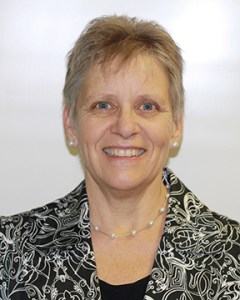
ProfilesShanoy Coombs is a decade rich Development Communications Specialist based in the Caribbean with local, regional and international expertise spanning several industries in the public, private and International NGO sectors.

Shanoy CoombsHer MA research at the University of Sheffield, UK focuses on the role of Intercultural Communication in Multi Stakeholder platforms and will complement her prior work experience in multicultural and intercultural settings.

Shanoy has consulted with International organizations such as the United Nations’ Food and Agriculture Organization for Jamaica, The Bahamas and Belize as well as the European Union and has worked on projects funded by the Inter-American Development Bank (IDB), the Caribbean Development Bank and Grand Challenges Canada.

She has also served as Communications Chairperson for the United Nations Communications Group Caribbean cluster where she provided oversight for joint United Nations activities in the caribbean that require communications support as a part of the One UN Strategy.

Shanoy also teaches Public Speaking sessions via the University of Sheffield’s student union and has led communications training sessions on behalf of several clients.

For more about her visit her website.

Publications prepared on behalf of organizations while an employee:


Work for CID:

Shanoy Coombs won a prize in the 2020 CID Video Competition. She also wrote KC98: Essentialism.

Wikipedia Entry for Intercultural Dialogue

Resources in ICD“ width=Daniel Mateo Ordóñez recently pointed out that Wikipedia did not yet have an article on intercultural dialogue, so I wrote one. That entry is now published.


If there are topics related to the concept that you would like to see included, send an email, or post a comment below.

As a reminder, CID does have its own Wikipedia entry, created several years ago, with the help of Minh Cao. Similarly, if there are additional topics you would like to see included on that entry, let me know.

Wendy Leeds-Hurwitz, Director
Center for Intercultural Dialogue

CMM Institute Learning Exchange 2020 (Online)

EventsCoordinated Management of Meaning Institute 2020 Learning Exchange: Beyond polarized narratives: Engaging CMM to create better social worlds, September 11-12, 2020 10am-4pm EDT (Online).

Organizers have an exciting plan for convening a virtual Learning Exchange centered around thirteen CMMi 2020 Fellows’ projects.  The entire CMM community is invited to be a part of it! When they chose the theme for the 2020 CMM Learning Exchange, “Beyond Polarized Narratives”, they had not anticipated the global pandemic and other dramatic developments in our social worlds. Anticipating the next turn, the importance for transcending polarized narratives should take on an even higher priority, and more considered attention. Each of the 2020 CMMi Fellows’ proposals invites attention to pivotal facets of this complex and significant social challenge, and will help shape the dialogic exploration in this year’s Learning Exchange.

If you have any questions please contact Ilene Wasserman   or   Beth Fisher-Yoshida.

KC49 Intersectionality Translated into German

Key Concepts in ICDContinuing translations of Key Concepts in Intercultural Dialogue, today I am posting KC#49: Intersectionality, which Gust Yep published in English in 2015, and which Alina Timofte has now translated into German.

As always, all Key Concepts are available as free PDFs; just click on the thumbnail to download the PDF. Lists organized chronologically by publication date and numberalphabetically by concept in English, and by languages into which they have been translated, are available, as is a page of acknowledgments with the names of all authors, translators, and reviewers.

KC49 Intersectionality_GermanYep, G. (2020). Intersektionalität. (A. Timofte, trans.) Key Concepts in Intercultural Dialogue, 49. Available from:
https://centerforinterculturaldialogue.org/wp-content/uploads/2020/07/kc49-intersectionality_german.pdf

The Center for Intercultural Dialogue publishes a series of short briefs describing Key Concepts in Intercultural Dialogue. Different people, working in different countries and disciplines, use different vocabulary to describe their interests, yet these terms overlap. Our goal is to provide some of the assumptions and history attached to each concept for those unfamiliar with it. As there are other concepts you would like to see included, send an email to the series editor, Wendy Leeds-Hurwitz. If there are concepts you would like to prepare, provide a brief explanation of why you think the concept is central to the study of intercultural dialogue, and why you are the obvious person to write up that concept.


Creative Commons License
This work is licensed under a Creative Commons Attribution-NonCommercial-NoDerivatives 4.0 International License.

Smithsonian Institution Fellowships (USA)

FellowshipsThe Smithsonian Institution Fellowship Program, Smithsonian Institution, Washington, DC. Deadline: November 1, 2020.

The Smithsonian Institution Fellowship Program offers opportunities for independent research or study related to Smithsonian collections, facilities, and/or research interests of the Institution and its staff. Fellowships are offered to graduate students, predoctoral students, and postdoctoral and senior investigators to conduct independent research and to utilize the resources of the Institution with members of the Smithsonian professional research staff serving as advisors and hosts.

Parts of the Smithsonian that might be of specific interest to CID followers include: Center for Folklife and Cultural Heritage, Office of International Relations, and there are Fulbright-Smithsonian Awards for those outside the US to travel to work with the Smithsonian collections.

Onboarding Best Practices for Transformation Projects Webinar

EventsOnboarding Best Practices for Transformation Projects, presented by Mithun Mridha, sponsored by SIETAR Tri-State, Webinar, August 31, 2020 from 1:00 pm to 2:00 pm (EST).

Are you working in a global organisation with multiple transformation initiatives involving significant turnover of employees over time? Do you have to deal regularly with onboarding new people in your project teams? Do you struggle with business continuity on your projects? Major challenges faced by project teams following ineffective onboarding include failed deliveries, staff turnover, unproductive employees and low knowledge retention.

Global Delivery Centres, Outsourcing and Nearshoring have become pillars of the current enterprise project landscape for international companies. Mithun Mridha, will present examples of unusual onboarding activities that managed to create extraordinary experiences for project team members, that enabled exceptional quality of project deliveries from his more 15+ years of consulting experience on Project Portfolios.

Teaching Interculturality in Higher Education (Online Event)

EventsFurther thoughts on teaching interculturality in higher education during and after the COVID-19 crisis4 September 2020.

Following a very successful and stimulating event in July 2020, this new webinar represents another contribution to reflecting on current issues in the teaching of interculturality in higher education, especially in relation to the COVID-19 crisis. New speakers were invited to share their views and reflections for this session (Australia, China, Finland, The Netherlands). Organised by Fred Dervin (University of Helsinki, Finland), Andreas Jacobsson (Karlstad University, Sweden) and Mei Yuan (Minzu University of China)

Interculturality is taught in institutions of higher education around the world under different guises (intercultural communication, intercultural encounters, global competence, etc.) and in different fields (language, teacher education, health care, business, etc.). The accelerated internationalization that these institutions have experienced for the last decades has also contributed to the popularity of courses around the notion of interculturality. What scholars note about such courses is that the ideologies, theoretical frameworks and methods used for teaching interculturality are many and varied. Furthermore, those who teach interculturality are not always specialists and they can struggle with different kinds of perspectives, paradigms, ideologies, methods…

Many argue that the COVID-19 crisis will have an influence on our lives for the years/decades (?) to come. As far as interculturality is concerned, the crisis has led to very violent acts of xenophobia, Sinophobia, blatant nationalism but also aggressive (systemic) racism and discrimination. At the same time, some of these have been counterbalanced a little by people standing up against them.

Will these have an influence on the way we see interculturality from a higher education perspective, especially on what we teach, from what perspective(s) and how? Is it time for (real) change, beyond the polarization of culturalist/essentialist and postmodern ideologies, in intercultural communication education?

KC5 Intercultural Communication Translated into Macedonian

Key Concepts in ICDContinuing translations of Key Concepts in Intercultural Dialogue, today I am posting KC#5: Intercultural Communication, which I wrote for publication in English in 2014, and which Emilija Jovanovska has now translated into Macedonian.

As always, all Key Concepts are available as free PDFs; just click on the thumbnail to download. Lists of Key Concepts organized alphabetically by conceptchronologically by publication date and number, and by languages into which they have been translated, are available, as is a page of acknowledgments with the names of all authors, translators, and reviewers.

KC5 Intercultural Communication_Macedonian

Leeds-Hurwitz, W. (2020). Intercultural communication [Macedonian]. (E. Jovanovska, trans). Key Concepts in Intercultural Dialogue, 5. Retrieved from:
https://centerforinterculturaldialogue.org/wp-content/uploads/2020/07/kc5-intercultural-communication_macedonian.pdf

If you are interested in translating one of the Key Concepts, please contact me for approval first because dozens are currently in process. As always, if there is a concept you think should be written up as one of the Key Concepts, whether in English or any other language, propose it. If you are new to CID, please provide a brief resume. This opportunity is open to masters students and above, on the assumption that some familiarity with academic conventions generally, and discussion of intercultural dialogue specifically, are useful.

Wendy Leeds-Hurwitz, Director
Center for Intercultural Dialogue


Creative Commons License
This work is licensed under a Creative Commons Attribution-NonCommercial-NoDerivatives 4.0 International License.