SIETAR Italia Call for Events Proposals 2021 (Italy)

Events

Call for Events Proposals for 2021, SIETAR Italia, Milan, Italy. Deadline: 15 November 2020.

Organizers at SIETAR Italia are currently working on the 2021 Programme of Events. Every year they ask members and non-members to deliver workshops, seminars, webinars or talks following their guidelines.

Are you interested in presenting an event in 2021?

The areas of greatest interest are:
•    Companies and organizational challenges
•    Intercultural and multicultural socio-political contexts
•    Development of competencies and training of intercultural professionals
•    Intercultural and interlinguistic communication
•    Intercultural education in the European context
•    Diversity, inclusion, equal opportunities and antiracism

If you have any interesting contribution to offer (in English or Italian) on one of these subjects, please complete the Form for Events Proposals – 2021 Calendar, and send it to SIETAR Italia by the 15th of November 2020. Notices about what has been accepted will be sent by 10th of December 2020.

It is very likely that the emergency context related to COVID-19 will somehow have an impact on the way the events take place also during 2021. Organizers ask, therefore, that you propose your events both for virtual mode and in person mode.

The 2021 Calendar of Events, as well as the one-off events, will be posted on the following channels: the SIETAR Italia website; the GLOBAL SIETAR calendar of events; Eventbrite, through the group’s Newsletter (a mailing list of 2500 contacts), the SIETAR Italia Facebook page, LinkedIn, Twitter, and Instagram, as well as through partners’ communication channels.

Organizers look forward to receiving your proposals with the aim of enhancing intercultural awareness in the business world, in politics, education and in our society as a whole.
CFP History of Communication ICA Preconference (Online)

ConferencesCall for proposals: Exclusions in the History and Historiography of Communication Studies, International Communication Association Remote Preconference, May 27, 2021. Organizers: David W. Park, Jefferson Pooley, Peter Simonson. Deadline: 20 December 2020.

The broader field of communication studies is in a moment when we are—or should be—intensively interrogating patterns of exclusion and hegemony that have continued to constitute it: around global region (de-Westernizing, theory from the South, persistent patterns of American influence/hegemony), race (#communicationsowhite), gender (#metoo, #gendercom, Matilda effects,), and indigeneity/colonization (postcolonial and decolonial initiatives). To frame these exclusions as constitutive is to head off any easy solutions in terms of greater inclusivity, though that needs to be part of the mix; rather, it is to invite us to consider all of the ways in which these and other exclusions have functioned to center certain problems, theories, methods, languages, nations, social identities, and publication venues; and to exclude or marginalize others that are cast as differentially less valuable, lower status, Other, and more. To frame them as constitutive is also to draw attention to how those exclusions are performatively enacted on an ongoing basis through the full range of practices, social and epistemological, through which the field (re)produces itself.

It is time to animate our histories of communication and media studies with similar problematics, recognizing the patterns and performances through which the field(s) has organized itself around constitutive exclusions and continues actively to do so in its historiography. How have particular geopolitical locations (including but not limited to nations) achieved centrality, established standards and status hierarchies, and accumulated advantages and various forms of capital through marginalization and exclusion? How has colonialism and its persistent structural effects fueled communication study around the globe, and how does our historiography maintain that form of dominance and exclusion? How have gender/patriarchy, race/racism, and ethnicity fueled analogous processes? What forms of resistance and counter-hegemonies have arisen or persisted?

Continue reading for full details.

Connecting Communities Through Mutual Cultural Understanding (Webinar)

EventsInternational Education Summit: Connecting Communities Through Mutual Cultural Understanding, World Artists Experiences, November 9, 16, 23, 30, 2020.

Maryland Governor Lawrence J. Hogan proclaimed November as International Education Month. He advocated listening, observing, and sharing “cross-cultural interaction and learning in schools, colleges and communities.” To support the Governor’s initiative, World Artists Experiences will present an International Education Summit “Connecting Communities Through Mutual Cultural Understanding.” 

Multi colored stick figures standing in a circle a

• November 9, 7:00 pm: “Who Are Marylanders?” will explore the rich diversity, demographics, origins, history, and contributions of Marylanders beginning in the 1600s through the present.

• November 16, 7:00 pm: “Connecting Cultures Beginning with Self” will discuss connecting cultures to develop mutual understanding in international communities.

• November 23, 7:00 pm: “Effective Communication in Diverse Cultural Settings will focus on the critical role of communication in daily lives and how misunderstandings in verbal and nonverbal communication emerge.

• November 30, 7:00 pm: “Sharing our Voices: Using Arts in Understanding Cultures” will examine the various ways the arts can be used to bridge cultures.

The summit is free, but prior registration is required. Register on the WAE website.

Melita Garza Profile

Profiles

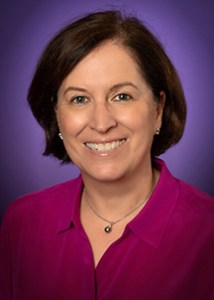
Melita M. Garza is associate professor in the journalism department in the Illinois College of Media at the University of Illinois, Champaign Urbana.

Melita GarzaShe is an American journalism historian who studies news as an agent of democracy, specializing in English- and Spanish-language news, the immigrant press, and coverage of underrepresented groups. Garza is the author of the award-winning They Came to Toil: Newspaper Representations of Mexicans and Immigrants in the Great Depression (University of Texas Press, 2018). They Came to Toil examines English- and Spanish-language news coverage of immigrants during the longest economic downturn in the United States. She is a founding faculty member of TCU’s interdisciplinary department of Comparative Race and Ethnic Studies (CRES). Her work has been published in Journalism History, American Journalism, and the Howard Journal of Communications.

She earned a Ph.D. from the University of North Carolina at Chapel Hill in 2012 after two decades reporting for the Chicago Tribune, Bloomberg News, and the Los Angeles Times. At the Chicago Tribune, she pioneered the paper’s ethnic affairs beat, and covered immigration, among other topics. Dr. Garza also holds an MBA from the University of Chicago and a B.A. from Harvard University. She teaches journalism history, media literacy, business journalism, and diversity and the media.


Work for CID: Melita Garza serves on the CID Advisory Board.

U Utah Asia Campus: Visual Communication (South Korea)

“Job

Assistant Professor (Lecturer, Non-tenure track), University of Utah Asia Campus, Songdo, South Korea. Deadline: November 15, 2020.

The Department of Communication at the University of Utah invites applications for a non-tenure-track Assistant Professor (Lecturer) position effective January 1, 2021. The successful candidate will be an excellent teacher dedicated to cultivating informed and ethical students who are ready to enter the workforce as well-prepared professionals. The successful candidate must be willing to teach courses, such as video production, principles of visual communication, visual theory, media generally, introductory courses, intro to speech, communication theory, and communication and/or media history. Teaching in strategic communication is a plus. Additionally, depending on the candidate selected, an administrative component may be possible.

Position located at the Utah Asia Campus (UAC) in Songdo, South Korea. All courses taught at the UAC are in English. The standard annual teaching load for lecturers at the UAC is 3/3/1 (three courses in the fall and the spring respectively and one course either during the winter or the summer). Successful candidates for the position should have a Ph.D. in Communication or a related discipline and evidence of teaching excellence.

Chinese U Hong Kong: Multiple Positions (China)

“JobMultiple positions, School of Journalism and Communication, Chinese University of Hong Kong, Hong Kong, China. Deadline: Open until filled (posted October 15, 2020).

Associate Professor(s) / Assistant Professor(s).

Applications are welcomed from candidates with research interests in critical communication studies, preferably with an emphasis on research about digital data, algorithm, and/or logistical media.

Associate Professor/ Assistant Professor.

The study of human communication processes related to digital media and technologies. Research areas can include but are not limited to the following: mobile media, social media, computational social science, virtual reality, big data, and AI.

Associate Professor/ Assistant Professor.

In advertising with professional expertise in areas such as social media content / data analysis and strategy, user experience and engagement research, and/or health communication.

Professor / Associate Professor.

In global media and communication studies, with research agenda in the broad field of global media and communication studies (including but not limited to: media production and labor; global media industries; or culture and communication).

There is also a position in the Department of Cultural and Religious Studies for an Assistant Professor, with a deadline of November 6, 2020. Applicants should have strong commitment in the general field of cultural studies, specializing in methods and theories of cultural studies, new media studies, critique of colonialism / nationalism / globalization, and/or other subject matters relevant to the teaching curriculum and research strengths of cultural studies at CUHK.

Call for Exercises on ICD Topics


Intercultural PedagogyCID would like to make available on this site a collection of exercises on topics related to intercultural dialogue, and designed to help people learn to engage in intercultural dialogues. 

Intercultural Dialogue definition

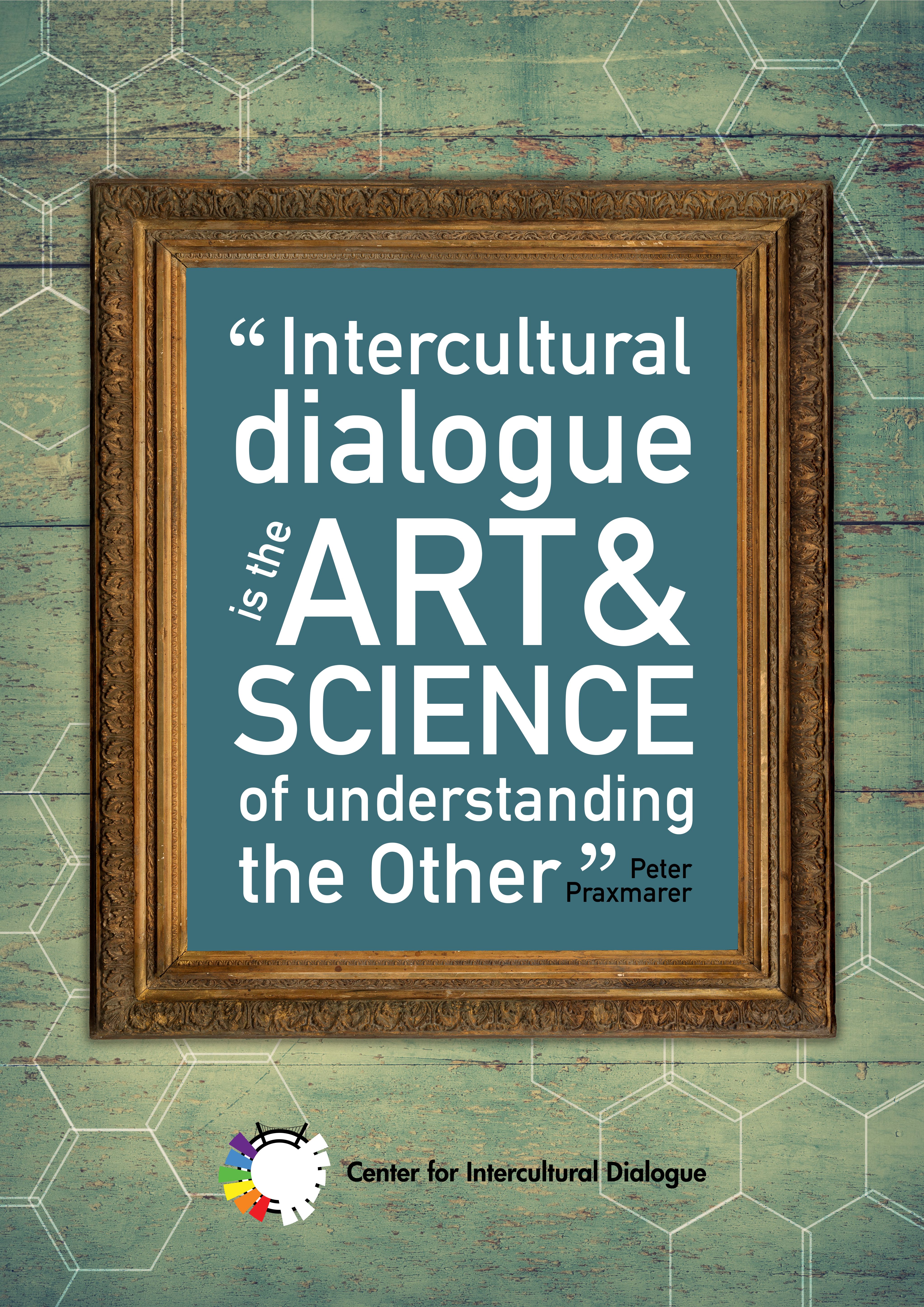
As a reminder, intercultural dialogue has been defined on this site as “the art and science of understanding the Other” (courtesy of Peter Praxmarer, as explained here). 

The goal is to first gather a number of such exercises and, second, make them available to all those who follow this site. This request may be interpreted broadly, both in terms of content (so that intercultural competence, conflict resolution, conflict management, negotiation, peacekeeping, etc. would all be appropriate foci), and in terms of type of exercise (not only discussion but also writing, video, interview, graphic design, etc. could all be relevant examples). 

Please send examples, and/or questions, to Wendy Leeds-Hurwitz, via email.

Jhon Eduardo Mosquera Pérez Profile

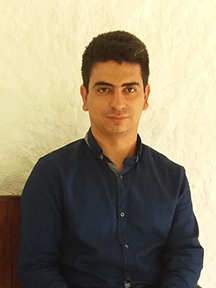
ProfilesJhon Eduardo Mosquera Pérez is a full time English language educator at a public institution in Huila, Colombia. He is a first semester student in the master´s degree in learning and teaching processes in second languages at Universidad Pontificia Bolivariana.

Jhon Eduardo Mosquera PérezHe holds a bachelor degree in the teaching of English as a foreign language from Universidad Surcolombiana and a master´s degree in English language teaching from the same university. In addition to his current studies, he is working as a co-researcher within the framework of the research group “APRENAP” from Universidad Surcolombiana while being also part of a research hotbed at Universidad Nacional de Colombia.
Some of his interests in terms of research are: language teacher identity, language assessment, the intersection between language teacher identity and autoethnography, interculturality, English as a lingua franca, computer assisted/technology enhance language learning (CALL/TELL), among others. At the moment of writing these words, he is working towards the publication of some articles delving into the just mentioned areas of knowledge.


Work for CID:

Jhon Eduardo Mosquera Pérez has translated KC2: CosmopolitanismKC17: Multilingualism, KC26: Global-Local Dialectic, KC40: English as a Lingua FrancaKC34: World Englishes, KC37: Dialogic Listening, KC51: Critical Discourse Analysis, KC62: Diaspora, KC68: Social Justice, KC70: VerstehenKC86: Educación Intercultural Bilingüe, and KC87: Culture Shock  into Spanish.

CFP Middle East Dialogue 2021 (USA)

EventsCall for proposals: Middle East Dialogue 2021, Policy Studies Organization, Washington, DC, March 19, 2021 (Virtual Meeting). Deadline: January 20, 2021.

The Policy Studies Organization (PSO) and The Digest of Middle East Studies (DOMES) have announced the official call for proposals for their annual Middle East Dialogue 2021. The event aims to promote dialogue about current policy concerns in the Middle East, and to provide a civil space for discussion across the religious and political spectrum. As in years past, they invite scholars, policy-makers, and other leaders within the global and local community to respectfully, and productively, discuss the diverse range of issues affecting the region.

U Notre Dame: Visiting Research Fellowships (USA)

FellowshipsVisiting Research Fellowships, Kroc Institute for International Peace Studies, Keough School of Global Affairs, University of Notre Dame, Notre Dame, Indiana, USA. Deadline: January 1, 2020.

Each year, the Kroc Institute’s Visiting Research Fellows Program brings outstanding scholars focused on peace research to the University of Notre Dame for a semester or a full academic year. The Institute particularly seeks scholars who will actively integrate their research with ongoing Kroc research initiatives. Applicants must have completed a doctoral, or equivalent, degree (with the exception of the Alumni Visiting Research Fellow). Visiting Fellow Openings for 2021-22 will emphasize several specific areas: the intersection of gender, intersectionality, conflict, and peacebuilding; peace accords; international mediation; or violence and systemic racism in policing and law enforcement.