Giovanna Carloni Profile

ProfilesGiovanna Carloni, PhD, is a lecturer at the University of Urbino, Italy.

Her fields of expertise are applied linguistics, foreign language education, teaching Italian as a second and foreign language, intercultural and global competence, educational technology, virtual exchange, teacher training, corpus linguistics, English linguistics, EAP (English for Academic Purposes) and ESP (English for Specific Purposes),  CLIL (Content and Language Integrated Learning), and internationalization in higher education. She worked as project coordinator for the CLIL Internationalization project at the University of Urbino, Italy, where she was also responsible for providing the content instructors engaged in the project with CLIL methodological support. As project coordinator, she devised the digitally-enhanced theoretical and methodological CLIL framework that the University of Urbino has adopted. Furthermore, she has been responsible for the design and implementation of virtual exchange from an intercultural perspective with universities in the USA, Australia, and South Africa for about a decade. Among her publications:

Books and edited volumes

Carloni, G. (2020). Digitally-enhanced practices and open pedagogy in English-taught programs: Flexible learning for local and global settings in higher education. Milan: Franco Angeli.

Carloni, G. (2016). Corpus linguistics and English teaching materials. Milan: Franco Angeli.

Carloni, G. (2015). CLIL in higher education and the role of corpora: A blended model of consultation services and learning environments. Venice: Edizioni Ca’ Foscari.

Carloni, G. (Ed.). (2015). Insegnare italiano a stranieri. Percorsi operativi. Milano: Franco Angeli.

Selected Articles

Carloni, G. (2021). Using a Community of Inquiry framework to foster students’ active learning. In K. Enomoto, R. Warner, & C. Nygaard (Eds.), Teaching and learning innovations in higher education (pp. 195-208).  Oxfordshire, UK: Libri Publishing.

Carloni G., & Zuccala B. (2020). Blending Italian through Skype: A diachronic and comparative account of a telecollaborative project. In J. Fornasiero, S. M. A. Reed, R. Amery, E. Bouvet, K. Enomoto, H. L. Xu (Eds.), Intersections in language planning and policy: Establishing connections in languages and cultures (pp. 279-298). Dordrecht: Springer Nature.

Carloni G., Grassi S., Virga A., & Zuccala B. (2018). Exploring the transnational connections between blended learning spaces, trans-institutional collaboration, and intercultural awareness in transformative telecollaborative projects. LEA – Lingue e letterature d’Oriente e d’Occidente, 7, 393-403. DOI:  http://dx.doi.org/10.13128/LEA-1824-484x-24403

Carloni G., & Zuccala B. (2018). Blending Italian ‘down-under’: Toward a theoretical framework and pragmatic guide for blending tertiary Italian language and culture courses through Skype-enhanced, pre-service teacher-centred telecollaboration. LEA – Lingue e letterature d’Oriente e d’Occidente, 7, 405-445. DOI: http://dx.doi.org/10.13128/LEA-1824-484x-24408

Carloni G., & Zuccala B. (2017). Blending Italian at Monash University through an Italian-Australian digital project: An analysis of students’ perceptions. LEA – Lingue e Letterature d’Oriente e d’Occidente, 6, 115-139. https://doi.org/10.13128/LEA-1824-484x-22333


Work for CID:
Giovanna Carloni participated in a CID/UNESCO focus group for the Futures of Education Initiative, and then provided an exercises for the addendum.

Nadia Abid Profile

Profiles

Nadia Abid is an assistant professor of Applied Linguistics in the English Department at Faculty of Arts and Humanities of Sfax (FLSH Sfax), Tunisia.

Nadia Abid

She obtained a joint PhD in Applied Linguistics from the University of Sfax, Tunisia and the University of Lorraine, France in 2012. She is currently a member of LAD (Laboratory on Approaches to Discourse, FLSH Sfax) and a coordinator of a Professional Master’s program in English for Communication.

She teaches TEFL (Teaching English as a Foreign Language), intercultural communication, ESP (English for Specific Purposes), TEYL (Teaching English to Young Learners), and theories of learning.

In her research, Nadia is interested in intercultural language learning and related issues including:  the development of intercultural communicative competence (ICC) in textbooks and virtual exchanges, the evaluation of the intercultural and global dimensions of EFL textbooks, learners’ attitudes, learners’ identity (re)construction in different intercultural contexts such as EFL classes, study abroad programs, and virtual exchanges.

Key publications

Abid, N., & Moalla, A. (2020). The promotion of the good intercultural speaker through intercultural contacts in a Tunisian EFL textbook.  Language and Intercultural Communication, 20(1), 37-49.

Abid, N., & Moalla, A. (2020). Tunisian students’ identity development in study abroad. I-LanD Journal: Negotiation of L2 Identities in the Age of Transnational Mobility. DOI: 10.26379/IL2020001_008.

Abid, N., & Moalla, A. (2021). The intercultural speaker across time: A study of Tunisian EFL textbooks. Compare: A Journal of comparative and international education. https://doi.org/10.1080/03057925.2020.1853506.

Abid, N.,  Moalla, A., & Omidvar, I. (2020). The use of a blog for the development of intercultural communicative competence: The case of Tunisian and American students. SHS Web of Conferences 88, 02011. LLT Forum. https://doi.org/10.1051/shsconf/20208802011.


Work for CID:
Nadia Abid reviews translations into Arabic.

Marlena Pompino Profile

ProfilesMarlena Pompino, MA, is is Marketing Manager at Buzzwoo Asia in Chiang Mai, Thailand.


Marlena Pompino

Marlena Pompino holds an undergraduate double major in English Studies, focusing on Linguistics, and Economic Sciences, with a minor in Intercultural German Studies. She spent one year in Namibia, in order to learn more about that beautiful continent and its diverse cultures, tribes, and people. She also holds a postgraduate degree in Media and Communication Management from the Macromedia University of Applied Sciences in Cologne. Her thesis was titled: Interculturality: Between real diversity and fake stereotypes – a comparative content analysis of corporate content communication around the world. She further holds certificates in Diversity Leadership, Balanced Leadership and Change Management.

See her LinkedIn profile for further information.


Work for CID:

Marlena Pompino has translated KC9: Communicative Competence, KC10: Cross-cultural Dialogue, KC11: Intercultural Discourse and Communication, KC27: Globalization, KC30: Critical Intercultural Communication, KC78: Language and Intercultural Communication, KC84: Double Intercultural Dialogue, KC88: Critical Cultural Linguistics, KC92: Kintsugi, KC95: Transnational Media, KC97: Anti-Racist Education, KC100: Transcultural Communication, KC102: Inclusive Communication, KC107: Interculturality, and KC108: Superdiversity  into German.

Maria Hussain Profile

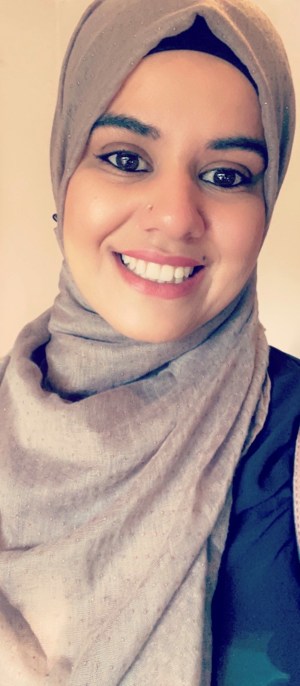
ProfilesMaria Hussain is a Lecturer in Management at Leeds University Business School, a Senior Fellow of the Higher Education Academy and a Certified Business and Management Educator.

Her expertise lies in; inclusive management education, intercultural communication and organisational culture relating to EDI (race- equity) in complex organisations. Maria was recently recognised for her contribution to global intercultural competence in Management education in UPSIGN‘s 2022/23 list of 75 notable British Pakistani academics, trainers and teachers to mark Pakistan’s 75th anniversary of Independence. UPSIGN is a charity that works globally to promote mentoring, support and the education of UK-based British Pakistanis (and Pakistanis) and highlighting their work in education and academia. UPSIGN is also committed to working towards the UN SDG’s and reducing the impact of the climate emergency.

Maria is a co-opted member of the British Academy Management national Council, providing steer on equity and inclusive educational practice within Business Education. She has recently been appointed to the Chartered Association of Business Schools national EDI Committee. In 2022, she was also appointed as a national Race Equality Charter institutional application reviewer at Advance HE. Institutionally, Maria co-chairs the Muslim Staff Network, the first faith-based staff network in the sector. This important work has influenced university-wide EDI policy and ongoing implementation on the intersection of race-religion in addressing outcomes and awarding ‘gaps.’

Furthermore, Maria has recently won a prestigious fellowship at the Leeds Institute of Teaching Excellence. Her research project entitled: Enhancing the value placed on diversity: from the international classroom to the global workplace explores attitudes towards diversity from both student and employer perspectives.

Recent publication:
Hussain, M. (2021). Creating cultural insights: Making inroads into cultural exchange. In A. Manning, & S. Colaiacomo (Eds.), Innovations in internationalisation at home (pp 75-91). Cambridge, UK: Cambridge Scholarly Publishing.

For further information please see Maria’s work profile.

Please connect with her on LinkedIn.


Work for CID:
Maria Hussain participated in the the CID/UNESCO focus groups for the Futures of Education Initiative.

Maura Di Mauro Profile

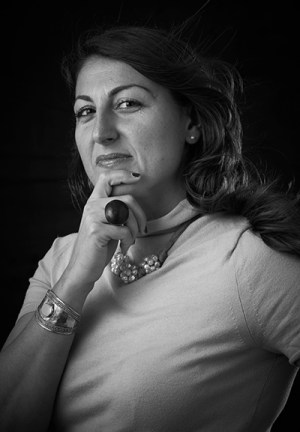
ProfilesMaura Di Mauro teaches Intercultural Management at the Catholic University of the Sacred Heart of Piacenza, Italy, and in other universities.

Maura Di Mauro

She is an Intercultural Trainer, Consultant and Coach, and an expert on Sustainability and Social Innovation. She has experience in assessment and development center activities for large multinational groups, both in Italy and abroad, in training managerial teams on the development of their intercultural and global skills, on leading multicultural teams, and on Diversity and Inclusion Management Design Strategies. From 2016 to 2019 she was the President of SIETAR Italia, and Board Member of SIETAR Europe, and has served as consultant to ISMU Foundation and other groups for research and training projects.

Publications include:

Di Mauro, M. (2021). Includere e valorizzare le competenze dei Migranti: TRAINING toolkit sul diversity management. ISMU Foundation.

Boerchi, D., Di Mauro, M., & Sarli, A. (2020). Guidelines for the identification and assessment of migrants’ soft skills. ISMU Foundation.

Di Mauro, M., & Gehrke, B. (2019). Feeling Italian. SIETAR Italia

Di Mauro, M., & Taratuhina, Y. (Eds.). (2019). East and West relations bridging: SIETAR Russia and SIETAR Europa 2018 Conference Proceedings.

Di Mauro, M. & Gehrke, B. (Eds.). (2018). Multicultural identities: Challenging the sense of belonging, Conference proceeding of IX SIETAR Italia International Conference. Fondazione Intercultura.

Di Mauro, M. (2016). Tourism: An opportunity for mobility and intercultural encounters. Intercultural Training and Consulting for the development of the tourism industry. In E. J. Nash, N. C. Brown, & L. Bracci (Eds.), Intercultural horizons: Identities, relationships and languages in migration (vol. 4). Newcastle upon Tyne, UK: Cambridge Scholars.

Di Mauro, M. (2015). The extension of intercultural competence today: from individual effectiveness, to innovative, responsible and sustainable practices. In L. Bracci, N. C. Brown, & E. J. Nash (Eds.), Intercultural horizons: Intercultural competence – key to the new multicultural societies of the globalized world (vol. 3). Newcastle upon Tyne, UK: Cambridge Scholars.


Work for CID:

Maura Di Mauro participated in a CID/UNESCO focus group for the Futures of Education Initiative, and wrote ICD Exercise #2.

Maria Cristina Gatti Profile

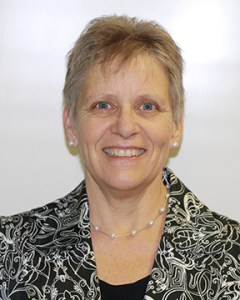
ProfilesMaria Cristina Gatti is Associate Professor in English Studies and Linguistics at the University of Bolzano (Italy), and Deputy Director of the course in Communication Sciences and Cultures of the Faculty of Education.

Maria Cristina Gatti

She is an applied linguist interested in communication in intercultural and multilingual contexts. She is currently leading research programmes on the role of English in multilingual teaching and professional environments, language variation in transnational communication contexts and online teaching in multilingual and multicultural environments. As a discourse analyst, she is particularly interested in issues related to social interaction in intercultural communication including identity, trust development, multisensoriality, embodiment as well as cognitive-semiotic approaches to spatiality and temporality. She has presented internationally and is supervising doctoral students in these fields. Her work has been published in international journals including Discourse Studies, Humanities, and International Journal of Applied Linguistics. She was a visiting scholar at the Department of Linguistics of UC at Berkeley where she also attended the LSA Linguistic Institute. She has been a member of the Association for Business Communication for more than ten years.


Work for CID:
Maria Cristina Gatti serves on the CID Advisory Board.

Mohammed Guamguami Profile

ProfilesMohammed Guamguami is Associate Professor of English at Mohammed Premier University, Oujda, Morocco. He is also a current part-time teacher at ALC, American Language Center, Oujda.

Mohammed Guamguami

Prior to this, he was a full-time trainer at the CRMEF, teacher training center, Oujda. His doctorate is in Languages, Cultures and Communication (2015). His specializations are: English Language Teaching, Cross-Cultural Communication and Discourse Studies.

Mohammed has been a visiting scholar at several international universities: AUT, Beirut, Lebanon; DePaul University, Chicago, IL; State University of New York, NY; and IUPUI, Indianapolis, IN.

His major publications include:

Guamgaumi, M., et al. (In press). Rethinking knowledge, inquiry and learning in the big data age: Perspectives across disciplines.

Guamgaumi, M., Zeriouh, M. & Boujemâa, E. (Eds.). (2018). Culture, society and education: An interdisciplinary reader. London, UK: Dar El Maha.

Guamgaumi, M., Zeriouh, M., & Tizaoui, H. (Eds.). (2017). English for Specific Purposes: A reader. Egypt: Dar El Maha.

Guamgaumi, M., & Zeriouh, M. (2017). Moroccan cultural identity: Difference and belonging at a post-modern age. Egypt: Dar El Maha.

Guamgaumi, M. (2016). English hegemony on ICTs: Local linguistic, cultural and educational divide. Germany: Lambert.

Guamgaumi, M. (2015). Cross-cultural communication in foreign language discourse: Towards a pedagogy of culture teaching/learning in Moroccan EFL context. Germany: Lambert.


Work for CID:

Mohammed Guamguami wrote KC99: Translanguaging and translated it into French and Arabic; KC100: Transcultural Communication and translated that into French and Arabic; KC102: Inclusive Communication and translated that into French, and KC103: Geoculture. He is now translating earlier concepts into French; already published are KC1: Intercultural Dialogue, KC2:Cosmopolitanism, KC3: Intercultural Competence, KC4: Coordinated Management of Meaning, KC5: Intercultural Communication, KC6: Intercultural Capital, KC7: Intergroup Relations Dialogue, KC8: Intercultural Dialogue, KC10: Cross-cultural Dialogue, KC11: Intercultural Discourse and Communication, KC12: Third Culture Kids, KC13: Language Ecology, KC14: Dialogue, KC15: Cultural Pluralism, KC16: Migration, KC17: Multilingualism, KC18: Intractable Conflict, KC19: Multiculturalism, KC21: Reflexivity, KC22: Cultural Identity, KC26: Global-Local Dialectic, KC32: Ethno-Political Conflict, KC36: Counter-narrative, KC39: Otherness and the Other(s), KC41: Yuan, KC46: Politeness, and KC49: Intersectionality. In addition, he has translated concepts into Arabic, including KC2: Cosmopolitanism, KC4: Coordinated Management of Meaning, KC5: Intercultural Communication, KC6: Intercultural Capital, KC7: IGR Dialogue, and KC12: Third Culture Kids. And he wrote Constructing Intercultural Dialogues #12: Transcultural Education in Context. He also participated in a CID/UNESCO focus group for the Futures of Education Initiative, and will be participating in an expert group organized by the Center.

Janny H. C. Leung Profile

ProfilesJanny H. C. Leung is Dean of Liberal Arts at Wilfrid Laurier University, where she is also Professor of Law and Society and Professor of English. She was Professor of Linguistics in the School of English at the University of Hong Kong. She obtained her M Phil and PhD in English and Applied Linguistics from the University of Cambridge, an LLB from the University of London, and an LLM from Yale Law School.

Janny Leung

She was a Visiting Scholar at the Harvard Yenching Institute, the Faculty of Law of McGill University, and a Luce East Asia Fellow at the National Humanities Center (USA).

Broadly speaking, her research has revolved around the study of meaning. Her first line of research, developed from her doctoral work, focuses on the mapping between meaning and linguistic form in the acquisition and processing of language, using a psycholinguistic approach and a quantitative methodology. She was a founding member of the University of Hong Kong’s Speech, Language and Cognition Laboratory.

Her second and most current line of research lies in the emergent interdisciplinary area of language and law. She has published a monograph and a series of papers on challenges, ideologies and paradoxes in multilingual legal practice. She has also written about language rights, legal interpretation, unrepresented litigation, courtroom discourse, legal translation, and representations of law in the media. Her current government-funded project deals with the evolution of law in the modern communication environment.

Selected publications:

Leung, J. (2019) Shallow equality and symbolic jurisprudence in multilingual legal orders. New York, NY: Oxford University Press.

Leung, J. (2019). Does the world need more Canada? Legal multilingualism and strategic pluralism. Sherbrooke Law Review / Revue de droit de l’Université de Sherbrooke, 47 (2-3), 193-226.

Leung, J., & Durant, A. (Eds.) (2018) Meaning and power in the language of law. Cambridge, UK: Cambridge University Press.

Durant, A., & Leung, J. (2016) Language and law. London, UK: Routledge.


Work for CID:

Janny Leung wrote a guest post on COVID-sensitive kanji.

Marcella LaFever Profile

Profiles

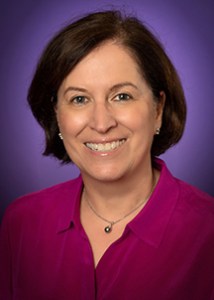
Marcella LaFever, Ph.D. (University of New Mexico, 2005) is an Associate Professor in Communications at the University of the Fraser Valley.

Marcella LaFever

Marcella, in examining the implications for herself to decolonize her communication practices, has focused her ongoing research program on listening to indigenous voices that have been saying for a long time what colonizers need to do to change their attitudes and practices. Marcella’s main program of research focuses on the social exclusion that results in public dialogue and decision-making where cultural ways of speaking are outside the norms expected in dominate North American culture. Her 9P Planning model posits a process that builds intercultural relationships to increase social inclusion in public dialogue. Dr. LaFever’s other current work is in two areas of intercultural communication: use of First Nation storytelling as a form of dialogic participation; and indigenization of classroom instructional practices.

Relevant Publications:

LaFever, M. (2017). Using the medicine wheel for curriculum design in intercultural communication: Rethinking learning outcomes. In G. Garcia-Perez & C. Rojas-Primus (Eds.), Promoting intercultural communication competencies in higher education (pp. 168-199). Hershey, PA: IGI Global.

LaFever, M. (2016). Switching from Bloom to the Medicine Wheel: Creating learning outcomes that support Indigenous ways of knowing in post-secondary education. Intercultural Education, 27(5), 409-424.

LaFever, M. (2011). Empowering Native Americans: Communication, planning and dialogue for eco-tourism in Gallup, New Mexico. Journal of International & Intercultural Communication, 4(2), 127-145.

LaFever, M. (2008). Communication for public decision-making in a negative historical context: Building intercultural relationships in the British Columbia treaty process. Journal of International & Intercultural Communication, 1(2), 158-180.


Work for CID: Marcella LaFever prepared ICD Exercise #1: Intercultural Meetups.

Melita Garza Profile

Profiles

Melita M. Garza is associate professor in the journalism department in the Illinois College of Media at the University of Illinois, Champaign Urbana.

Melita GarzaShe is an American journalism historian who studies news as an agent of democracy, specializing in English- and Spanish-language news, the immigrant press, and coverage of underrepresented groups. Garza is the author of the award-winning They Came to Toil: Newspaper Representations of Mexicans and Immigrants in the Great Depression (University of Texas Press, 2018). They Came to Toil examines English- and Spanish-language news coverage of immigrants during the longest economic downturn in the United States. She is a founding faculty member of TCU’s interdisciplinary department of Comparative Race and Ethnic Studies (CRES). Her work has been published in Journalism History, American Journalism, and the Howard Journal of Communications.

She earned a Ph.D. from the University of North Carolina at Chapel Hill in 2012 after two decades reporting for the Chicago Tribune, Bloomberg News, and the Los Angeles Times. At the Chicago Tribune, she pioneered the paper’s ethnic affairs beat, and covered immigration, among other topics. Dr. Garza also holds an MBA from the University of Chicago and a B.A. from Harvard University. She teaches journalism history, media literacy, business journalism, and diversity and the media.


Work for CID: Melita Garza serves on the CID Advisory Board.